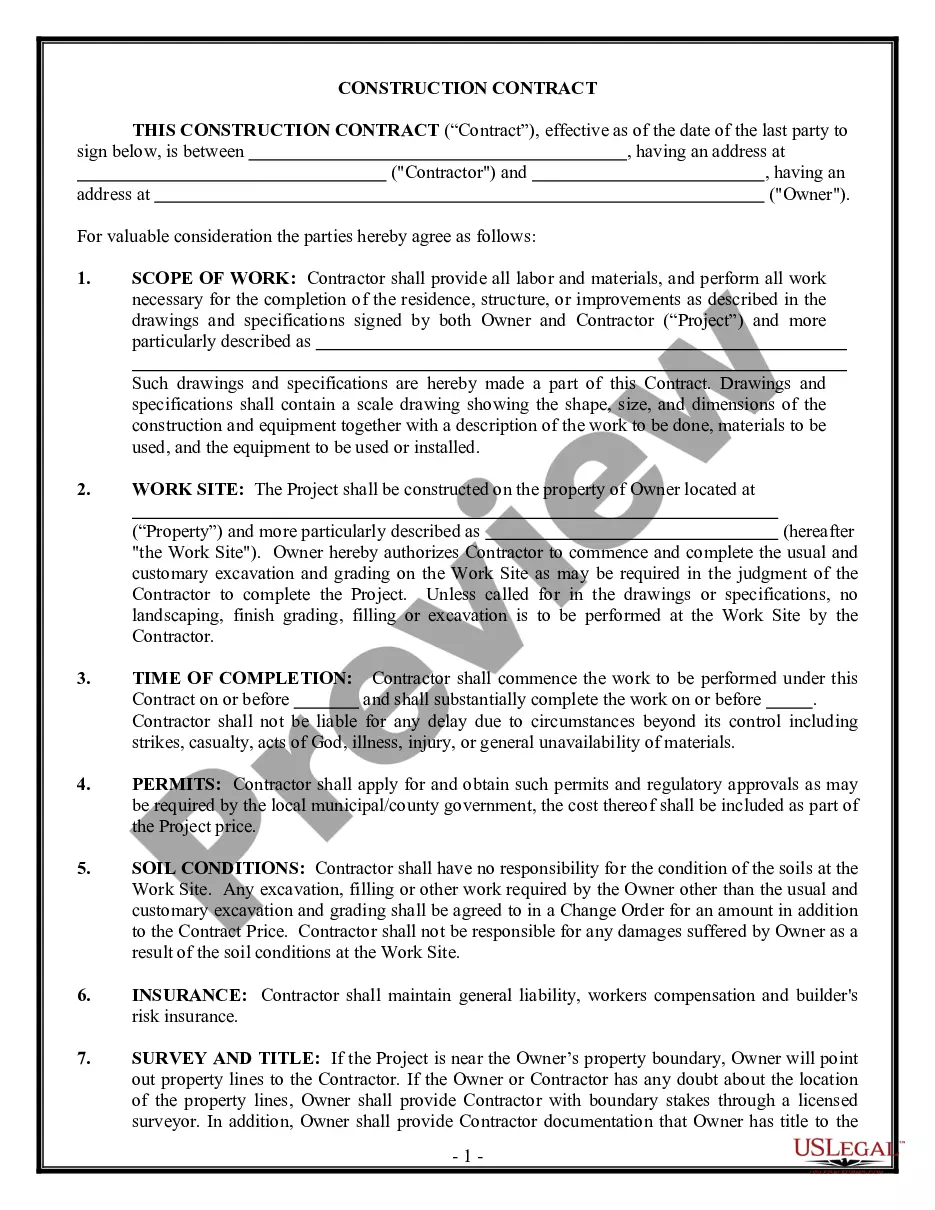
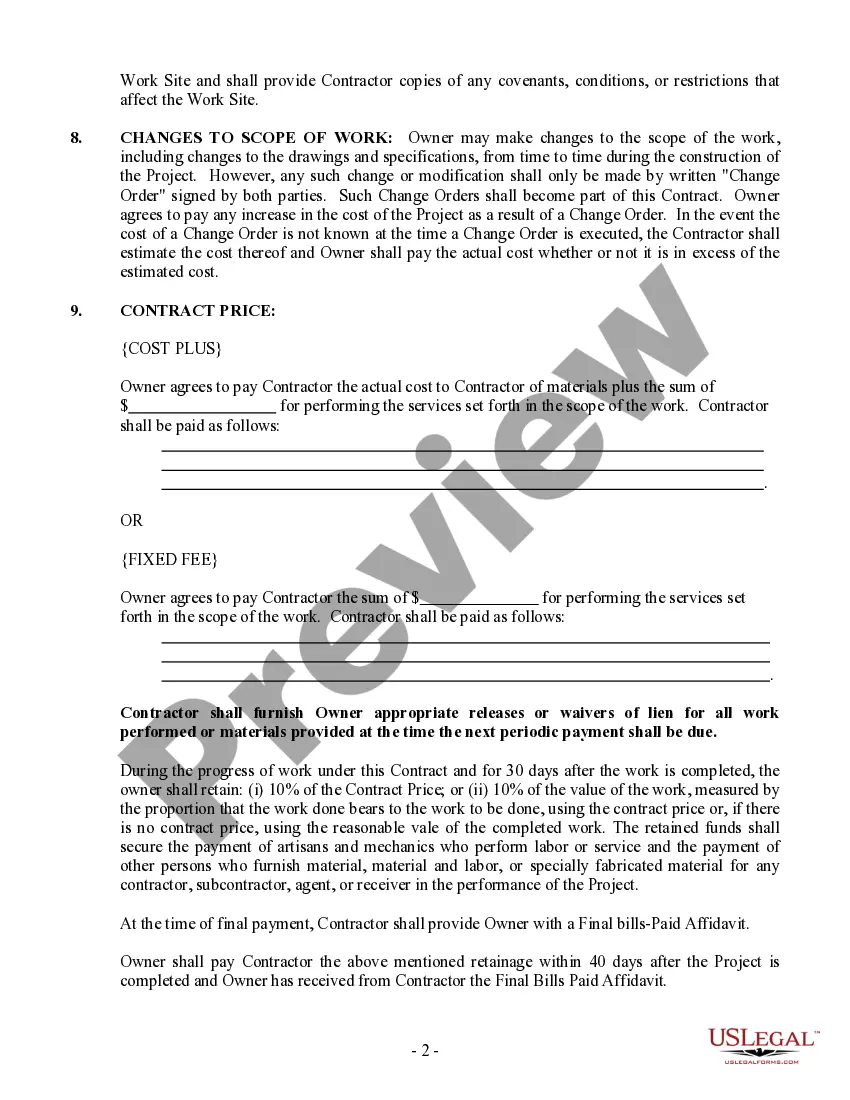
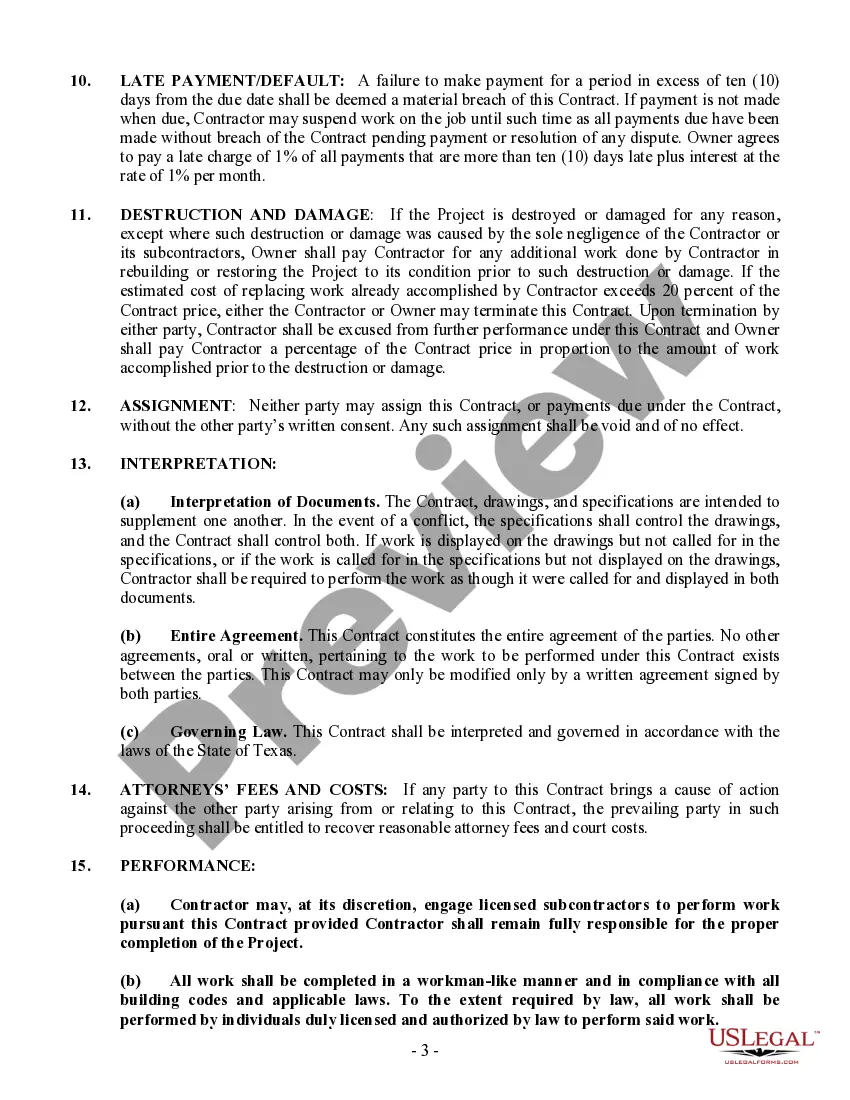
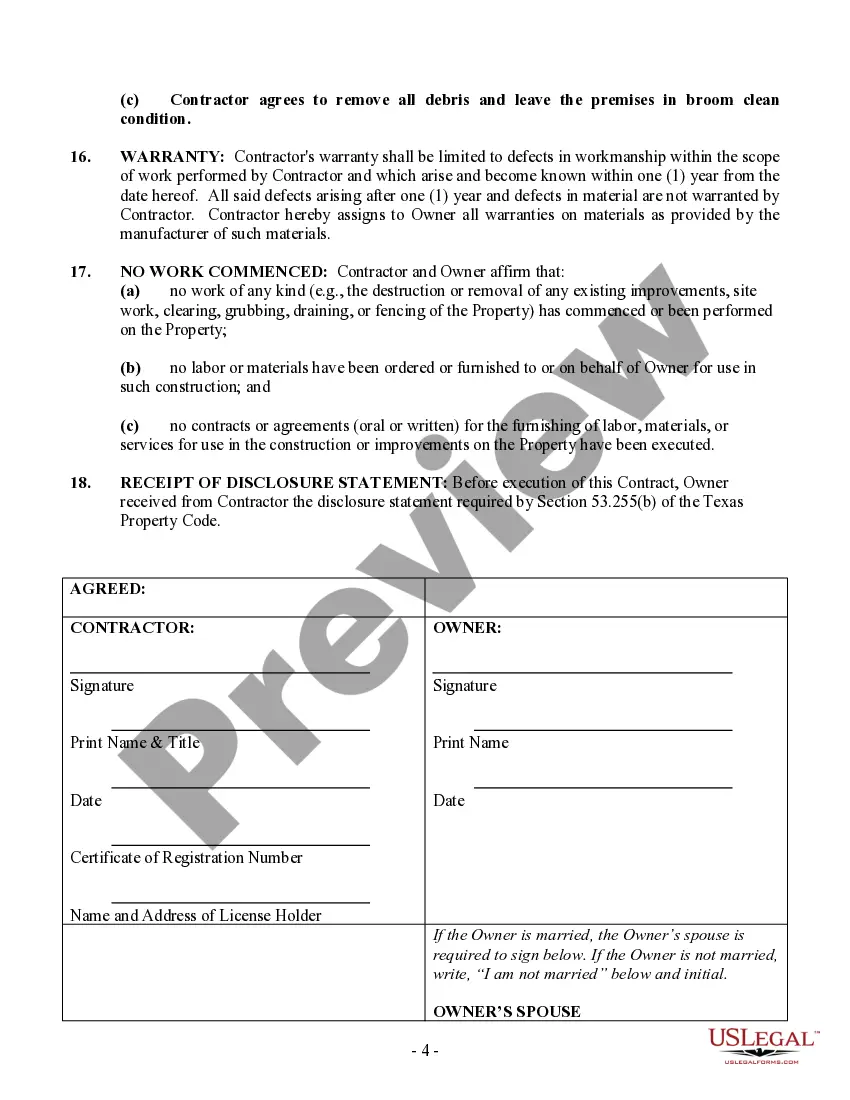
Residential Construction Contract Cost Plus Formulary
Description
Get your form ready online
Our built-in tools help you complete, sign, share, and store your documents in one place.
Make edits, fill in missing information, and update formatting in US Legal Forms—just like you would in MS Word.
Download a copy, print it, send it by email, or mail it via USPS—whatever works best for your next step.
Sign and collect signatures with our SignNow integration. Send to multiple recipients, set reminders, and more. Go Premium to unlock E-Sign.
If this form requires notarization, complete it online through a secure video call—no need to meet a notary in person or wait for an appointment.
We protect your documents and personal data by following strict security and privacy standards.

Make edits, fill in missing information, and update formatting in US Legal Forms—just like you would in MS Word.

Download a copy, print it, send it by email, or mail it via USPS—whatever works best for your next step.

Sign and collect signatures with our SignNow integration. Send to multiple recipients, set reminders, and more. Go Premium to unlock E-Sign.

If this form requires notarization, complete it online through a secure video call—no need to meet a notary in person or wait for an appointment.

We protect your documents and personal data by following strict security and privacy standards.
Looking for another form?

How to fill out Texas Construction Contract Cost Plus Or Fixed Fee?
Creating legal documents from the ground up can frequently feel daunting.
Certain situations may require extensive investigation and significant expenses.
If you're seeking a simpler and more cost-effective method for generating the Residential Construction Contract Cost Plus Formula or any other documentation without hassle, US Legal Forms is readily available.
Our online repository of over 85,000 current legal forms covers nearly all facets of your financial, legal, and personal matters.
However, before proceeding with downloading the Residential Construction Contract Cost Plus Formula, consider these suggestions: Review the document preview and details to ensure it’s the form you seek. Verify that the template aligns with your state and county's rules and regulations. Select the appropriate subscription plan to acquire the Residential Construction Contract Cost Plus Formula. Download the document, then fill it out, certify it, and print it. US Legal Forms has a strong reputation backed by over 25 years of experience. Join us today and simplify your form-filling experience!
- With a few simple clicks, you can quickly access state- and county-compliant templates thoughtfully compiled by our legal experts.
- Utilize our platform whenever you need dependable services where you can effortlessly search for and download the Residential Construction Contract Cost Plus Formula.
- If you’re already familiar with our website and have established an account with us, simply Log In, find the template, and download it or retrieve it later from the My documents section.
- Not signed up yet? No worries. Setting it up takes only a few minutes, allowing you to explore the library.
Form popularity
FAQ
Structuring a cost-plus contract involves setting clear guidelines that outline the project's scope, cost categories, and payment terms. Begin by defining eligible costs, including labor, materials, and overhead, and establish a formula for calculating the contractor's profit. It's crucial to include provisions for monitoring expenses and adjusting payments as necessary. US Legal Forms offers resources to help you effectively structure a residential construction contract cost plus formulary, ensuring both clarity and compliance.
An example of a cost-plus contract might involve a homeowner who wants to build a custom home. In this scenario, the contractor would bill the homeowner for all expenses related to construction, including labor, materials, and overhead, while adding a predetermined percentage for profit. This method exemplifies the residential construction contract cost plus formulary, allowing for a collaborative approach that can adapt to changes in design or materials as the project progresses.
While cost-plus contracts offer flexibility, they can lead to higher overall costs if not managed properly. Homeowners may face unexpected expenses, as the contractor's profit increases with project costs. It's important to establish a clear budget and guidelines to minimize risks associated with the residential construction contract cost plus formulary. Engaging a reliable contractor can help mitigate these disadvantages.
As this contract reimburses the contractor for both direct and indirect costs, it creates an incentive in order to allocate all the possible costs to the production of goods under the contract which is a major problem with it.
A: As an example, a cost-plus contract may establish that the total estimated cost of a building project is $10 million plus a fixed fee of $1.5 million, roughly 15% of the total cost, as the contractor's profit. So the total expense to the buyer would be approximately $11.5 million ?the cost plus the fee.
Who pays for those mistakes? The owner doesn't want to because it's not the owner's fault. But mistakes and rework are just part of the costs. In a cost-plus contract the owner agrees to pay the costs.
The Problem With Cost-Plus One of the biggest risks is untacked cost overruns. This happens when a project's expenses exceed the original budget, and the contractor is still obligated to complete the work but doesn't track the changes that occurred.
plus contract is a construction agreement that requires reimbursement for project costs as well as a markup that covers the contractor's overhead and profit. In other words, the name is a shorthand way of remembering what the contract covers: project costs plus contractor markup.