New Hampshire Tenant Eviction
Description

Get your form ready online
Our built-in tools help you complete, sign, share, and store your documents in one place.
Make edits, fill in missing information, and update formatting in US Legal Forms—just like you would in MS Word.
Download a copy, print it, send it by email, or mail it via USPS—whatever works best for your next step.
Sign and collect signatures with our SignNow integration. Send to multiple recipients, set reminders, and more. Go Premium to unlock E-Sign.
If this form requires notarization, complete it online through a secure video call—no need to meet a notary in person or wait for an appointment.
We protect your documents and personal data by following strict security and privacy standards.

Make edits, fill in missing information, and update formatting in US Legal Forms—just like you would in MS Word.

Download a copy, print it, send it by email, or mail it via USPS—whatever works best for your next step.

Sign and collect signatures with our SignNow integration. Send to multiple recipients, set reminders, and more. Go Premium to unlock E-Sign.

If this form requires notarization, complete it online through a secure video call—no need to meet a notary in person or wait for an appointment.

We protect your documents and personal data by following strict security and privacy standards.
Looking for another form?

Form popularity
FAQ
Evicting a tenant in New Hampshire can be a complex process, often taking time and careful consideration. Landlords must follow legal procedures, including proper notice and court filings, which can be daunting without the right information. However, with the right resources, like those offered by US Legal Forms, you can simplify the New Hampshire tenant eviction process and ensure that you meet all legal requirements efficiently.
Yes, in New Hampshire, a landlord must have a valid reason to initiate a tenant eviction. Common reasons include non-payment of rent or violation of lease terms. Familiarizing yourself with the reasons for a New Hampshire tenant eviction can help tenants understand their situation and protect their rights effectively.
In New Hampshire, a landlord typically cannot evict a tenant without a court order. A proper legal procedure must be followed, including providing notice and allowing the tenant an opportunity to respond. Understanding this process helps tenants navigate potential New Hampshire tenant eviction scenarios, protecting their rights while maintaining a fair rental environment.
A 30-day notice means that a tenant informs their landlord of their intent to leave the rental property within 30 days. This notification is essential for a smooth New Hampshire tenant eviction and ensures that both the tenant and the landlord understand their rights and responsibilities. Issuing this notice helps initiate the process of securing your next living arrangement.
If you fail to provide a required 30-day notice to move out, you may face complications related to your New Hampshire tenant eviction. Landlords could decide to take legal action if you remain in the property beyond your lease agreement. It is crucial to understand that not giving notice can lead to additional rent payments and may hinder your efforts to secure a smooth transition to a new home.
Typically, the timeframe to evict a tenant in New Hampshire ranges from a few weeks to a couple of months. This period depends on various factors such as court schedules and any tenant responses. Planning ahead and following the correct legal procedures can help facilitate a smoother eviction process.
Yes, you can initiate a New Hampshire tenant eviction even if no written lease exists. In such cases, landlords can typically rely on verbal agreements or rental arrangements. However, it's crucial to provide proper notice and adhere to state laws regarding tenant rights.
The duration to complete a New Hampshire tenant eviction can vary but generally takes about 30 to 60 days. Factors include the type of eviction notice served and whether the tenant contests the eviction in court. Keeping the process organized and following legal protocols can expedite the timeline significantly.
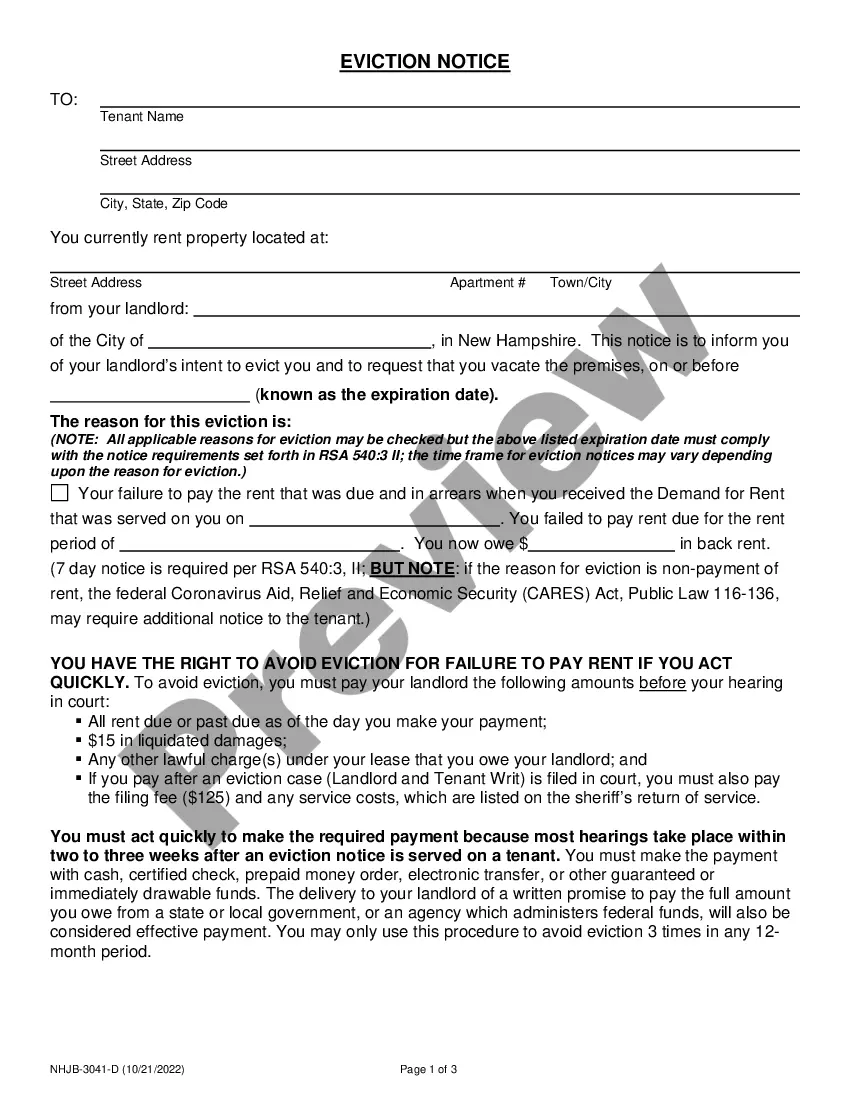
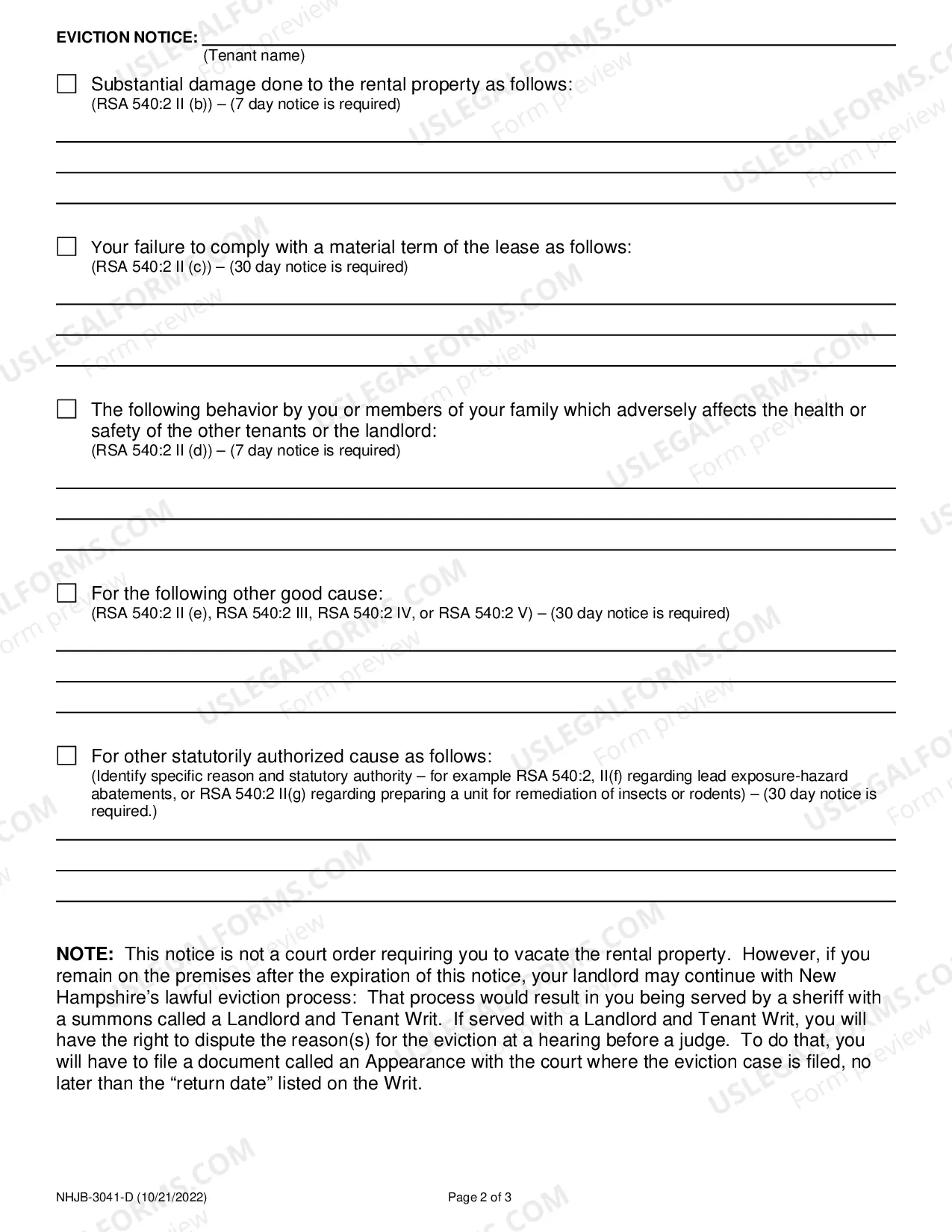
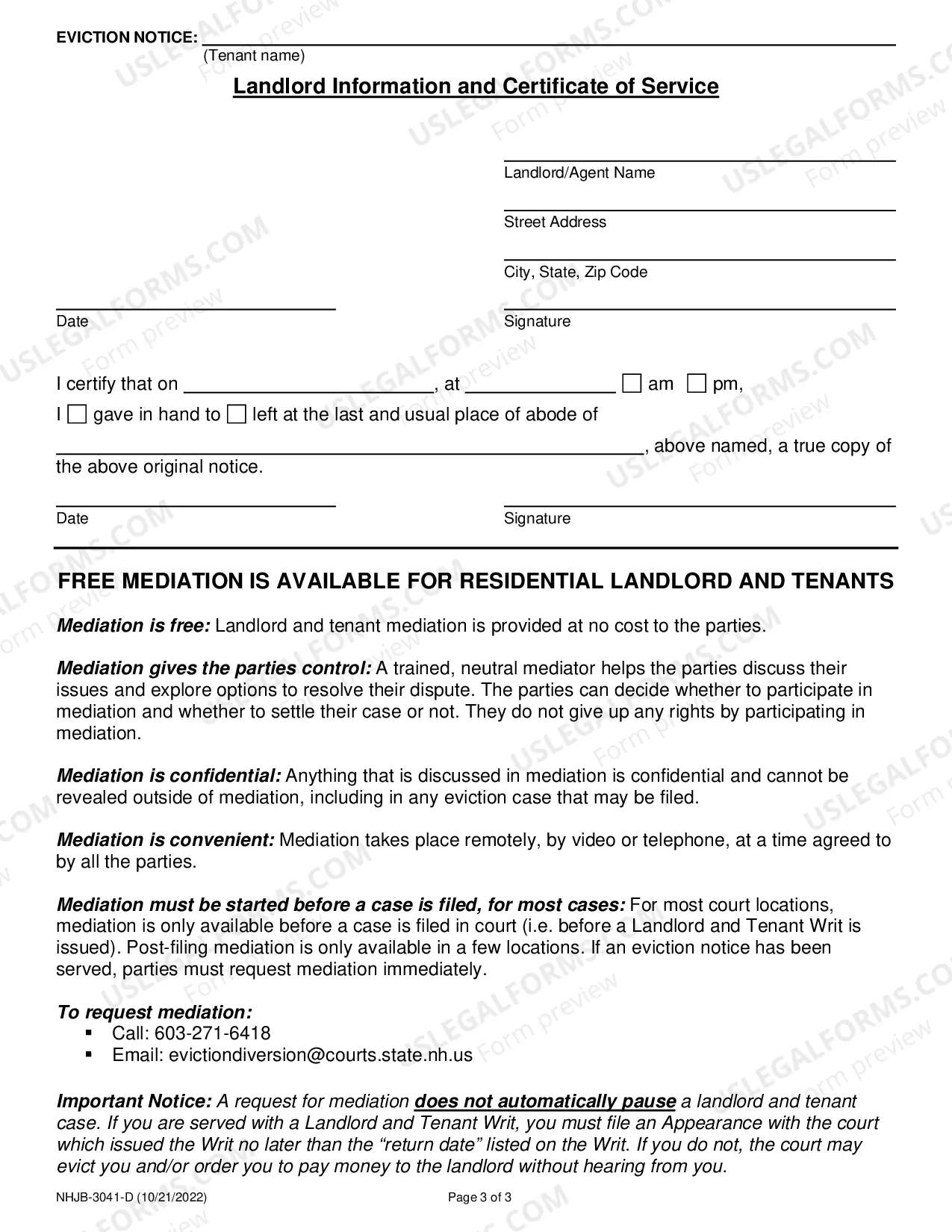
To fill out an eviction notice for New Hampshire tenant eviction, you should begin by clearly stating the reason for the eviction. Include the date the notice is issued, the tenant's full name, and the address of the rental property. Next, specify the time frame in which the tenant must vacate the premises, as outlined by New Hampshire law.
A 30-day notice to vacate in New Hampshire is a formal notification given to tenants, indicating they must leave the rental property within 30 days. This notice is typically issued for month-to-month leases and allows landlords to legally terminate tenancy. Utilizing uslegalforms can provide you with the correct templates to ensure compliance with New Hampshire tenant eviction regulations.
