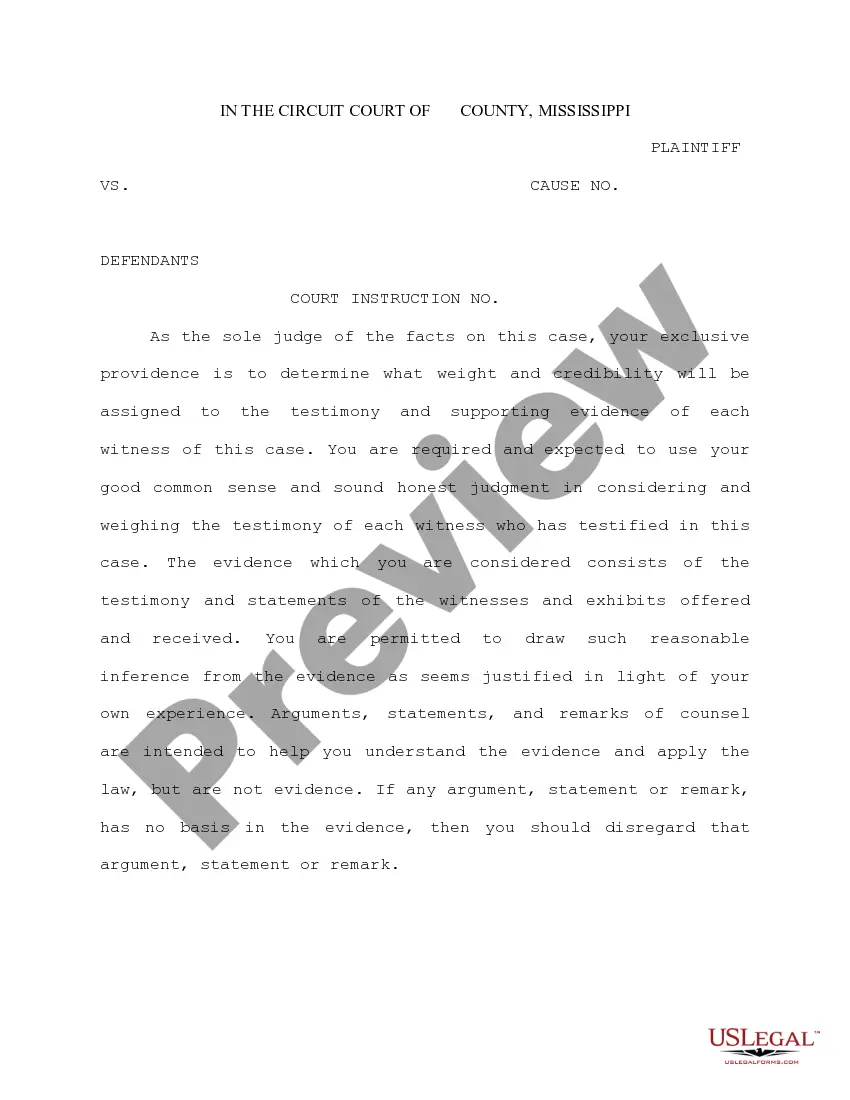
Mississippi Model Jury Instructions For Civil Cases
Description
Get your form ready online
Our built-in tools help you complete, sign, share, and store your documents in one place.
Make edits, fill in missing information, and update formatting in US Legal Forms—just like you would in MS Word.
Download a copy, print it, send it by email, or mail it via USPS—whatever works best for your next step.
Sign and collect signatures with our SignNow integration. Send to multiple recipients, set reminders, and more. Go Premium to unlock E-Sign.
If this form requires notarization, complete it online through a secure video call—no need to meet a notary in person or wait for an appointment.
We protect your documents and personal data by following strict security and privacy standards.

Make edits, fill in missing information, and update formatting in US Legal Forms—just like you would in MS Word.

Download a copy, print it, send it by email, or mail it via USPS—whatever works best for your next step.

Sign and collect signatures with our SignNow integration. Send to multiple recipients, set reminders, and more. Go Premium to unlock E-Sign.

If this form requires notarization, complete it online through a secure video call—no need to meet a notary in person or wait for an appointment.

We protect your documents and personal data by following strict security and privacy standards.
Looking for another form?
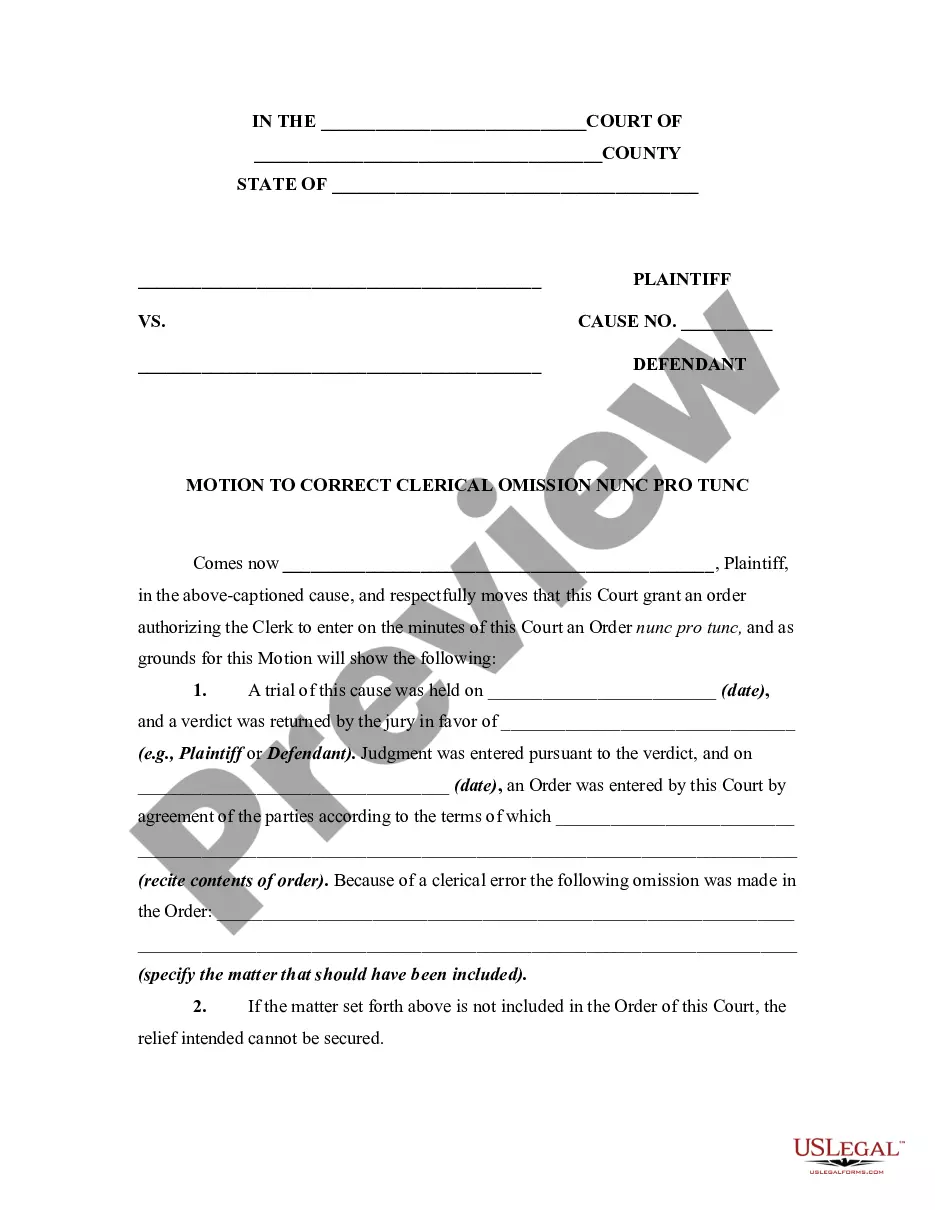
How to fill out Mississippi Jury Instruction - Court Instruction - Final Instructions General?
The Mississippi Model Jury Instructions For Civil Cases displayed on this webpage is a reusable legal framework crafted by expert attorneys in accordance with federal and local regulations.
For over 25 years, US Legal Forms has supplied individuals, organizations, and legal professionals with over 85,000 verified, state-specific documents for any business and personal circumstance. It’s the quickest, most straightforward, and most trustworthy method to acquire the documents you require, as the service ensures the highest degree of data security and anti-malware safeguards.
Join US Legal Forms to have confirmed legal templates for all of life’s circumstances readily available.
- Search for the file you require and review it. Browse through the document you searched and preview it or examine the form description to ensure it meets your requirements. If it doesn't, use the search feature to locate the correct one. Click Buy Now once you have located the template you need.
- Subscribe and Log In. Select the pricing plan that works for you and create an account. Utilize PayPal or a credit card for a swift payment. If you already possess an account, Log In and verify your subscription to continue.
- Obtain the editable template. Choose the format you wish for your Mississippi Model Jury Instructions For Civil Cases (PDF, Word, RTF) and save the document on your device.
- Fill out and sign the document. Print the template to complete it manually. Alternatively, use an online multifunctional PDF editor to quickly and accurately fill in and sign your document with a legally-binding electronic signature.
- Download your documents once again. Use the same document again whenever needed. Access the My documents tab in your profile to re-download any previously saved documents.
Form popularity
FAQ
Model Jury Instruction - A form jury instruction usually approved by a state bar association or similar group regarding matters arising in a typical case. Courts usually accept model jury instructions as authoritative.
The judge will advise the jury that it is the sole judge of the facts and of the credibility (believability) of witnesses. He or she will note that the jurors are to base their conclusions on the evidence as presented in the trial, and that the opening and closing arguments of the lawyers are not evidence.
Either before or after the closing arguments by the lawyers, the judge will explain the law that applies to the case to you. This is the judge's instruction to the jury. You have to apply that law to the facts, as you have heard them, in arriving at your verdict.
(1) Members of the jury, now it is time for me to instruct you about the law you must follow in deciding this case. (2) I will start by explaining your duties and the general rules that apply in every criminal case. (3) Then I will explain the elements of the crimes that the defendant is accused of committing.
Jury instructions should ideally be brief, concise, non-repetitive, relevant to the case's details, understandable to the average juror, and should correctly state the law without misleading the jury or inviting unnecessary speculation.