Minnesota Transfer Deed Form With Trust
Description

Get your form ready online
Our built-in tools help you complete, sign, share, and store your documents in one place.
Make edits, fill in missing information, and update formatting in US Legal Forms—just like you would in MS Word.
Download a copy, print it, send it by email, or mail it via USPS—whatever works best for your next step.
Sign and collect signatures with our SignNow integration. Send to multiple recipients, set reminders, and more. Go Premium to unlock E-Sign.
If this form requires notarization, complete it online through a secure video call—no need to meet a notary in person or wait for an appointment.
We protect your documents and personal data by following strict security and privacy standards.

Make edits, fill in missing information, and update formatting in US Legal Forms—just like you would in MS Word.

Download a copy, print it, send it by email, or mail it via USPS—whatever works best for your next step.

Sign and collect signatures with our SignNow integration. Send to multiple recipients, set reminders, and more. Go Premium to unlock E-Sign.

If this form requires notarization, complete it online through a secure video call—no need to meet a notary in person or wait for an appointment.

We protect your documents and personal data by following strict security and privacy standards.
Looking for another form?



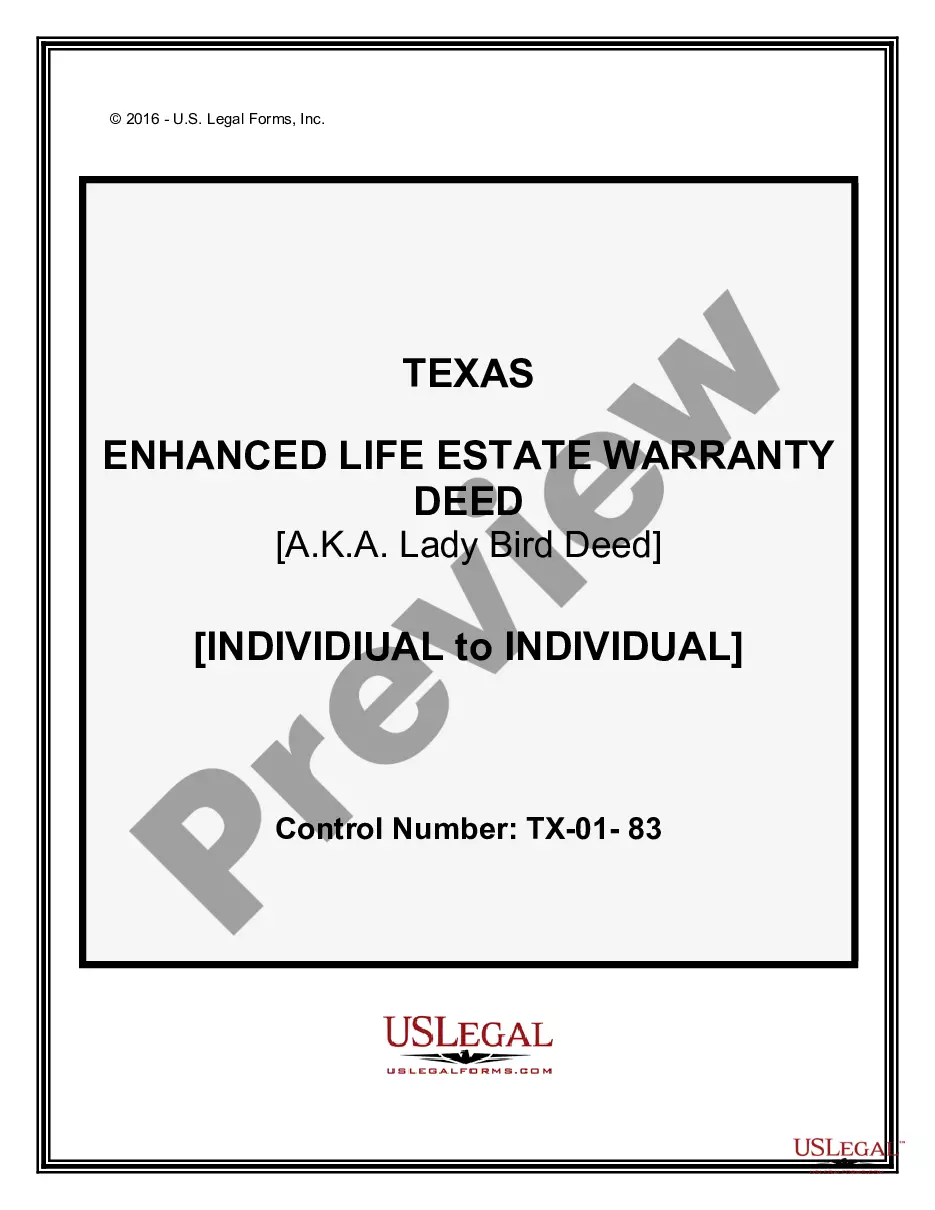




How to fill out Minnesota Transfer On Death Deed - Individual To Individual?
It’s widely known that you cannot instantly become a legal expert, nor can you swiftly learn how to prepare a Minnesota Transfer Deed Form With Trust without a specialized background.
Compiling legal documents is a lengthy process that necessitates specific education and expertise.
So why not entrust the creation of the Minnesota Transfer Deed Form With Trust to the experts.
Preview it (if this option is available) and read the supporting description to determine if the Minnesota Transfer Deed Form With Trust is what you’re looking for.
If you need any other template, start your search over. Create a free account and choose a subscription option to purchase the form. Click Buy now. After the payment is completed, you can download the Minnesota Transfer Deed Form With Trust, complete it, print it, and send or mail it to the specified individuals or organizations.
- With US Legal Forms, one of the most comprehensive legal template libraries, you can find everything from court documents to templates for internal corporate communication.
- We understand the significance of compliance and adherence to federal and state laws and regulations.
- That’s why, on our platform, all forms are location-specific and up to date.
- Here’s how to get started with our platform and obtain the form you need in just a few minutes.
- Locate the form you need using the search bar at the top of the page.
Form popularity
FAQ
Some potential problems include: Paying estate debt. ... Accidentally disinheriting someone. ... Jeopardizing your beneficiary's government benefits. ... Conflict with your will. ... No plan for incapacity.
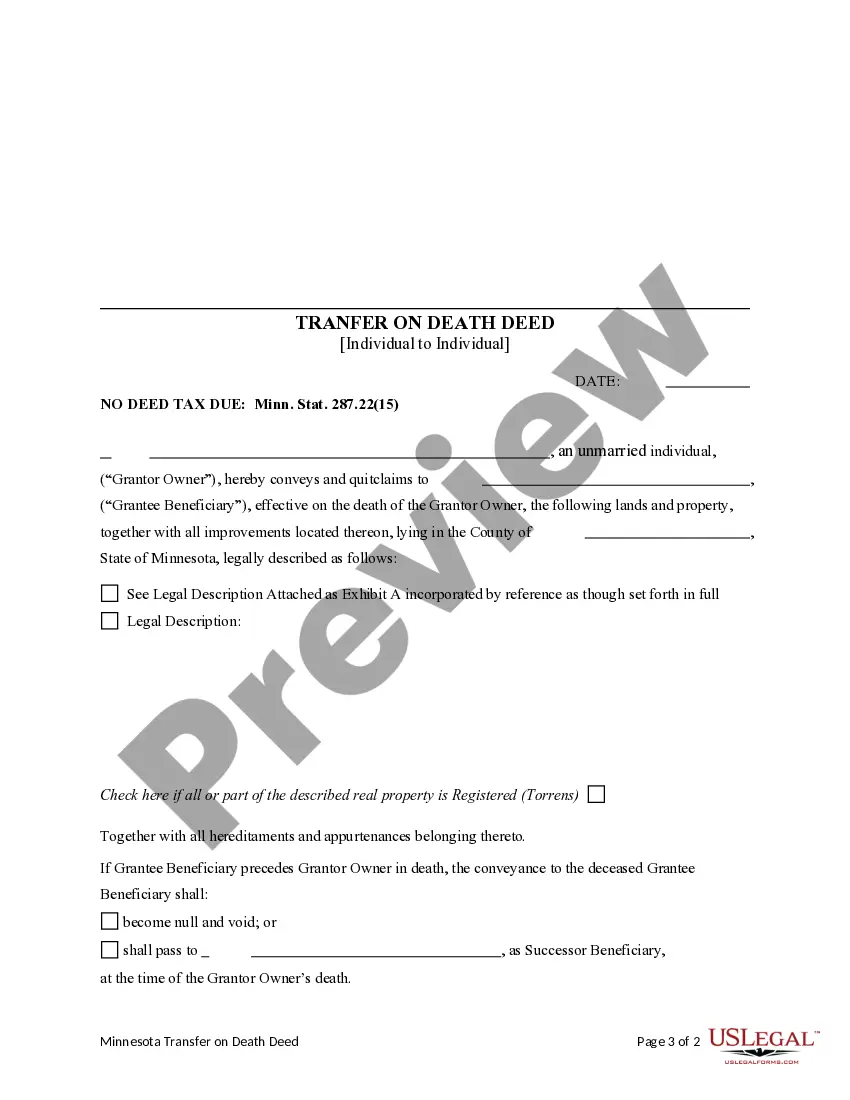
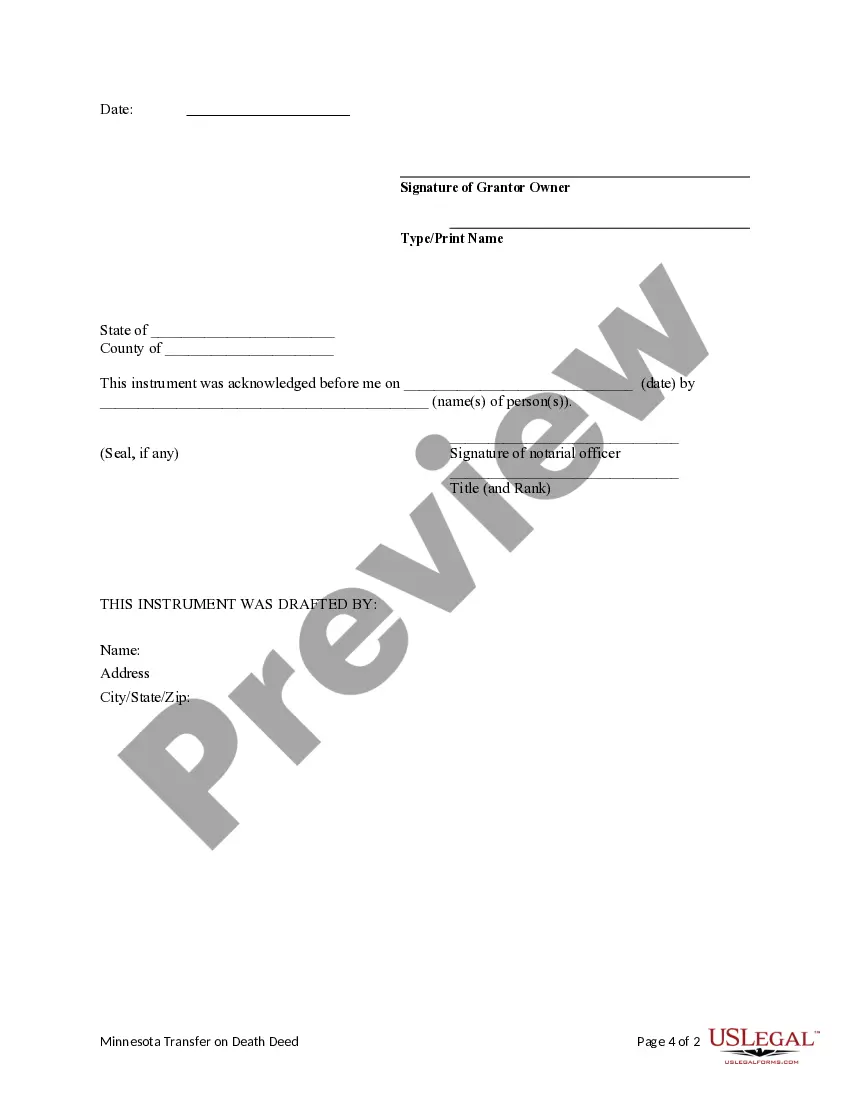
Transfers of real property must be in writing and notarized. Deeds should be recorded in the county where the property is located.
A transfer on death deed can be a useful addition to your estate plan, but it may not address other concerns, like minimizing estate tax or creditor protection, for which you need a trust. In addition to a will or trust, you can also transfer property by making someone else a joint owner, or using a life estate deed.
The most important benefit of a TOD account is simplicity. Estate planning can help minimize the legal mess left after you die. Without it, the probate system can take over the distribution of your assets. It can also name an executor of your estate and pay off your remaining debts with your assets.
To get title to the property after your death, the beneficiary must record the following documents in the county where the property is located: (1) an affidavit of identity and survivorship, (2) a certified death certificate, and (3) a clearance certificate (showing that the county will not seek reimbursement for ...