Michigan Estate Deed Form For Deceased Person
Description

Get your form ready online
Our built-in tools help you complete, sign, share, and store your documents in one place.
Make edits, fill in missing information, and update formatting in US Legal Forms—just like you would in MS Word.
Download a copy, print it, send it by email, or mail it via USPS—whatever works best for your next step.
Sign and collect signatures with our SignNow integration. Send to multiple recipients, set reminders, and more. Go Premium to unlock E-Sign.
If this form requires notarization, complete it online through a secure video call—no need to meet a notary in person or wait for an appointment.
We protect your documents and personal data by following strict security and privacy standards.

Make edits, fill in missing information, and update formatting in US Legal Forms—just like you would in MS Word.

Download a copy, print it, send it by email, or mail it via USPS—whatever works best for your next step.

Sign and collect signatures with our SignNow integration. Send to multiple recipients, set reminders, and more. Go Premium to unlock E-Sign.

If this form requires notarization, complete it online through a secure video call—no need to meet a notary in person or wait for an appointment.

We protect your documents and personal data by following strict security and privacy standards.
Looking for another form?
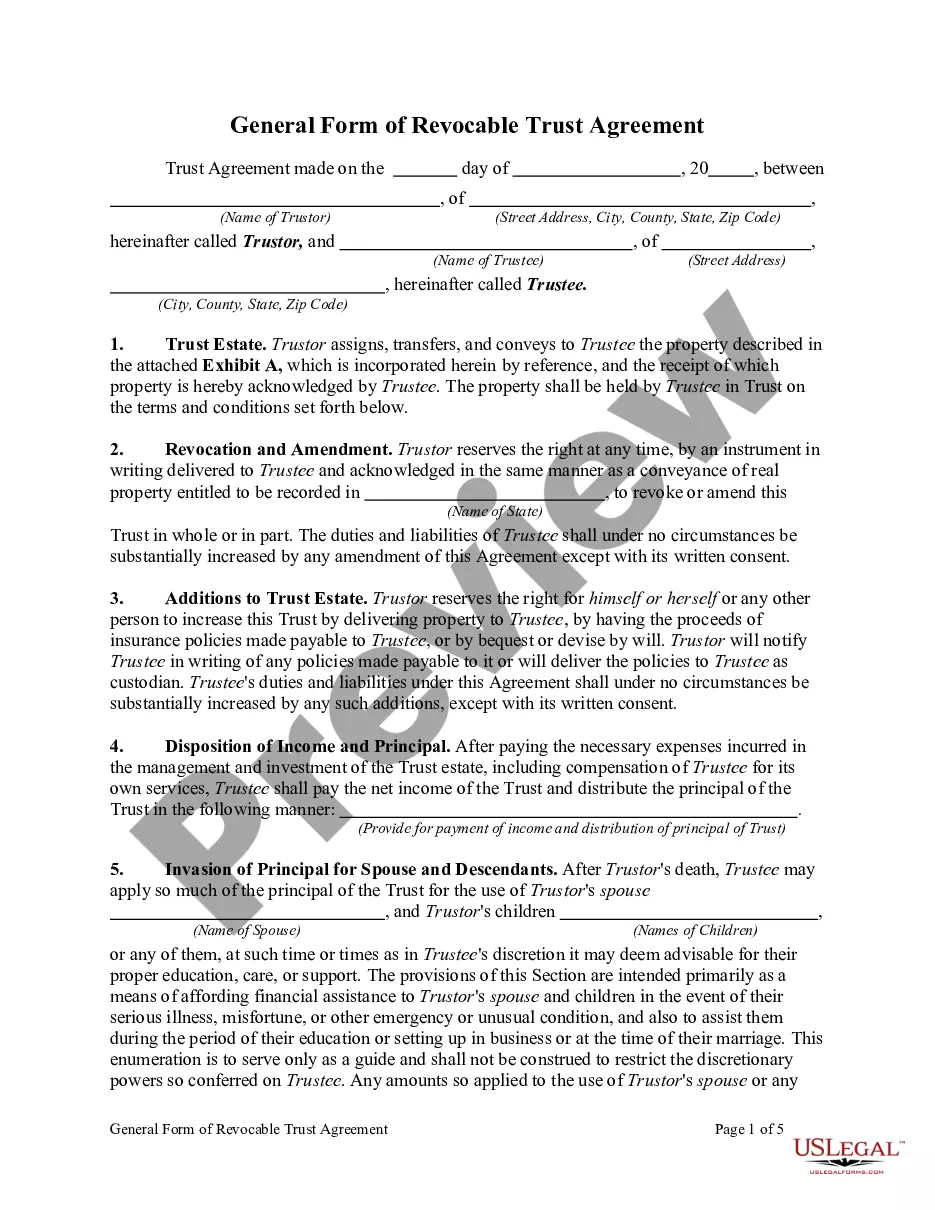
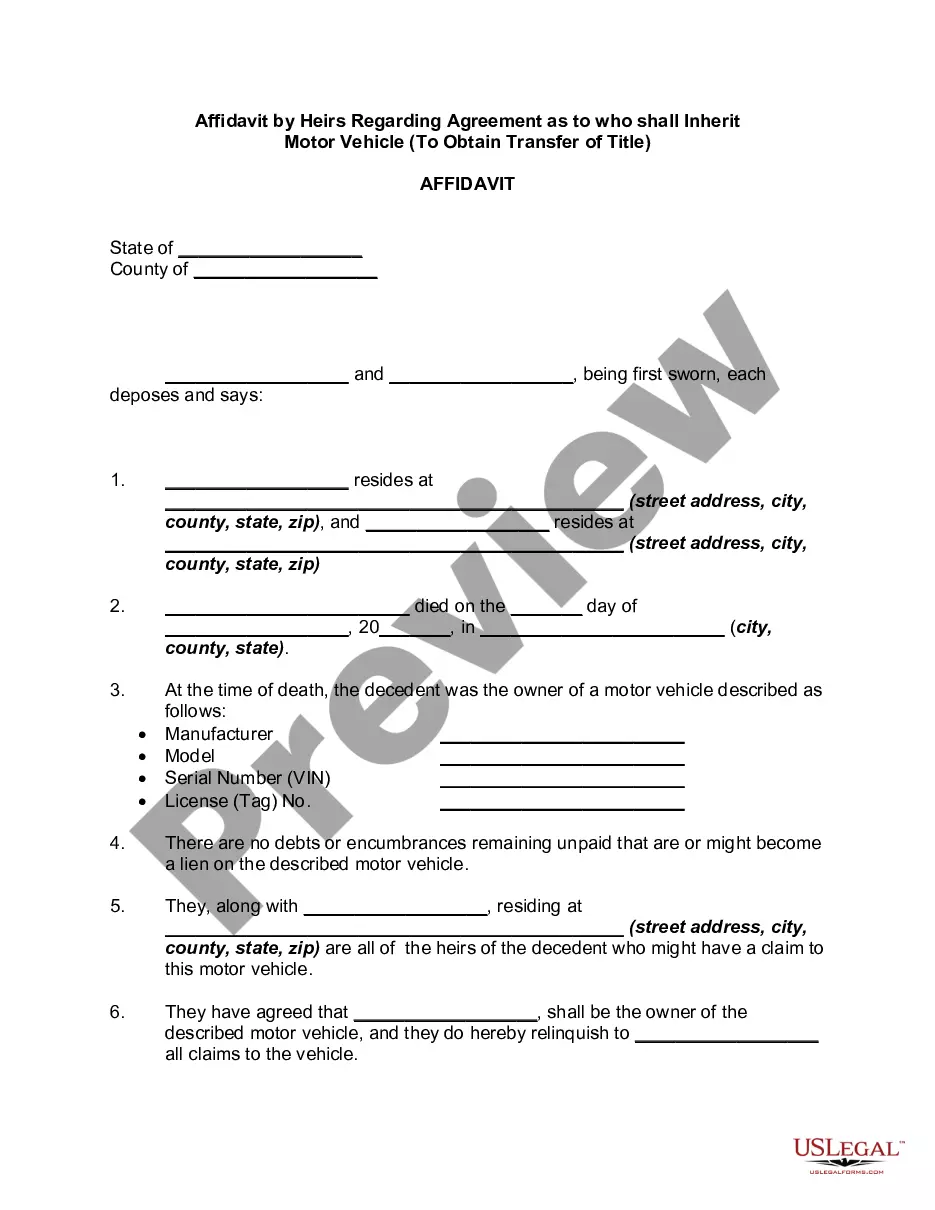
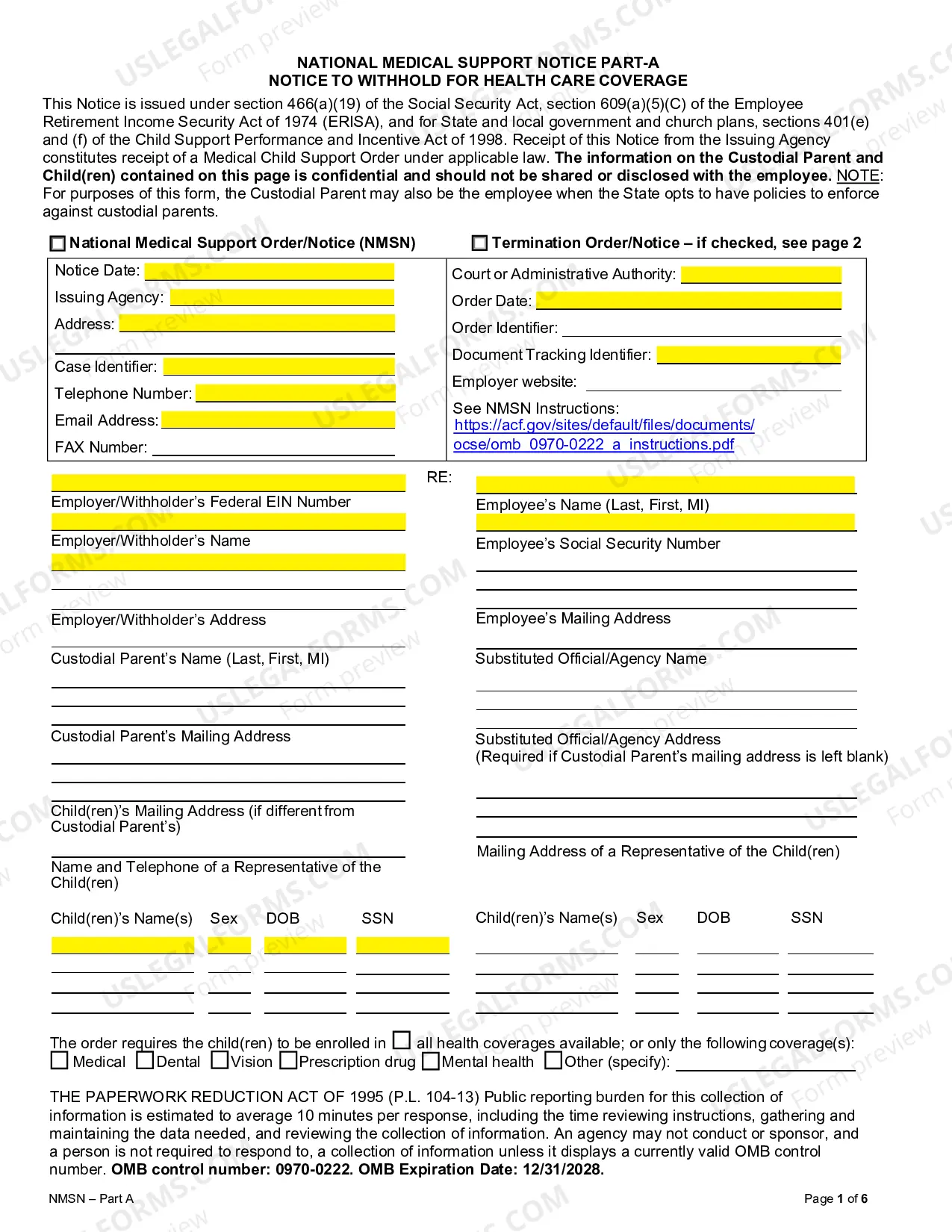
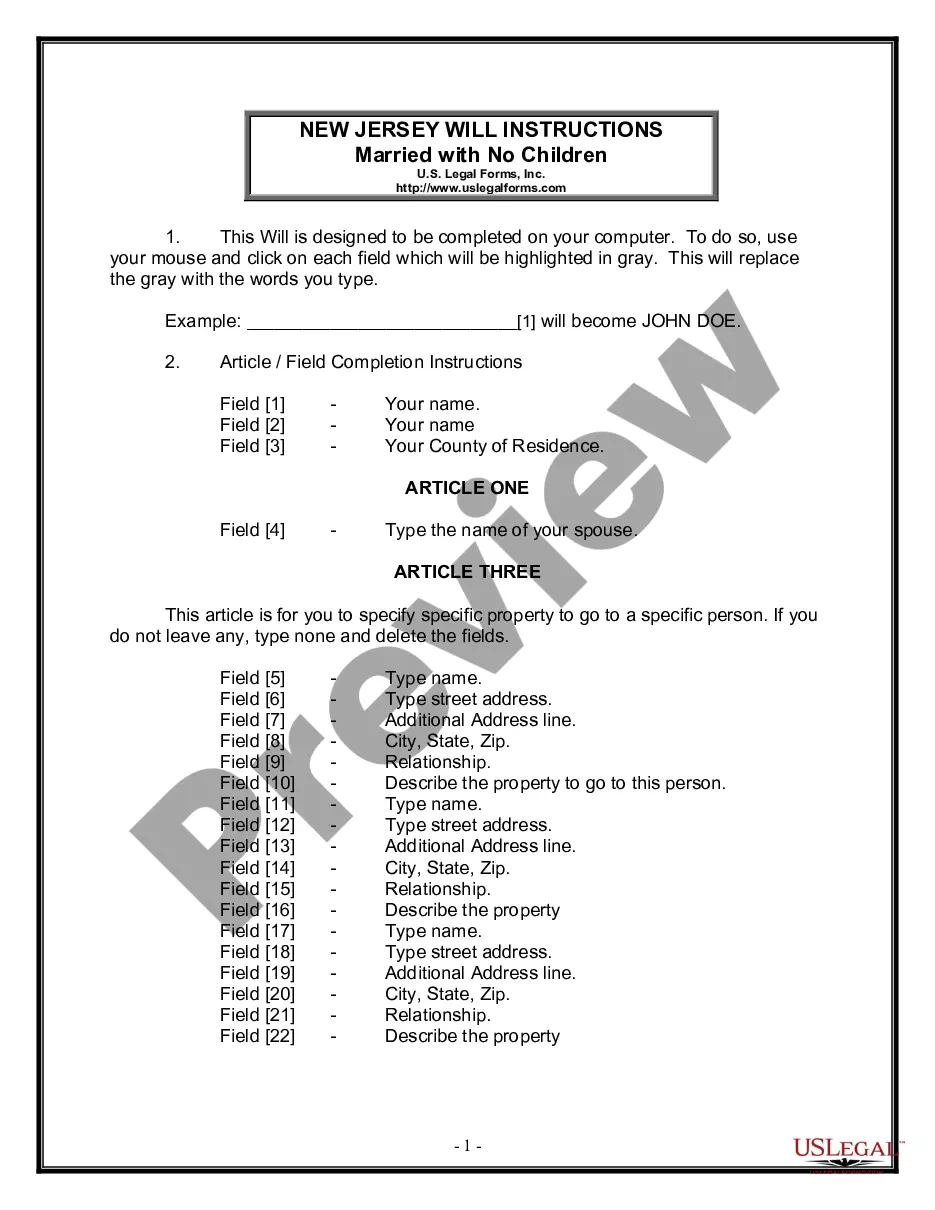
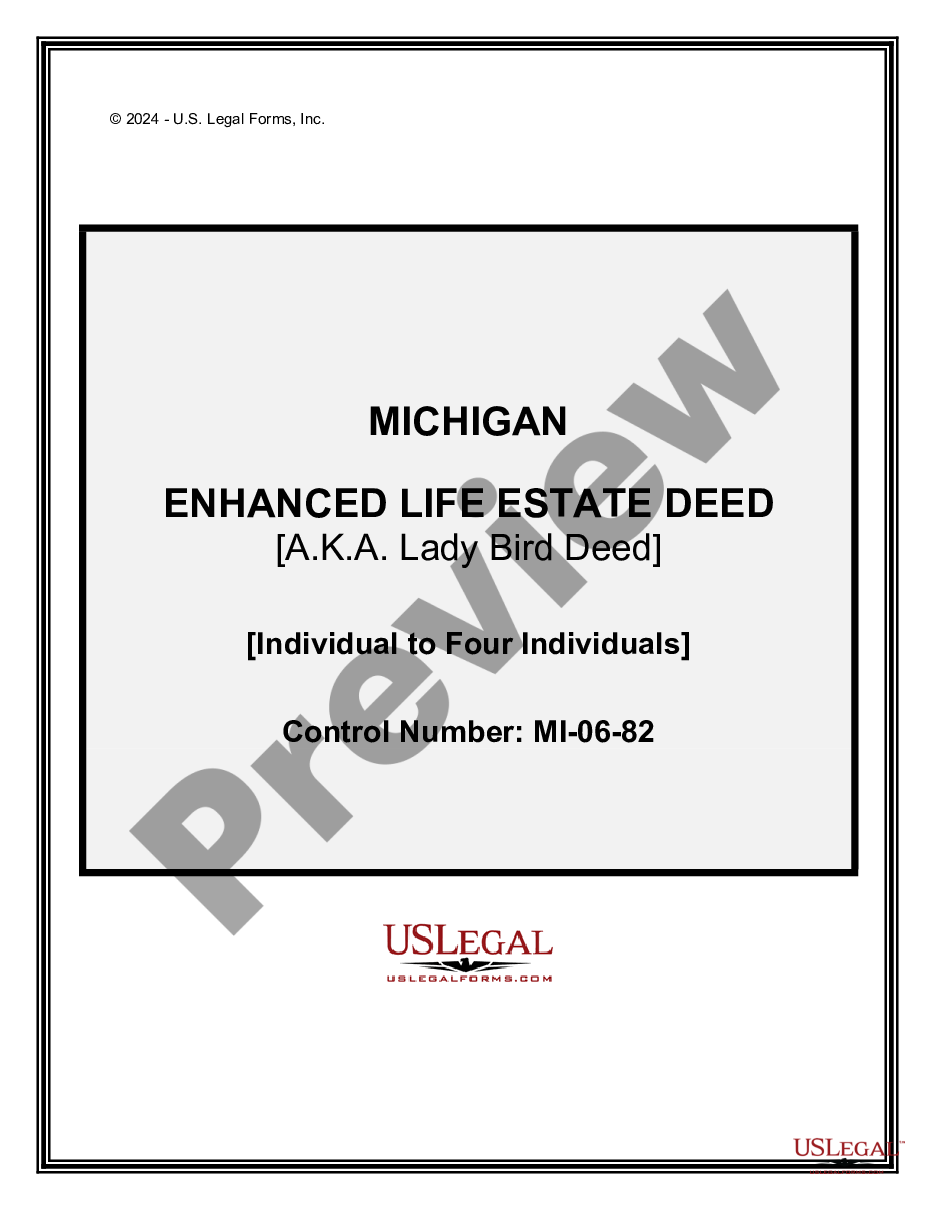
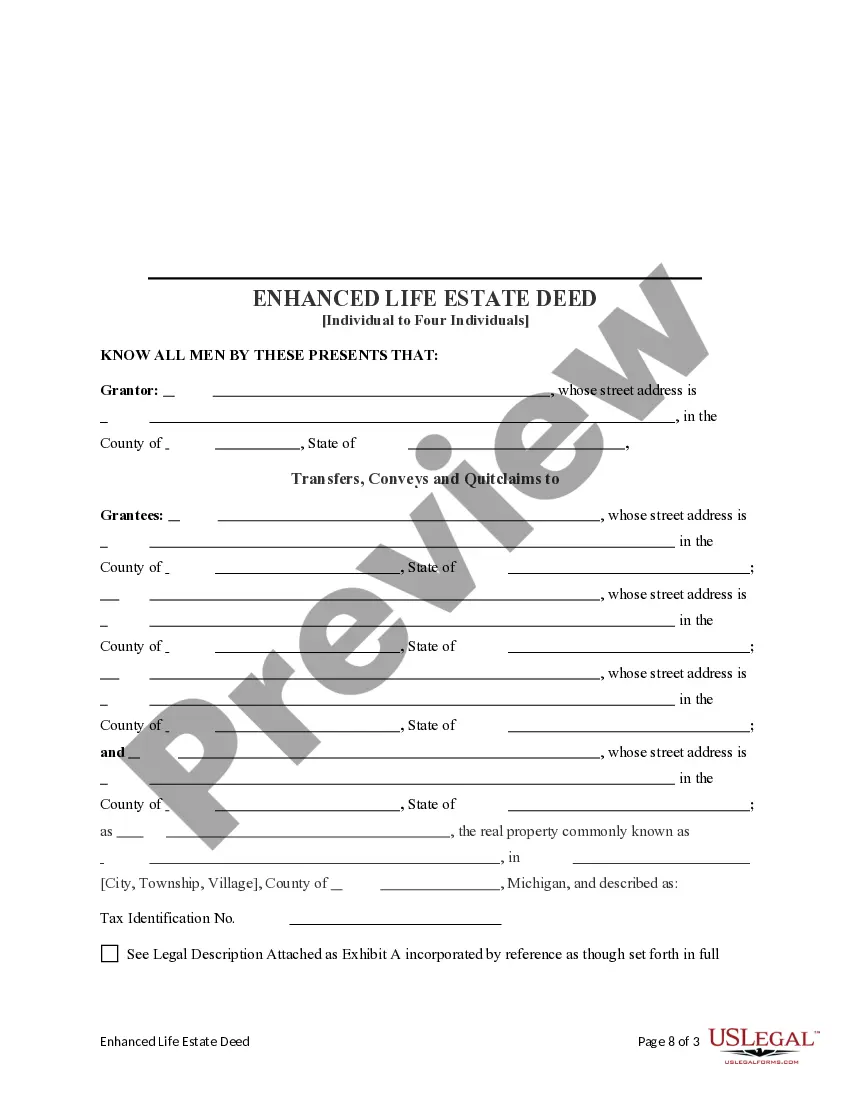
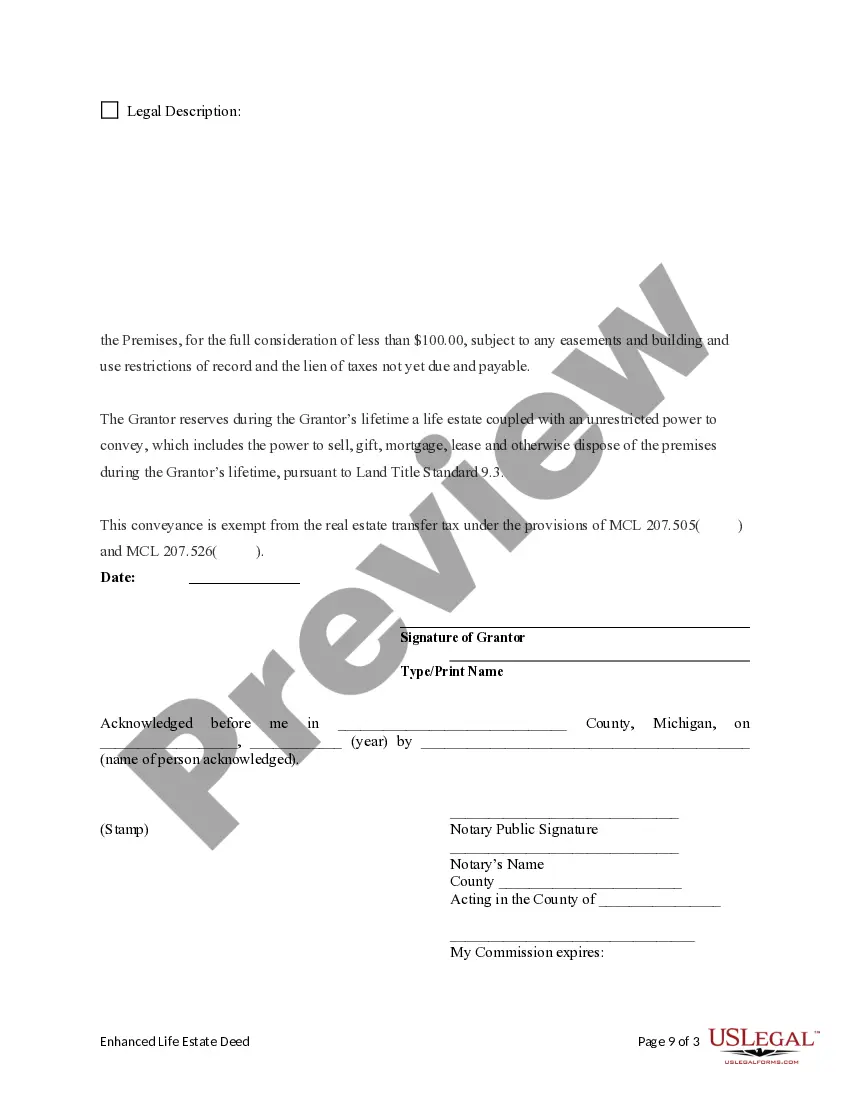
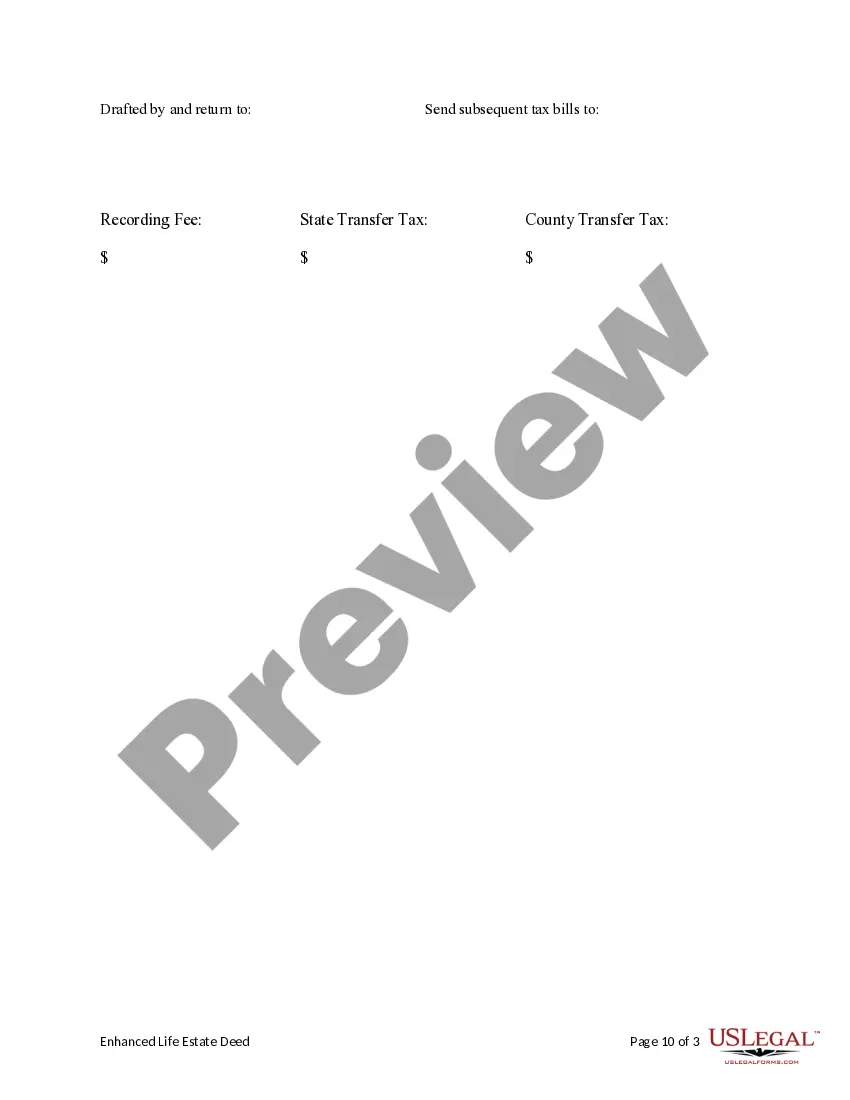
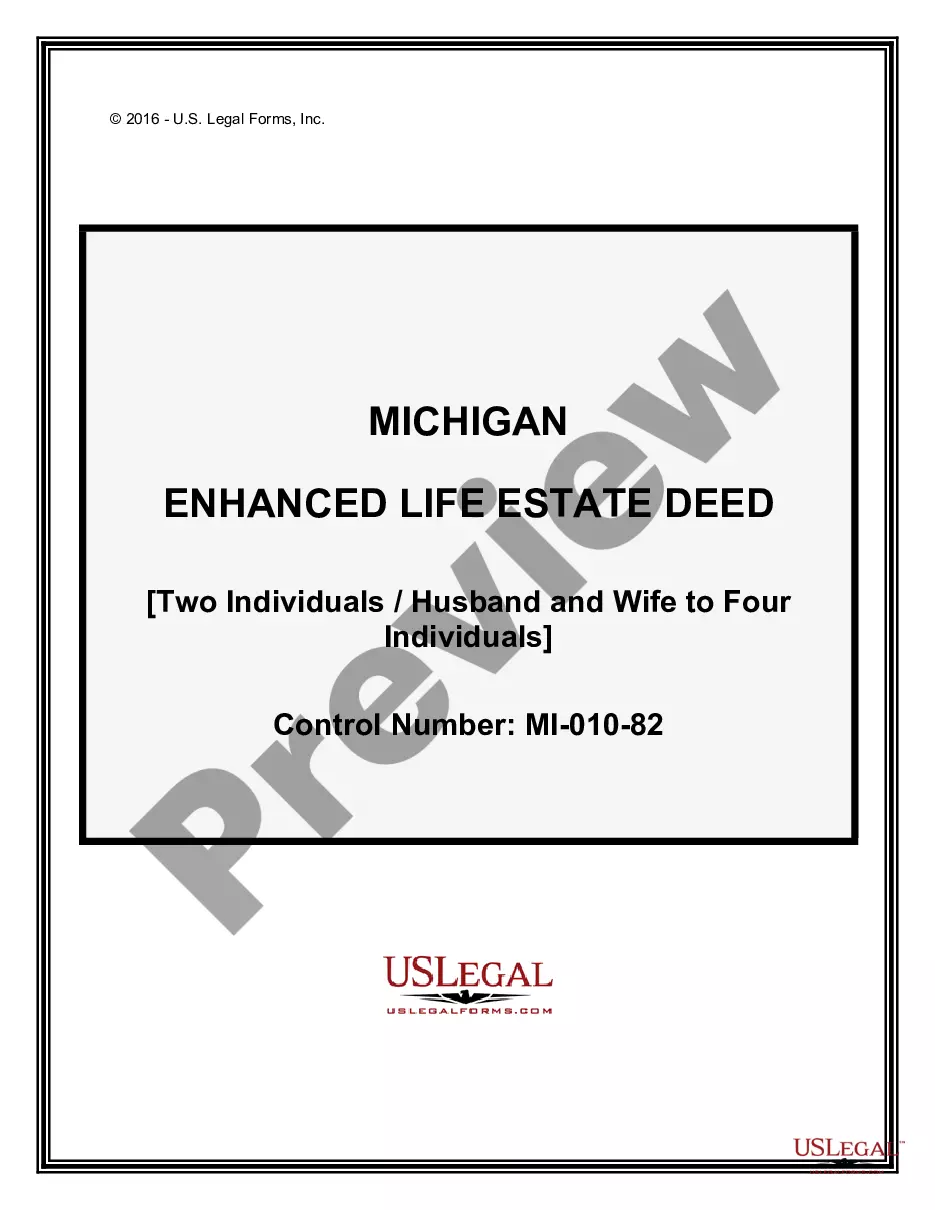
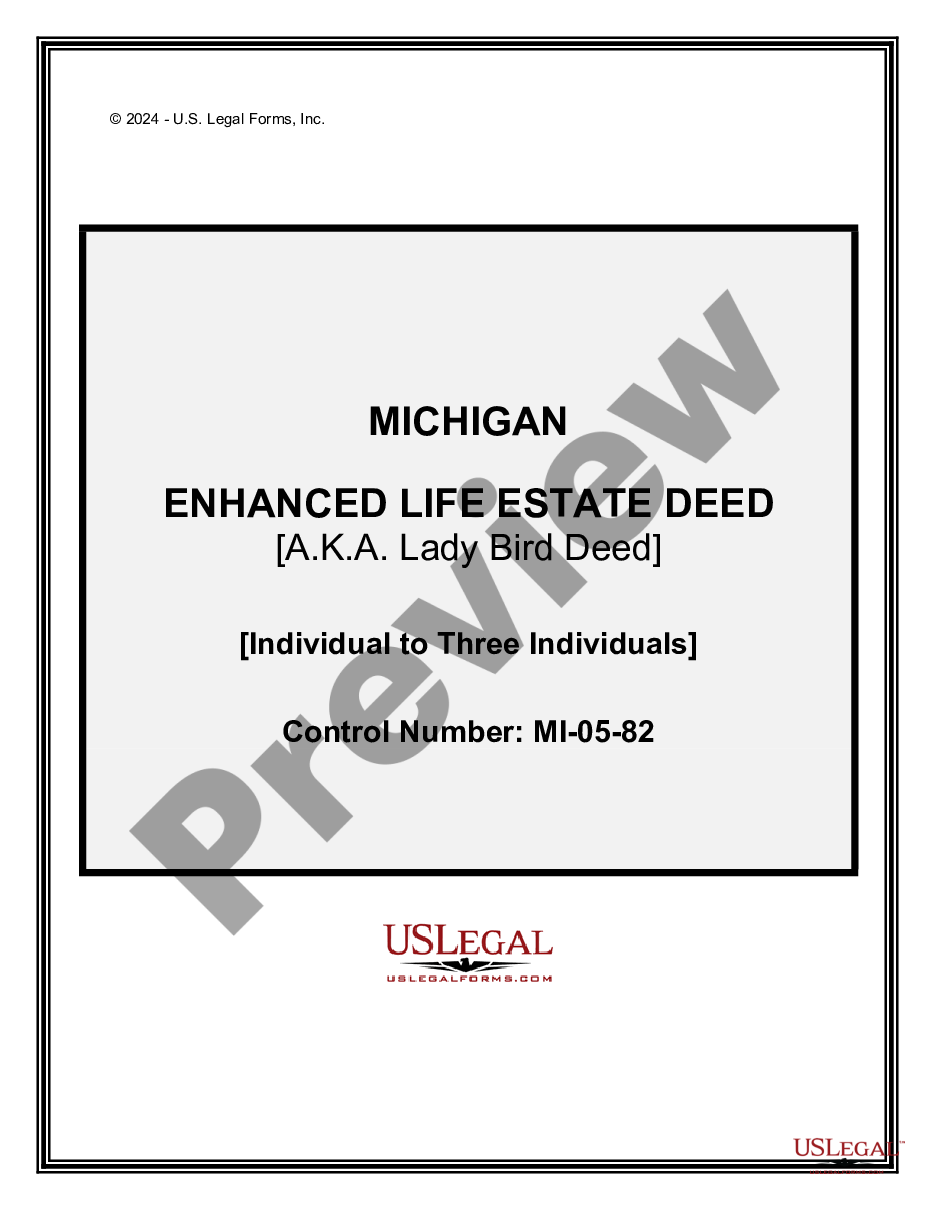
How to fill out Michigan Enhanced Life Estate Or Lady Bird Deed - Individual To Four Individuals?
It’s clear that you cannot become a legal expert instantly, nor can you determine how to swiftly create the Michigan Estate Deed Form For Deceased Person without a specialized background.
Drafting legal documents is a lengthy endeavor that necessitates specific training and skills. So why not entrust the creation of the Michigan Estate Deed Form For Deceased Person to the professionals.
With US Legal Forms, one of the most extensive legal document repositories, you can locate everything from court papers to templates for internal corporate communication. We recognize how vital compliance and adherence to federal and state regulations are.
Sign up for a free account and choose a subscription plan to acquire the form.
Select Buy now. Once the payment is completed, you can download the Michigan Estate Deed Form For Deceased Person, complete it, print it, and send or mail it to the designated individuals or entities.
- That’s why, on our platform, all templates are location-specific and current.
- Here’s get started with our website and obtain the document you need in just minutes.
- Find the document you seek using the search bar at the top of the page.
- Preview it (if this option is available) and review the accompanying description to ascertain whether the Michigan Estate Deed Form For Deceased Person is what you’re looking for.
- Start your search again if you require a different template.
Form popularity
FAQ
In Michigan, real estate can be transferred via a TOD deed, also known as a beneficiary deed. This deed allows a property owner to designate a beneficiary who will automatically inherit the property upon the owner's death, avoiding probate.
Michigan is one of the more than twenty-five states that now allow the use of TOD deeds, and more states are considering adopting laws that allow them. You do not have to actually live in a state that allows TOD deeds to be able to use one, but the property must be located in such a state.
Sign and date the quitclaim deed in a notary's presence, then file it with the County Register of Deeds Office in the property's county, not the county where you live. Once the deed is filed and recorded, the transfer is deemed legal.
As part of the affidavit, the person filling out the paperwork, known as ?the affiant,? must provide certain information, including the deceased person's personal information, date of death, and a list of the deceased's property and debts. This document must be signed under oath, so honesty is paramount.
How do I add someone to my deed? You need to pick up a Quit Claim Deed form at any office supply store such as Office Max or Office Depot, or you can get one at the Register of Deeds Offices. You can also access our forms page by clicking HERE.