Grandparents Rights For Custody
Description
Get your form ready online
Our built-in tools help you complete, sign, share, and store your documents in one place.
Make edits, fill in missing information, and update formatting in US Legal Forms—just like you would in MS Word.
Download a copy, print it, send it by email, or mail it via USPS—whatever works best for your next step.
Sign and collect signatures with our SignNow integration. Send to multiple recipients, set reminders, and more. Go Premium to unlock E-Sign.
If this form requires notarization, complete it online through a secure video call—no need to meet a notary in person or wait for an appointment.
We protect your documents and personal data by following strict security and privacy standards.

Make edits, fill in missing information, and update formatting in US Legal Forms—just like you would in MS Word.

Download a copy, print it, send it by email, or mail it via USPS—whatever works best for your next step.

Sign and collect signatures with our SignNow integration. Send to multiple recipients, set reminders, and more. Go Premium to unlock E-Sign.

If this form requires notarization, complete it online through a secure video call—no need to meet a notary in person or wait for an appointment.

We protect your documents and personal data by following strict security and privacy standards.
Looking for another form?

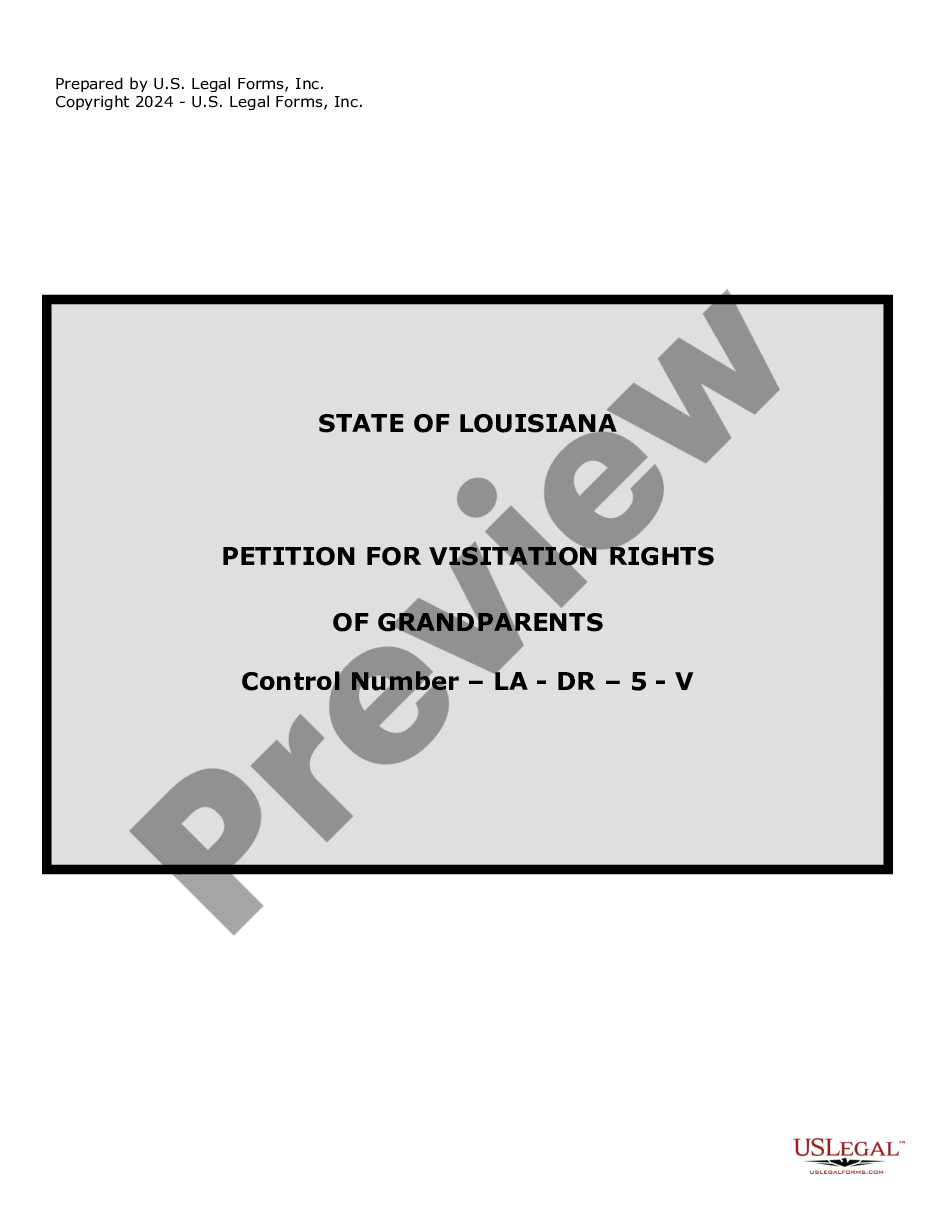
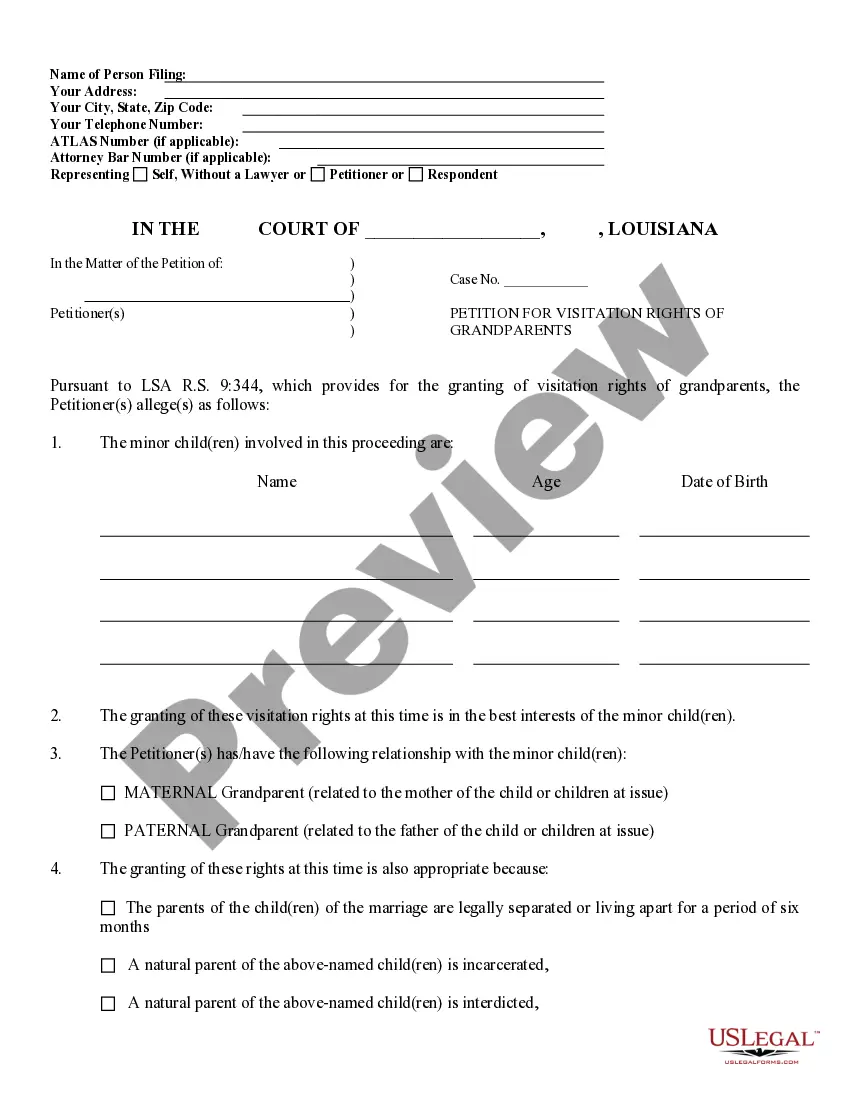
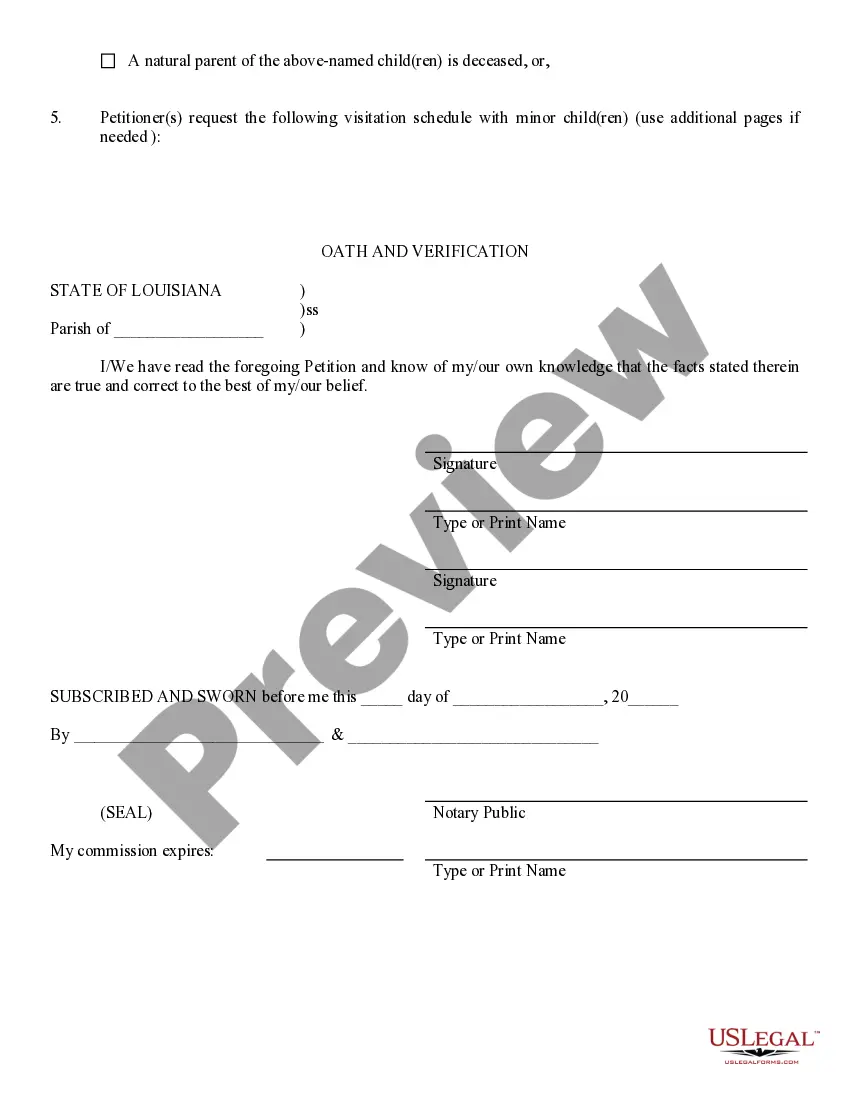
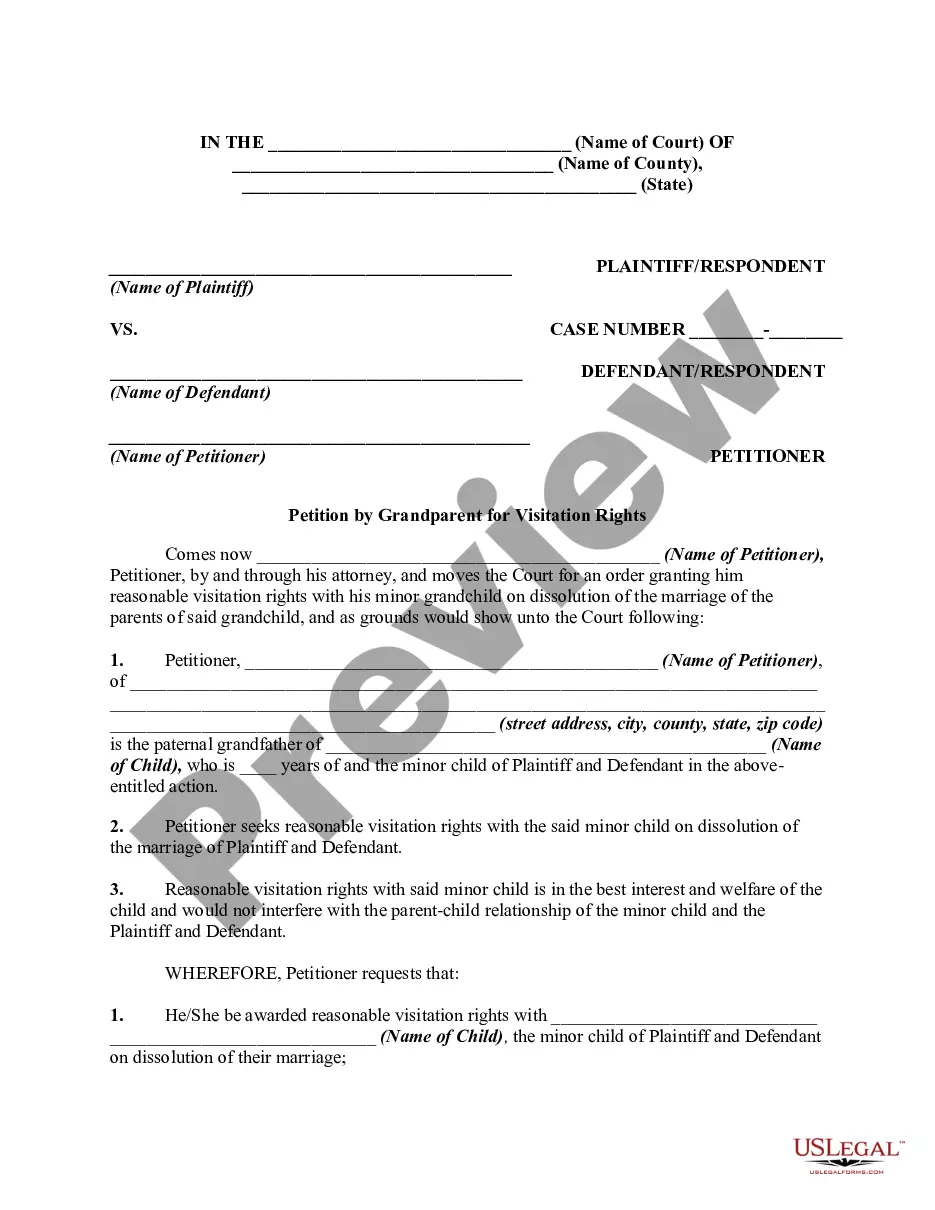
How to fill out Louisiana Petition For Visitation Rights Of Grandparents?
- First, login to your US Legal Forms account if you are a returning user. Ensure your subscription is active to download necessary templates quickly.
- If you are new to the service, start by exploring the Preview mode for the form you need. Verify it aligns with your jurisdiction's laws.
- In case you need another document, utilize the Search feature to locate a more appropriate template that fits your requirements.
- Select your desired form and click on the Buy Now button to initiate the purchasing process. Choose a subscription plan that suits your needs.
- Complete your purchase by entering your payment details, whether through credit card or PayPal.
- Finally, download your form directly to your device and access it anytime via the My Forms section in your profile.
By following these steps, you can conveniently obtain the necessary legal documents to assert grandparents' rights for custody, ensuring you are prepared for any related legal proceedings.
Start exploring US Legal Forms today to streamline your legal document needs and empower your custodial journey!
Form popularity
FAQ
Grandparent alienation may manifest through reluctance from grandchildren to engage, negative remarks about grandparents, or avoidance of family gatherings. These signs indicate a breakdown in communication and relationship. Recognizing these signs early is essential in addressing the issue effectively. Grandparents can start the resolution process by understanding their rights and seeking assistance through platforms like US Legal Forms to explore their options.
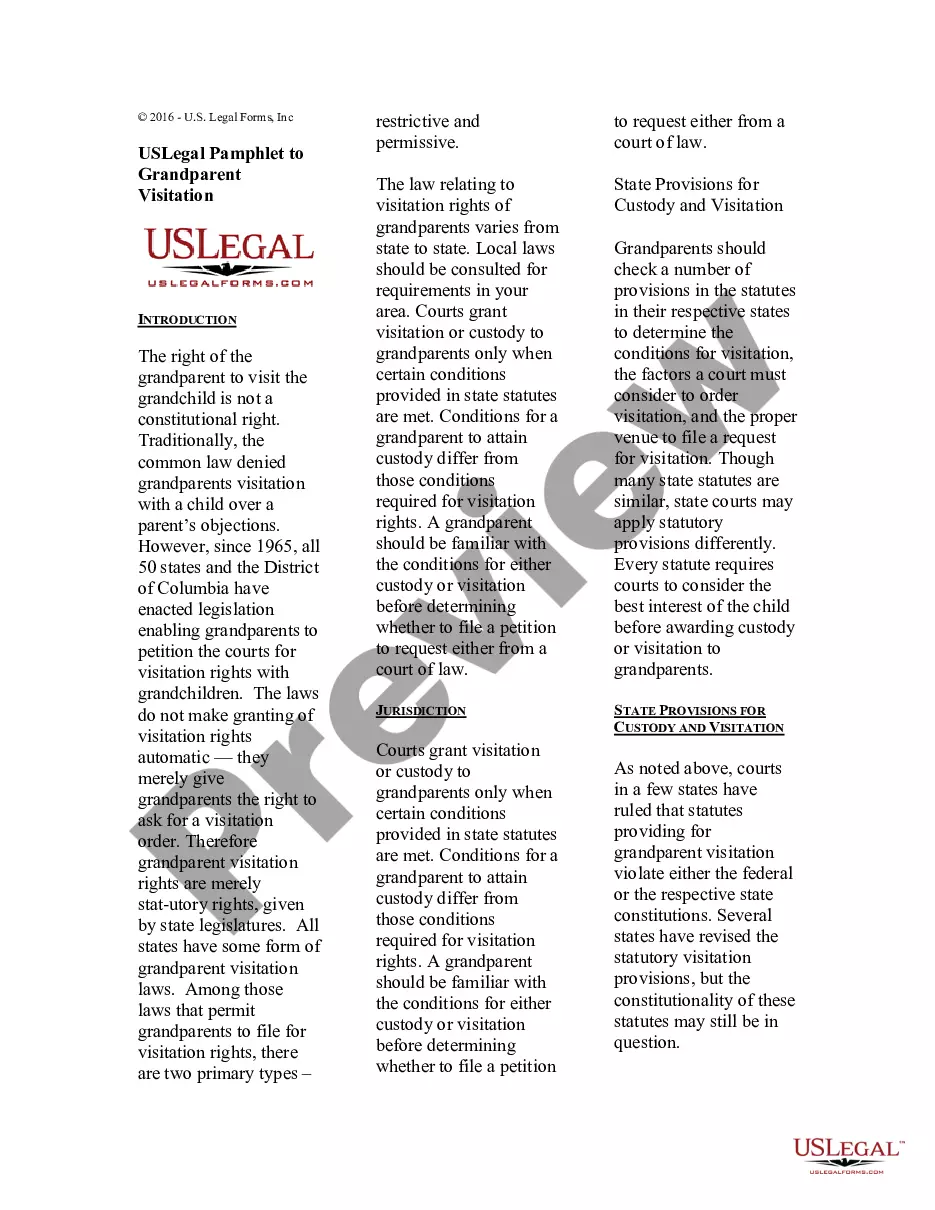
Several states in the U.S. have laws that grant specific rights to grandparents seeking custody or visitation. States like California, New York, and Texas provide avenues for grandparents to maintain relationships with their grandchildren. It's imperative for grandparents to research their state's specific laws regarding grandparents rights for custody, as each state has unique provisions. Resources such as US Legal Forms can facilitate this research.
In Virginia, grandparents have specific rights that can help secure visitation with their grandchildren under certain circumstances. Generally, these rights come into play when a parental relationship changes or if the child's well-being is at stake. It’s crucial to understand that grandparents rights for custody can vary case by case, and it's advisable to seek legal counsel for tailored advice.
When parents restrict access to grandchildren, it can lead to difficult family dynamics. In such situations, it's important for grandparents to express their desire for a relationship openly and respectfully. If those attempts fail, they might want to explore grandparents rights for custody within their state. Legal assistance from services like US Legal Forms can clarify your rights and the steps to take.
As a parent, you have discretion over your child's visitors, including their grandparents. However, it is beneficial to consider the emotional bond and the advantages of family relationships. If you have reservations, discussing these with your parents can help establish boundaries while still fostering connections. Understanding grandparents rights for custody can also shed light on what the law entitles you and your parents.
When you find yourself unable to see your grandchildren, start by discussing your concerns with the parents. Open communication can help bridge gaps and clarify intentions. If things do not improve, consider exploring your options under grandparents rights for custody laws in your state. Consulting with a legal expert, such as those available on the US Legal Forms platform, can provide guidance and support.
Obtaining grandparents' rights can be difficult, particularly if the parents oppose it. Courts evaluate the circumstances to decide what is best for the child. Familiarizing yourself with the process and associated laws can increase your chances of success; resources like USLegalForms are available to assist you through this journey.
Yes, you can pursue legal action if your son is preventing you from seeing your grandchildren. However, this route can be complex and may lead to strained family relations. Legal support can help clarify your grandparents' rights for custody and establish a case that focuses on the best interests of the children.
In Illinois, grandparents do have legal rights regarding visitation. If the parents are divorced, separated, or unfit, you can petition the court for visitation rights. Knowledge of grandparents' rights for custody can empower you to take action and ensure that your relationship with your grandchildren is protected.
If you are not allowed to see your grandchildren, it's important to seek legal advice to explore your rights. You may have options under the law to request visitation through the courts. Engaging in open dialogue with the parents may also help, but securing your rights often requires understanding grandparents' rights for custody.