Joint Custody In Louisiana With Final Decision Making Authority
Description
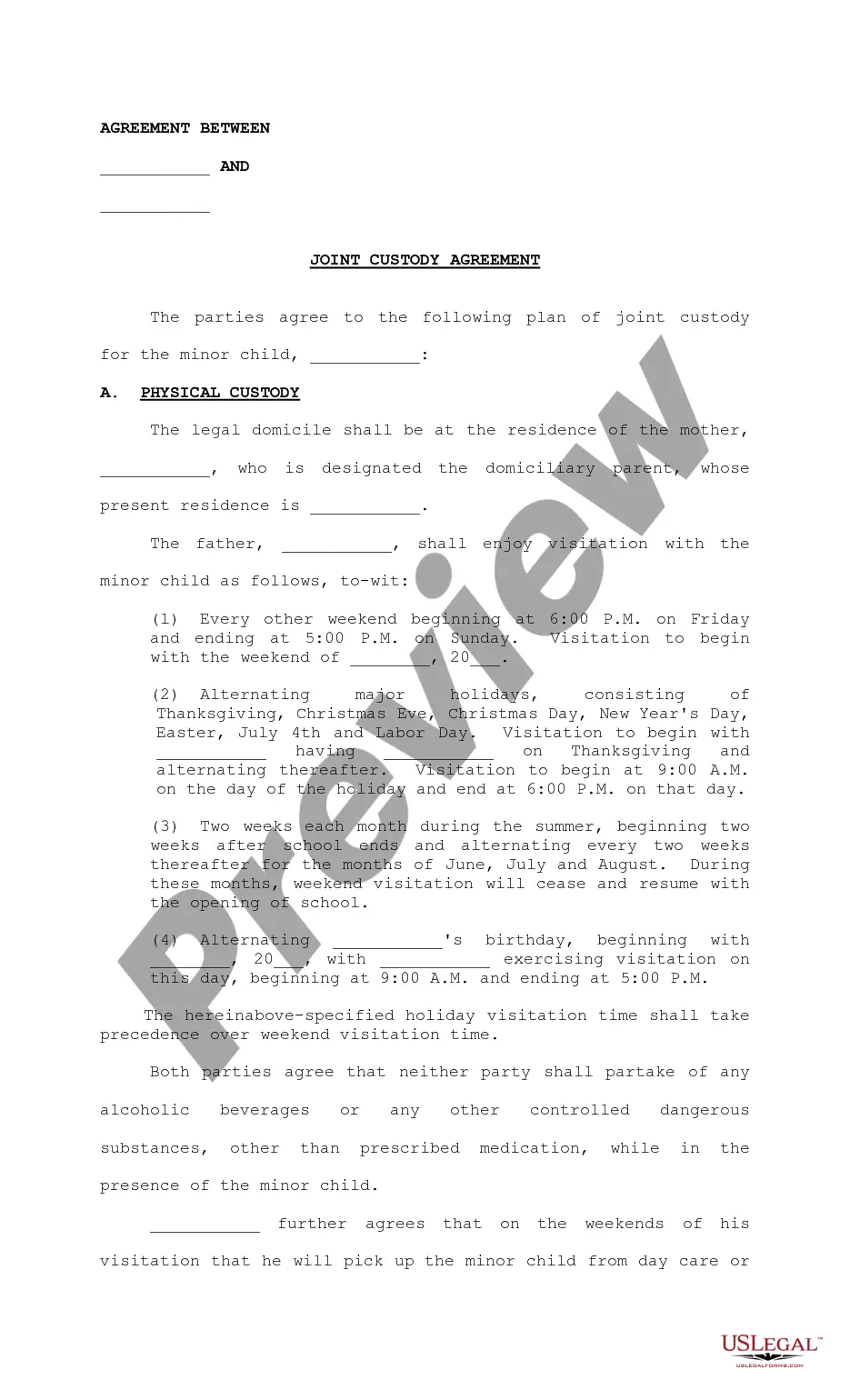
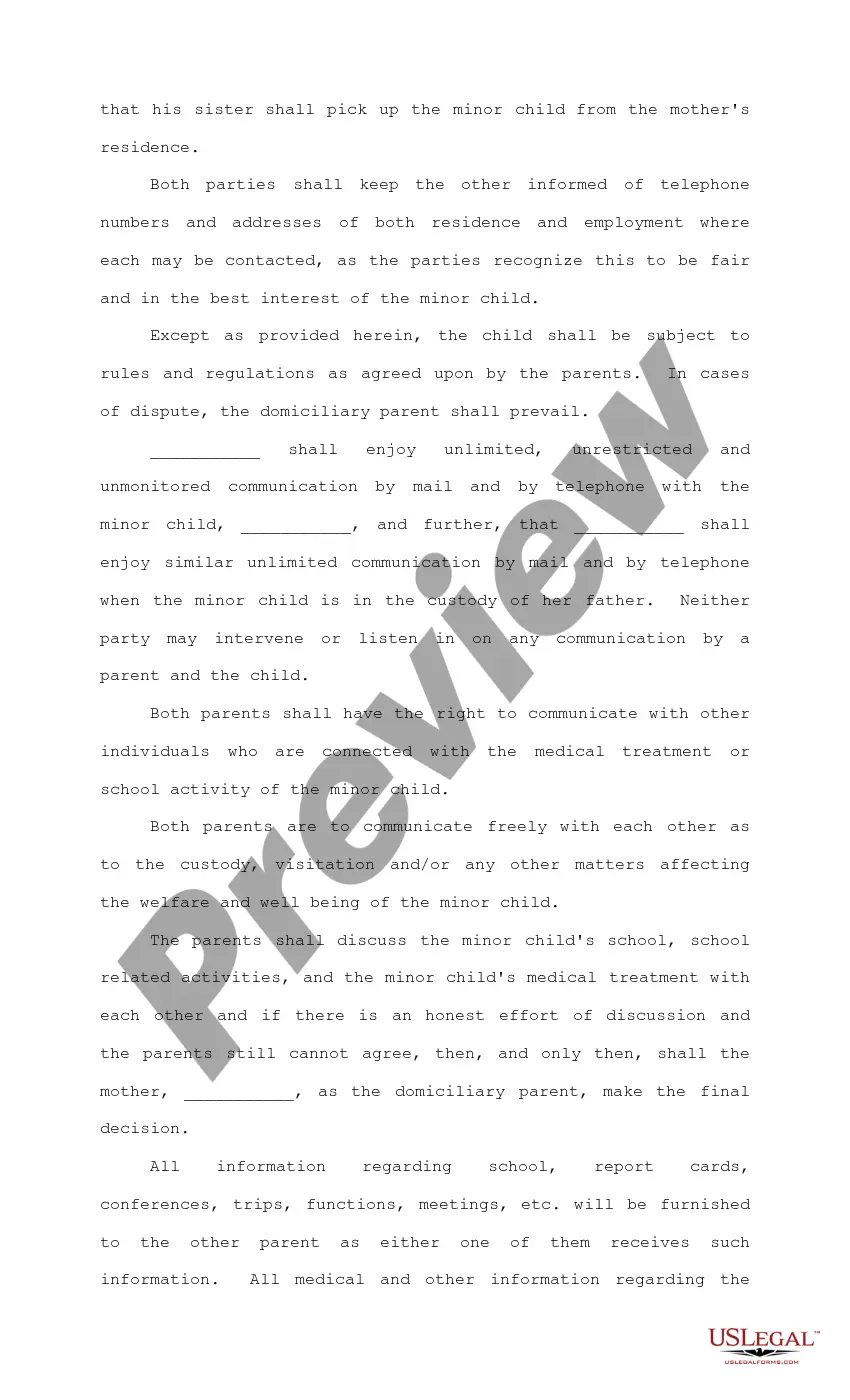
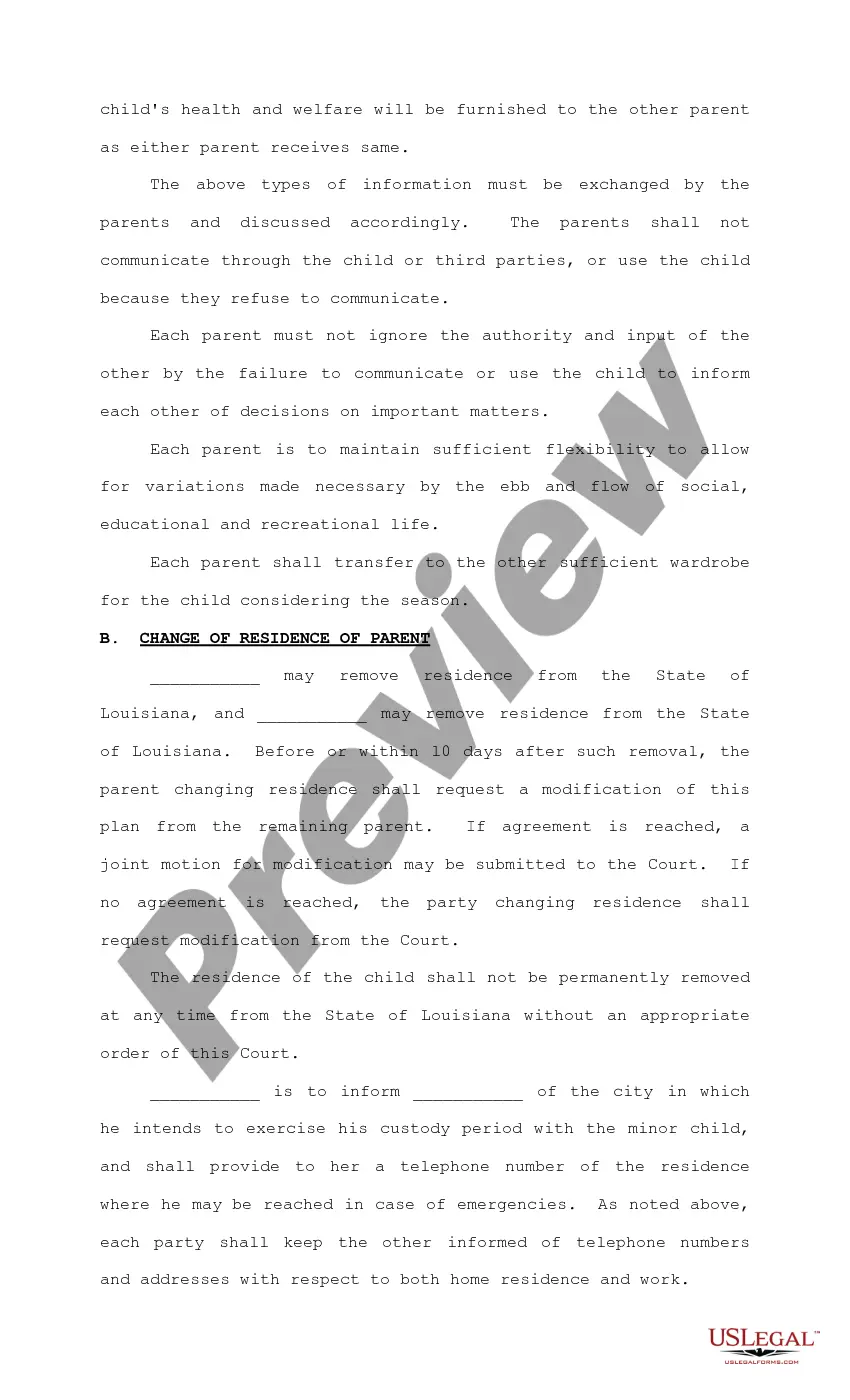
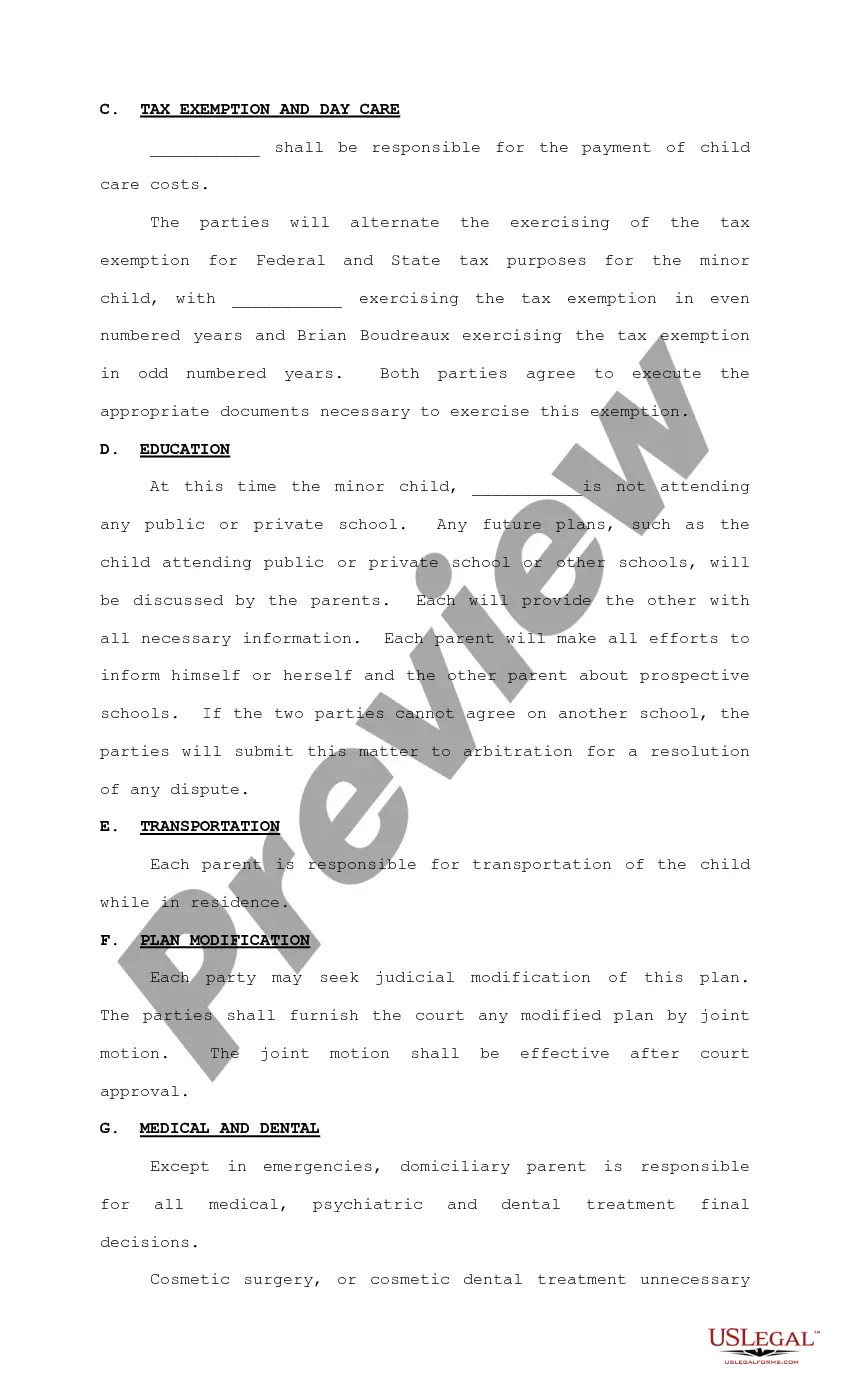
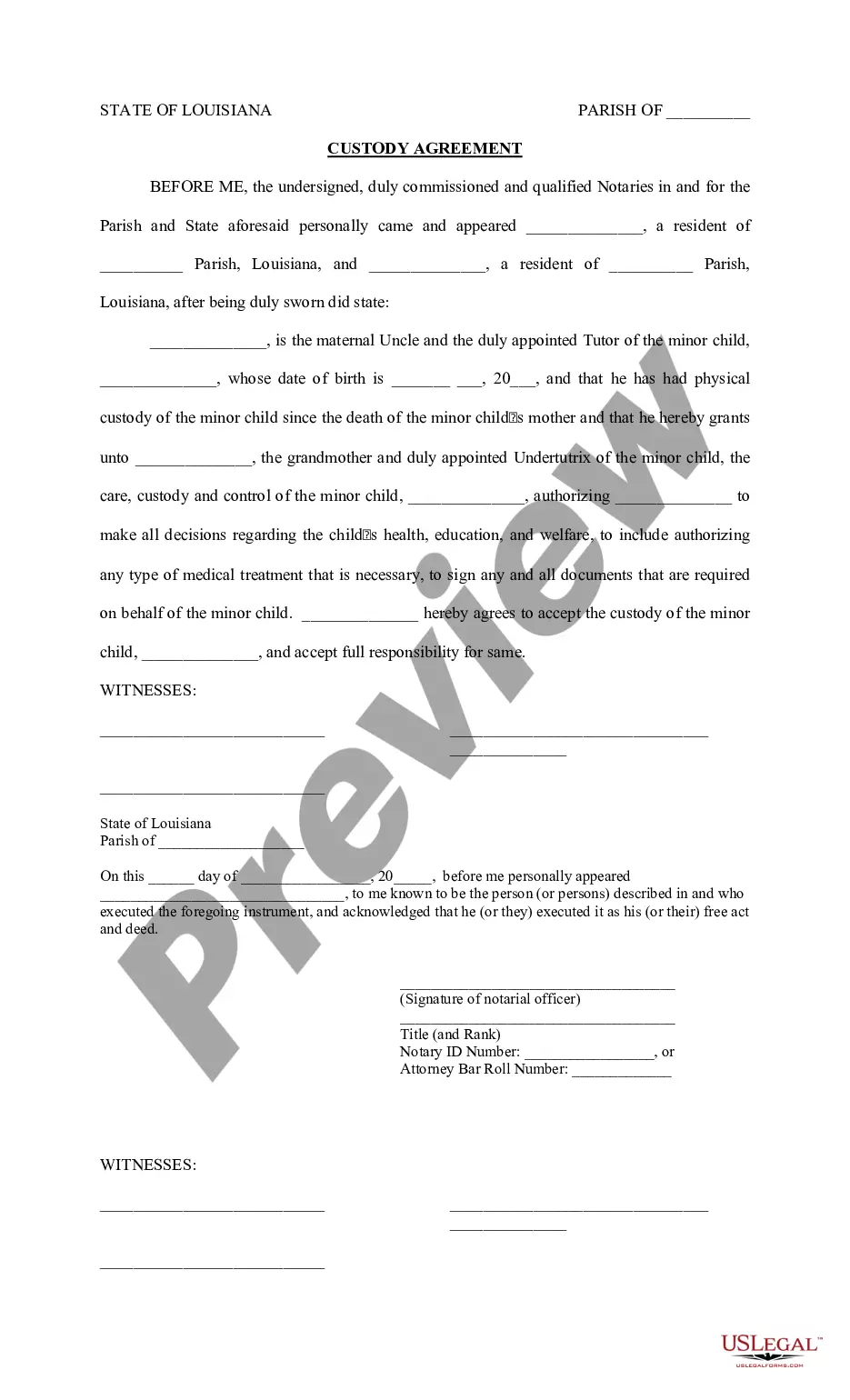
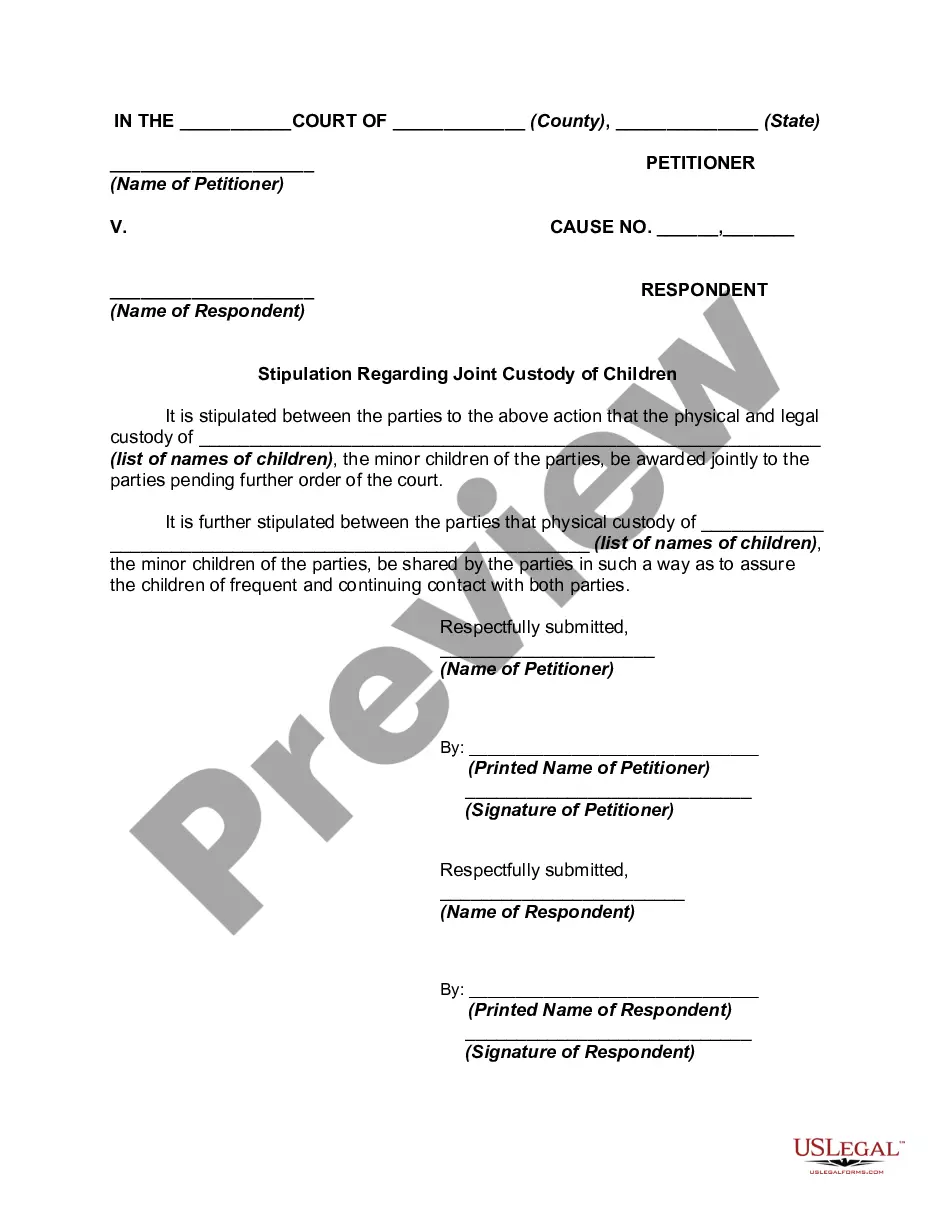
Get your form ready online
Our built-in tools help you complete, sign, share, and store your documents in one place.
Make edits, fill in missing information, and update formatting in US Legal Forms—just like you would in MS Word.
Download a copy, print it, send it by email, or mail it via USPS—whatever works best for your next step.
Sign and collect signatures with our SignNow integration. Send to multiple recipients, set reminders, and more. Go Premium to unlock E-Sign.
If this form requires notarization, complete it online through a secure video call—no need to meet a notary in person or wait for an appointment.
We protect your documents and personal data by following strict security and privacy standards.

Make edits, fill in missing information, and update formatting in US Legal Forms—just like you would in MS Word.

Download a copy, print it, send it by email, or mail it via USPS—whatever works best for your next step.

Sign and collect signatures with our SignNow integration. Send to multiple recipients, set reminders, and more. Go Premium to unlock E-Sign.

If this form requires notarization, complete it online through a secure video call—no need to meet a notary in person or wait for an appointment.

We protect your documents and personal data by following strict security and privacy standards.
Looking for another form?
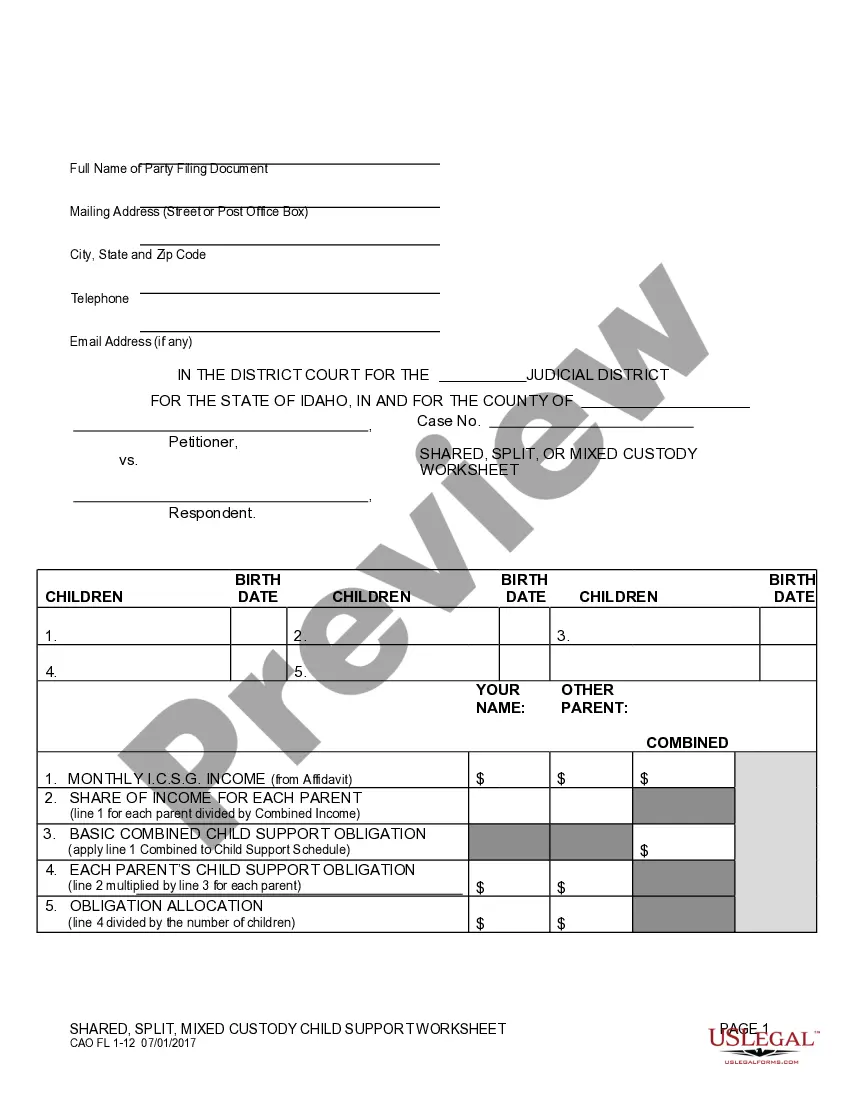
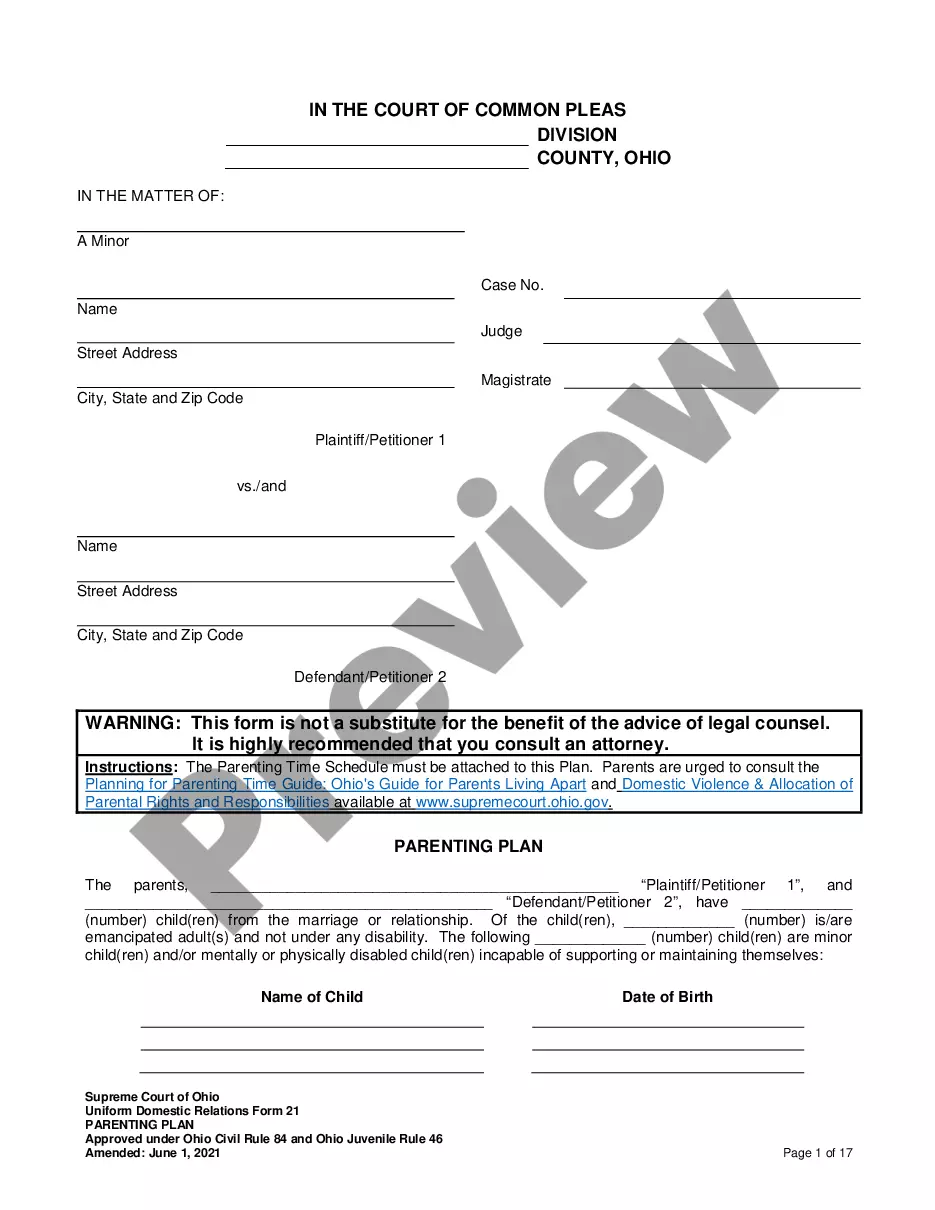
How to fill out Louisiana Joint Custody Agreement?
Whether for commercial reasons or personal affairs, everyone must confront legal issues at some point in their life.
Filling out legal documents requires meticulous focus, beginning with selecting the appropriate form example. For example, if you choose an incorrect version of the Joint Custody In Louisiana With Final Decision Making Authority, it will be rejected once you submit it. Thus, it is vital to obtain a reliable source of legal forms like US Legal Forms.
With a comprehensive US Legal Forms library available, you no longer need to waste time searching for the appropriate template online. Utilize the library’s user-friendly navigation to find the right template for any event.
- Locate the template you require by using the search bar or catalog browsing.
- Examine the form’s description to confirm it suits your circumstances, state, and county.
- Click on the form’s preview to view it.
- If it is the wrong document, return to the search feature to find the Joint Custody In Louisiana With Final Decision Making Authority sample you need.
- Download the template once it corresponds with your requirements.
- If you have a US Legal Forms account, simply click Log in to access previously saved documents in My documents.
- If you don’t have an account yet, you can acquire the form by clicking Buy now.
- Select the appropriate pricing option.
- Fill out the profile registration form.
- Choose your payment method: use a credit card or PayPal account.
- Select the document format you prefer and download the Joint Custody In Louisiana With Final Decision Making Authority.
- Once it is downloaded, you can complete the form using editing software or print it and finalize it manually.
Form popularity
FAQ
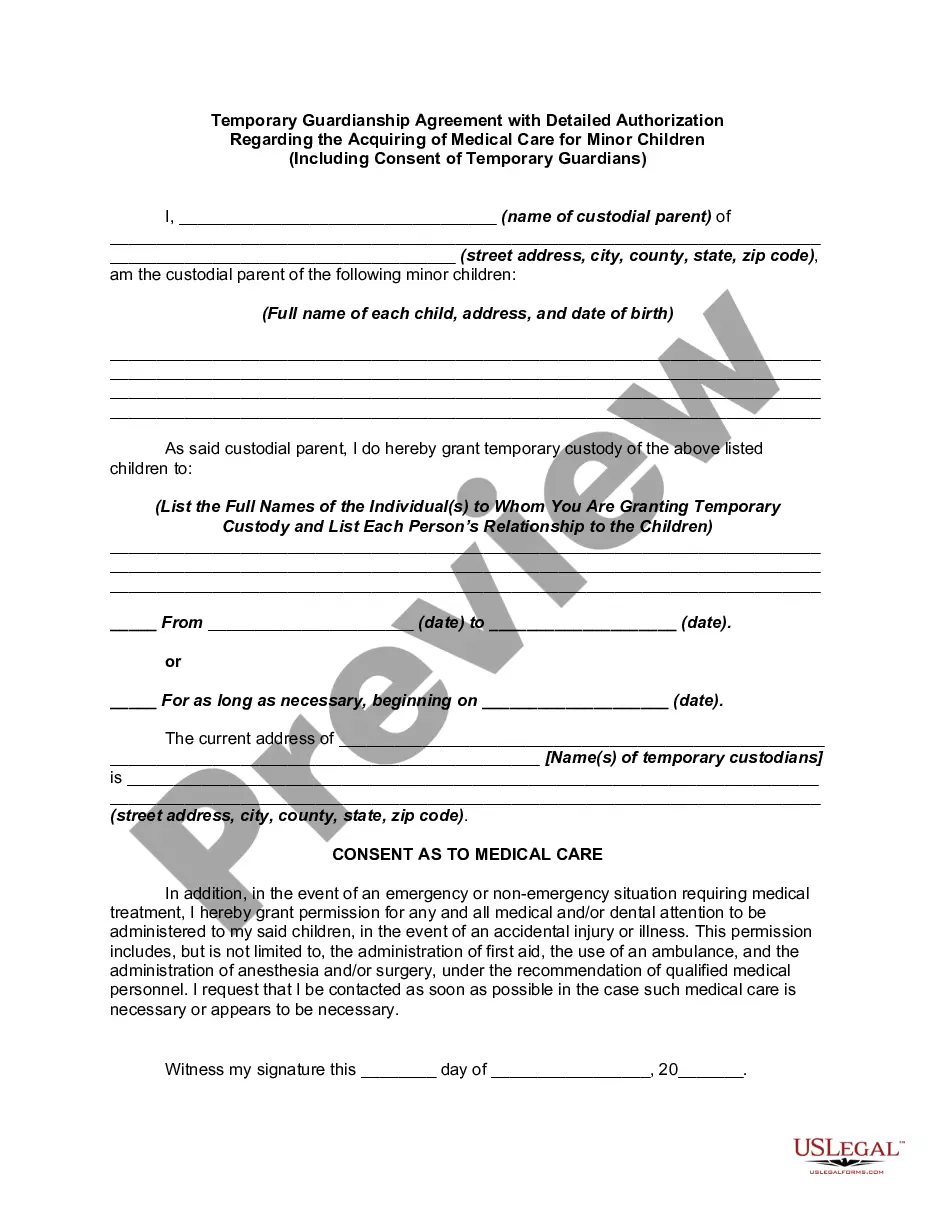
Joint custody with final say means that both parents share custody responsibilities, but one parent has the authority to make final decisions on specific matters. This arrangement promotes collaboration while ensuring that important choices can be made efficiently. Knowing how joint custody in Louisiana with final decision-making authority works can empower you to navigate parenting effectively.
As the primary parent, you have the right to make important decisions about your child's upbringing, including education and healthcare. You also have the right to determine where your child will live and how time is shared with the other parent. Understanding your rights in joint custody in Louisiana with final decision-making authority helps ensure that you can act in your child's best interests.
Behaviors such as failing to support the child's relationship with the other parent, engaging in substance abuse, or demonstrating instability can negatively impact a custody case. Courts assess each parent's ability to provide a nurturing environment. By focusing on maintaining a positive relationship and adhering to joint custody in Louisiana with final decision-making authority, you can enhance your standing in court.
As a primary parent with final decision-making authority, you can typically make crucial decisions regarding education, healthcare, religion, and extracurricular activities. This authority enables you to guide your child's development and well-being effectively. Understanding your rights within joint custody in Louisiana with final decision-making authority is vital for ensuring your child's needs are met.
In Louisiana, joint custody means both parents share legal and physical custody of their children. This arrangement allows both parents to be involved in important decisions regarding their children's lives. With joint custody in Louisiana with final decision-making authority, one parent may have the ultimate say on certain matters, ensuring that decisions align with the child's best interests.
One of the biggest mistakes in a custody battle is failing to prioritize the best interests of the child. Focusing on winning the case instead of fostering a cooperative environment can harm relationships and affect custody outcomes. In joint custody in Louisiana with final decision-making authority, it's essential to communicate openly and collaboratively for the sake of the child.
The 7 7 7 rule of parenting refers to a structured schedule where children spend seven days with one parent, then switch to another parent for the next seven days. This approach promotes stability and allows children to maintain strong relationships with both parents. In the context of joint custody in Louisiana with final decision-making authority, this rule can help parents manage their time effectively while adhering to a custody arrangement.