Employment Employee Personnel Without
Description
Get your form ready online
Our built-in tools help you complete, sign, share, and store your documents in one place.
Make edits, fill in missing information, and update formatting in US Legal Forms—just like you would in MS Word.
Download a copy, print it, send it by email, or mail it via USPS—whatever works best for your next step.
Sign and collect signatures with our SignNow integration. Send to multiple recipients, set reminders, and more. Go Premium to unlock E-Sign.
If this form requires notarization, complete it online through a secure video call—no need to meet a notary in person or wait for an appointment.
We protect your documents and personal data by following strict security and privacy standards.

Make edits, fill in missing information, and update formatting in US Legal Forms—just like you would in MS Word.

Download a copy, print it, send it by email, or mail it via USPS—whatever works best for your next step.

Sign and collect signatures with our SignNow integration. Send to multiple recipients, set reminders, and more. Go Premium to unlock E-Sign.

If this form requires notarization, complete it online through a secure video call—no need to meet a notary in person or wait for an appointment.

We protect your documents and personal data by following strict security and privacy standards.
Looking for another form?

How to fill out Florida Employment Employee Personnel File Package?
It is clear that you cannot become a legal expert instantly, nor can you understand how to swiftly create Employment Employee Personnel Without a specialized background.
Assembling legal documents is a lengthy process that demands a specific education and expertise.
So why not entrust the creation of the Employment Employee Personnel Without to the experts.
Preview it (if this option is available) and review the accompanying description to determine if Employment Employee Personnel Without fits your needs.
If you require a different template, restart your search.
- With US Legal Forms, one of the largest legal document repositories, you can find everything from court papers to templates for internal corporate communication.
- We recognize how essential it is to comply with federal and local laws and regulations.
- That’s why all forms on our site are location-specific and current.
- To begin with our platform and obtain the form you need in just a few minutes.
- Locate the form you require by utilizing the search bar at the top of the page.
Form popularity
FAQ
Documents pertaining to someone's employment history should also be kept in their employee file. This includes: Records relating to promotion, demotion, internal job transfers, and layoffs. Pay and compensation information.
How to organize personnel files Determine which documents to store. Review company policy, federal law and state regulations to learn which documents to include in a personnel file. ... Choose a filing method. ... Format your documents. ... Learn who can access the files. ... Create a file retention policy. ... Update the files as needed.
In each employee's personnel file, include signed copies of the following: Employee handbook acknowledgments. Policy acknowledgments (such as harassment prevention policies, social media policies, etc.) Confidentiality agreements. Noncompete agreements. Relocation agreements. Other signed contracts or agreements.
Personnel files should only include items that are related to an employee's job or employment status. Examples of items that should not be included in the personnel file are: Pre-employment records (with the exception of the application and resume) Monthly attendance transaction documents.
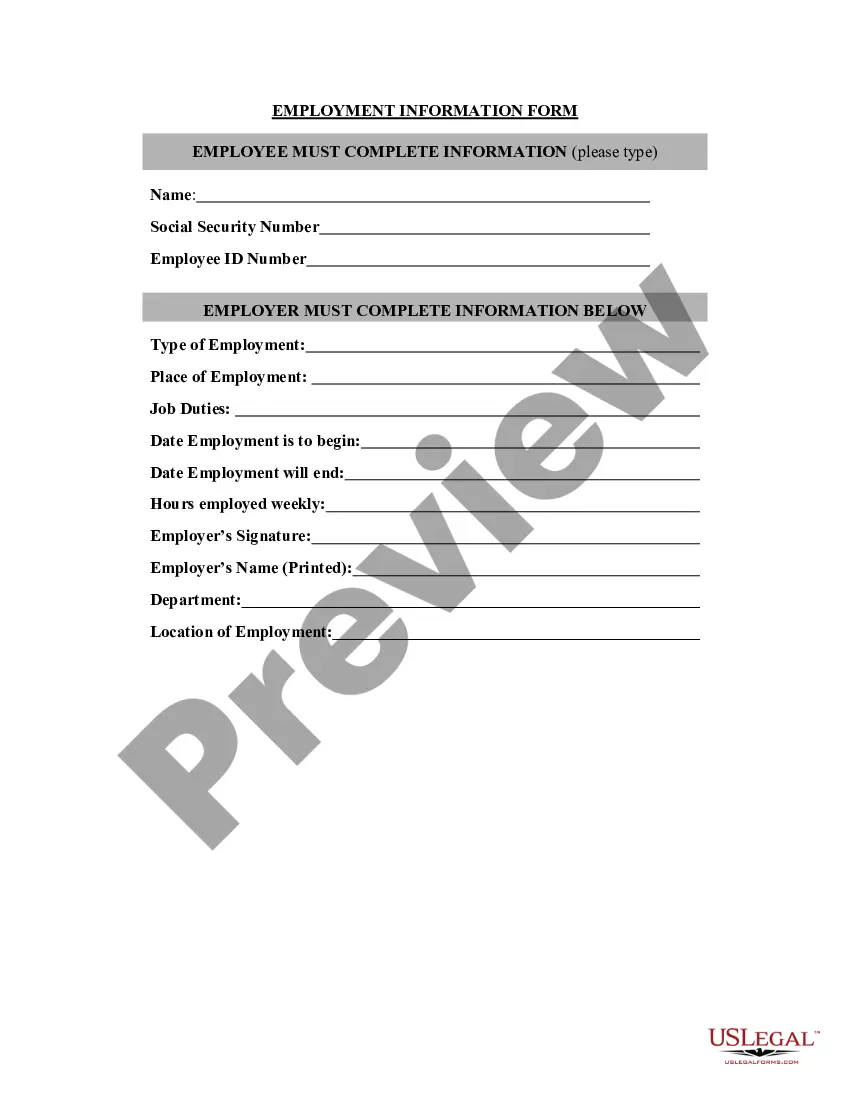
A good employee information form should be comprehensive yet straightforward. It should include: Personal Information: Full name, address, contact details, marital status, and spouse's details. Job Information: Title, department, supervisor, work location, start date, and salary.