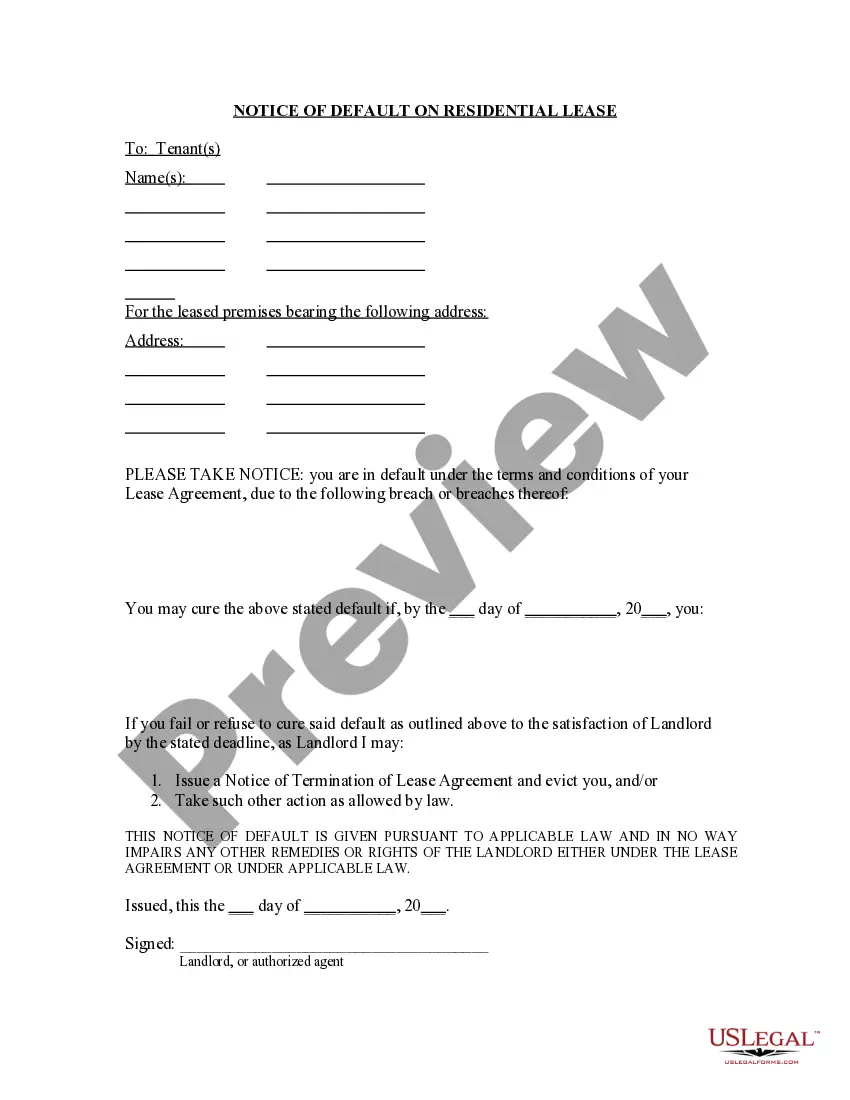
Default On Lease For 99 Years
Description


Get your form ready online
Our built-in tools help you complete, sign, share, and store your documents in one place.
Make edits, fill in missing information, and update formatting in US Legal Forms—just like you would in MS Word.
Download a copy, print it, send it by email, or mail it via USPS—whatever works best for your next step.
Sign and collect signatures with our SignNow integration. Send to multiple recipients, set reminders, and more. Go Premium to unlock E-Sign.
If this form requires notarization, complete it online through a secure video call—no need to meet a notary in person or wait for an appointment.
We protect your documents and personal data by following strict security and privacy standards.

Make edits, fill in missing information, and update formatting in US Legal Forms—just like you would in MS Word.

Download a copy, print it, send it by email, or mail it via USPS—whatever works best for your next step.

Sign and collect signatures with our SignNow integration. Send to multiple recipients, set reminders, and more. Go Premium to unlock E-Sign.

If this form requires notarization, complete it online through a secure video call—no need to meet a notary in person or wait for an appointment.

We protect your documents and personal data by following strict security and privacy standards.
Looking for another form?

How to fill out Florida Notice Of Default On Residential Lease?
Locating a preferred location to obtain the most up-to-date and suitable legal templates is a significant part of managing red tape.
Identifying the correct legal document demands precision and carefulness, which is why it is crucial to obtain samples of Default On Lease For 99 Years solely from trustworthy sources, such as US Legal Forms. An incorrect template will squander your time and prolong the predicament you are facing. With US Legal Forms, there is little to worry about. You can access and review all the details regarding the document’s applicability and relevance for your circumstance and in your state or county.
Eliminate the hassle associated with your legal paperwork. Investigate the extensive US Legal Forms catalog to locate legal templates, assess their pertinence to your case, and download them instantly.
- Utilize the library navigation or search option to find your sample.
- Examine the form’s details to determine if it meets the criteria of your state and county.
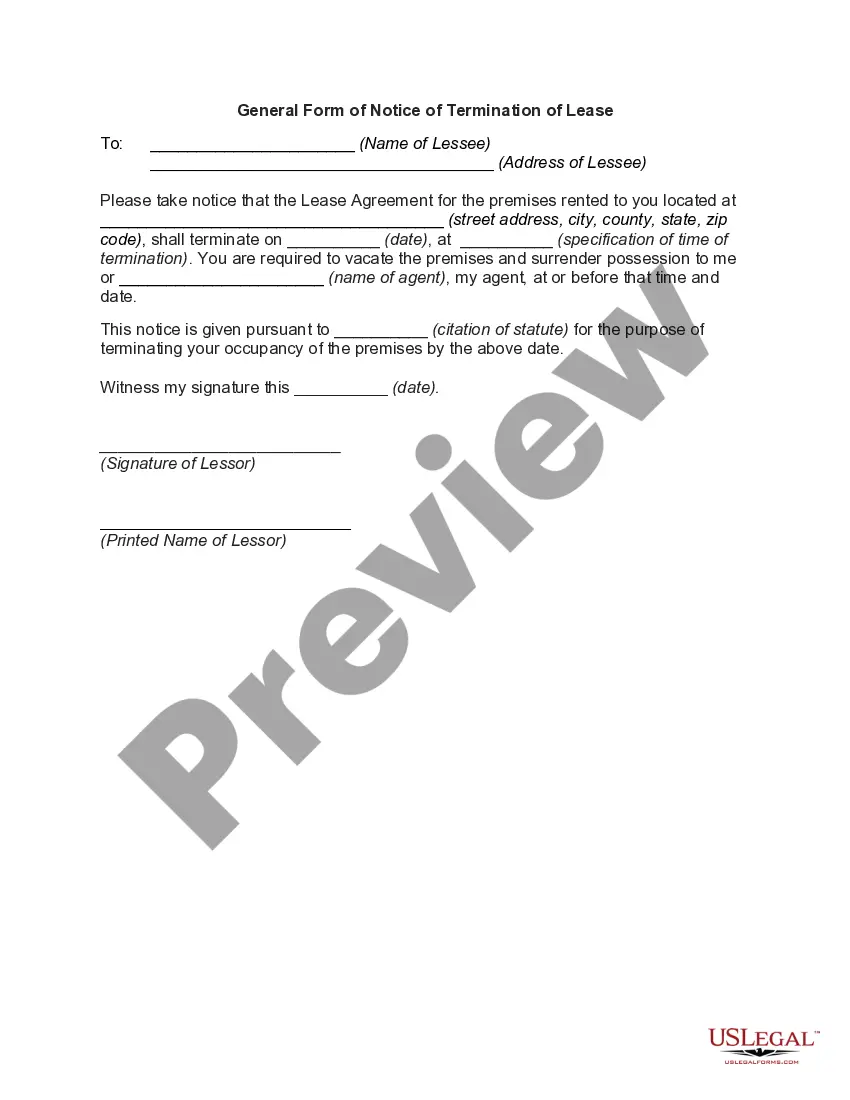
- Check the form preview, if available, to confirm the template is indeed the one you are seeking.
- Return to the search and seek for the correct template if the Default On Lease For 99 Years does not align with your specifications.
- If you are certain about the form’s relevance, download it.
- If you are a registered user, click Log in to authenticate and access your chosen templates in My documents.
- If you do not have an account yet, click Buy now to purchase the template.
- Select the pricing plan that fulfills your needs.
- Continue to the registration to complete your purchase.
- Conclude your purchase by selecting a payment method (credit card or PayPal).
- Choose the file format for downloading Default On Lease For 99 Years.
- Once you obtain the form on your device, you can modify it using the editor or print it to complete it manually.
Form popularity
FAQ
A 99-year leasehold is an arrangement where a tenant rents a property for 99 years. This type of lease offers significant time for the tenant to enjoy and use the property while also adhering to specific terms with the landowner. It is essential to understand the implications regarding default on a lease for 99 years, as it can affect your rights and responsibilities.
The courts began making most public records available online through a subscription to the XChange database in April 2011. See the Court Records web page for more information about where to find court records.
MyCase is an online system available from the Utah State Courts. You can use MyCase to: See your case history (a record of what has happened in your case) See the papers that have been filed in your case.
Free public XChange access is available at most district courthouses and may be available in some justice court locations. Contact the district or justice court to verify public XChange access. Free public XChange access is also available at the Utah State Law Library.
For a criminal case in Utah that is current or pending, you can look up records with your docket number using the appellate docket search tool. This will bring up information about the docket, including the title, docket number, status, agency, and actions along with their disposition date.
Most justice, district and appellate court records are public. Anyone can see and make copies of public records. Rule of Judicial Administration 4-202.02(2).
The Utah State Archives is the repository for many judicial/court records, including the Utah State Supreme Court and many county district courts.
Yes, most arrest and criminal records are made available to the public but you have to know what ways to find them. In Utah, you have a few different options for checking if there are any criminal records for a particular person.
Access your case information online using MyCase. MyCase is an online system available from the Utah State Courts. You can use MyCase to: See your case history (a record of what has happened in your case)