Notice Intent Enter Landlord With No Permission
Description
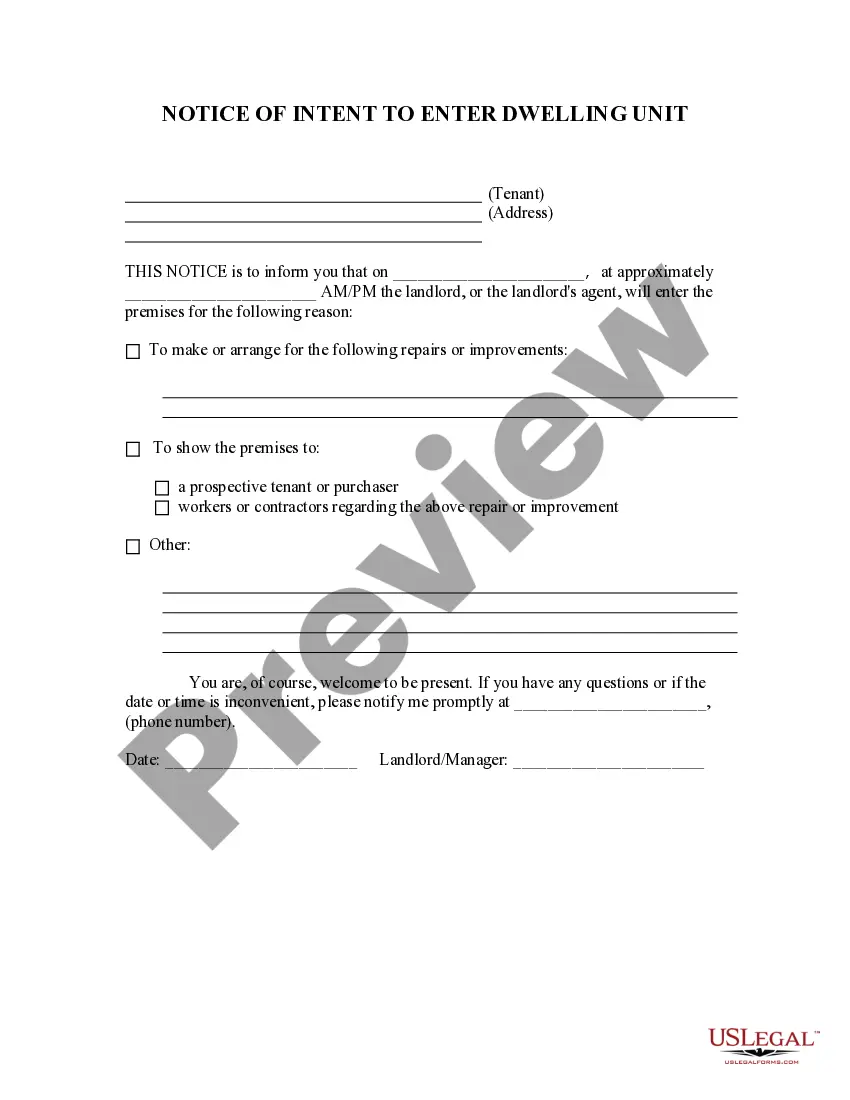

Get your form ready online
Our built-in tools help you complete, sign, share, and store your documents in one place.
Make edits, fill in missing information, and update formatting in US Legal Forms—just like you would in MS Word.
Download a copy, print it, send it by email, or mail it via USPS—whatever works best for your next step.
Sign and collect signatures with our SignNow integration. Send to multiple recipients, set reminders, and more. Go Premium to unlock E-Sign.
If this form requires notarization, complete it online through a secure video call—no need to meet a notary in person or wait for an appointment.
We protect your documents and personal data by following strict security and privacy standards.

Make edits, fill in missing information, and update formatting in US Legal Forms—just like you would in MS Word.

Download a copy, print it, send it by email, or mail it via USPS—whatever works best for your next step.

Sign and collect signatures with our SignNow integration. Send to multiple recipients, set reminders, and more. Go Premium to unlock E-Sign.

If this form requires notarization, complete it online through a secure video call—no need to meet a notary in person or wait for an appointment.

We protect your documents and personal data by following strict security and privacy standards.
Looking for another form?




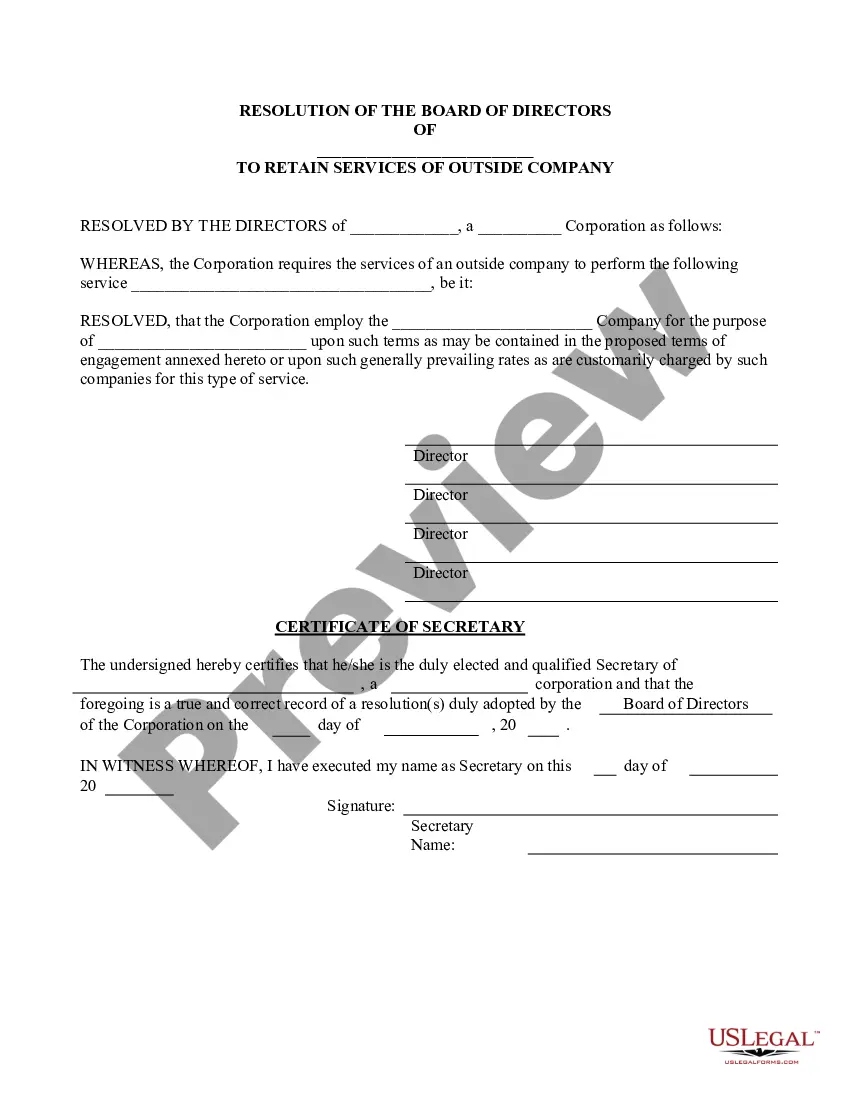
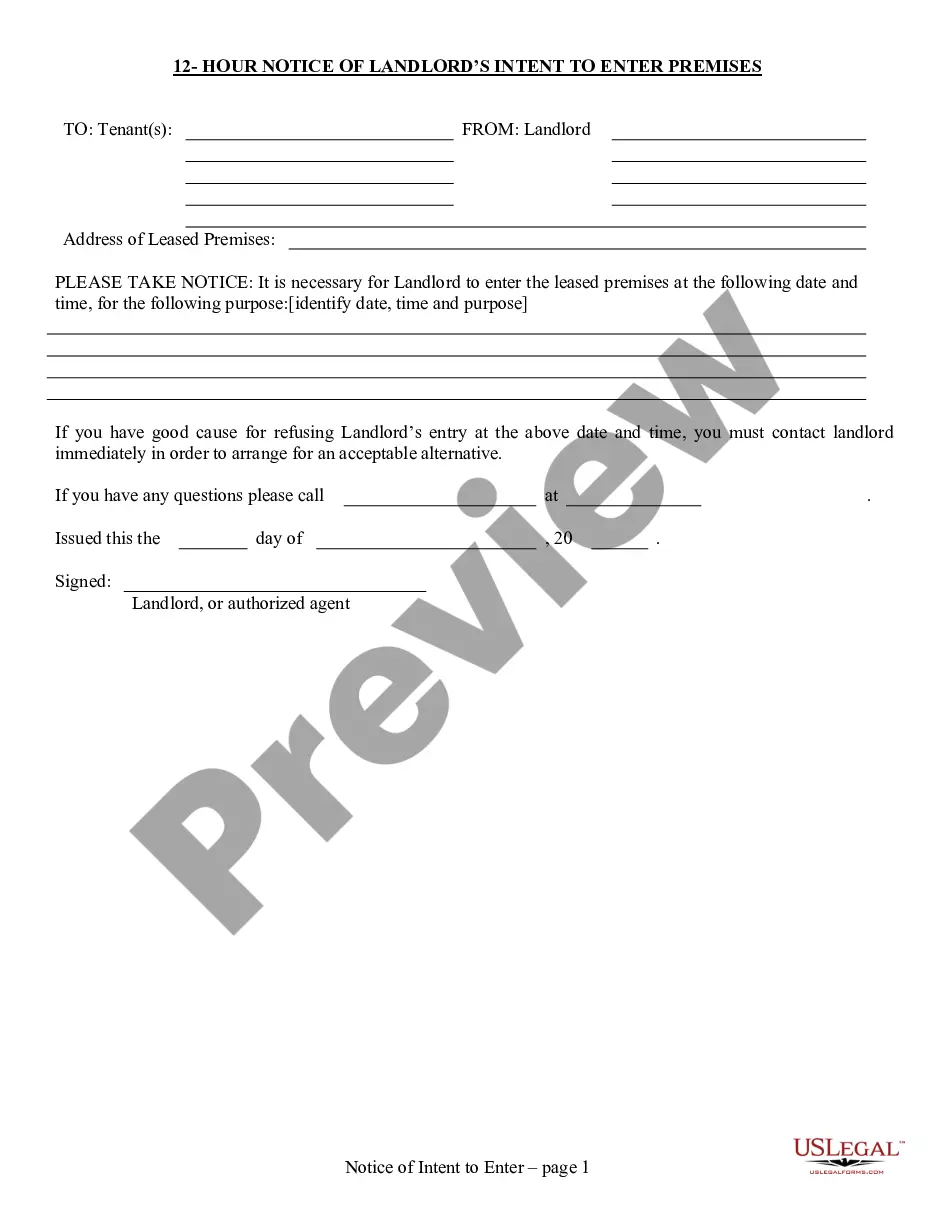
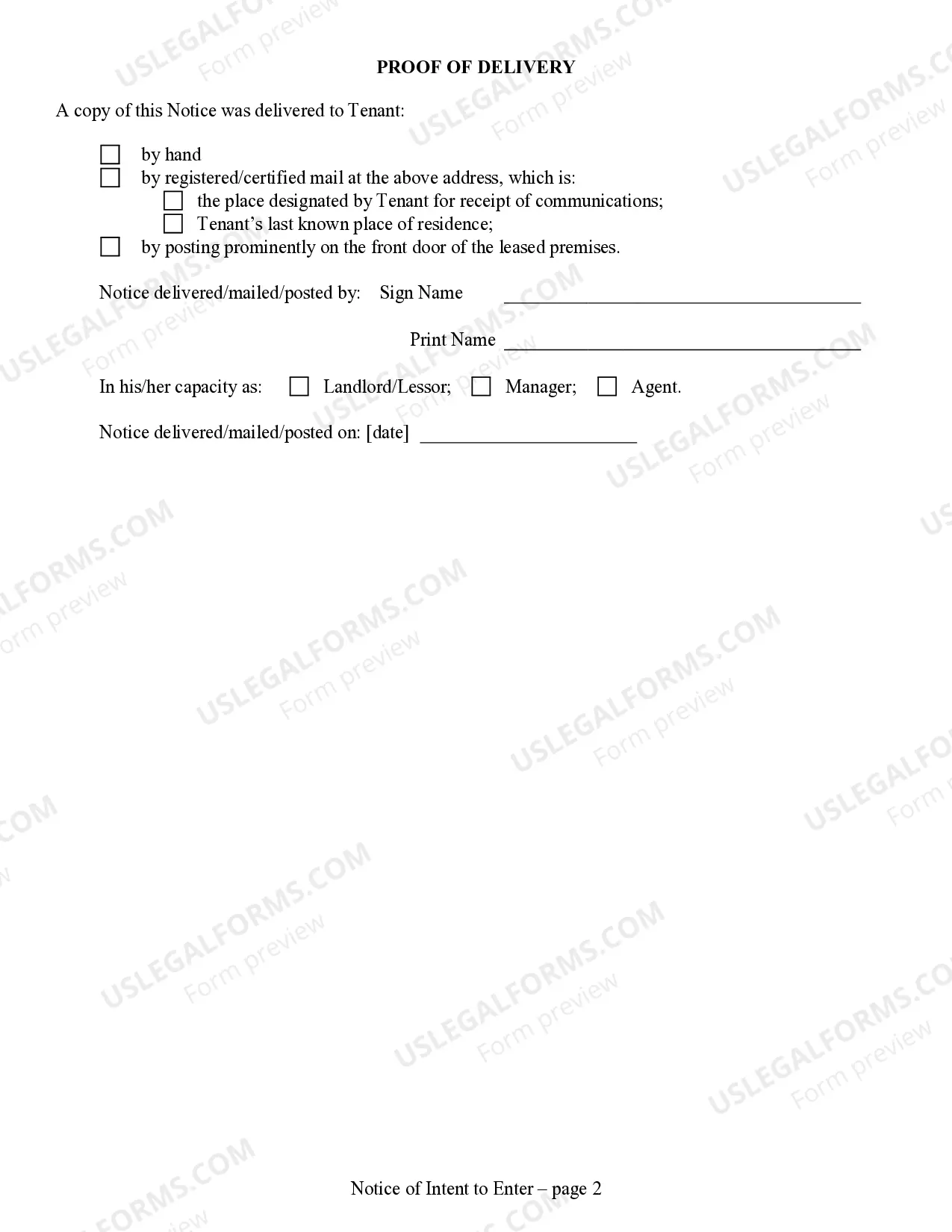
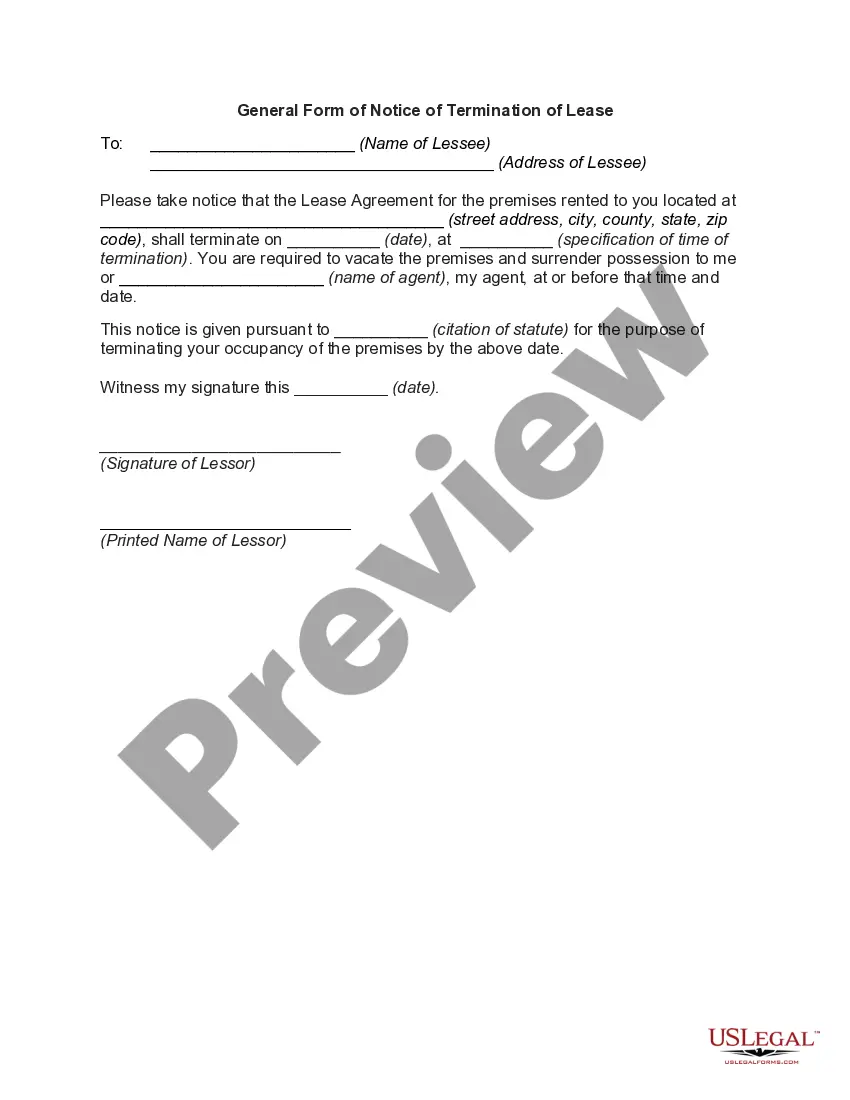
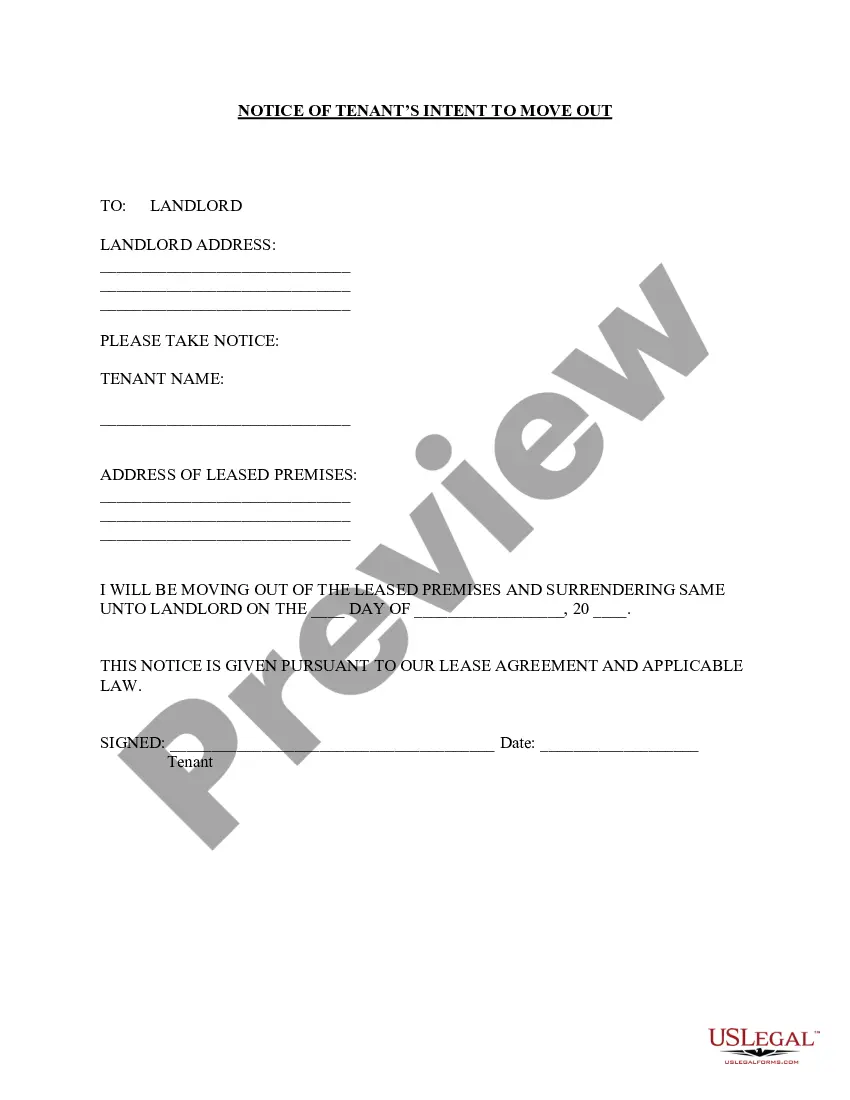
How to fill out Florida 12 Hour Notice Of Landlord's Intent To Enter Premises For Residential From Landlord To Tenant?
- Log in to your US Legal Forms account or create one to access the extensive library of legal forms.
- Preview the form to ensure it meets your jurisdiction's requirements. If it doesn't, use the Search option to find an appropriate alternative.
- Select the document you need and click on the Buy Now button to choose your subscription plan.
- Complete your purchase by entering your payment information. You can use a credit card or PayPal.
- Once the purchase is confirmed, download the form directly to your device and access it anytime from the My Forms section.
Once you have your document, it's essential to follow legal procedures carefully to ensure compliance and avoid conflicts with landlords.
Take control of your legal needs today—visit US Legal Forms to get started!
Form popularity
FAQ
You can sue your landlord for various reasons, including unauthorized entry, failure to maintain safe living conditions, or breaching the lease agreement. It is essential to gather evidence and document instances of negligence or illegal entry. Seeking legal advice is crucial for navigating this process smoothly. US Legal Forms can provide you with the necessary documentation and guidance you may need.
Yes, a landlord can be considered trespassing if they enter a tenant's premises without permission and without a valid reason under the lease agreement. Trespassing laws protect a tenant’s right to privacy and security in their home. If you believe your landlord has overstepped their boundaries, you may need to explore your legal options. US Legal Forms can assist you in understanding your rights better.
Yes, you can sue your landlord for entering your property without permission, especially if it violated your rights. This action falls under trespassing laws, and it's essential to gather evidence that shows this unwarranted intrusion. Consulting with a legal professional can clarify your options and help guide you through the legal process. US Legal Forms provides templates and resources for dispute resolutions.
In Kansas, tenants can report landlords to the local housing authority or the Kansas Attorney General's office. This is particularly important if your landlord engages in illegal activities, like entering your home without permission. Documenting your experiences will support your claims in these reports. For further assistance and legal documentation, consider using US Legal Forms.
If your landlord entered your property without permission in Chicago, you can first address the issue directly with them to express your concerns. Keep a record of the unauthorized entry as documentation. If the behavior continues, you may need to explore legal options, such as filing a complaint or seeking assistance from a local tenants' rights organization. US Legal Forms can help you better understand your rights and options.
Landlord negligence occurs when a landlord fails to uphold their responsibilities to maintain the property, resulting in harm to the tenant. This can include ignoring maintenance requests or allowing unsafe conditions to persist. If a landlord enters your home without permission during this neglect, it further complicates the issue. Seeking guidance on this matter can be beneficial, and US Legal Forms offers useful resources.
A landlord consent waiver is a legal document that allows a landlord to enter a tenant's property without obtaining prior permission. This waiver typically outlines the conditions under which the landlord can gain access. However, it is crucial to understand that even with a waiver, a landlord must still respect tenant privacy. If there are any concerns about this process, consider consulting with US Legal Forms for assistance.
A letter of intent to a landlord is a communication that outlines your intentions regarding a lease or rental agreement. This letter can express your desire to renew, terminate, or negotiate terms with your landlord. Crafting such a letter can clarify your position and inform the landlord of your plans, which is crucial when understanding notice intent enter landlord with no permission.
A notice of intent for entry is a formal alert from a landlord to tenants indicating when they plan to visit the property. This typically outlines the date, time, and purpose of the entry, ensuring that tenants receive adequate warning. Understanding the notice intent enter landlord with no permission can empower you as a tenant to know your rights regarding access to your space.
A Notice of Intent from USCIS is a document that informs applicants about potential issues with their immigration applications. It allows individuals to respond to concerns before a final decision is made. While this may not relate directly to the notice intent enter landlord with no permission, the principle of receiving timely notifications is similarly important in tenant-landlord relationships.