California Professional Corporation Bylaws With Members
Description
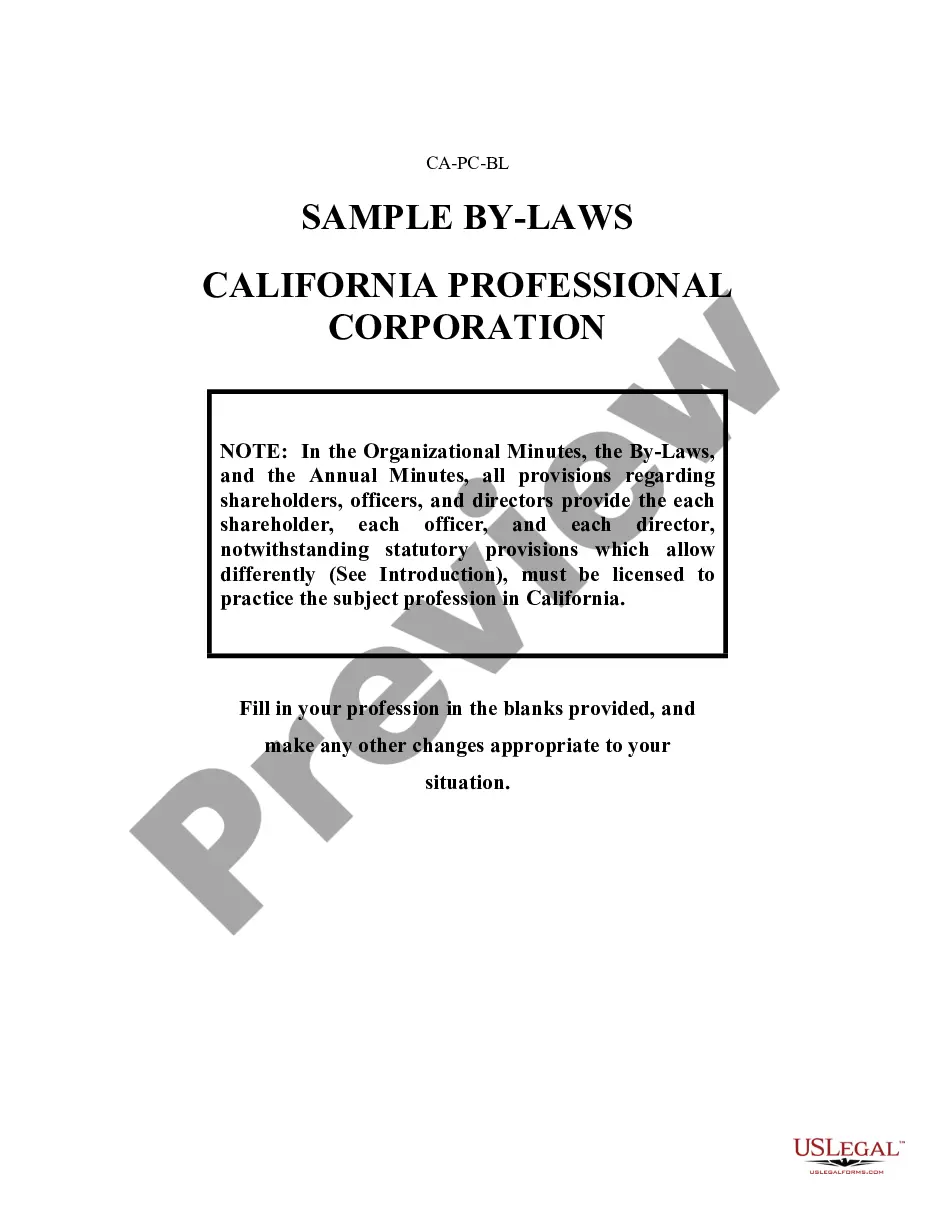
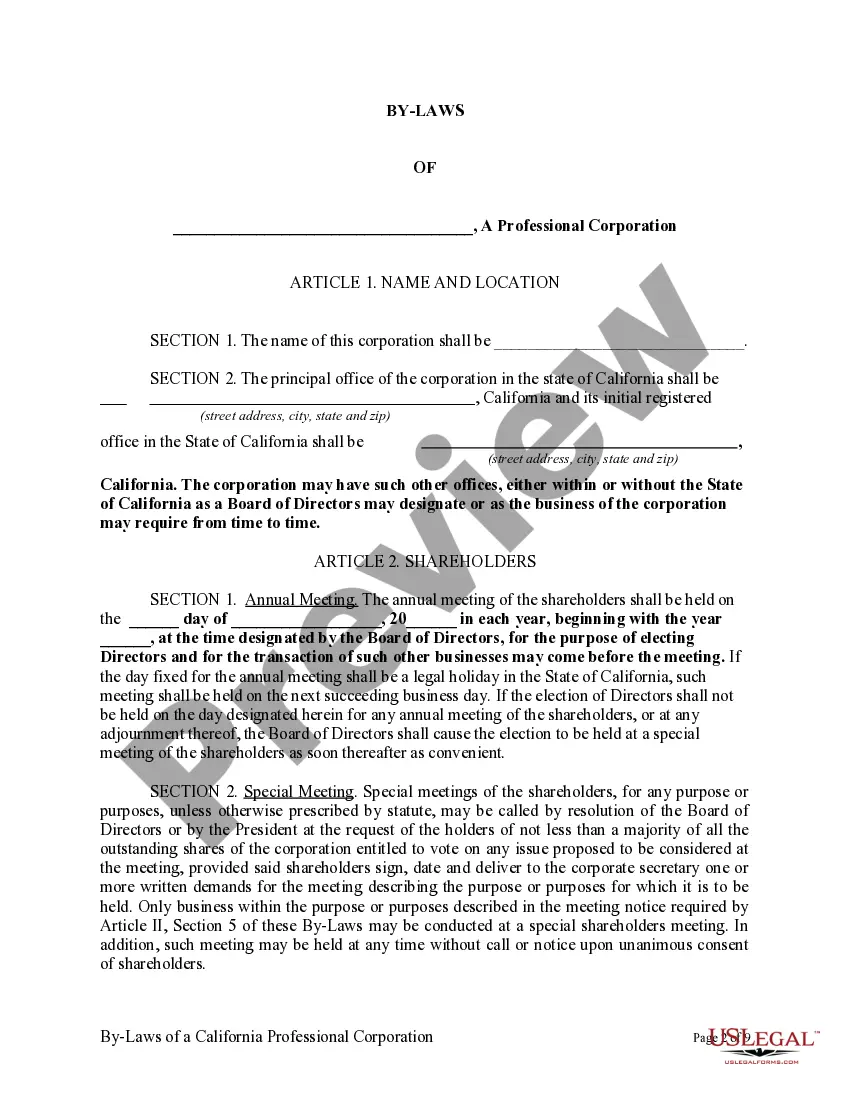
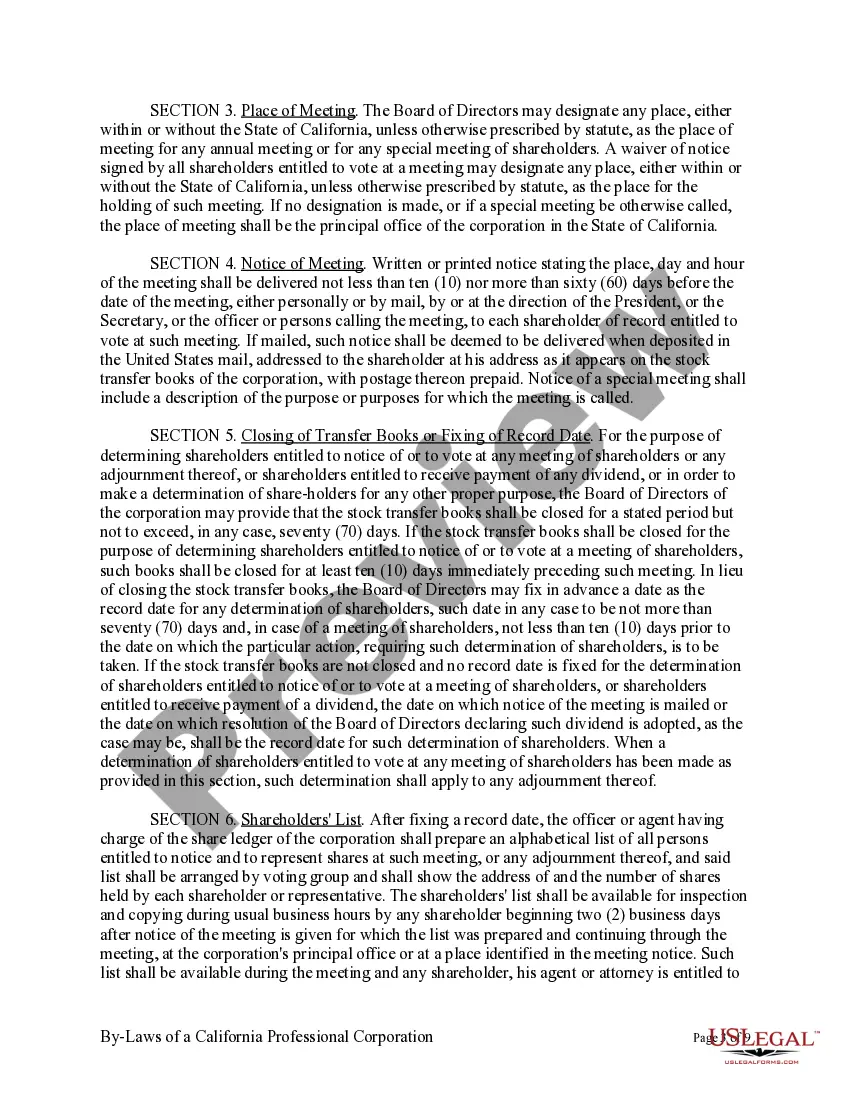
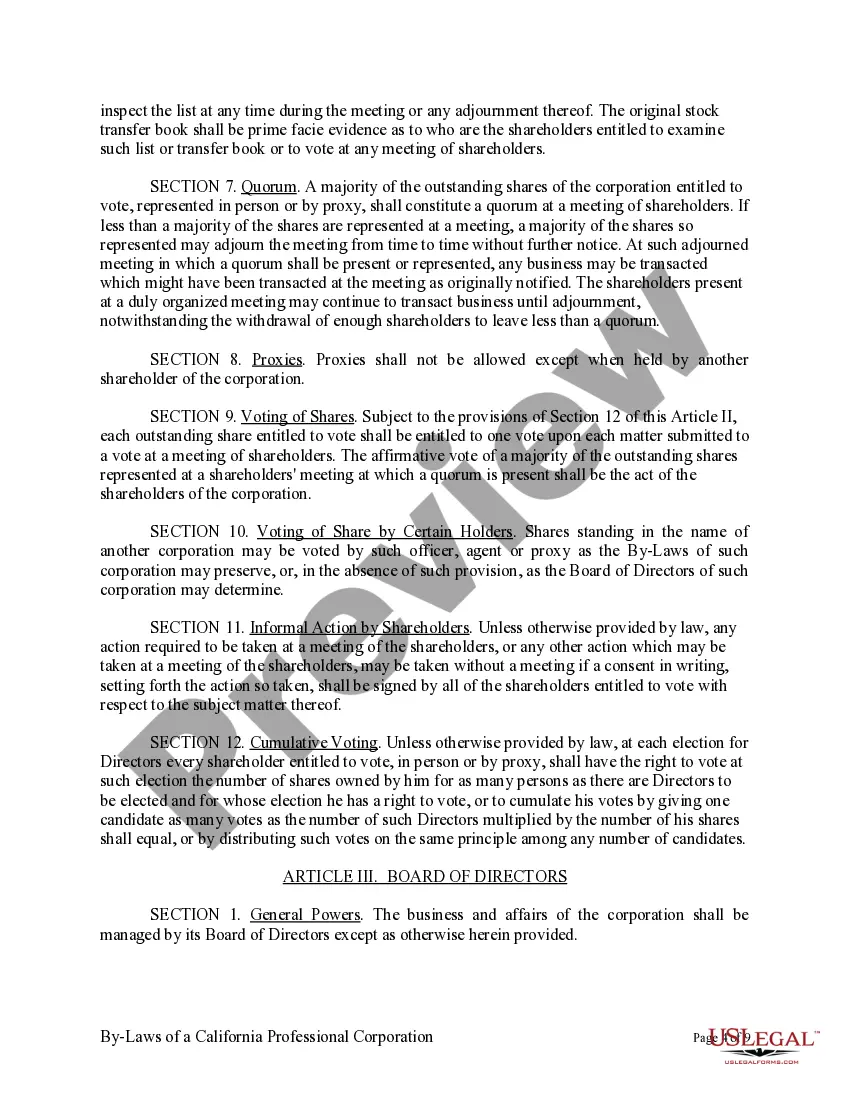
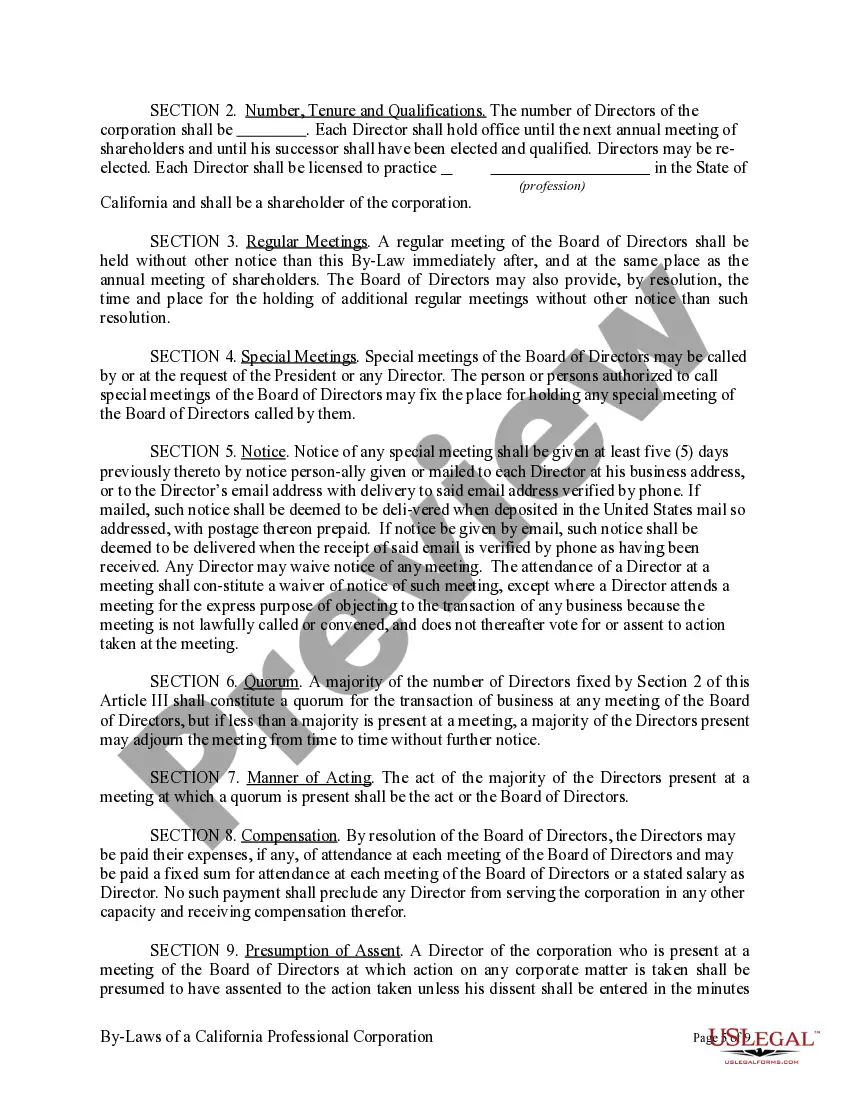
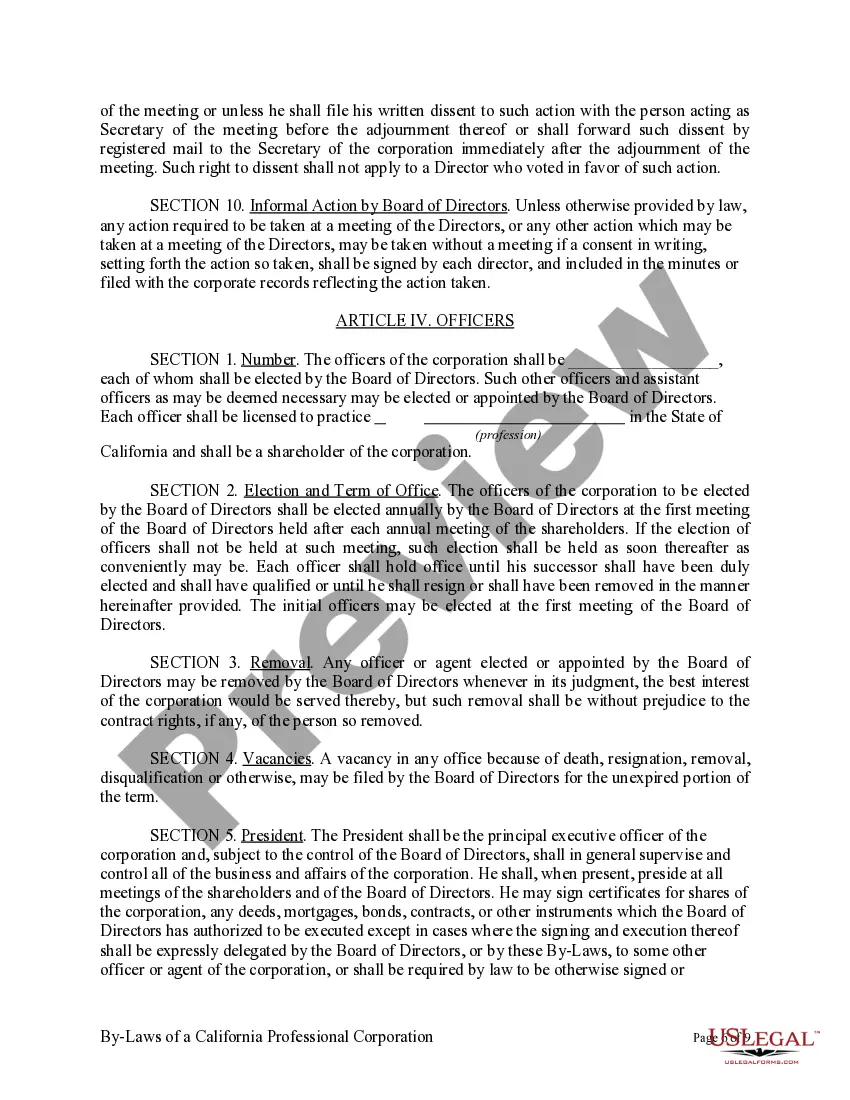
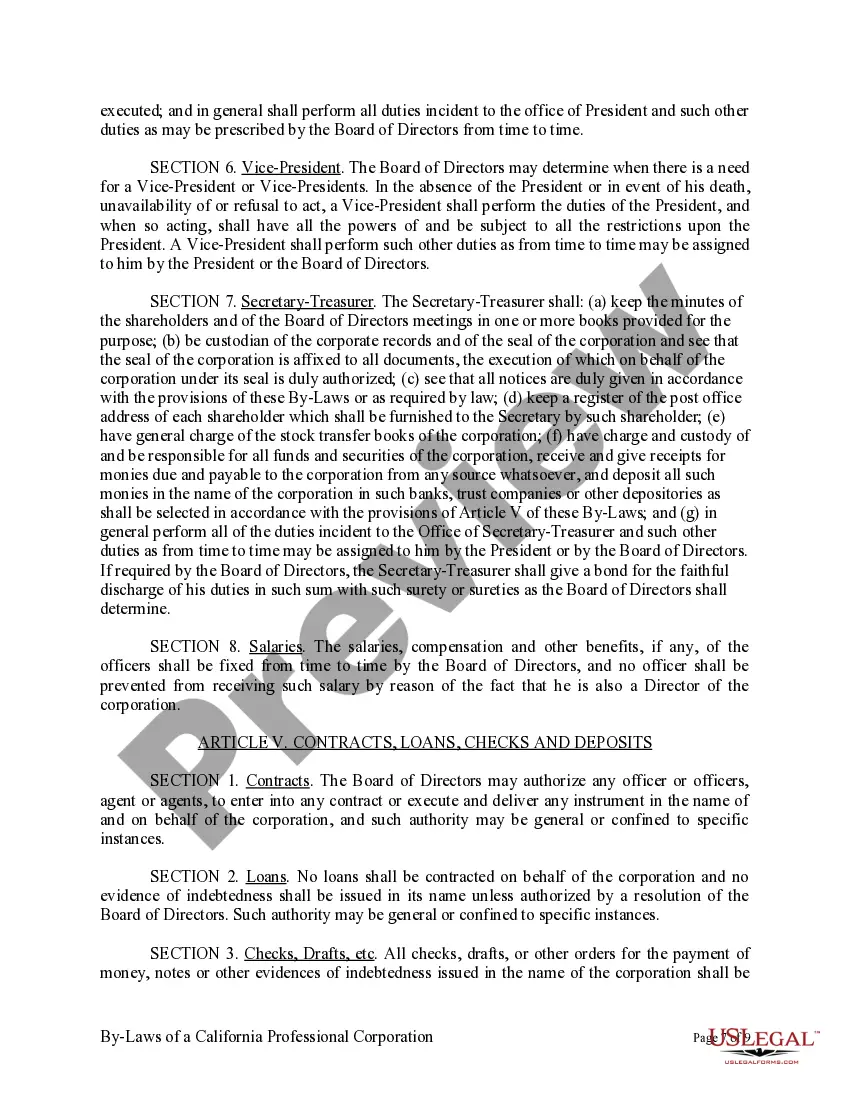
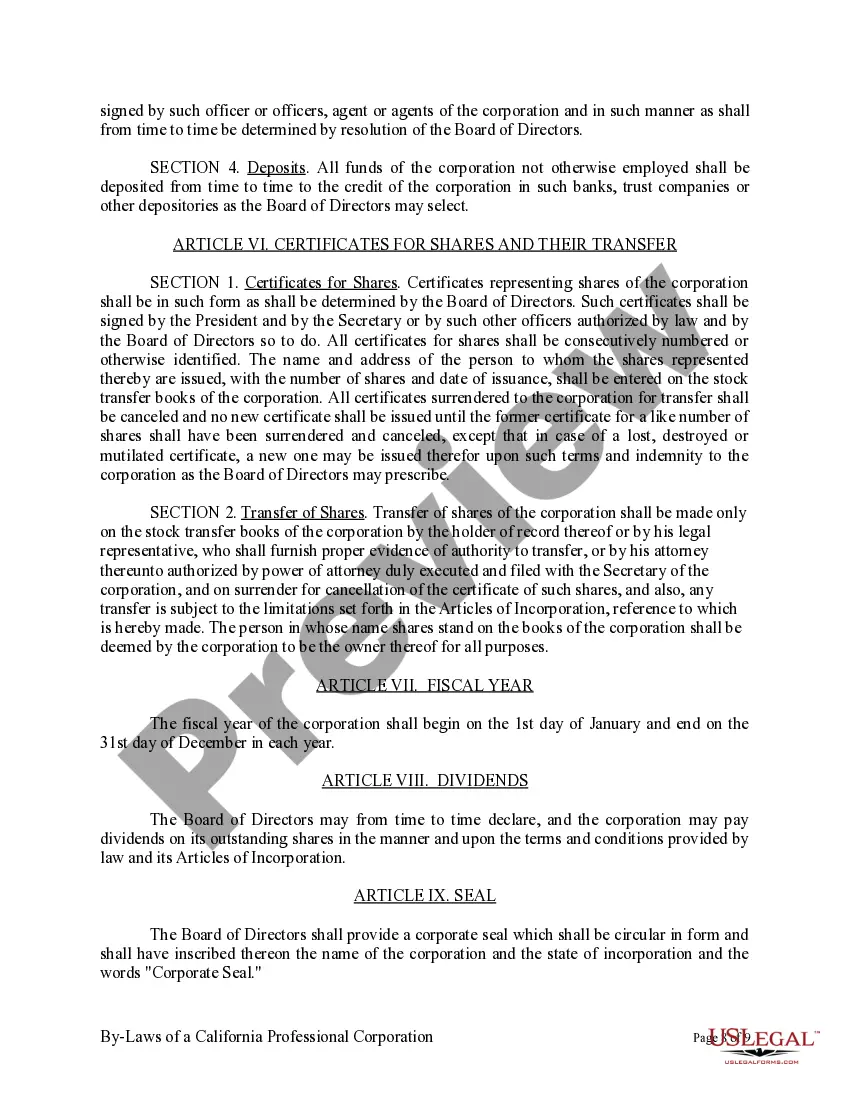
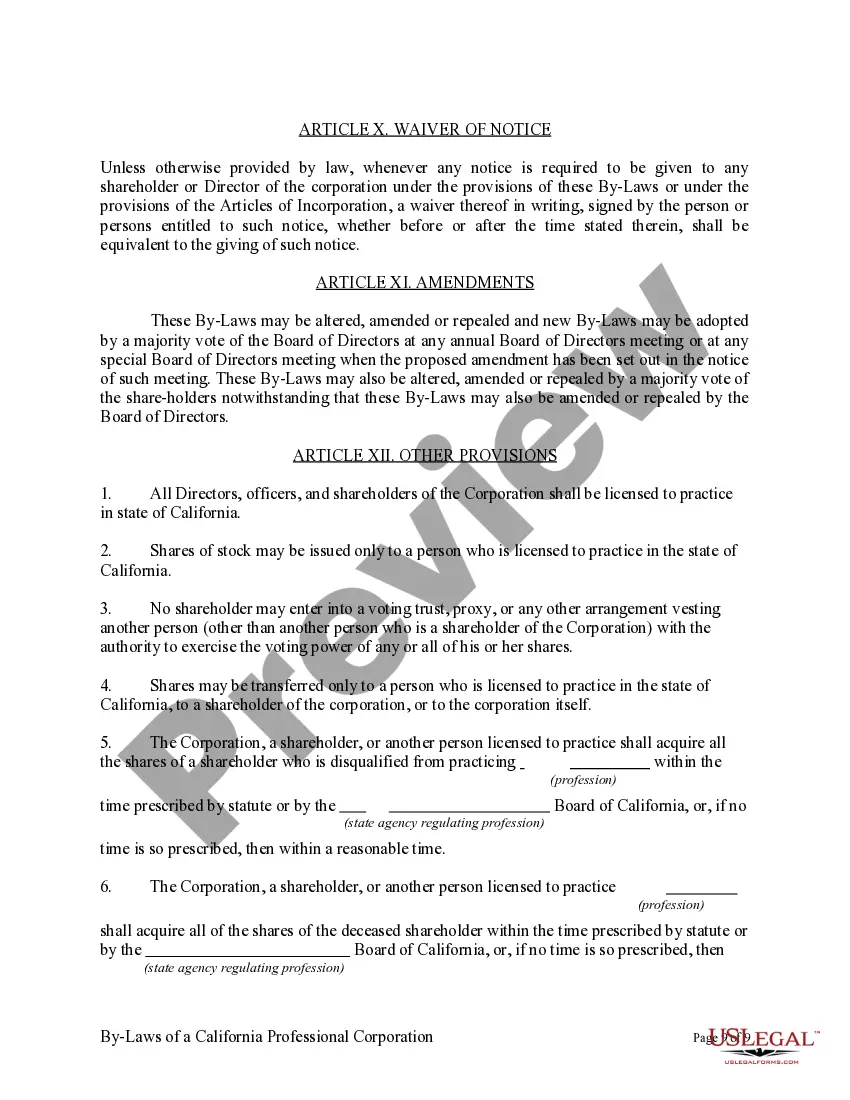
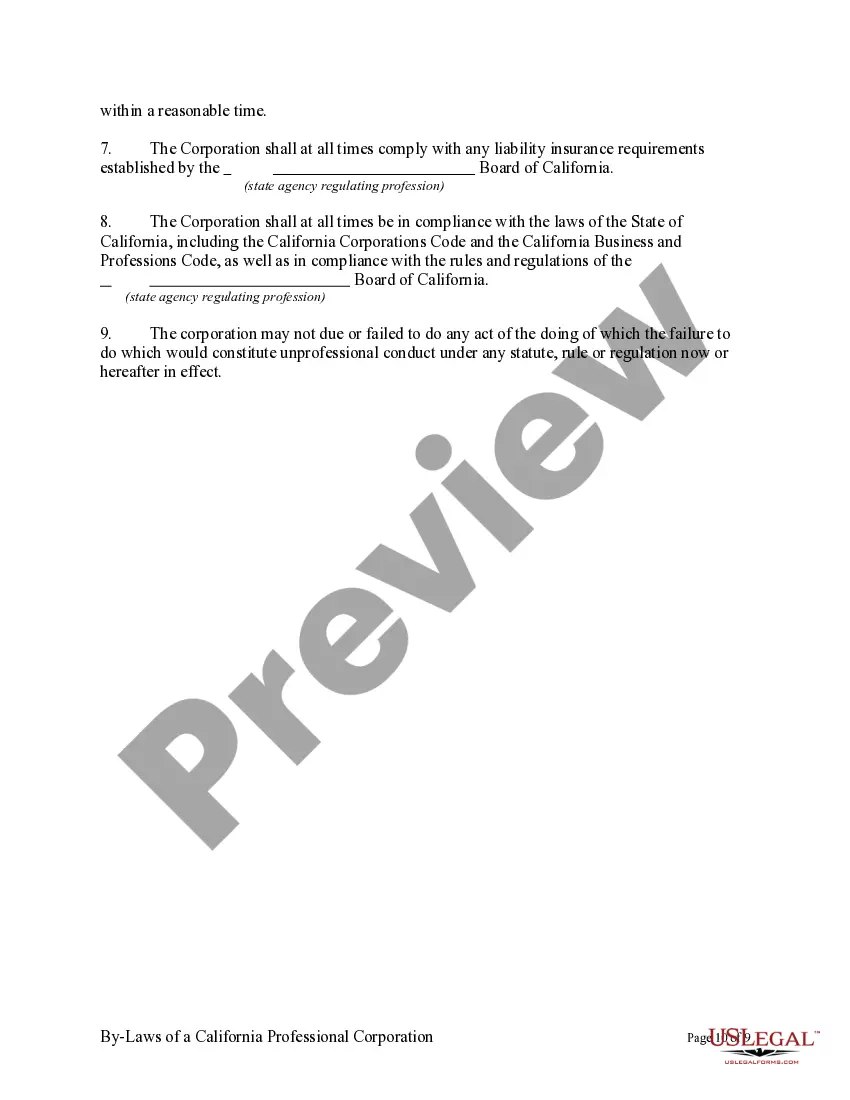
Get your form ready online
Our built-in tools help you complete, sign, share, and store your documents in one place.
Make edits, fill in missing information, and update formatting in US Legal Forms—just like you would in MS Word.
Download a copy, print it, send it by email, or mail it via USPS—whatever works best for your next step.
Sign and collect signatures with our SignNow integration. Send to multiple recipients, set reminders, and more. Go Premium to unlock E-Sign.
If this form requires notarization, complete it online through a secure video call—no need to meet a notary in person or wait for an appointment.
We protect your documents and personal data by following strict security and privacy standards.

Make edits, fill in missing information, and update formatting in US Legal Forms—just like you would in MS Word.

Download a copy, print it, send it by email, or mail it via USPS—whatever works best for your next step.

Sign and collect signatures with our SignNow integration. Send to multiple recipients, set reminders, and more. Go Premium to unlock E-Sign.

If this form requires notarization, complete it online through a secure video call—no need to meet a notary in person or wait for an appointment.

We protect your documents and personal data by following strict security and privacy standards.
Looking for another form?
How to fill out Sample Bylaws For A California Professional Corporation?
Whether for commercial reasons or personal matters, everyone must handle legal issues at some moment in their life.
Filling out legal paperwork requires meticulous focus, beginning with choosing the appropriate form template.
Once saved, you can fill out the form using editing software or print it and complete it manually. With an extensive US Legal Forms catalog available, you won’t have to waste time searching for the correct sample online. Utilize the library’s straightforward navigation to find the right form for any circumstance.
- Locate the template you require by using the search function or browsing the catalog.
- Review the form’s description to ensure it is appropriate for your needs, jurisdiction, and locality.
- Click on the form’s preview to inspect it.
- If it is not the correct document, return to the search feature to find the California Professional Corporation Bylaws With Members sample you need.
- Acquire the template if it aligns with your specifications.
- If you already possess a US Legal Forms account, simply click Log in to access previously saved templates in My documents.
- If you do not yet have an account, you can download the form by clicking Buy now.
- Select the appropriate pricing choice.
- Complete the account registration form.
- Choose your payment option: you can utilize a credit card or PayPal account.
- Select the desired file format and download the California Professional Corporation Bylaws With Members.
Form popularity
FAQ
What Is A California Professional Corporation? Members of certain professions, such as lawyers, doctors, accountants, and engineers, may form a California professional corporation (also known as a ?PC?). Typically, these types of entities provide services only through licensed professionals.
The California Corporations Code does not explicitly state that corporations must have corporate bylaws. However, the necessity of bylaws is implied in several places, including CA Corp Code § 213, which requires corporations to keep a copy of their bylaws on file at their principal executive office.
A professional corporation conveys limited liability to its members just as a regular corporation. However, in most cases, the corporation does not convey limited liability for the malpractice of the individual members. Ideally, professionals manage that type of risk through malpractice insurance policies.
In general, corporations in California must have at least three directors on their board unless the company has less than three shareholders. In that case, the number of directors must not be less than the number of shareholders.
When adding officers or directors to a California C corporation, an incorporator must appoint an individual. At the initial board of directors meeting, members can also appoint officers and authorize issuance of stock. Corporations must also file the statement of information.