California Not Charging For Theft
Description
Get your form ready online
Our built-in tools help you complete, sign, share, and store your documents in one place.
Make edits, fill in missing information, and update formatting in US Legal Forms—just like you would in MS Word.
Download a copy, print it, send it by email, or mail it via USPS—whatever works best for your next step.
Sign and collect signatures with our SignNow integration. Send to multiple recipients, set reminders, and more. Go Premium to unlock E-Sign.
If this form requires notarization, complete it online through a secure video call—no need to meet a notary in person or wait for an appointment.
We protect your documents and personal data by following strict security and privacy standards.

Make edits, fill in missing information, and update formatting in US Legal Forms—just like you would in MS Word.

Download a copy, print it, send it by email, or mail it via USPS—whatever works best for your next step.

Sign and collect signatures with our SignNow integration. Send to multiple recipients, set reminders, and more. Go Premium to unlock E-Sign.

If this form requires notarization, complete it online through a secure video call—no need to meet a notary in person or wait for an appointment.

We protect your documents and personal data by following strict security and privacy standards.
Looking for another form?


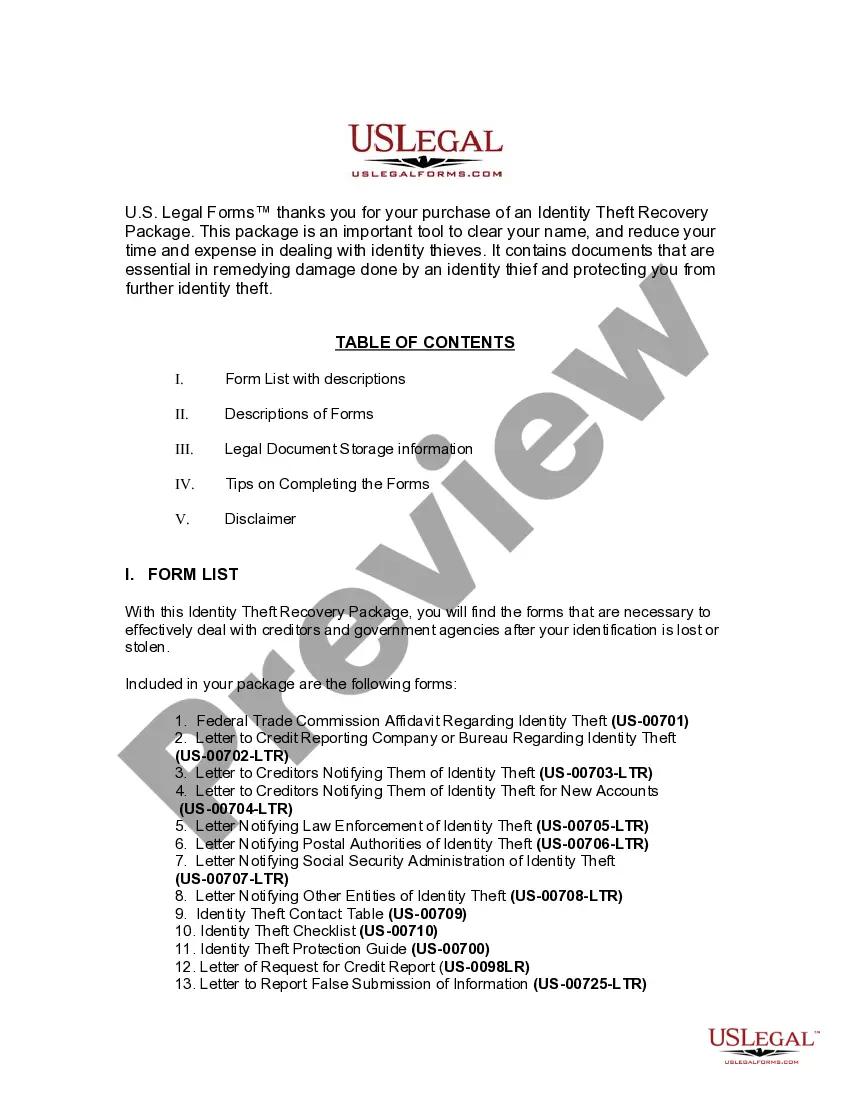
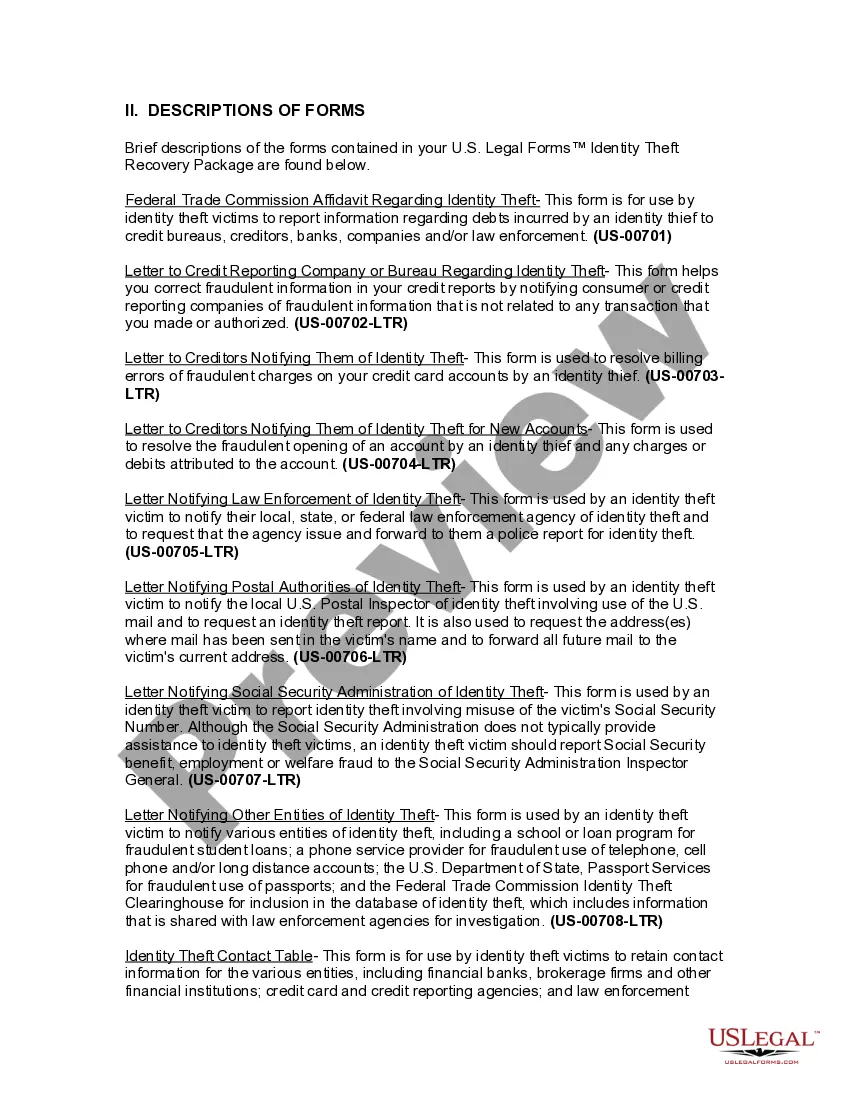
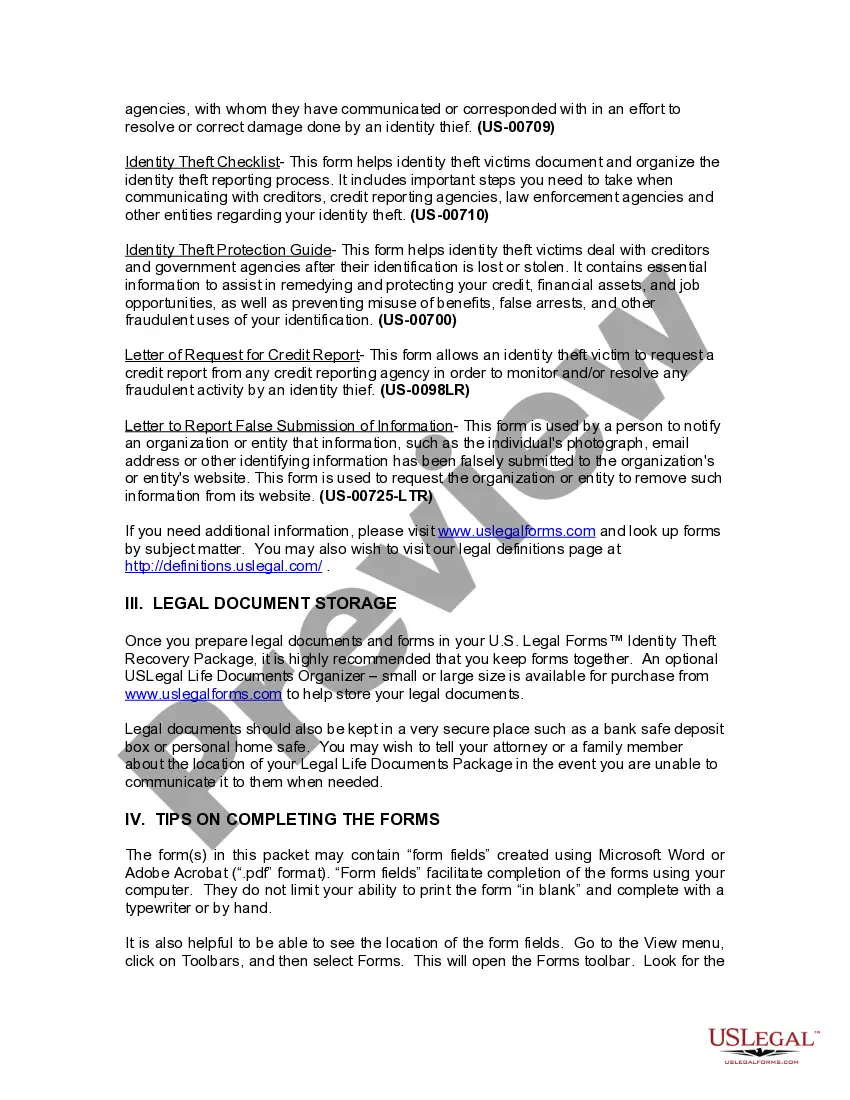
How to fill out California Identity Theft Recovery Package?
Dealing with legal documents and protocols can be a labor-intensive addition to your day.
California Not Charging For Theft and similar forms typically necessitate that you search for them and comprehend how to fill them out correctly.
Therefore, if you are managing financial, legal, or personal affairs, having a thorough and accessible online collection of documents readily available will be immensely helpful.
US Legal Forms is the premier online resource for legal documents, offering over 85,000 state-specific templates and various tools to help you finalize your paperwork efficiently.
Simply Log In to your account, locate California Not Charging For Theft, and download it immediately from the My documents section. You can also access previously downloaded documents.
- Explore the collection of suitable documents available to you with just a single click.
- US Legal Forms equips you with state- and county-specific documents available for download at any time.
- Streamline your document management processes with exceptional support that enables you to prepare any form within minutes without extra or concealed charges.
Form popularity
FAQ
You can report wage theft in California to the Division of Labor Standards Enforcement or your local labor office. They provide resources and guidance to help you file your claim. Utilizing services like uslegalforms can streamline your reporting process. With California not charging for theft, you can take decisive action to ensure your rights are upheld.
To report wage theft in California, you can file a claim with the California Division of Labor Standards Enforcement or contact local labor boards. Providing as much information as possible will strengthen your case. Additionally, platforms like uslegalforms can assist you in navigating the process smoothly. Remember, California not charging for theft supports your right to fair wages.
To file a waiting time penalty in California, you need to submit a claim to the California Division of Labor Standards Enforcement. Include details about your employment and the reasons for your claim. This process allows you to pursue compensation for wages owed after termination. Remember, California not charging for theft allows you to seek justice and ensure fair treatment.
Wage theft in California encompasses various practices, including unpaid overtime, not paying minimum wage, and withholding breaks. It also includes misclassifying employees as independent contractors to avoid paying benefits. Recognizing these violations is vital, as California not charging for theft emphasizes the state's commitment to worker rights. Understanding your rights can help you take action against wage theft.
Yes, you can report wage theft anonymously in California. Many agencies allow you to submit complaints without revealing your identity. This approach can protect you from potential retaliation while ensuring that your concerns are addressed. Remember, California not charging for theft is crucial for maintaining fair labor practices.
California's statute criminalizing Grand Theft (CPC §487) applies, broadly, whenever property is taken with value exceeding $950. The crime also applies to automobile theft and the theft or firearms. Grand Theft does not require the use of fear or force. You must, however, move the property and keep it for some period.
How long does shoplifting stay on your record in California? Items that were shoplifted below $950 is a misdemeanor in California but a second offense can be a felony. If you are convicted of a shoplifting charge in California, the conviction remains on your record forever unless you get it dismissed or expunged.
Penal Code 488 is the California statute that defines petty theft, making it a criminal act to steal $950 or less of property or services. A violation of this statute is a misdemeanor punishable with a maximum fine of $1,000 and up to six months in county jail.
Depending on the prosecutor, this crime can either be charged as a misdemeanor or a felony. Of course, the total value of the theft will also impact the level of the charge, since those amounts closer to the $950 limit usually result in basic misdemeanor charges.
If someone is accused of stealing or attempting to steal items valued at more than $950, then that individual can be charged with Penal Code 487 PC grand theft. Grand theft can be charged as a felony that carries up to three years in state prison.