Housing Agreement For Employee With Disabilities
Description
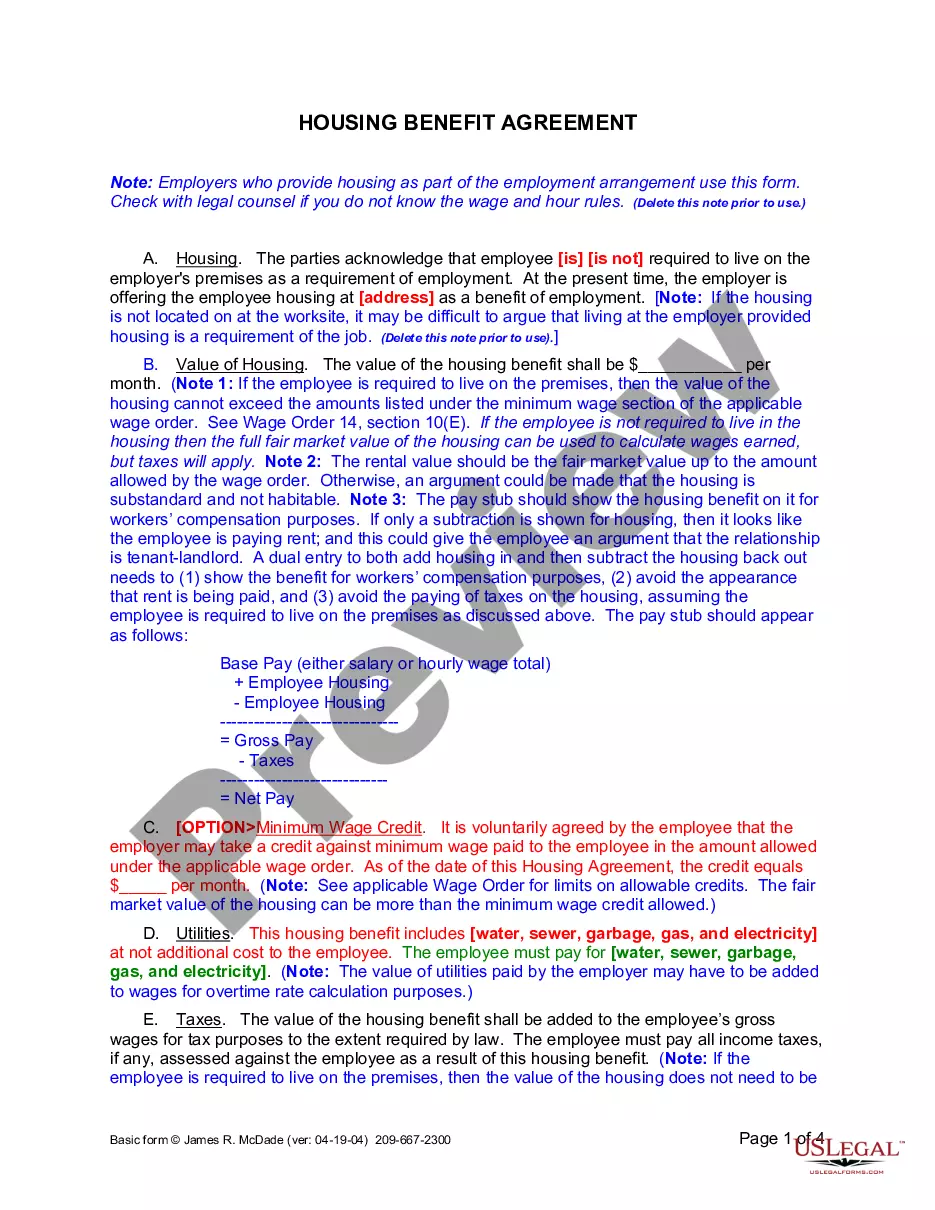
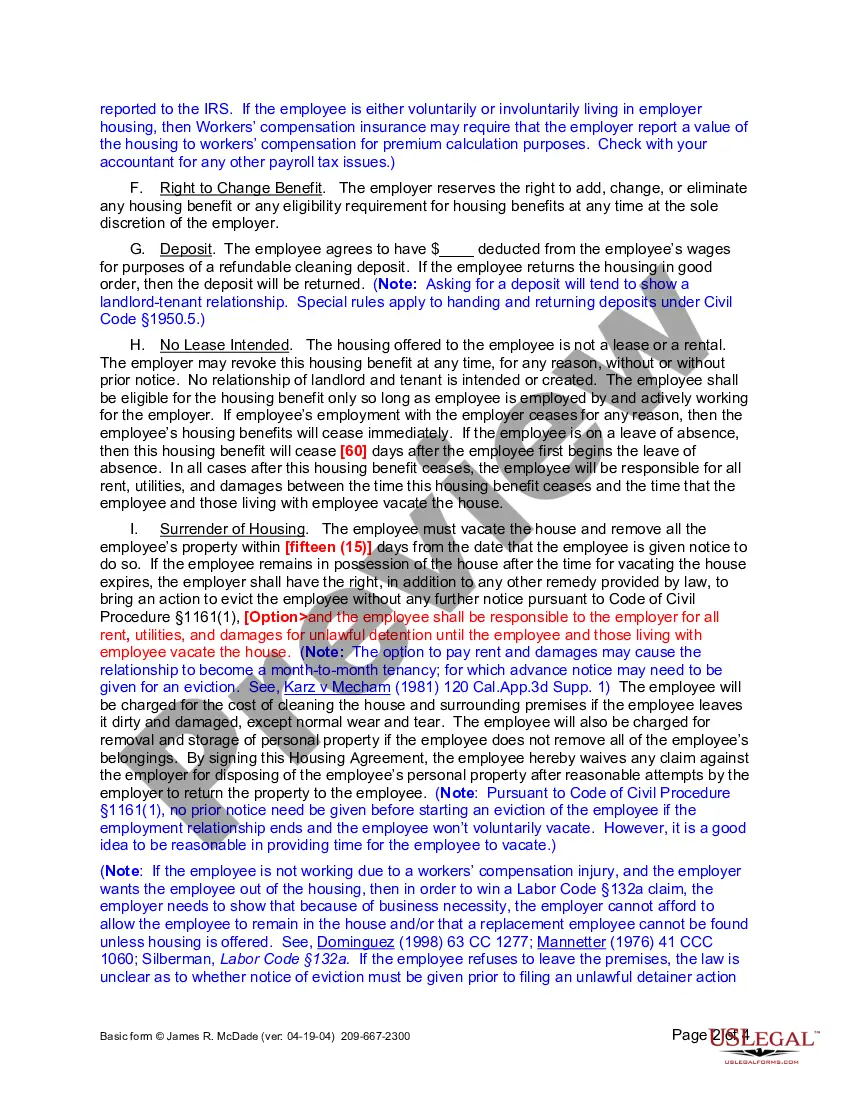
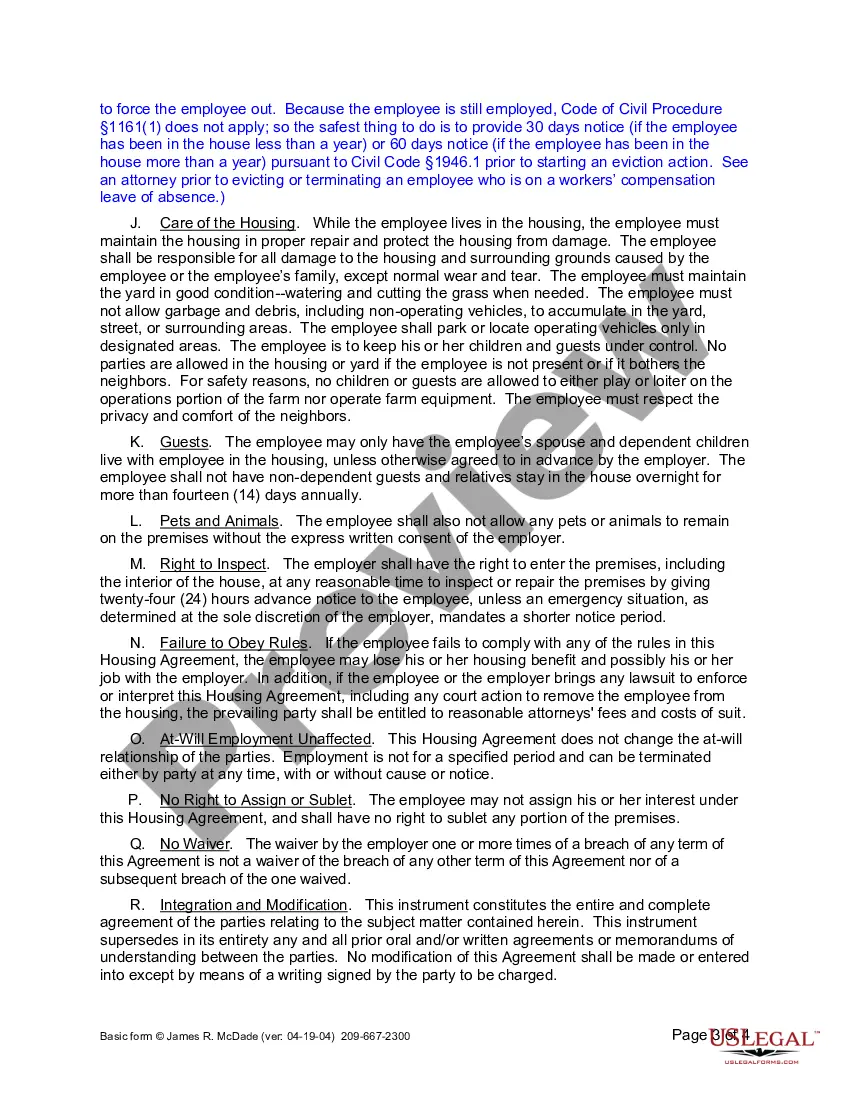
Get your form ready online
Our built-in tools help you complete, sign, share, and store your documents in one place.
Make edits, fill in missing information, and update formatting in US Legal Forms—just like you would in MS Word.
Download a copy, print it, send it by email, or mail it via USPS—whatever works best for your next step.
Sign and collect signatures with our SignNow integration. Send to multiple recipients, set reminders, and more. Go Premium to unlock E-Sign.
If this form requires notarization, complete it online through a secure video call—no need to meet a notary in person or wait for an appointment.
We protect your documents and personal data by following strict security and privacy standards.

Make edits, fill in missing information, and update formatting in US Legal Forms—just like you would in MS Word.

Download a copy, print it, send it by email, or mail it via USPS—whatever works best for your next step.

Sign and collect signatures with our SignNow integration. Send to multiple recipients, set reminders, and more. Go Premium to unlock E-Sign.

If this form requires notarization, complete it online through a secure video call—no need to meet a notary in person or wait for an appointment.

We protect your documents and personal data by following strict security and privacy standards.
Looking for another form?


How to fill out California Housing Benefit Agreement?
Whether for commercial reasons or for personal issues, everyone encounters legal matters at some point in their life.
Completing legal documents requires meticulous care, starting with selecting the right form template.
Once downloaded, you can complete the form using editing software or print it out to fill it in manually.
With an extensive catalog from US Legal Forms available, you won't waste time looking for the right template online. Use the library’s easy navigation to find the correct template for any circumstance.
- For instance, if you choose an incorrect version of the Housing Agreement For Employee With Disabilities, it will be rejected upon submission.
- Thus, it is essential to have a reliable source for legal forms such as US Legal Forms.
- To obtain a sample of the Housing Agreement For Employee With Disabilities, follow these straightforward steps.
- Utilize the search feature or browse the catalog to find the template you need.
- Review the form's details to ensure it aligns with your situation, jurisdiction, and area.
- Click on the form's preview to examine it.
- If it's not the right form, return to the search option to locate the Housing Agreement For Employee With Disabilities sample you need.
- Download the document if it satisfies your specifications.
- If you have a US Legal Forms account, click Log in to access previously saved documents in My documents.
- If you don’t yet have an account, you can acquire the form by clicking Buy now.
- Select the correct payment option.
- Fill out the account registration form.
- Choose your method of payment: by credit card or PayPal.
- Select the document format you prefer and download the Housing Agreement For Employee With Disabilities.
Form popularity
FAQ
To submit a request for reasonable accommodation related to the housing agreement for employee with disabilities, start by clearly outlining your needs. Document your specific situation and explain how the requested changes will help you perform your job effectively. It's essential to present this information to your human resources department or designated official. You can also utilize the US Legal Forms platform to find ready-made templates that facilitate this process, ensuring you include all necessary details.
Examples of reasonable accommodations for housing can include modifications like installing grab bars, allowing service animals, or ensuring access to common areas. These adaptations help create a comfortable living environment for individuals with disabilities. When considering a housing agreement for employee with disabilities, it's important to discuss these options with your landlord or housing authority to find a mutually agreeable solution.
Filling out a reasonable accommodation form involves carefully providing all required personal information first. Next, describe your disability and how it affects your work or housing situation. Specify your desired accommodations clearly, keeping in mind how they relate to your housing agreement for employee with disabilities, and then submit the form to the designated authority within your organization.
In your reasonable accommodation request, start with a clear explanation of your disability and how it impacts your daily tasks. Articulate the specific accommodation you need in relation to a housing agreement for employee with disabilities. Make sure to communicate any deadlines or urgency to assist your employer in addressing your needs effectively.
ADA accommodations can range from physical changes in the workplace to flexible scheduling. Common examples include modified workspaces, assistive technology tools, or providing reserved parking spaces. Understanding and utilizing these accommodations enhances your housing agreement for employee with disabilities, ensuring a supportive environment.
To fill out the ADA accommodation form, begin by providing your contact information and a detailed description of your disability. Include how your condition affects your ability to perform essential job functions, if applicable. Clearly state the type of accommodation you are requesting, linking it to your housing agreement for employee with disabilities needs, and submit the form to your employer or HR department for review.
The Americans with Disabilities Act plays a significant role in ensuring equal access to housing for persons with disabilities. This act prohibits discrimination against individuals with disabilities in various housing-related transactions, aiming to make housing accessible and feasible. For employees with disabilities, having a clear housing agreement can help outline the necessary accommodations and protections. Understanding the ADA's implications in housing ensures that both parties benefit from a fair arrangement.
If your job cannot accommodate your specific needs, your employer may need to explore other solutions, such as finding a different role that suits your abilities. The ADA encourages employers to engage in an interactive process with employees to discover potential alternatives. If no accommodations are possible, employees may have the right to explore other opportunities within the organization. It’s essential to discuss your needs openly, particularly in relation to your housing agreement for employees with disabilities.
An effective example of reasonable accommodation includes allowing an employee with a mobility impairment to work from home, thus eliminating the need for travel. Alternatively, providing special equipment, such as ergonomic chairs or voice-to-text software, can significantly enhance an employee's productivity. These types of accommodations ensure that your workplace remains accessible and supportive. A well-structured housing agreement for employees with disabilities may include such provisions for improved work conditions.
Not all requests for changes are considered reasonable under the ADA. For instance, an employer is not obligated to provide accommodations that impose an undue hardship on their operations. Additionally, changes that fundamentally alter the nature of the job or that would be overly costly may not qualify. Understanding what constitutes a reasonable accommodation within a housing agreement for employees with disabilities is crucial for both employers and employees.