Tenant Credit History For Loan
Description

Get your form ready online
Our built-in tools help you complete, sign, share, and store your documents in one place.
Make edits, fill in missing information, and update formatting in US Legal Forms—just like you would in MS Word.
Download a copy, print it, send it by email, or mail it via USPS—whatever works best for your next step.
Sign and collect signatures with our SignNow integration. Send to multiple recipients, set reminders, and more. Go Premium to unlock E-Sign.
If this form requires notarization, complete it online through a secure video call—no need to meet a notary in person or wait for an appointment.
We protect your documents and personal data by following strict security and privacy standards.
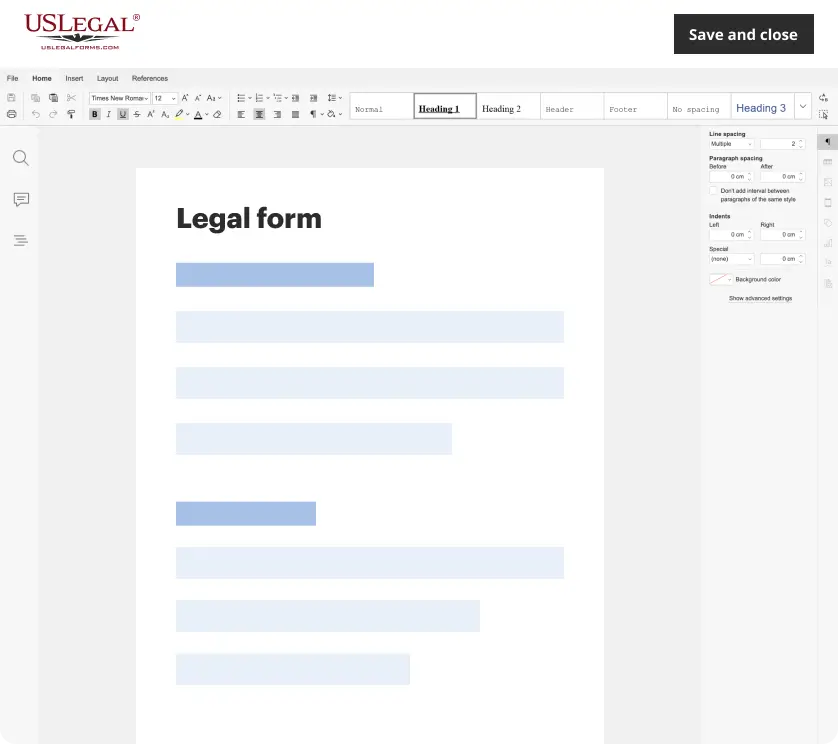
Make edits, fill in missing information, and update formatting in US Legal Forms—just like you would in MS Word.
Download a copy, print it, send it by email, or mail it via USPS—whatever works best for your next step.
Sign and collect signatures with our SignNow integration. Send to multiple recipients, set reminders, and more. Go Premium to unlock E-Sign.

If this form requires notarization, complete it online through a secure video call—no need to meet a notary in person or wait for an appointment.
We protect your documents and personal data by following strict security and privacy standards.
Looking for another form?






How to fill out California Tenant Consent To Credit Background And Reference Check?
Creating legal documents from the ground up can occasionally be daunting.
Certain situations may require extensive research and a significant financial investment.
If you seek a more uncomplicated and economical method for preparing Tenant Credit History For Loan or other forms without unnecessary complications, US Legal Forms is always within reach.
Our online repository of over 85,000 current legal documents encompasses nearly every facet of your financial, legal, and personal issues.
Before diving straight into downloading Tenant Credit History For Loan, consider these pointers: Review the document preview and descriptions to confirm that you are selecting the correct form. Ensure the chosen document meets the requirements of your state and county. Select the most suitable subscription plan to acquire the Tenant Credit History For Loan. Download the document, then complete, verify, and print it out. US Legal Forms holds a strong reputation and possesses over 25 years of experience. Join us today and make form completion an effortless and efficient process!
- With just a few clicks, you can swiftly find state- and county-specific documents meticulously crafted by our legal experts.
- Utilize our site whenever you require a dependable and trustworthy service that enables you to easily find and acquire the Tenant Credit History For Loan.
- If you’re already a user and have registered with us before, simply Log In to your account, find the document, and download it or re-download it anytime from the My documents section.
- Don’t have an account? No problem. It only takes a few minutes to create one and browse the collection.
Form popularity
FAQ
To pull a tenant's credit report, landlords usually need the tenant's consent, which is a requirement under the Fair Credit Reporting Act. They can obtain tenant credit histories through major credit bureaus or specialized tenant screening services. These services provide critical insights, making it easier to assess a tenant's reliability and financial behavior. By understanding the tenant credit history for loan assessments, landlords can make informed decisions regarding potential tenants.
Generally, it is not illegal to share your tenant credit report with a landlord, provided that you have obtained the report legally. In fact, sharing your tenant credit history for loan applications might help you secure a lease more easily. However, ensure that you do this responsibly and understand the data privacy laws in your state. It is a good idea to confirm the landlord's credibility first.
You can view your rental history on your credit report by requesting a copy from major credit bureaus, such as TransUnion, Experian, or Equifax. This report will typically detail your tenant credit history for loan purposes, showing how your rental payments impacted your overall credit score. Additionally, some online services can provide insights into your rental history, helping you understand how it affects your credit. Always check your report for accuracy, as errors can impact your loan eligibility.
While standard credit reports do not include rental payments, they are significant in evaluating your tenant credit history for loan purposes. Fortunately, there are services that allow renters to add their payment history to their credit profile. By doing so, your rent payments can play a crucial role in building a positive credit history, making you a more attractive candidate for loans.
Renting can be an effective way to build your tenant credit history for loan eligibility. While traditional credit cards and loans are more common, consistent, on-time rent payments can reflect your reliability as a borrower. Utilizing platforms like USLegalForms can help you establish a way to report your rent payments and improve your overall credit profile.
Rent payments typically do not appear on your credit report, which means they often do not count towards your tenant credit history for loan applications. However, some services can report your rent payments to credit bureaus, allowing these on-time payments to positively influence your credit. By ensuring your rent payment history is reported, you can help build a stronger tenant credit history for loan assessments.
When filling out a credit reference, make sure to provide clear and accurate information about your payment history and credit terms. Include details such as your relationship with the tenant and their payment track record to support their rental application. Effectively sharing this information enhances their tenant credit history for loan assessments, improving their chances of approval.
The best background check for tenants includes a thorough examination of tenant credit history for loan eligibility, criminal records, and eviction histories. A comprehensive background check not only helps you ensure that potential tenants are trustworthy, but it also provides you with peace of mind. Utilize platforms like US Legal Forms to access reliable screening services for a smooth rental process.
To report rent payments for credit, landlords can use tenant credit history for loan purposes by registering with credit bureaus that accept rental payment data. Setting up a reporting system allows you to build your tenants’ credit profiles over time. This could also benefit landlords by attracting more responsible tenants who understand the value of good credit.
While different landlords have varying standards, some might consider a credit score as low as 580. It is crucial to note that accepting lower scores could increase the risk of late rent payments. Therefore, landlords should review tenants' credit reports and other financial factors to make informed decisions.