Terminate Rental Agreement Without Penalty
Description



Get your form ready online
Our built-in tools help you complete, sign, share, and store your documents in one place.
Make edits, fill in missing information, and update formatting in US Legal Forms—just like you would in MS Word.
Download a copy, print it, send it by email, or mail it via USPS—whatever works best for your next step.
Sign and collect signatures with our SignNow integration. Send to multiple recipients, set reminders, and more. Go Premium to unlock E-Sign.
If this form requires notarization, complete it online through a secure video call—no need to meet a notary in person or wait for an appointment.
We protect your documents and personal data by following strict security and privacy standards.

Make edits, fill in missing information, and update formatting in US Legal Forms—just like you would in MS Word.

Download a copy, print it, send it by email, or mail it via USPS—whatever works best for your next step.

Sign and collect signatures with our SignNow integration. Send to multiple recipients, set reminders, and more. Go Premium to unlock E-Sign.

If this form requires notarization, complete it online through a secure video call—no need to meet a notary in person or wait for an appointment.

We protect your documents and personal data by following strict security and privacy standards.
Looking for another form?







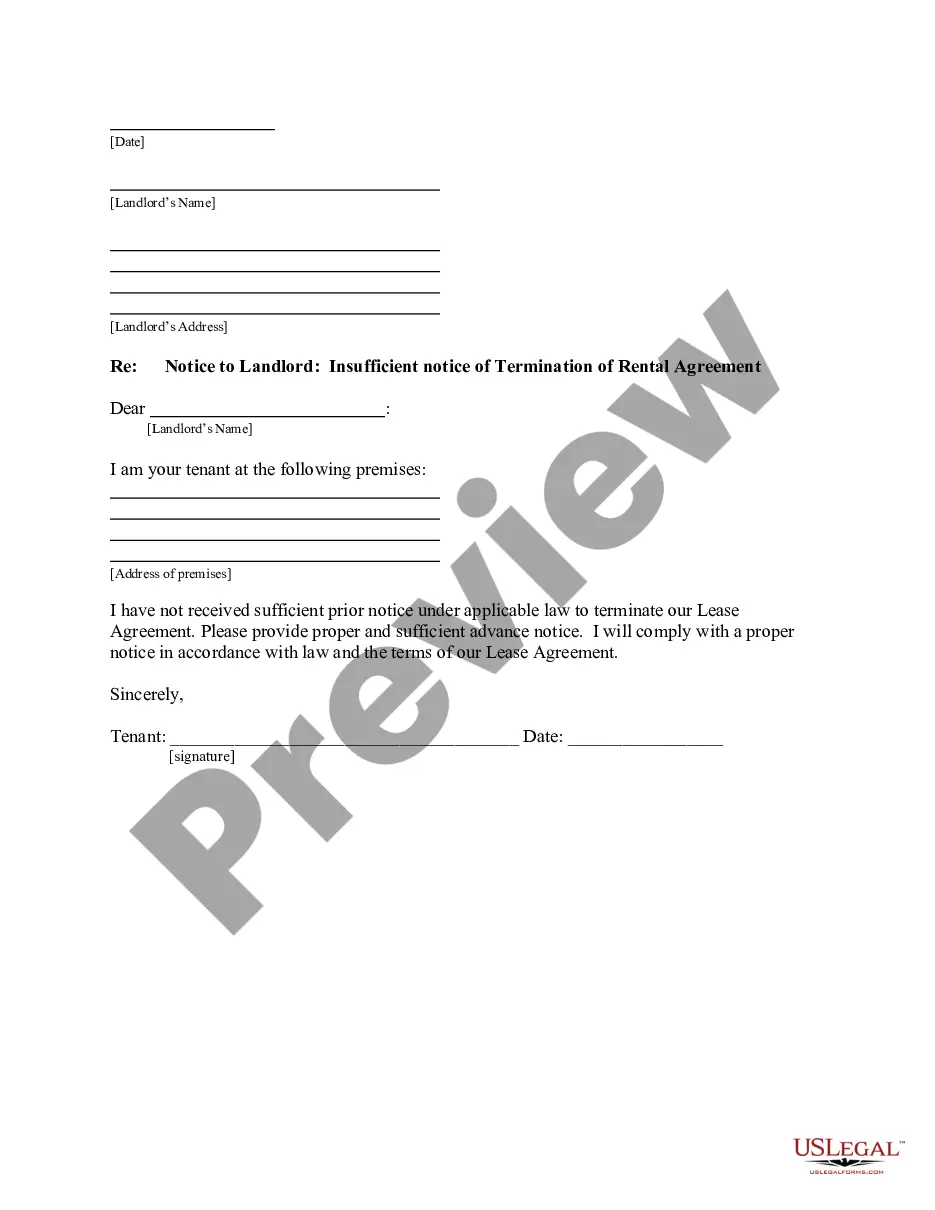
How to fill out California Letter From Tenant To Landlord About Insufficient Notice To Terminate Rental Agreement?
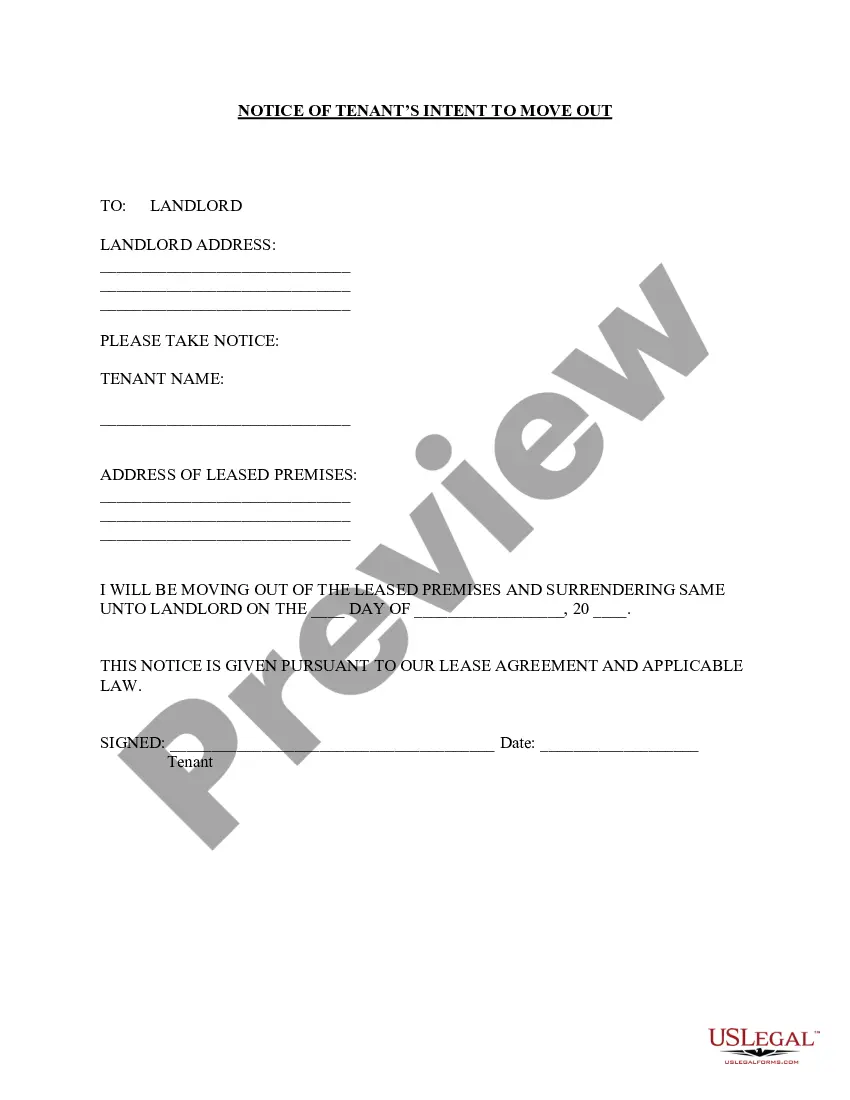
The End Rental Agreement Without Charge you see on this page is a multipurpose legal template created by qualified lawyers in adherence to federal and local regulations.
For over 25 years, US Legal Forms has supplied individuals, companies, and lawyers with more than 85,000 authenticated, state-specific forms for any commercial and personal circumstances. It’s the quickest, easiest, and most reliable method to obtain the documents you require, as the service ensures bank-level data protection and anti-malware safety.
Select the format you desire for your End Rental Agreement Without Charge (PDF, Word, RTF) and download the sample onto your device.
- Search for the document you require and review it.
- Look through the sample you searched and preview it or check the form description to ensure it meets your needs. If it doesn’t, use the search bar to find the correct one. Click Buy Now when you have located the template you need.
- Sign up and Log In.
- Choose the pricing plan that fits you and create an account. Use PayPal or a credit card to make a fast payment. If you already possess an account, Log In and review your subscription to proceed.
- Obtain the editable template.
Form popularity
FAQ
Use the Guide to Legal Help or call 1-888-783-8190 to find out if they can help you.
All lawyers have a responsibility to assist in providing pro bono publico service. See Rule 6.1. An individual lawyer fulfills this responsibility by accepting a fair share of unpopular matters or indigent or unpopular clients.
Because you decide to leave home and physically separate from your spouse does not mean you are ?legally separated? under Michigan law. For a couple to be ?legally separated? under Michigan law, one spouse must file a request or a complaint about Separate Maintenance.
Most services are free. Provides free legal assistance to low-income persons encountering a civil (non-criminal) legal problem including divorce, spousal or child abuse, public assistance, consumer rights or tenants' rights.
Steps for Filing for Divorce in Michigan Without a Lawyer Step 1: Find Out Whether You Qualify for a Michigan Divorce. ... Step 2: Get Case-Specific Forms. ... Step 3: Fill Out and Sign Michigan Divorce Forms. ... Step 4: File Your Complaint for Divorce with the Appropriate Court. ... Step 5: Serve Your Spouse with Divorce Papers.
In general, we are able to help persons with a total household income at or below 125% of the Federal poverty level. In some eligibility circumstances, we are able to help persons with a total household income up to 200% of the Federal poverty level if they have other qualifying expenses.
In general, we are able to help persons with a total household income at or below 125% of the Federal poverty level. In some eligibility circumstances, we are able to help persons with a total household income up to 187.5% of the Federal poverty level if they have other qualifying circumstances.