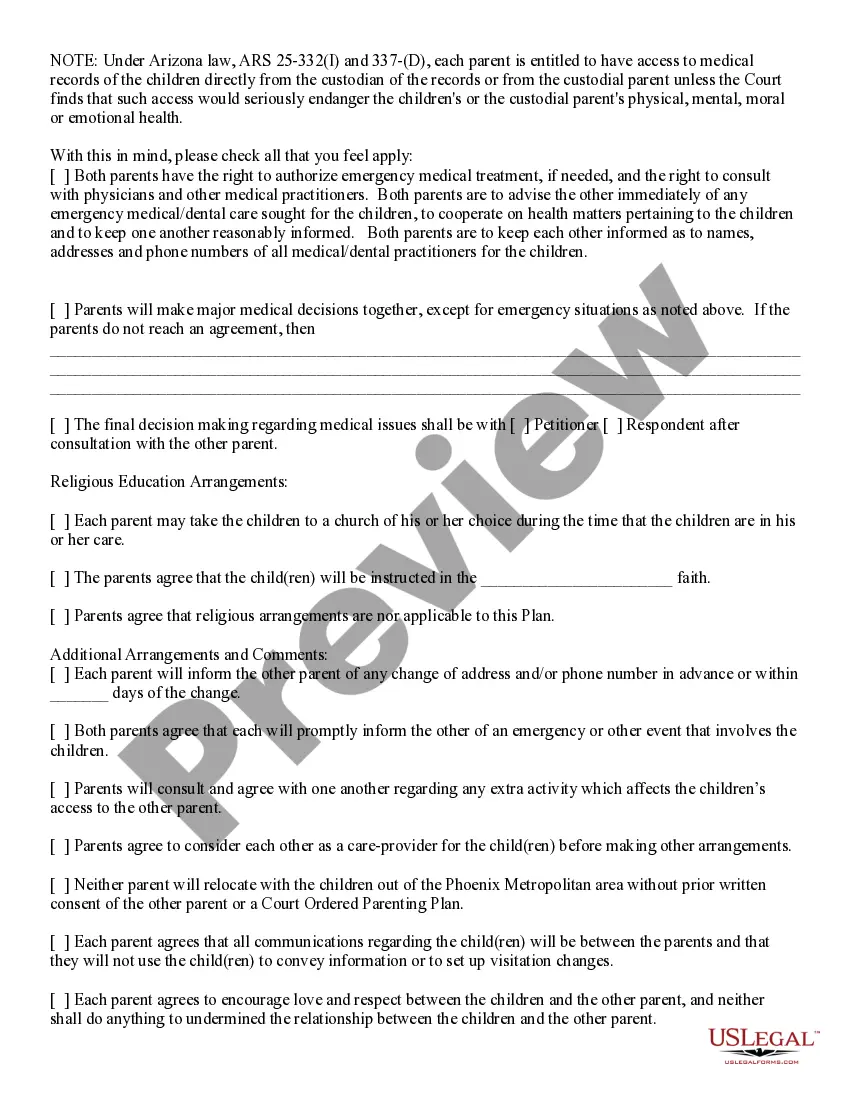
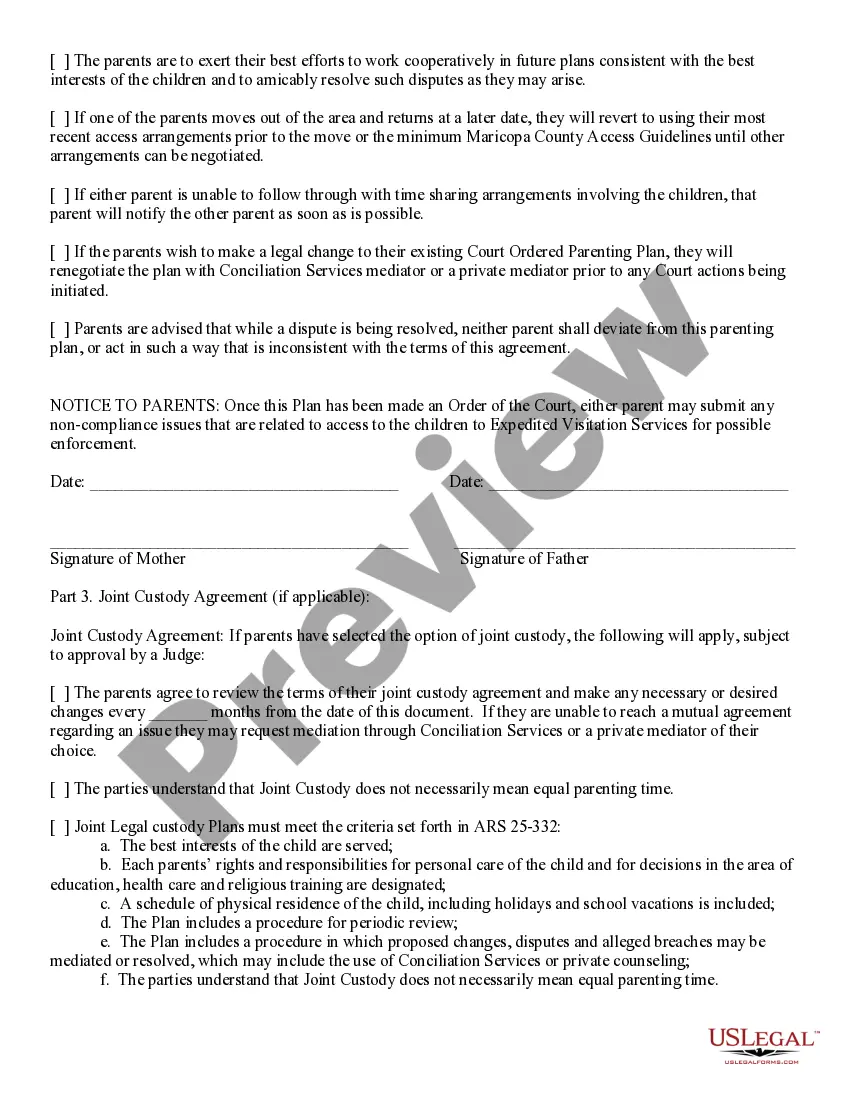
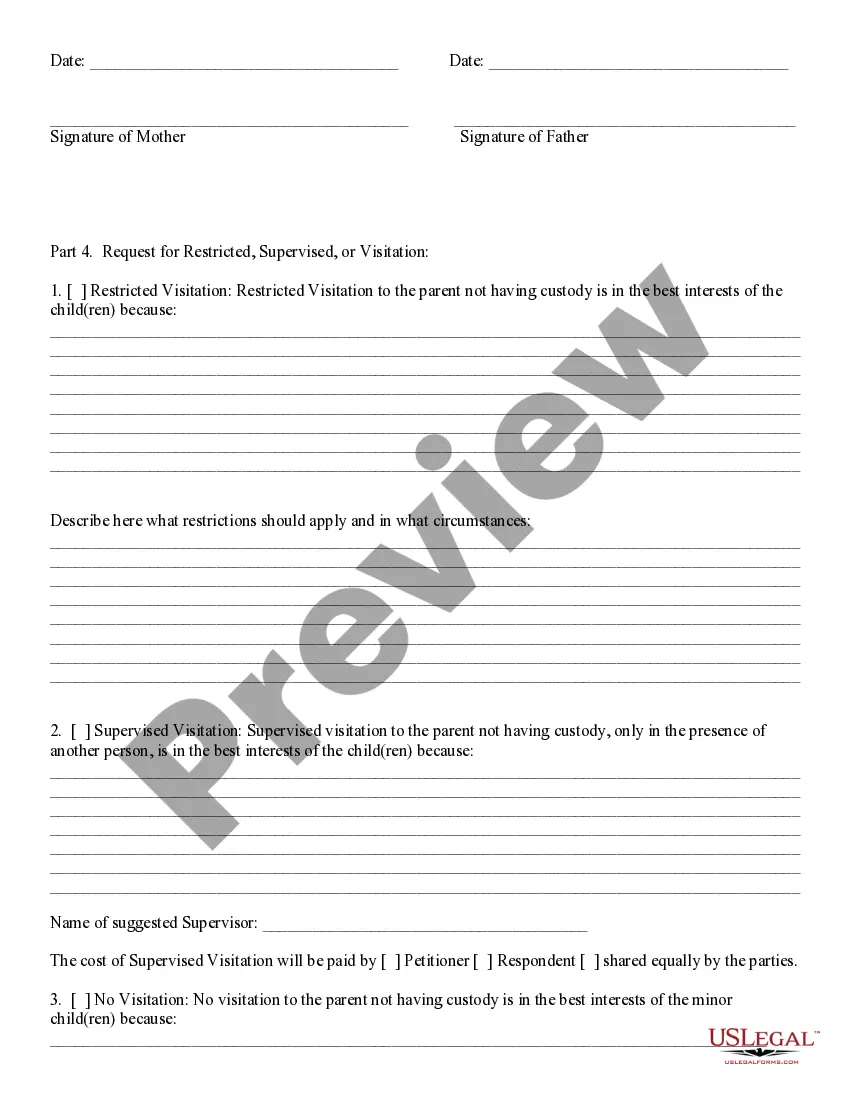
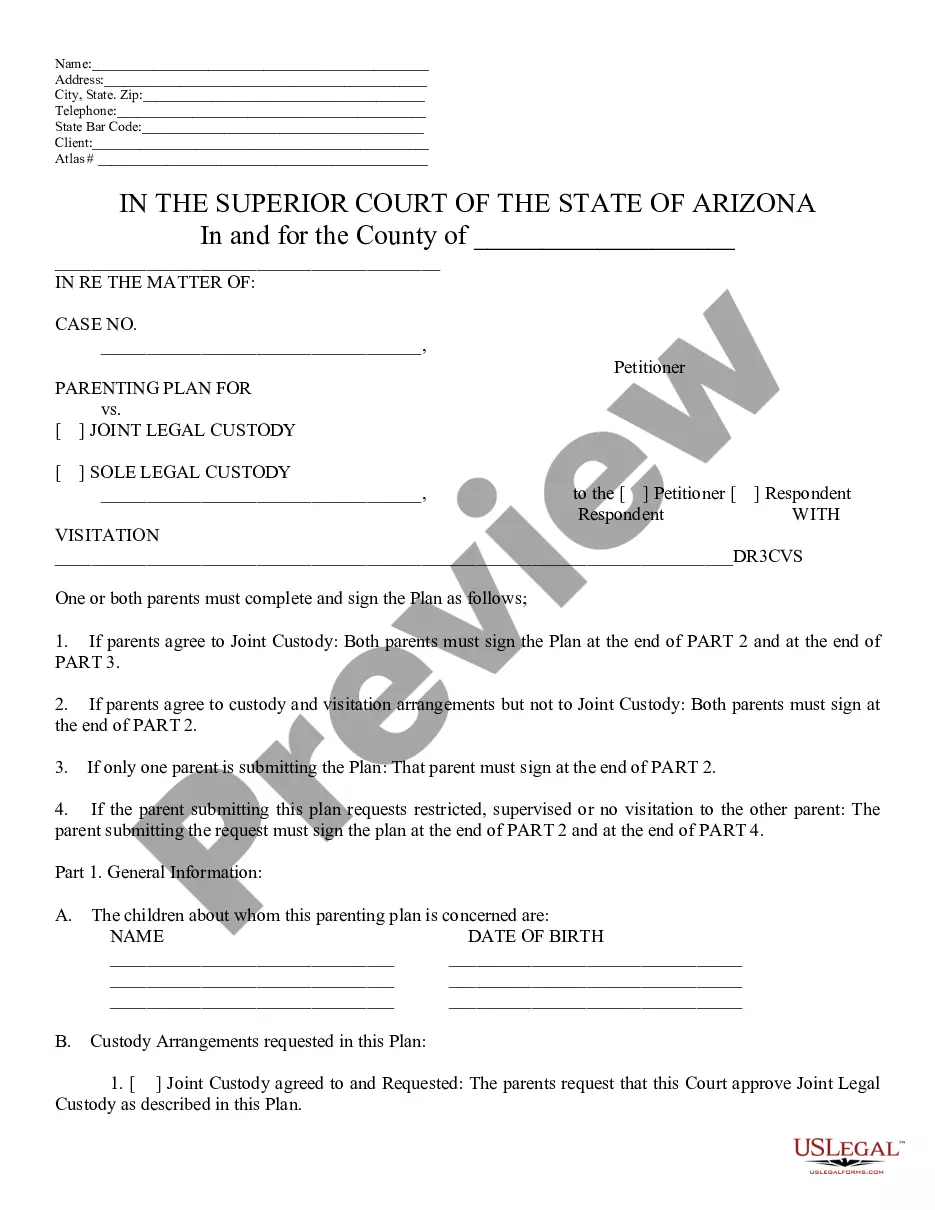
Joint Custody Agreement Without Going To Court
Description

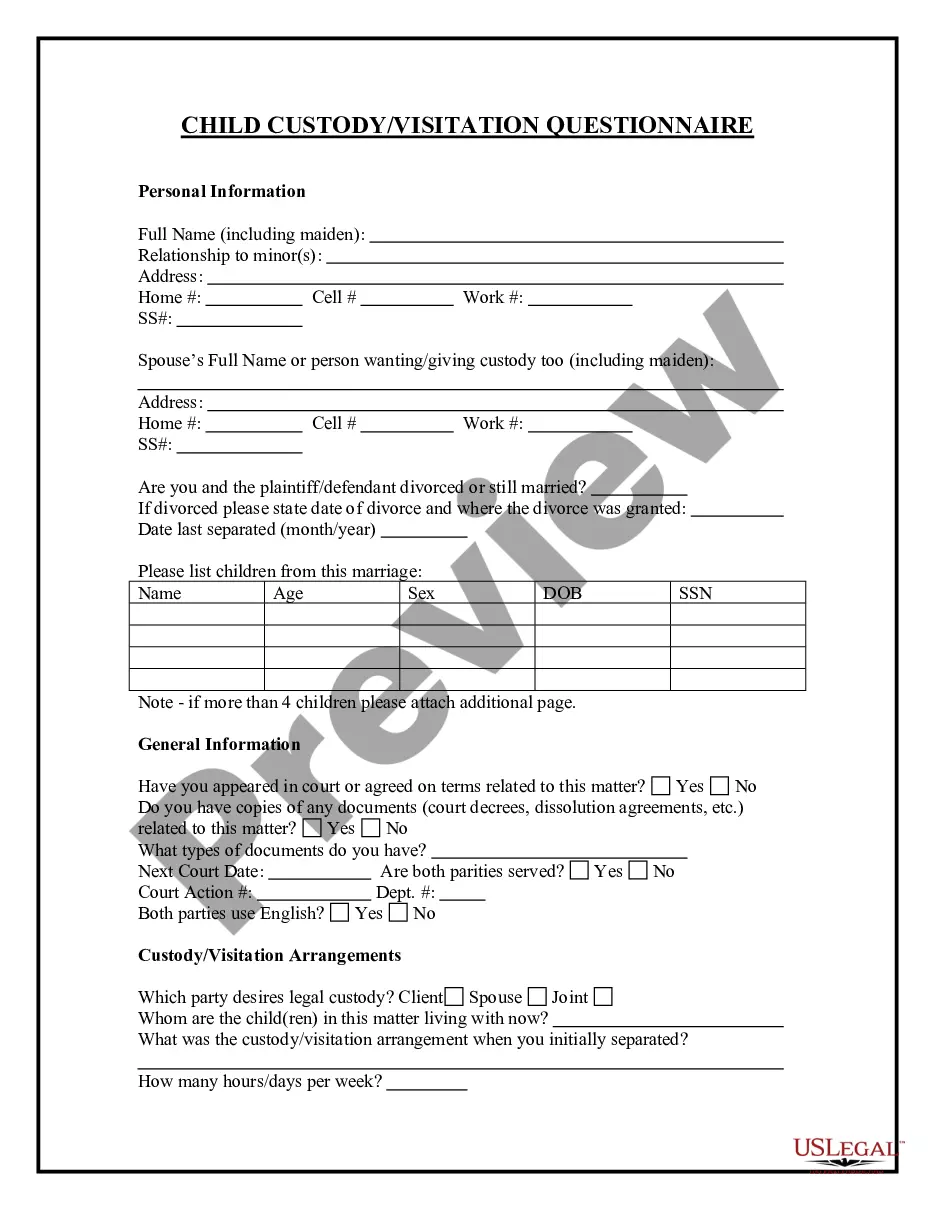
Get your form ready online
Our built-in tools help you complete, sign, share, and store your documents in one place.
Make edits, fill in missing information, and update formatting in US Legal Forms—just like you would in MS Word.
Download a copy, print it, send it by email, or mail it via USPS—whatever works best for your next step.
Sign and collect signatures with our SignNow integration. Send to multiple recipients, set reminders, and more. Go Premium to unlock E-Sign.
If this form requires notarization, complete it online through a secure video call—no need to meet a notary in person or wait for an appointment.
We protect your documents and personal data by following strict security and privacy standards.

Make edits, fill in missing information, and update formatting in US Legal Forms—just like you would in MS Word.

Download a copy, print it, send it by email, or mail it via USPS—whatever works best for your next step.

Sign and collect signatures with our SignNow integration. Send to multiple recipients, set reminders, and more. Go Premium to unlock E-Sign.

If this form requires notarization, complete it online through a secure video call—no need to meet a notary in person or wait for an appointment.

We protect your documents and personal data by following strict security and privacy standards.
Looking for another form?



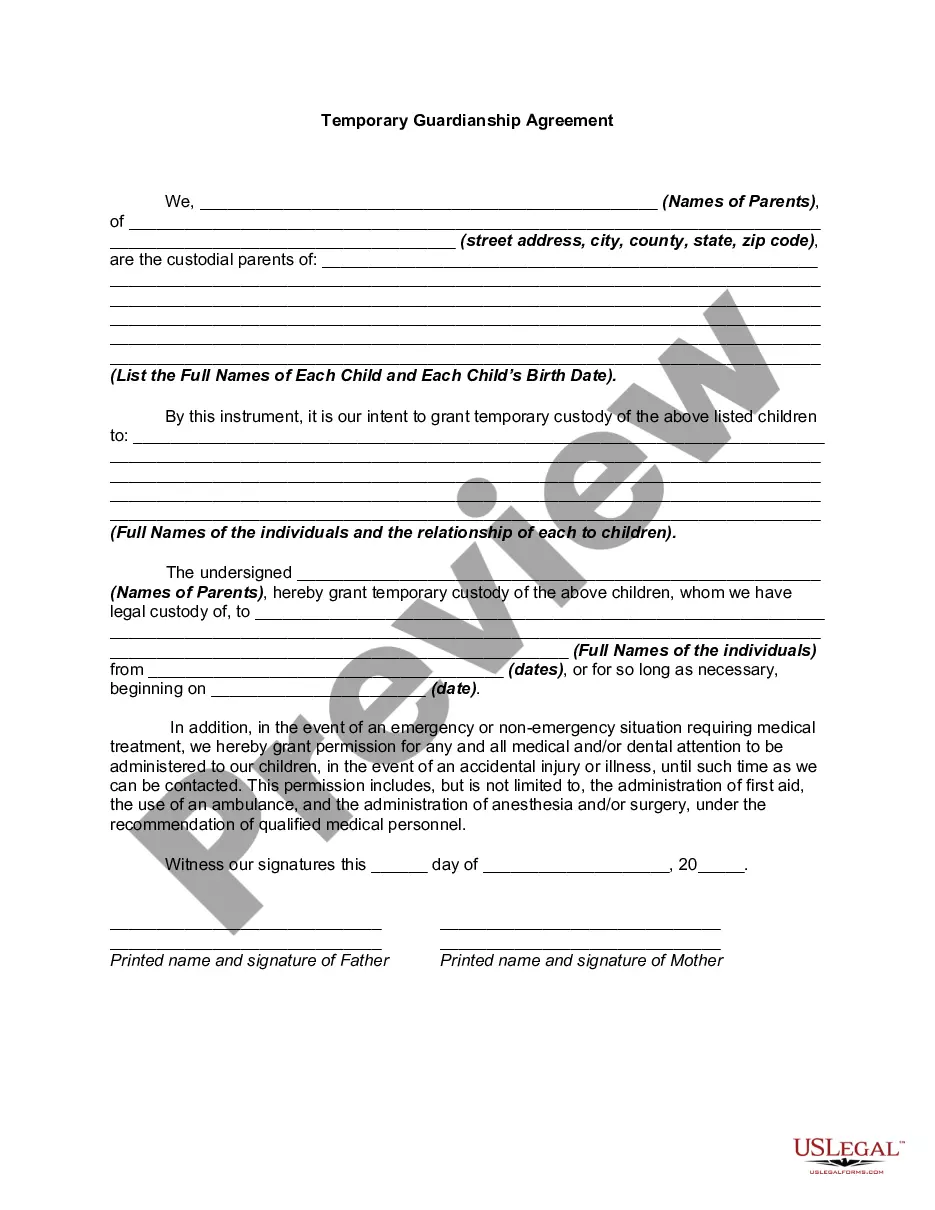

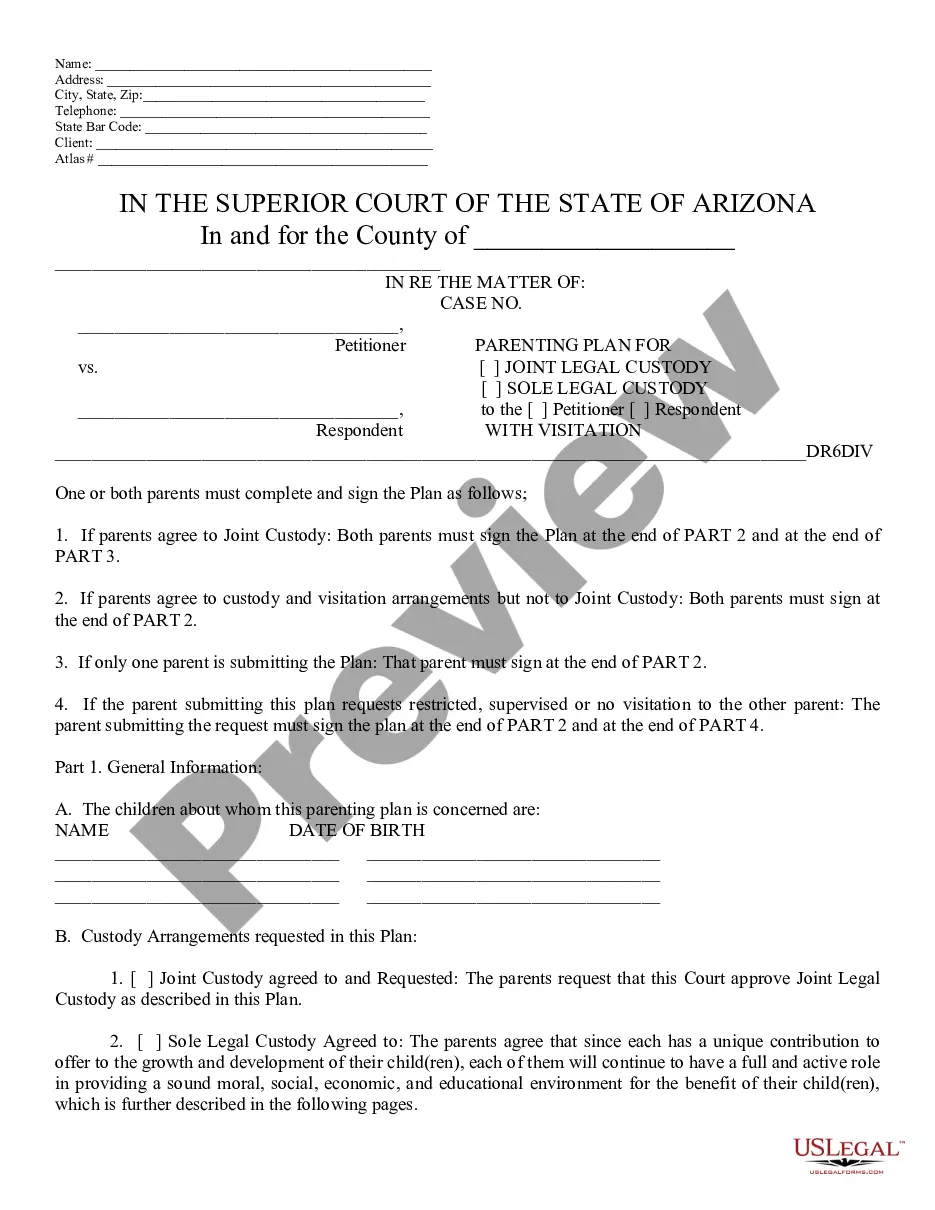
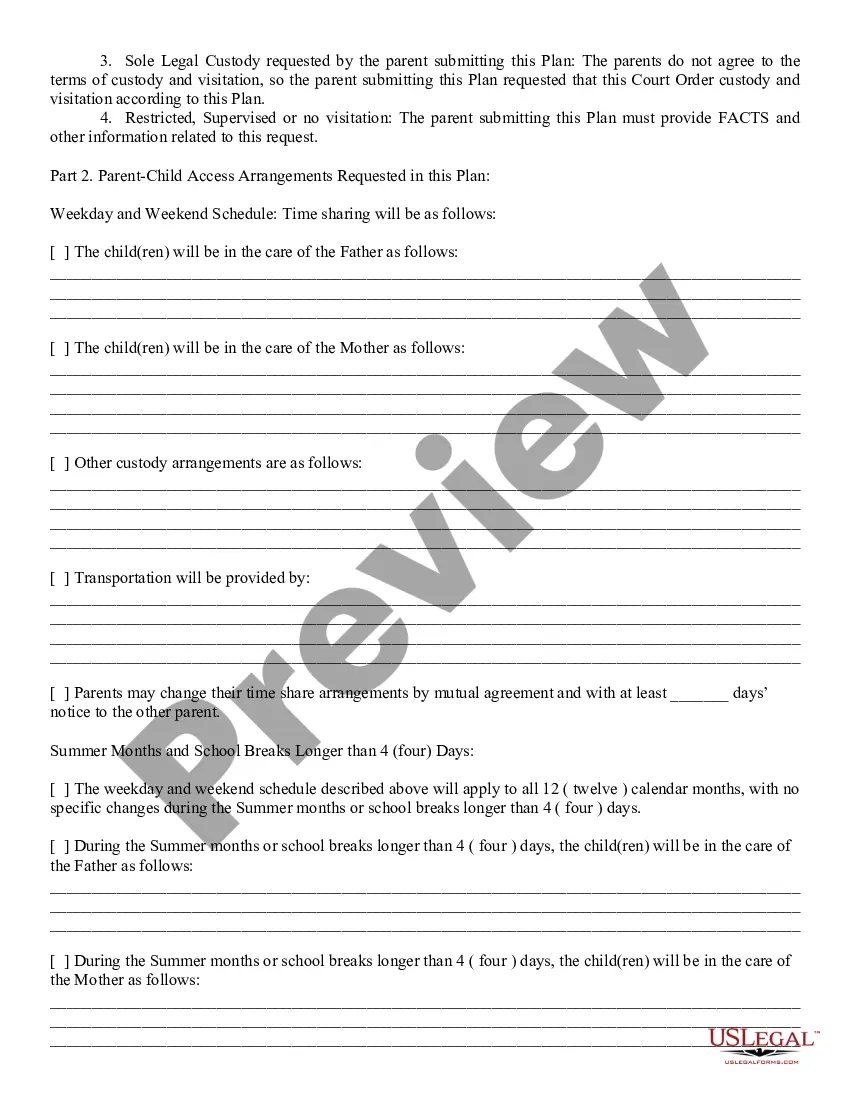
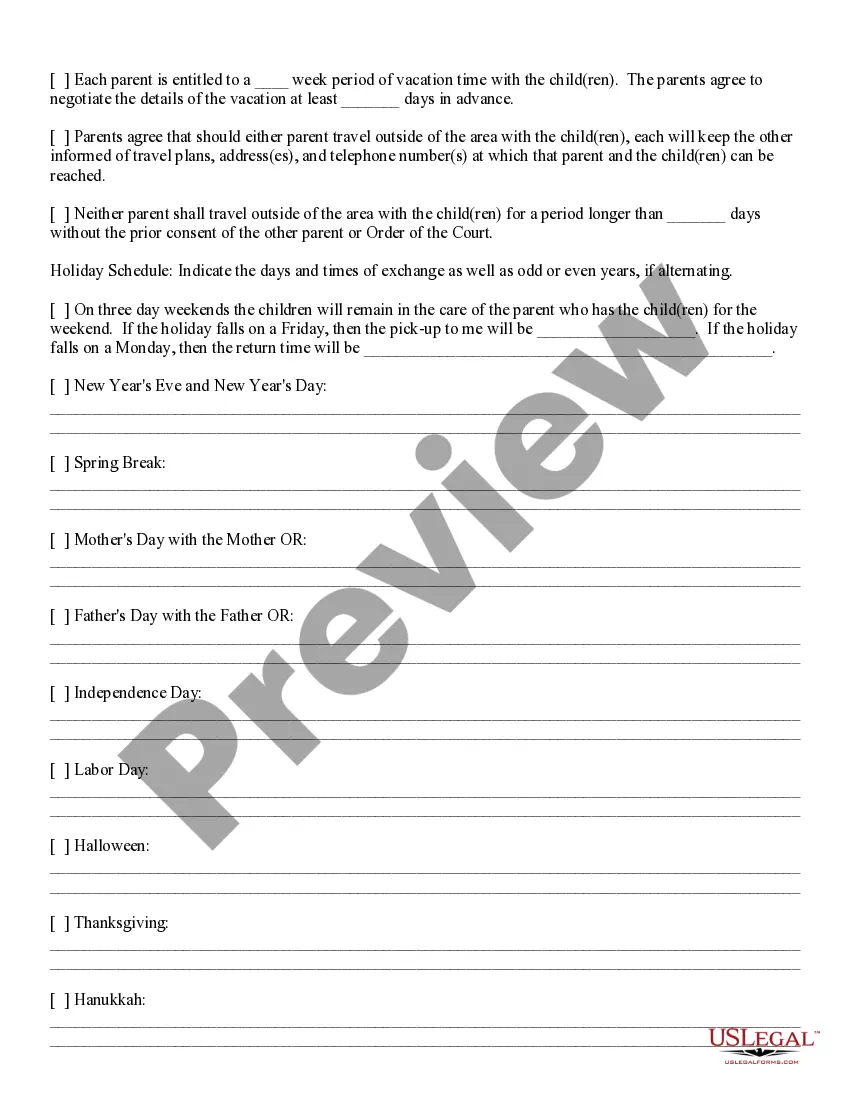
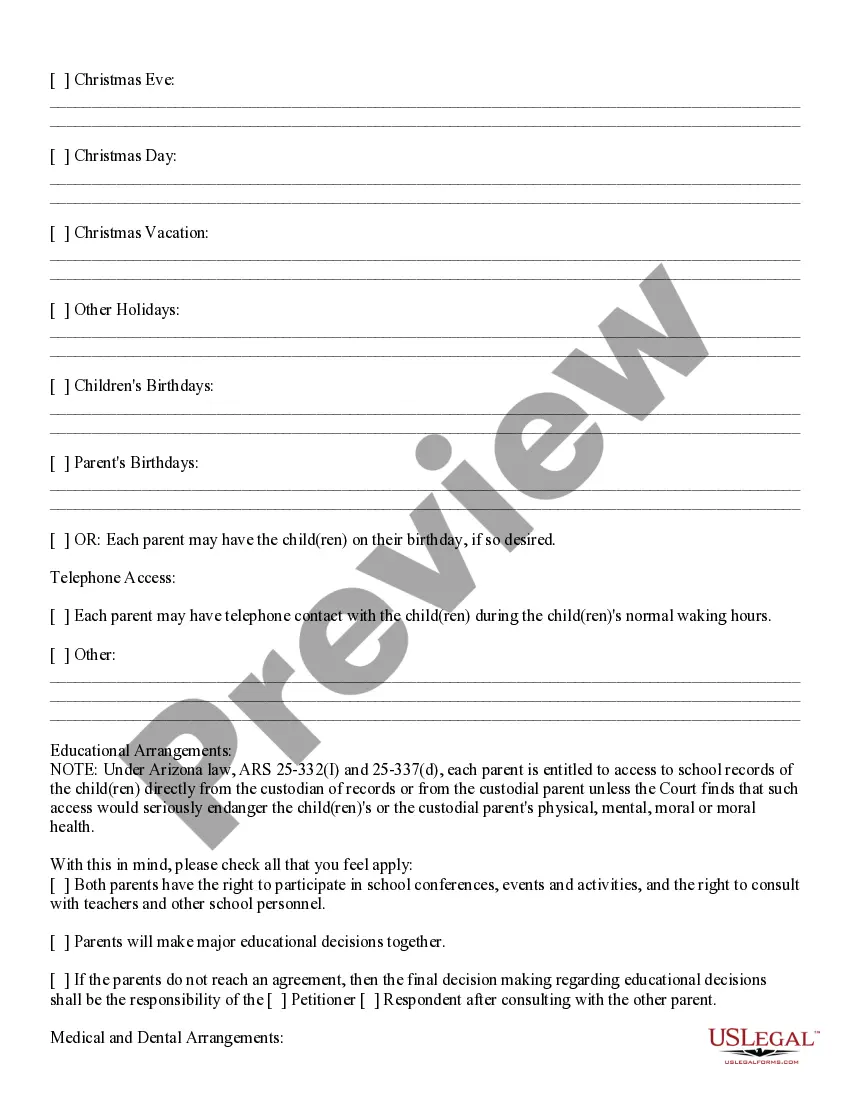
How to fill out Arizona Parenting Plan And Guidelines?
Legal management can be overwhelming, even for the most adept professionals.
When you seek a Joint Custody Agreement Without Going To Court and lack the time to look for the correct and current version, the processes may be challenging.
US Legal Forms meets all your requirements, from personal to business paperwork, all in one location.
Utilize cutting-edge tools to fill out and manage your Joint Custody Agreement Without Going To Court.
Here are the steps to follow after accessing the form you require: Confirm it is the correct form by previewing it and reviewing its description. Ensure that the template is recognized in your state or county. Click Buy Now when you are ready. Choose a monthly subscription plan. Select the format you need, and Download, complete, sign, print, and send your document. Enjoy the US Legal Forms online repository, supported by 25 years of experience and reliability. Simplify your daily document management into a straightforward and user-friendly process today.
- Access a valuable resource library of articles, guides, and materials pertinent to your circumstances and requirements.
- Save time and effort searching for the documents you need by leveraging US Legal Forms’ sophisticated search and Preview feature to find and download your Joint Custody Agreement Without Going To Court.
- If you have a monthly subscription, Log In to your US Legal Forms account, locate the form, and download it.
- Check your My documents tab to see the documents you have previously downloaded and manage your folders as desired.
- If it’s your first time using US Legal Forms, create a free account to gain unlimited access to all platform benefits.
- A comprehensive online form repository can be transformative for anyone wishing to navigate these circumstances effectively.
- US Legal Forms is a leader in online legal documents, boasting over 85,000 state-specific legal forms accessible at any time.
- With US Legal Forms, you can access localized legal and business documents tailored to your needs.
Form popularity
FAQ
No unless there are special circumstances. Neither parent has rights to restrict the other parent from seeing their child. The only exception to this rule is where the welfare of a child may be at risk. If there is a possibility that the child is at risk of harm the mother can stop a father from seeing his child.
Keeping a child away from the other parent can backfire in serious and permanent ways. If the other parent feels that the situation will not resolve itself, they have the legal right to bring the matter before the court to enforce the existing court order regarding the parenting plan and their visitation rights.
Most experts recommend that co-parents with toddlers use the 2-2-3 schedule. This schedule minimizes the time a toddler spends apart from either co-parent. In addition, this consistency provides the stability young children need and allows them to form meaningful relationships with both parents.
Outcomes if you do not Attend a Family Court Hearing If you do not go to a family court hearing the case is unlikely to just go away. There are a variety of potential outcomes depending on whether you are the applicant or respondent in the proceedings. These include: Adjournment and a new court date.
Domestic abuse You can sort out the arrangements for your children by agreement at any time ? either before or after you start court proceedings or without there being any court proceedings at all. Whether you manage to do this will depend partly on you and your ex's attitude to solving your problems this way.