Non-marital Relationship
Description
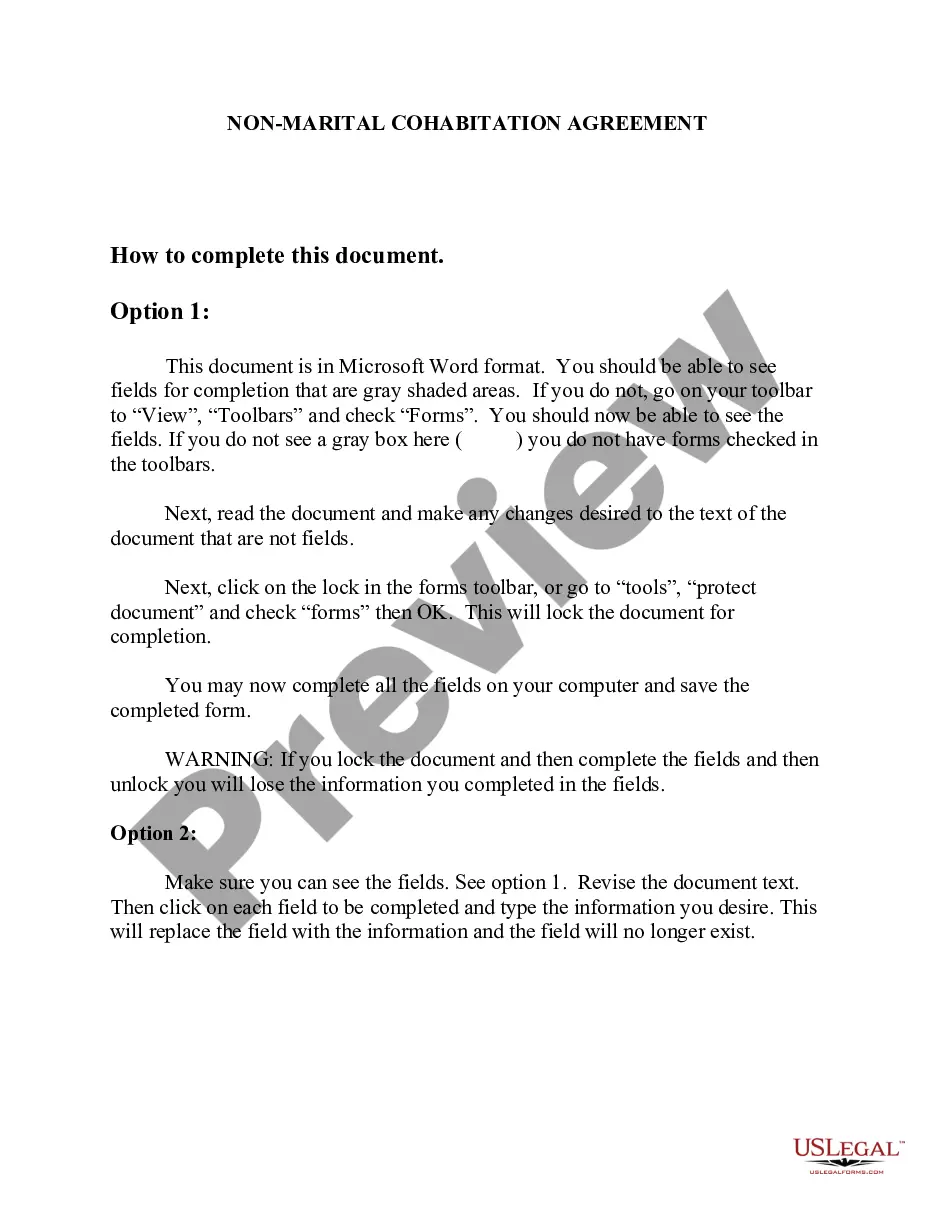
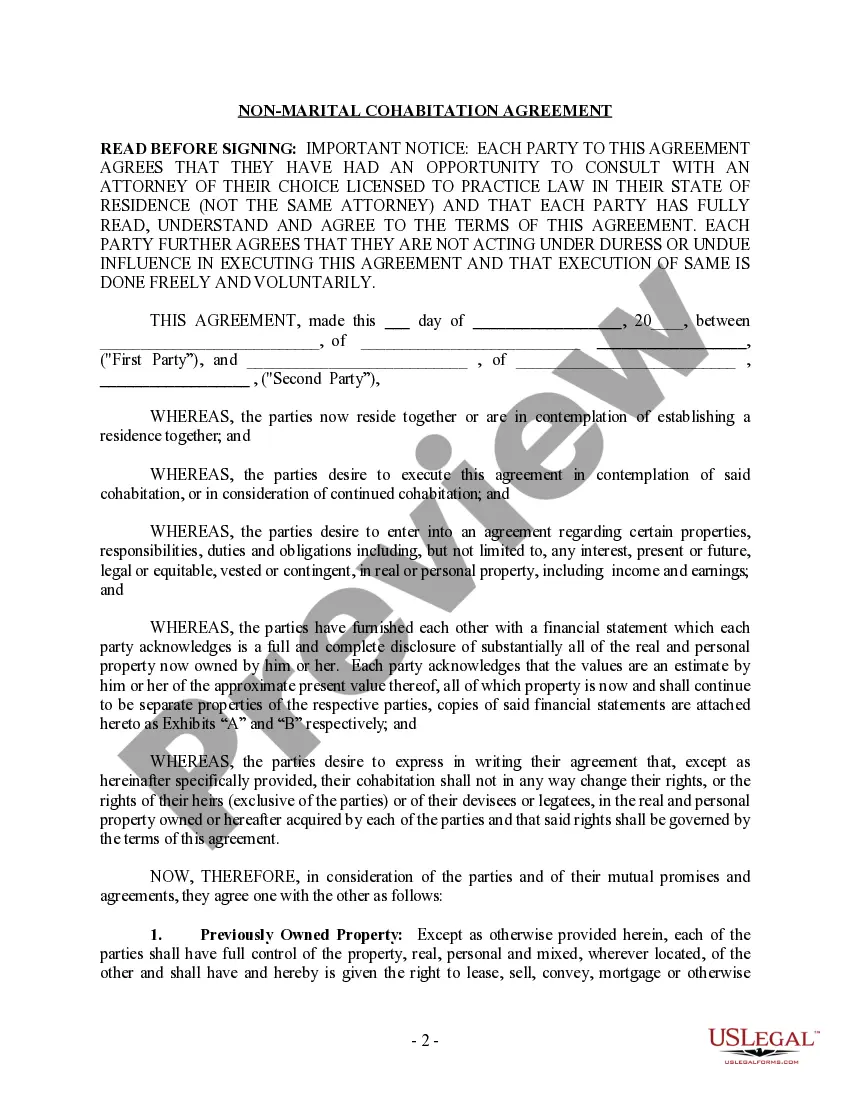
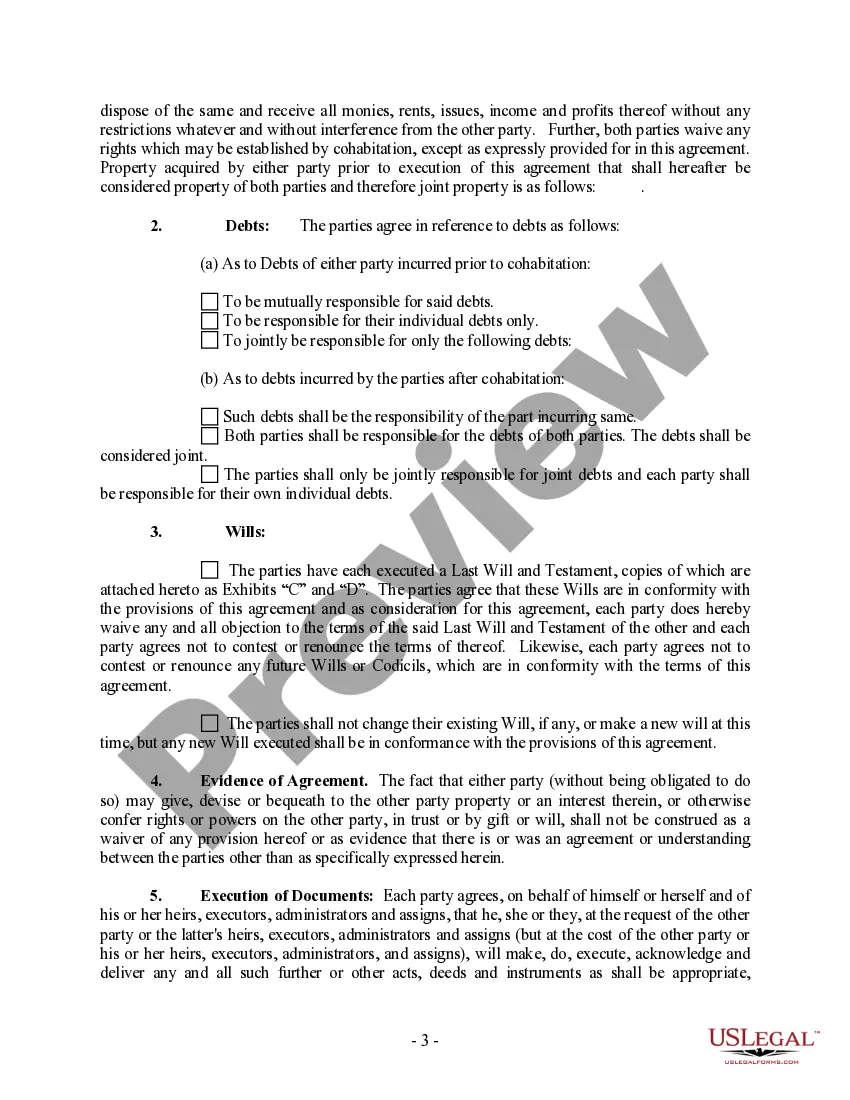
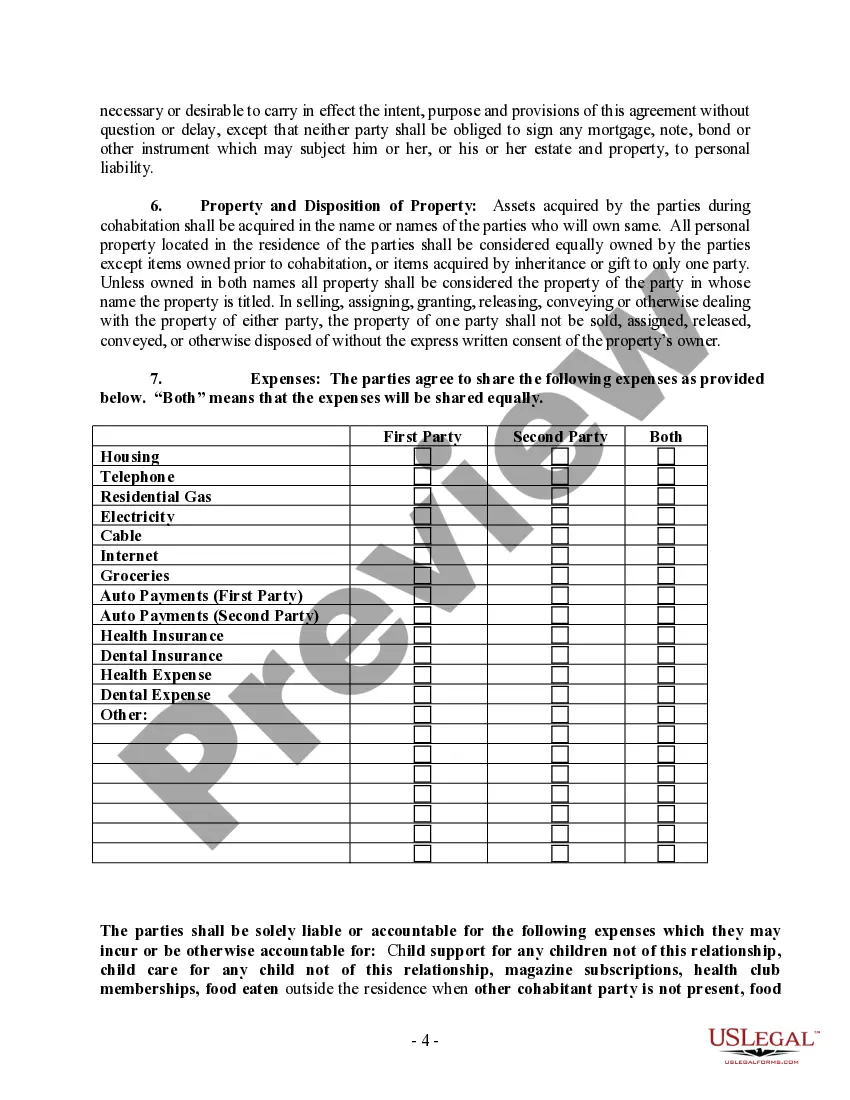
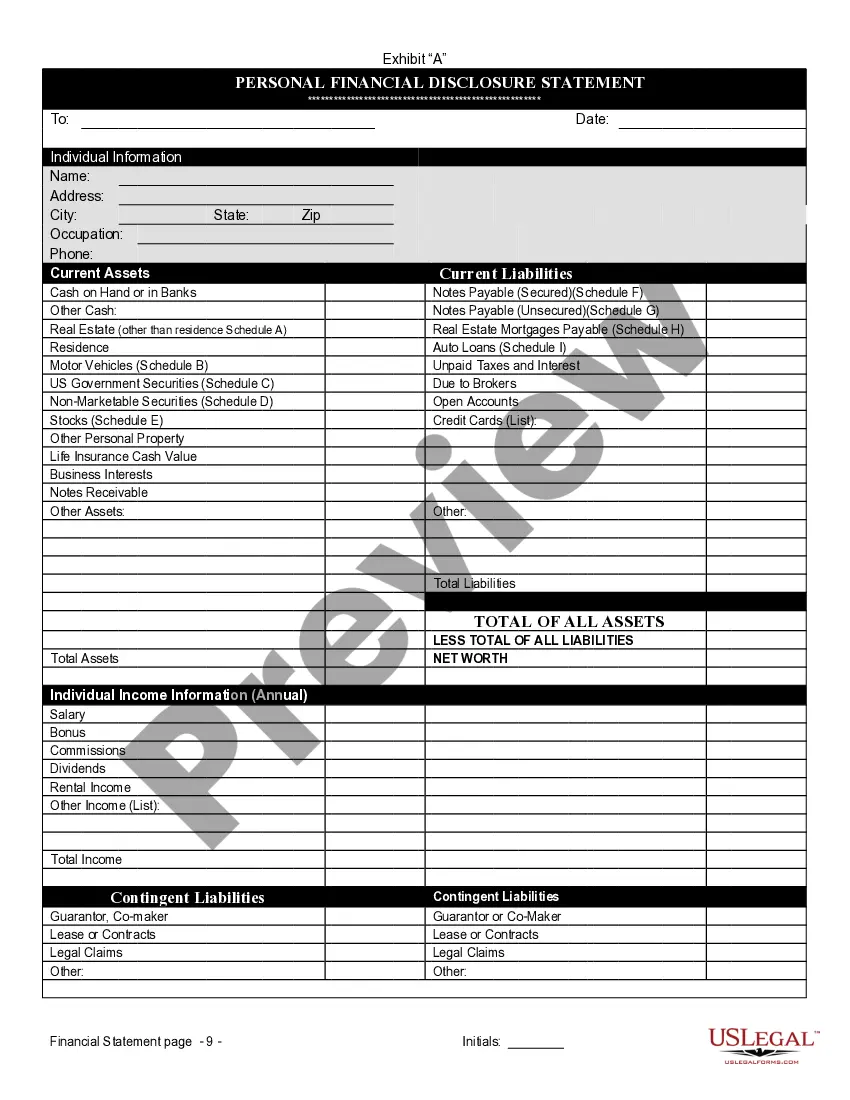
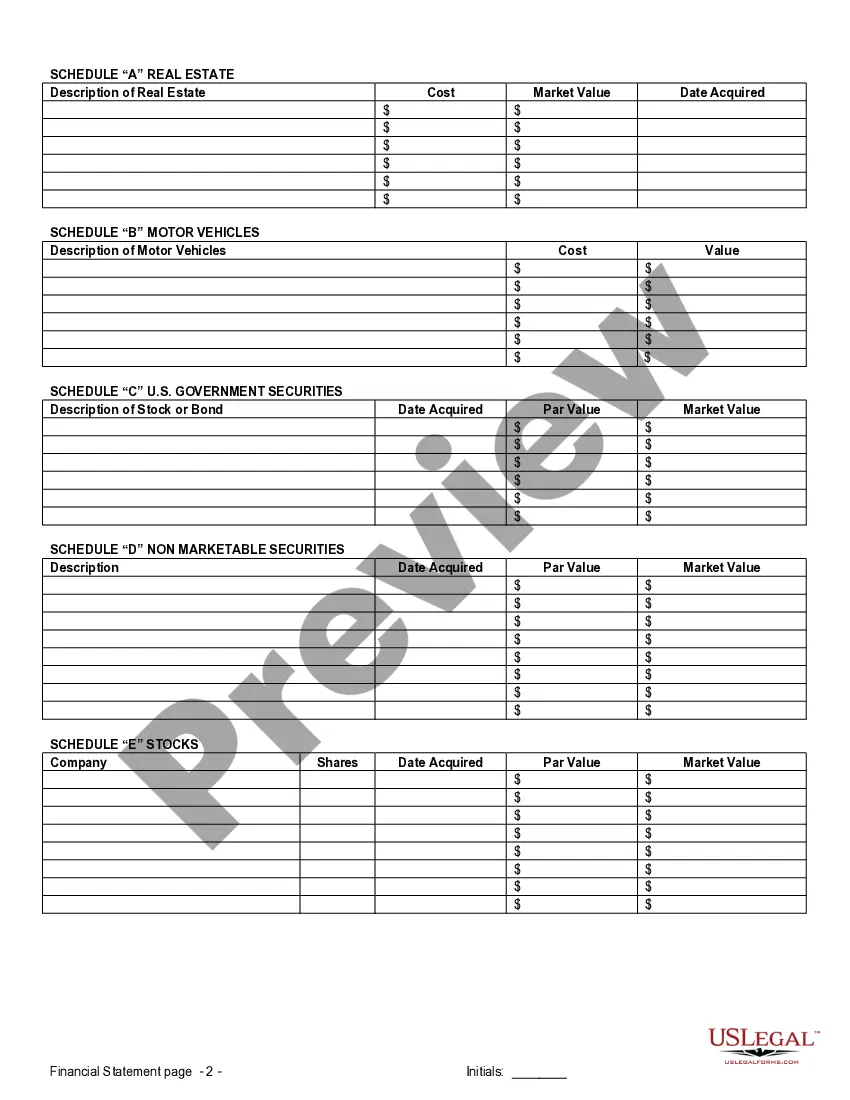

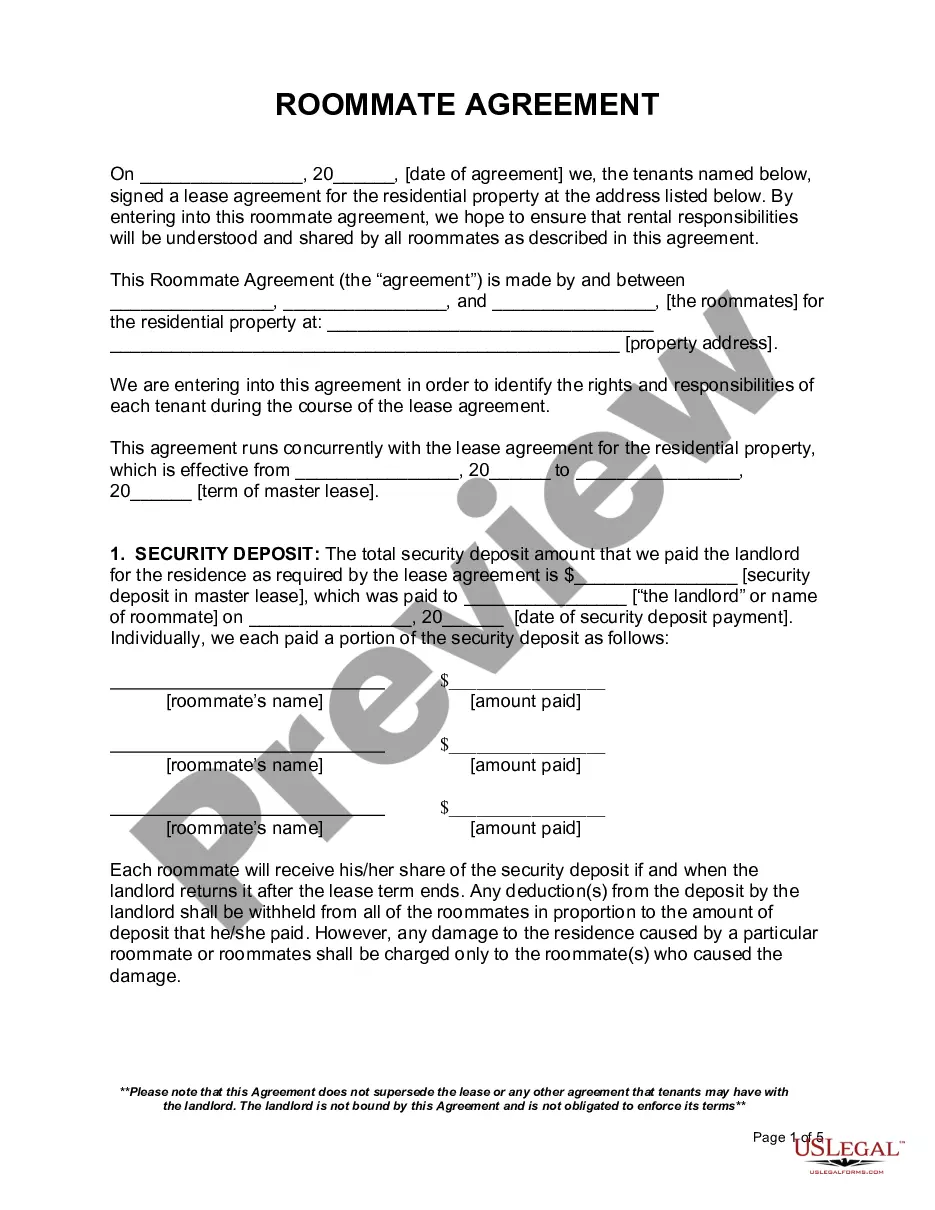
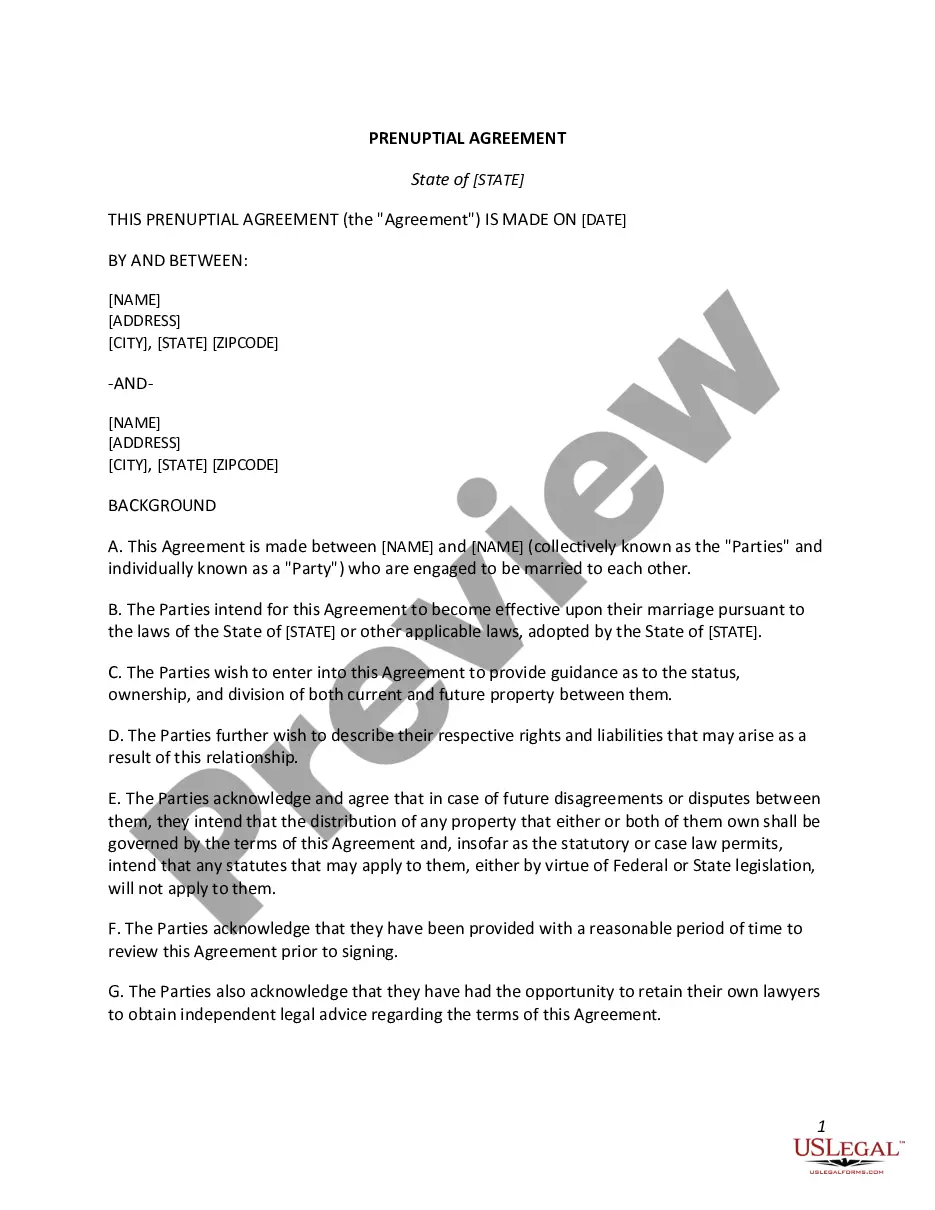
Get your form ready online
Our built-in tools help you complete, sign, share, and store your documents in one place.
Make edits, fill in missing information, and update formatting in US Legal Forms—just like you would in MS Word.
Download a copy, print it, send it by email, or mail it via USPS—whatever works best for your next step.
Sign and collect signatures with our SignNow integration. Send to multiple recipients, set reminders, and more. Go Premium to unlock E-Sign.
If this form requires notarization, complete it online through a secure video call—no need to meet a notary in person or wait for an appointment.
We protect your documents and personal data by following strict security and privacy standards.

Make edits, fill in missing information, and update formatting in US Legal Forms—just like you would in MS Word.

Download a copy, print it, send it by email, or mail it via USPS—whatever works best for your next step.

Sign and collect signatures with our SignNow integration. Send to multiple recipients, set reminders, and more. Go Premium to unlock E-Sign.

If this form requires notarization, complete it online through a secure video call—no need to meet a notary in person or wait for an appointment.

We protect your documents and personal data by following strict security and privacy standards.
Looking for another form?









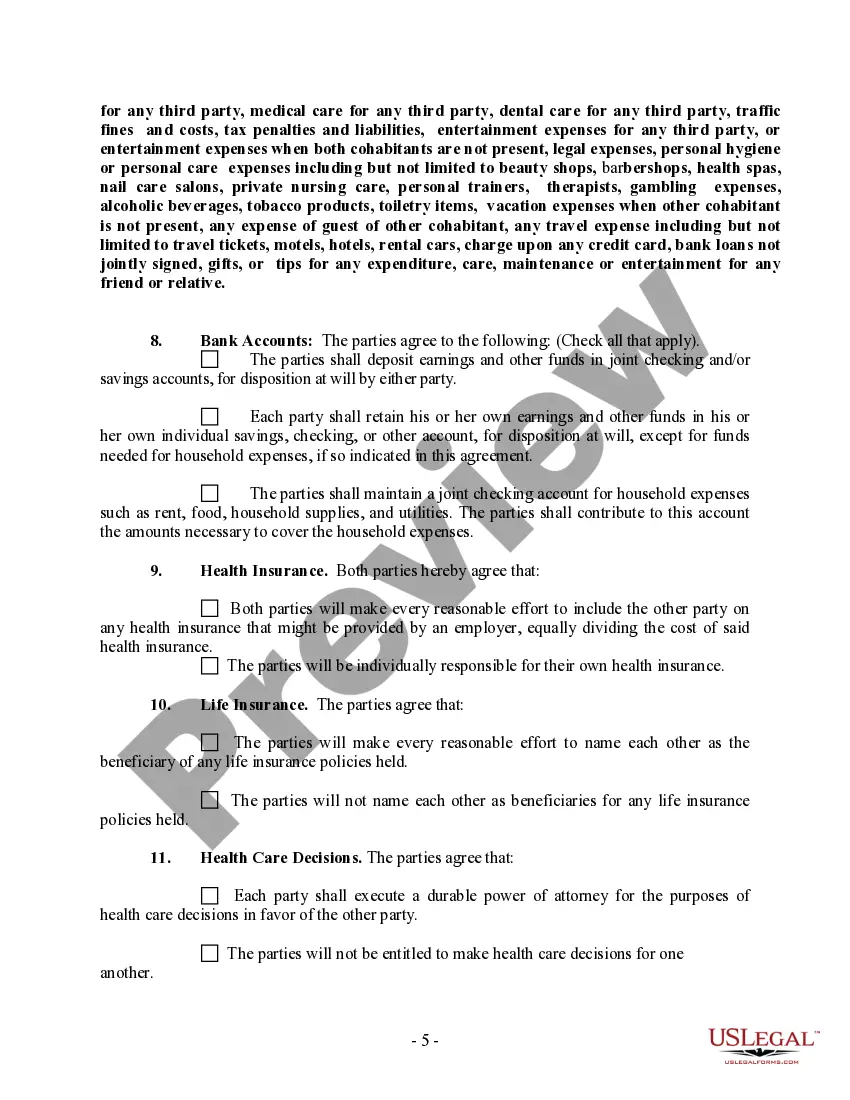
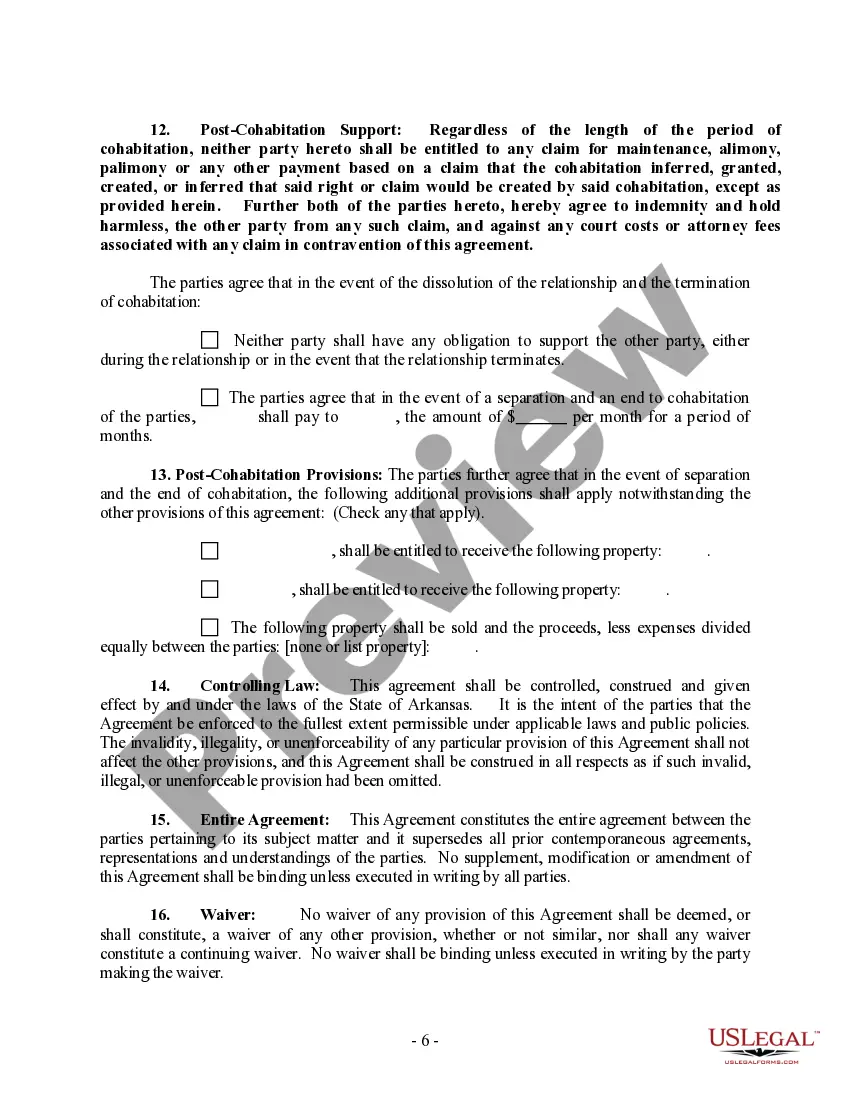
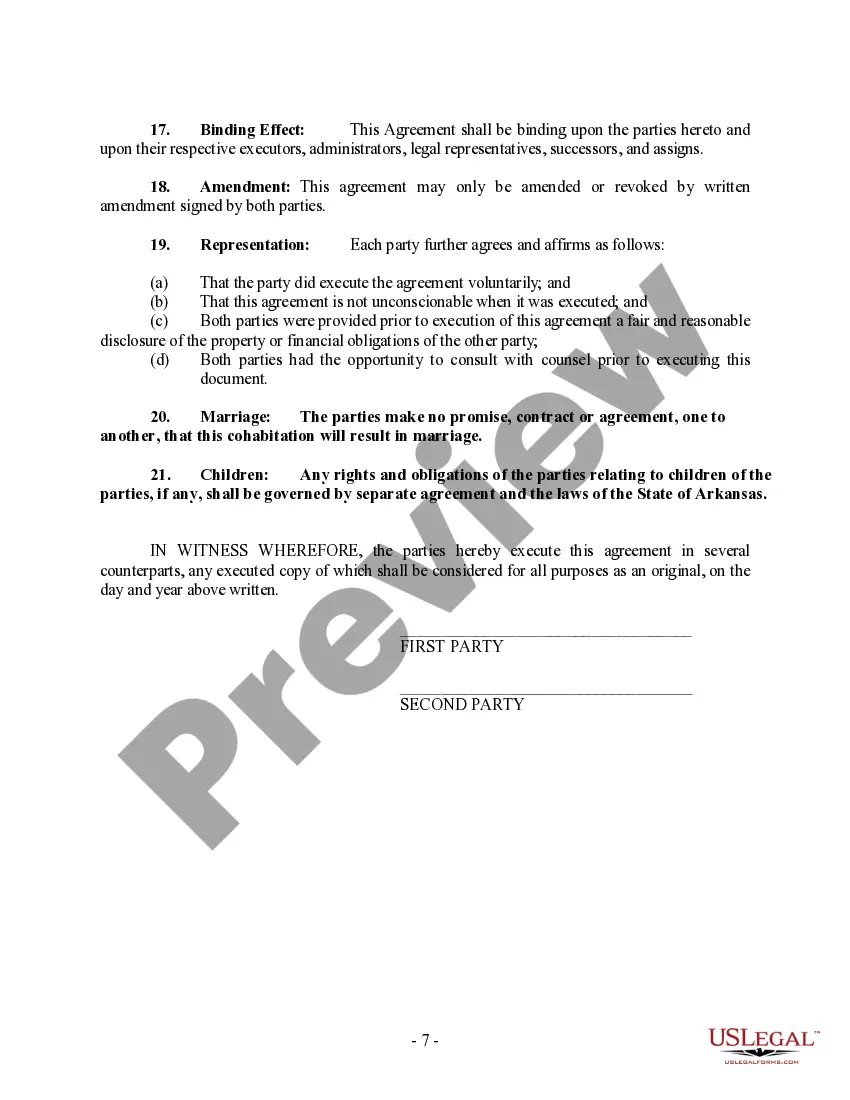
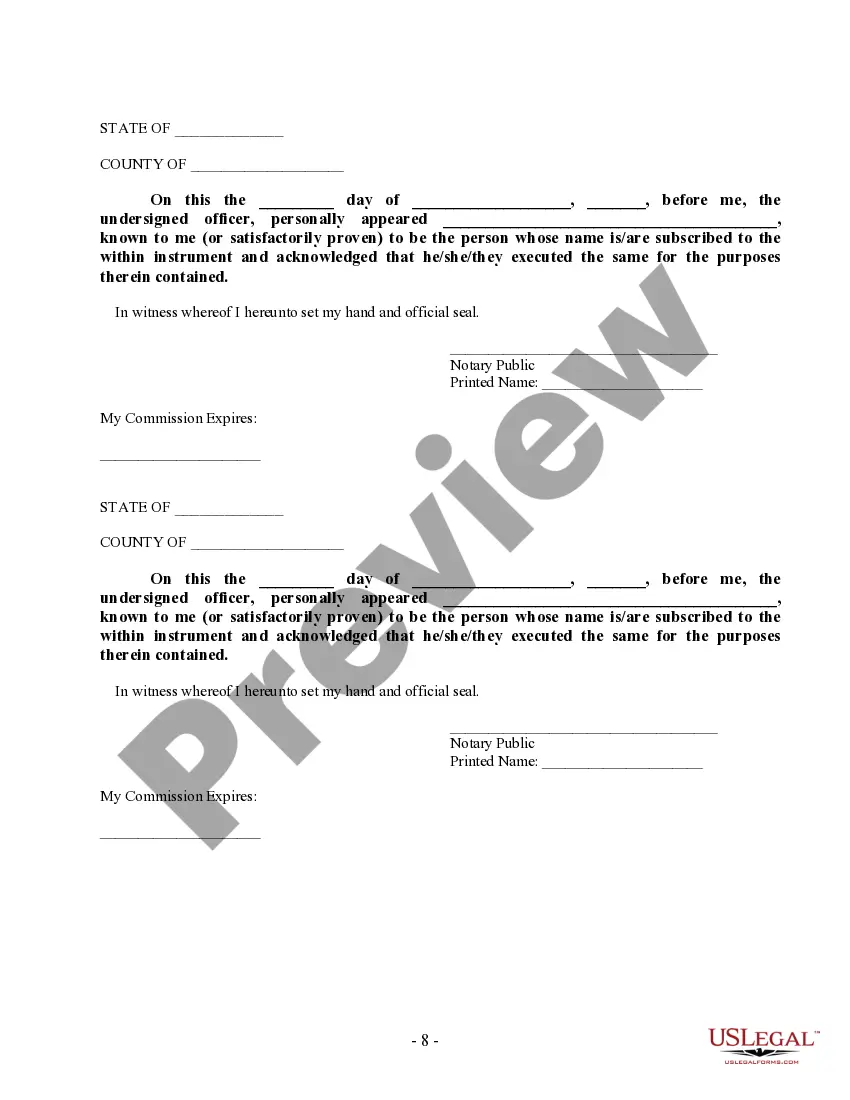
How to fill out Arkansas Non-Marital Cohabitation Living Together Agreement?
- Log in to your US Legal Forms account if you're a returning user, and click the Download button for your desired form. Ensure your subscription is active; renew if necessary.
- For first-time users, start by reviewing the form descriptions and preview mode to select the right document for your jurisdiction.
- If you need a different template, use the Search function to find a form that fits your requirements.
- Once you've identified the right document, click on the Buy Now button and select a subscription plan that works best for you.
- Complete your purchase by entering your payment information or using your PayPal account.
- Download your selected form onto your device for easy access and completion. You can also retrieve it later from the My Forms section in your account.
Using US Legal Forms streamlines the process of acquiring necessary documentation for your non-marital relationship. With their extensive form library and access to expert assistance, you can be confident that your documents are both precise and legally compliant.
Don't wait any longer; start your journey with US Legal Forms today, and empower yourself to manage your legal needs effortlessly.
Form popularity
FAQ
Dating someone for seven years does not legally make you married unless you have entered into a formal marriage or meet criteria for common law marriage in certain states. The length of your relationship, while significant, does not grant marital status. For individuals in non-marital relationships, understanding the legal framework around your situation is crucial. You can find valuable legal insights through US Legal Forms to navigate your status.
Generally, a time frame alone does not automatically designate you as married after a relationship ends. In some circumstances, non-marital relationships may have rights similar to those of married couples, but this often depends on specific laws in your state. Resources like US Legal Forms can provide important information on the legal distinctions between a relationship and marriage.
In most cases, simply being in a long-term relationship does not equate to being married. Different states have unique laws regarding common law marriages, which may recognize a relationship as marital after a certain duration. To determine your rights and obligations, especially in a non-marital relationship, explore legal tools available on US Legal Forms that can help clarify your status.
If you are in a non-marital relationship, you would typically select 'single' or 'not married' on official forms. It's important to accurately represent your situation to avoid any legal complications. If you need to document your relationship status for legal purposes, consider consulting resources on non-marital relationships, or verify through platforms like US Legal Forms for accurate guidance.
The 2-2-2 rule for couples emphasizes the importance of regular quality time in a non-marital relationship by suggesting two dates each month, two weekend trips each year, and two vacations annually. By following this rule, couples ensure they dedicate time to nourish their connection through shared experiences. This framework is helpful for those wanting to maintain a strong bond and can be easily managed with tools offered by platforms like US Legal Forms, which provides resources for relationship planning and agreements.
The 222 dating method is a strategy designed to create meaningful connections in a non-marital relationship. It encourages partners to engage in two fun activities each week and have two deep conversations that promote understanding and growth. This method, by emphasizing intentional time together, fosters emotional resilience and enhances the quality of interactions, making it especially beneficial for couples looking to solidify their partnership.
The 222 rule focuses on maintaining balance and ensuring quality time in a non-marital relationship. It recommends that couples should dedicate two nights each month for a date night, two weekend getaways each year, and two significant outings each year. Following the 222 rule helps partners prioritize their connection, ensuring they invest in experiences that foster intimacy and strengthen their bond, which is essential in non-marital relationships.
The 777 rule for couples is a guideline designed to enhance communication and connection in a non-marital relationship. This rule suggests that partners should spend seven hours a week together, have seven conversations that matter, and take seven opportunities to appreciate each other. Implementing the 777 rule can strengthen your bond and foster a deeper understanding between partners, making it a valuable practice for those in non-marital relationships.
If you separate without filing for divorce, you remain legally married and cannot make major life changes, such as remarrying. In a non-marital relationship, separation often involves legal clarity on asset division and personal responsibilities. It’s important to outline each partner’s rights to prevent complications later on. Seeking legal advice is highly recommended to ensure that both parties have clarity moving forward.
Filing taxes together as a couple typically requires legal marriage status, so if you are in a non-marital relationship, your options are limited. Tax benefits are generally reserved for married couples. That said, check your state laws, as some states recognize common-law marriage, which could change your filing status. Platforms like USLegalForms can help you navigate these tax complexities.