Transfer Death Tod With A Family
Description



Get your form ready online
Our built-in tools help you complete, sign, share, and store your documents in one place.
Make edits, fill in missing information, and update formatting in US Legal Forms—just like you would in MS Word.
Download a copy, print it, send it by email, or mail it via USPS—whatever works best for your next step.
Sign and collect signatures with our SignNow integration. Send to multiple recipients, set reminders, and more. Go Premium to unlock E-Sign.
If this form requires notarization, complete it online through a secure video call—no need to meet a notary in person or wait for an appointment.
We protect your documents and personal data by following strict security and privacy standards.
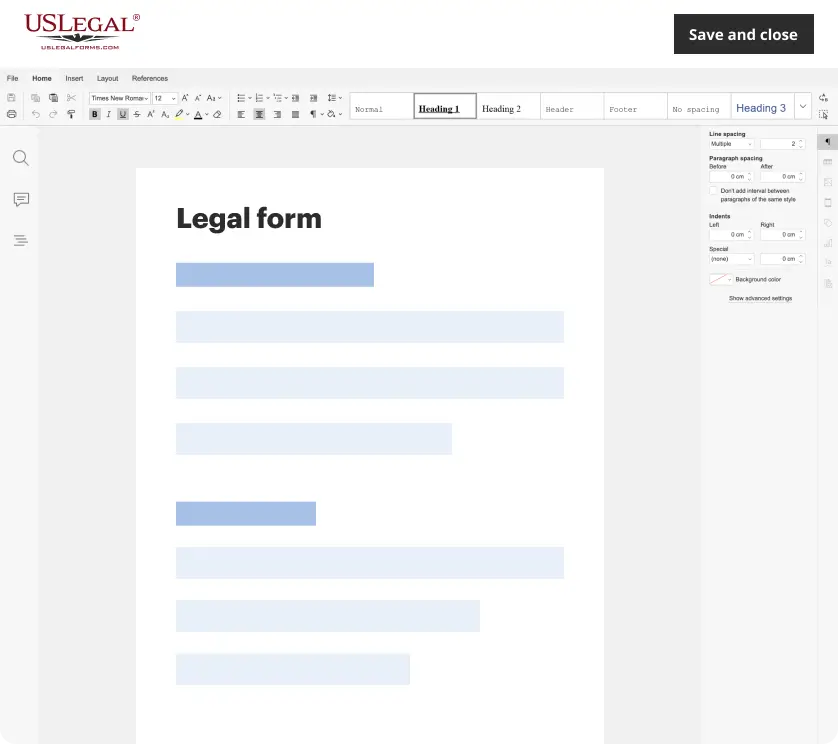
Make edits, fill in missing information, and update formatting in US Legal Forms—just like you would in MS Word.
Download a copy, print it, send it by email, or mail it via USPS—whatever works best for your next step.
Sign and collect signatures with our SignNow integration. Send to multiple recipients, set reminders, and more. Go Premium to unlock E-Sign.

If this form requires notarization, complete it online through a secure video call—no need to meet a notary in person or wait for an appointment.

We protect your documents and personal data by following strict security and privacy standards.
Looking for another form?
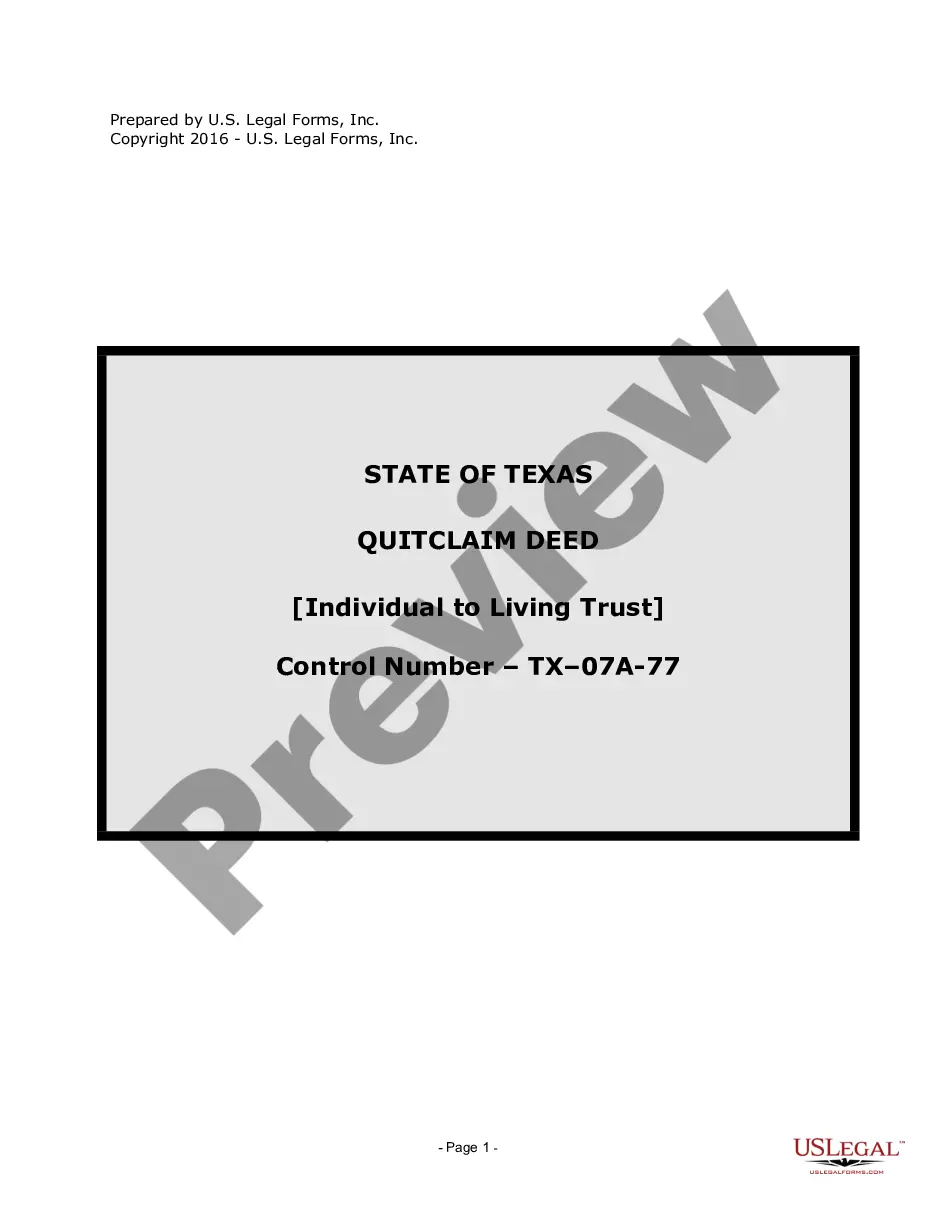

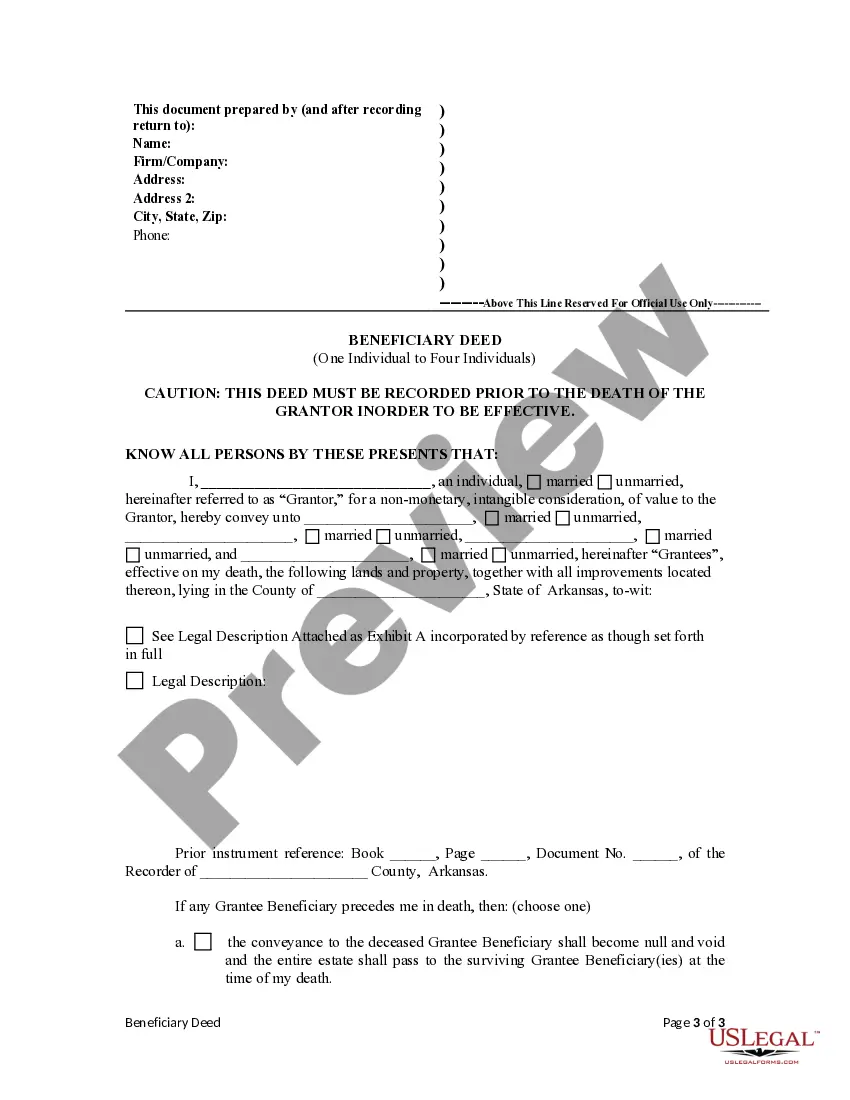
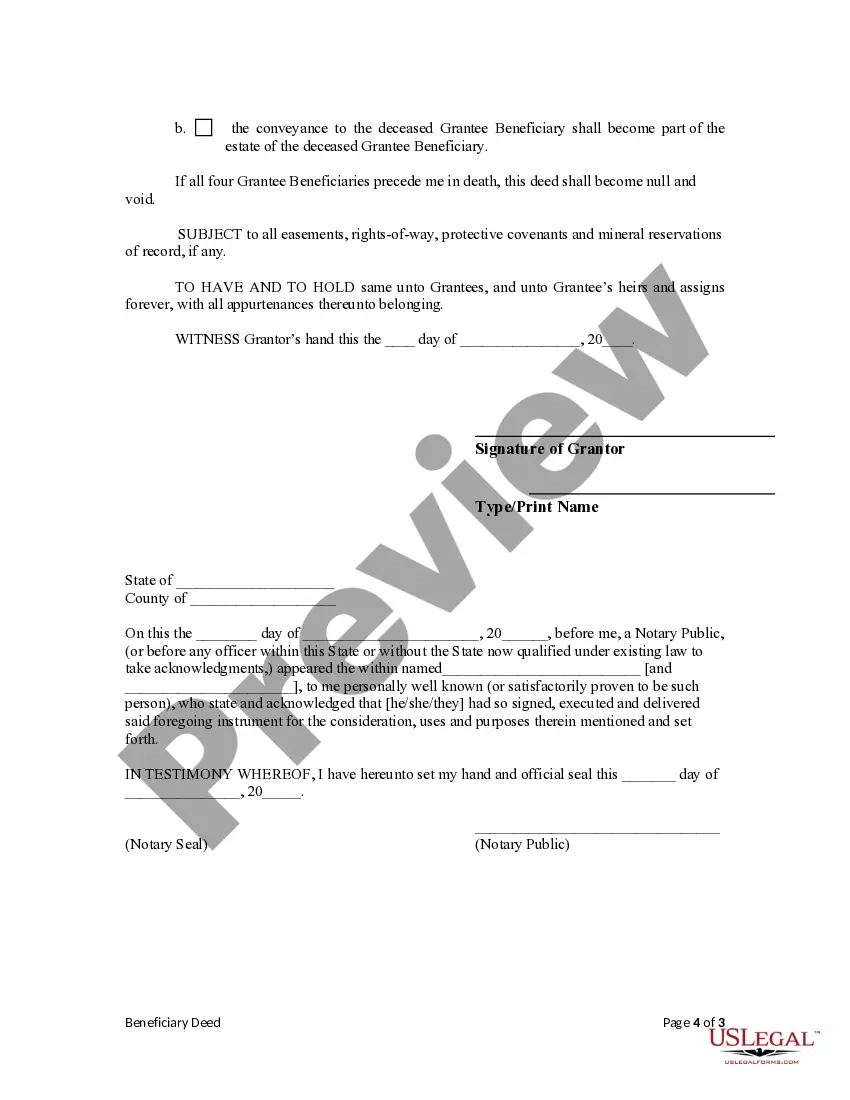
How to fill out Arkansas Transfer On Death Deed Or TOD - Beneficiary Deed For One Individual To Four Individuals?
- If you have previously used US Legal Forms, log into your account and locate the necessary transfer form in your library. Ensure your subscription is active; if not, renew it as per your plan.
- For new users, start by exploring the Preview options to find the appropriate form that matches your needs and adheres to local jurisdictional requirements.
- Should you require a different template, utilize the Search feature to find the correct one. Once confirmed, proceed to the next step.
- Select the form you need and click on the Buy Now button. Choose your preferred subscription plan, and create an account to access a wealth of resources.
- Complete your purchase by entering your payment information, either through credit card or PayPal.
- Download the necessary form and save it to your device. You can always access it later from the My Forms section.
In just a few straightforward steps, you can ensure your family is protected and prepared for the future.
Start your journey with US Legal Forms today and gain access to thousands of legal documents at your fingertips!
Form popularity
FAQ
Choosing between a Transfer on Death deed and a beneficiary designation often depends on your specific situation and preferences. A TOD deed is efficient for real estate, while beneficiaries are typically used for financial accounts and life insurance policies. Both options can simplify asset transfer and prevent probate, making them valuable for families. You might want to explore both options further on US Legal Forms to find the best fit for your family's needs.
A Transfer on Death deed works by allowing you to name a beneficiary who will inherit your property upon your death. You retain full ownership and control of the property while you're alive, and you can revoke or modify the deed at any time. This structure helps ensure your family receives the property seamlessly, avoiding probate complications. For more detailed guidance, US Legal Forms offers resources tailored to Transfer Death TOD with a family.
Yes, a Transfer on Death deed avoids probate in Texas. When you use a TOD deed, the property passes directly to the designated beneficiaries without going through the lengthy probate process. This feature can significantly ease the burdens on your family during a difficult time. Explore the benefits of TOD deeds with your family to make informed decisions on property transfer.
In Texas, a Transfer on Death (TOD) deed allows property owners to designate beneficiaries to receive their property after their death. This deed must be specific and legally executed to be valid. Generally, each owner can designate a beneficiary or multiple beneficiaries, which gives families more control over their assets. You can learn more about the rules for executing a TOD deed on the US Legal Forms platform.
Yes, New Jersey permits transfer on death (TOD) deeds. This feature offers residents a beneficial means of passing real estate to beneficiaries without encountering the probate process. Families in New Jersey can effectively manage their estate plans using TOD deeds, making it easier to transfer death TOD with a family. It’s advisable to consult with legal professionals to maximize the benefits of this option.
The most effective way to leave property upon death often depends on individual circumstances. Many families benefit from a transfer on death (TOD) deed, as it allows for a straightforward and private transfer of real estate to heirs. However, it’s wise to evaluate options like trusts and wills, ensuring that the chosen method aligns with family needs. A comprehensive approach can facilitate a seamless transfer death TOD with a family.
A transfer on death (TOD) deed typically does not avoid inheritance taxes. The property might be included in the taxable estate depending on the value and local laws. However, using TOD can simplify the transfer process and lessen potential tax burdens for families. It's essential to consult a tax advisor to understand the implications of a transfer death TOD with a family.
The timelines for filing probate vary by state, but generally, you should file within six months after the death. In the absence of a will, this process can become more complicated, as the court determines how assets will be distributed. Families should be mindful of these deadlines to navigate estate matters, particularly when considering how to transfer death TOD with a family effectively.
While it is not strictly necessary to hire a lawyer to create a transfer on death (TOD) deed, it is highly advisable. Legal professionals can ensure that the document complies with state laws and accurately reflects family intentions. Engaging a lawyer can prevent costly mistakes down the line, which is essential when aiming to transfer death TOD with a family smoothly.
Yes, New York State does allow transfer on death (TOD) deeds. This enables property owners to efficiently transfer real estate to designated beneficiaries without the need for probate. Families can create a smoother transition by incorporating TOD deeds into their estate planning. This process enhances clarity for those inheriting property after a transfer death TOD with a family.