Lease Agreement For Residential Property
Description


Get your form ready online
Our built-in tools help you complete, sign, share, and store your documents in one place.
Make edits, fill in missing information, and update formatting in US Legal Forms—just like you would in MS Word.
Download a copy, print it, send it by email, or mail it via USPS—whatever works best for your next step.
Sign and collect signatures with our SignNow integration. Send to multiple recipients, set reminders, and more. Go Premium to unlock E-Sign.
If this form requires notarization, complete it online through a secure video call—no need to meet a notary in person or wait for an appointment.
We protect your documents and personal data by following strict security and privacy standards.

Make edits, fill in missing information, and update formatting in US Legal Forms—just like you would in MS Word.

Download a copy, print it, send it by email, or mail it via USPS—whatever works best for your next step.

Sign and collect signatures with our SignNow integration. Send to multiple recipients, set reminders, and more. Go Premium to unlock E-Sign.

If this form requires notarization, complete it online through a secure video call—no need to meet a notary in person or wait for an appointment.

We protect your documents and personal data by following strict security and privacy standards.
Looking for another form?
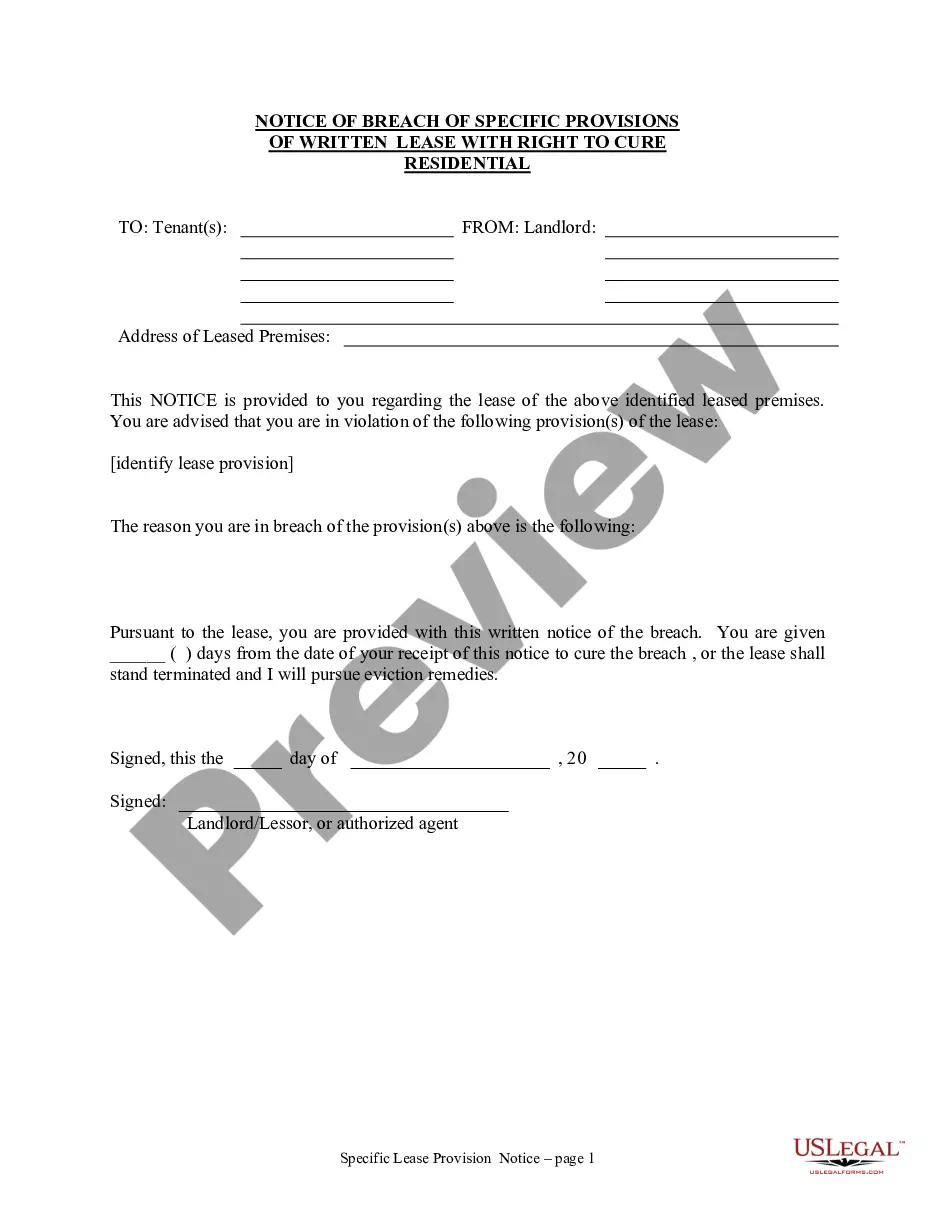
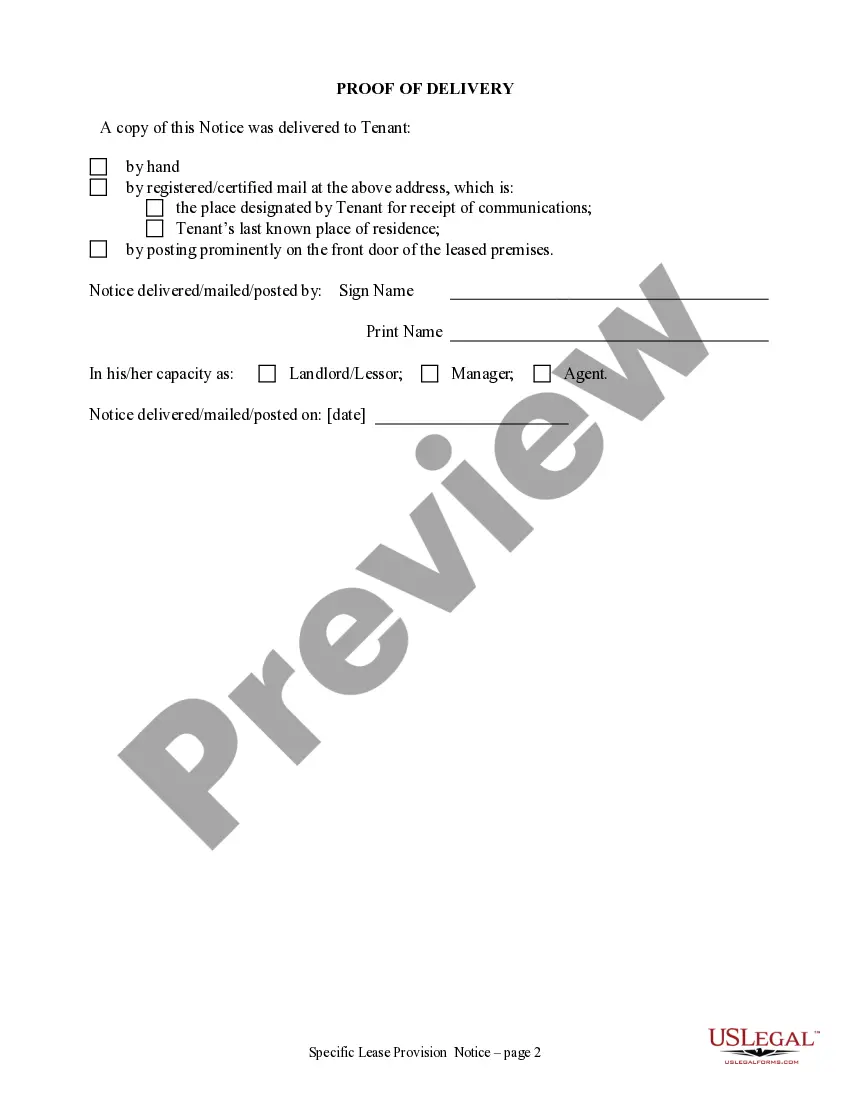
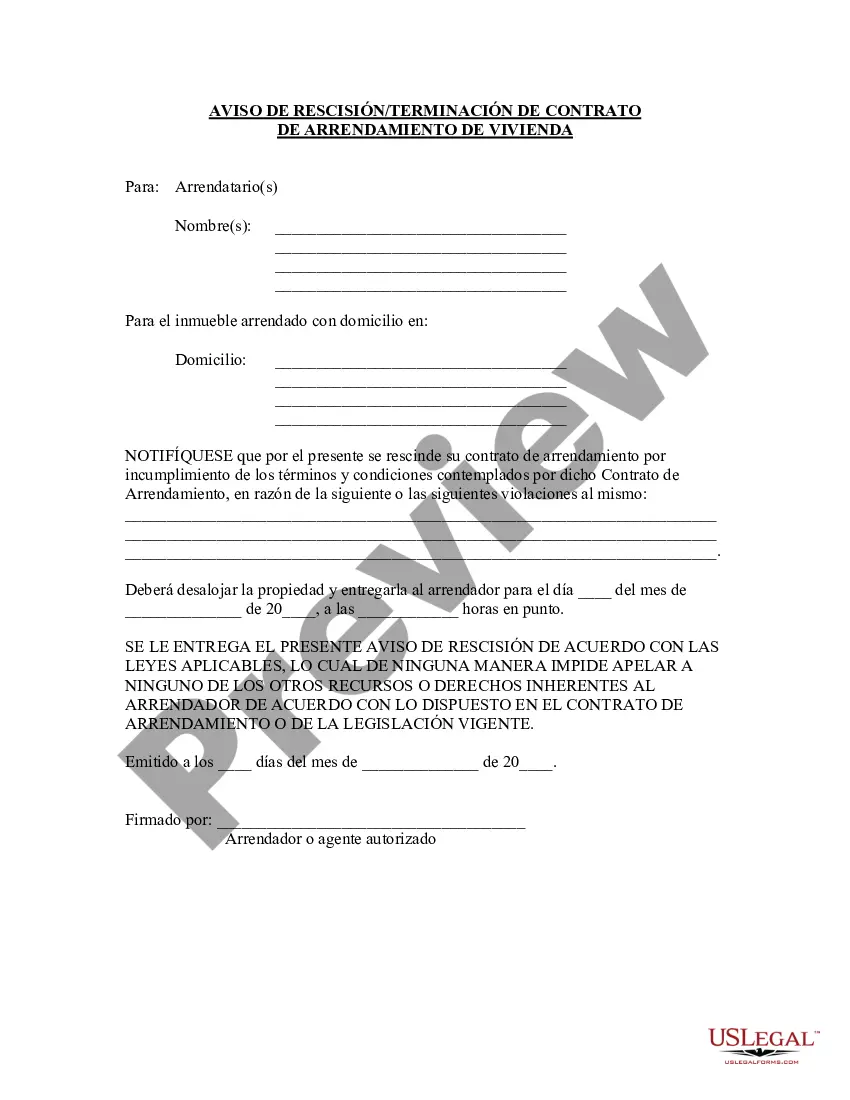
How to fill out Alabama Notice Of Breach Of Written Lease For Violating Specific Provisions Of Lease With Right To Cure For Residential Property From Landlord To Tenant?
- Log in to your US Legal Forms account if you're an existing user. Check the status of your subscription to avoid any interruptions.
- For new users, start by browsing through the preview mode and form descriptions to select a lease agreement that fits your requirements and complies with local laws.
- If you need another document, use the search bar to easily find the correct lease agreement.
- Once you find the right template, click the Buy Now button and choose your preferred subscription plan. Create an account to access the document library.
- Complete your purchase by providing payment information, either via credit card or PayPal.
- Finally, download your lease agreement for residential property to complete it and store it in the 'My Forms' section for future reference.
By utilizing US Legal Forms, you gain access to a robust library of over 85,000 legal templates, ensuring that you're equipped with accurate and effective documents.
Start your hassle-free legal documentation journey today with US Legal Forms. Visit their website and discover the ease of obtaining your lease agreement for residential property!
Form popularity
FAQ
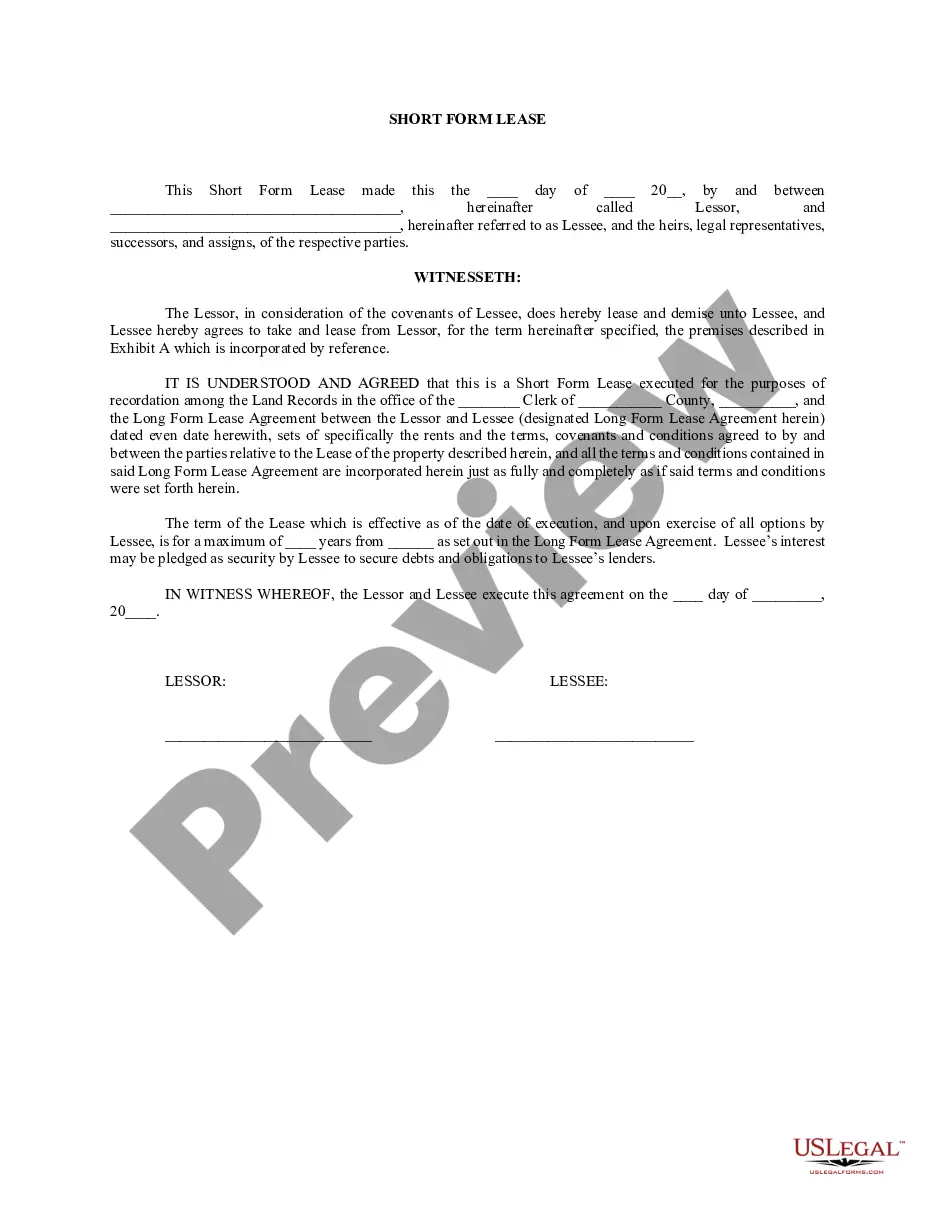
Writing a lease proposal for a property involves outlining your intent and the terms you wish to establish. Start by clearly stating the property details, rental amount, desired lease duration, and any special conditions you wish to include. Utilizing a template from uslegalforms can simplify the process, helping you create a professionally formatted lease proposal for residential property that covers all essential points.
Several factors can void a lease agreement, including the signing of the contract under duress, misrepresentation of facts, or illegal activities associated with the lease. Additionally, if one party fails to fulfill the agreement's terms, the lease may become void. Understanding these potential pitfalls is vital, and consulting a well-structured lease agreement for residential property can help prevent such issues.
Handwritten contracts can hold up in court if they meet legal criteria, including clear terms and signatures from both parties. However, the risks associated with missing details or misinterpretations are higher compared to typed contracts. When creating a lease agreement for residential property, using a structured format from a reliable source can significantly reduce these risks.
Verbal rental agreements can be difficult to enforce in court, as they often lack the clarity and detail required to uphold legal standards. While such agreements may be valid, proving their existence and specifics without written documentation can be challenging. Thus, it’s advisable to formalize agreements by drafting a lease agreement for residential property in writing to ensure both parties are protected.
Yes, a handwritten lease agreement can be legally binding as long as it includes all necessary information and is signed by both parties. However, it is essential to ensure that the terms are clear and comprehensive to avoid disputes. To create a more robust lease agreement for residential property, consider using digital platforms that offer templates and legal guidance.
Filling a lease agreement for residential property is straightforward. Start by clearly entering the names of all parties involved, including landlords and tenants. Next, detail the rental terms, such as the duration of the lease, payment amount, and due dates. Finally, include any specific conditions or rules pertinent to the property, ensuring both parties understand and agree before signing.
Yes, you can create your own lease agreement for residential property as long as you include necessary legal elements. When drafting, ensure you cover aspects such as duration, rent amount, security deposit, and tenant responsibilities. However, to avoid potential pitfalls, it’s wise to refer to templates or examples from reputable sources like US Legal Forms. Their resources can help you create enforceable and comprehensive agreements.
You can certainly write up your own lease agreement for residential property. While it's possible to draft your lease from scratch, it is important to include all relevant details, such as rental terms, maintenance responsibilities, and policies on pets. If you're unsure about the legal language or specific requirements, consider using a service like USLegalForms. This platform offers user-friendly templates that can guide you through the process and ensure you capture all necessary elements.
The most common type of lease for residential property is a standard fixed-term lease. This agreement typically lasts for one year and establishes clear terms between the tenant and the landlord. In some cases, a month-to-month lease can also be utilized, providing flexibility for both parties. No matter which type you choose, ensure your lease agreement for residential property includes essential clauses to protect your interests.
Yes, you can create a lease agreement for residential property yourself. However, it is essential to ensure that your lease complies with state laws and covers all necessary terms. Many landlords choose to use templates or online resources to simplify this process. Utilizing a platform like USLegalForms can provide customizable options and legal guidance to enhance your lease.