Delaware Last Will and Testament for Married Person with Adult and Minor Children
Overview of this form
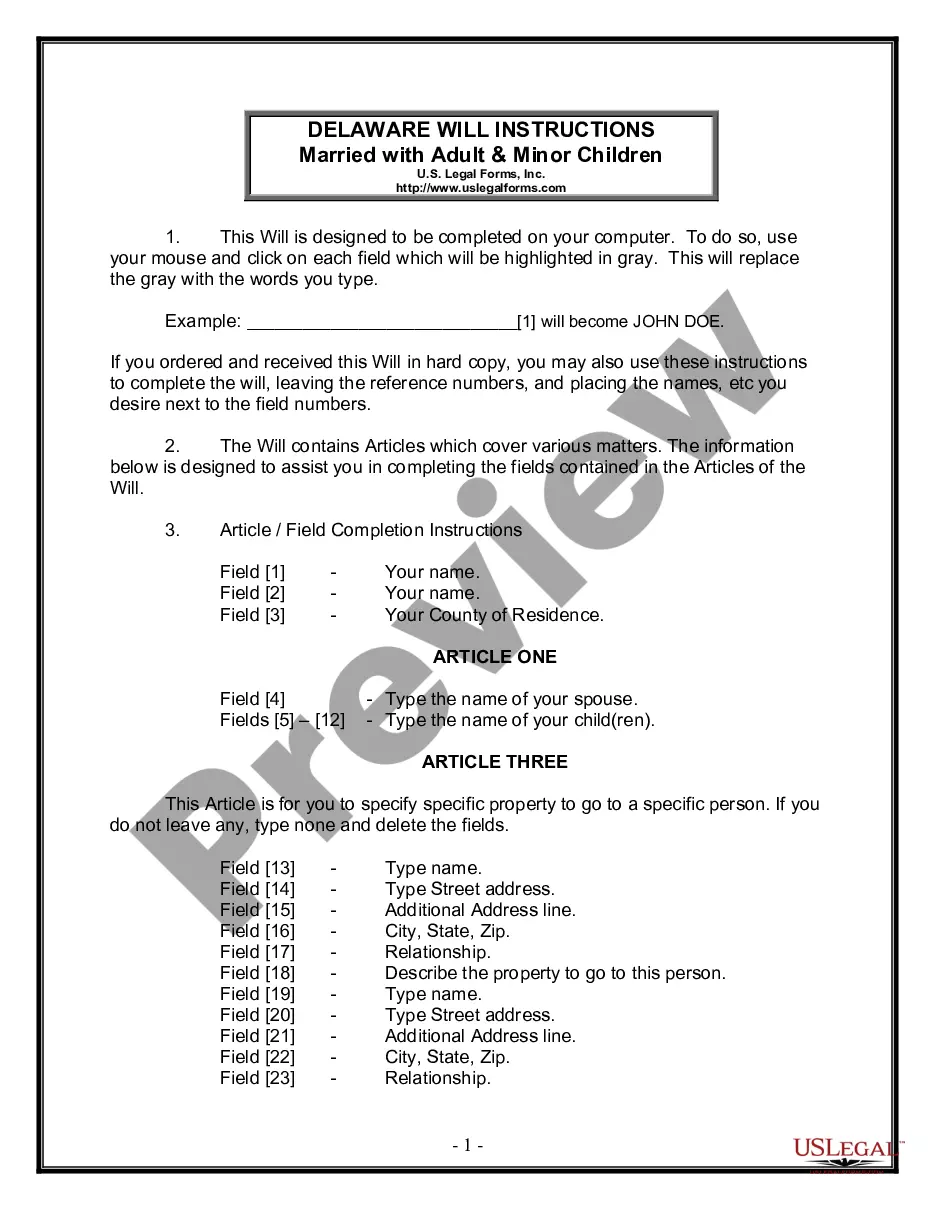
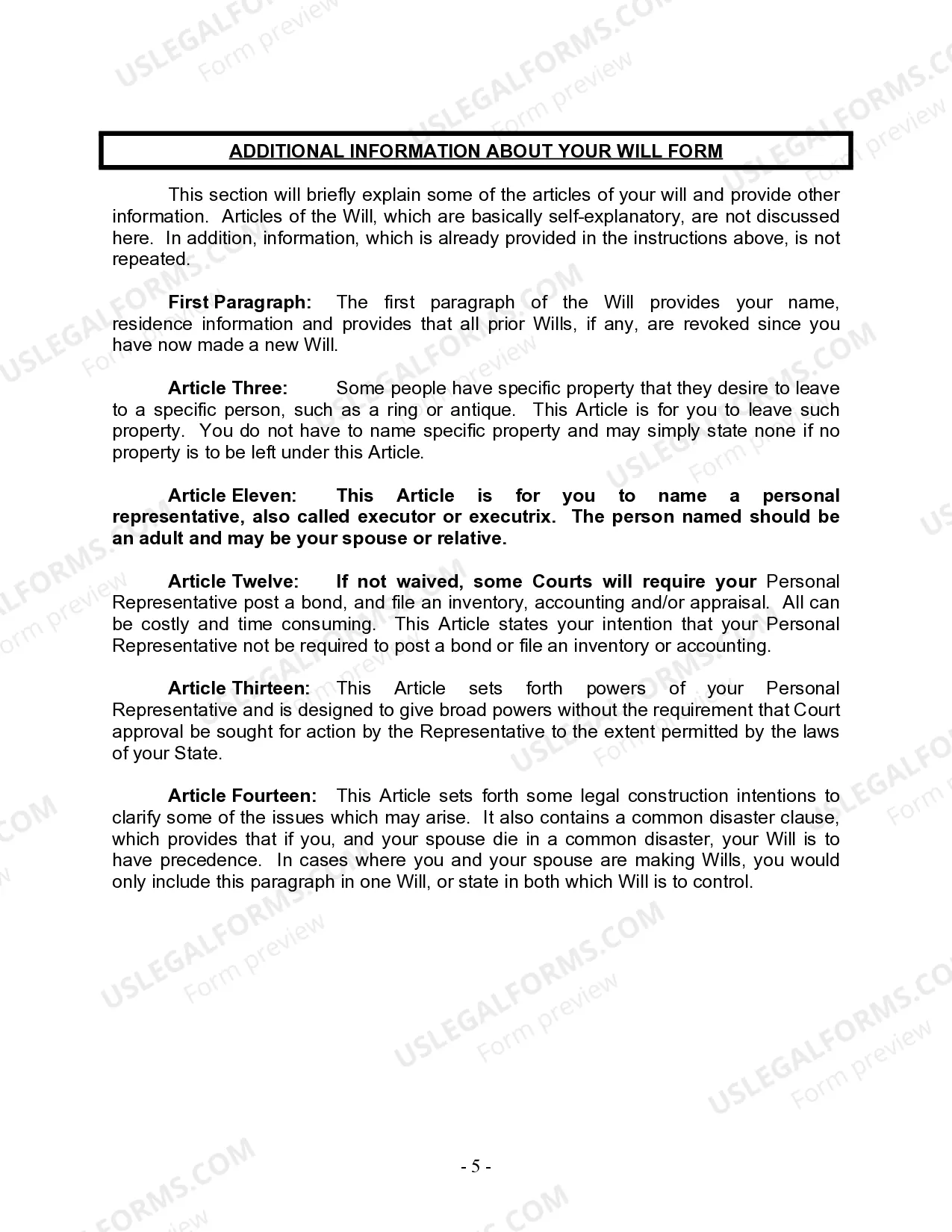
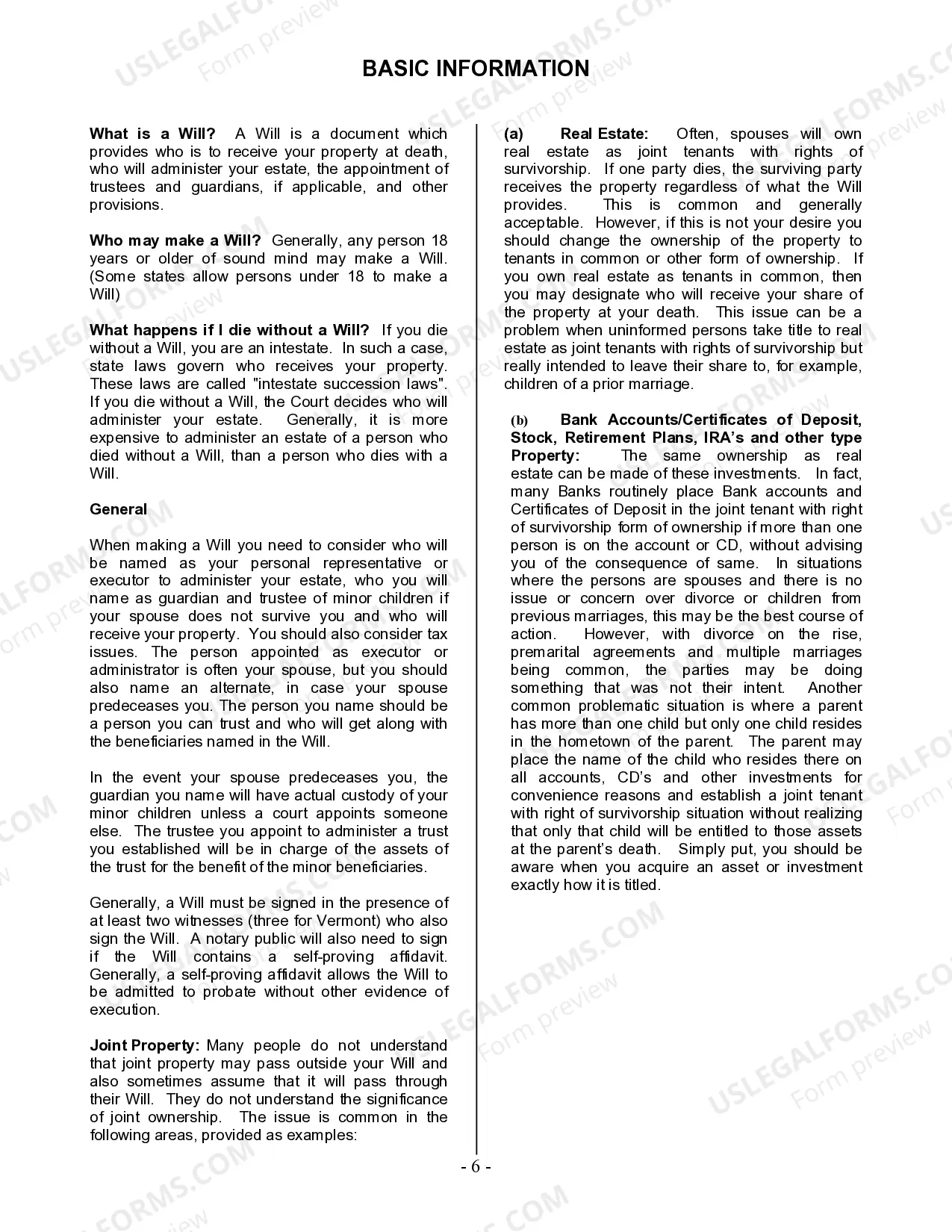
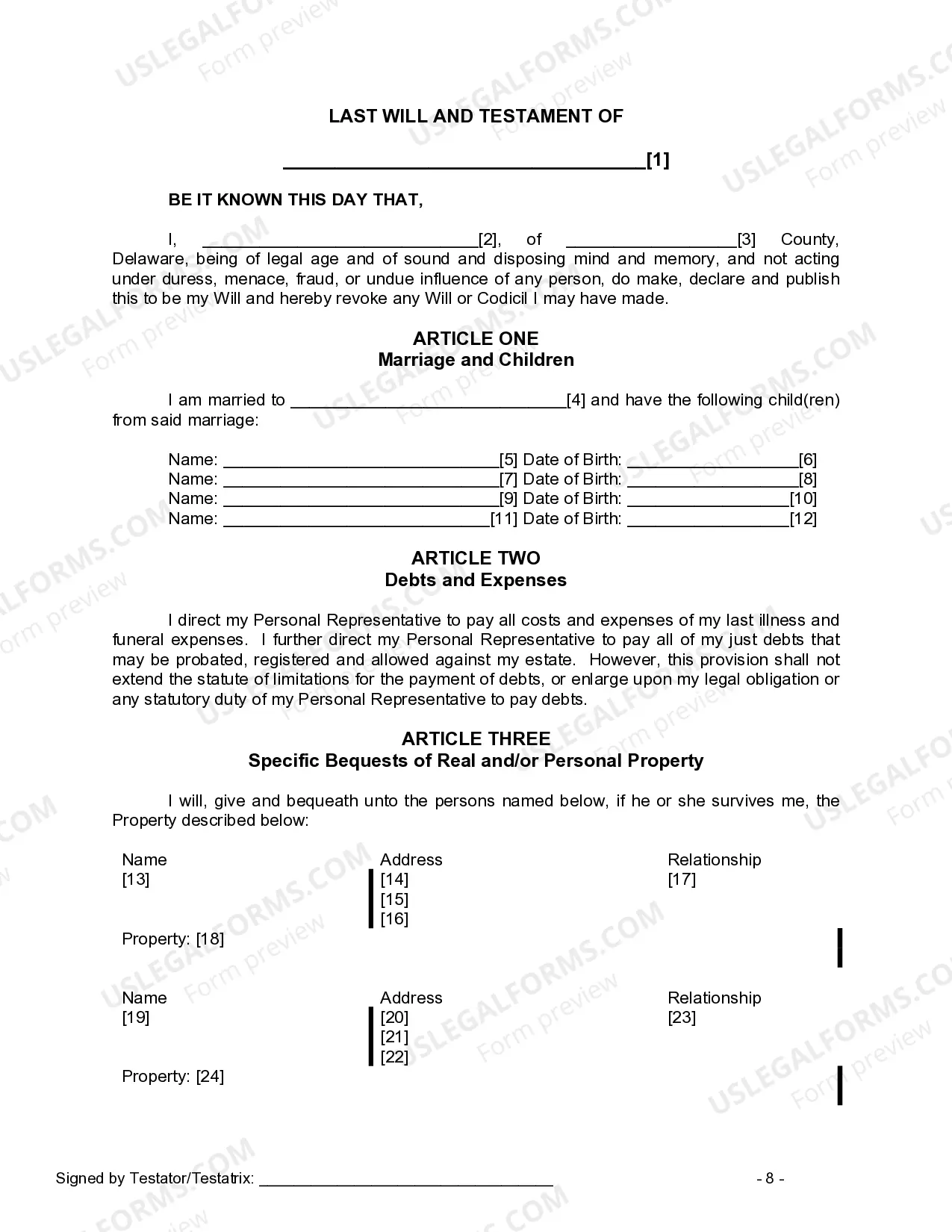
This Last Will and Testament form is specifically designed for married individuals with both adult and minor children. It allows you to express your wishes regarding the distribution of your assets, the appointment of executors, and provisions for your spouse and children. Unlike general wills, this form includes specific clauses tailored to address the needs and rights of both adult and minor beneficiaries, ensuring that their future interests are protected.
Main sections of this form
- Appointment of a personal representative or executor to handle the estate.
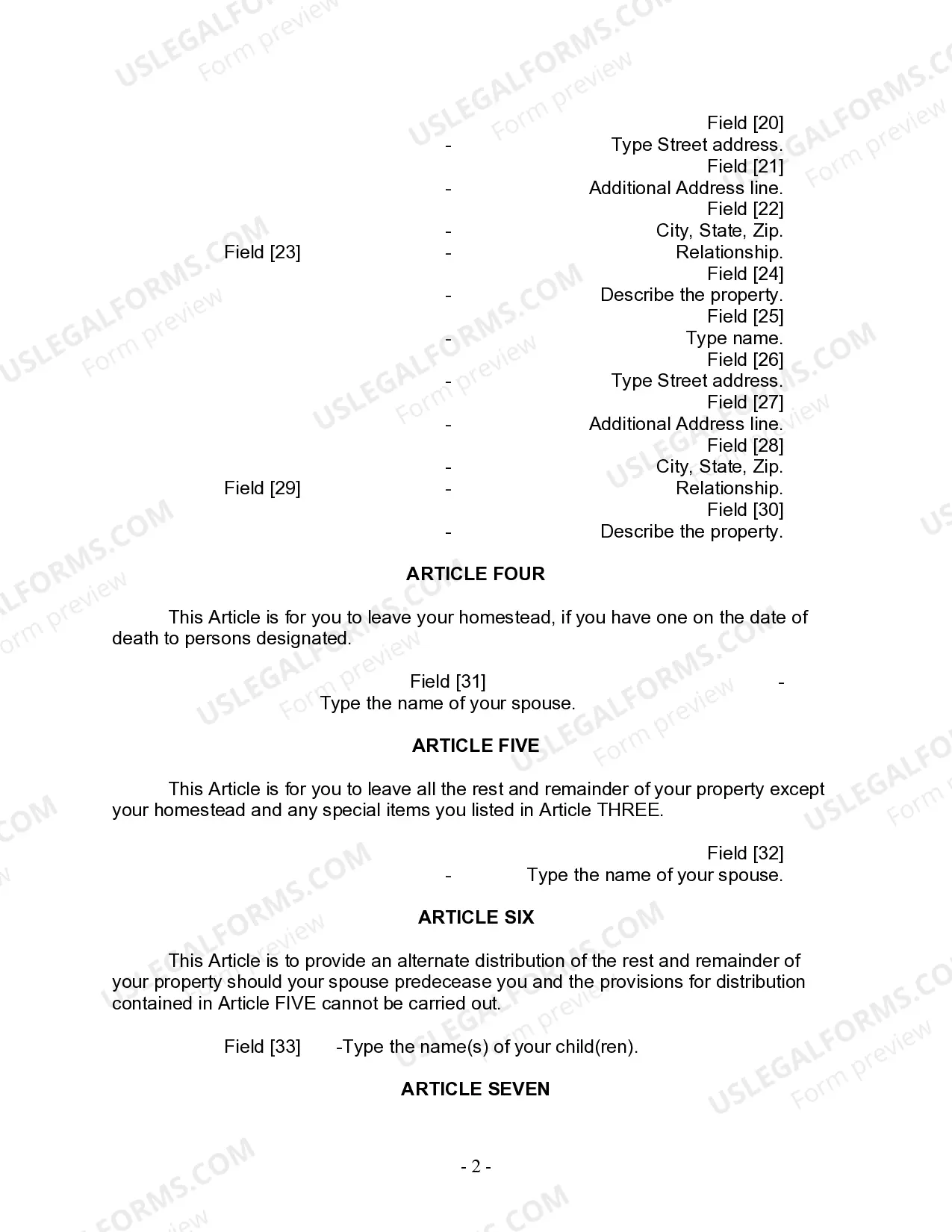
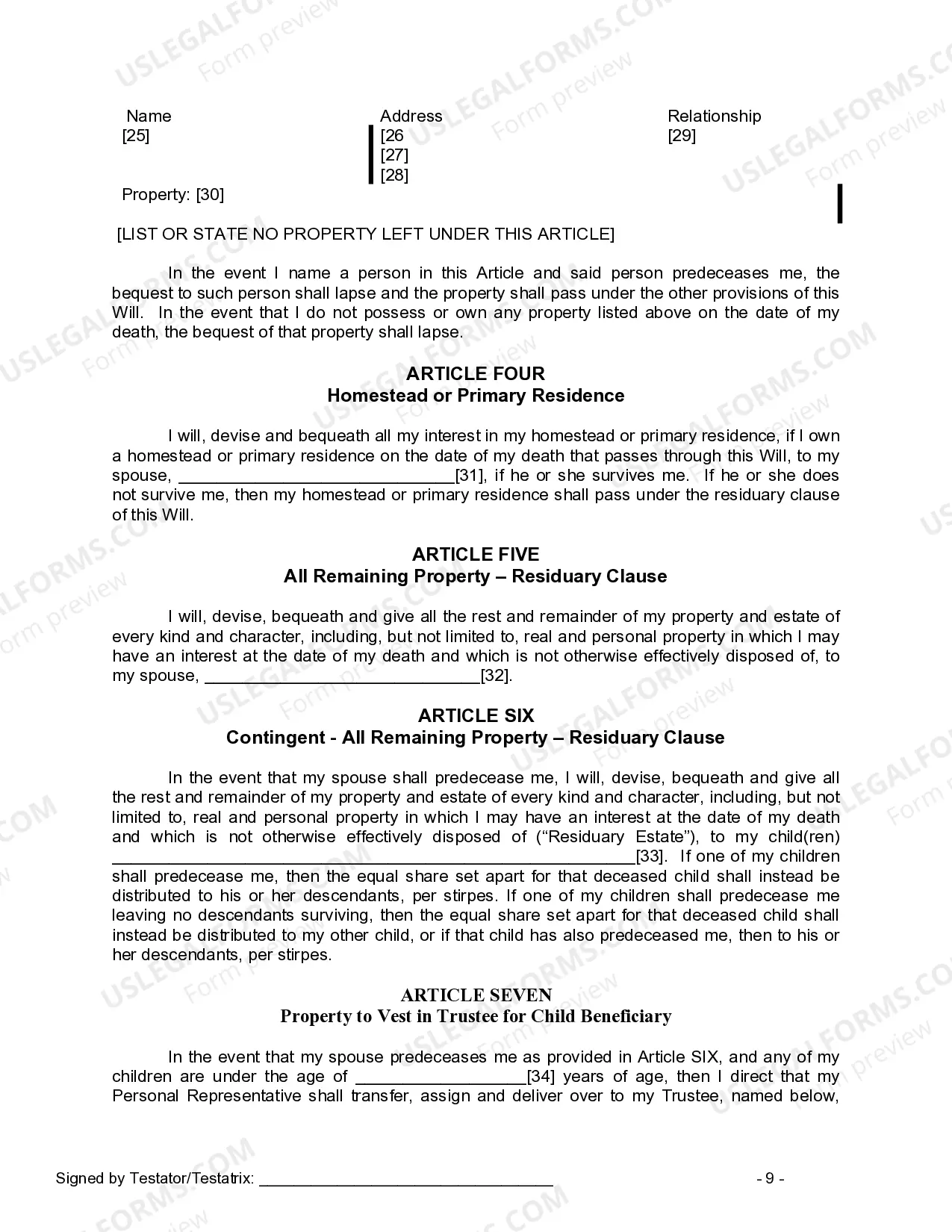
- Detailed provisions for the distribution of property to your spouse and children.
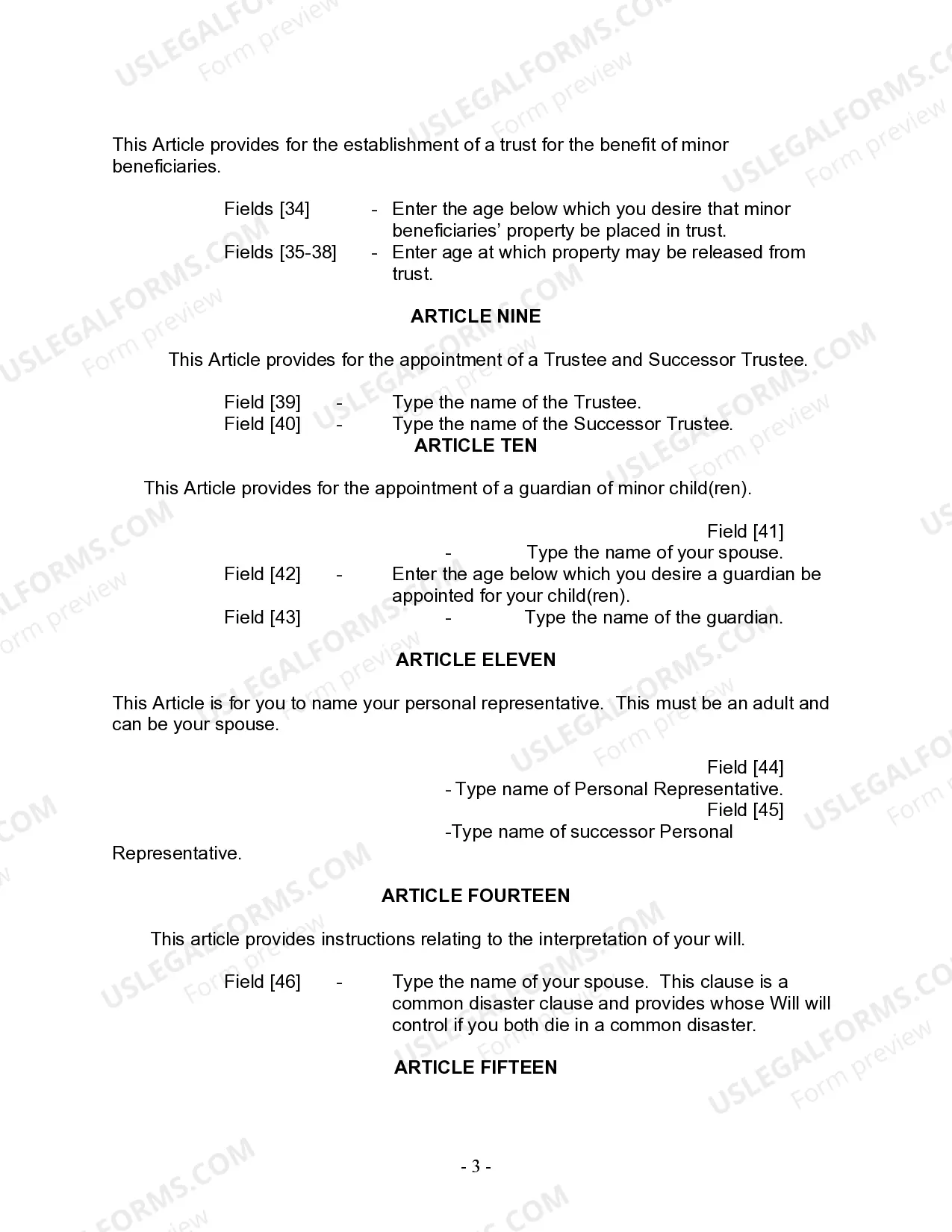
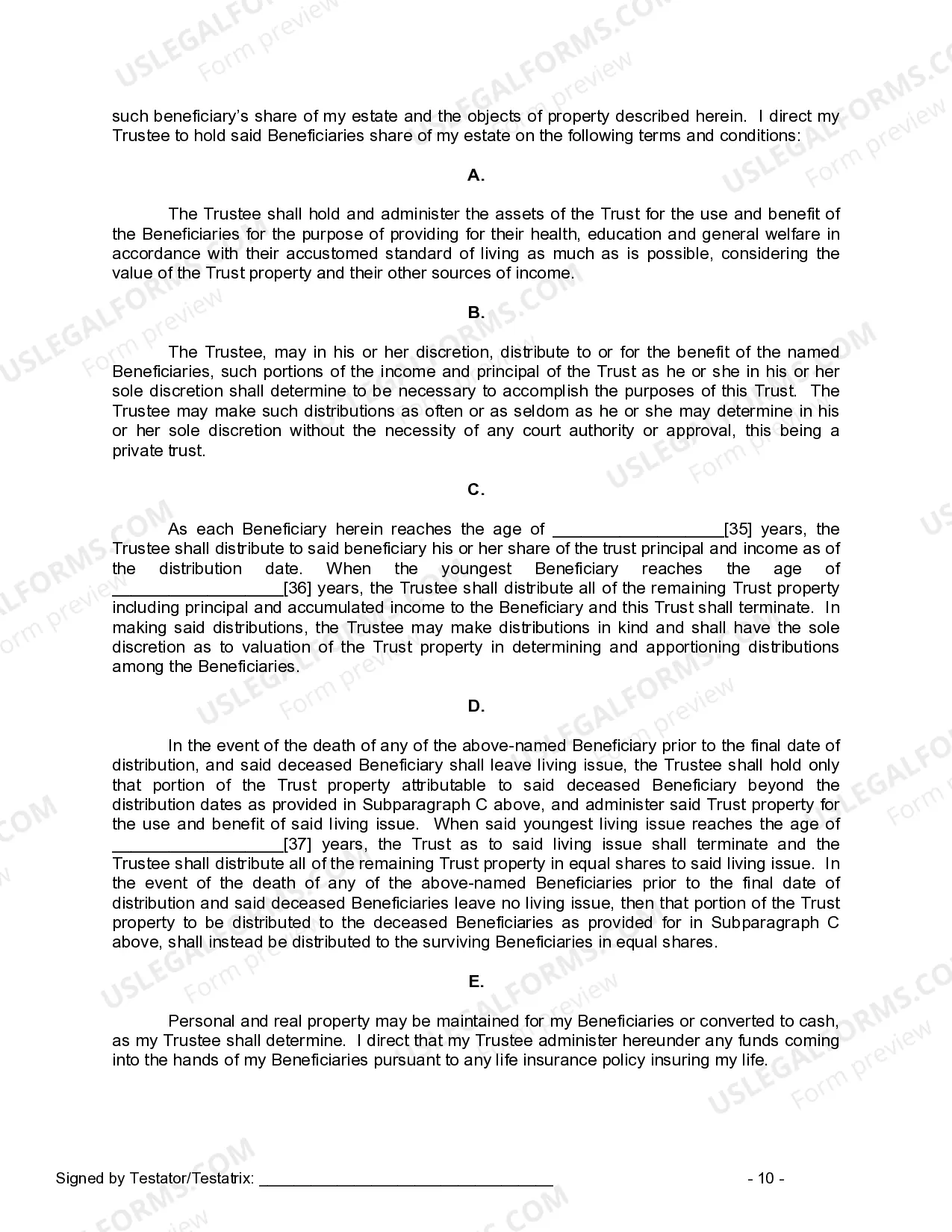
- Establishment of a trust for minor children, including the appointment of a trustee.
- Clauses addressing debts and funeral expenses to ensure proper payment from the estate.
- Specific bequests that detail who receives particular assets.
- Appointment of a guardian for minor children, if necessary.





When this form is needed
This form is essential when a married person with children wishes to formalize their will, particularly when there are minor children involved. You should use this form if you want to specify how your assets should be distributed, appoint a guardian, and ensure your minor children are financially secure after your passing. It's also beneficial to have this will prepared if you have specific wishes regarding funeral expenses and debts.
Who can use this document
- Married individuals with either adult or minor children.
- Those wanting to ensure their wishes are legally documented regarding asset distribution.
- Parents seeking to appoint guardians for minor children in case of their untimely death.
- Individuals with specific bequests in mind for family members or friends.
How to complete this form
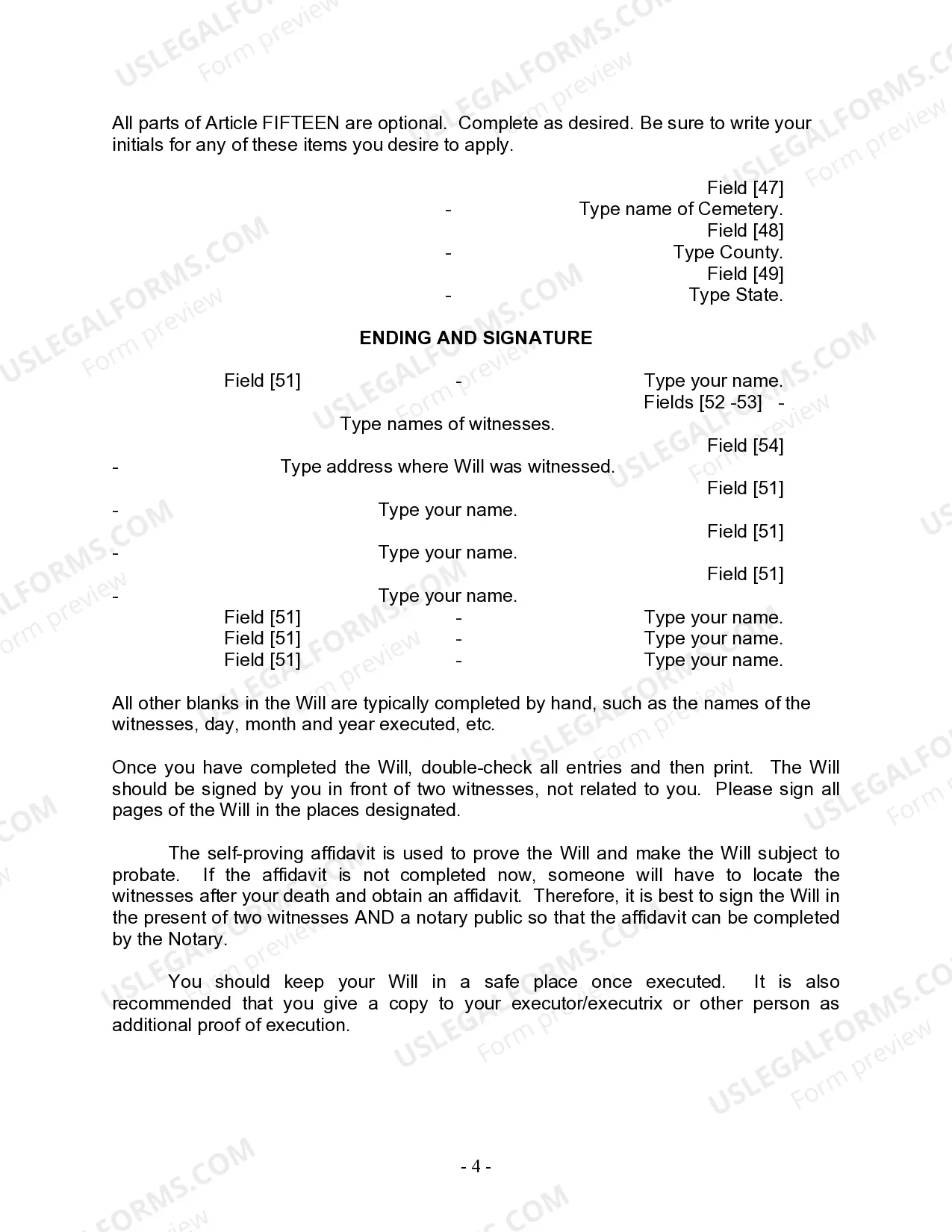
- Begin by identifying yourself as the testator, including your full name and county of residence.
- List your marital status and names and birth dates of your children.
- Appoint your personal representative or executor to manage your estate.
- Specify any specific bequests, indicating who receives certain properties or assets.
- Indicate guardianship preferences for minor children, if applicable.
- Sign the document in the presence of two witnesses who should also sign to validate the will.
Does this form need to be notarized?
Yes, this form must be notarized to be legally valid. This may require the presence of a notary public who will verify the identities of the signers. US Legal Forms offers an integrated online notarization service that is available 24/7, ensuring a secure and convenient process without the need for travel.
Get your form ready online
Our built-in tools help you complete, sign, share, and store your documents in one place.
Make edits, fill in missing information, and update formatting in US Legal Forms—just like you would in MS Word.
Download a copy, print it, send it by email, or mail it via USPS—whatever works best for your next step.
Sign and collect signatures with our SignNow integration. Send to multiple recipients, set reminders, and more. Go Premium to unlock E-Sign.
If this form requires notarization, complete it online through a secure video call—no need to meet a notary in person or wait for an appointment.
We protect your documents and personal data by following strict security and privacy standards.

Make edits, fill in missing information, and update formatting in US Legal Forms—just like you would in MS Word.

Download a copy, print it, send it by email, or mail it via USPS—whatever works best for your next step.

Sign and collect signatures with our SignNow integration. Send to multiple recipients, set reminders, and more. Go Premium to unlock E-Sign.

If this form requires notarization, complete it online through a secure video call—no need to meet a notary in person or wait for an appointment.

We protect your documents and personal data by following strict security and privacy standards.
Mistakes to watch out for
- Failing to have the will signed in the presence of the required witnesses.
- Leaving out important details about property distribution.
- Not updating the will after major life changes, such as the birth of a child.
- Omitting to specify a guardian for minor children.
Advantages of online completion
- Convenient access allows you to prepare the document at your own pace.
- Editable templates ensure you can tailor the form to fit your specific needs.
- Instant download option provides immediate access to your legal form.
- Guidance from licensed attorneys enhances the reliability of the document.
Quick recap
- This Last Will and Testament is essential for married individuals with children.
- It allows you to detail asset distribution and guardianship arrangements.
- Proper execution, including notarization, is crucial for the validity of the will.
Looking for another form?
Form popularity
FAQ
Excluding a child from your Delaware Last Will and Testament for Married Person with Adult and Minor Children is straightforward but requires careful consideration. You should explicitly state your intention in the will by naming the child and clarifying your wishes. This helps prevent any confusion or potential legal disputes later. Consulting with an attorney can assist you in drafting your will to reflect these specific intentions clearly.
In Delaware, you do not need to register your Delaware Last Will and Testament for Married Person with Adult and Minor Children while you are alive. However, once you pass away, the will must go through probate. This process includes filing your will with the Register of Wills in the county where you lived. It's advisable to ensure your will is properly drafted to avoid complications during this process.
A last will and testament does not override a marriage, but its provisions can greatly impact how an estate is distributed among a spouse and children. In Delaware, a valid will can change the default inheritance laws, making it essential for married individuals with children to have a Delaware Last Will and Testament for Married Person with Adult and Minor Children. Proper estate planning ensures your assets are distributed according to your wishes.
In Delaware, a spouse does not automatically inherit everything if there are surviving children. Instead, the law dictates that the estate is divided between the spouse and children, unless specified otherwise in a Delaware Last Will and Testament for Married Person with Adult and Minor Children. It’s vital to create a will to clarify your intentions and ensure that your wishes are honored.
No, you do not necessarily need a lawyer to create a will in Delaware. Many individuals successfully draft their own Delaware Last Will and Testament for Married Person with Adult and Minor Children using online resources. Nevertheless, consulting with a legal expert can provide additional assurance that your will meets all legal requirements.
In Delaware, when a husband passes away, his wife is entitled to a portion of his estate, regardless of the terms set out in the Last Will and Testament. If there is no will, she may receive one-third of the estate if there are children, or half if there are no children. Understanding these rights helps you plan an equitable distribution of your assets through your will.
Yes, in the case of a Delaware Last Will and Testament for Married Person with Adult and Minor Children, your spouse is generally considered a primary beneficiary. This is true unless you specifically designate otherwise in your will. By making the right choices in your estate planning, you ensure both your spouse's and your children's needs are met.
In Delaware, your spouse is entitled to a share of your estate regardless of what your Last Will and Testament states. This means that even if you do not include them in the will, they may receive a statutory share if you die intestate. It’s important to consider this when drafting your will, to ensure your spouse’s rights and your wishes align.
In Delaware, for your Last Will and Testament for Married Person with Adult and Minor Children to be valid, it must be in writing and signed by you or another person at your direction. Additionally, you need at least two witnesses who will also sign the document. Following these requirements helps ensure your wishes are honored while minimizing potential legal challenges.
Including your adult children in your Delaware Last Will and Testament for Married Person with Adult and Minor Children is not mandatory. However, if you wish to provide for them or make your intentions clear regarding your assets, it is advisable to do so. By explicitly naming your adult children, you reduce the chance of disputes later. Consider consulting a legal professional if you need assistance with this process.