Delaware Revocation of Statutory Advance Health Care Directive
Overview of this form
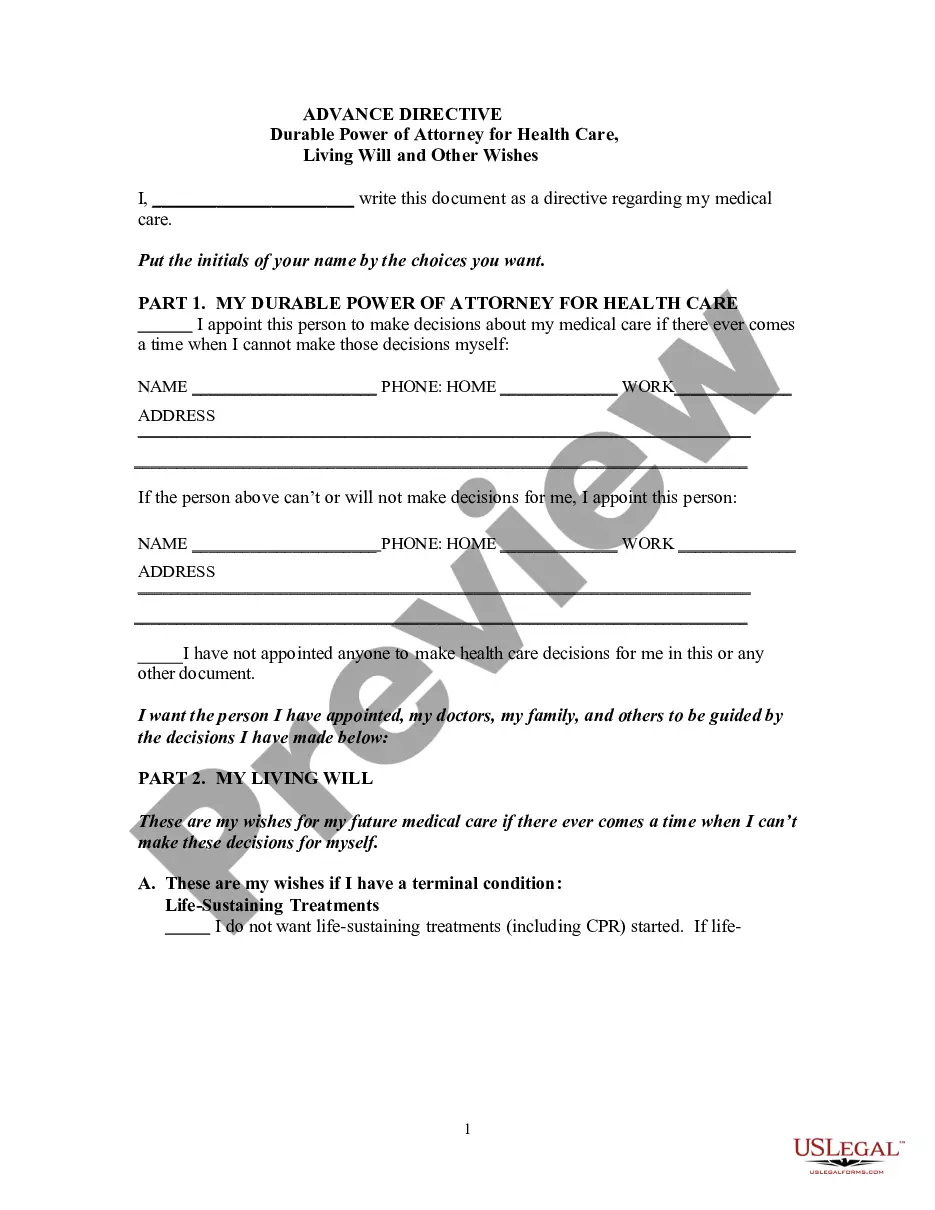
The Revocation of Statutory Advance Health Care Directive allows individuals to revoke or modify their previously established Advance Health-Care Directive. This important legal document enables you to specify health care decisions and appoint a person to make those decisions on your behalf. It is essential for maintaining control over your health care wishes, particularly if your circumstances change or if you have reconsidered your earlier directives.
Key components of this form
- Declarant Information: Spaces for your name, signature, and address.
- Date of Original Directive: Required to reference when the initial Advance Health-Care Directive was executed.
- Revocation Specifications: Options to revoke all or specific parts of the original directive, including power of attorney, health care instructions, anatomical gifts, and primary care physician designations.
- Witness Requirements: Provisions for revocation in the presence of at least two competent witnesses, one being a health care provider.
- Signature Section: A space for the Declarant's signature indicating the date of revocation.
Common use cases
This form should be used when you wish to revoke, either partially or entirely, an existing Advance Health-Care Directive. You might find it necessary in situations such as a change in your health care preferences, a shift in personal relationships, or even if you feel that the individuals previously appointed no longer align with your desires for health care decisions.
Who can use this document
- Individuals who have a previously executed Advance Health-Care Directive.
- Adults who have experienced changes in their health care preferences or personal relationships.
- Those who want to ensure their medical wishes are clearly represented and up to date.
How to complete this form
- Begin by entering your full name as the Declarant at the top of the form.
- Specify the date when your original Advance Health-Care Directive was created.
- Select which parts of the directive you wish to revoke by checking the appropriate boxes.
- Sign the form, indicating the date of revocation.
- Include your printed name and address for identification.
- Ensure two competent witnesses sign, with one being a health care provider, if revocation is verbal.
Notarization requirements for this form
In most cases, this form does not require notarization. However, some jurisdictions or signing circumstances might. US Legal Forms offers online notarization powered by Notarize, accessible 24/7 for a quick, remote process.
Get your form ready online
Our built-in tools help you complete, sign, share, and store your documents in one place.
Make edits, fill in missing information, and update formatting in US Legal Forms—just like you would in MS Word.
Download a copy, print it, send it by email, or mail it via USPS—whatever works best for your next step.
Sign and collect signatures with our SignNow integration. Send to multiple recipients, set reminders, and more. Go Premium to unlock E-Sign.
If this form requires notarization, complete it online through a secure video call—no need to meet a notary in person or wait for an appointment.
We protect your documents and personal data by following strict security and privacy standards.

Make edits, fill in missing information, and update formatting in US Legal Forms—just like you would in MS Word.

Download a copy, print it, send it by email, or mail it via USPS—whatever works best for your next step.

Sign and collect signatures with our SignNow integration. Send to multiple recipients, set reminders, and more. Go Premium to unlock E-Sign.

If this form requires notarization, complete it online through a secure video call—no need to meet a notary in person or wait for an appointment.

We protect your documents and personal data by following strict security and privacy standards.
Typical mistakes to avoid
- Failing to specify which parts of the directive are being revoked.
- Not having the required witnesses present during verbal revocation.
- Omitting to date the revocation, which is crucial for legal recognition.
- Providing incomplete personal information on the form.
Why use this form online
- Immediate access to the latest legal templates, ensuring compliance with current laws.
- Easy editing allows you to customize the form according to your specific needs.
- Convenience of downloading the form instantly for use at your discretion.
- A reliable and efficient way to manage important legal documents.
Looking for another form?
Form popularity
FAQ
Yes, medical providers can ignore advance directives in certain circumstances, particularly in cases where the directive is unclear or conflicts with medical ethics. For example, if a directive specifies a treatment that is not medically viable, providers may choose not to follow it. It’s crucial to grasp the nuances of the Delaware Revocation of Statutory Advance Health Care Directive to ensure that your healthcare wishes are respected.
A physician may go against the patient’s advance directives in emergencies when immediate action is necessary to preserve life or health, and there is no time to consult the document. Additionally, if the advance directive is deemed to be out of date or legally inadequate, a physician may disregard it. Familiarizing yourself with the Delaware Revocation of Statutory Advance Health Care Directive can help you understand the implications of such situations.
Yes, a medical power of attorney can override an advance directive if the appointed agent acts according to the patient's best interests and within the authority granted to them. This means that if there are changes in the patient’s condition or new information emerges, the agent may make decisions that differ from the advance directive. Understanding both documents, including the Delaware Revocation of Statutory Advance Health Care Directive, is vital for clarity in medical decisions.
A healthcare provider can reject an advance directive if they believe it contradicts their ethical beliefs or professional standards. For example, if a provider feels that following the directive would result in harm or violate their conscience, they may refuse to comply. It's essential to know your rights regarding the Delaware Revocation of Statutory Advance Health Care Directive to navigate these situations effectively.
A physician may choose not to honor an advance directive due to various reasons, such as a lack of clarity in the document or its legal validity. Additionally, if the directive conflicts with established medical guidelines or standards of care, this may also come into play. Understanding the specific guidelines around Delaware Revocation of Statutory Advance Health Care Directive can help clarify why such decisions are made.
An advance directive can be overruled in specific situations, particularly if the patient's current medical condition is different from what they outlined earlier. For instance, if the patient's wishes conflict with new medical evidence or treatments that could significantly improve their quality of life. Additionally, if a legal authority finds a directive invalid, it may also be set aside. It is crucial to understand how Delaware Revocation of Statutory Advance Health Care Directive works in these situations.
Ultimately, it is the responsibility of your healthcare providers to follow your advance directive, but others, like family members or health care proxies, can also play a role in advocating for your wishes. To ensure that your directives are respected, consider discussing your wishes with loved ones and healthcare professionals. Utilizing services like US Legal Forms can help you create clear, effective directives that guide your care.
Advanced directives, including the Delaware Revocation of Statutory Advance Health Care Directive, are legally binding, but they can be changed. As long as you meet state requirements for revocation or amendment, your directives can reflect your current wishes. It's essential to stay informed and periodically review your directives for any necessary updates.
While physicians typically must adhere to a patient's advance directives, there are certain circumstances where they may question its applicability. If a directive contradicts current medical standards or poses harm, a physician might withhold compliance. Understanding the nuances of the Delaware Revocation of Statutory Advance Health Care Directive can help you avoid these situations.
An advance directive can be deemed invalid for several reasons, including lack of proper signatures, failure to meet state requirements, or if the patient had not been competent when establishing it. If you suspect your advance directive may be questioned, reviewing it against the Delaware Revocation of Statutory Advance Health Care Directive guidelines is essential. Consulting platforms like US Legal Forms can assist in ensuring your document's validity.