Delaware Request for List of Possible Lien Claimants - Individual
About this form
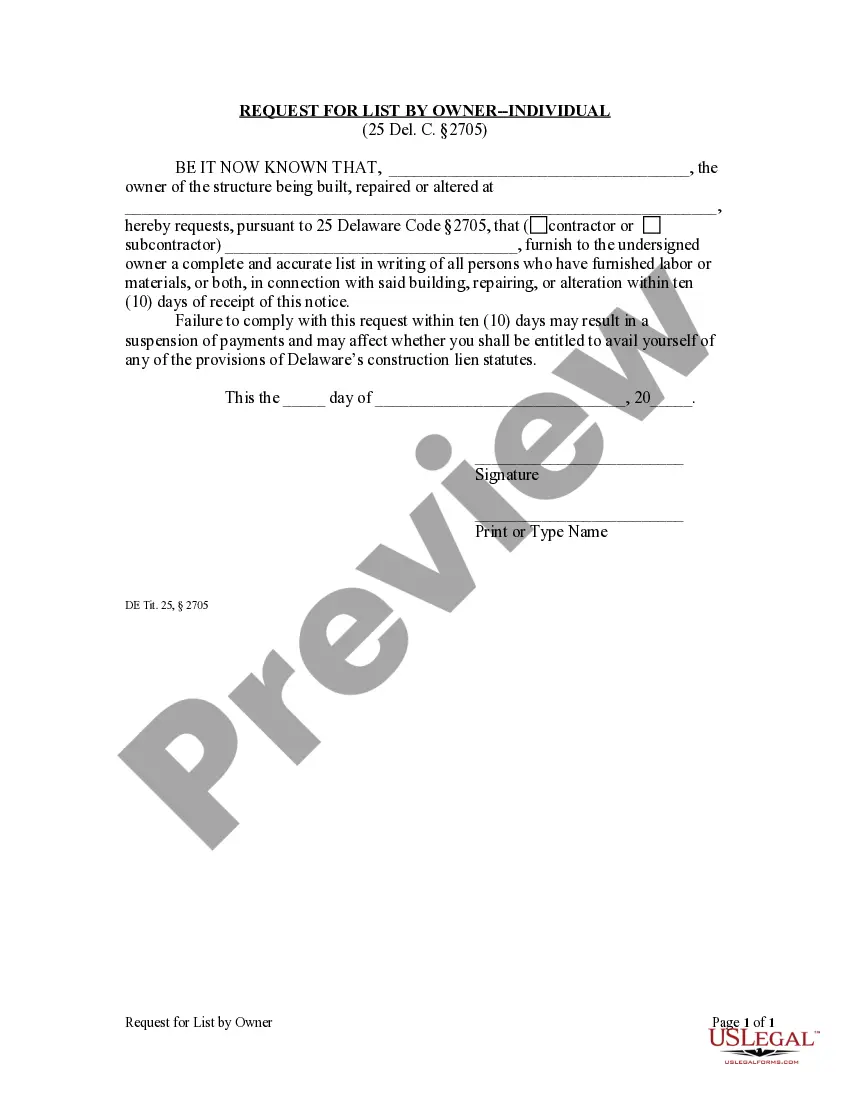
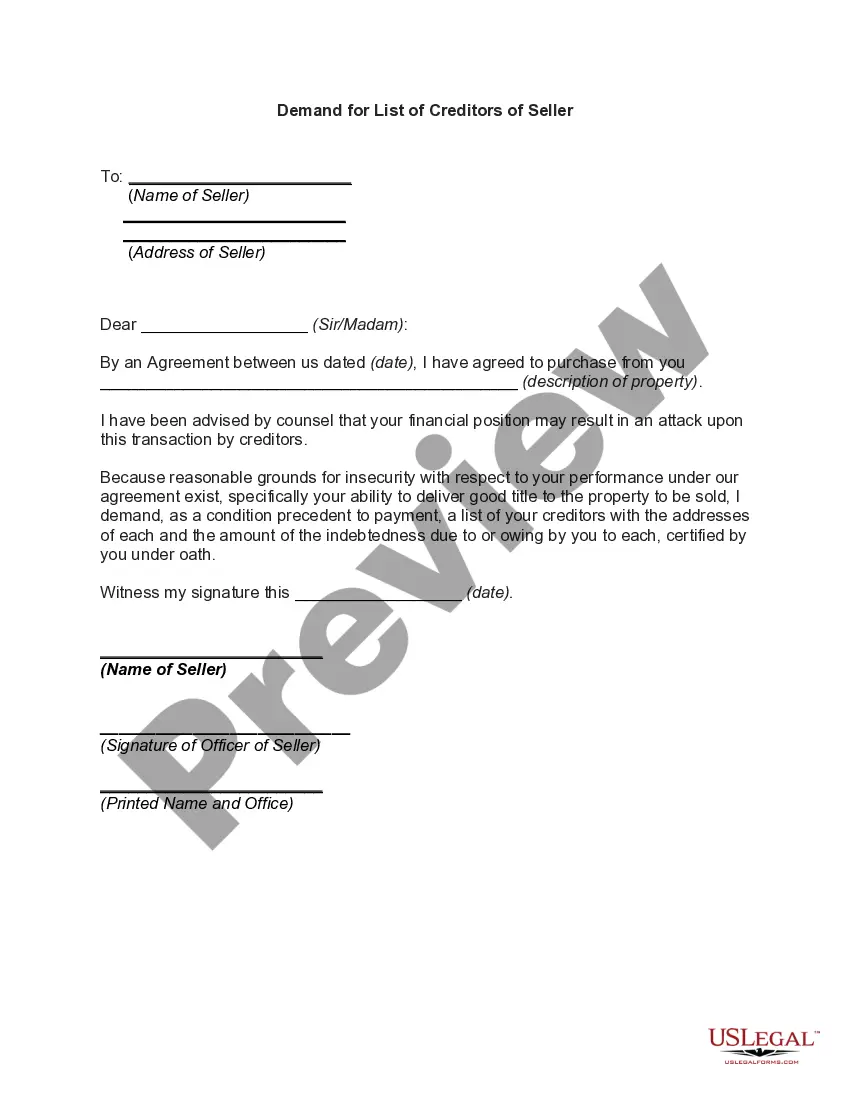
The Request for List of Possible Lien Claimants - Individual is a legal document that allows an individual owner to formally request a written list from a contractor or subcontractor of all persons who have provided labor or materials for a building project. This form is essential for protecting the owner's rights and ensuring compliance with Delaware's construction lien statutes, which can vary from similar documents that do not specify individual claimants.
Form components explained
- Owner's name and details of the property involved.
- Contractor or subcontractor's name to whom the request is addressed.
- Deadline for compliance, set at ten days from the receipt of the request.
- Immediate effects of non-compliance, including potential suspension of payments.
- Date of signature and printed name of the owner.
Common use cases
This form should be used when an individual owner of a property wishes to request information about individuals and businesses that may have a lien against the property due to unpaid work or materials. This request is crucial prior to making final payments to the contractor or subcontractor to ensure there are no undisclosed claims against the property.
Who can use this document
This form is intended for:
- Individual property owners overseeing construction, repair, or alteration projects.
- Homeowners seeking to protect their interests by ensuring all potential lien claimants are identified.
- Individuals involved in residential construction projects looking for legal recourse to ensure compliance by contractors.
Instructions for completing this form
- Identify and enter your name as the owner of the property.
- Specify the property location where the construction or repair is taking place.
- Insert the name of the contractor or subcontractor addressed in the request.
- Sign and date the form to finalize your request.
- Ensure the request is sent in a manner that confirms receipt by the contractor or subcontractor.
Does this document require notarization?
This form does not typically require notarization unless specified by local law. However, confirming the requirements based on your situation is advisable to ensure its validity.
Get your form ready online
Our built-in tools help you complete, sign, share, and store your documents in one place.
Make edits, fill in missing information, and update formatting in US Legal Forms—just like you would in MS Word.
Download a copy, print it, send it by email, or mail it via USPS—whatever works best for your next step.
Sign and collect signatures with our SignNow integration. Send to multiple recipients, set reminders, and more. Go Premium to unlock E-Sign.
If this form requires notarization, complete it online through a secure video call—no need to meet a notary in person or wait for an appointment.
We protect your documents and personal data by following strict security and privacy standards.

Make edits, fill in missing information, and update formatting in US Legal Forms—just like you would in MS Word.

Download a copy, print it, send it by email, or mail it via USPS—whatever works best for your next step.

Sign and collect signatures with our SignNow integration. Send to multiple recipients, set reminders, and more. Go Premium to unlock E-Sign.

If this form requires notarization, complete it online through a secure video call—no need to meet a notary in person or wait for an appointment.

We protect your documents and personal data by following strict security and privacy standards.
Avoid these common issues
- Failing to specify the correct contractor or subcontractor name.
- Not providing adequate property details to avoid confusion.
- Missing the ten-day deadline for the contractor's response.
Benefits of completing this form online
- Conveniently download and fill out the form at your own pace.
- Easy to edit and customize for specific needs.
- Access to reliable templates drafted by licensed attorneys.
Looking for another form?

Form popularity
FAQ
You can get a lien release form by visiting US Legal Forms, where they offer a variety of templates tailored for different states, including Delaware. Simply navigate to the appropriate section, such as the Delaware Request for List of Possible Lien Claimants - Individual, and follow the instructions to customize your form. This approach saves you time and ensures accuracy.
A lien release documents the removal of a lien from a property, indicating that the debt has been satisfied. This release is crucial for clearing the title, allowing the property owner to sell or refinance without encumbrances. Understanding the significance of a lien release can help streamline your Delaware Request for List of Possible Lien Claimants - Individual process.
Filing a lien on a property in Delaware requires you to complete the necessary forms and submit them to the appropriate county office. Make sure to include all relevant details such as the debt amount and property description. If you need assistance, consider using the resources available on US Legal Forms for filing guidelines related to the Delaware Request for List of Possible Lien Claimants - Individual.
To perform a lien search in Delaware, you can access the Delaware Division of Corporations website or reach out to local county clerks. This process involves searching public records to identify any existing liens on a property. It is important to conduct this search accurately, especially if you are preparing a Delaware Request for List of Possible Lien Claimants - Individual.
The lien holder is the party that possesses a lien on a property, typically as a result of an unpaid debt. This is often the same as the lien claimant, but in some cases, it may differ if the claim gets transferred. Knowing who the lien holder is helps you understand your financial obligations and assists in processing your Delaware Request for List of Possible Lien Claimants - Individual.
The lien claimant is the person or organization that has asserted a claim on a property through a lien. This could be a contractor, subcontractor, or any service provider who has not received payment. Identifying the lien claimant is essential when navigating the Delaware Request for List of Possible Lien Claimants - Individual, as it determines who holds the legal rights to seek payment.
A lien claimant is an individual or entity that has a legal right to a lien against a property due to an outstanding debt or obligation. This typically occurs when a creditor files a lien to secure payment. Understanding this role is crucial, especially when addressing the Delaware Request for List of Possible Lien Claimants - Individual, as it helps clarify your obligations and rights.
When writing a letter to release a lien, start by clearly stating the details of the lien, including the property description and lien claimant information. Next, mention your intent to release the lien and reference the Delaware Request for List of Possible Lien Claimants - Individual if applicable. Finally, provide your contact information and sign the letter to validate your request.
To obtain a lien release form, you can visit the US Legal Forms website. They provide customizable templates that you can fill out quickly and efficiently. Make sure to select the Delaware Request for List of Possible Lien Claimants - Individual section to get the specific form you need. This will help ensure that your request is handled smoothly.
Rule of Civil Procedure 9 in Delaware addresses the specificity required when alleging fraud or mistake in legal complaints. It mandates that you describe these allegations with adequate detail to prevent vague claims. When managing a Delaware Request for List of Possible Lien Claimants - Individual, being aware of Rule 9 is essential if your case involves claims of fraud. Understanding these requirements can ensure your pleadings are sufficiently detailed.