District of Columbia Last Will and Testament for Divorced person not Remarried with Minor Children
What this document covers
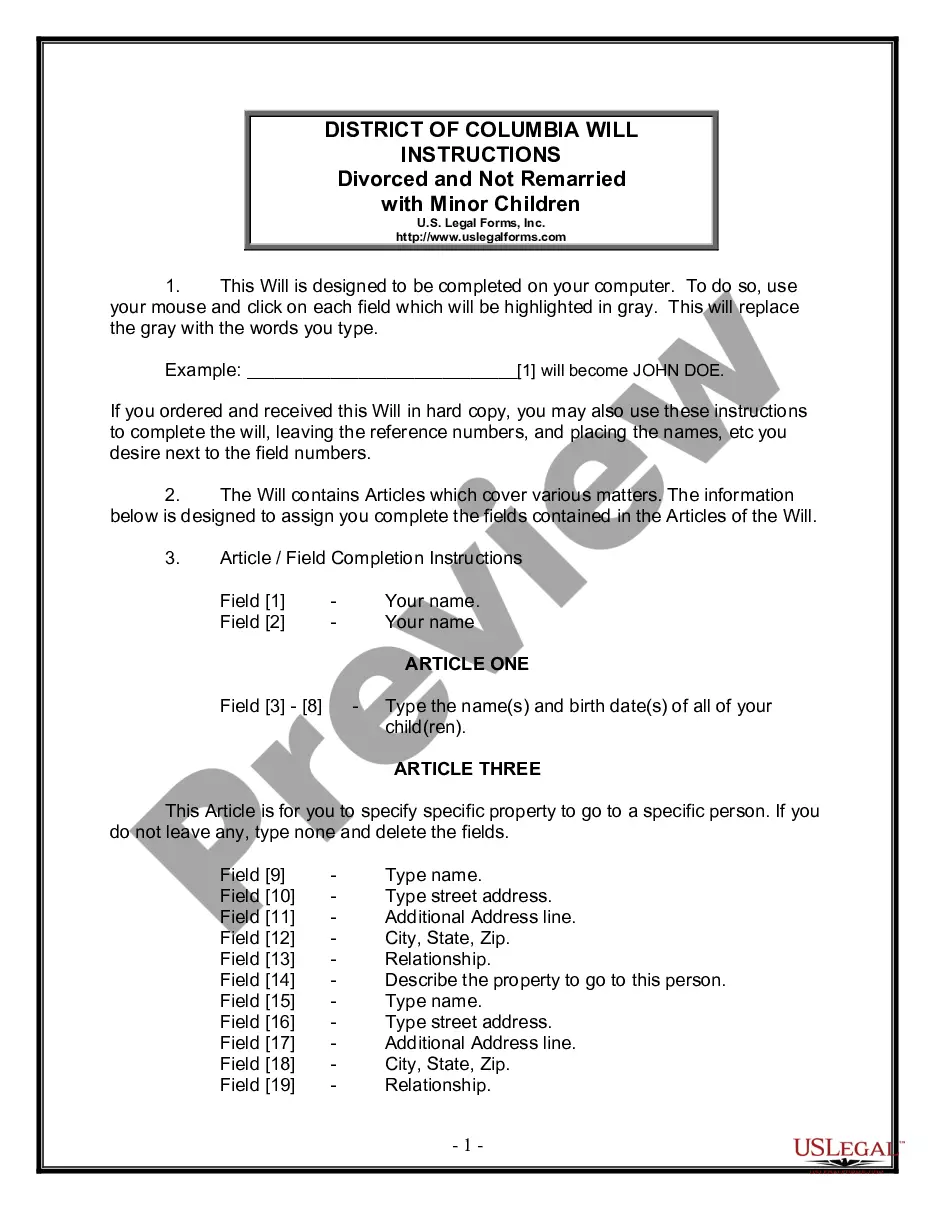
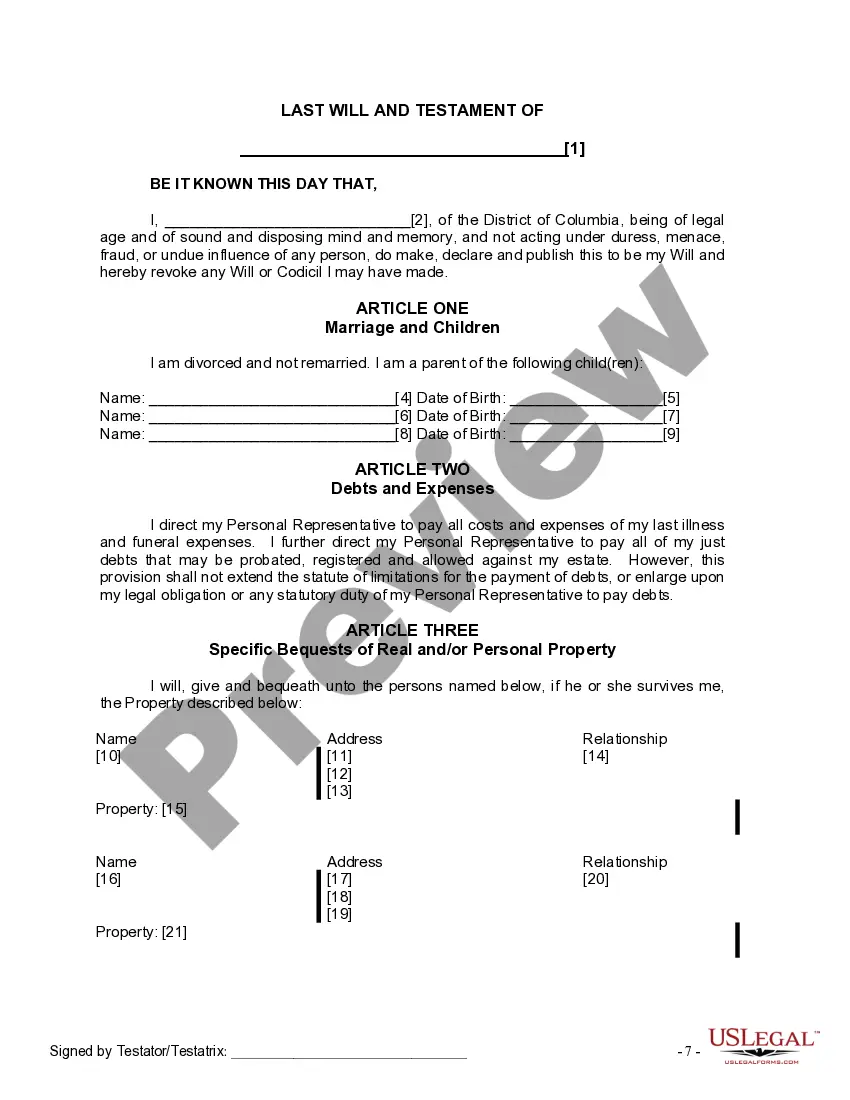
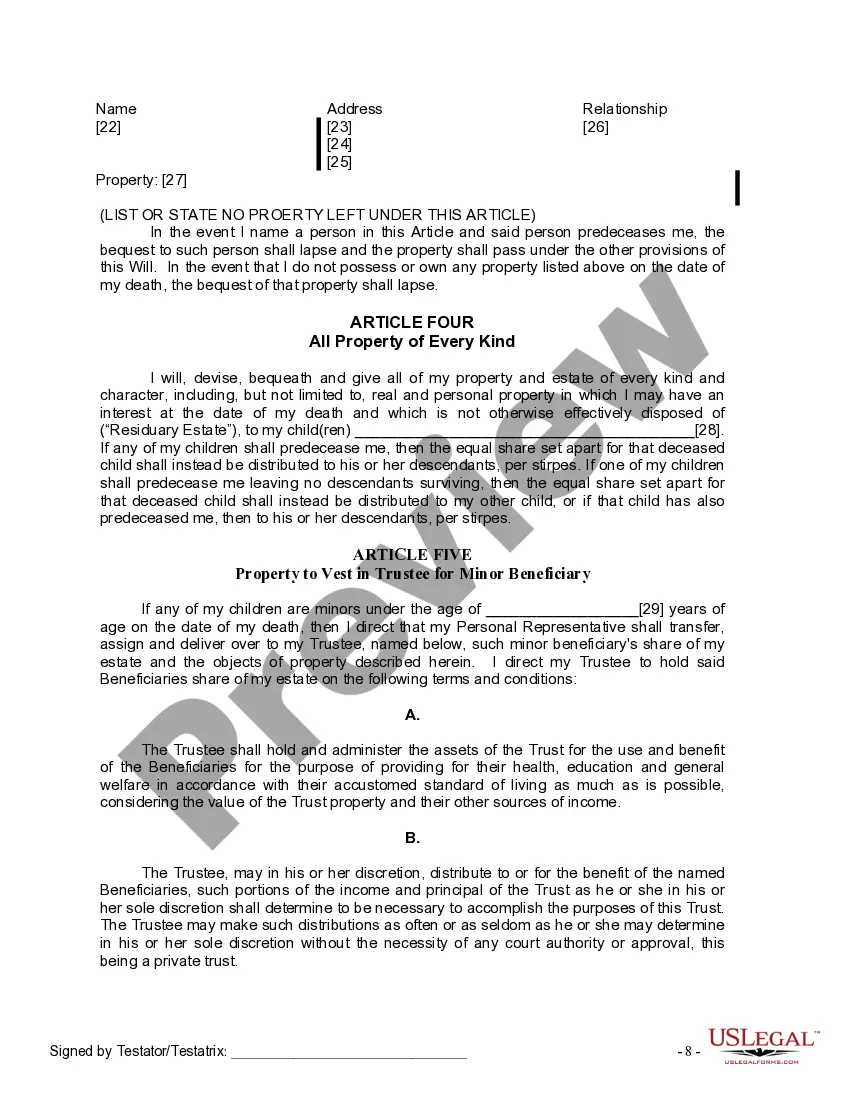
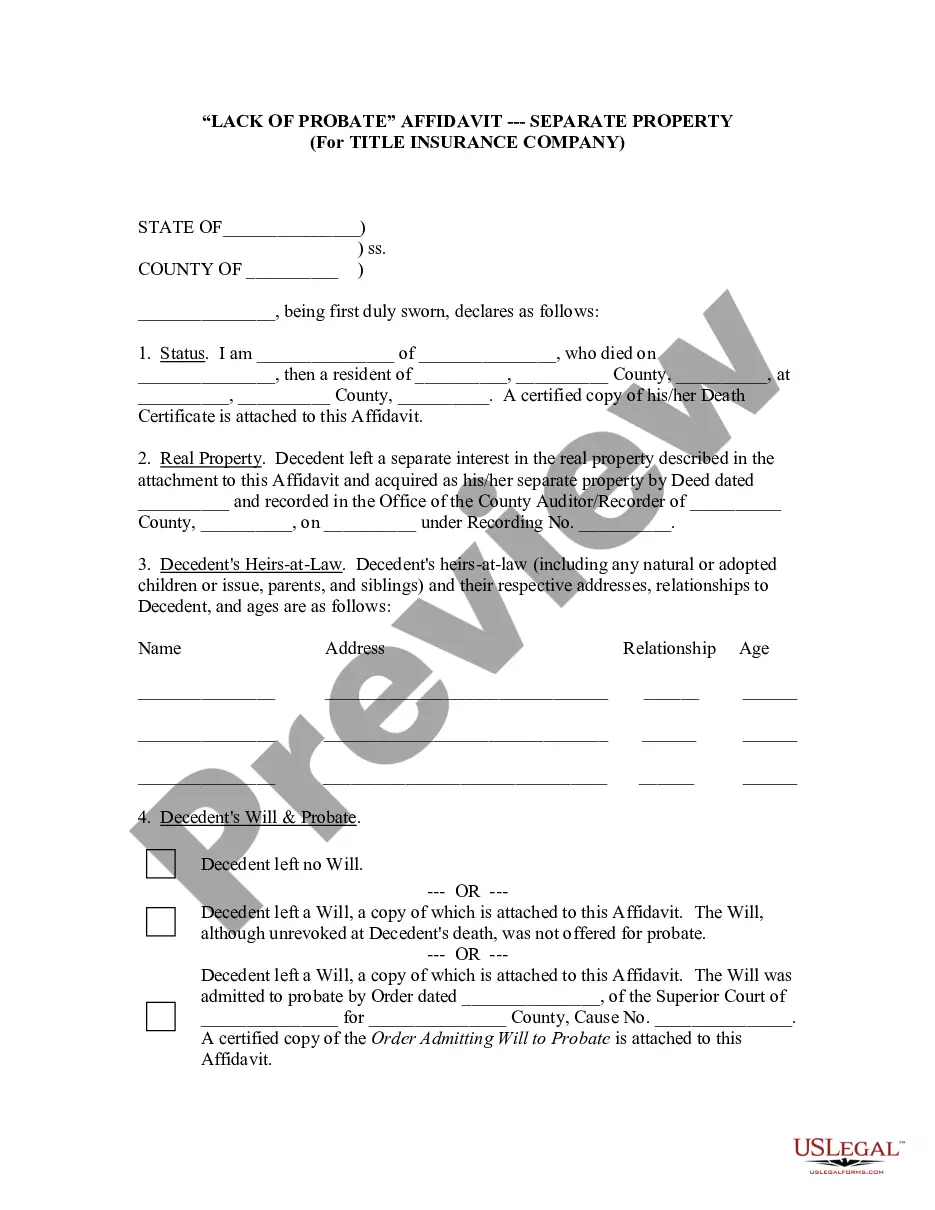
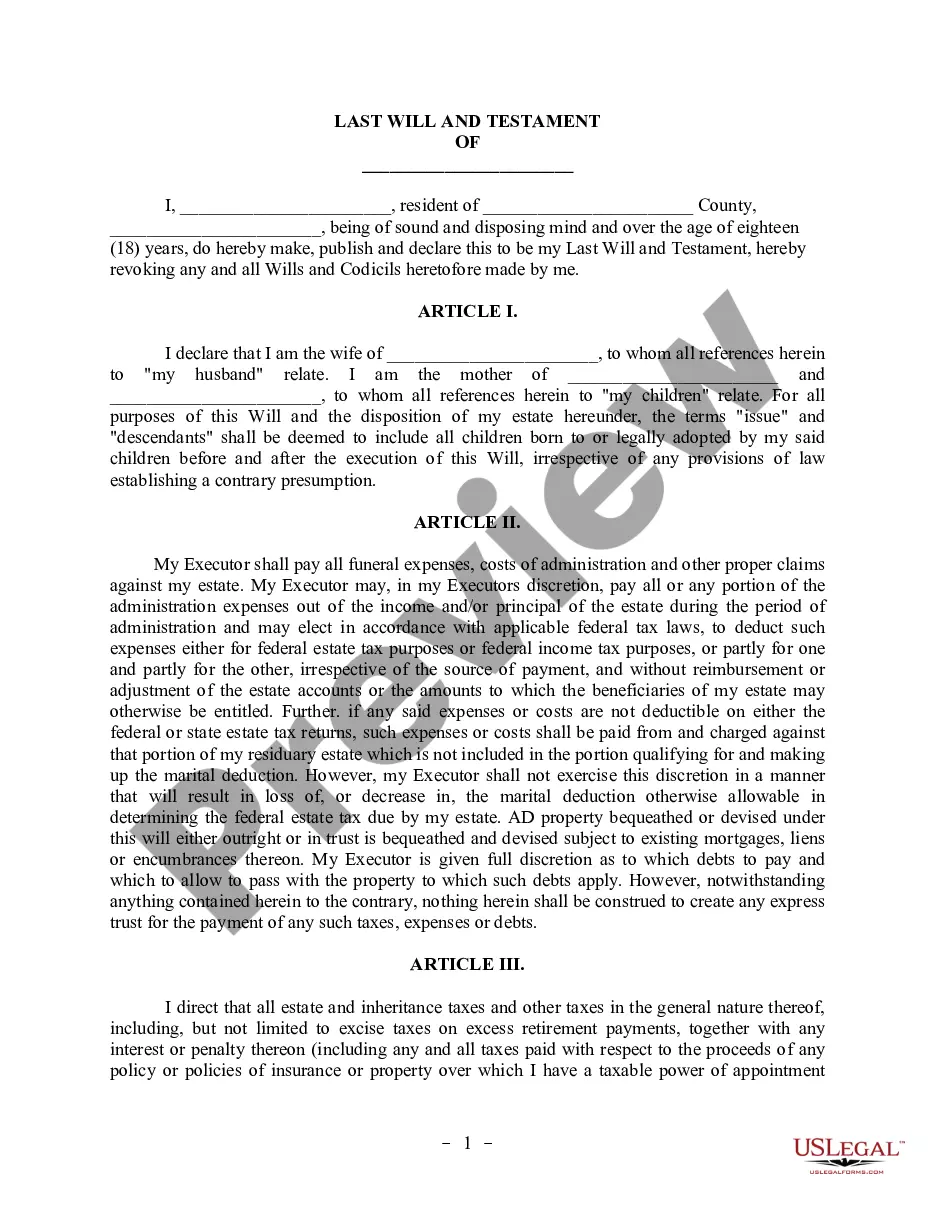
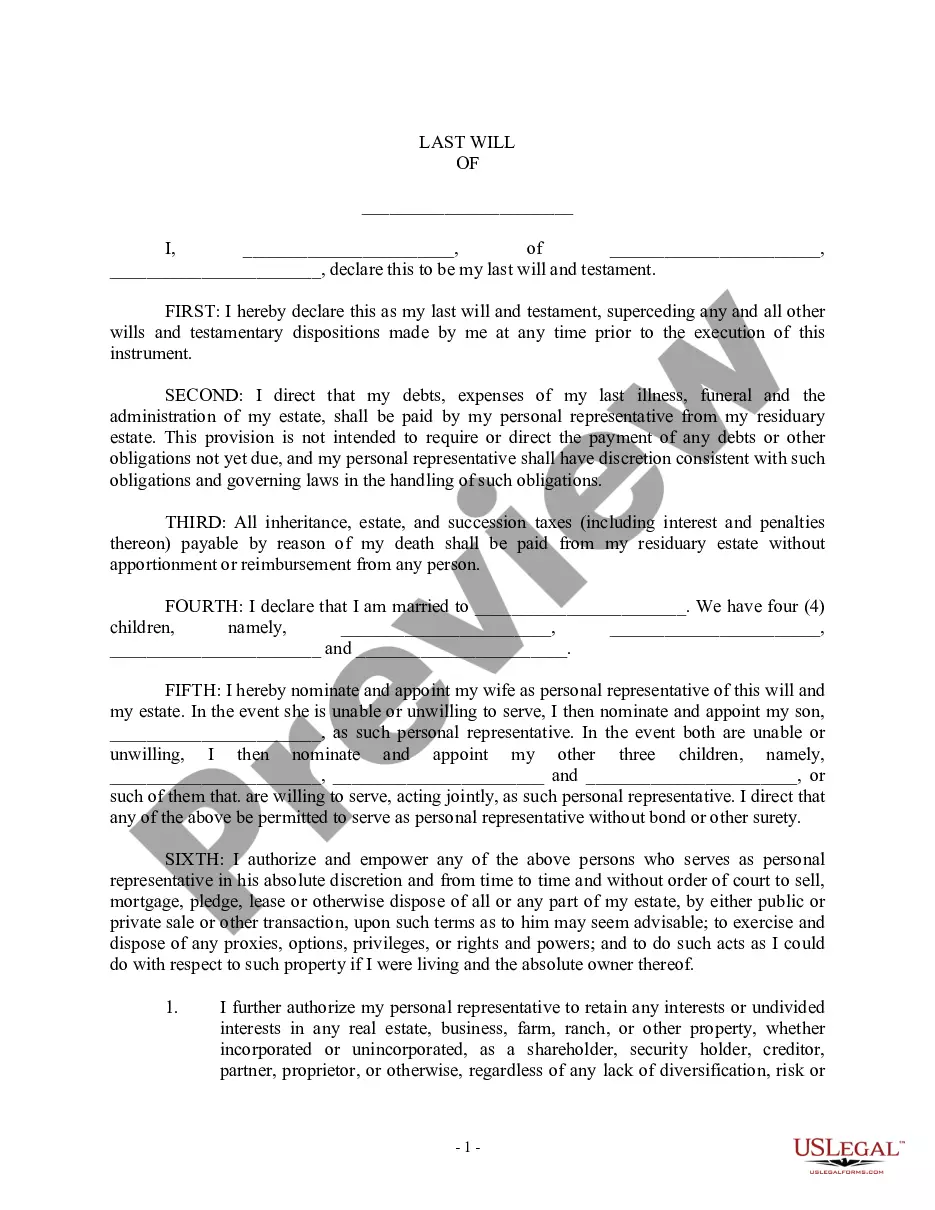
This Last Will and Testament is specifically designed for a divorced person who has not remarried and has minor children. It serves as a legal document outlining how your assets will be distributed upon your death, who will take care of your minor children, and who will fulfill the role of the personal representative or executor. This form is tailored to address the unique situation of not being remarried and ensures that your children's welfare is legally acknowledged and prioritized in your estate plan.
Key components of this form
- Appointment of a personal representative (executor).
- Designations for minor children as beneficiaries.
- Specific bequests of property to named individuals.
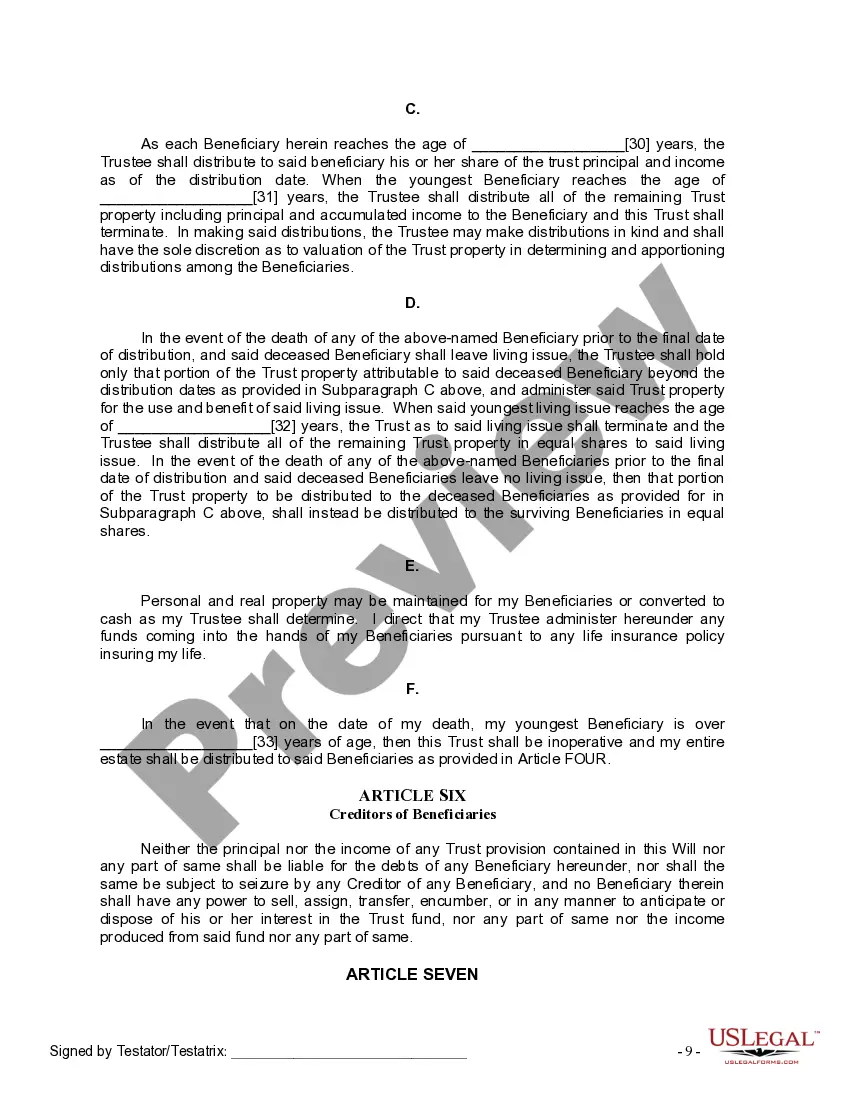
- Establishment of a trust for minor children.
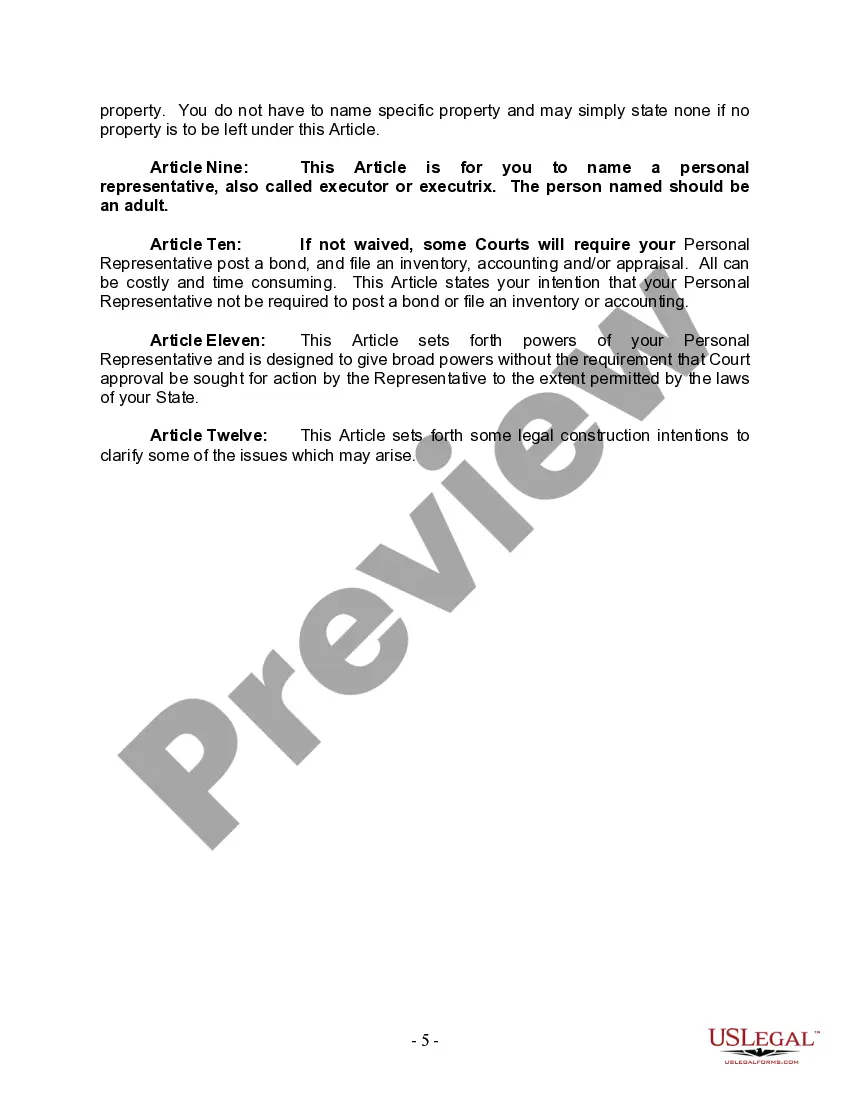
- Appointment of a guardian for minor children.
- Provisions for debts and expenses related to the estate.


When to use this form
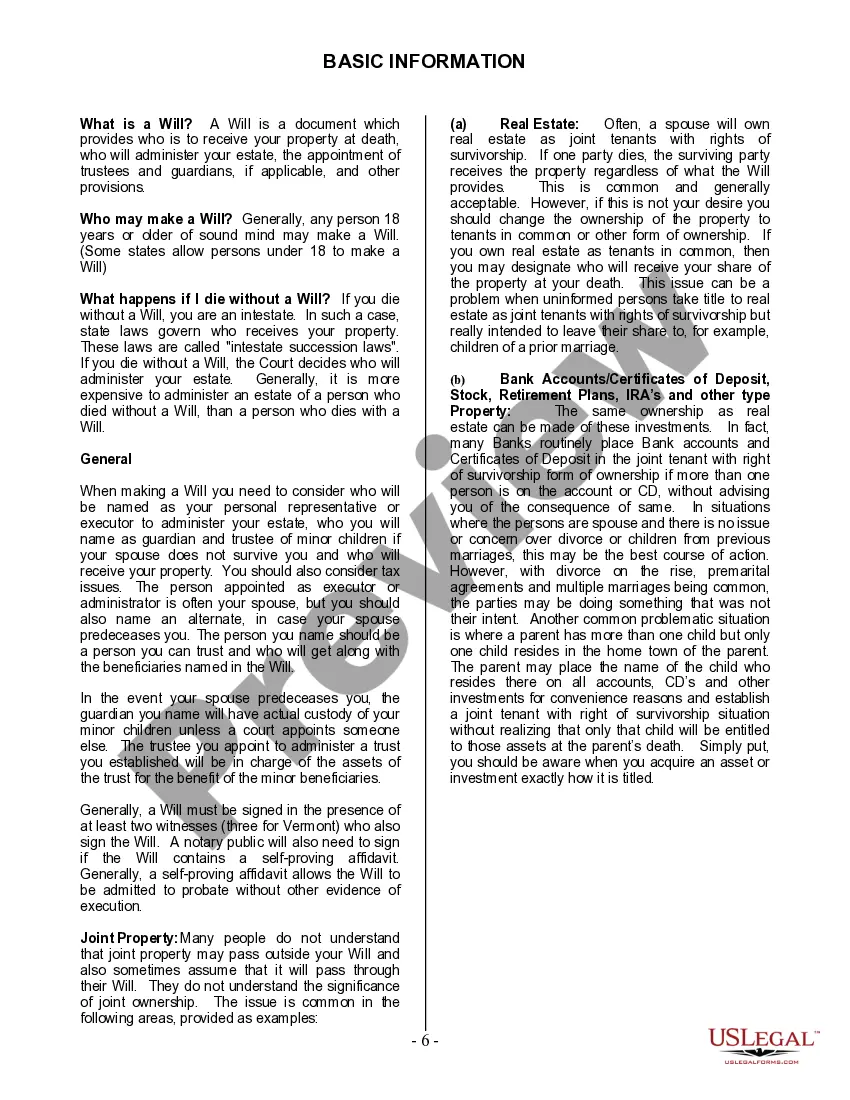
This form should be used when you are a divorced individual with minor children and wish to ensure that your assets are distributed according to your wishes after your death. It is also used to appoint guardians for your children and manage funds through a trust until they reach adulthood. Having a will in place can prevent family disputes and ensure your children's future is secured according to your preferences.
Who this form is for
This form is intended for:
- Divorced individuals who have not remarried.
- Parents with minor children under their care.
- Those looking to specify how their assets will be divided upon death.
- Individuals in need of appointing guardians for their minor children.
Steps to complete this form
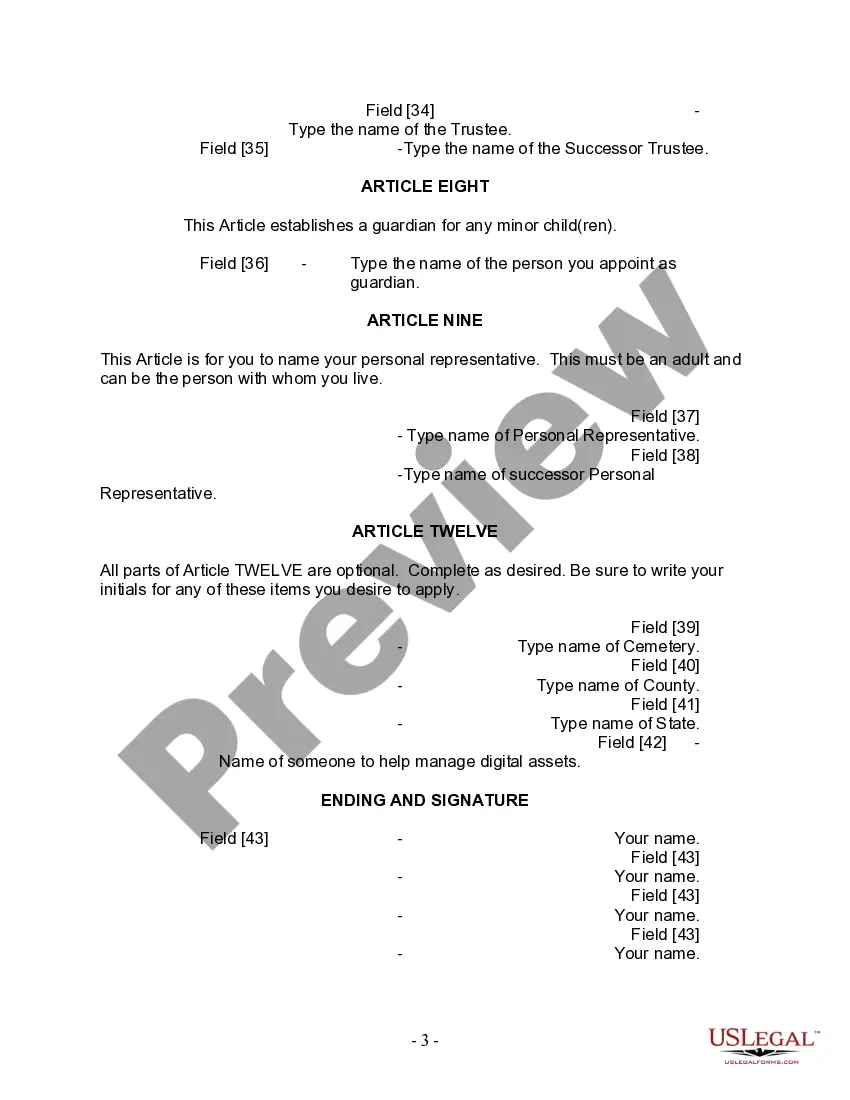
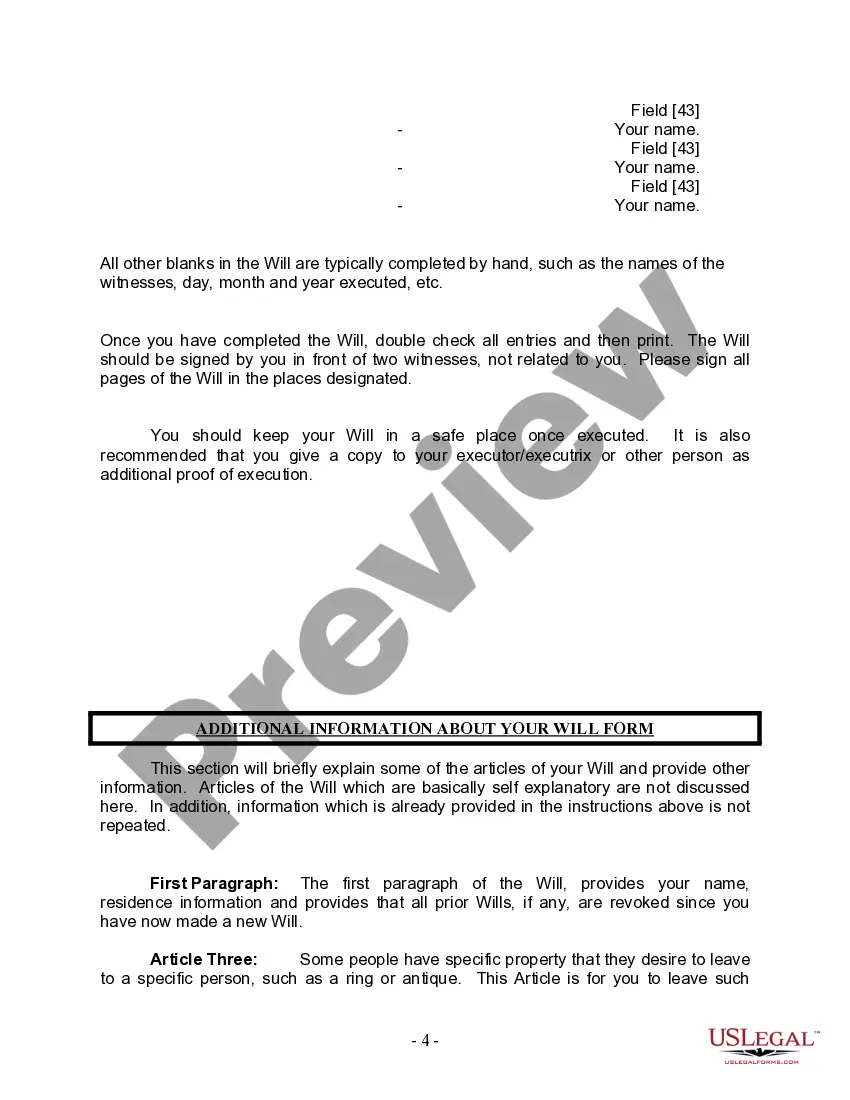
- Identify the personal representative and any alternative representatives you wish to appoint.
- List the names and birth dates of all your minor children.
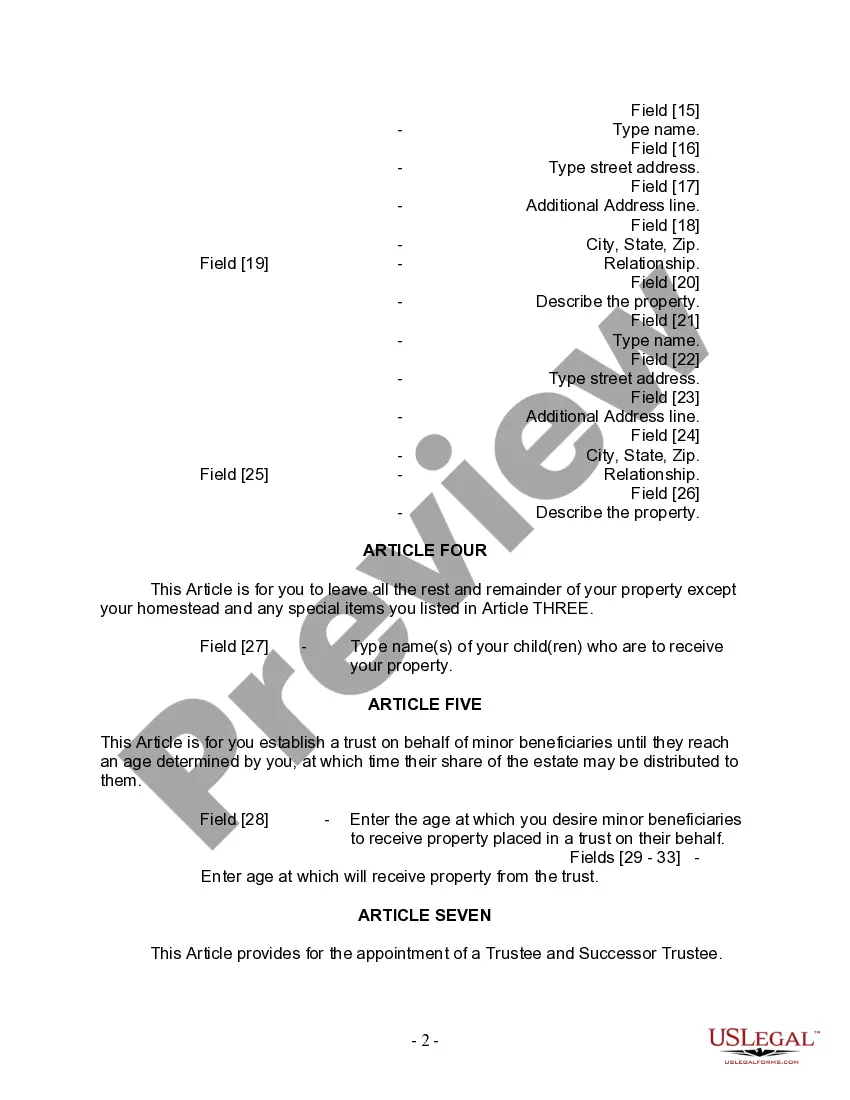
- Specify any specific bequests of property by identifying the recipient and the property details.
- Determine whether to establish a trust for your minor children's inheritance.
- Sign the will in front of two witnesses and a notary public, if required by your state.
Notarization requirements for this form
This form usually doesn’t need to be notarized. However, local laws or specific transactions may require it. Our online notarization service, powered by Notarize, lets you complete it remotely through a secure video session, available 24/7.
Get your form ready online
Our built-in tools help you complete, sign, share, and store your documents in one place.
Make edits, fill in missing information, and update formatting in US Legal Forms—just like you would in MS Word.
Download a copy, print it, send it by email, or mail it via USPS—whatever works best for your next step.
Sign and collect signatures with our SignNow integration. Send to multiple recipients, set reminders, and more. Go Premium to unlock E-Sign.
If this form requires notarization, complete it online through a secure video call—no need to meet a notary in person or wait for an appointment.
We protect your documents and personal data by following strict security and privacy standards.

Make edits, fill in missing information, and update formatting in US Legal Forms—just like you would in MS Word.

Download a copy, print it, send it by email, or mail it via USPS—whatever works best for your next step.

Sign and collect signatures with our SignNow integration. Send to multiple recipients, set reminders, and more. Go Premium to unlock E-Sign.

If this form requires notarization, complete it online through a secure video call—no need to meet a notary in person or wait for an appointment.

We protect your documents and personal data by following strict security and privacy standards.
Avoid these common issues
- Failing to update the will after changes in family status.
- Not having the necessary witnesses or notary present during signing.
- Omitting details about the personal representative or guardian.
- Leaving the form unsigned or improperly filed.
Benefits of using this form online
- Convenient and easy access to legal documentation from home.
- Edit and customize fields directly on your computer.
- Immediate download of the form upon completion.
- Access to attorney-drafted materials ensuring legal compliance.
What to keep in mind
- This Last Will and Testament is tailored for divorced individuals with minor children.
- It facilitates the appointment of guardians and distribution of assets as per your wishes.
- Proper execution involving witnesses and notarization is crucial for validity.
- Online access provides convenience and immediate customization capabilities.
Looking for another form?
Form popularity
FAQ
In the District of Columbia, wills do not require notarization to be legally valid. However, having your will notarized can provide additional proof of authenticity. If you are creating a District of Columbia Last Will and Testament for Divorced person not Remarried with Minor Children, it may be wise to consider notarization for added security. Utilizing platforms like US Legal Forms facilitates this process, ensuring your will meets all necessary requirements.
Yes, you can write your own will in the District of Columbia. However, it is important to follow specific legal requirements to ensure validity. For a District of Columbia Last Will and Testament for Divorced person not Remarried with Minor Children, consulting legal resources can help you include essential provisions for your minor children. Using a professional service like US Legal Forms can guide you through the process, providing templates tailored to your needs.
In Washington, D.C., for a will to be valid, it must be in writing, signed by the testator, and acknowledged by two witnesses. This applies to anyone, including those creating a District of Columbia Last Will and Testament for Divorced person not Remarried with Minor Children. Using a platform like uslegalforms can help ensure that your will meets all legal requirements.
Generally, a will does not override a divorce settlement because settlements are part of a legal agreement. However, if your will was drafted after the divorce and explicitly states your wishes, it can take precedence in terms of asset distribution. For peace of mind, consider a District of Columbia Last Will and Testament for Divorced person not Remarried with Minor Children that aligns with your divorce settlement terms.
Yes, you can create a will independently of your spouse. In fact, it's advisable for a person with minor children to have a District of Columbia Last Will and Testament for Divorced person not Remarried with Minor Children to ensure proper guardianship and distribution of assets. This independence allows you to specify your wishes without any influence from your former spouse.
In most cases, a divorce decree can impact property ownership, but it does not directly change the terms of a deed. If you have a District of Columbia Last Will and Testament for Divorced person not Remarried with Minor Children, it's crucial to review how your divorce decree affects properties mentioned in the will. Always consult a legal professional to understand your specific situation.
A will can change significantly after a divorce. In the District of Columbia, if you create a District of Columbia Last Will and Testament for Divorced person not Remarried with Minor Children, your ex-spouse may no longer inherit under that will. Additionally, any provisions that name your ex-spouse as a beneficiary could be revoked automatically due to the divorce.
Writing a District of Columbia Last Will and Testament for a Divorced person not Remarried with Minor Children involves several key steps. First, you should gather essential information, such as your assets and a list of your beneficiaries, including your children. Next, utilize a template or legal service, like USLegalForms, to ensure your will meets all legal requirements in DC. Finally, sign your will in front of at least two witnesses to make it legally valid.
Marriage does not automatically invalidate a will in the United States. However, depending on state laws, provisions may exist that affect how assets are allocated upon marriage. For individuals creating a District of Columbia Last Will and Testament for Divorced person not Remarried with Minor Children, staying informed about these laws can ensure your wishes are honored.
While a will does not need to be notarized to be valid in Washington, D.C., having it notarized can provide a level of security and ease during the probate process. This formal step can benefit individuals creating a District of Columbia Last Will and Testament for Divorced person not Remarried with Minor Children, ensuring peace of mind about your wishes being upheld.