District of Columbia Statutory General Power of Attorney - General, Durable, Limited
Overview of this form
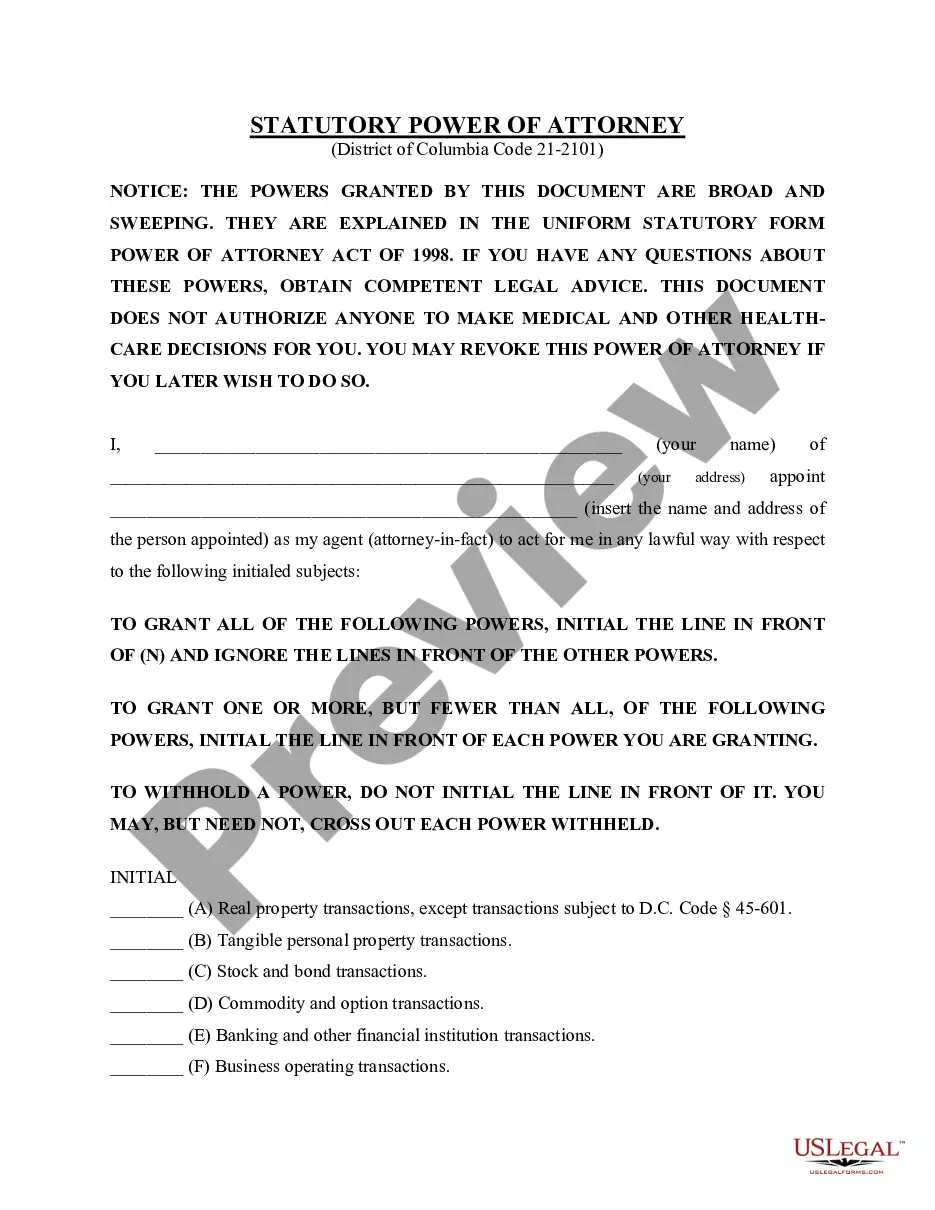
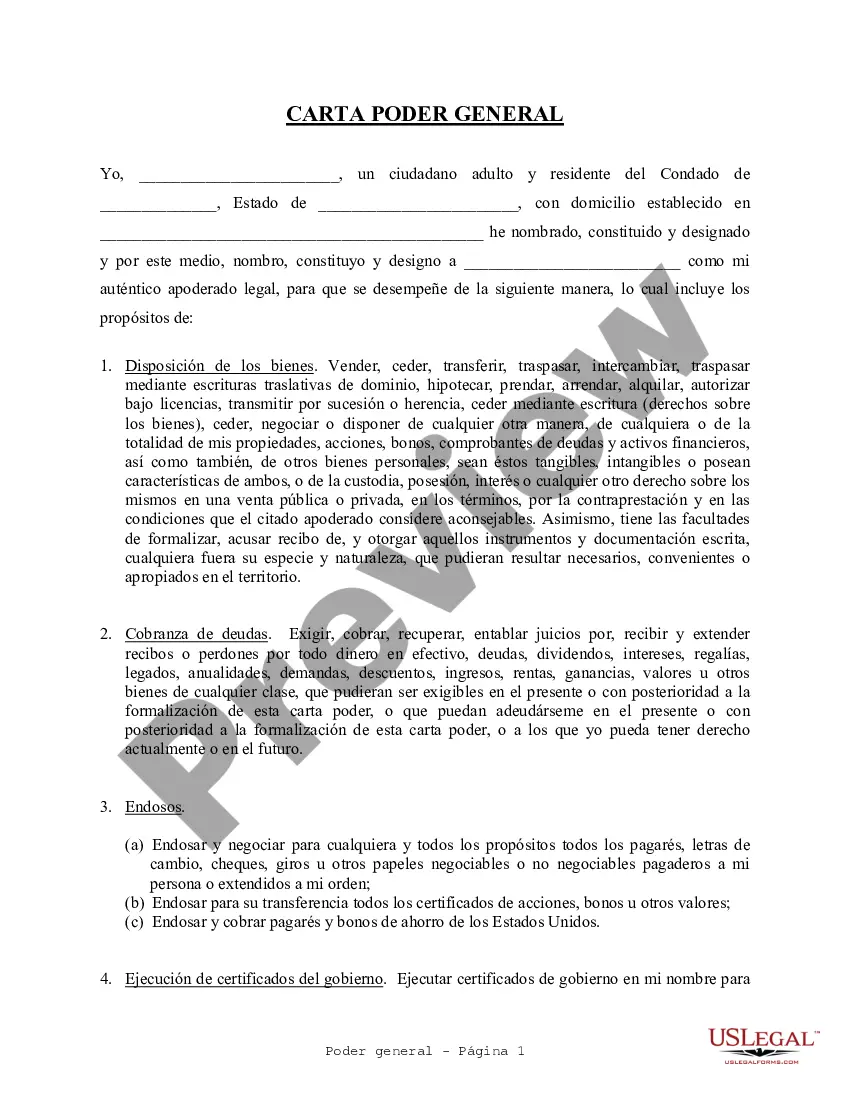
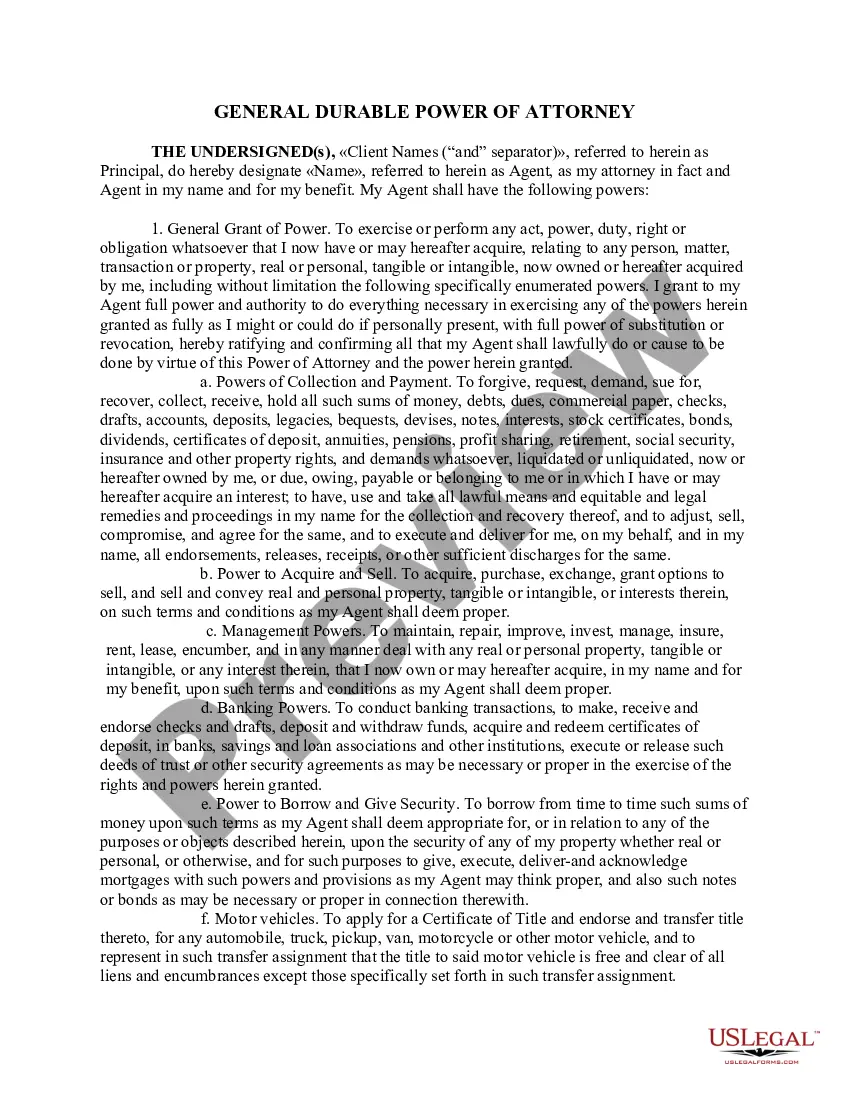
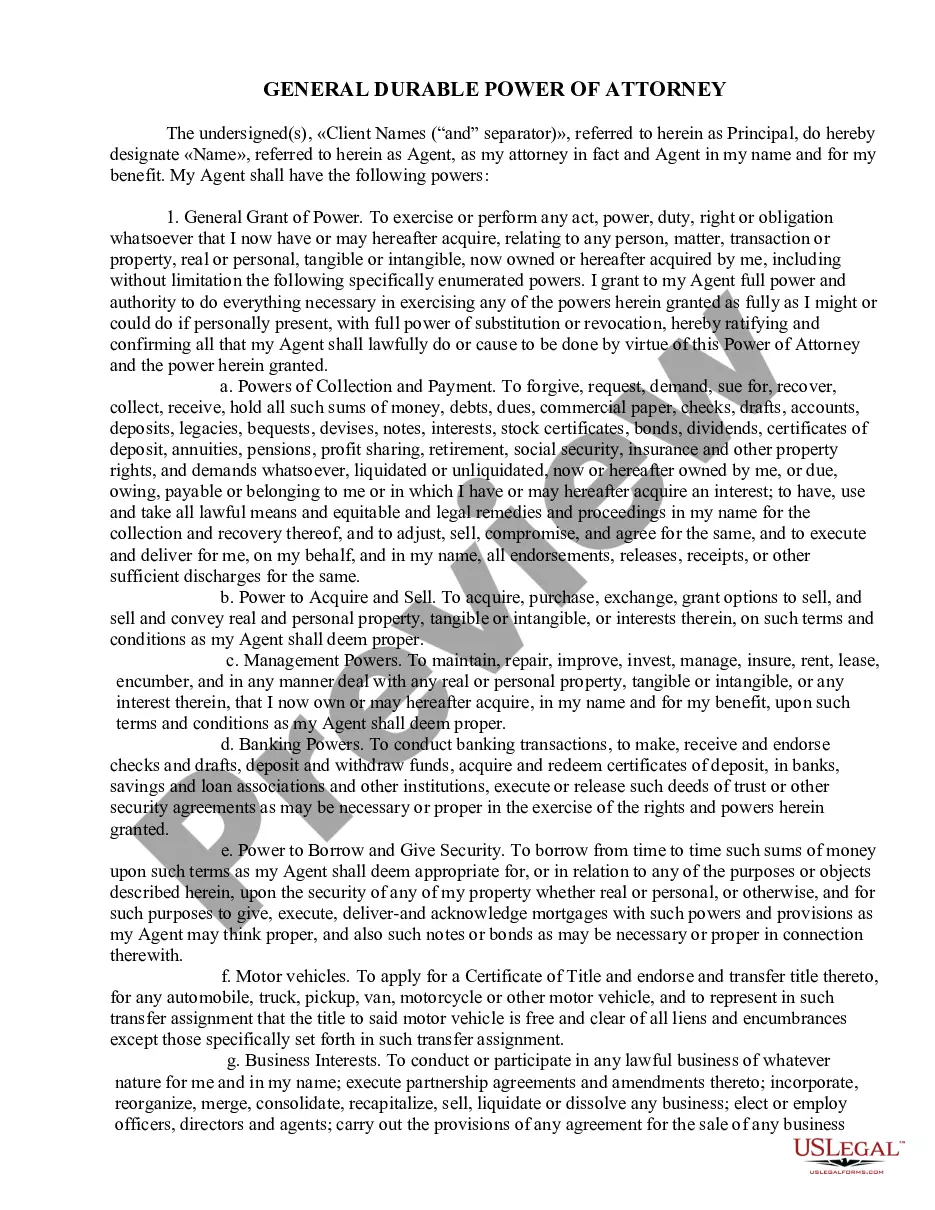
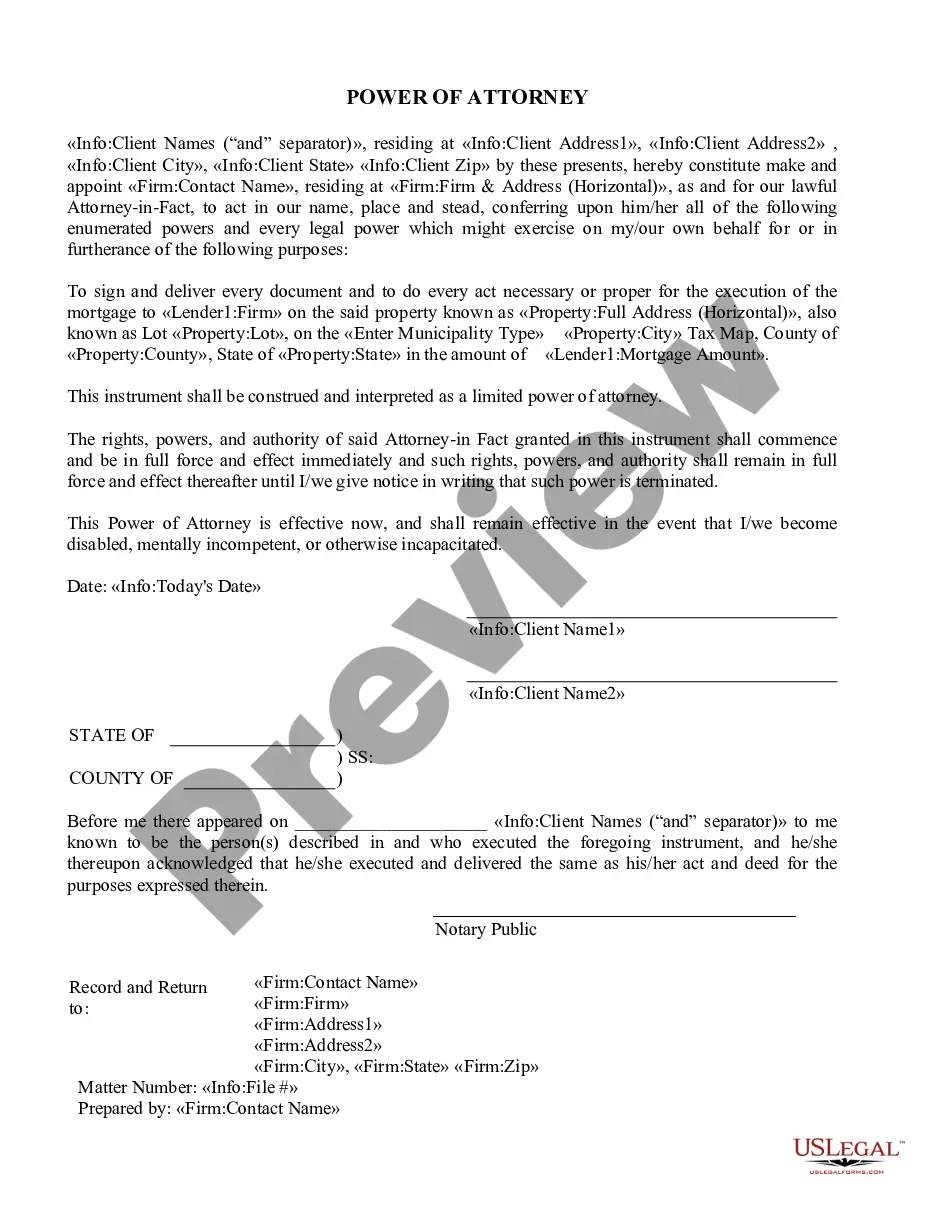
The Statutory General Power of Attorney is a legally approved document that allows you to appoint someone as your attorney-in-fact to manage a variety of matters on your behalf. This form offers flexibility as it can be tailored to grant broad powers or be limited to specific tasks, such as handling financial transactions or real estate dealings. Unlike traditional power of attorney forms, this statutory option ensures compliance with state laws and offers durability, meaning it remains effective even if you become incapacitated.
Form components explained
- Name and address of the principal (the person granting the power).
- Name and address of the attorney-in-fact (the person receiving the power).
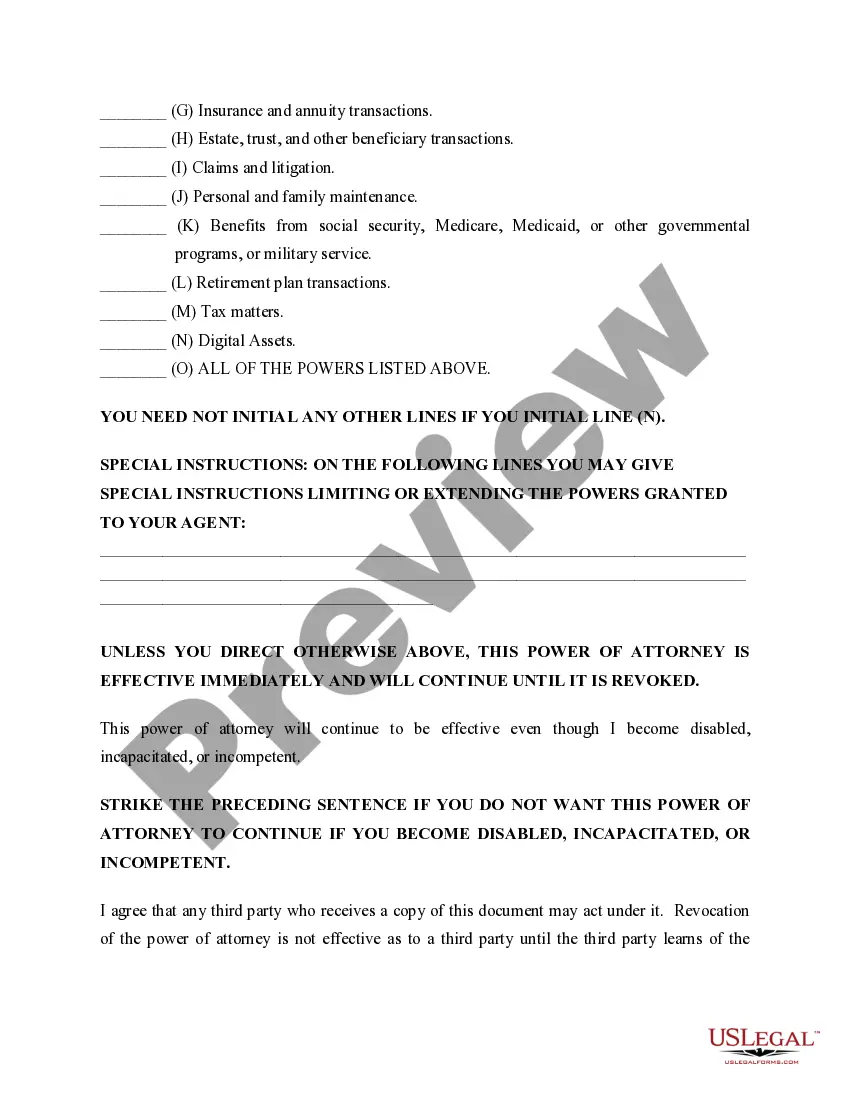
- Specific powers granted, which can include property transactions, banking, and tax matters.
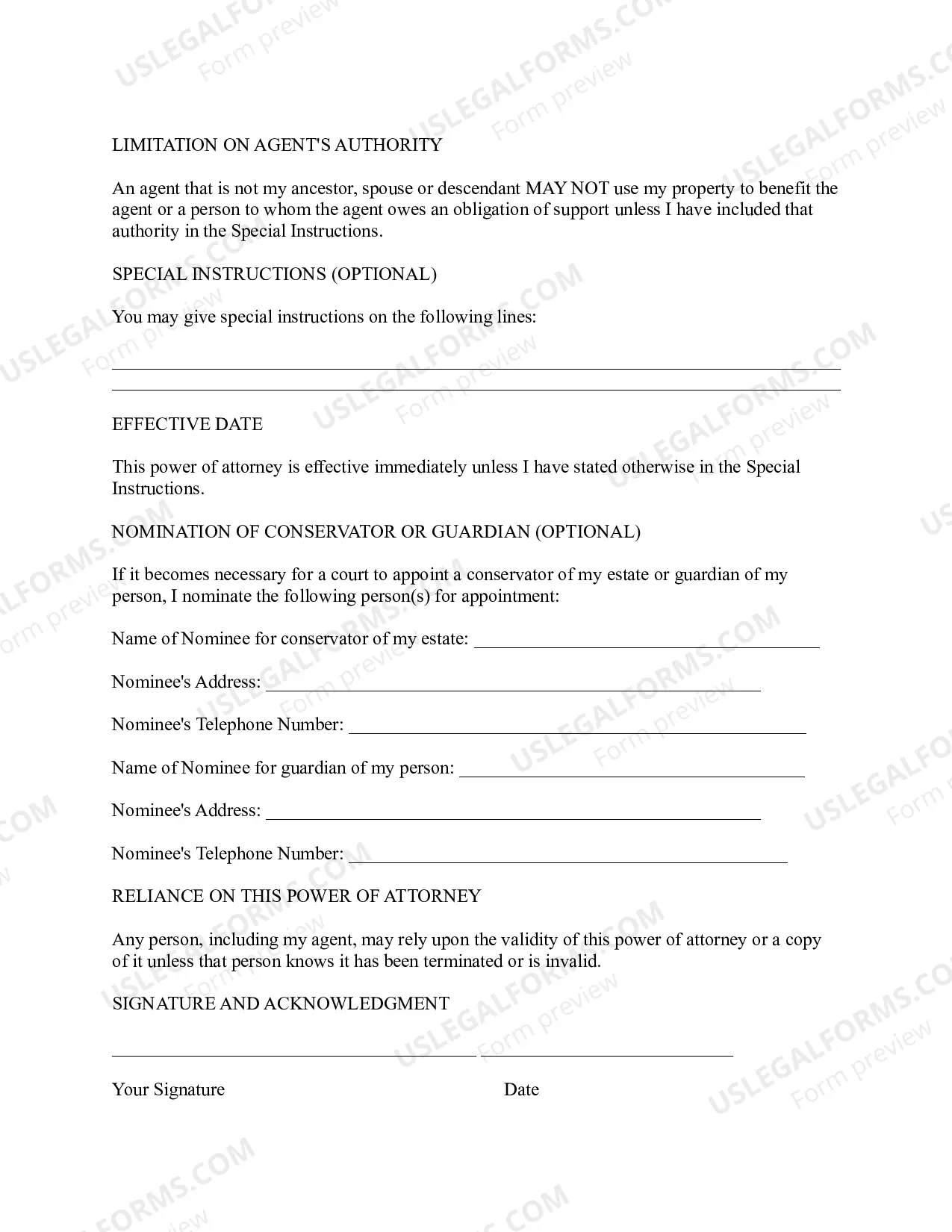
- Instructions regarding limitations or extensions of the powers.
- Durability clause indicating whether the powers remain effective if the principal becomes incapacitated.
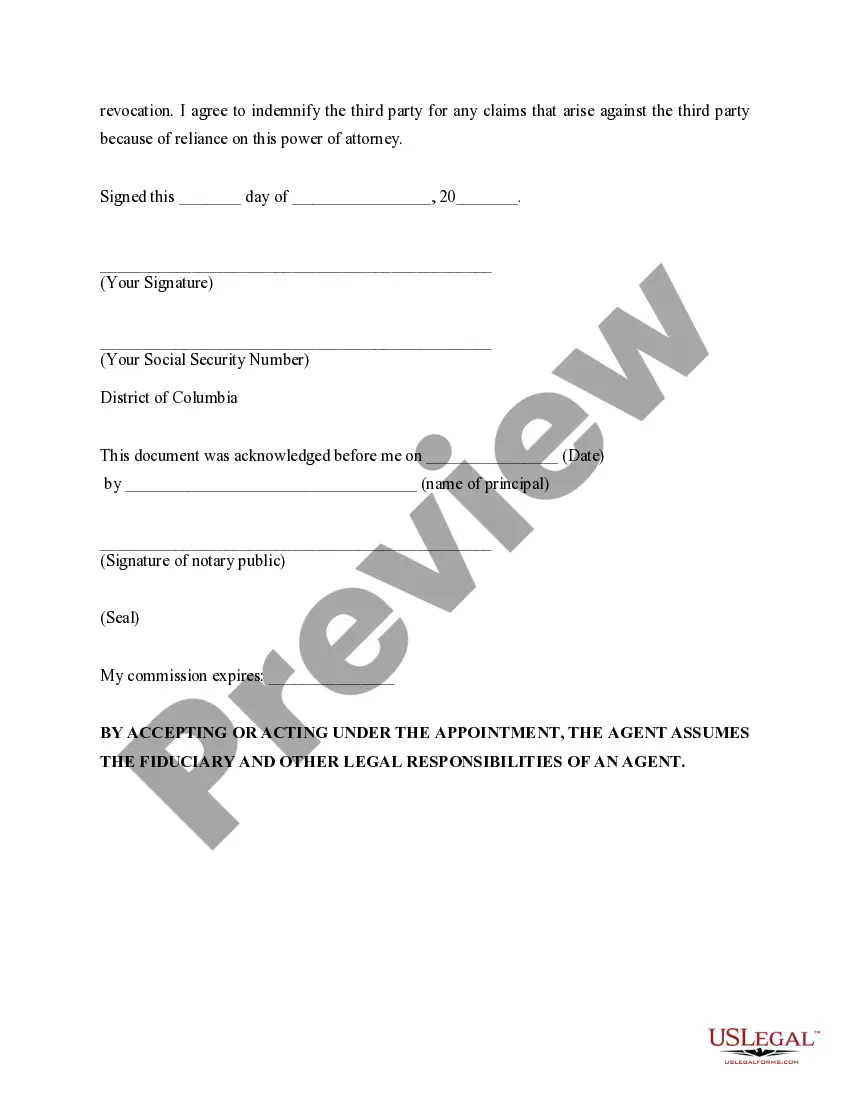
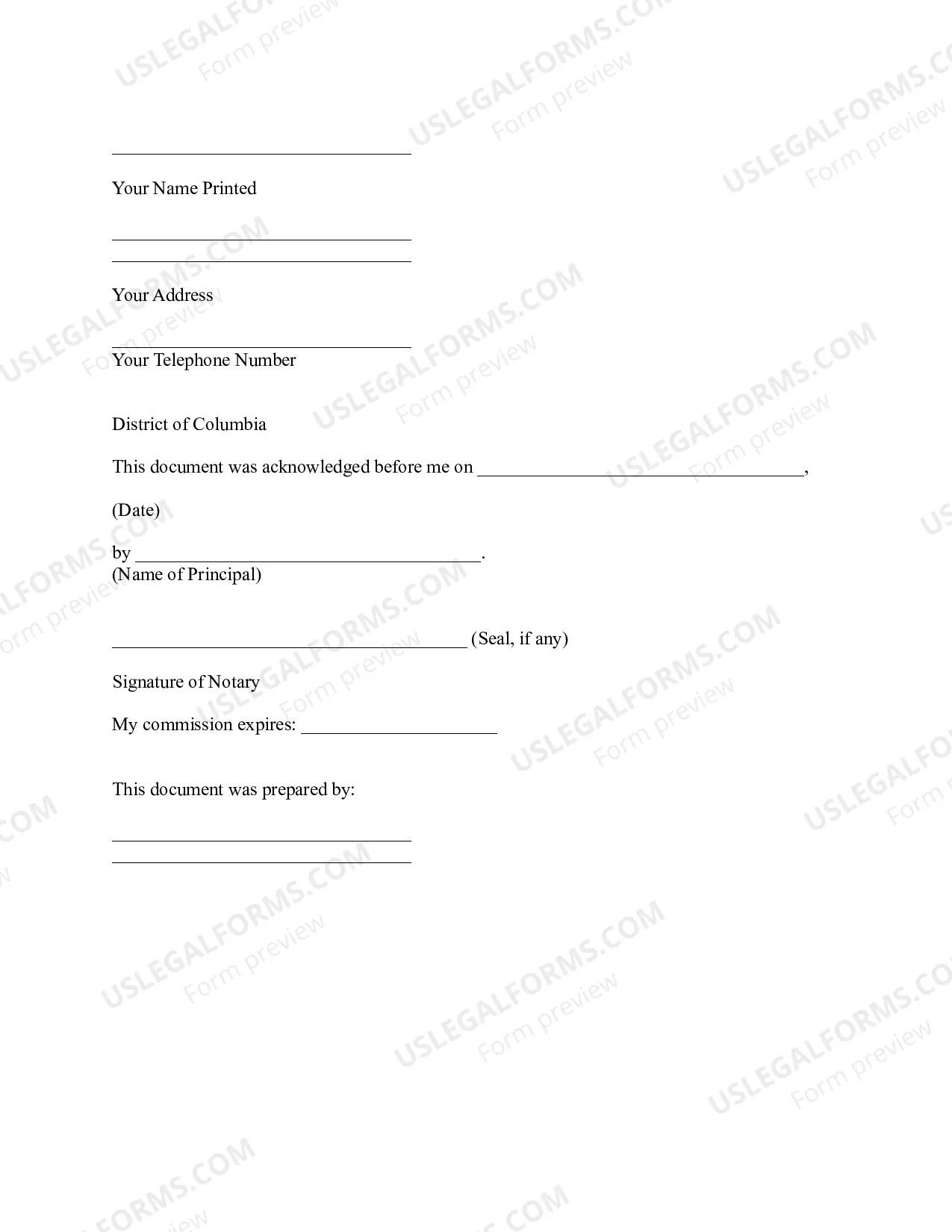
- Signature lines for the principal and, if applicable, for the notary public.
Common use cases
This form is typically used in situations where you need to delegate authority to someone else for financial and property-related decisions. For instance, if you are traveling abroad and want your trusted friend or family member to manage your investments or real estate, this form would be essential. It is also advisable when planning for potential future incapacity to ensure that your affairs are handled according to your wishes.
Who can use this document
- Individuals who wish to appoint an agent to manage financial or property matters.
- People planning for potential incapacitation due to health reasons.
- Anyone needing to make specific arrangements for property management while away.
- Individuals wanting to grant limited authority for specific transactions.
Completing this form step by step
- Identify and enter your full name and address at the beginning of the document.
- Insert the name and address of the agent you are appointing.
- Initial next to each power you wish to grant or choose the broad option by initialing "N."
- Provide any special instructions regarding the powers granted, if applicable.
- Sign and date the document, including your Social Security Number for identification.
- Complete the acknowledgment section with a notary public, if needed.
Does this document require notarization?
Yes, this form must be notarized to be legally valid. This ensures that your identity is verified and provides additional security. US Legal Forms offers integrated online notarization services, allowing you to complete the process securely via video call, any time, with no need to travel.
Get your form ready online
Our built-in tools help you complete, sign, share, and store your documents in one place.
Make edits, fill in missing information, and update formatting in US Legal Forms—just like you would in MS Word.
Download a copy, print it, send it by email, or mail it via USPS—whatever works best for your next step.
Sign and collect signatures with our SignNow integration. Send to multiple recipients, set reminders, and more. Go Premium to unlock E-Sign.
If this form requires notarization, complete it online through a secure video call—no need to meet a notary in person or wait for an appointment.
We protect your documents and personal data by following strict security and privacy standards.

Make edits, fill in missing information, and update formatting in US Legal Forms—just like you would in MS Word.

Download a copy, print it, send it by email, or mail it via USPS—whatever works best for your next step.

Sign and collect signatures with our SignNow integration. Send to multiple recipients, set reminders, and more. Go Premium to unlock E-Sign.

If this form requires notarization, complete it online through a secure video call—no need to meet a notary in person or wait for an appointment.

We protect your documents and personal data by following strict security and privacy standards.
Typical mistakes to avoid
- Failing to initial the specific powers granted, which can lead to confusion over authority.
- Not including special instructions when needed, which may limit the effectiveness of the agent.
- Overlooking the notary acknowledgment section, if required.
- Ignoring the durability clause, which may leave the power invalid in case of incapacitation.
Why complete this form online
- Convenience of downloading the form instantly from anywhere.
- Editability allows you to customize the form to suit your needs without legal fees.
- Reliability, with forms drafted by licensed attorneys ensuring legal compliance.
- This power of attorney allows your agent to make various financial and legal decisions within the scope of your granted authorities.
- It is important to understand that this document does not authorize anyone to make medical decisions on your behalf.
- You may revoke this power of attorney at any time unless you have specified otherwise in the document.
Key takeaways
- The Statutory General Power of Attorney allows you to appoint an agent for various legal matters.
- You can tailor your powers, making it limited or broad based on your needs.
- This form requires notarization to be recognized legally.
- It remains effective even if you become incapacitated, unless stated otherwise.
Looking for another form?




Form popularity
FAQ
A statutory power of attorney follows specific laws laid out by the state, like those found in the District of Columbia Statutory General Power of Attorney - General, Durable, Limited. This type ensures compliance with local regulations. In contrast, a general power of attorney can be more flexible and customized, but may lack the built-in protections and clarity provided by statutory versions. Choosing the right option is essential for effective legal representation.
There are four main types of power of attorney: general, durable, limited, and springing. General power of attorney grants broad authority, while durable power of attorney remains effective during incapacitation. Limited power of attorney restricts authority to specific tasks, and springing power of attorney activates upon a certain condition, typically incapacitation. Understanding these categories within the District of Columbia Statutory General Power of Attorney - General, Durable, Limited is crucial for informed decision-making.
In Washington, D.C., a durable power of attorney allows an individual to authorize someone to make decisions on their behalf even if they lose mental capacity. This is part of the District of Columbia Statutory General Power of Attorney - General, Durable, Limited framework. Having a durable power of attorney in place ensures that your personal and financial affairs will be managed according to your wishes at all times.
A uniform statutory power of attorney is generally a standardized form that can be used across different states, whereas a durable power of attorney specifically retains its validity even when the principal becomes incapacitated. In the context of the District of Columbia Statutory General Power of Attorney - General, Durable, Limited, one can see how these terms can be related but are not interchangeable. Understanding these nuances helps in proper legal arrangement.
The difference between durable and limited power of attorney lies mainly in their scope and duration. A durable power of attorney continues to be in effect even if the principal becomes incapacitated, while a limited power of attorney is set for specific tasks or a time frame. Knowing this distinction helps individuals choose the right type of District of Columbia Statutory General Power of Attorney - General, Durable, Limited for their needs.
A legal power of attorney, specifically under the District of Columbia Statutory General Power of Attorney - General, Durable, Limited, cannot make certain critical decisions. These include decisions about life-sustaining medical treatment, signing a will, and making personal decisions regarding the principal’s care that require the principal's specific consent. Understanding these limitations is essential for anyone using a power of attorney.
The best person to act as your power of attorney is someone you trust completely, as they will have the authority to make significant decisions on your behalf. It could be a family member, close friend, or even a professional, such as an attorney, depending on your situation. Selecting the right individual ensures that your intentions are respected under the District of Columbia Statutory General Power of Attorney - General, Durable, Limited. Always consider their capabilities, reliability, and understanding of your values when making this important decision.
The key difference is that a durable power of attorney remains effective even if the principal becomes incapacitated, while a limited power of attorney ends if the principal loses mental capacity. This distinction is critical in planning for future needs and healthcare decisions. When dealing with the District of Columbia Statutory General Power of Attorney - General, Durable, Limited, it’s essential to understand these terms to ensure you select the appropriate document for your circumstances.
Limited power of attorney grants authority over specific tasks or decisions, while specific power of attorney refers to the same concept, but usually applies to a clearly defined action or event. Both types allow the principal to retain control over their decisions while designating someone to act on their behalf. This flexibility can be beneficial within the framework of the District of Columbia Statutory General Power of Attorney - General, Durable, Limited. Choosing the correct option can simplify transactions and ensure your wishes are honored.
The main difference lies in their legal provisions and usage. A statutory power of attorney follows a specific format established by state law, while a general durable power of attorney gives the agent broad authority, allowing them to make various decisions on behalf of the principal. This becomes crucial when dealing with the District of Columbia Statutory General Power of Attorney - General, Durable, Limited. Understanding these differences can help you choose the right document for your needs.