District of Columbia Guaranty or Guarantee of Payment of Rent
What this document covers
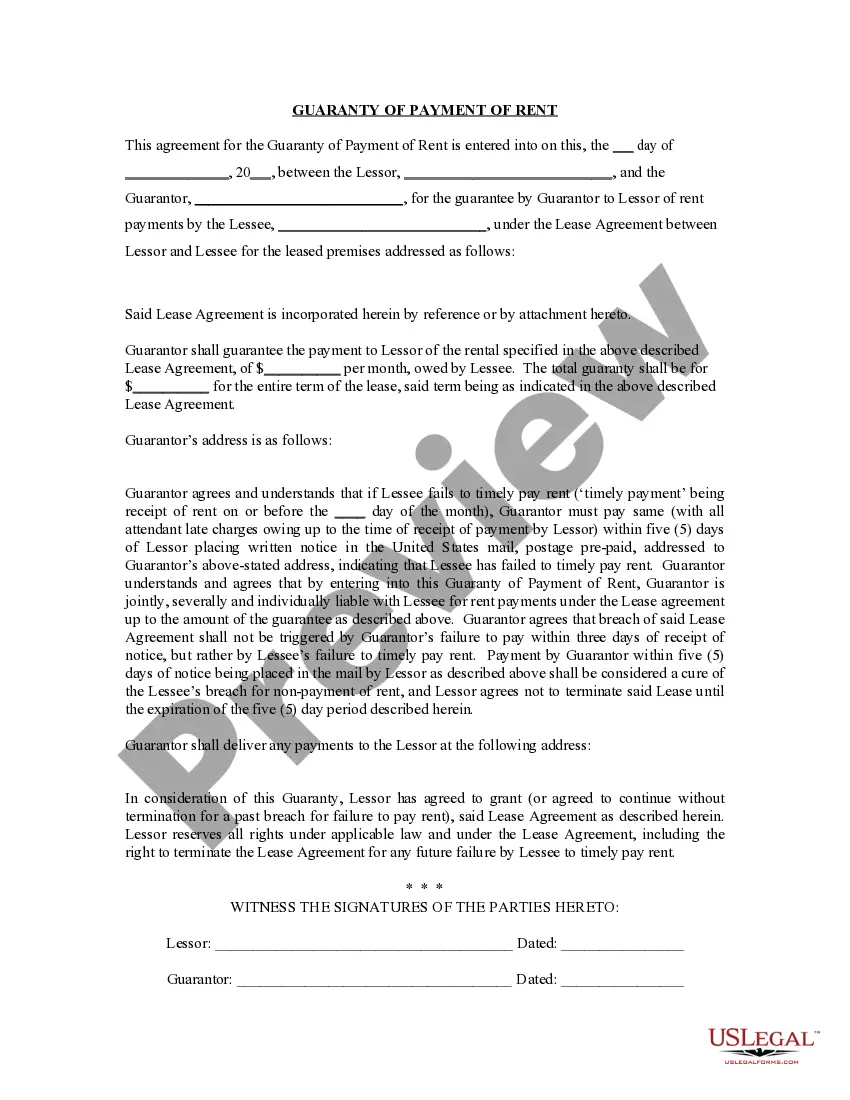
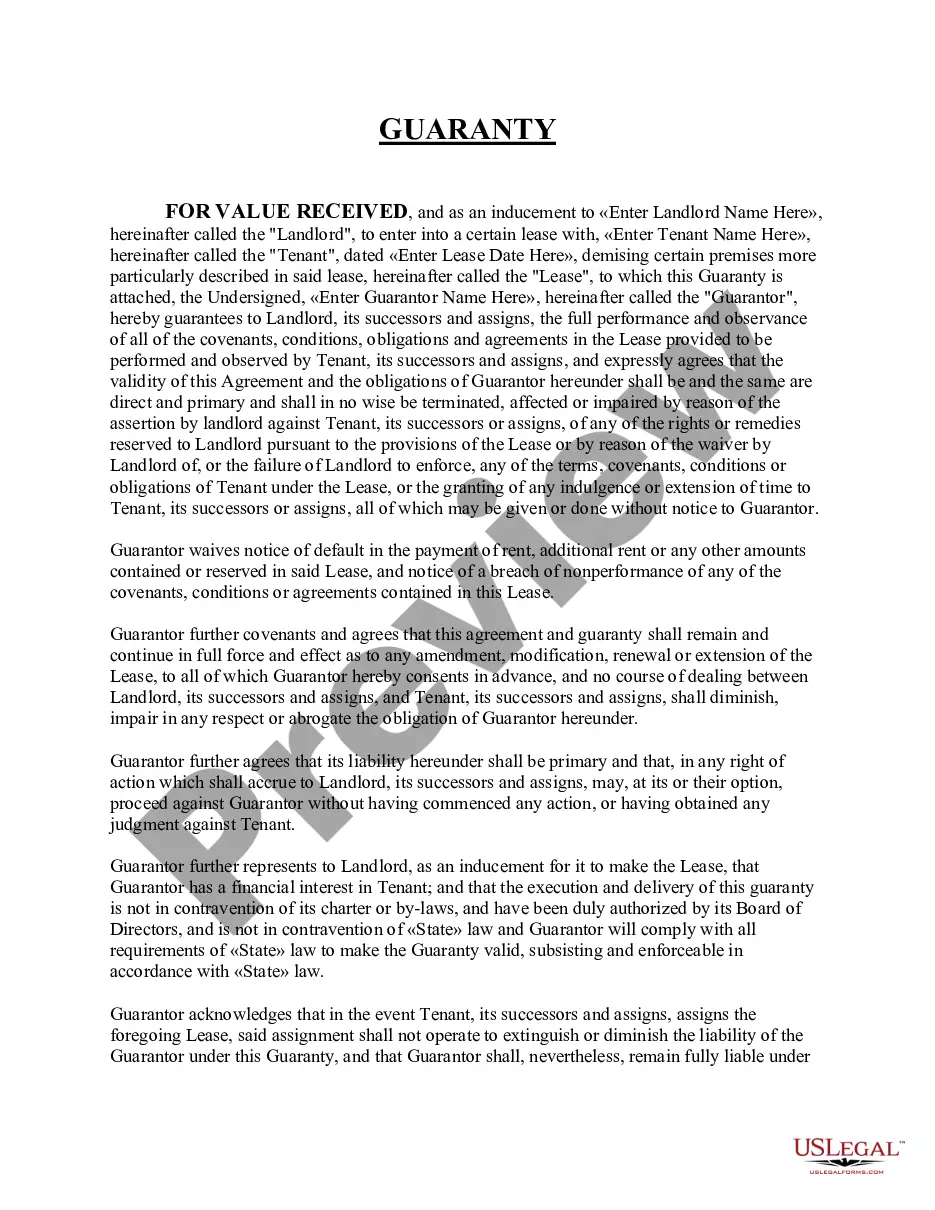
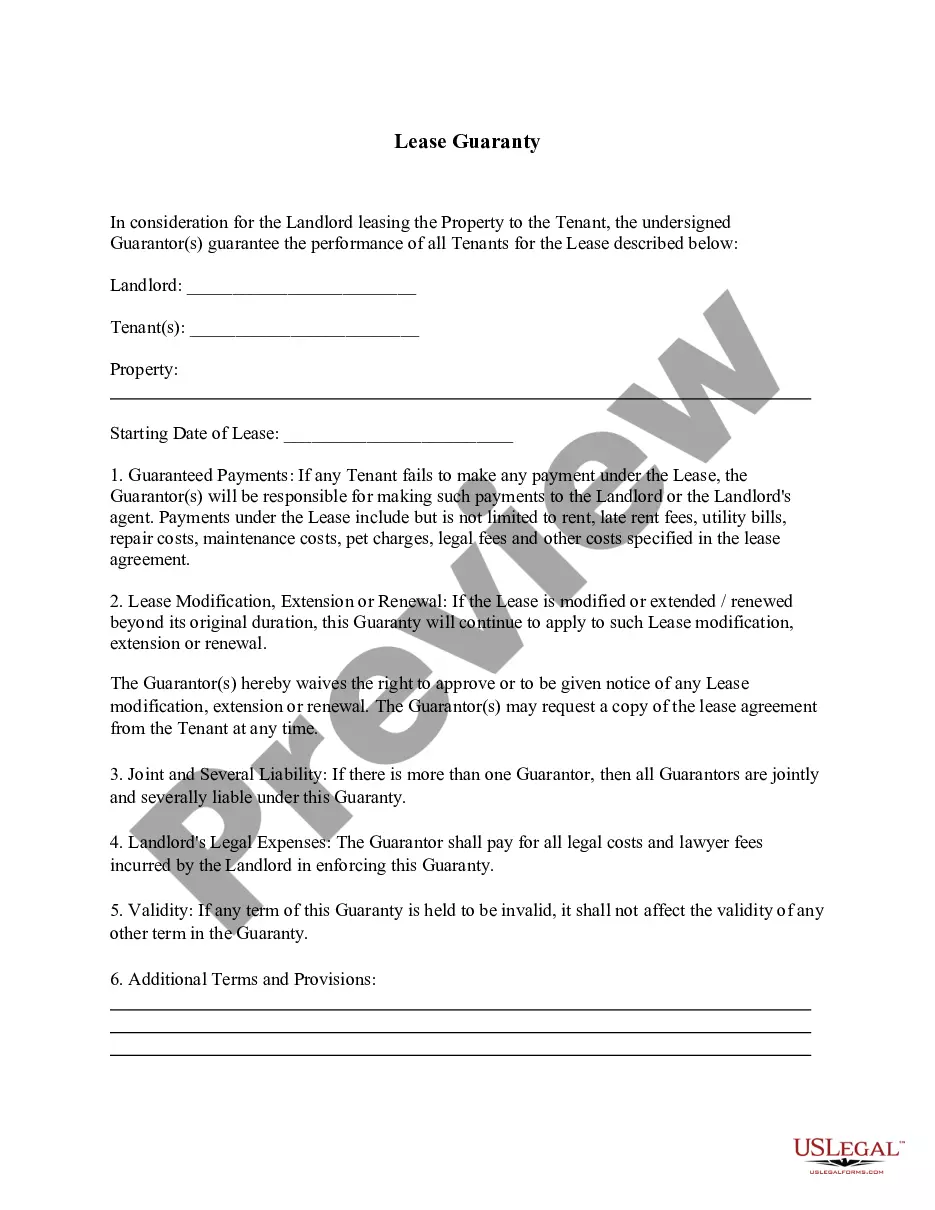
The Guaranty or Guarantee of Payment of Rent is a legal document that establishes an agreement between a guarantor and a landlord, ensuring that the rent will be paid even if the tenant cannot fulfill this obligation. This form serves specifically as a protective measure for landlords, distinguishing it from similar rental agreements where the responsibility for payment lies solely with the tenant. By committing as a guarantor, one agrees to cover the tenant's rental payments, adding an extra layer of security for landlords in leasing arrangements.
Key parts of this document
- Identification of the guarantor and tenant
- Details of the lease or rental agreement
- Conditions under which the guarantor must pay the rent
- Signature blocks for both parties
- Dates related to the agreement
When this form is needed
This form is typically used when a tenant seeks to lease a property but may not have sufficient credit history or income to secure the lease on their own. It is also applicable when landlords require additional assurance that rent will be paid in full and on time. Using a guarantor can facilitate rental agreements, particularly in more competitive housing markets where landlords are looking for stable payment assurances.
Who can use this document
- Landlords needing extra security for lease agreements
- Tenants with limited financial backgrounds seeking rental properties
- Guarantors who are willing to assume financial responsibility for a tenant's rent
Completing this form step by step
- Identify the parties involved, including the tenant and guarantor.
- Provide the details of the rental property.
- Specify the payment obligations and the conditions under which the guarantor must fulfill these obligations.
- Enter the appropriate dates for the agreement.
- Ensure all parties sign and date the document.
Notarization guidance
Notarization is generally not required for this form. However, certain states or situations might demand it. You can complete notarization online through US Legal Forms, powered by Notarize, using a verified video call available anytime.
Get your form ready online
Our built-in tools help you complete, sign, share, and store your documents in one place.
Make edits, fill in missing information, and update formatting in US Legal Forms—just like you would in MS Word.
Download a copy, print it, send it by email, or mail it via USPS—whatever works best for your next step.
Sign and collect signatures with our SignNow integration. Send to multiple recipients, set reminders, and more. Go Premium to unlock E-Sign.
If this form requires notarization, complete it online through a secure video call—no need to meet a notary in person or wait for an appointment.
We protect your documents and personal data by following strict security and privacy standards.

Make edits, fill in missing information, and update formatting in US Legal Forms—just like you would in MS Word.

Download a copy, print it, send it by email, or mail it via USPS—whatever works best for your next step.

Sign and collect signatures with our SignNow integration. Send to multiple recipients, set reminders, and more. Go Premium to unlock E-Sign.

If this form requires notarization, complete it online through a secure video call—no need to meet a notary in person or wait for an appointment.

We protect your documents and personal data by following strict security and privacy standards.
Typical mistakes to avoid
- Failing to clearly define the payment conditions.
- Not including the correct details of the rental property.
- Leaving out signatures or dates, which can render the form invalid.
Benefits of using this form online
- Convenience of completing and downloading the form at any time.
- Editability allows users to customize the form to their specific needs.
- Reliability of using professionally drafted forms that comply with legal standards.
Legal use & context
- This form is legally enforceable as long as all parties understand their obligations.
- It is important for guarantors to understand the financial responsibility they are assuming.
- Each state may have different laws governing rental agreements and guaranty contracts.
Main things to remember
- The Guaranty or Guarantee of Payment of Rent protects landlords and helps tenants secure housing.
- Completing this form requires clear identification of parties, property details, and conditions for payment.
- Understanding the legal implications of being a guarantor is crucial before signing.
Looking for another form?
Form popularity
FAQ
If a tenant refuses to allow access for necessary repairs, landlords should communicate the importance of these repairs and seek to resolve the issue amicably. It is advisable to document all attempts to gain access. In the context of the District of Columbia Guaranty or Guarantee of Payment of Rent, understanding tenant laws can provide guidance on how to handle this situation legally.
Generally, landlords in DC are responsible for maintaining the property, while tenants are not held accountable for routine repairs. However, tenants can be responsible for damages they cause. Understanding the nuances of the District of Columbia Guaranty or Guarantee of Payment of Rent will help clarify your rights and responsibilities.
Tenant laws in DC require landlords to maintain the property and ensure it is habitable. This includes making necessary repairs in a timely manner. If your landlord neglects these responsibilities, knowing the District of Columbia Guaranty or Guarantee of Payment of Rent can empower you to seek remediation effectively.
In the District of Columbia, you can withhold rent if your landlord fails to provide essential services or make necessary repairs, affecting your living conditions. However, it is important to follow legal procedures first. Understanding the guidelines surrounding the District of Columbia Guaranty or Guarantee of Payment of Rent can help you navigate such situations effectively.
To report a landlord in the District of Columbia, you can contact the Department of Consumer and Regulatory Affairs (DCRA). They can address violations related to rental laws and tenant rights. If you face issues such as not receiving the District of Columbia Guaranty or Guarantee of Payment of Rent, reporting your landlord can initiate necessary actions for resolution.
A payment guarantee letter is a document in which a guarantor agrees to take responsibility for payments if the tenant defaults. This letter is crucial, especially in the District of Columbia, enhancing the security of rent payments. It serves as a formal assurance to landlords, making them more comfortable entering into lease agreements.
To add a guarantor to a lease, you usually need to inform your landlord and provide the guarantor’s information and financial details. The landlord may require a separate guarantor agreement to be signed, clearly outlining the obligations under the District of Columbia Guaranty or Guarantee of Payment of Rent. Ensuring all parties understand their responsibilities will foster a smooth leasing process.
Generally, a guarantor should have a good credit score, often around 650 or higher, to increase the chance of a landlord accepting them. A strong credit score indicates financial responsibility, which reassures landlords who rely on the District of Columbia Guaranty or Guarantee of Payment of Rent. However, specific requirements can vary depending on the landlord.
To write a letter of proof of rent payment, include the tenant's name, property address, payment dates, and the payment amounts. Be concise and clear to ensure that the letter serves its purpose, especially when addressing the District of Columbia Guaranty or Guarantee of Payment of Rent. This letter can be beneficial for tenants who need to demonstrate timely payments to their next landlord.
To release yourself from a personal guarantee on a commercial lease, you typically need to negotiate with the landlord. They may agree to release you if you find a new tenant or settle any outstanding obligations related to the lease. It's essential to document all agreements in writing to avoid future disputes, especially focusing on the District of Columbia Guaranty or Guarantee of Payment of Rent.