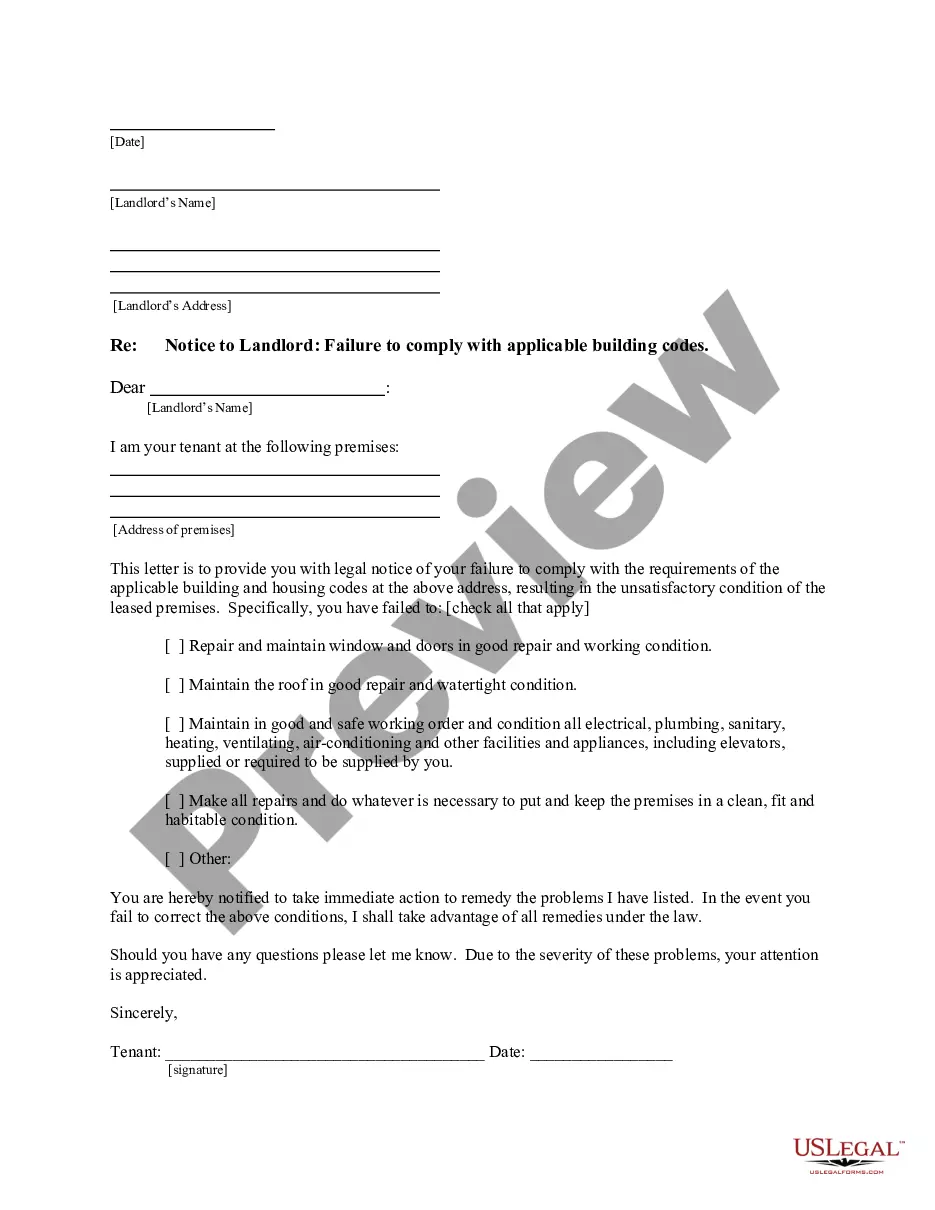
District of Columbia Letter from Tenant to Landlord for Failure of Landlord to comply with building codes affecting health and safety or resulting in untenantable condition - demand for remedy
What is this form?
This form is a Letter from Tenant to Landlord for Failure of Landlord to comply with building codes affecting health and safety or resulting in untenantable condition. It serves as a formal demand for repairs or remedies related to unsafe or unhealthy living conditions within ten days. This form is essential for tenants seeking to ensure their rented premises adhere to health and safety standards, distinguishing it from other tenant-landlord communication forms.
Key parts of this document
- Tenant identification and signature
- Landlord identification or authorized agent details
- Specific issues affecting health and safety
- Deadline for compliance (ten days)
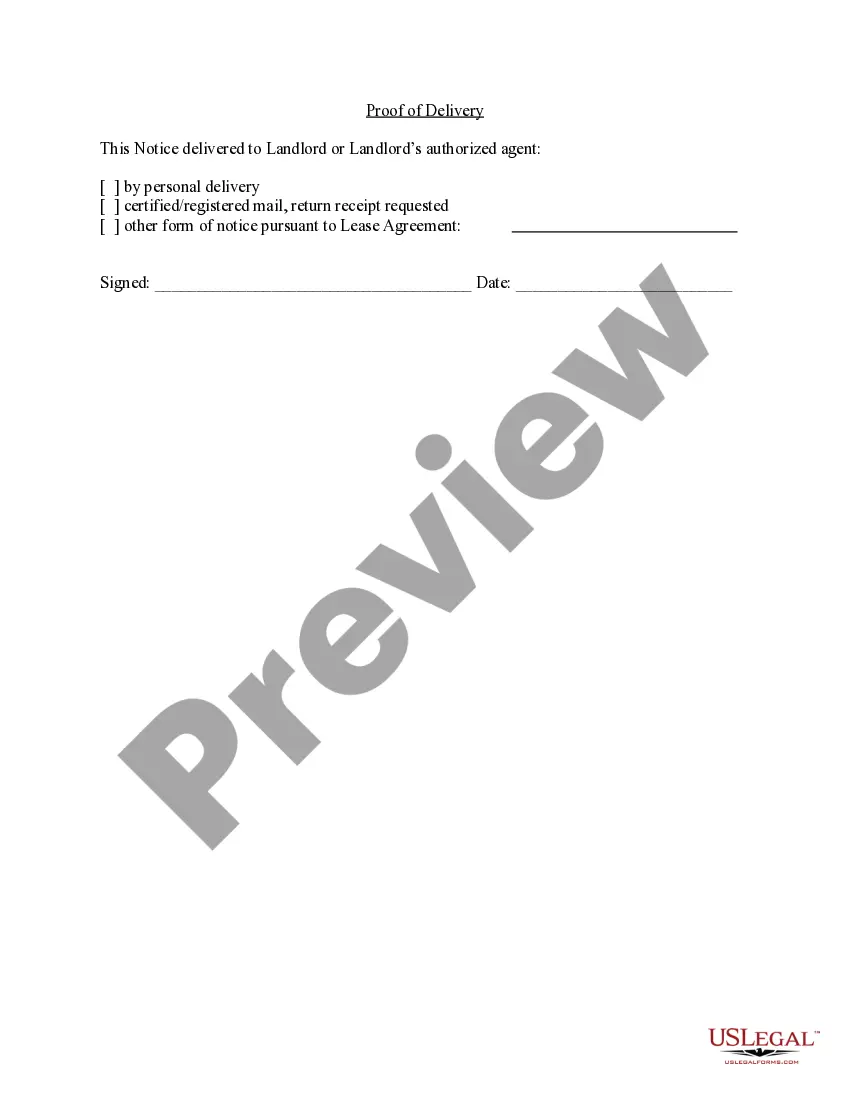
- Proof of delivery method


Situations where this form applies
This form should be used when a tenant identifies conditions within their rental property that violate building codes regarding health and safety standards. If the landlord has failed to address issues that render the property unsafe, unhealthy, or untenantable, this letter serves as a formal request for action to rectify those conditions within a specified time frame.
Who needs this form
- Tenants residing in properties with health and safety violations
- Individuals seeking to formally notify their landlords of required repairs
- Renters who want to document communication with their landlord about habitability issues
How to complete this form
- Identify the tenant by entering their name and signature.
- Provide the landlord's name or the name of their authorized agent.
- Clearly outline the specific building code violations affecting health and safety.
- Set a deadline of ten days for the landlord to address these issues.
- Include a method for proof of delivery of the notice.
Does this form need to be notarized?
This form does not typically require notarization unless specified by local law. Tenants can send this letter directly to the landlord or their authorized agent to ensure proper communication regarding health and safety issues.
Get your form ready online
Our built-in tools help you complete, sign, share, and store your documents in one place.
Make edits, fill in missing information, and update formatting in US Legal Forms—just like you would in MS Word.
Download a copy, print it, send it by email, or mail it via USPS—whatever works best for your next step.
Sign and collect signatures with our SignNow integration. Send to multiple recipients, set reminders, and more. Go Premium to unlock E-Sign.
If this form requires notarization, complete it online through a secure video call—no need to meet a notary in person or wait for an appointment.
We protect your documents and personal data by following strict security and privacy standards.

Make edits, fill in missing information, and update formatting in US Legal Forms—just like you would in MS Word.

Download a copy, print it, send it by email, or mail it via USPS—whatever works best for your next step.

Sign and collect signatures with our SignNow integration. Send to multiple recipients, set reminders, and more. Go Premium to unlock E-Sign.

If this form requires notarization, complete it online through a secure video call—no need to meet a notary in person or wait for an appointment.

We protect your documents and personal data by following strict security and privacy standards.
Typical mistakes to avoid
- Failing to include specific details about the violations
- Not specifying the deadline for compliance clearly
- Forgetting to sign the letter
- Neglecting to keep a copy for personal records
Benefits of using this form online
- Conveniently downloadable and customizable
- Drafted by licensed attorneys to ensure legal accuracy
- Access to a reliable record of communication
- Easy to complete and print for delivery
Main things to remember
- Use this letter to formally request necessary repairs from your landlord.
- Clearly outline the health and safety issues affecting the rental premises.
- Keep a copy and proof of delivery for your records.
Looking for another form?





Form popularity
FAQ
In California, a prospective landlord cannot ask about race, color, religion, sex, gender, gender identity, gender expression, sexual orientation, marital status, national origin, ancestry, familial status, disability, or genetic information.
The Tenant Doesn't Make Enough Income. The Tenant Smokes. The Tenant Has a Pet. The Tenant's Income Isn't Verified. The Tenant Has Been Convicted of a Crime. The Tenant Does Not Have Rental History. The Tenant Has a History of Damaging Property and Not Paying Rent. The Tenant Provides False Information.
As a tenant in a private rented property, your tenancy agreement (which should be co-signed by you and your landlord before you move in) provides you with a number of rights: The right to live in a property that's safe and in a good state of repair.The right to be protected from unfair rent and unfair eviction.
A landlord cannot legally evict you without a court order, whether or not you have a lease.) How long does it take for a landlord to evict a tenant? A landlord can evict a tenant only by going through a formal eviction proceeding, which can take a few weeks from start to finish.
As a tenant in a private rented property, your tenancy agreement (which should be co-signed by you and your landlord before you move in) provides you with a number of rights: The right to live in a property that's safe and in a good state of repair.The right to be protected from unfair rent and unfair eviction.
Washington, D.C., Eviction Process Timeline Initial Notice Period between 30 and 180 days, depending on the notice type and reason for eviction. Issuance/Service of Summons and Complaint 5-7 days, depending on whether the eviction is for illegal drug activity.
A landlord cannot evict a tenant without an adequately obtained eviction notice and sufficient time. A landlord cannot retaliate against a tenant for a complaint. A landlord cannot forego completing necessary repairs or force a tenant to do their own repairs.A landlord cannot remove a tenant's personal belongings.
In general, landlords and tenants both have the right to give notice to each other, cancelling any lease agreement between them. (See Rental Housing Act 1999.)The Consumer Protection Act (CPA) gives additional rights to the tenant by allowing them to cancel the lease provided 20 business days' notice is given.
Renter ResponsibilitiesYou will maintain the property in a clean and habitable condition. You will inform the landlord when issues arise that could harm the value of the property. You will pay for any repairs due to your negligence or misuse of the property.