Connecticut Revocation Statutory General Power of Attorney
What is this form?
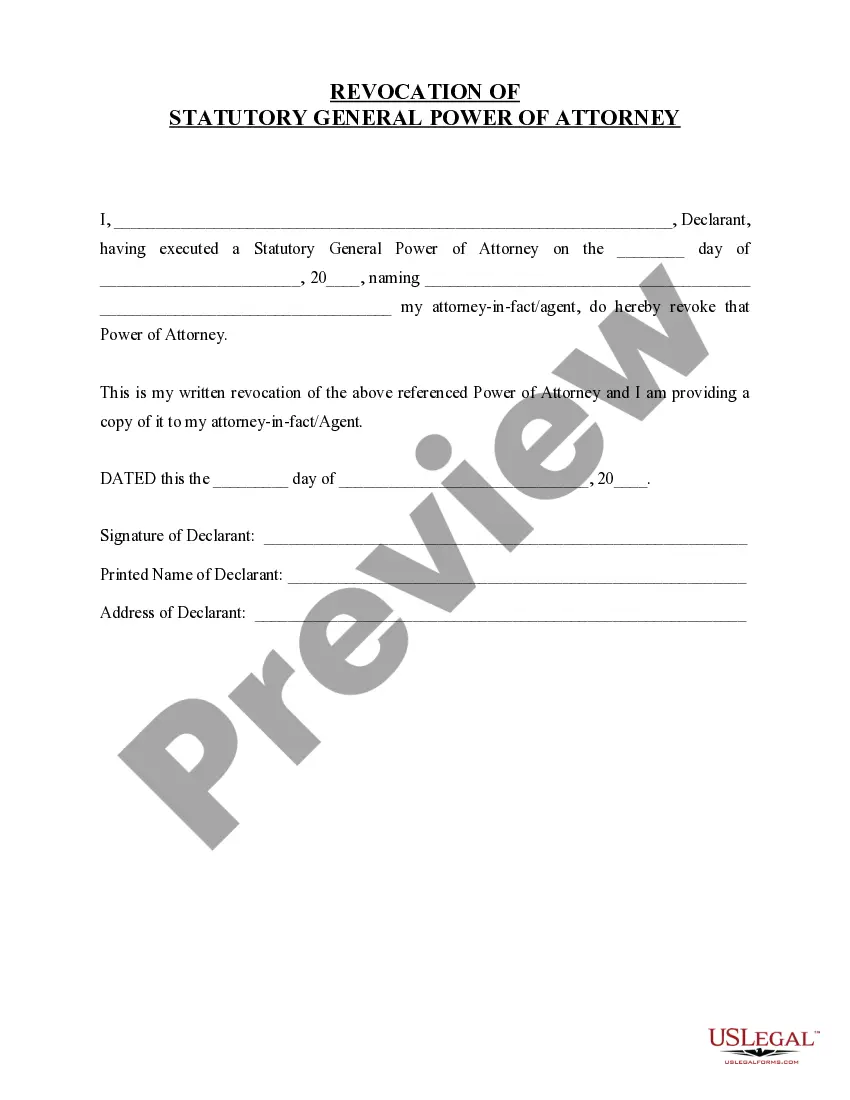
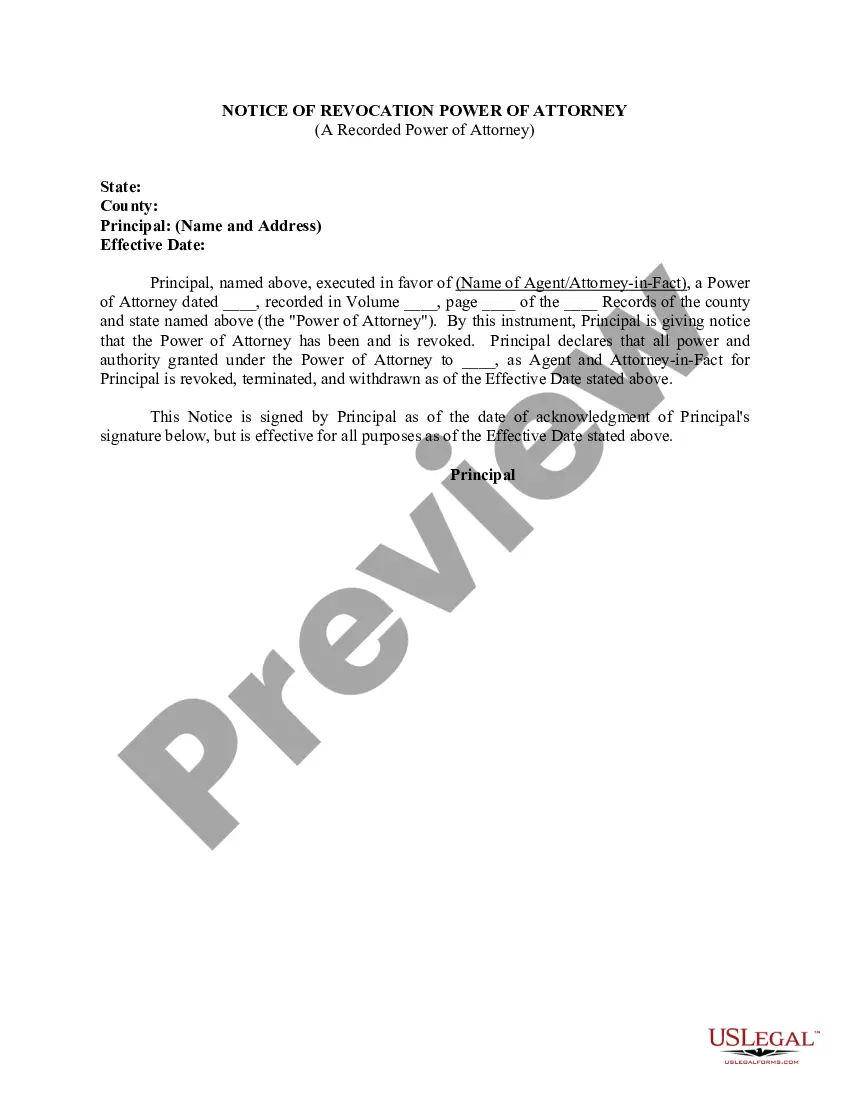
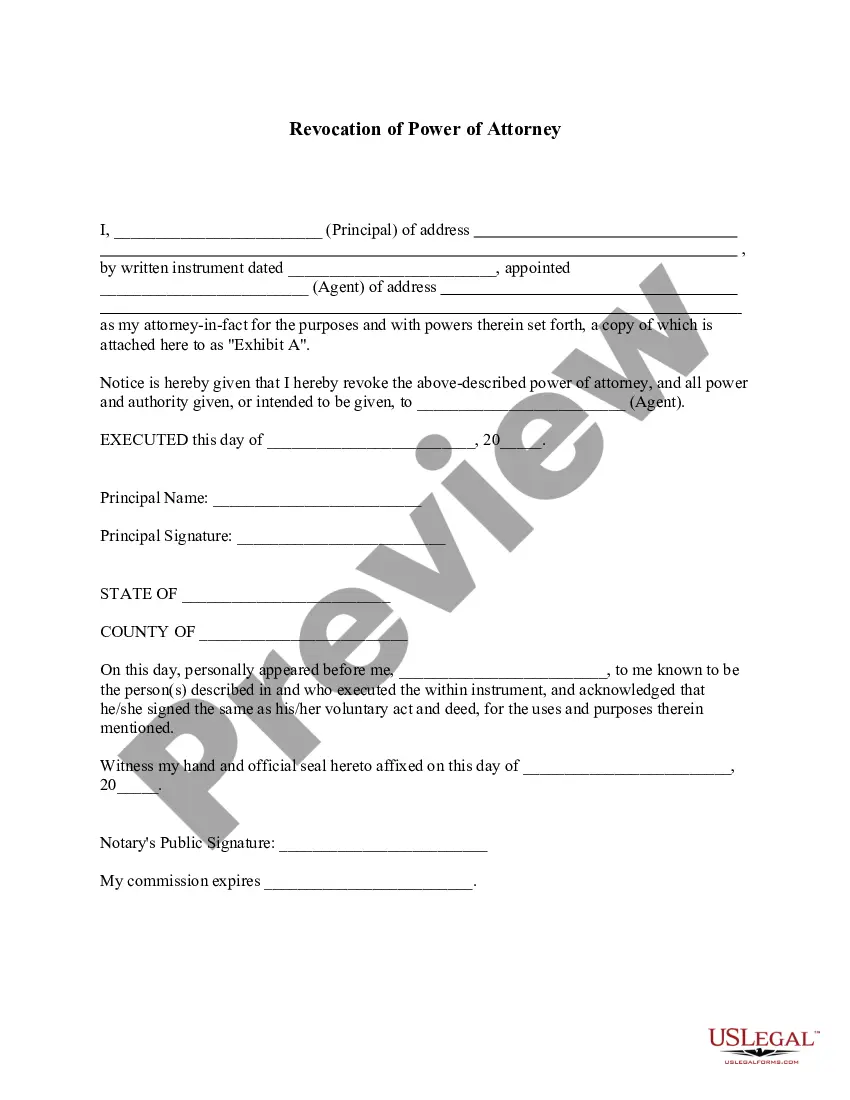
The Revocation Statutory General Power of Attorney is a legal document used to withdraw the authority granted to an agent (attorney-in-fact) to handle your finances and property. This form specifically revokes any previous general, durable, or limited power of attorney you may have executed. Unlike a new power of attorney form, this document solely serves to terminate the existing authority, ensuring that your agent can no longer act on your behalf.
Key parts of this document
- Declarant's name and personal details
- Date of the original power of attorney
- Name of the previously designated attorney-in-fact
- Statement of revocation
- Signature of the declarant
- Date of revocation
Situations where this form applies
You should use the Revocation Statutory General Power of Attorney when you want to cancel the authority previously granted to your attorney-in-fact. This may be necessary if you no longer wish to have someone manage your affairs, if you have appointed a different agent, or if your circumstances have changed and you want to revoke the earlier powers granted.
Who needs this form
- Individuals who have previously executed a general or durable power of attorney
- Declarants seeking to change their attorney-in-fact
- Anyone looking to terminate agent authority due to personal or legal changes
How to prepare this document
- Identify the parties involved by filling in your name as the declarant
- Provide the date of the original power of attorney
- Enter the name of the attorney-in-fact you are revoking
- Sign and date the revocation statement
- Consider providing a copy to the revoked agent
Notarization guidance
Yes, this form must be notarized to be legally valid. Doing so adds a layer of authenticity to the document. US Legal Forms offers integrated online notarization services that are available 24/7, ensuring convenience and security through a simple video call process.
Get your form ready online
Our built-in tools help you complete, sign, share, and store your documents in one place.
Make edits, fill in missing information, and update formatting in US Legal Forms—just like you would in MS Word.
Download a copy, print it, send it by email, or mail it via USPS—whatever works best for your next step.
Sign and collect signatures with our SignNow integration. Send to multiple recipients, set reminders, and more. Go Premium to unlock E-Sign.
If this form requires notarization, complete it online through a secure video call—no need to meet a notary in person or wait for an appointment.
We protect your documents and personal data by following strict security and privacy standards.

Make edits, fill in missing information, and update formatting in US Legal Forms—just like you would in MS Word.

Download a copy, print it, send it by email, or mail it via USPS—whatever works best for your next step.

Sign and collect signatures with our SignNow integration. Send to multiple recipients, set reminders, and more. Go Premium to unlock E-Sign.

If this form requires notarization, complete it online through a secure video call—no need to meet a notary in person or wait for an appointment.

We protect your documents and personal data by following strict security and privacy standards.
Typical mistakes to avoid
- Failing to include the date of the original power of attorney
- Not signing the form in the presence of a notary, if required
- Neglecting to notify the attorney-in-fact of the revocation
Benefits of completing this form online
- Immediate access to professionally drafted legal templates
- Easy to download and personalize according to your needs
- Secure online notarization available
Legal use & context
The Revocation Statutory General Power of Attorney is a legally binding document that cancels the powers previously granted to your agent. It is crucial to use this form properly to ensure that any financial or property decisions made by your previous agent are no longer valid after the revocation.
What to keep in mind
- The Revocation Statutory General Power of Attorney effectively cancels a previously granted power to an agent.
- It is important to ensure that all fields are filled out correctly to prevent any legal ambiguities.
- Obtaining notarization is essential for the revocation to hold up legally.
Looking for another form?
Form popularity
FAQ
The validity of a power of attorney in Connecticut can generally last until it is revoked, but it can also be set for a specific time period. The Connecticut Revocation Statutory General Power of Attorney does not impose a maximum duration, but your agent's powers cease if you become incapacitated unless it is a durable power of attorney. Always consult legal resources like US Legal Forms to ensure your documents meet the necessary requirements.
In most cases, a new power of attorney will automatically revoke an old one if it indicates such in its terms. It is important to establish clarity through the Connecticut Revocation Statutory General Power of Attorney, ensuring that any older documents are rendered ineffective. To avoid complications, communicate the details of the new power of attorney to all necessary institutions and parties.
A new power of attorney generally overrides an old one if it is properly executed and contains language that explicitly revokes prior agreements. The Connecticut Revocation Statutory General Power of Attorney ensures that confusion is avoided by providing clear directives. Always make sure to communicate the changes to all relevant parties involved in the management of your affairs.
Yes, you have the right to revoke your power of attorney at any time, as long as you are mentally competent. This revocation can be easily accomplished through a written notice that complies with the Connecticut Revocation Statutory General Power of Attorney guidelines. It is essential to inform the agent and any relevant institutions to prevent the old power of attorney from being honored.
When two powers of attorney exist, the one that is most recent typically takes precedence, but this can vary based on the language within the documents. It is crucial to ensure that the Connecticut Revocation Statutory General Power of Attorney clearly states which document is to be upheld. Confusion can arise if both documents are not clearly reconciled, potentially leading to disputes among family members or representatives.
Being a power of attorney can come with significant responsibilities, which can be a downside for some individuals. The agent may feel overwhelmed managing finances and making critical decisions for someone else. Furthermore, the Connecticut Revocation Statutory General Power of Attorney mandates that the agent acts in the best interests of the principal, and failing to do so can result in legal complications. Therefore, it is essential for anyone considering this role to weigh these responsibilities carefully.
A power of attorney in Connecticut cannot make decisions regarding your health care unless specifically authorized. Furthermore, this authority does not extend to obtaining or managing property you hold in a trust. Additionally, the Connecticut Revocation Statutory General Power of Attorney does not allow the agent to perform actions that would cause harm or violate any laws. Understanding these limitations is crucial when selecting your agent.
In Connecticut, a statutory durable power of attorney is a legal document that allows one person to make financial decisions on behalf of another. This document remains effective even if the individual becomes incapacitated. It is important to understand that the Connecticut Revocation Statutory General Power of Attorney can revoke any prior powers of attorney, ensuring your current wishes are honored. Using a clear and reliable platform like USLegalForms can help you create this document accurately.
Yes, a family member can revoke a power of attorney online, including the Connecticut Revocation Statutory General Power of Attorney. It is important to follow specific legal procedures to ensure the revocation is valid. Online platforms, like US Legal Forms, offer resources and templates to facilitate this process efficiently. By using these tools, you can ensure that the revocation is properly documented and legally binding.
You can verbally revoke a power of attorney, but it is advisable to follow up with a written document for clarity and legal safety. Verbal revocation might not hold up in all situations, especially if disputes arise later. To ensure full compliance with legal standards in Connecticut, consider preparing a formal revocation document to accompany any verbal notifications about changes to your Connecticut Revocation Statutory General Power of Attorney.