Connecticut Assignment of Lease and Rent from Borrower to Lender
Understanding this form
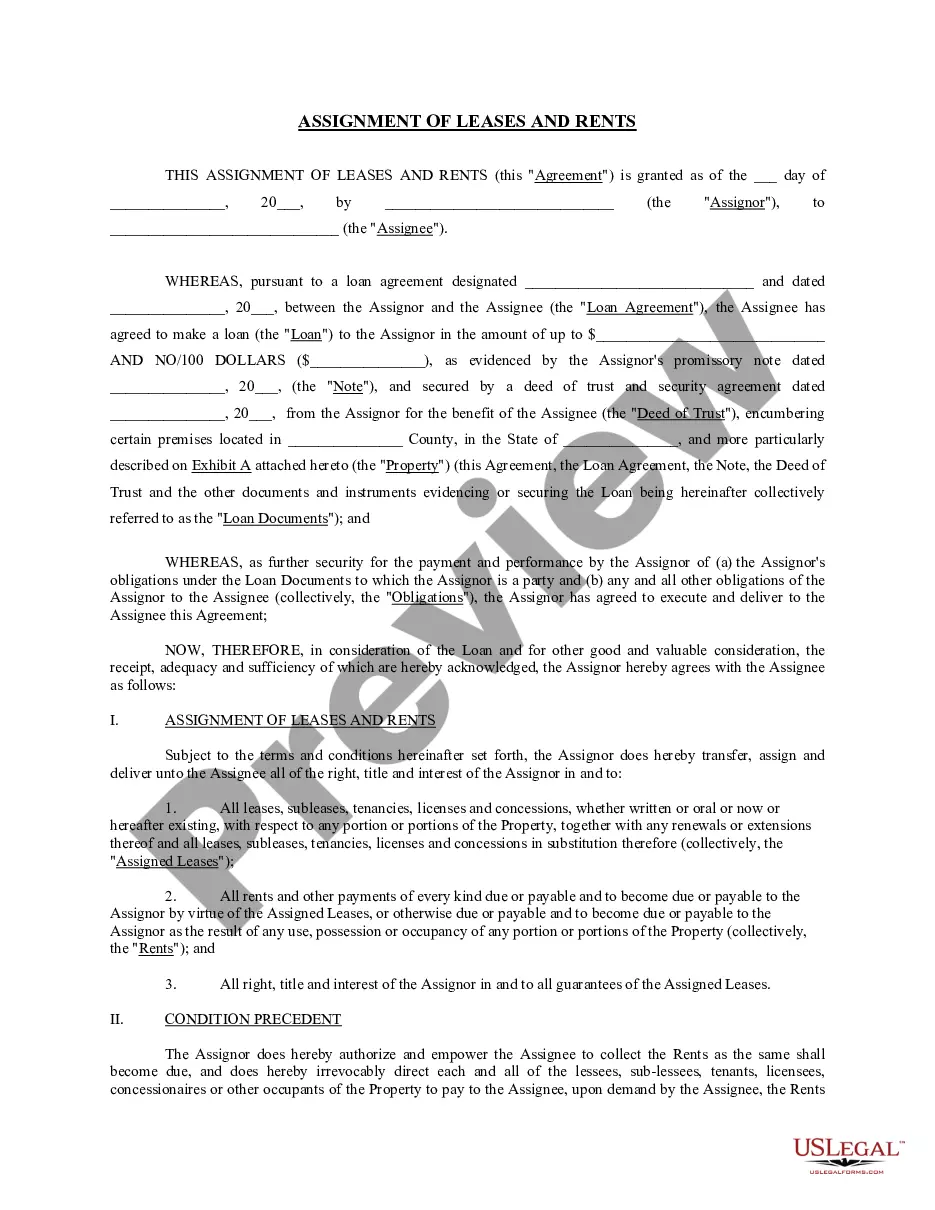
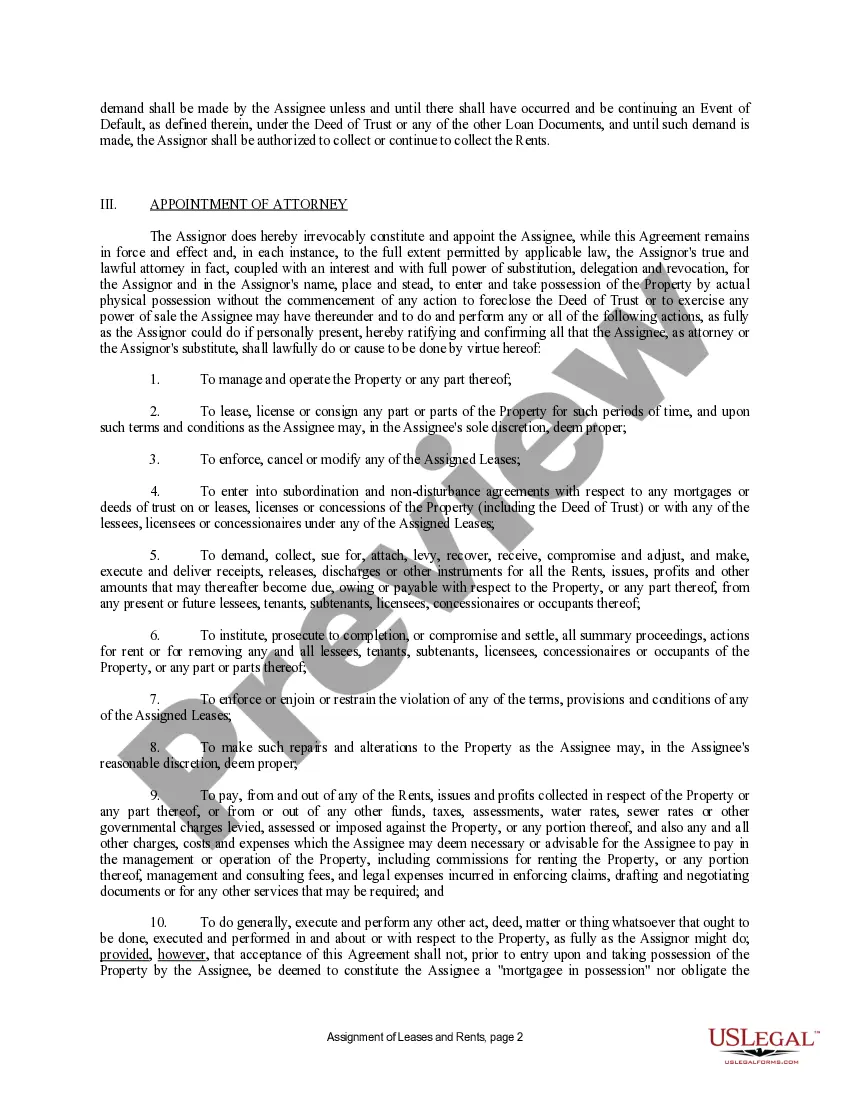
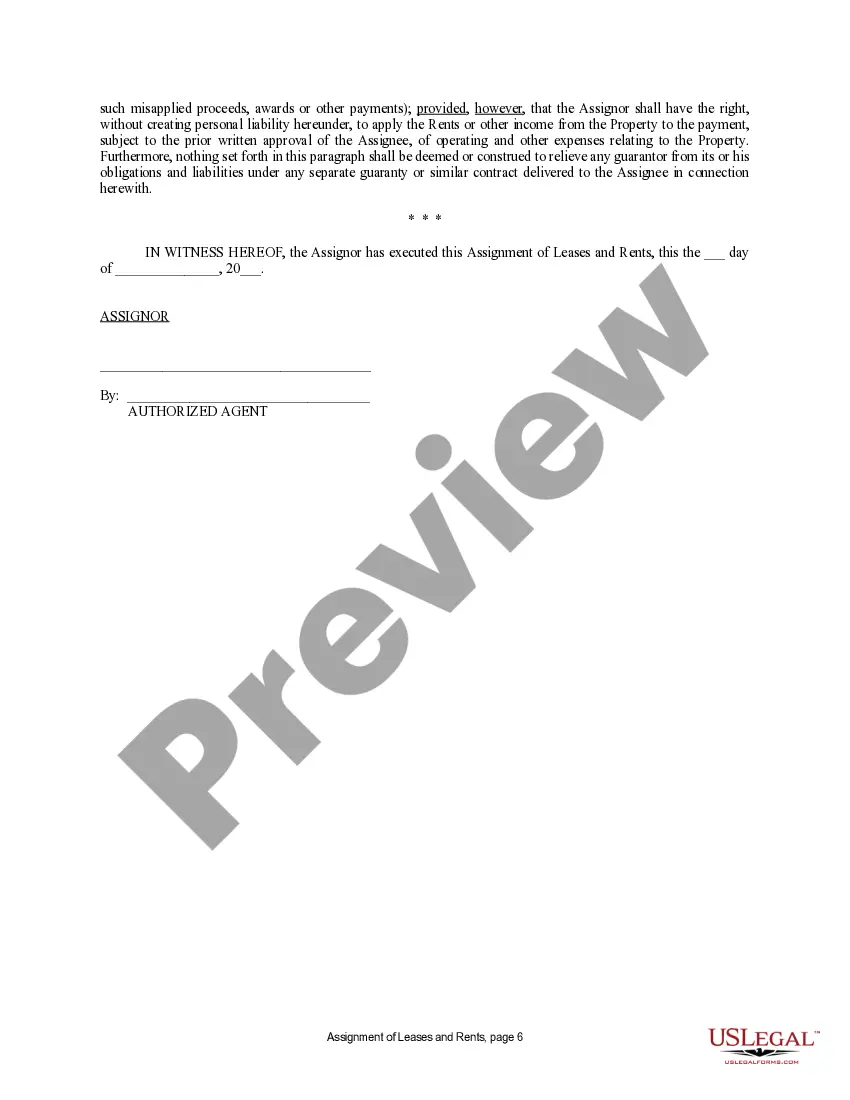
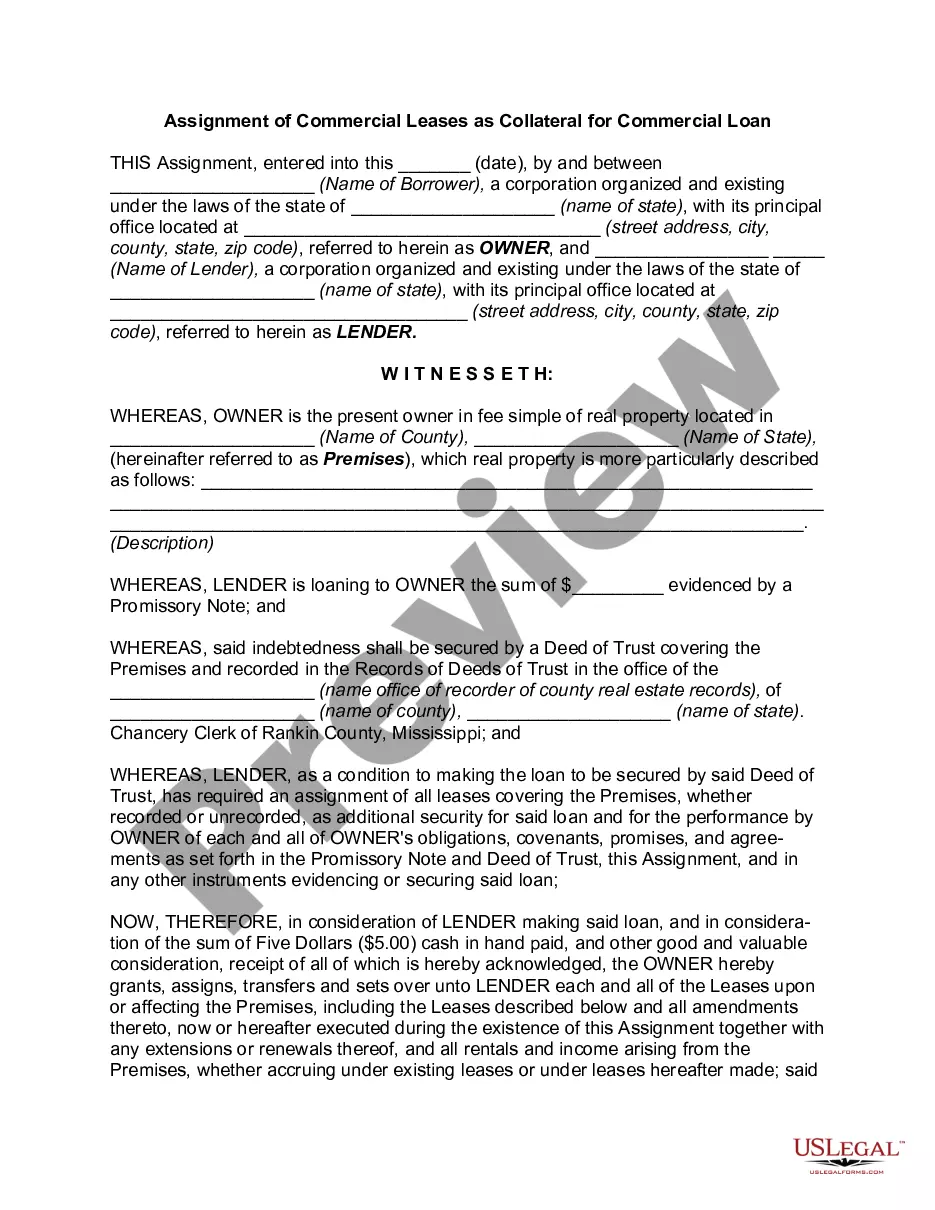
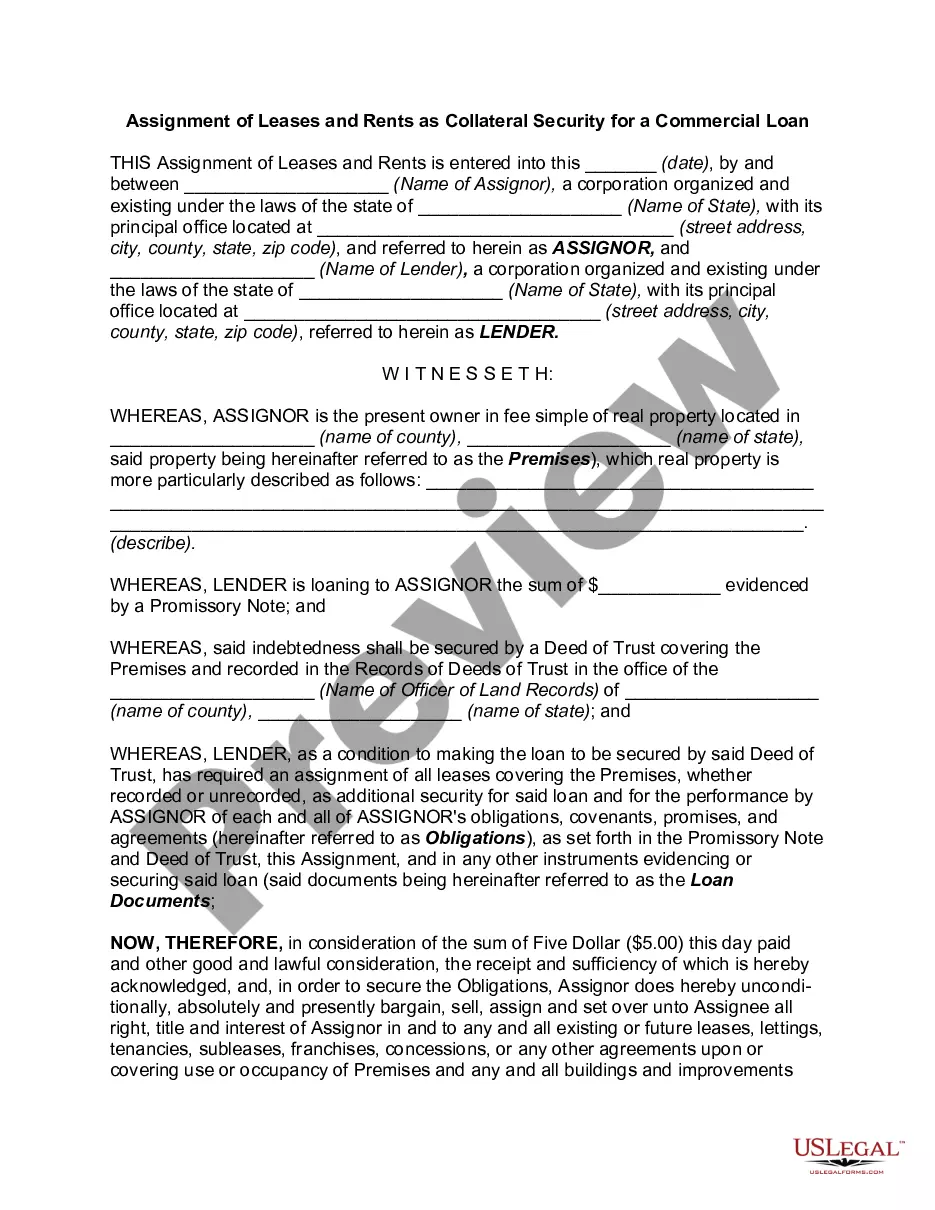
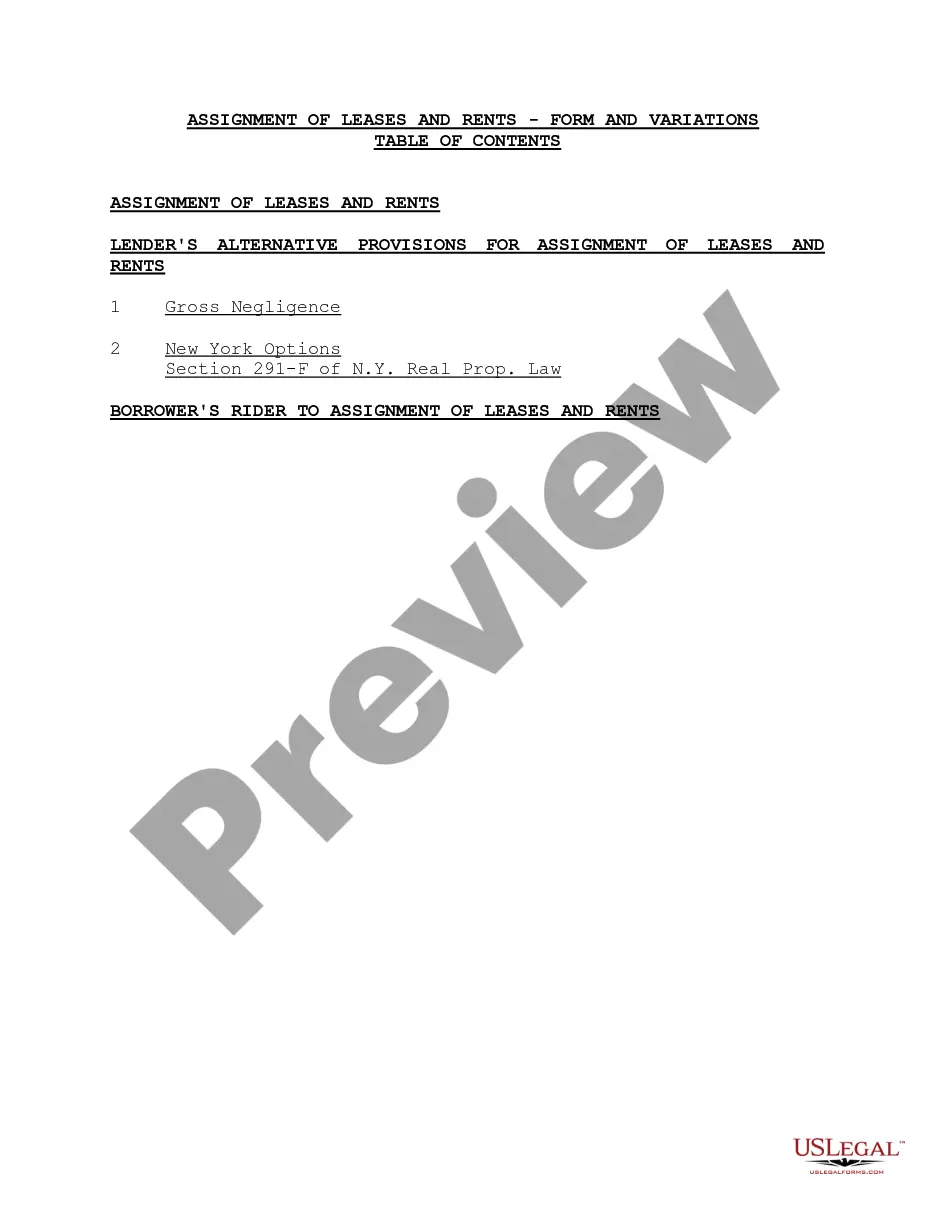
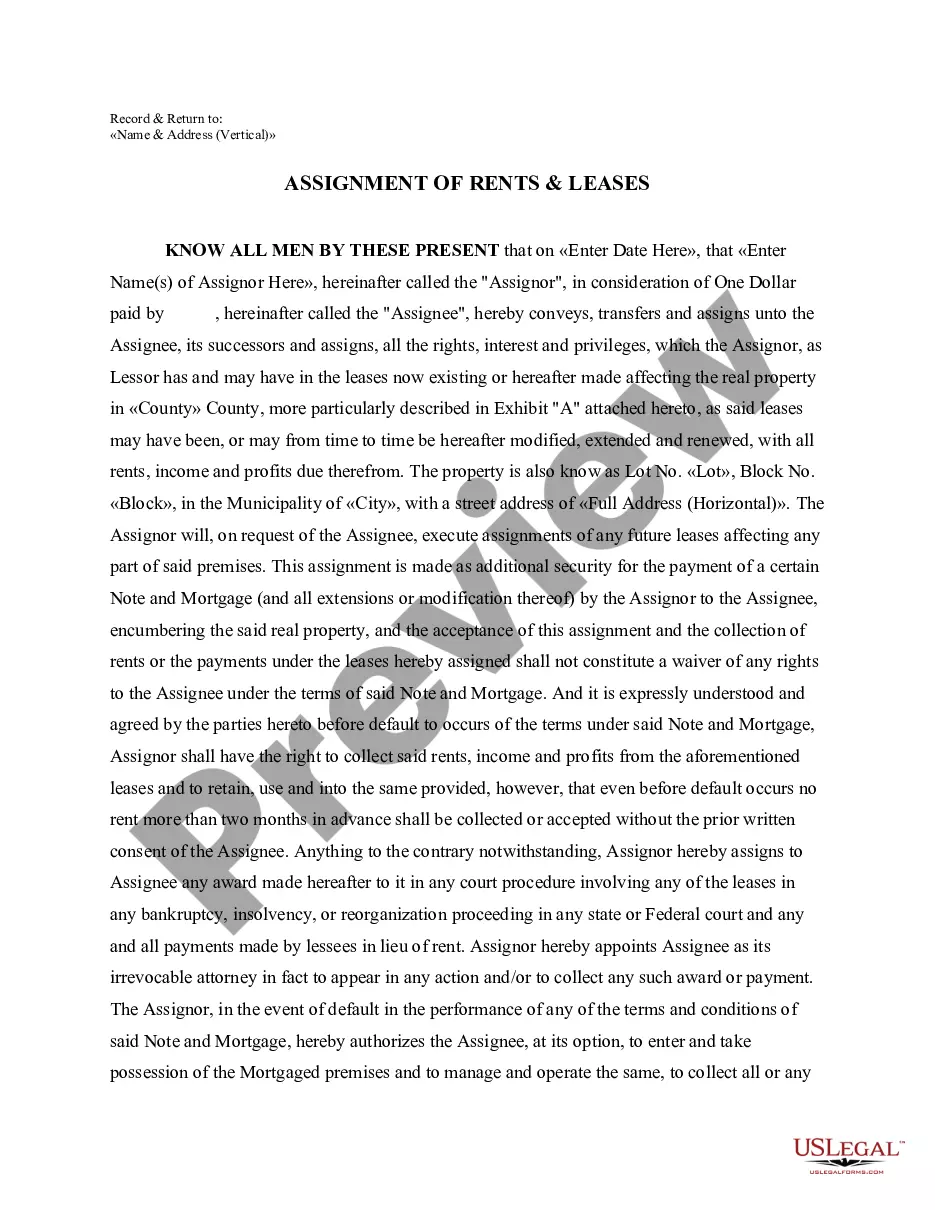
The Assignment of Lease and Rent from Borrower to Lender is a legal document that allows a borrower to assign their rights to collect lease payments and rental income to a lender. This form is typically used when borrowing money, where the lender wants assurance of repayment, secured by the income generated from the property. It differs from a traditional lease agreement by focusing on the transfer of rights to income rather than the rental property itself.
Key parts of this document
- Parties Involved: Identifies the Assignor (borrower) and Assignee (lender).
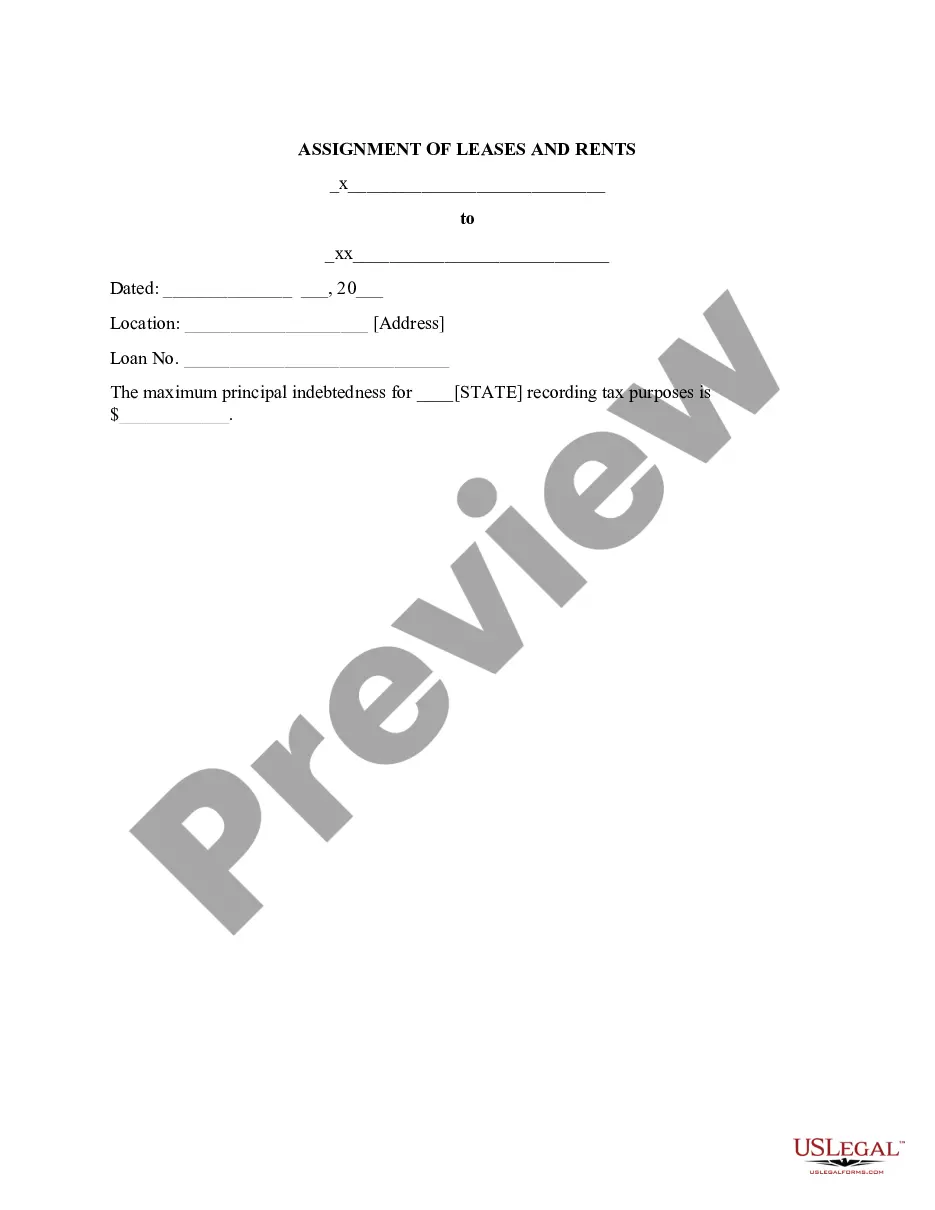
- Loan Agreement Reference: Details about the loan amount, terms, and related documents.
- Property Description: Specifies the property being assigned.
- Collection Rights: Grants the Assignee rights to collect rent and other payments if certain conditions are met.
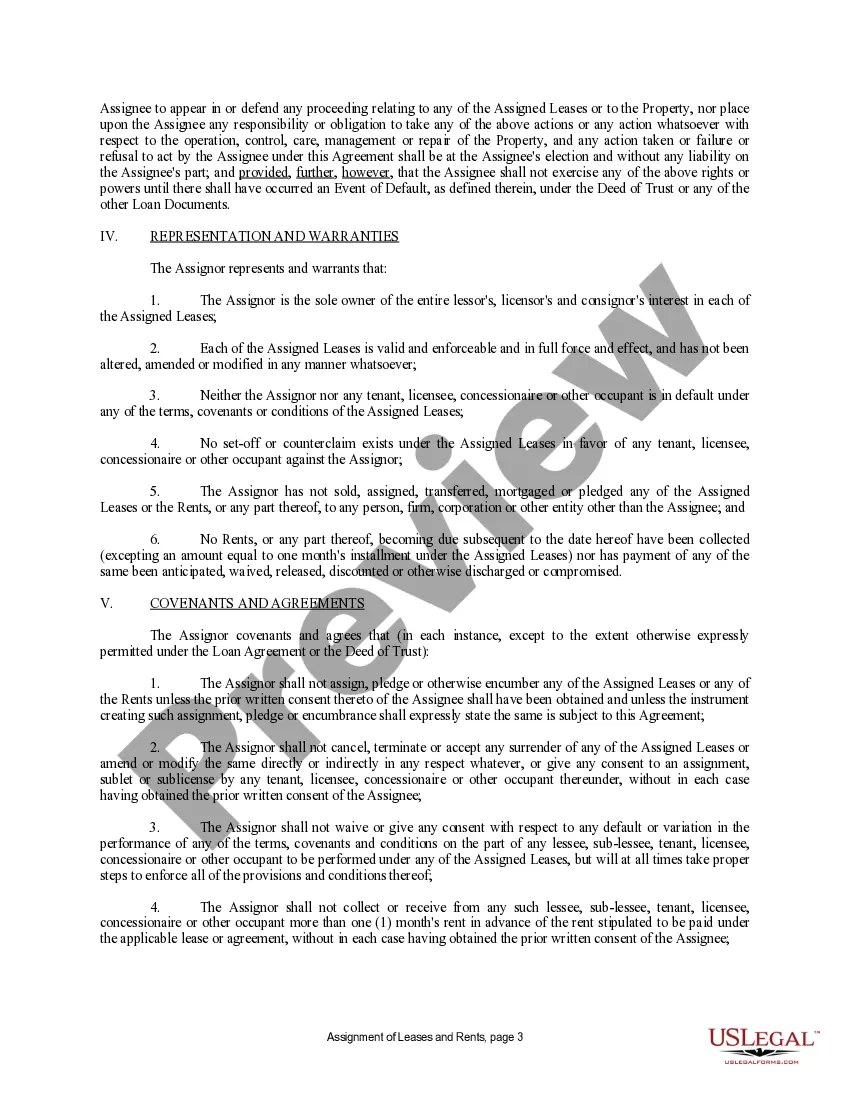
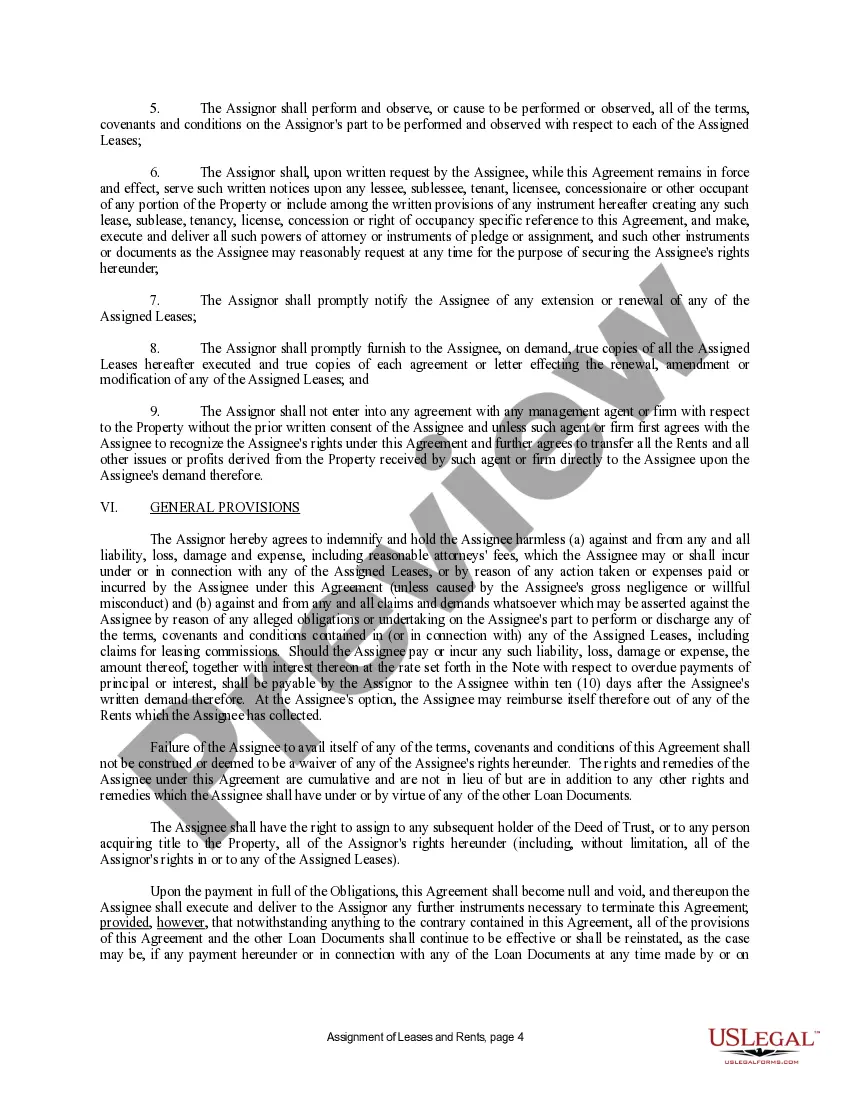
- Obligations and Representations: Lists the borrower's representations and warranties regarding the leases and rents.

When to use this document
This form is typically used when a borrower is seeking a loan secured by expected rental income from a property. It can be useful in scenarios such as refinancing existing debt, securing new financing, or when a property owner wants to provide their rental income as collateral to a lender.
Who this form is for
Who should use this form:
- Property owners who need to secure a loan using rental income.
- Lenders requiring assurance against the risk of non-repayment.
- Landlords with multiple tenants looking to streamline financial operations.
How to prepare this document
To complete this form, follow these steps:
- Identify the parties involved by entering the names of the Assignor and Assignee.
- Specify the date of the assignment and reference the loan agreement.
- Enter the details regarding the property, including address and county.
- Fill in the loan amount, including any specifics about the payment terms.
- Collect signatures from all parties involved to finalize the agreement.
Does this document require notarization?
This form does not typically require notarization unless specified by local law. However, it is advisable to have it notarized to enhance its legal validity and provide an additional layer of credibility.
Get your form ready online
Our built-in tools help you complete, sign, share, and store your documents in one place.
Make edits, fill in missing information, and update formatting in US Legal Forms—just like you would in MS Word.
Download a copy, print it, send it by email, or mail it via USPS—whatever works best for your next step.
Sign and collect signatures with our SignNow integration. Send to multiple recipients, set reminders, and more. Go Premium to unlock E-Sign.
If this form requires notarization, complete it online through a secure video call—no need to meet a notary in person or wait for an appointment.
We protect your documents and personal data by following strict security and privacy standards.

Make edits, fill in missing information, and update formatting in US Legal Forms—just like you would in MS Word.

Download a copy, print it, send it by email, or mail it via USPS—whatever works best for your next step.

Sign and collect signatures with our SignNow integration. Send to multiple recipients, set reminders, and more. Go Premium to unlock E-Sign.

If this form requires notarization, complete it online through a secure video call—no need to meet a notary in person or wait for an appointment.

We protect your documents and personal data by following strict security and privacy standards.
Typical mistakes to avoid
- Failing to accurately describe the property involved may lead to legal challenges.
- Not including proper parties or signing without authorization could invalidate the agreement.
- Missing details about the loan terms may cause confusion later.
Why use this form online
- Convenient online access to complete the form at your own pace.
- Editable templates allow for customization to fit specific agreements and circumstances.
- Reliable legal document prepared by licensed attorneys, ensuring compliance with state laws.
- The Assignment of Lease and Rent is an enforceable contract that must adhere to both state laws and the terms of the loan agreement.
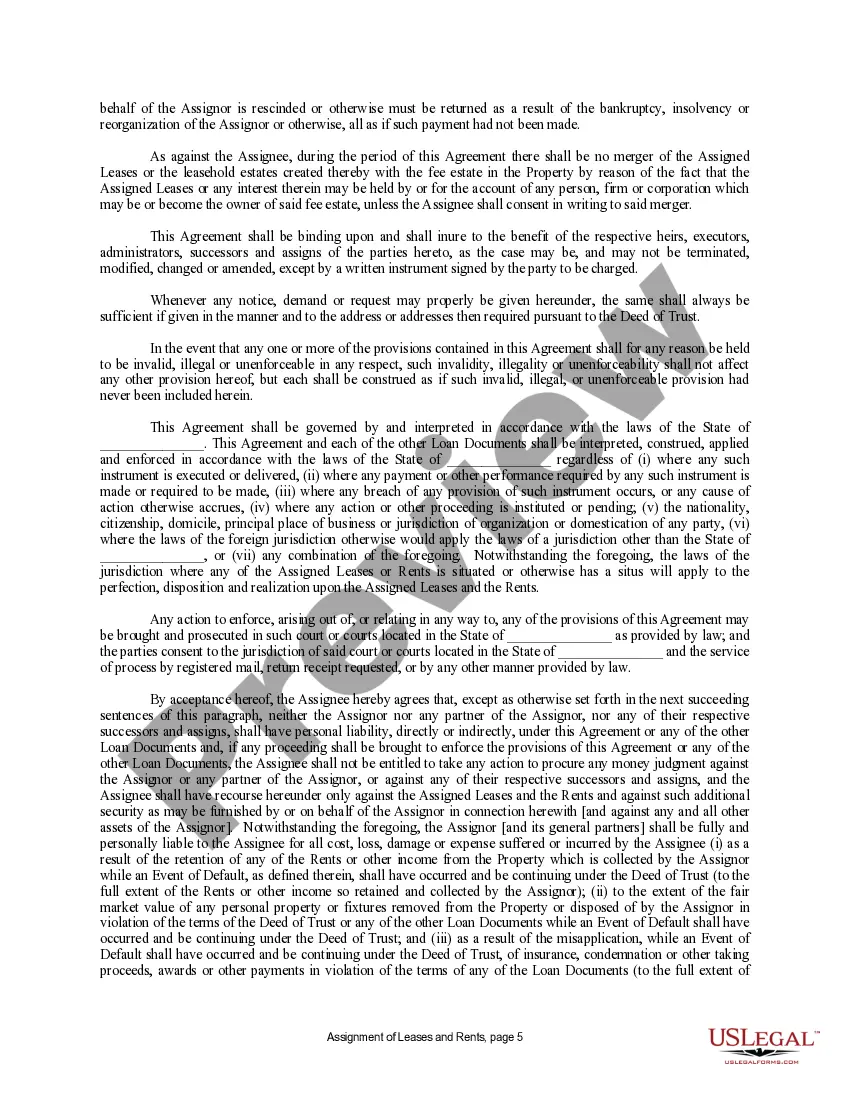
- In case of default, the lender can collect the assigned rents without initiating foreclosure, provided the proper notifications are made.
Key takeaways
- The form allows property owners to secure loans using rental income as collateral.
- Completing the form accurately is essential for ensuring enforceability.
- It may be beneficial to have the document notarized for additional legal assurance.
Looking for another form?



Form popularity
FAQ
The primary purpose of an assignment of leases and rents is to provide the lender with a stream of income in case the borrower fails to meet their obligations. This financial safeguard is crucial in the Connecticut Assignment of Lease and Rent from Borrower to Lender framework, as it ensures that the lender can manage potential risks. By having direct access to rental income, lenders gain greater confidence in granting loans. This arrangement benefits all parties involved by promoting stability.
Assignment of leases and rents involves transferring the rights to collect rent and enforce lease terms from one individual to another. This is crucial in transactions like the Connecticut Assignment of Lease and Rent from Borrower to Lender, as it allows lenders to secure income from rental properties. The assignment can also help tenants manage their obligations more effectively during challenging times. To ensure you meet all legal standards, explore the resources available through US Legal Forms.
Absolute assignment of leases and rents refers to the complete transfer of all rights to lease payments and property management from one party to another. This is essential in the context of the Connecticut Assignment of Lease and Rent from Borrower to Lender, as it gives the lender direct control over the rental income. This type of assignment can provide security for lenders, ensuring that they receive consistent payments without delays. For detailed templates and guidance, consider using US Legal Forms to navigate your needs.
The purpose of an assignment of lease is to allow a tenant to transfer their lease obligations and associated rights to another party. This is particularly important in scenarios where a tenant is unable to fulfill their lease terms, thus the Connecticut Assignment of Lease and Rent from Borrower to Lender ensures that the landlord continues to receive rent while someone else occupies the property. Assignments help maintain rental income stability and provide options for tenants facing relocation or financial changes. To simplify this process, you can use US Legal Forms for tailored documents.
A deed of assignment of lease is a formal legal document that officially transfers the rights and obligations of a lease from one party to another. In the context of the Connecticut Assignment of Lease and Rent from Borrower to Lender, the deed serves to protect the interests of both the landlord and the new tenant. It contains clauses that clarify the responsibilities regarding rent payments and property maintenance. You can easily access templates for this deed on US Legal Forms to ensure proper compliance with state laws.
The form for assignment of lease by landlord is a legal document that facilitates the transfer of leasing rights from one party to another. Specifically, with the Connecticut Assignment of Lease and Rent from Borrower to Lender, this form ensures that all parties involved understand their rights and responsibilities. This document typically requires information about the original lease, the new tenant, and the landlord’s consent. Utilizing platforms like US Legal Forms can help you find the correct form and streamline the process.
The assignment of leases to the lender refers to a legal arrangement where a borrower transfers their rights to lease payments to a lender as a form of collateral. This assignment helps secure the lender's financial interests in the property, especially if the borrower defaults on their mortgage. Under the Connecticut Assignment of Lease and Rent from Borrower to Lender, this process is critical for safeguarding both lender and borrower interests.
The borrower remains primarily responsible for making rental payments to the landlord, even if the lease has been assigned to the lender. However, the lender now holds the right to collect these payments due to the assignment. This dynamic is pivotal to understanding the Connecticut Assignment of Lease and Rent from Borrower to Lender and ensuring proper management of rental agreements.
No, the assignment of a mortgage does not mean foreclosure. Foreclosure is a legal process occurring when a borrower defaults on their mortgage payments, while assignment simply refers to transferring mortgage rights to another party. The Connecticut Assignment of Lease and Rent from Borrower to Lender can continue to exist without leading to foreclosure, emphasizing the lender's rights to collect rent.
The assignment clause in a mortgage specifies the conditions under which the mortgage can be transferred or assigned to another lender. This clause typically assures that the borrower is aware of any changes in the party receiving mortgage payments. Understanding the assignment clause is crucial, especially within the context of the Connecticut Assignment of Lease and Rent from Borrower to Lender.