Connecticut Letter from Landlord to Tenant with 30 day notice of Expiration of Lease and Nonrenewal by landlord - Vacate by expiration
What this document covers
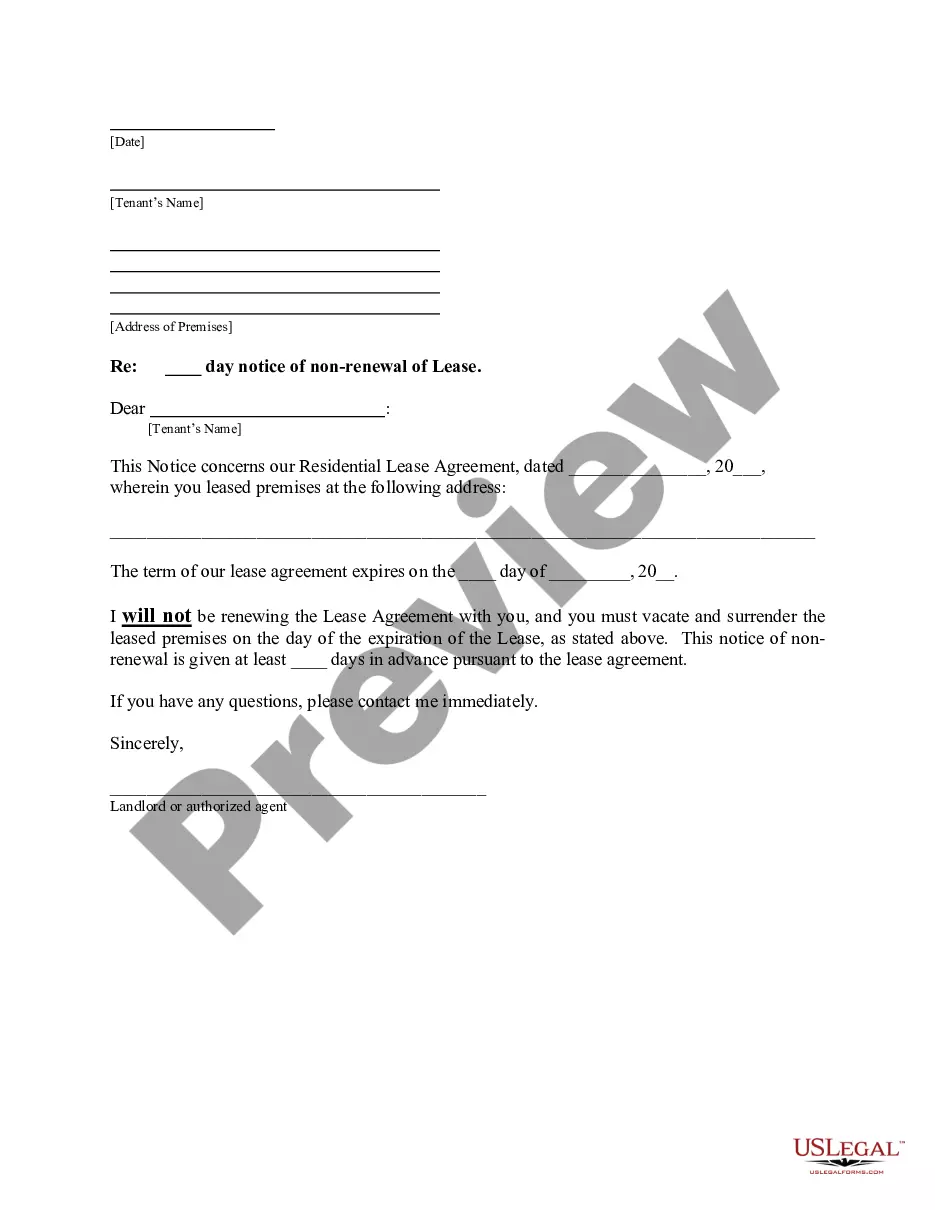
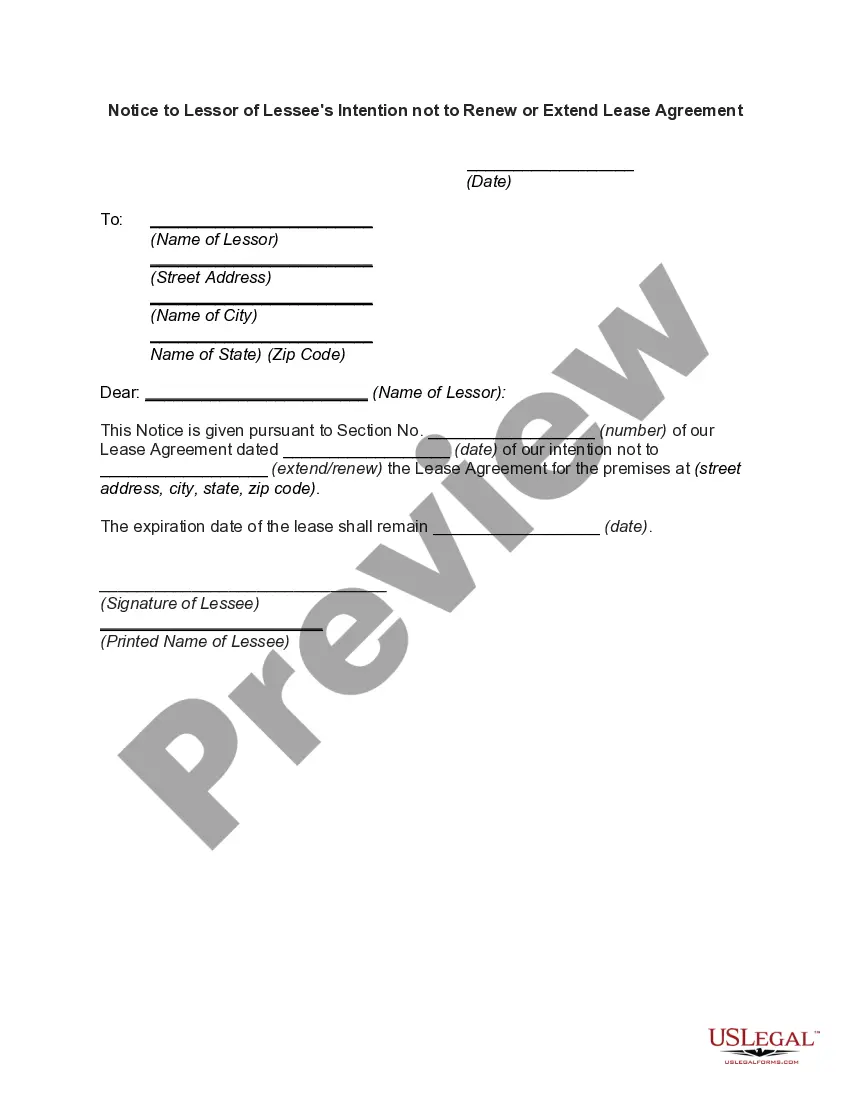
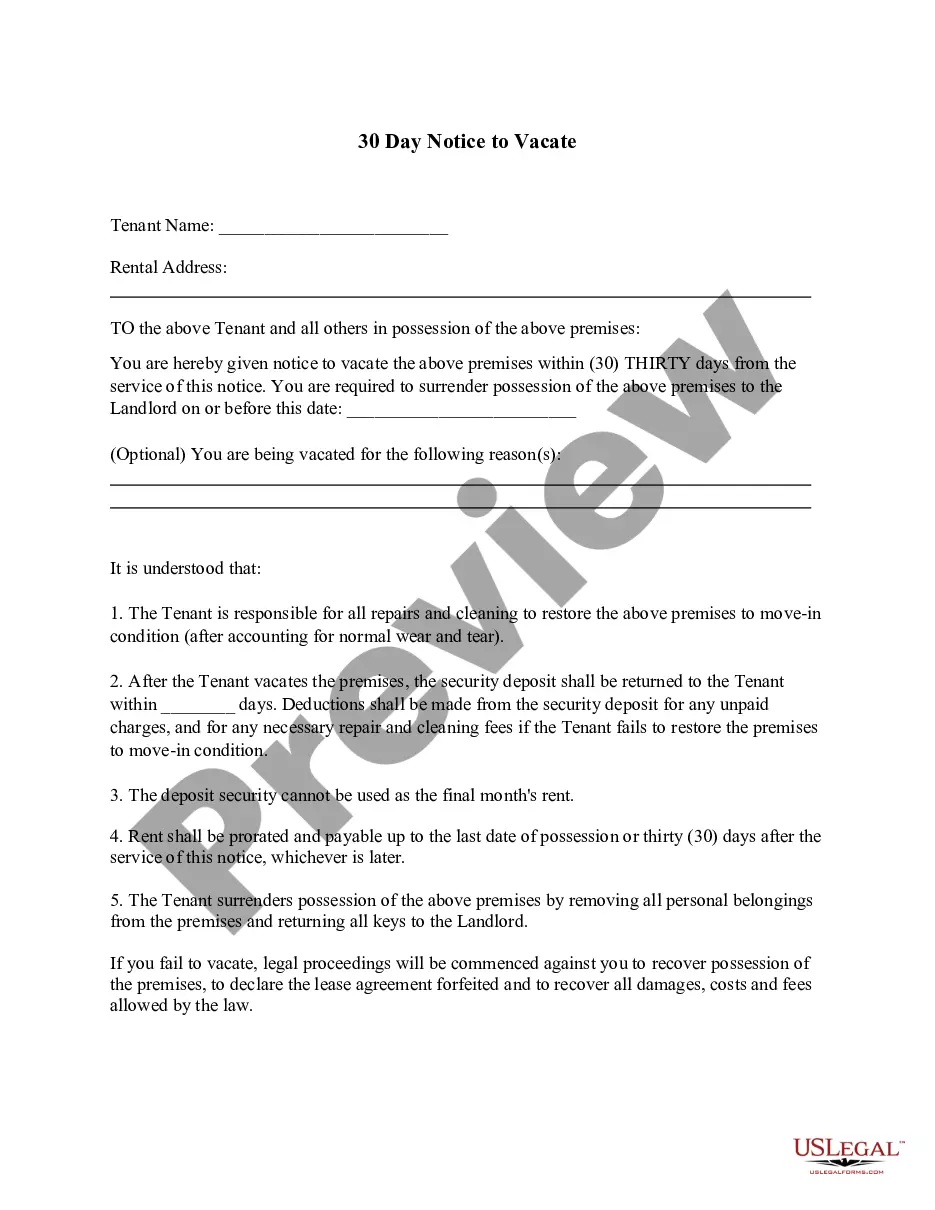
This form is a letter from a landlord to a tenant, providing a 30-day notice of lease expiration and non-renewal. It serves to inform the tenant that the lease agreement will not be renewed, requiring them to vacate the premises at the end of the lease term. This type of notice is essential for landlords looking to officially notify tenants about the end of their lease obligations and clarify the moving process.
What’s included in this form
- Lease expiration date
- Notice of non-renewal statement
- Requested move-out date
- Contact information for the landlord
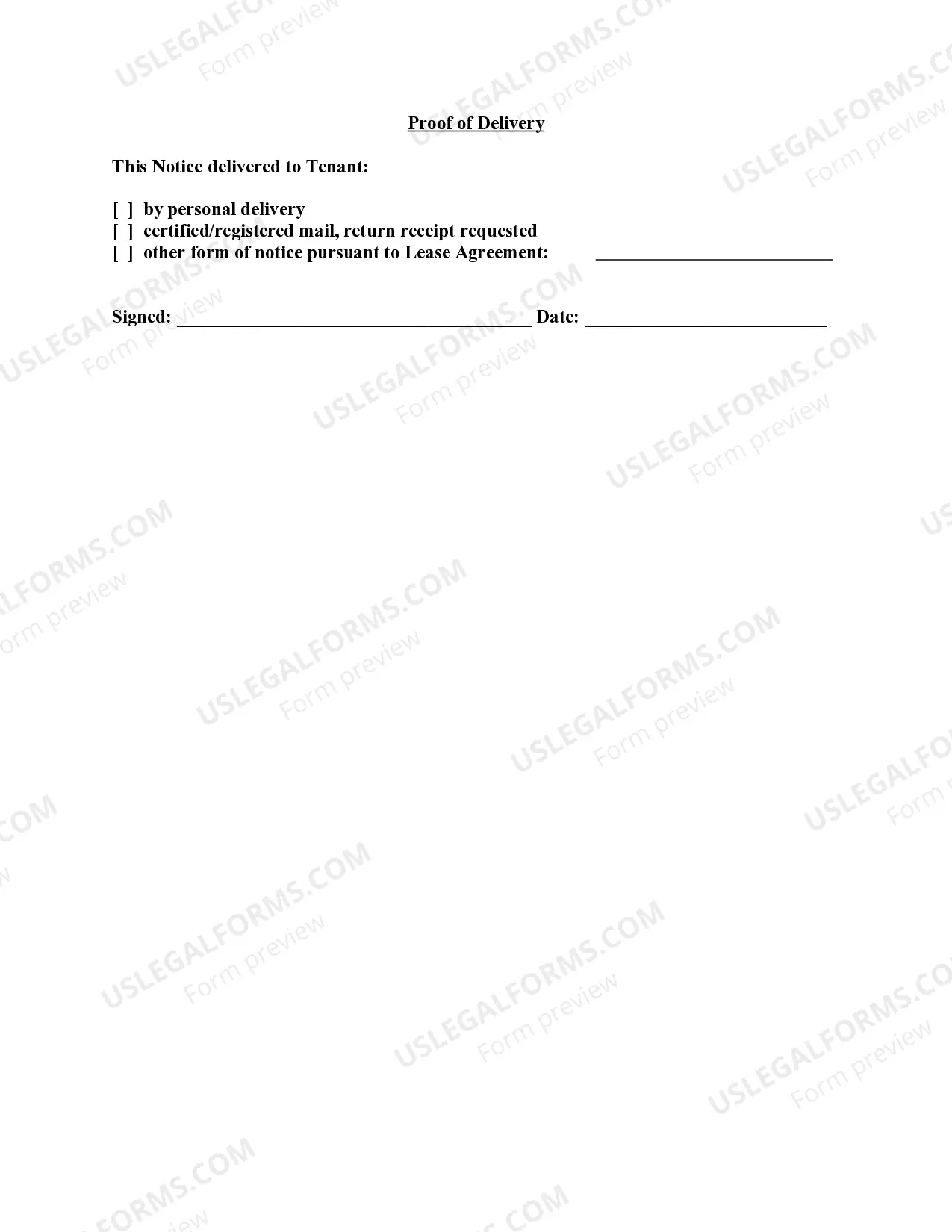
- Proof of delivery mechanism

Situations where this form applies
This form should be used when a landlord decides not to renew a lease agreement and needs to formally notify the tenant of the lease's expiration. It is applicable in situations where the landlord intends for the tenant to vacate the property, ensuring compliance with local laws regarding timely notifications.
Who can use this document
- Landlords who have tenants living in a rental property
- Property managers handling lease agreements
- Owners of rental properties wishing to terminate rentals
How to complete this form
- Identify the parties involved: landlord and tenant.
- Specify the property address where the lease applies.
- Enter the expiration date of the lease agreement.
- Include the number of days' notice provided to the tenant.
- Sign the letter with the landlord or authorized agent's name and date.
Does this form need to be notarized?
This form does not typically require notarization unless specified by local law. It is advisable to check state-specific regulations to ensure compliance.
Get your form ready online
Our built-in tools help you complete, sign, share, and store your documents in one place.
Make edits, fill in missing information, and update formatting in US Legal Forms—just like you would in MS Word.
Download a copy, print it, send it by email, or mail it via USPS—whatever works best for your next step.
Sign and collect signatures with our SignNow integration. Send to multiple recipients, set reminders, and more. Go Premium to unlock E-Sign.
If this form requires notarization, complete it online through a secure video call—no need to meet a notary in person or wait for an appointment.
We protect your documents and personal data by following strict security and privacy standards.

Make edits, fill in missing information, and update formatting in US Legal Forms—just like you would in MS Word.

Download a copy, print it, send it by email, or mail it via USPS—whatever works best for your next step.

Sign and collect signatures with our SignNow integration. Send to multiple recipients, set reminders, and more. Go Premium to unlock E-Sign.

If this form requires notarization, complete it online through a secure video call—no need to meet a notary in person or wait for an appointment.

We protect your documents and personal data by following strict security and privacy standards.
Common mistakes
- Failing to provide the required notice period as stated in the lease agreement.
- Not signing the notice, making it less valid.
- Omitting the property address, leading to confusion.
- Using unclear language that may mislead the tenant regarding move-out requirements.
Advantages of online completion
- Convenient access to printable and downloadable forms.
- Editable templates that save time and reduce errors.
- Reliability from attorney-drafted legal documents ensuring compliance.
Quick recap
- This form notifies a tenant that their lease is expiring and will not be renewed.
- It is crucial for landlords to provide this notice within the required timeframe.
- Clear communication helps prevent future disputes with tenants regarding lease termination.
Looking for another form?




Form popularity
FAQ
To write a letter indicating that you are not renewing your lease, start by clearly stating the purpose of the letter. You should include your details, the tenant’s name, the property address, and the specific date the lease expires. Then, express your intention to not renew the lease, citing the Connecticut Letter from Landlord to Tenant with 30 day notice of Expiration of Lease and Nonrenewal by landlord - Vacate by expiration as the guiding document. Finally, remind the tenant of their responsibility to vacate the property by the expiration date.
A formal letter to your landlord should follow a standard business format. Start with your address, date, landlord's address, and a polite greeting. Make sure to clearly state your reason for writing, whether it is related to a 30-day notice or another issue, as indicated in the Connecticut Letter from Landlord to Tenant with 30 day notice of Expiration of Lease and Nonrenewal by landlord - Vacate by expiration.
In Connecticut, a landlord must provide a minimum of 30 days' notice to tenants when choosing not to renew a lease. This notice should be delivered in writing to ensure clear communication. This process is encapsulated in the Connecticut Letter from Landlord to Tenant with 30 day notice of Expiration of Lease and Nonrenewal by landlord - Vacate by expiration.
Writing a 30-day letter involves being specific about your move-out date. Include your personal details and any necessary instructions regarding the condition of the property. This letter should reflect the standards required in the Connecticut Letter from Landlord to Tenant with 30 day notice of Expiration of Lease and Nonrenewal by landlord - Vacate by expiration.
To draft a 30-day notice letter, start with a polite greeting and clearly state your intention to vacate. Be sure to mention the lease expiration and your move-out date. This format complies with the guidelines of a Connecticut Letter from Landlord to Tenant with 30 day notice of Expiration of Lease and Nonrenewal by landlord - Vacate by expiration.
When writing a 30-day notice to your landlord, it is vital to mention the date you plan to vacate. Also, include your current address and any specific instructions for returning keys or conducting a walkthrough. This document serves as your official notice within the framework of the Connecticut Letter from Landlord to Tenant with 30 day notice of Expiration of Lease and Nonrenewal by landlord - Vacate by expiration.
You can notify your landlord by writing a formal letter expressing your intent not to renew your lease. Be sure to include essential details like your name, rental address, and the expiration date of the lease. This approach aligns with the requirements outlined in the Connecticut Letter from Landlord to Tenant with 30 day notice of Expiration of Lease and Nonrenewal by landlord - Vacate by expiration.
To inform your landlord that you do not wish to renew your lease, start by addressing them properly. Clearly state your decision along with the lease expiration date. It's important to refer to the Connecticut Letter from Landlord to Tenant with 30 day notice of Expiration of Lease and Nonrenewal by landlord - Vacate by expiration for proper procedures.
In your notice letter, clearly state your intention to vacate the property. Include the date of your planned move-out, and express gratitude for your time in the rental. This is a formal way to document your communication regarding the Connecticut Letter from Landlord to Tenant with 30 day notice of Expiration of Lease and Nonrenewal by landlord - Vacate by expiration.
In Connecticut, if a landlord chooses not to renew a lease, they must provide at least 30 days' notice to the tenant. This notice should be written and specify the date the tenant must vacate the premises. Utilizing a Connecticut Letter from Landlord to Tenant with 30 day notice of Expiration of Lease and Nonrenewal by landlord - Vacate by expiration ensures compliance with the law and smooth communication.