Connecticut Letter from Tenant to Landlord containing Notice to Cease Unjustified Nonacceptance of Rent
About this form
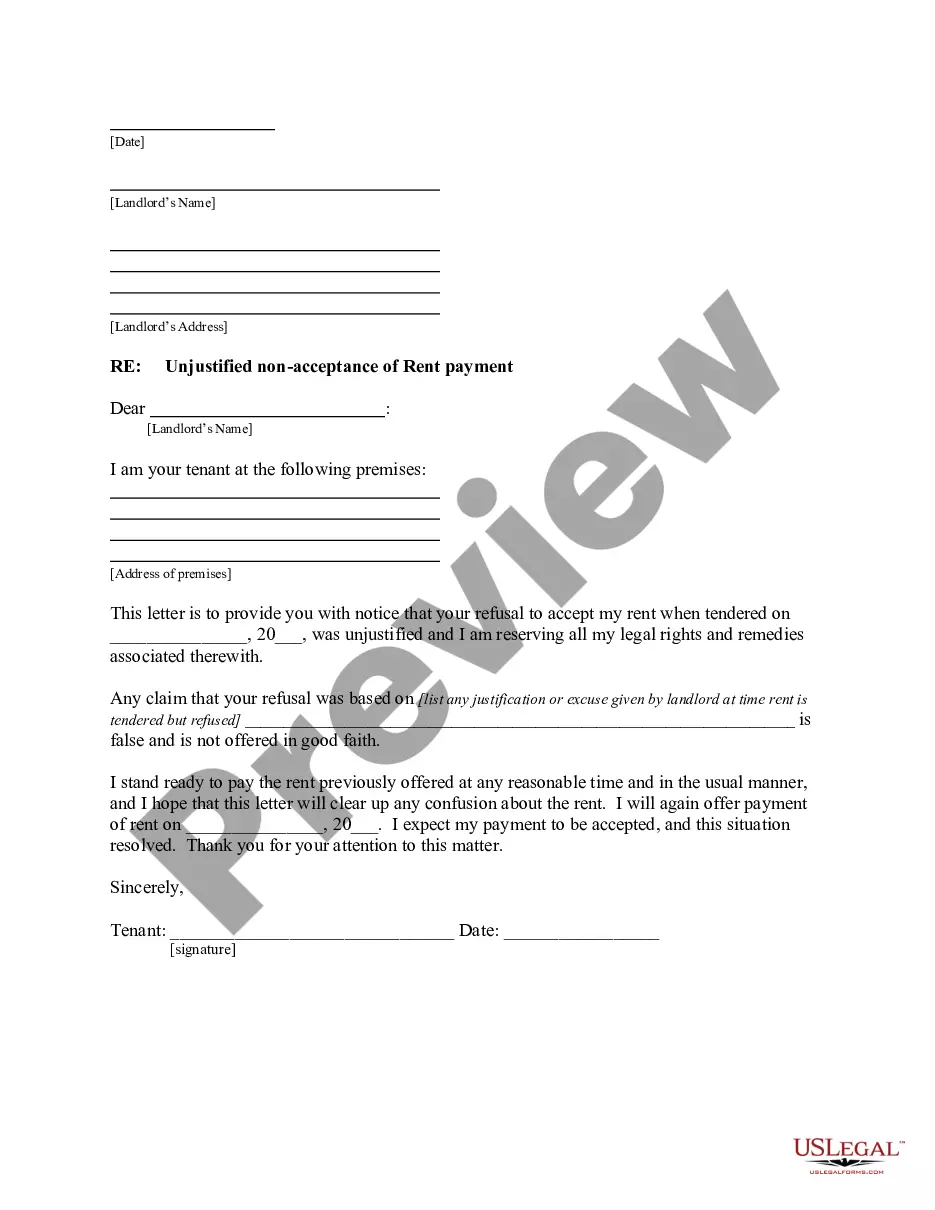
The Letter from Tenant to Landlord containing Notice to Cease Unjustified Nonacceptance of Rent is a legal document used by tenants to formally inform their landlord of the unjustified refusal to accept rent payments. This letter serves as a notification that the tenant is reserving all legal rights related to the landlord's refusal and aims to clarify any misunderstandings regarding the rent payment. Unlike general rent payment notices, this document specifically addresses refusals that the tenant believes are without valid reason.
Main sections of this form
- Identification of the tenant and landlord, including contact details.
- Statement regarding the landlord's refusal to accept rent.
- Declaration that the refusal is unjustified and in bad faith.
- Provision for offering rent payment on a specified date.
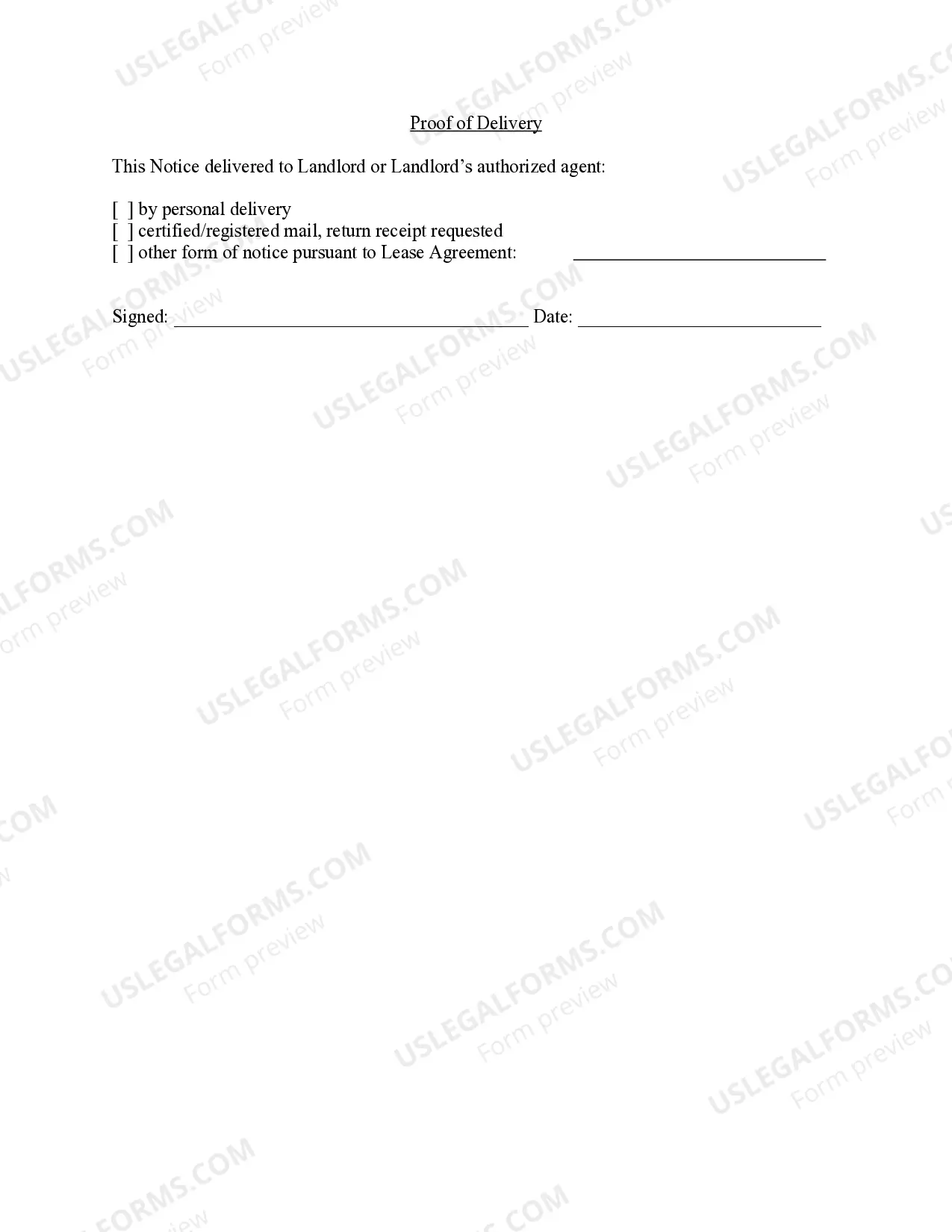
- Proof of delivery method to ensure the landlord receives notice.


When to use this form
This form is essential for tenants who have encountered problematic situations where their landlord refuses to accept rent payments. You should use this letter if you believe the landlord's refusal is not justified and you wish to protect your legal rights by formally documenting the incident. It helps to prevent potential eviction or legal disputes by clearly communicating your position regarding rent payments.
Who can use this document
- Tenants who are experiencing unjustified refusals of rent payments by their landlord.
- Individuals leasing property who want to formally dispute a landlord's actions regarding payment acceptance.
- Any tenant concerned about protecting their legal rights in relation to lease agreements.
How to complete this form
- Clearly identify yourself as the tenant and provide your contact information.
- Identify the landlord or their authorized agent and provide their contact details.
- State the reasons you believe the landlord's refusal to accept payment is unjustified.
- Indicate a specific date when you plan to offer rent payment again.
- Sign and date the letter to formalize the communication.
- Deliver the notice to the landlord or their agent using a reliable delivery method.
Does this form need to be notarized?
This form does not typically require notarization unless specified by local law. It is advisable to check your state regulations to ensure compliance.
Get your form ready online
Our built-in tools help you complete, sign, share, and store your documents in one place.
Make edits, fill in missing information, and update formatting in US Legal Forms—just like you would in MS Word.
Download a copy, print it, send it by email, or mail it via USPS—whatever works best for your next step.
Sign and collect signatures with our SignNow integration. Send to multiple recipients, set reminders, and more. Go Premium to unlock E-Sign.
If this form requires notarization, complete it online through a secure video call—no need to meet a notary in person or wait for an appointment.
We protect your documents and personal data by following strict security and privacy standards.

Make edits, fill in missing information, and update formatting in US Legal Forms—just like you would in MS Word.

Download a copy, print it, send it by email, or mail it via USPS—whatever works best for your next step.

Sign and collect signatures with our SignNow integration. Send to multiple recipients, set reminders, and more. Go Premium to unlock E-Sign.

If this form requires notarization, complete it online through a secure video call—no need to meet a notary in person or wait for an appointment.

We protect your documents and personal data by following strict security and privacy standards.
Common mistakes
- Failing to provide clear identification of both parties involved.
- Not stating the specific reasons for believing the refusal was unjustified.
- Ignoring to set a future date for the next rent payment offer.
- Not keeping a copy of the letter for personal records.
- Using informal language instead of maintaining a professional tone.
Benefits of completing this form online
- Immediate access to ready-made legal templates designed by licensed attorneys.
- Easy download and editing capabilities to customize the form as needed.
- Convenient and time-saving, allowing you to handle legal matters from home.
- Reliable documentation that can help in potential future disputes with landlords.
Looking for another form?
Form popularity
FAQ
Taking back a notice to vacate can be complicated, depending on your landlord's policies and state laws. It's crucial to communicate with your landlord promptly if you reconsider your decision. Be aware that written agreements may stand, and your landlord has the right to decide whether to allow you to stay. In situations where a dispute arises, a Connecticut Letter from Tenant to Landlord containing Notice to Cease Unjustified Nonacceptance of Rent could clarify matters.
When writing a letter to your landlord to give notice, start by stating your intention clearly. Include the date you are sending the letter, your contact information, and the property address. Always specify the date you plan to vacate and consider checking the lease for any specific requirements. If you have unresolved issues regarding payment or acceptance of rent, mention them and consider a Connecticut Letter from Tenant to Landlord containing Notice to Cease Unjustified Nonacceptance of Rent.
No, a notice to vacate is not the same as eviction. A notice to vacate is a formal communication from a tenant to their landlord about their intention to leave the property. Eviction, on the other hand, is a legal process initiated by the landlord to remove a tenant from the property. If a tenant is facing potential eviction and has rent acceptance issues, a Connecticut Letter from Tenant to Landlord containing Notice to Cease Unjustified Nonacceptance of Rent can be a critical tool.
To write a letter to a landlord to vacate, begin with your contact information and the date, followed by the landlord's contact information. Clearly express your intent to vacate and the proposed move-out date. Remember to keep it professional and polite, as good relations can benefit future housing applications. In cases of unresolved issues like rent disputes, consider submitting a Connecticut Letter from Tenant to Landlord containing Notice to Cease Unjustified Nonacceptance of Rent.
Writing a notice from a tenant to a landlord involves stating your name, the property address, and the purpose of the notice. Include the relevant details clearly and concisely, specifying the action you are requesting, such as a repair or clarification on rent issues. A structured approach ensures better communication. For issues with rent nonacceptance, a Connecticut Letter from Tenant to Landlord containing Notice to Cease Unjustified Nonacceptance of Rent helps convey your message effectively.
When writing a notice to vacate to your landlord, include your name and the property address at the top. State your intent to vacate, including the date you plan to move out. It is best to reference the lease terms regarding the notice period. If you're encountering issues like unjustified nonacceptance of rent, consider using a Connecticut Letter from Tenant to Landlord containing Notice to Cease Unjustified Nonacceptance of Rent.
To write a notice to vacate as a tenant, start by including your name, address, and the date. Clearly state your intention to vacate, providing a specific move-out date. Ensure to check your lease for required notice periods. Utilizing a Connecticut Letter from Tenant to Landlord containing Notice to Cease Unjustified Nonacceptance of Rent can strengthen your position in any disputes with the landlord.
The eviction process in Arkansas begins when a landlord files an eviction notice, often called an unlawful detainer. This notice informs the tenant of the claim and the following steps. The tenant has specific days to respond, and if the issue escalates, a court appearance may be necessary. For tenants facing unjustified nonacceptance of rent, a Connecticut Letter from Tenant to Landlord containing Notice to Cease Unjustified Nonacceptance of Rent can clarify their intentions.
In Connecticut, landlords must give tenants at least 30 days' notice if they do not wish to renew the lease. Clear communication on this matter can help avoid disputes or confusion. If any issues arise, a Connecticut Letter from Tenant to Landlord containing Notice to Cease Unjustified Nonacceptance of Rent can be a valuable tool for managing the situation.
You should inform your landlord of your decision to not renew your lease ideally 30 days before the lease ends. This respects both parties' time and allows for proper planning. Utilizing a Connecticut Letter from Tenant to Landlord containing Notice to Cease Unjustified Nonacceptance of Rent ensures your intentions are documented, leaving no room for ambiguity.