Connecticut Letter from Tenant to Landlord about Illegal entry by landlord
What is this form?
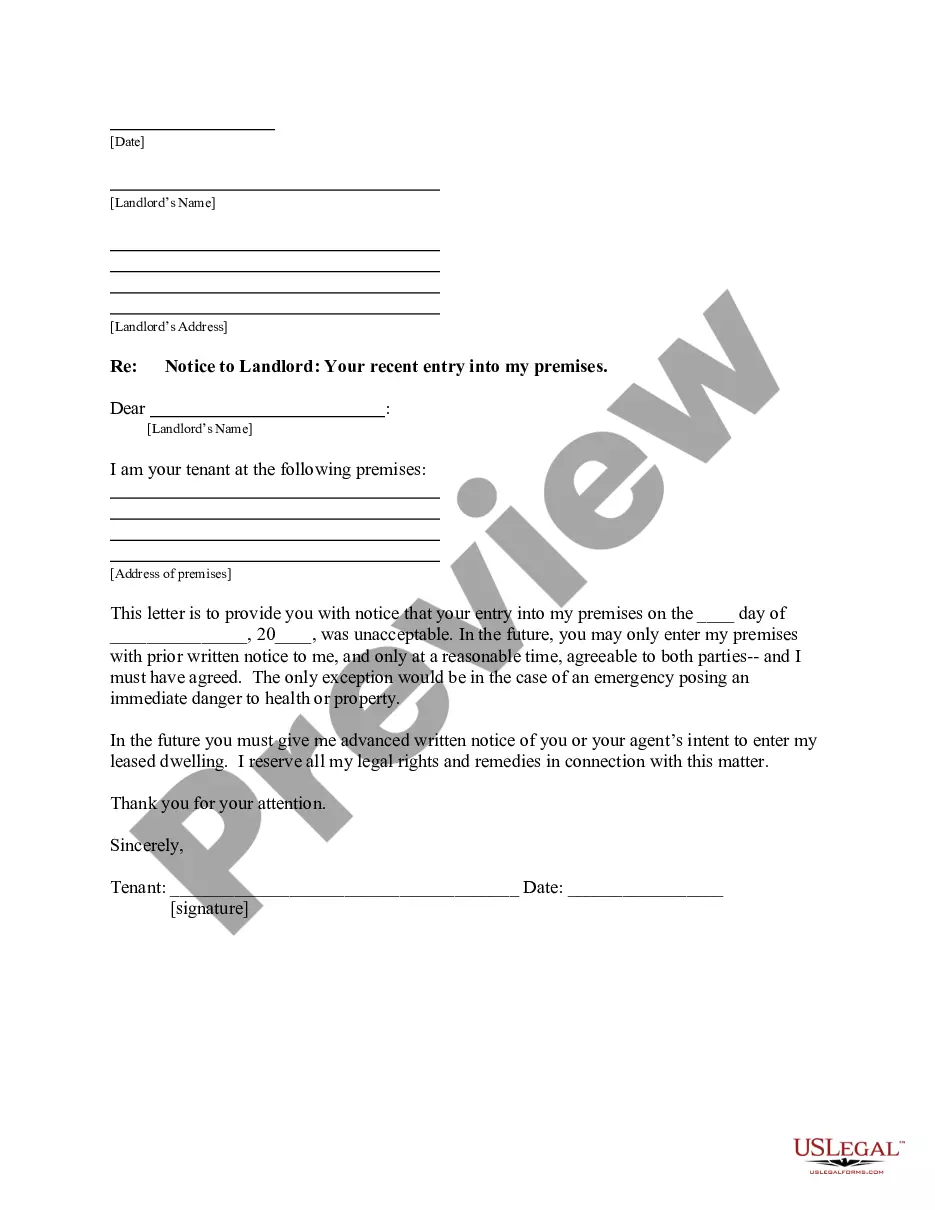
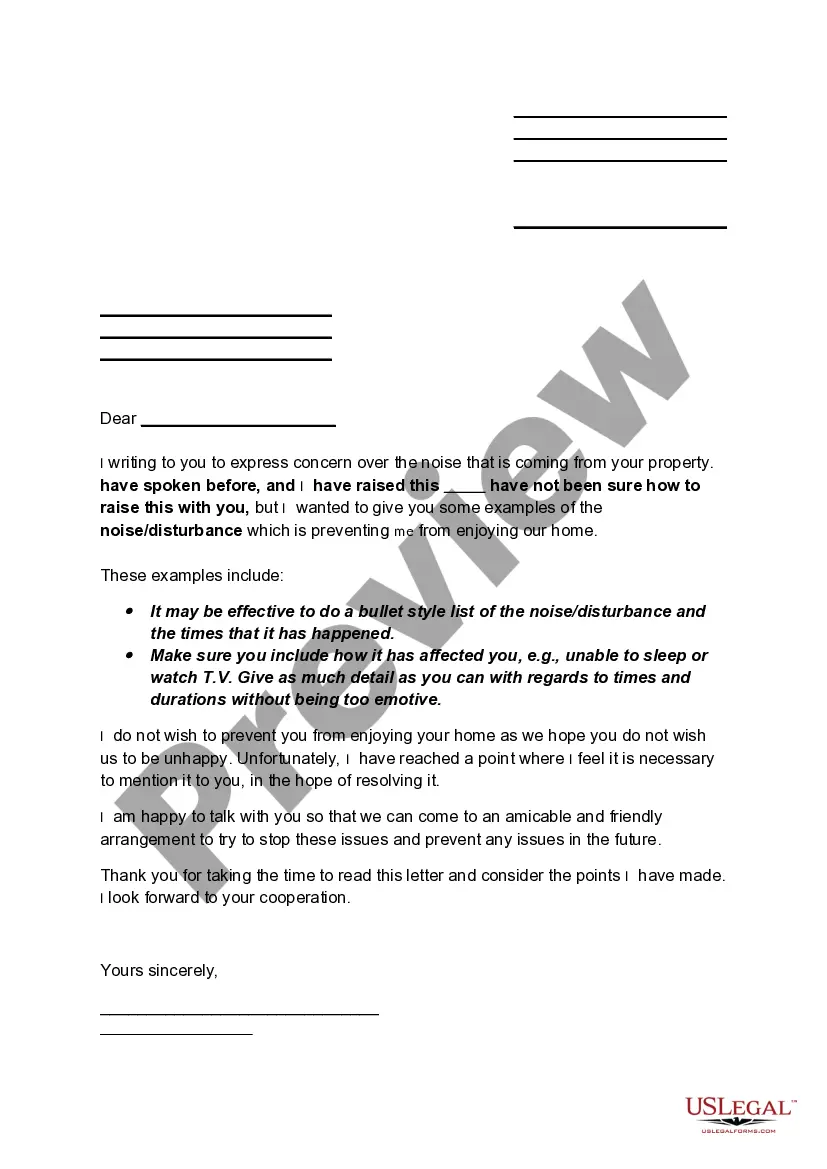
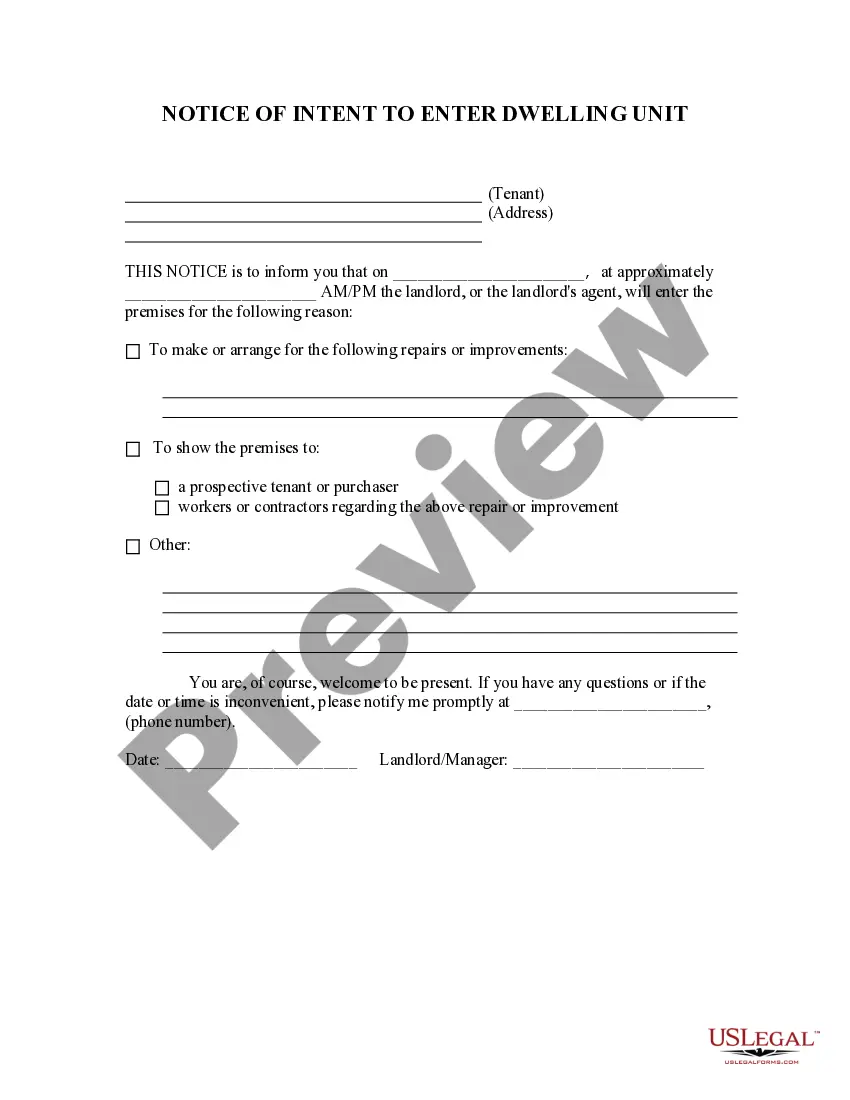
This form is a Letter from Tenant to Landlord concerning illegal entry by the landlord. It serves the purpose of documenting a tenant's request for advance written notice before the landlord or their agents enter the leased premises. This form clarifies the tenant's legal rights regarding access to their home and outlines the conditions under which the landlord may enter, specifically emphasizing the need for reasonable notice and reinforcing the tenant's right to privacy.
Form components explained
- Identification of the tenant and landlord involved in the tenancy.
- Clear statement requesting advance written notice for future entries.
- Specification of reasonable times for entry, acceptable to both parties.
- Reference to emergencies where immediate entry is permissible.
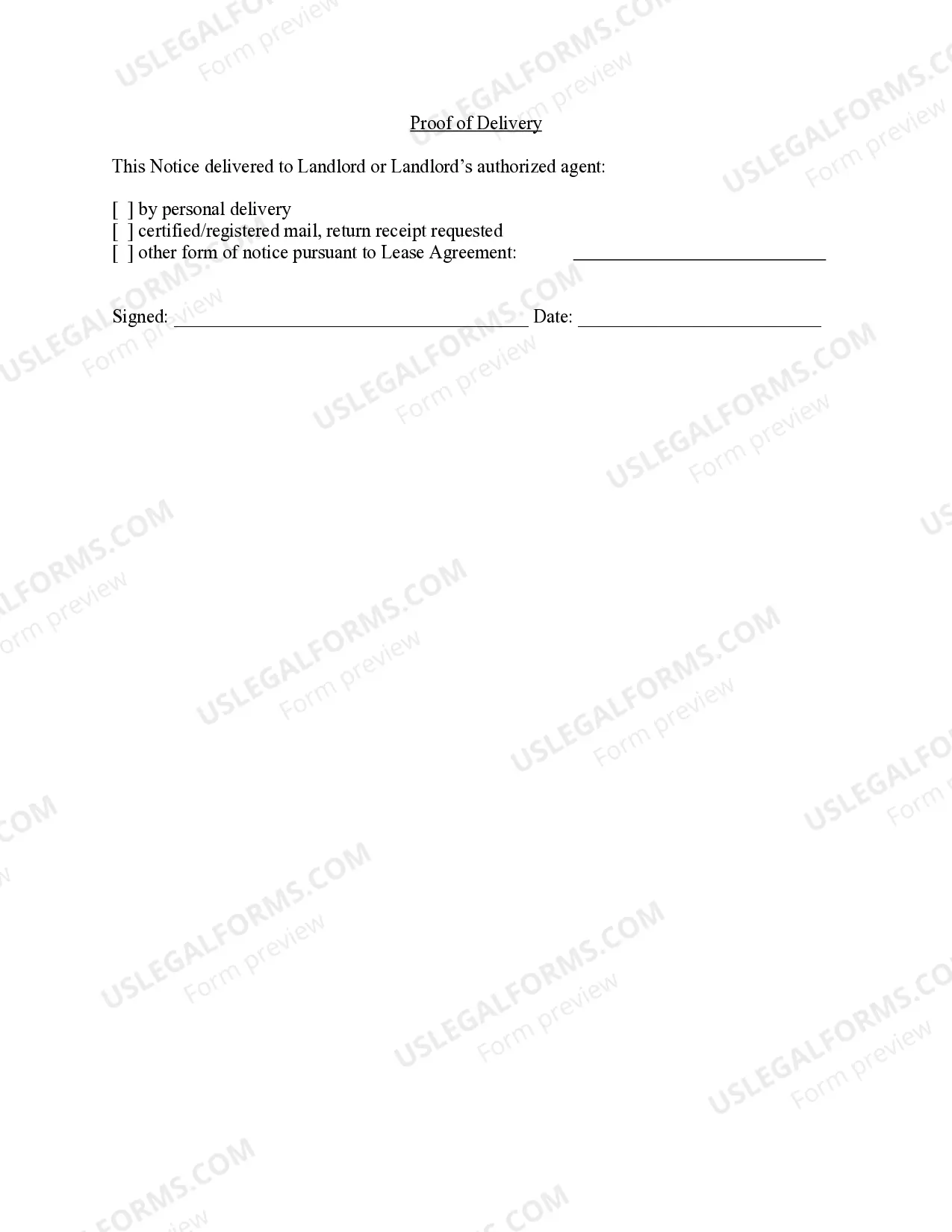
- Space for tenant's signature, date, and proof of delivery method.

When this form is needed
This form is needed when a tenant believes their landlord has entered the rental property without proper notice, which may violate tenant rights. It is appropriate to use this letter when the tenant wishes to formalize their request for notice of entry to prevent future unauthorized access and to protect their privacy and safety within their dwelling.
Who should use this form
- Tenants renting residential properties who feel their right to privacy is being infringed.
- Individuals who have experienced unauthorized entry by their landlord.
- Tenants who want to establish clear communication regarding access to their rental unit.
How to prepare this document
- Identify and enter the names of both the tenant and landlord at the top of the letter.
- Clearly state the request for advance written notice of any future entries.
- Specify what constitutes a reasonable time for accessing the premises.
- Include the date and your signature at the conclusion of the letter.
- Choose a method for delivering the notice, such as personal delivery or certified mail.
Does this document require notarization?
This form does not typically require notarization to be legally valid. However, some jurisdictions or document types may still require it. US Legal Forms provides secure online notarization powered by Notarize, available 24/7 for added convenience.
Get your form ready online
Our built-in tools help you complete, sign, share, and store your documents in one place.
Make edits, fill in missing information, and update formatting in US Legal Forms—just like you would in MS Word.
Download a copy, print it, send it by email, or mail it via USPS—whatever works best for your next step.
Sign and collect signatures with our SignNow integration. Send to multiple recipients, set reminders, and more. Go Premium to unlock E-Sign.
If this form requires notarization, complete it online through a secure video call—no need to meet a notary in person or wait for an appointment.
We protect your documents and personal data by following strict security and privacy standards.

Make edits, fill in missing information, and update formatting in US Legal Forms—just like you would in MS Word.

Download a copy, print it, send it by email, or mail it via USPS—whatever works best for your next step.

Sign and collect signatures with our SignNow integration. Send to multiple recipients, set reminders, and more. Go Premium to unlock E-Sign.

If this form requires notarization, complete it online through a secure video call—no need to meet a notary in person or wait for an appointment.

We protect your documents and personal data by following strict security and privacy standards.
Mistakes to watch out for
- Failing to provide complete information about the tenant and landlord.
- Not clearly stating the request for advance notice.
- Leaving out the signature or date, which makes the letter invalid.
- Using vague language that does not specify what is meant by "reasonable time."
Advantages of online completion
- Convenient access to a legally drafted document without needing to consult an attorney.
- Easy to download and customize for your specific situation and state.
- Time-efficient, as you can complete and send the form immediately.
Legal use & context
- This letter is a formal request and serves as evidence of the tenant's demand for privacy and notice.
- Failure to comply may strengthen the tenant's case in disputes regarding illegal entry.
- Always retain a copy of this letter for personal records and future reference.
Looking for another form?
Form popularity
FAQ
This form is a letter tenants use to address illegal entry by the landlord and to request advance written notice before future entries. It documents the tenant’s right to privacy, sets reasonable times for entry, and acknowledges emergencies where immediate access is permissible. Use it when a landlord has entered without proper notice to formalize protections.
Yes, generally a landlord should provide advance written notice before entering a rental unit, except in emergencies. This form helps the tenant document that notice request and sets reasonable times for entry, guiding future access and reinforcing privacy protections described in the letter.
This form is about advance notice for landlord entry, not about showing the unit. It does not provide specific rules for viewings. If the tenant wants to restrict showings, a separate written request or clause detailing scheduled times can be used alongside this form.
Renters in Connecticut have a right to privacy and to reasonable notice before landlord entry. This form supports asserting those rights by requesting advance written notice and specifying acceptable entry times, while also noting emergencies where immediate entry is permitted.
This form helps tenants address unannounced entry by requesting advance written notice going forward and clarifying acceptable entry times. It acknowledges emergencies where immediate entry is allowed and provides a record of delivery method to prove notice was provided.
It is tailored to address illegal entry by the landlord and to document advance notice before future entries, with a focus on protecting the tenant’s privacy in Connecticut. Its components include spaces for identification, delivery proof, signatures, and dates to formalize the arrangement.