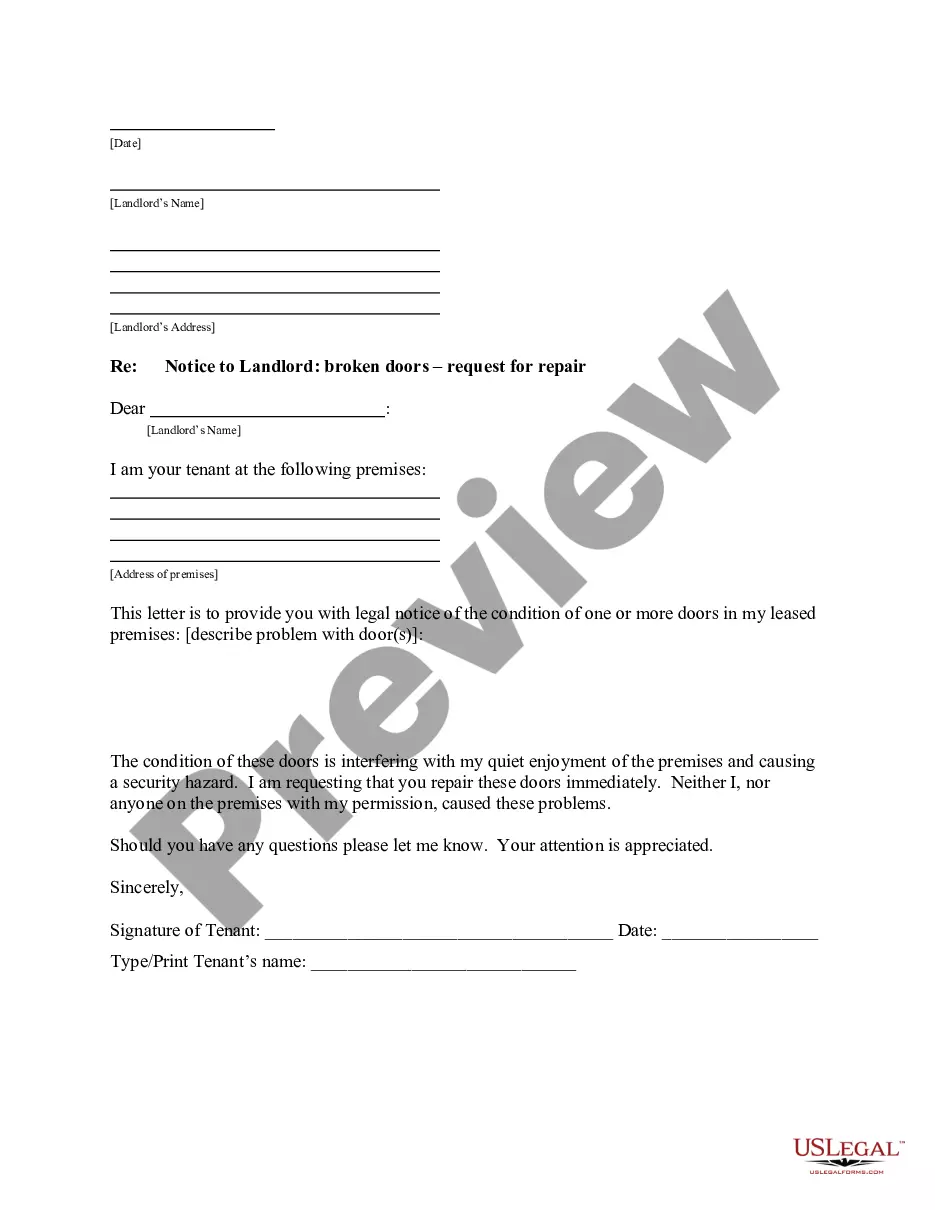
Connecticut Letter from Tenant to Landlord containing Notice that doors are broken and demand repair
Understanding this form
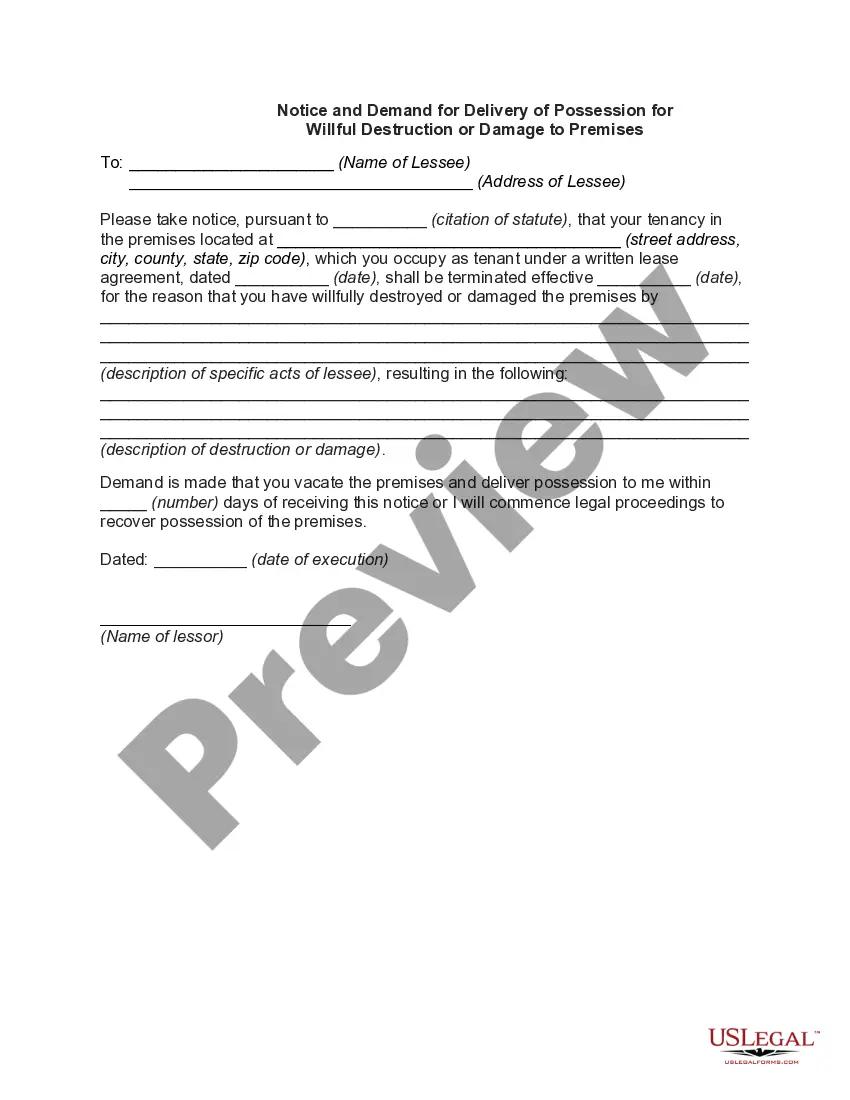
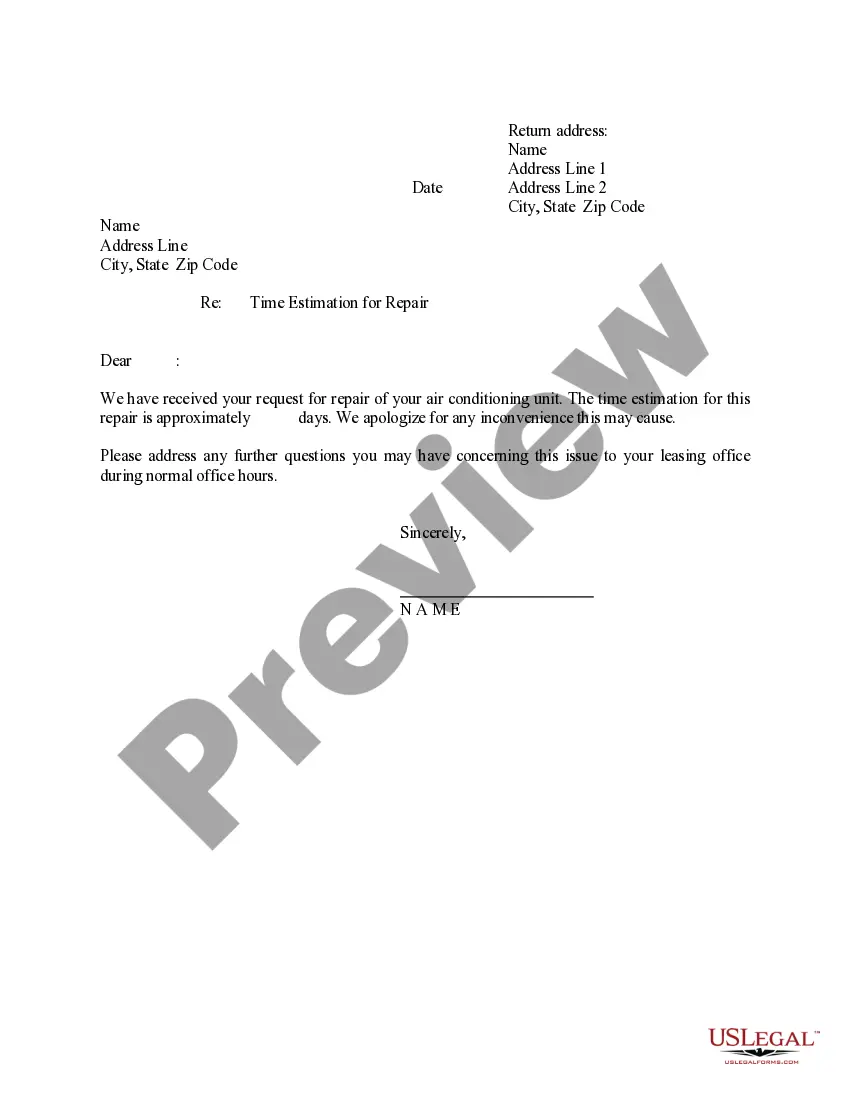
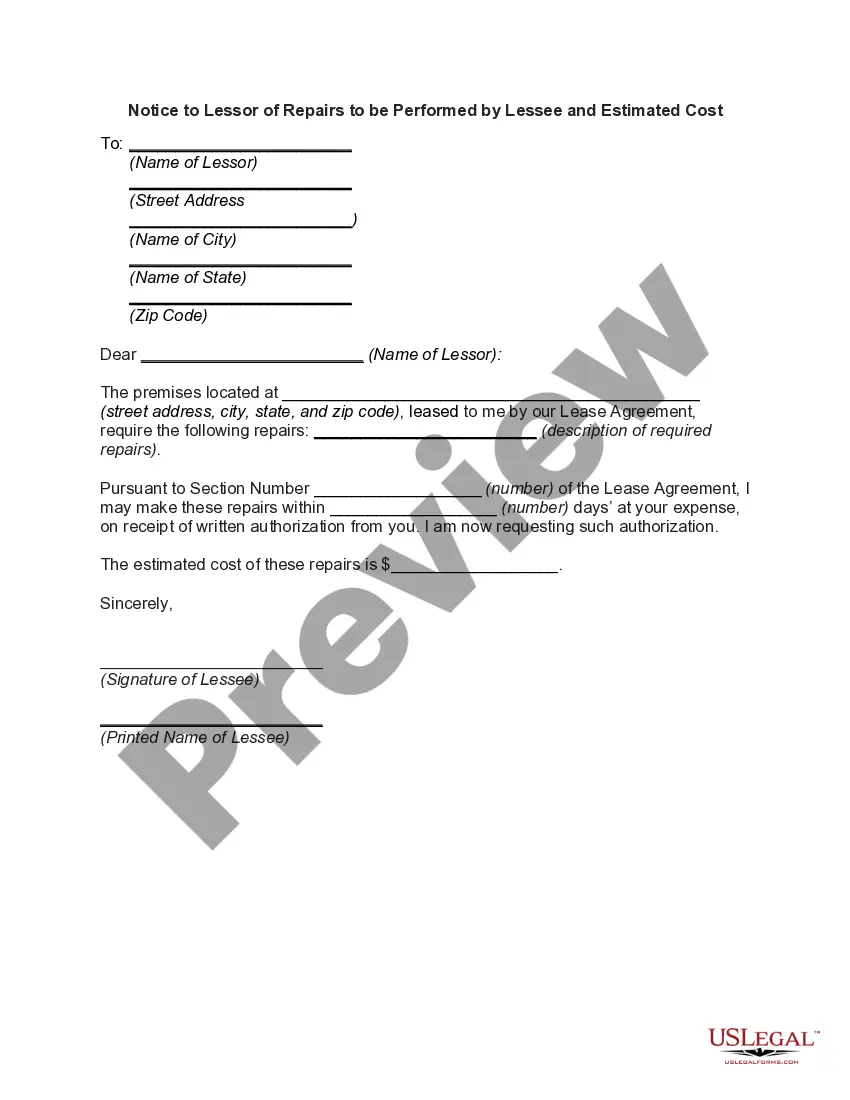
This form is a Letter from Tenant to Landlord, specifically designed to notify the landlord about broken doors in the rental property. It formally requests repairs in accordance with the lease agreement. This form helps tenants document communication regarding maintenance issues, establishing a clear request that can be referenced later if necessary.
Key components of this form
- Signature of tenant: A space for the tenant's signature to validate the request.
- Date: A section to indicate when the letter is written.
- Tenant's name: Area to type or print the tenant's name for identification.
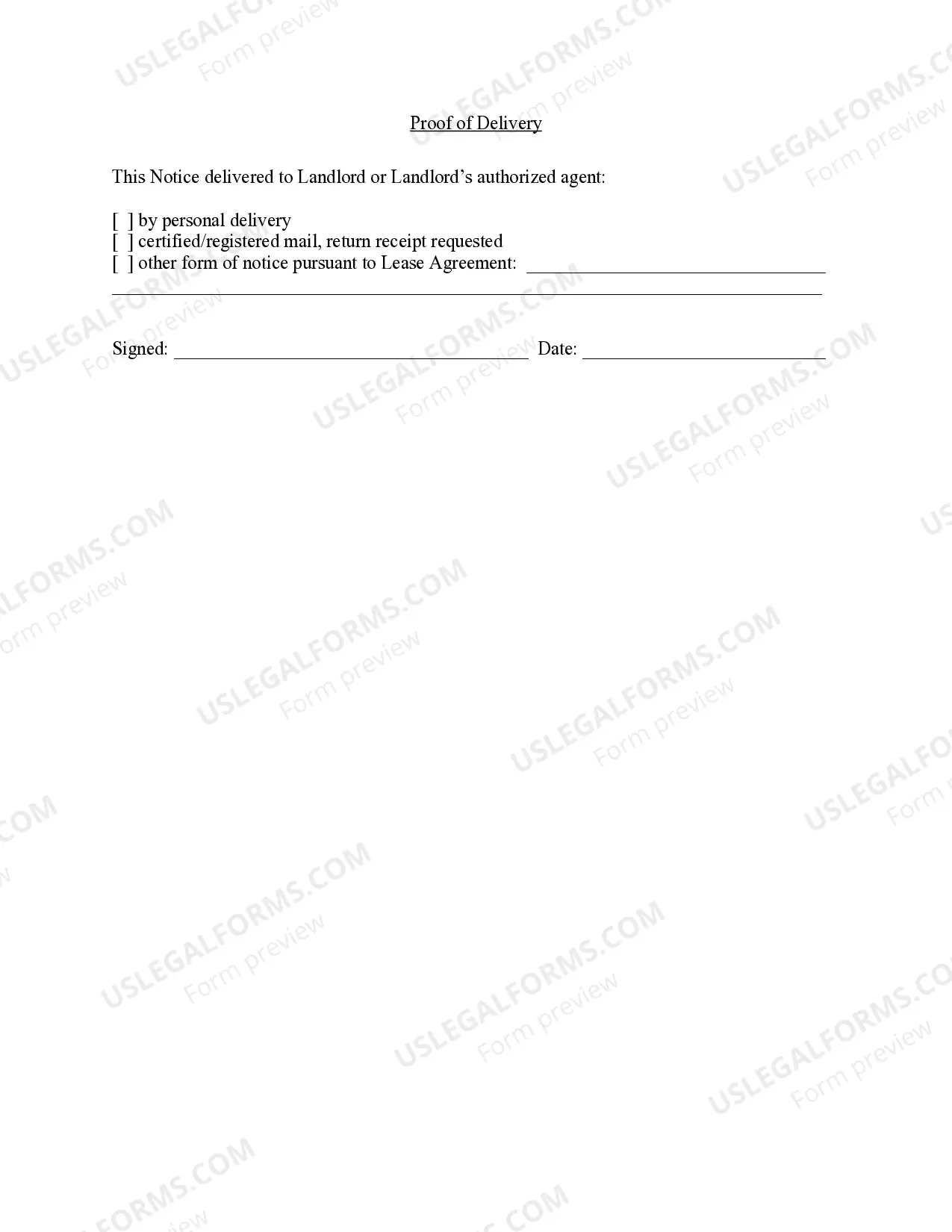
- Proof of delivery: Notation for how the notice was delivered to the landlord.
- Landlord's name: Information to identify the landlord or authorized agent receiving the notice.

When to use this form
This form should be used when a tenant discovers that the doors in their rental property are broken and need repair. It is important to formally notify the landlord about the issue, particularly if it affects the tenant's security or comfort. Using this form ensures that the request for repair is documented and communicated effectively.
Who this form is for
- Tenants experiencing issues with broken doors in their rental property.
- Anyone under a lease agreement who requires formal communication with their landlord regarding repairs.
- Individuals who want to ensure a record of their repair requests for legal purposes.
Steps to complete this form
- Identify the tenant: Enter the tenant's name where indicated.
- Specify the issue: Clearly state that the doors are broken and require repair.
- Enter the date: Write the current date on which you are sending the notice.
- Provide proof of delivery: Choose and specify how the notice was delivered to the landlord.
- Sign the letter: Include your signature to authenticate the request.
Notarization guidance
This form does not typically require notarization unless specified by local law. However, ensuring that all parties have a copy and that delivery is confirmed can enhance its validity.
Get your form ready online
Our built-in tools help you complete, sign, share, and store your documents in one place.
Make edits, fill in missing information, and update formatting in US Legal Forms—just like you would in MS Word.
Download a copy, print it, send it by email, or mail it via USPS—whatever works best for your next step.
Sign and collect signatures with our SignNow integration. Send to multiple recipients, set reminders, and more. Go Premium to unlock E-Sign.
If this form requires notarization, complete it online through a secure video call—no need to meet a notary in person or wait for an appointment.
We protect your documents and personal data by following strict security and privacy standards.

Make edits, fill in missing information, and update formatting in US Legal Forms—just like you would in MS Word.

Download a copy, print it, send it by email, or mail it via USPS—whatever works best for your next step.

Sign and collect signatures with our SignNow integration. Send to multiple recipients, set reminders, and more. Go Premium to unlock E-Sign.

If this form requires notarization, complete it online through a secure video call—no need to meet a notary in person or wait for an appointment.

We protect your documents and personal data by following strict security and privacy standards.
Common mistakes
- Failing to include the date, which is important for tracking when the notice was sent.
- Not signing the letter, rendering it unofficial.
- Omitting the method of delivery, which is necessary for proof of communication.
Benefits of completing this form online
- Convenience: Easily download and fill out the form from anywhere.
- Editability: Customize the template to fit your specific situation.
- Reliability: Use forms drafted by licensed attorneys to ensure legal compliance.
Legal use & context
- Establishes a formal request for repairs, which can be important for future legal actions.
- Provides documentation of issues reported to the landlord, which can help in disputes.
- Helps tenants comply with lease terms regarding maintenance requests.
What to keep in mind
- The form is essential for tenants needing repairs to broken doors.
- It ensures proper documentation and communication with the landlord.
- Using this form can help protect tenants' rights regarding property maintenance.
Looking for another form?
Form popularity
FAQ
In Connecticut, a landlord is generally required to make repairs within a reasonable time frame after receiving notification. When you send a Connecticut Letter from Tenant to Landlord containing Notice that doors are broken and demand repair, it serves as a formal request that highlights the urgency of the situation. Typically, landlords should address urgent repairs, such as broken doors, within a few days. However, for less urgent repairs, a longer period may be acceptable, depending on the nature of the issue and local regulations.
To write a letter of repair, begin by identifying yourself and providing the date. State the issues clearly, such as broken doors needing attention, while mentioning the context of the Connecticut Letter from Tenant to Landlord containing Notice that doors are broken and demand repair. Request specific repair actions and a timeline for when you expect the repairs to be completed.
An example letter to a tenant regarding damages should start with the landlord's address and the date. Detail the damages observed and cite any specific leases or agreements. Be sure to mention the need for repairs, similar to a Connecticut Letter from Tenant to Landlord containing Notice that doors are broken and demand repair, and instruct them on next steps.
Begin your request letter for repair by including your name, address, and the date. Outline the specific repairs needed, such as fixing broken doors, and refer to the Connecticut Letter from Tenant to Landlord containing Notice that doors are broken and demand repair for context. Make your request straightforward and end with a call for a timely response.
To craft a good letter of request, structure it with a clear introduction, body, and conclusion. Clearly express your needs regarding repairs, like those in the Connecticut Letter from Tenant to Landlord containing Notice that doors are broken and demand repair. Maintain a respectful yet assertive tone, and conclude with your contact information for easy follow-up.
A demand letter should start with your information and the date, followed by a clear description of the repairs needed. Mention the Connecticut Letter from Tenant to Landlord containing Notice that doors are broken and demand repair in your letter. Be specific about the desired outcome, and indicate that you expect a response within a certain timeframe to avoid further action.
To write a request for repairs, begin with your contact details and the date. Clearly state the issues, such as broken doors, and reference the Connecticut Letter from Tenant to Landlord containing Notice that doors are broken and demand repair. Use clear, polite language to communicate your expectations for prompt action, and include a deadline for the repairs if necessary.
In Connecticut, landlords are generally required to make necessary repairs within a reasonable time after receiving notice. If you send a Connecticut Letter from Tenant to Landlord containing Notice that doors are broken and demand repair, your landlord should act quickly to address the issue. A reasonable timeframe can vary based on the severity of the problem, but often it is expected to be within a few days to a few weeks.
To write a letter to a tenant for repairs, explain the specific repairs needed and the urgency behind them. Be clear about timelines and any steps the tenant should take to facilitate these repairs. You can refer to the Connecticut Letter from Tenant to Landlord containing Notice that doors are broken and demand repair for a structured format. This ensures your message is delivered efficiently and formally.
Writing a notification letter to your landlord involves stating the problem clearly and concisely, specifying what needs to be repaired. You may include your rights and responsibilities in tenant-landlord agreements to back your request. Utilizing the Connecticut Letter from Tenant to Landlord containing Notice that doors are broken and demand repair can serve as an effective template. This ensures all important details are captured without ambiguity.