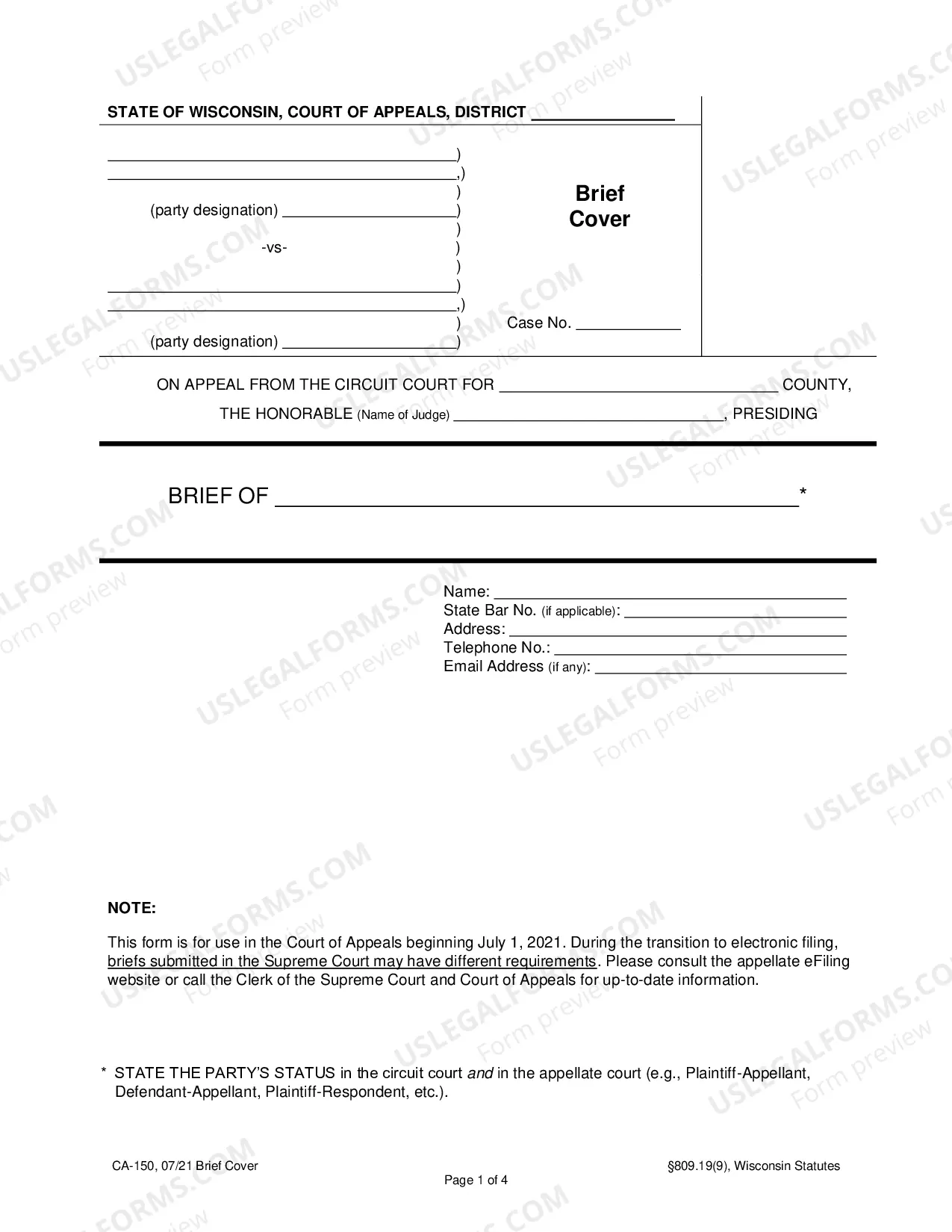
Colorado Letter from Landlord to Tenant about Intent to increase rent and effective date of rental increase
What is this form?
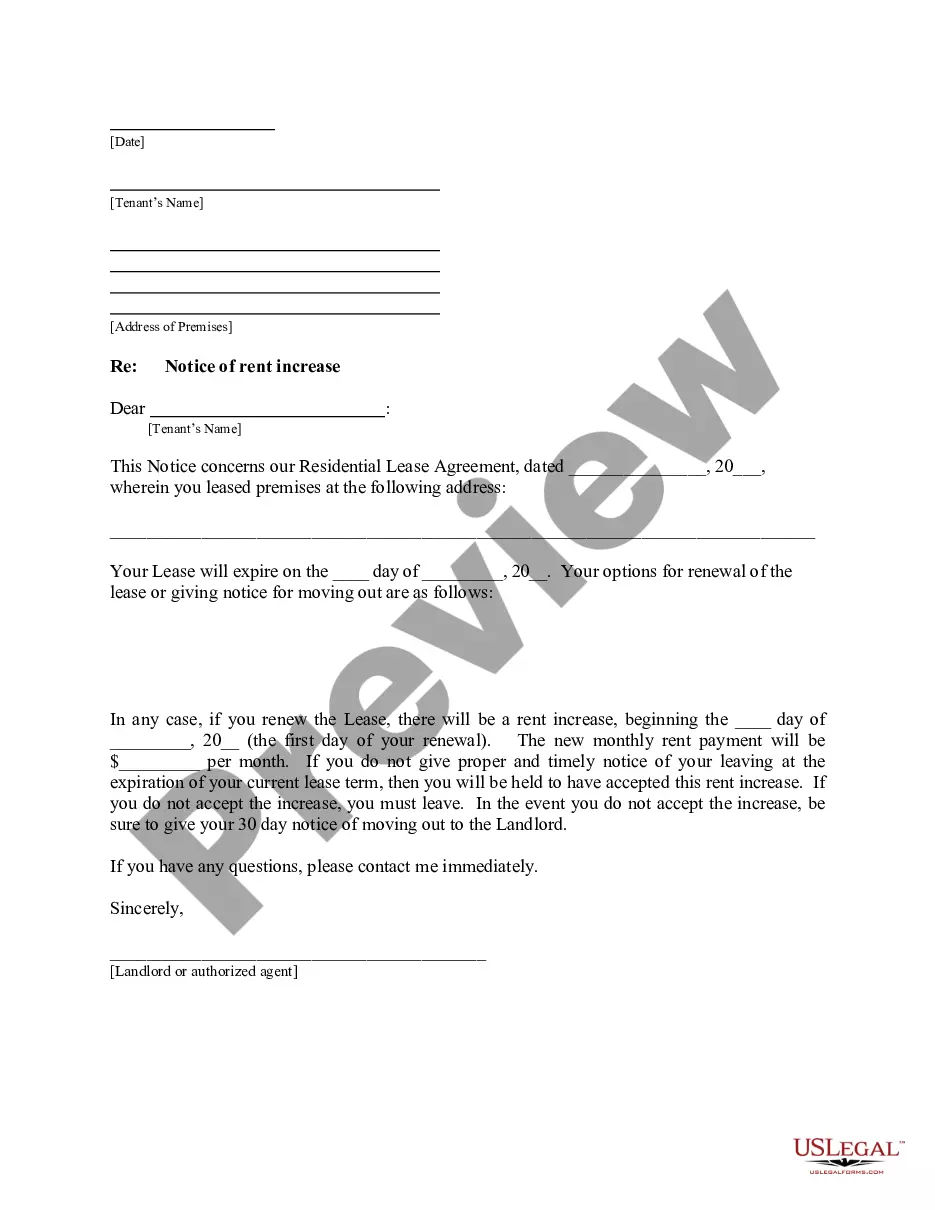
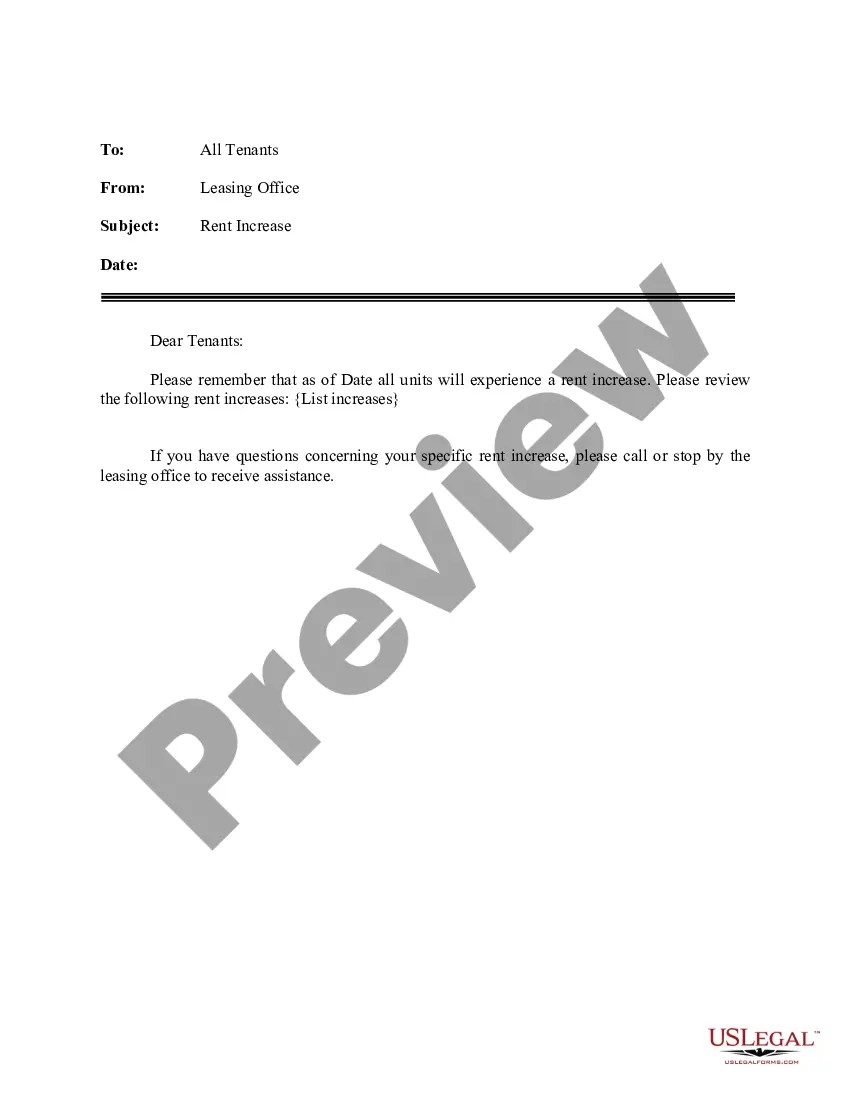
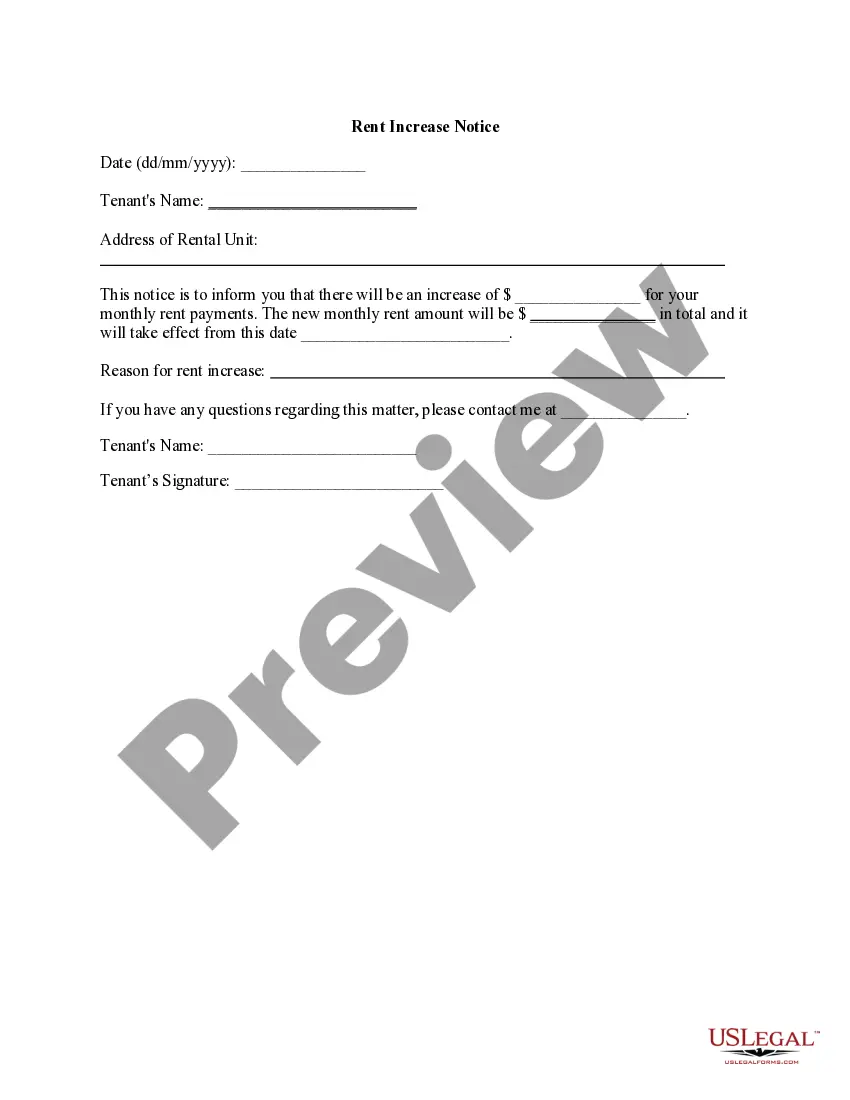
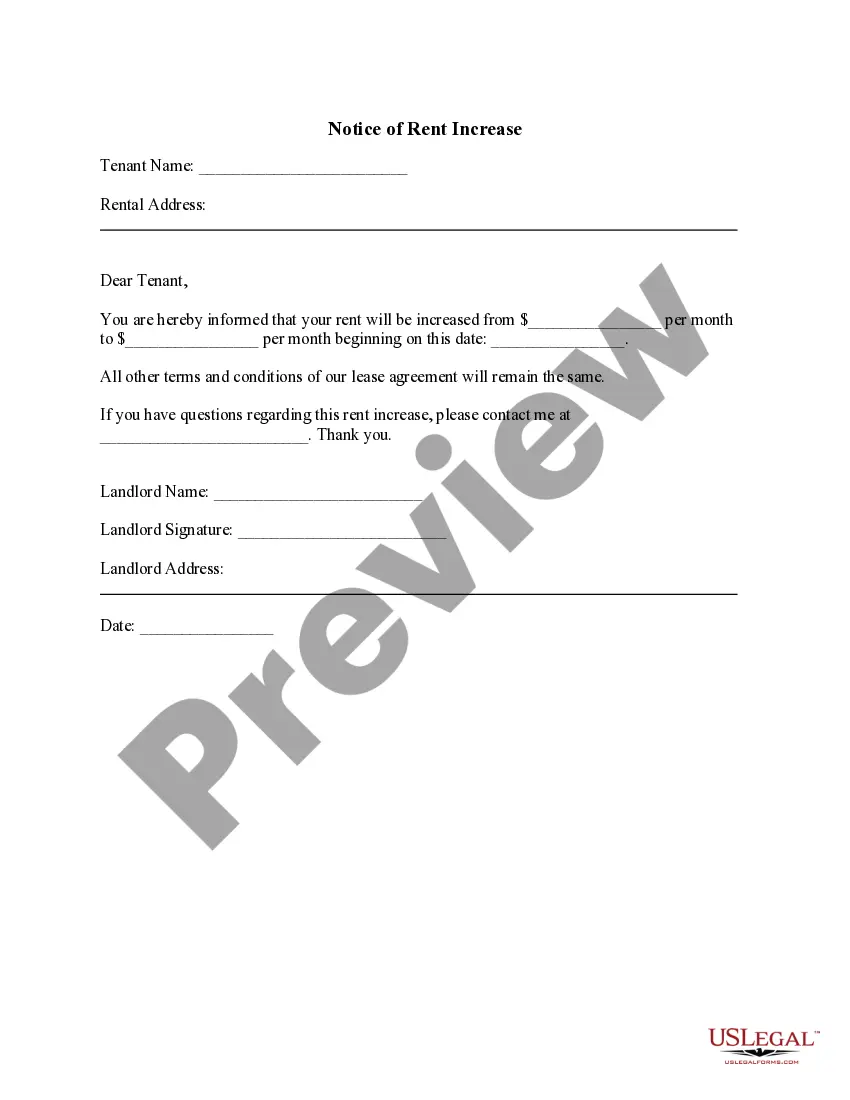
This form is a notice from a landlord to a tenant regarding an intent to increase rent after the lease term ends. It clearly states the new rental amount and the effective date of the increase. This form ensures that tenants are formally informed about the changes in their rental obligations, helping both parties understand their rights and responsibilities as the lease transitions to a month-to-month agreement if not renewed.
Key parts of this document
- The address of the rented property.
- The expiration date of the current lease agreement.
- A clear statement of the new rent amount.
- The effective date of the rent increase.
- Options for the tenant regarding renewal or moving out.
- Contact information for the landlord or authorized agent.

Common use cases
This form is used when you, as a landlord, intend to increase the rent after the existing lease period has concluded. It provides necessary information to tenants to help them make informed decisions about whether to renew the lease or vacate the premises. Use this form to ensure proper communication of any changes in rental terms.
Intended users of this form
This form is suitable for:
- Landlords looking to notify tenants of a rent increase.
- Property management companies managing residential leases.
- Real estate professionals assisting landlords with lease management.
How to complete this form
To complete this form, follow these steps:
- Identify the parties involved, including the landlord and tenant.
- Specify the property address where the tenant resides.
- Enter the original lease date and the expiration date of the lease.
- Clearly state the new rent amount and effective date of the increase.
- Include options available to the tenant for lease renewal or moving out.
- Sign the notice as the landlord or authorized agent.
Does this form need to be notarized?
This form does not typically require notarization unless specified by local law. Always confirm your local regulations to ensure compliance.
Get your form ready online
Our built-in tools help you complete, sign, share, and store your documents in one place.
Make edits, fill in missing information, and update formatting in US Legal Forms—just like you would in MS Word.
Download a copy, print it, send it by email, or mail it via USPS—whatever works best for your next step.
Sign and collect signatures with our SignNow integration. Send to multiple recipients, set reminders, and more. Go Premium to unlock E-Sign.
If this form requires notarization, complete it online through a secure video call—no need to meet a notary in person or wait for an appointment.
We protect your documents and personal data by following strict security and privacy standards.

Make edits, fill in missing information, and update formatting in US Legal Forms—just like you would in MS Word.

Download a copy, print it, send it by email, or mail it via USPS—whatever works best for your next step.

Sign and collect signatures with our SignNow integration. Send to multiple recipients, set reminders, and more. Go Premium to unlock E-Sign.

If this form requires notarization, complete it online through a secure video call—no need to meet a notary in person or wait for an appointment.

We protect your documents and personal data by following strict security and privacy standards.
Avoid these common issues
- Failing to provide adequate notice as required by state law.
- Not including the effective date of the rent increase.
- Neglecting to specify the options for the tenant.
- Omitting the signature from the landlord or authorized agent.
Benefits of using this form online
- Convenient and easy to use with clear formatting.
- Downloadable and customizable according to specific needs.
- Legally reviewed by licensed attorneys to ensure compliance.
- Immediate access to forms at any time, aiding timely communication.
Legal use & context
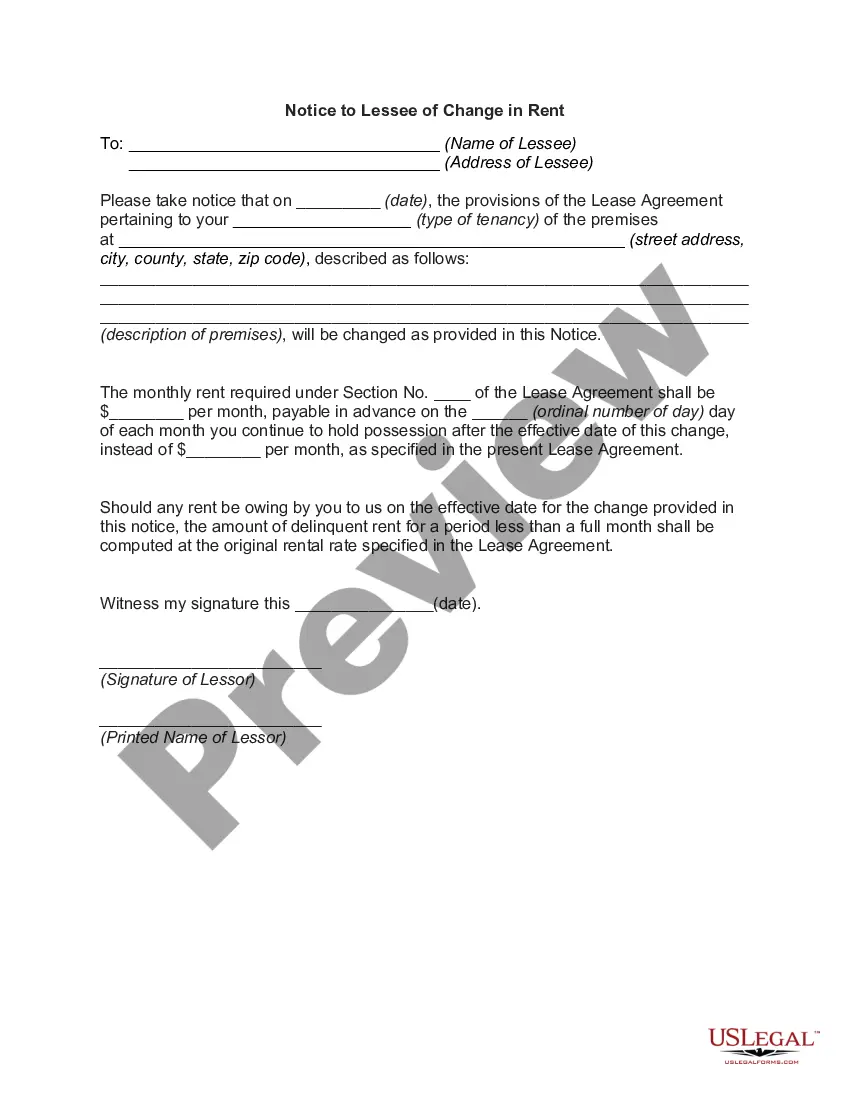
- Provides documentation for legal compliance when raising rent.
- Helps prevent disputes by notifying tenants formally and sufficiently.
Summary of main points
- This form serves as a formal notification for rent increases after lease expiration.
- Proper completion protects both landlord and tenant interests.
- Always adhere to state guidelines regarding notice periods for rent increases.
Looking for another form?
Form popularity
FAQ
To notify a tenant to vacate the premises in a gracious manner, start by expressing appreciation for them as a tenant. Clearly state the timeframe for vacating and any necessary details, while maintaining a respectful tone. A well-structured Colorado Letter from Landlord to Tenant about Intent to increase rent can also serve to communicate any changes regarding their lease effectively.
When notifying a tenant about a rental increase, transparency is key. Clearly explain the reasons behind the increase, such as rising property costs or upgrades being made to the property. Using a Colorado Letter from Landlord to Tenant about Intent to increase rent and effective date of rental increase helps convey this message in a structured and professional manner.
Writing to a tenant involves clear communication and a polite tone. Start by addressing the tenant properly and stating the purpose of the letter, whether it pertains to rent, maintenance, or any other issues. If you need to inform them of an increase, a robust Colorado Letter from Landlord to Tenant about Intent to increase rent and effective date of rental increase ensures they understand the rationale behind it.
Begin by introducing your relationship with the tenant, including how long you have known them. Highlight their positive qualities and reliability in meeting their rental obligations. This reference can serve as a helpful tool for the tenant, and combining it with a Colorado Letter from Landlord to Tenant about Intent to increase rent can enhance their credibility.
In Colorado, there is no state-wide limit on how much a landlord can increase rent, but local laws may apply. Generally, landlords must provide written notice of the increase, possibly through a Colorado Letter from Landlord to Tenant about Intent to increase rent and effective date of rental increase. Therefore, always check local regulations to ensure compliance.
To craft a letter that emphasizes your commitment to remain a responsible tenant, start by clearly stating your situation. Include any steps you are taking to address the landlord’s concerns, such as paying overdue rent or correcting behavior. This Colorado Letter from Landlord to Tenant about Intent to increase rent can show that you value your rental agreement and wish to maintain a good relationship.
Writing a formal letter to a tenant involves clear, concise communication. Start with your contact information and that of the tenant, followed by a subject line indicating the nature of the letter. Include essential details like the intended rent increase and its effective date, utilizing the structure of a Colorado Letter from Landlord to Tenant about Intent to increase rent and effective date of rental increase for best practices.
If you find your rent to be excessively high, first review your lease agreement for terms regarding rent increases. You can also engage in a discussion with your landlord to negotiate the amount or seek assistance from local housing authorities. Utilizing a formal approach, such as referencing a Colorado Letter from Landlord to Tenant about Intent to increase rent and effective date of rental increase, can foster constructive dialogue.
The maximum rent increase allowed is usually determined by local laws and the specific lease agreement between landlord and tenant. If your lease does not specify a cap on increases, then the landlord can set a new rate as long as they provide adequate notice. For clarity, many landlords use a Colorado Letter from Landlord to Tenant about Intent to increase rent and effective date of rental increase.
The maximum rent increase a landlord can impose largely depends on the lease terms and local regulations. In the absence of rent control, landlords have the flexibility to increase rent at their discretion, providing appropriate notice to tenants. Issuing a Colorado Letter from Landlord to Tenant about Intent to increase rent and effective date of rental increase clarifies this process.