Colorado Letter from Tenant to Landlord about Illegal entry by landlord
About this form
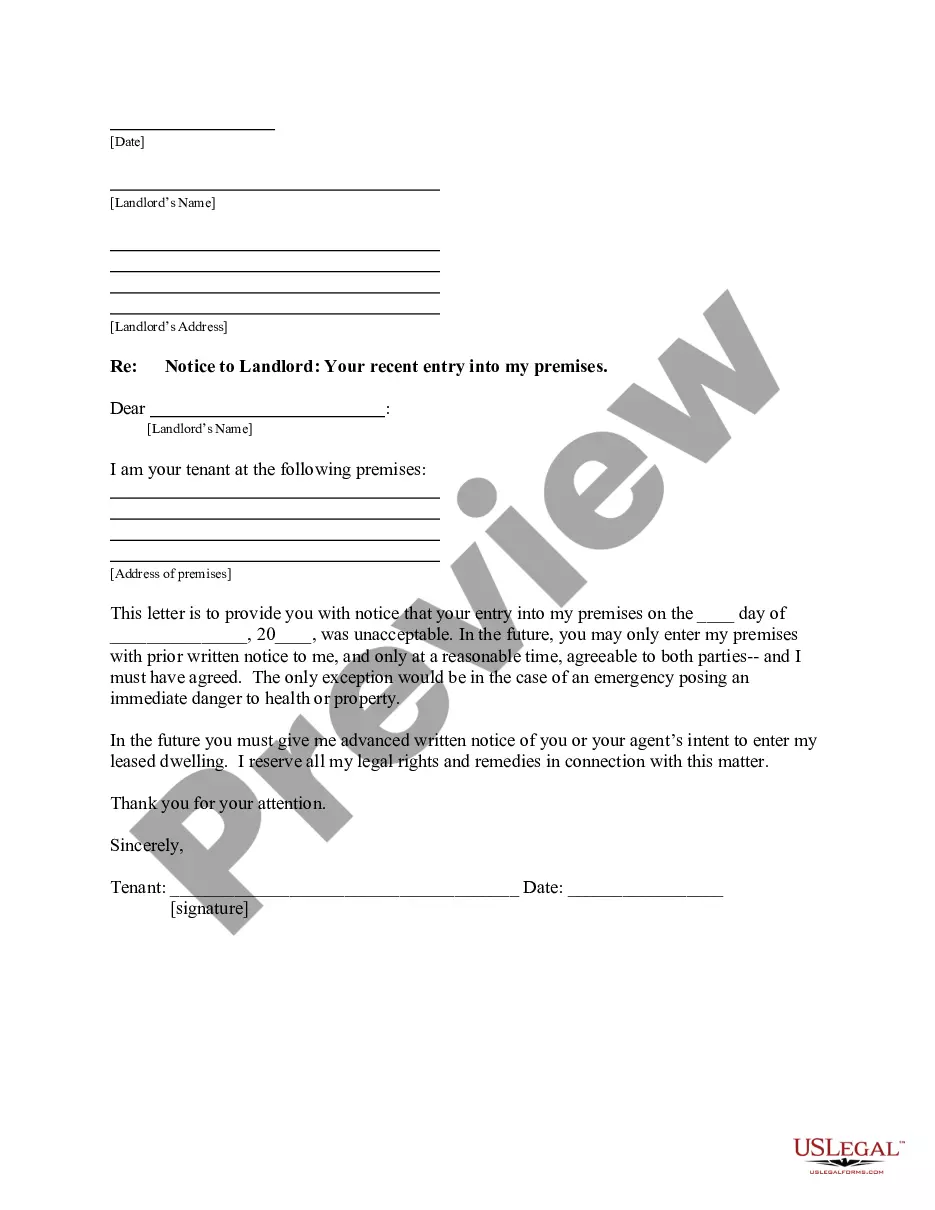
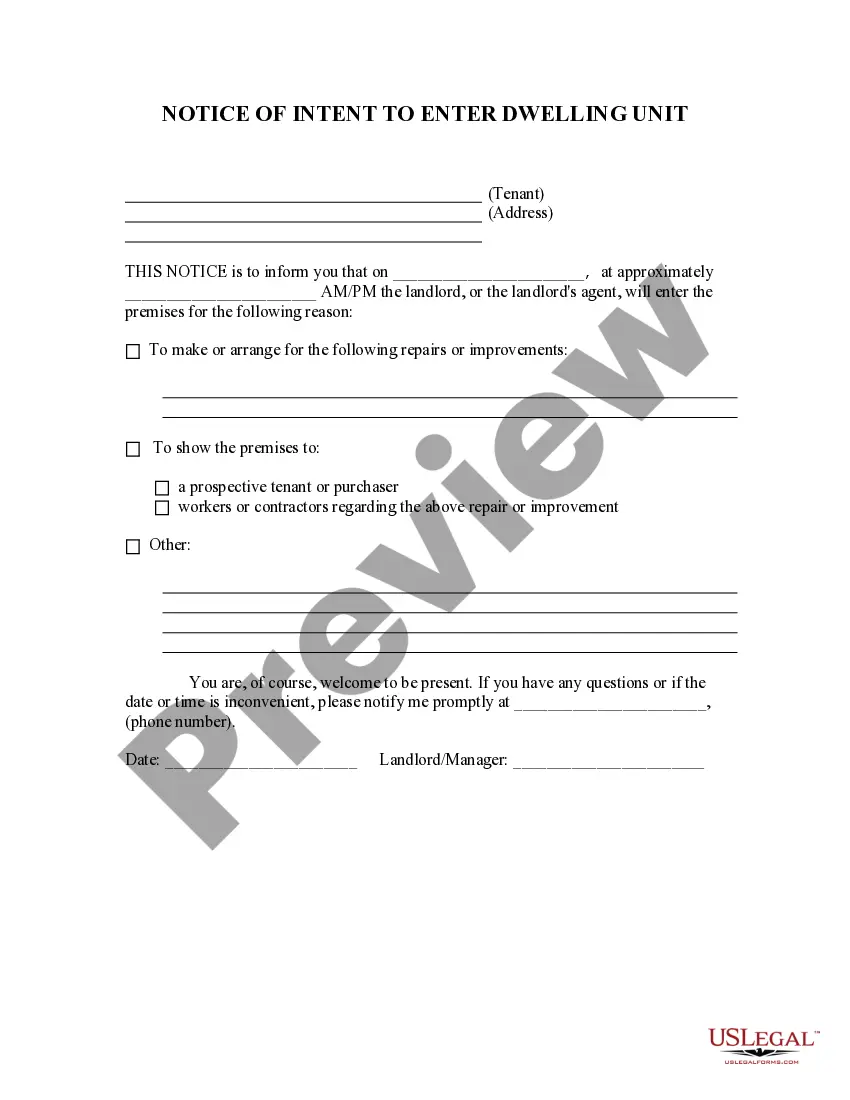
This form is a Letter from Tenant to Landlord about illegal entry by landlord. Its primary purpose is to request that the landlord provide advanced written notice before entering the leased premises, except in emergencies. This form is distinct from other landlord-tenant communications because it specifically addresses unauthorized entries and establishes a protocol for future visits.
Key parts of this document
- Request for advanced written notice of entry by the landlord or their agents.
- Reservation of tenant's legal rights regarding the matter.
- Signature line for the tenant to confirm the notice.
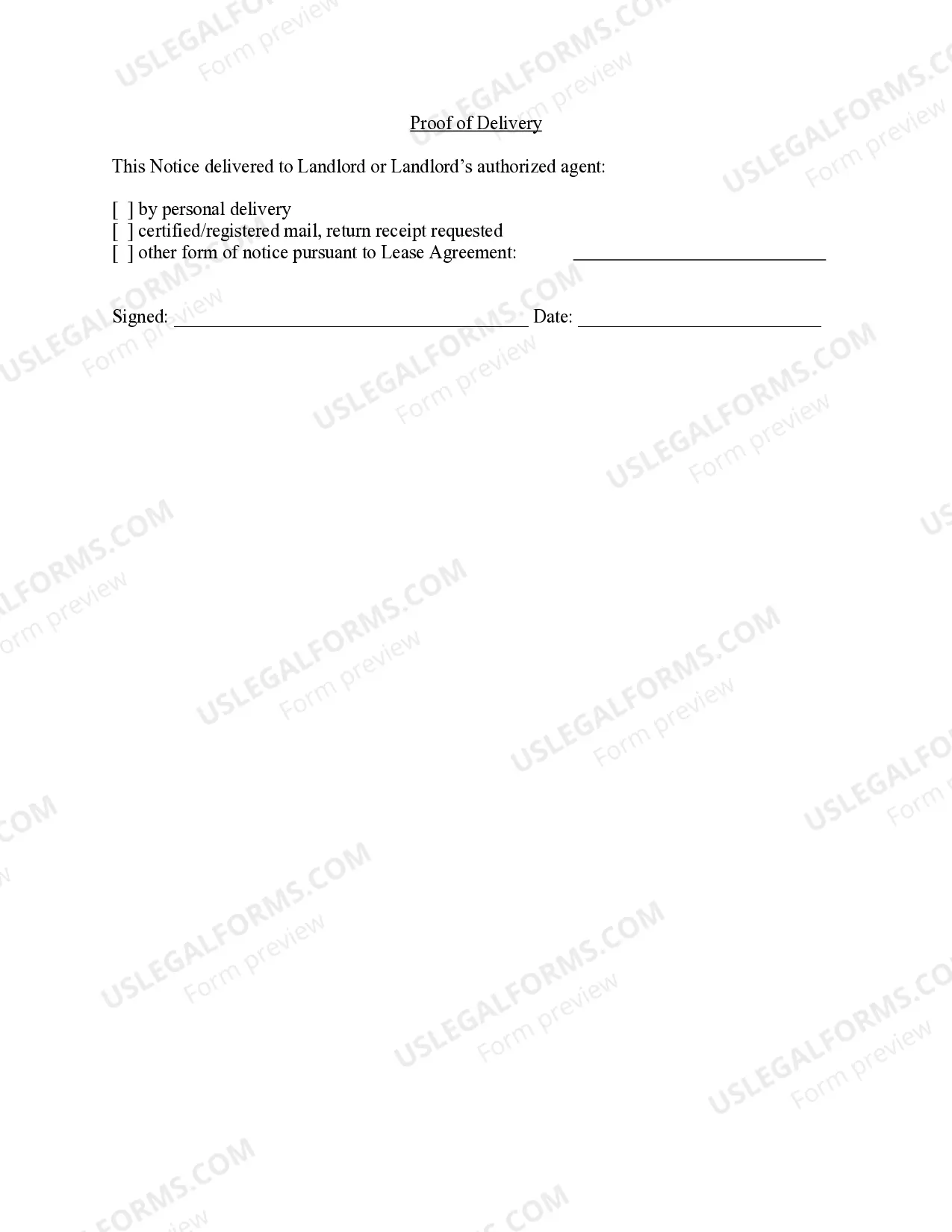
- Proof of delivery section to ensure the landlord receives the notice.

When to use this form
This form should be used when a tenant believes that their landlord has entered the rented premises without proper notification or permission. It is essential in situations where the tenant wants to legally document their concerns and set boundaries regarding future access by the landlord.
Who this form is for
- Tenants who have experienced unauthorized entry by their landlord.
- Individuals renting residential properties seeking to assert their rights.
- Renters looking to establish clear communication and procedures with their landlords.
Completing this form step by step
- Identify the parties involved by entering the tenant's name and the landlord's name.
- Specify the leased property address to clarify the location of concern.
- Fill in the date to provide a timeline for the notice.
- Sign the letter to formalize the request for future entry protocols.
- Choose a delivery method and complete the proof of delivery section.
Is notarization required?
Notarization is generally not required for this form. However, certain states or situations might demand it. You can complete notarization online through US Legal Forms, powered by Notarize, using a verified video call available anytime.
Get your form ready online
Our built-in tools help you complete, sign, share, and store your documents in one place.
Make edits, fill in missing information, and update formatting in US Legal Forms—just like you would in MS Word.
Download a copy, print it, send it by email, or mail it via USPS—whatever works best for your next step.
Sign and collect signatures with our SignNow integration. Send to multiple recipients, set reminders, and more. Go Premium to unlock E-Sign.
If this form requires notarization, complete it online through a secure video call—no need to meet a notary in person or wait for an appointment.
We protect your documents and personal data by following strict security and privacy standards.

Make edits, fill in missing information, and update formatting in US Legal Forms—just like you would in MS Word.

Download a copy, print it, send it by email, or mail it via USPS—whatever works best for your next step.

Sign and collect signatures with our SignNow integration. Send to multiple recipients, set reminders, and more. Go Premium to unlock E-Sign.

If this form requires notarization, complete it online through a secure video call—no need to meet a notary in person or wait for an appointment.

We protect your documents and personal data by following strict security and privacy standards.
Common mistakes to avoid
- Failing to provide accurate property details.
- Not signing the letter, which may undermine its validity.
- Sending the notice without a means to prove delivery.
Benefits of completing this form online
- Convenient download that allows for easy access and printing.
- Editability to customize the form according to specific situations.
- Reliability of documents drafted by licensed attorneys to ensure compliance with legal standards.
Legal use & context
- This letter serves as written documentation of the tenant's request for lawful entry procedures.
- Establishing this communication helps to protect tenant rights and can aid in legal disputes.
- While this form is enforceable, local laws governing landlord entry rights may provide additional context.
Key takeaways
- The form is essential for tenants seeking to address unauthorized entries by their landlords.
- Proper completion and delivery can help establish clear boundaries and protect tenant rights.
- Using this form effectively communicates expectations and promotes a respectful landlord-tenant relationship.
Looking for another form?




Form popularity
FAQ
In Colorado, a landlord must provide at least 24 hours' notice before entering a tenant's property. This notice can be verbal or written, although written notification is advisable for clarity. Exceptions exist for emergencies, where immediate access is necessary. Tenants can use a Colorado Letter from Tenant to Landlord about Illegal entry by landlord if they feel their rights are being violated regarding notice of entry.
Yes, tenants can deny landlords entry under certain circumstances. In Colorado, a landlord must have valid reasons for entry, such as ensuring property maintenance or emergencies. If a landlord attempts to enter without proper notice or consent, a tenant can rightly refuse entry. In such cases, a Colorado Letter from Tenant to Landlord about Illegal entry by landlord can serve as an important notification to assert the tenant's rights.
Recently, Colorado has implemented laws enhancing renter protections, specifically concerning privacy and notice requirements. These laws regulate how and when landlords can enter rental properties. Understanding these changes is crucial for tenants. It helps to know your rights, which can guide you in drafting a Colorado Letter from Tenant to Landlord about Illegal entry by landlord.
Yes, you can deny entry to your landlord under certain circumstances. If the landlord attempts to enter your rental property without proper notice, such as in cases of illegal entry, you have the right to refuse access. Always document these interactions and consider drafting a Colorado Letter from Tenant to Landlord about Illegal entry by landlord for clarity. This letter can serve as a formal reminder of your rights.
To write a legal letter to your landlord, begin with your name and address, followed by the date. Clearly state your concerns regarding illegal entry by the landlord. Reference the relevant laws or tenant rights in Colorado. Finally, request a prompt response and include your contact information for follow-up.
Harassment by a landlord in Colorado can include frequent, unnecessary visits, failure to make requested repairs, or threats of eviction without cause. Such behavior disrupts the tenant's right to a safe, peaceful home. If you feel harassed, documenting your communication through a Colorado Letter from Tenant to Landlord about Illegal entry by landlord can serve as a key tool for addressing the situation effectively.
Yes, landlords are required to give notice before entering a rental property in Colorado. They generally need to provide at least 24 hours' notice, allowing tenants to prepare for the visit. If landlords fail to comply, tenants can reference the Colorado Letter from Tenant to Landlord about Illegal entry by landlord to document the incident and seek resolution.
In Colorado, landlords must provide tenants with at least 24 hours' notice before entering a property, except in emergencies. This requirement ensures tenants' right to privacy and peace in their living space. If you experience issues with your landlord entering without adequate notice, consider using a Colorado Letter from Tenant to Landlord about Illegal entry by landlord to formally address the matter.
In Colorado, a landlord can require a 60-day notice, but this typically pertains to lease agreements without a specific end date or when the lease term is month-to-month. Tenants should review their lease carefully to understand any notice requirements. For disputes regarding this notice, a Colorado Letter from Tenant to Landlord about Illegal entry by landlord can help clarify communication and expectations.
In a letter from a landlord to a tenant to vacate, state the reason for the eviction clearly and provide a timeline for moving out. Follow state laws and include any necessary legal references. A well-structured letter will help prevent misunderstandings and ensure all parties are informed of their rights and obligations.