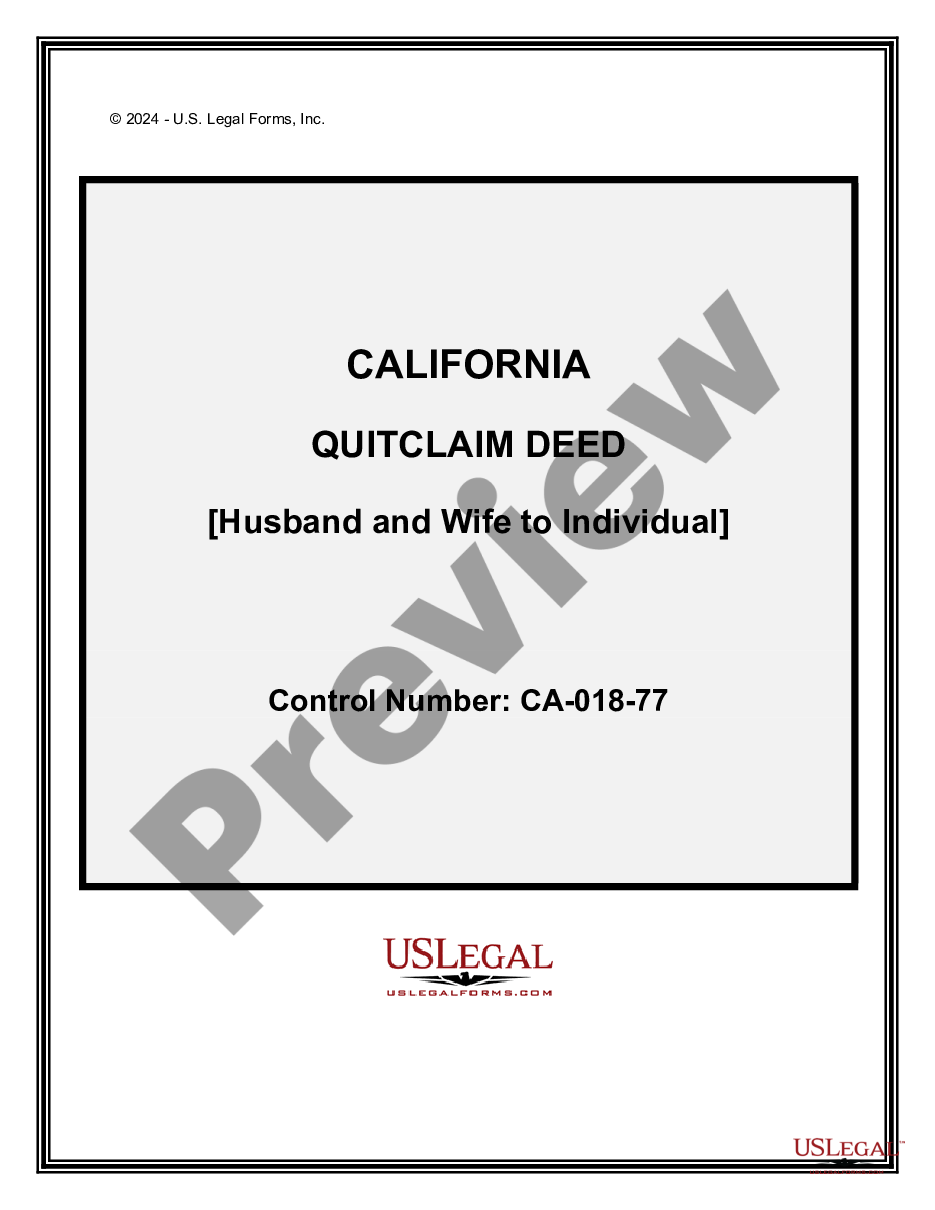
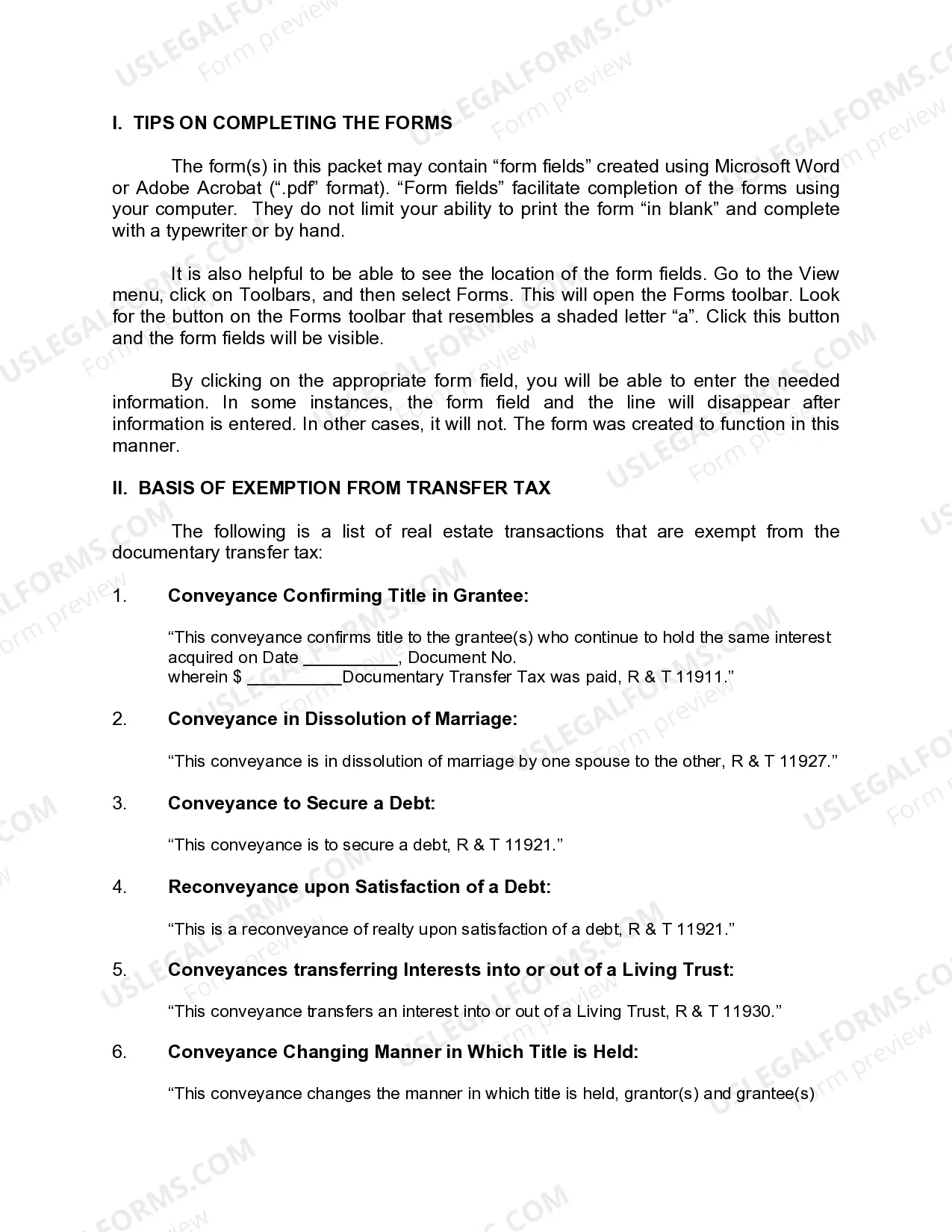
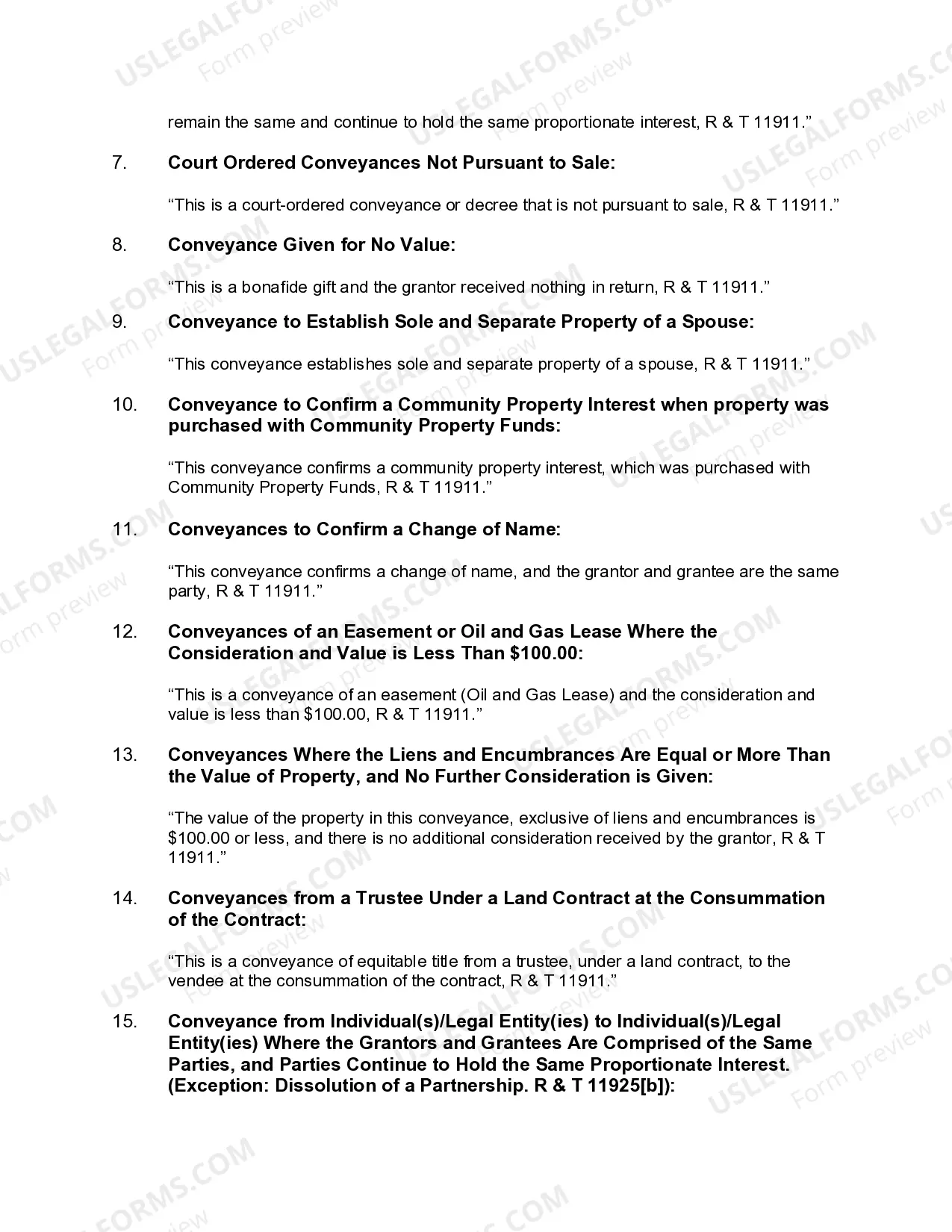
California Quitclaim Deed from Husband and Wife to an Individual
About this form
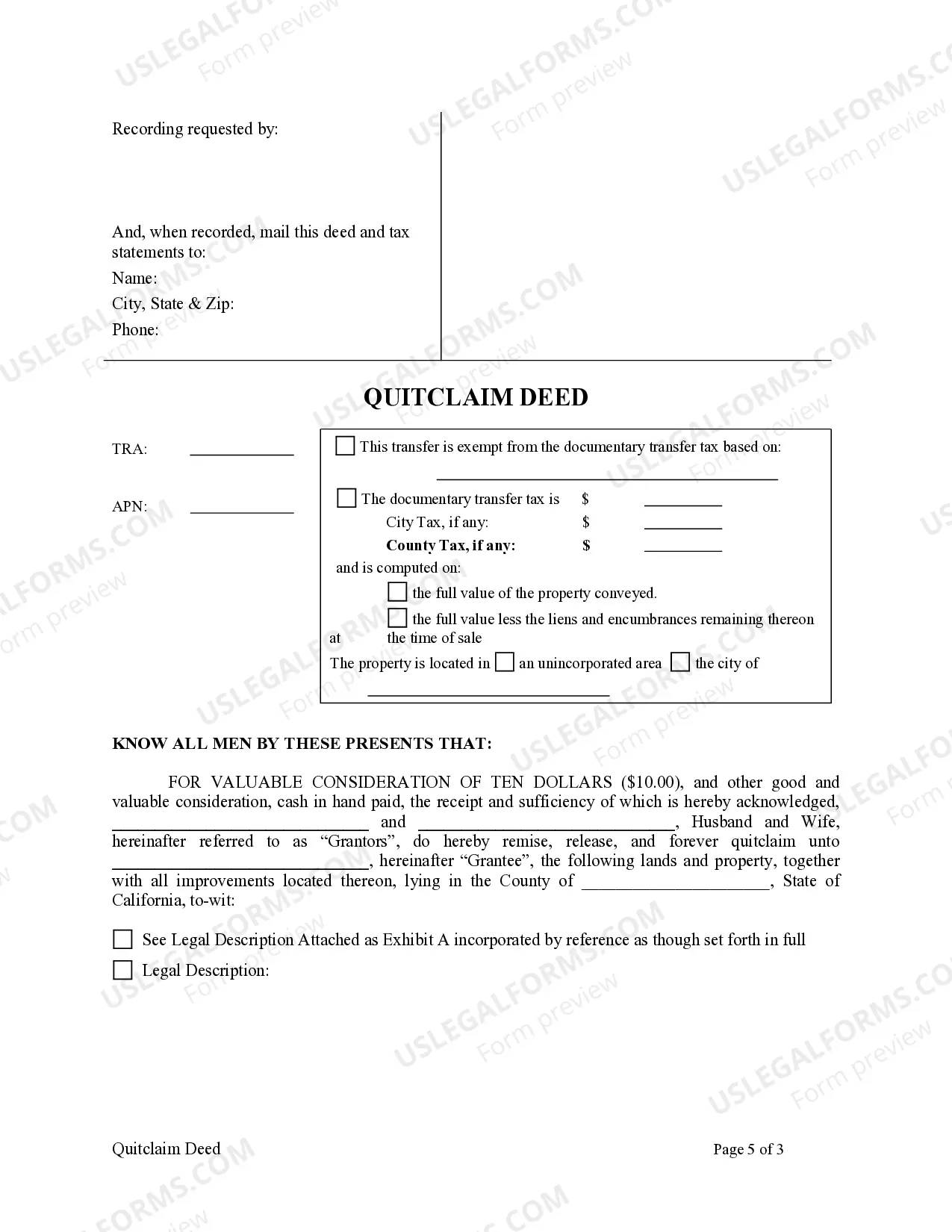
The Quitclaim Deed from Husband and Wife to an Individual is a legal document used to transfer property ownership from a married couple (the grantors) to a single individual (the grantee). This form is unique because it allows the grantors to convey their interest in the property without making any guarantees regarding its title. It is particularly useful in situations where one spouse wants to transfer property to another individual, such as in divorce or estate planning scenarios. Unlike a warranty deed, a quitclaim deed does not provide any warranties or assurances about the state of the property's title.
Key components of this form
- Identification of the grantors (husband and wife) and the grantee (individual receiving the property).
- Description of the property being transferred, including legal descriptions.
- Statement of the grantors' intention to quitclaim their interest in the property.
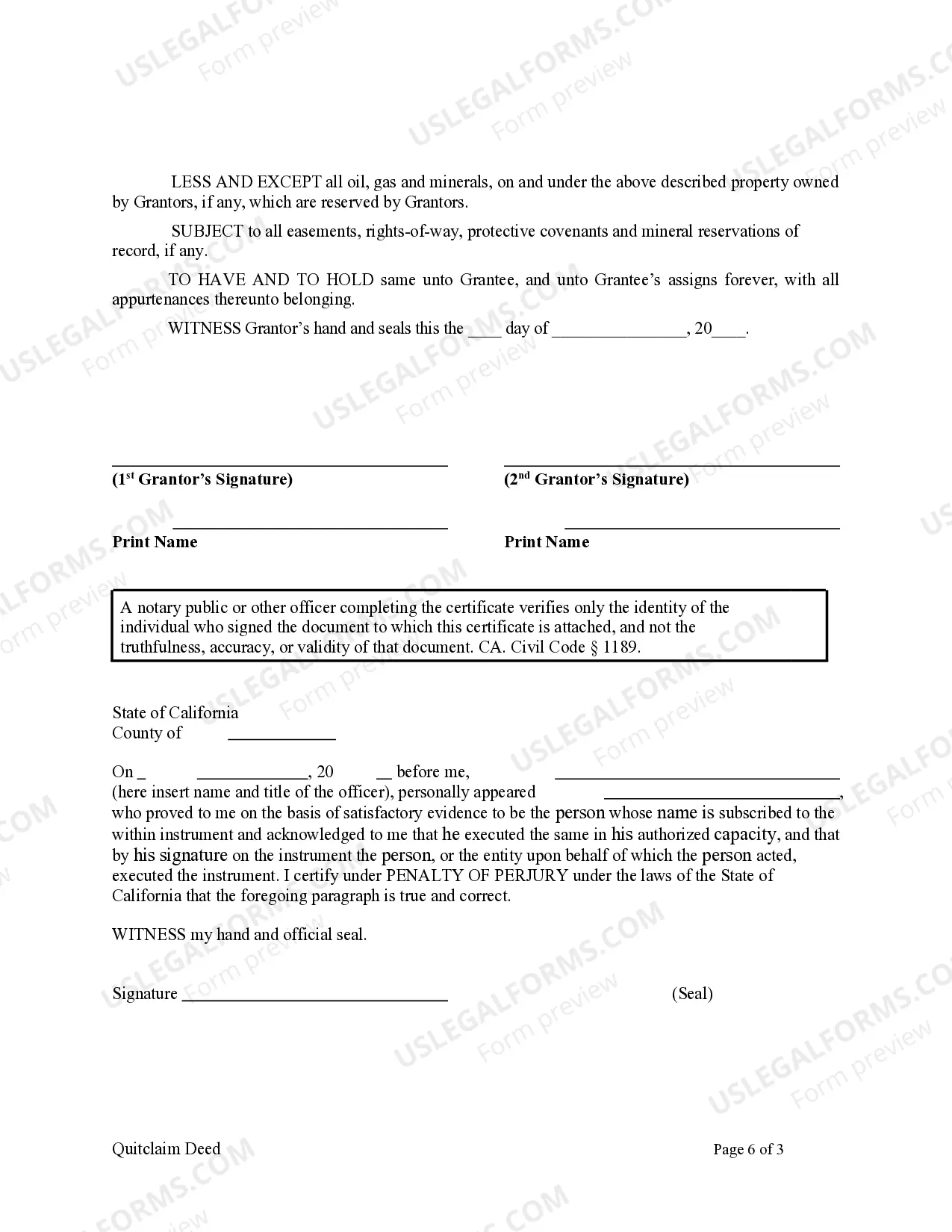
- Reservation of rights regarding oil, gas, and minerals beneath the property.
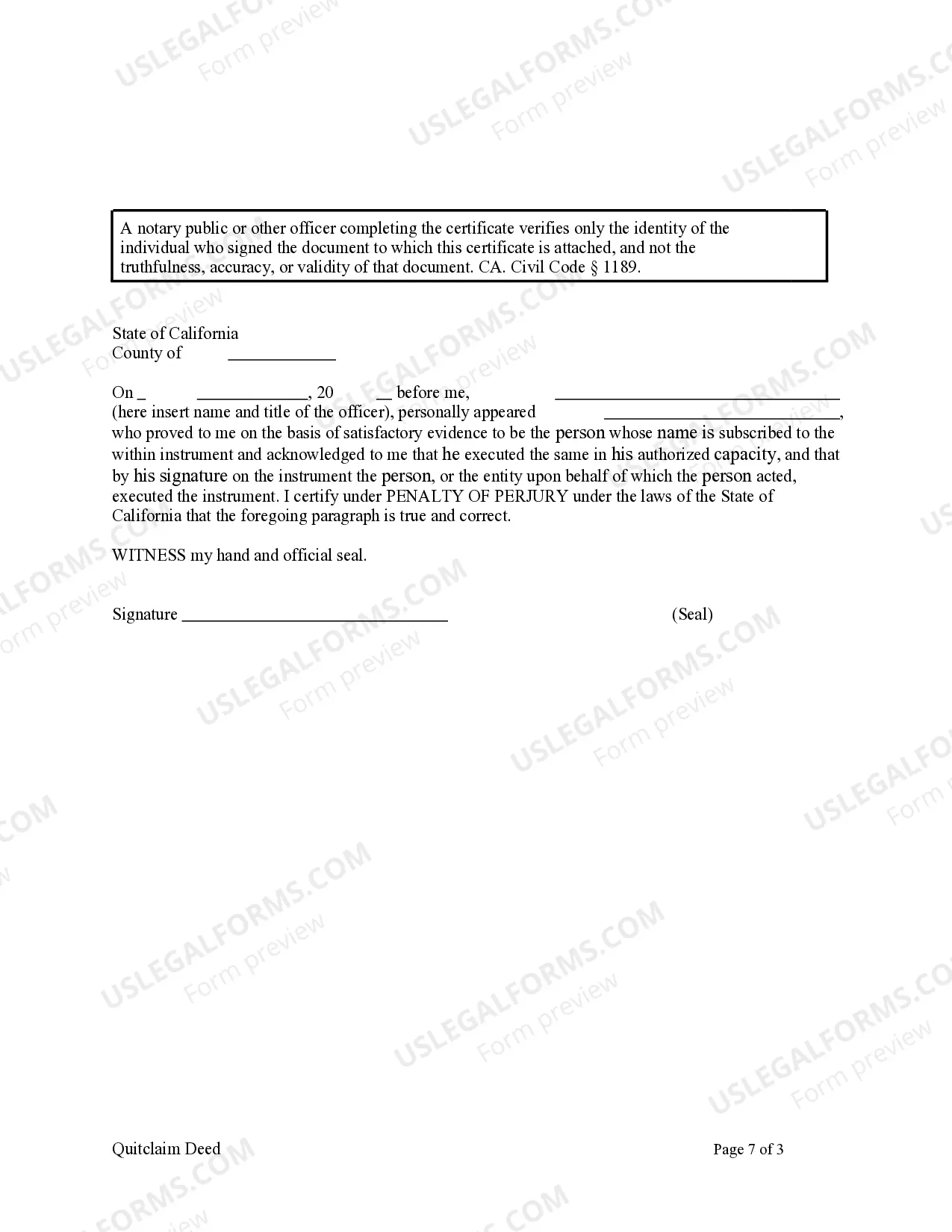
- Signatures of the grantors, witnessed, and notary acknowledgment if required.






Situations where this form applies
This form is ideal for situations where a husband and wife wish to transfer property to an individual without any warranties on the title. Common scenarios include transferring property as part of marital separation, gifting property to a relative, or clarifying ownership interests when one spouse wants to quitclaim their interest in the property to the other spouse or a third party.
Who needs this form
- Married couples wishing to transfer property ownership to an individual.
- Individuals involved in estate planning or property transfers within a family.
- Couples going through a divorce wanting to finalize property ownership arrangements.
Instructions for completing this form
- Identify the parties involved as grantors (both husband and wife) and the grantee (the individual receiving the property).
- Provide the legal description of the property to be transferred, ensuring it is accurate and complete.
- Specify any reservations, such as oil, gas, and minerals, indicating they are retained by the grantors.
- Have both grantors sign the deed, ensuring their signatures are witnessed as required.
- If necessary, obtain notarization to validate the deed according to state law.
Notarization requirements for this form
Yes, this form must be notarized to be legally valid. This ensures the authenticity of the signatures and is commonly required in many states for deeds. US Legal Forms offers integrated online notarization, available 24/7, allowing users to complete the notarization process securely via video call without needing to travel.
Get your form ready online
Our built-in tools help you complete, sign, share, and store your documents in one place.
Make edits, fill in missing information, and update formatting in US Legal Forms—just like you would in MS Word.
Download a copy, print it, send it by email, or mail it via USPS—whatever works best for your next step.
Sign and collect signatures with our SignNow integration. Send to multiple recipients, set reminders, and more. Go Premium to unlock E-Sign.
If this form requires notarization, complete it online through a secure video call—no need to meet a notary in person or wait for an appointment.
We protect your documents and personal data by following strict security and privacy standards.

Make edits, fill in missing information, and update formatting in US Legal Forms—just like you would in MS Word.

Download a copy, print it, send it by email, or mail it via USPS—whatever works best for your next step.

Sign and collect signatures with our SignNow integration. Send to multiple recipients, set reminders, and more. Go Premium to unlock E-Sign.

If this form requires notarization, complete it online through a secure video call—no need to meet a notary in person or wait for an appointment.

We protect your documents and personal data by following strict security and privacy standards.
Common mistakes to avoid
- Failing to provide a complete and accurate legal description of the property.
- Not obtaining all required signatures from both grantors.
- Neglecting to include necessary reservations or conditions if applicable.
- Not having the deed notarized when required by state law.
- Forgetting to record the deed with the appropriate governmental office after completion.
Advantages of online completion
- Convenient access to legal forms that can be downloaded and completed at home.
- Editability allows customization to fit specific circumstances before printing.
- Reliable resources drafted by licensed attorneys ensure legal compliance.
Key takeaways
- A Quitclaim Deed transfers property without any warranties regarding ownership.
- This form is suitable for married couples transferring property to an individual.
- Proper completion, including notarization, is essential for the deed's validity.
- Understanding state-specific requirements can help ensure successful property transfer.
Looking for another form?



Form popularity
FAQ
Filling out an interspousal transfer deed involves a few essential steps. Begin by entering the property description, including the address and legal description. Next, both spouses must provide their names and signatures, ensuring you note the nature of the transfer. Utilize a California Quitclaim Deed from Husband and Wife to an Individual to streamline this process. You can easily find templates through platforms like uslegalforms to ensure compliance with legal requirements.
Yes, once a spouse signs a quitclaim deed in California, they typically relinquish their rights to the property unless specified otherwise. This means that the remaining spouse will have sole ownership. However, specific circumstances or agreements may alter this general outcome, so it's beneficial to consult a legal expert beforehand. Using a California Quitclaim Deed from Husband and Wife to an Individual can clarify ownership intentions.
The effect of an interspousal transfer deed in California primarily affects ownership rights. When one spouse transfers their interest to the other, it confirms joint ownership or alters the nature of property. This deed can simplify legal processes during divorce or estate planning. It is advisable to consider using a California Quitclaim Deed from Husband and Wife to an Individual for these transitions.
In California, an interspousal transfer deed can change the nature of property from separate to community property. This is significant because it impacts how the property is treated during property division in case of a divorce. The courts recognize that the transfer shows intent to share ownership. Thus, understanding the implications of using a California Quitclaim Deed from Husband and Wife to an Individual is crucial.
To add your spouse to your deed in California, you can use a California Quitclaim Deed from Husband and Wife to an Individual. This form allows both spouses to transfer interest in the property. After completing the deed, you should sign it in the presence of a notary. Finally, record the deed with the county recorder's office to ensure it is official.
To transfer ownership from husband to wife, you would typically use a California Quitclaim Deed from Husband and Wife to an Individual. This document serves as a formal declaration of the transfer and must be signed by both parties. After notarization, you should record the deed at your county's recorder's office to ensure it is legally valid.
The most common way to transfer ownership is through the use of a quitclaim deed. Specifically, a California Quitclaim Deed from Husband and Wife to an Individual allows you to transfer your interest in the property easily. This method requires minimal paperwork and can be executed as long as the parties involved agree to the terms.
Anyone can prepare a quitclaim deed in California, but it is best handled by a legal professional to ensure accuracy. When using a California Quitclaim Deed from Husband and Wife to an Individual, having clear and precise language can eliminate misunderstandings in ownership transfers. Additionally, online platforms like uslegalforms can guide you in creating a valid deed quickly.
In California, if you need to transfer property from husband to wife after death, you can generally use a California Quitclaim Deed from Husband and Wife to an Individual. However, for online procedures in India, it is crucial to follow local laws regarding inheritance and property transfer. Consulting a legal expert can provide clarity on the requirements and ensure a smooth process.
Yes, you can transfer shares from husband to wife, similar to using a California Quitclaim Deed from Husband and Wife to an Individual for real estate. This transfer typically requires a formal agreement or documentation demonstrating your intent. Depending on the type of shares and their governing documents, you may also need to follow specific procedures set by the company that issued the shares.