Arizona Revocation of Mental Health Care Power of Attorney
Understanding this form
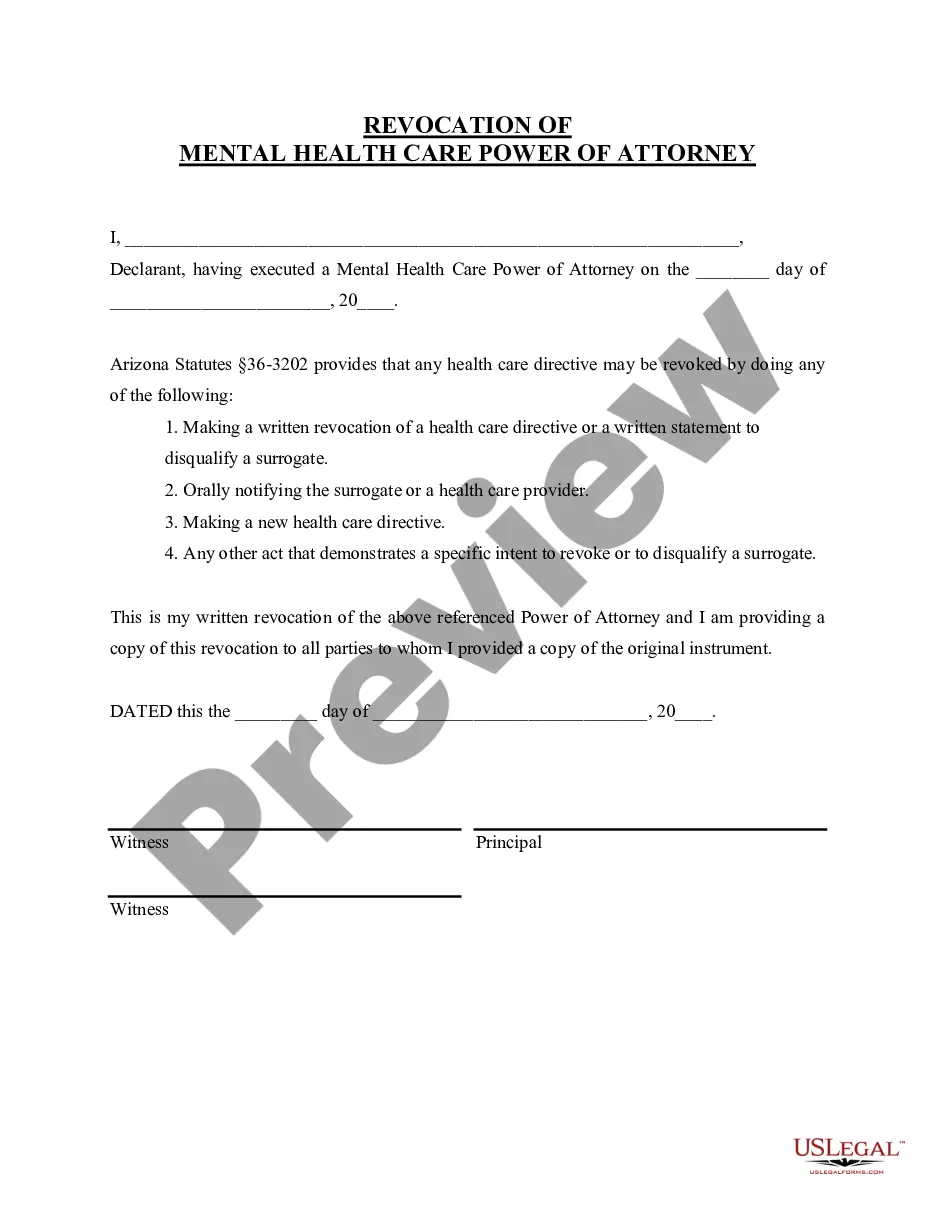
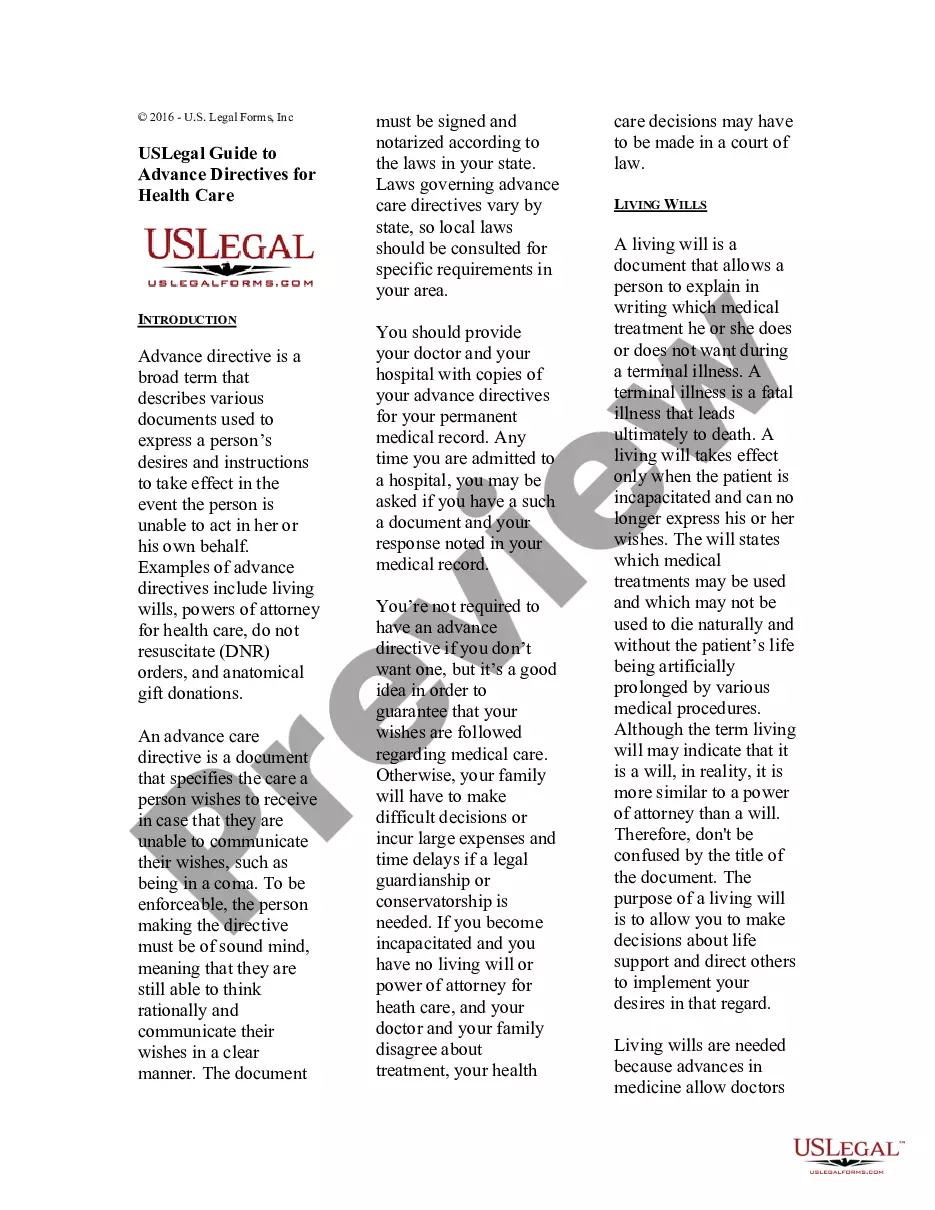
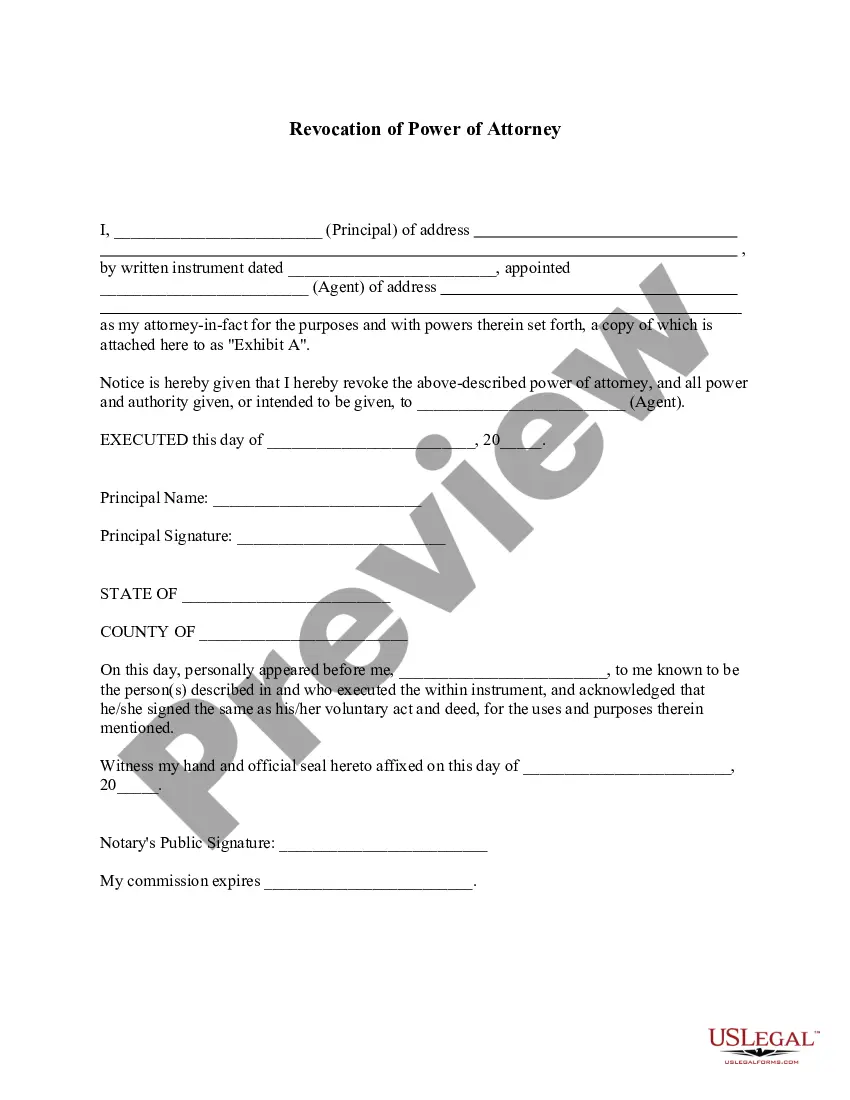
The Revocation of Mental Health Care Power of Attorney is a legal document that allows an individual to revoke the authority granted to another person to make decisions regarding mental health treatment. This form is essential when a declarant wishes to terminate previously designated powers due to changes in their circumstances or intentions. Unlike the original Mental Health Care Power of Attorney, this form specifically acts to cancel the previous authority granted under that document.
Key parts of this document
- Declarant's name and identification details.
- Original date of the Mental Health Care Power of Attorney.
- Specific methods for revoking the authority.
- Date of revocation.
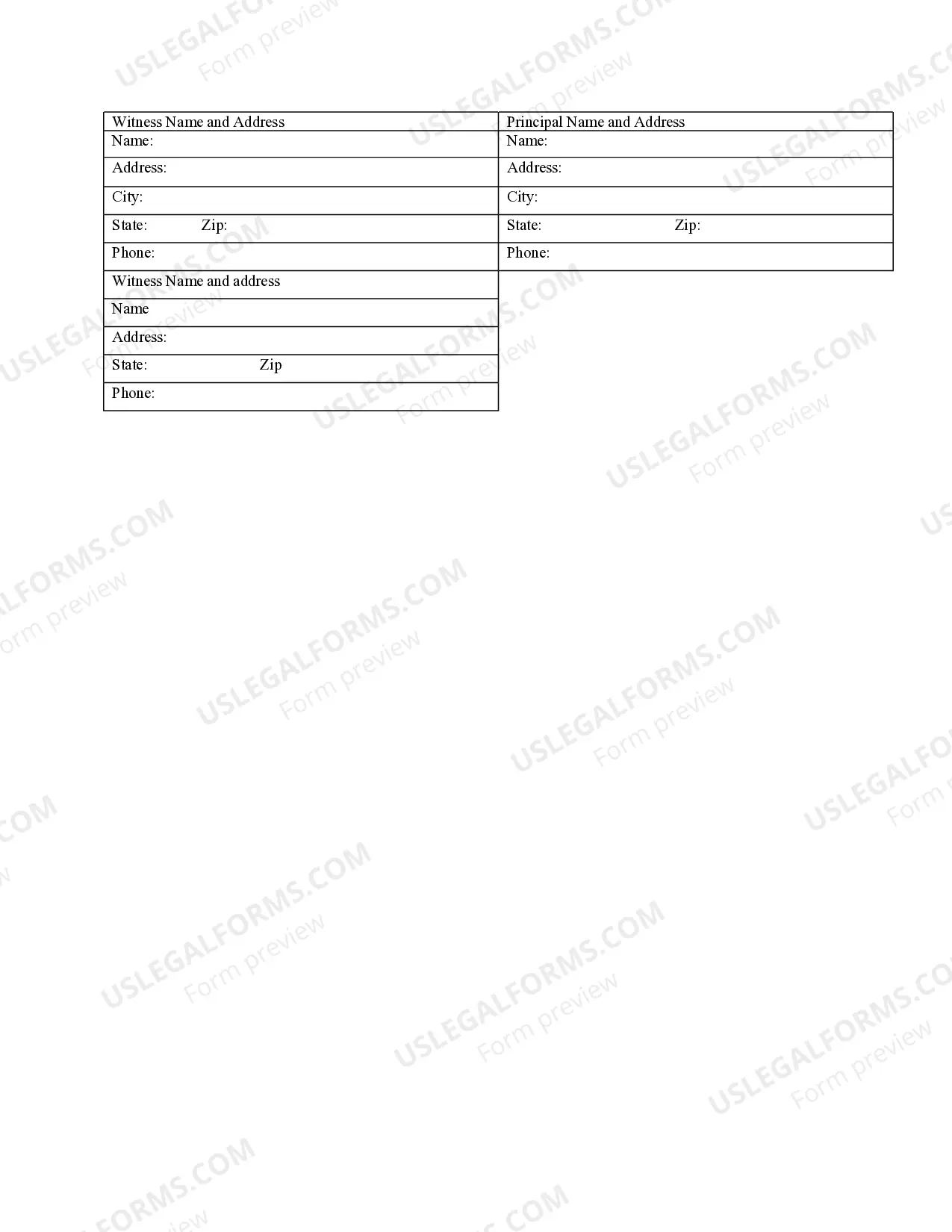
- Signature and details of witnesses.
When to use this form
This form should be used when an individual wishes to revoke a previously executed Mental Health Care Power of Attorney. Situations may arise where a person may no longer feel comfortable with their appointed surrogate, or there may have been significant life changes such as recovery from illness, changes in relationships, or a reassessment of one's mental health care preferences.
Who should use this form
- Individuals who have previously executed a Mental Health Care Power of Attorney.
- Persons who are no longer able or willing to have their surrogates make decisions on their behalf.
- Those who wish to ensure their current mental health care preferences are accurately reflected.
Steps to complete this form
- Identify yourself as the declarant and enter your full name.
- Specify the original date when the Mental Health Care Power of Attorney was executed.
- State your intent to revoke the previously granted authority.
- Provide the date of the revocation.
- Sign the document in the presence of witnesses and include their information.
Does this form need to be notarized?
Notarization is generally not required for this form. However, certain states or situations might demand it. You can complete notarization online through US Legal Forms, powered by Notarize, using a verified video call available anytime.
Get your form ready online
Our built-in tools help you complete, sign, share, and store your documents in one place.
Make edits, fill in missing information, and update formatting in US Legal Forms—just like you would in MS Word.
Download a copy, print it, send it by email, or mail it via USPS—whatever works best for your next step.
Sign and collect signatures with our SignNow integration. Send to multiple recipients, set reminders, and more. Go Premium to unlock E-Sign.
If this form requires notarization, complete it online through a secure video call—no need to meet a notary in person or wait for an appointment.
We protect your documents and personal data by following strict security and privacy standards.

Make edits, fill in missing information, and update formatting in US Legal Forms—just like you would in MS Word.

Download a copy, print it, send it by email, or mail it via USPS—whatever works best for your next step.

Sign and collect signatures with our SignNow integration. Send to multiple recipients, set reminders, and more. Go Premium to unlock E-Sign.

If this form requires notarization, complete it online through a secure video call—no need to meet a notary in person or wait for an appointment.

We protect your documents and personal data by following strict security and privacy standards.
Typical mistakes to avoid
- Not including the original date of the Mental Health Care Power of Attorney.
- Failing to sign the revocation in front of a witness.
- Using vague language that does not clearly indicate the intent to revoke.
- Not providing copies of the revocation to original parties involved.
Advantages of online completion
- Convenience of accessing and completing the form from home.
- Editability allows users to personalize the document as needed.
- Reliable templates drafted by licensed attorneys ensure legal compliance.
Looking for another form?

Form popularity
FAQ
Yes, you can resign as a Power of Attorney, and it is a legal right to do so. To begin the process, provide a written notice to the principal stating your intention to resign. It’s also wise to reference any relevant documents, such as the Arizona Revocation of Mental Health Care Power of Attorney, to ensure clarity and formal recognition. By following these steps, you can step back from your responsibilities confidently.
Removing yourself as a Power of Attorney involves a few clear steps. Firstly, inform the principal of your decision in writing, outlining your reasons for resignation. Secondly, file any necessary paperwork, such as an Arizona Revocation of Mental Health Care Power of Attorney form, with the relevant institutions. This action will help ensure that all parties are notified officially and can proceed correctly.
To resign as a Power of Attorney (POA) in Arizona, you must follow a specific process. Begin by notifying the principal in writing of your intent to resign. Additionally, send a copy of your resignation to any institutions or parties that may need to be aware of this change, especially in relation to any Arizona Revocation of Mental Health Care Power of Attorney forms. It’s essential to keep a record of all communications for your protection.
Quitting your attorney job is a straightforward process. First, make sure to notify your employer formally, preferably in writing, stating your intention to resign. You should also give proper notice, which is typically two weeks, to allow for a smooth transition. This ensures that you leave your position on good terms and reduces potential complications regarding your responsibilities, including any Arizona Revocation of Mental Health Care Power of Attorney matters.
In Arizona, individuals can create a power of attorney for financial matters, medical decisions, or both. The person granting power must be at least 18 years old and be of sound mind. It’s essential to comply with state laws, including having the document signed by a notary or witnesses, to ensure its validity, particularly when discussing the Arizona Revocation of Mental Health Care Power of Attorney.
To revoke a medical power of attorney in Arizona, you need to execute a formal revocation document that communicates your decision clearly. Make sure to sign this document and notify the agent and all relevant medical providers. It’s important to keep a copy of the revocation for your records to prevent any confusion in the future.
In Arizona, a medical power of attorney must be signed in the presence of a notary public or two witnesses. Notarization adds an extra level of authenticity and helps prevent future disputes regarding the validity of the document. Ensuring proper execution is crucial when considering the Arizona Revocation of Mental Health Care Power of Attorney to avoid complications later.
To revoke a power of attorney in Arizona, you must create a revocation document that clearly states your intention to cancel the existing power of attorney. This document should be signed and dated, and it is wise to notify the agent and any third parties who were involved. Additionally, consider filing the revocation with the county recorder for clarity and public record.
Obtaining power of attorney for someone who is incapacitated in Arizona typically requires a court process known as guardianship. You will start by filing a petition in the court and providing medical evidence of the person’s incapacity. Engaging a legal professional can simplify this process and ensure that the rights and wishes of the incapacitated individual are respected.
In Arizona, if there is no power of attorney in place, medical decisions will typically be made by the spouse or adult children of the incapacitated person. If these relatives are not available, the hierarchy of decision-making could include parents, siblings, and other close relatives. It is advisable to consider appointing a power of attorney to clarify and streamline these decisions, especially concerning mental health care.