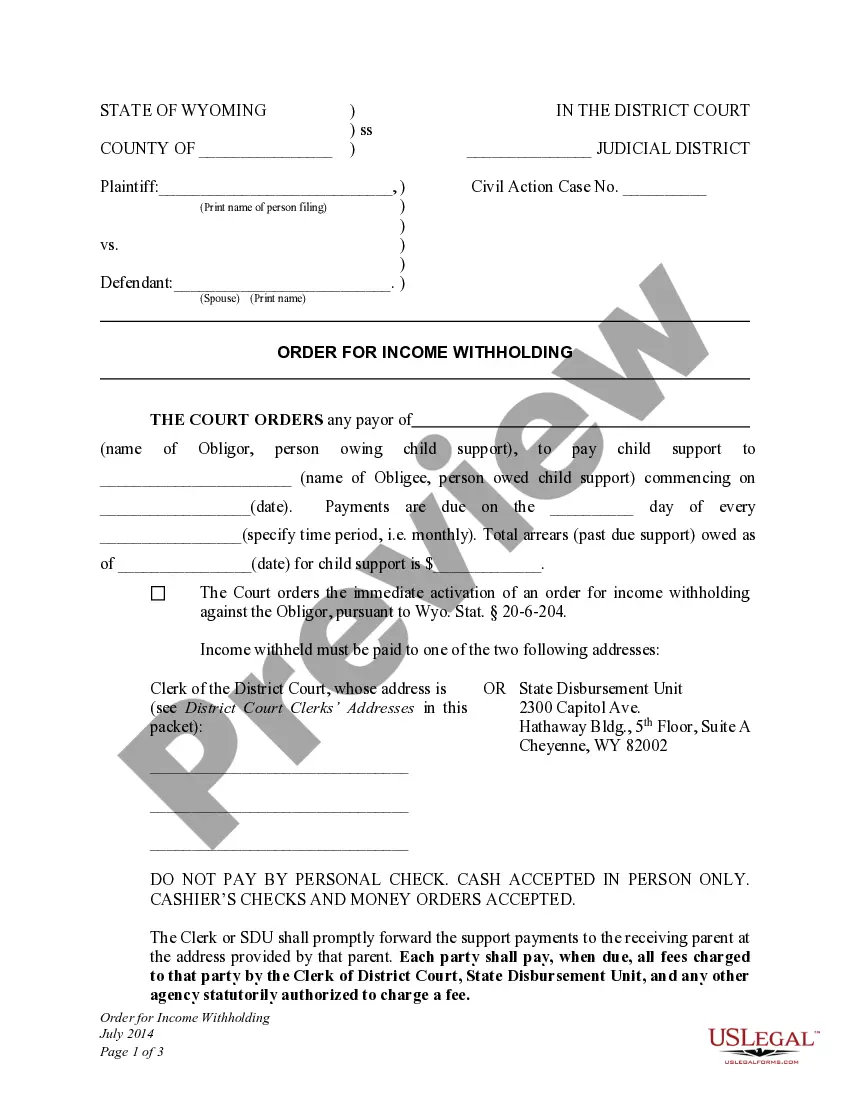
Arizona Complaint in Paternity Establishing Child Custody, Visitation and Support
About this form
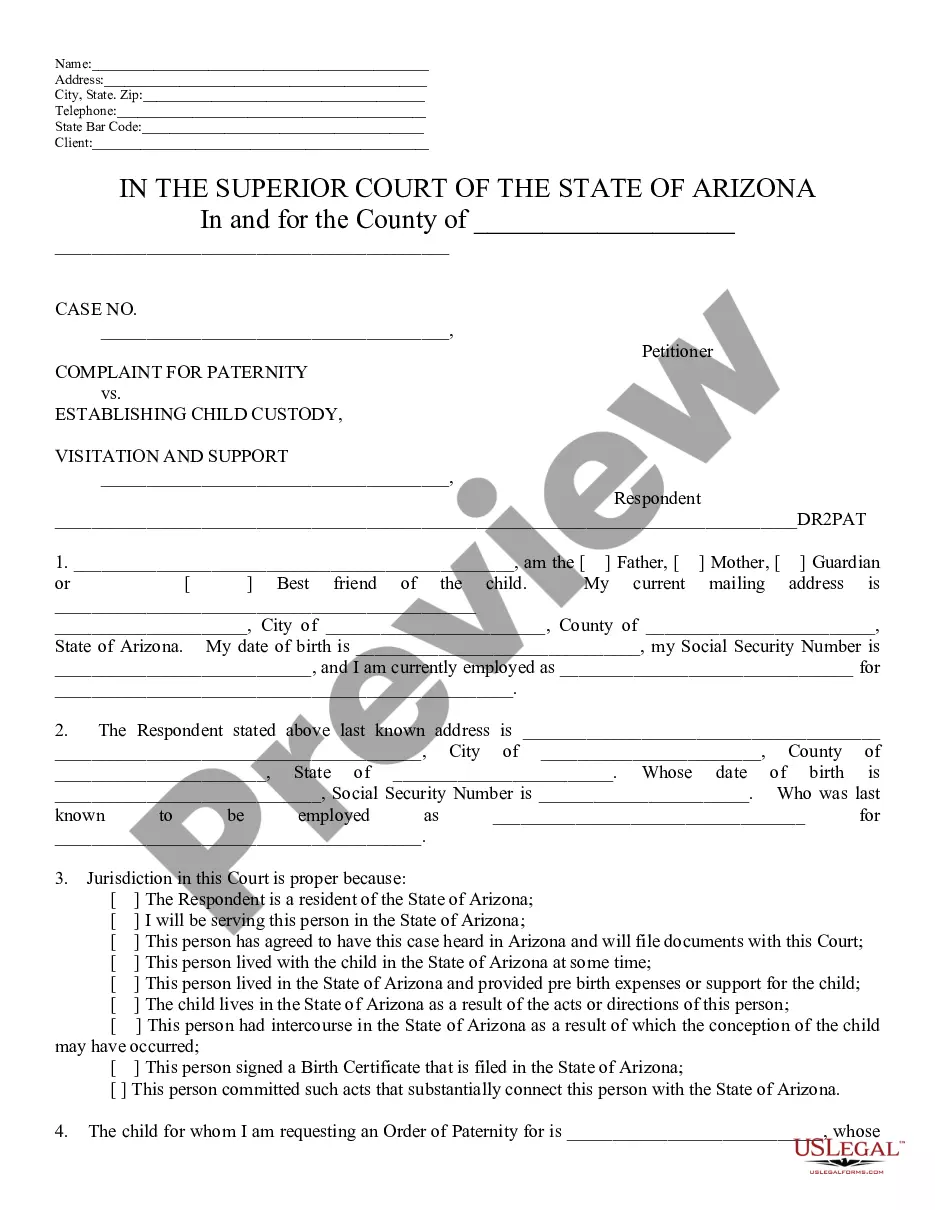
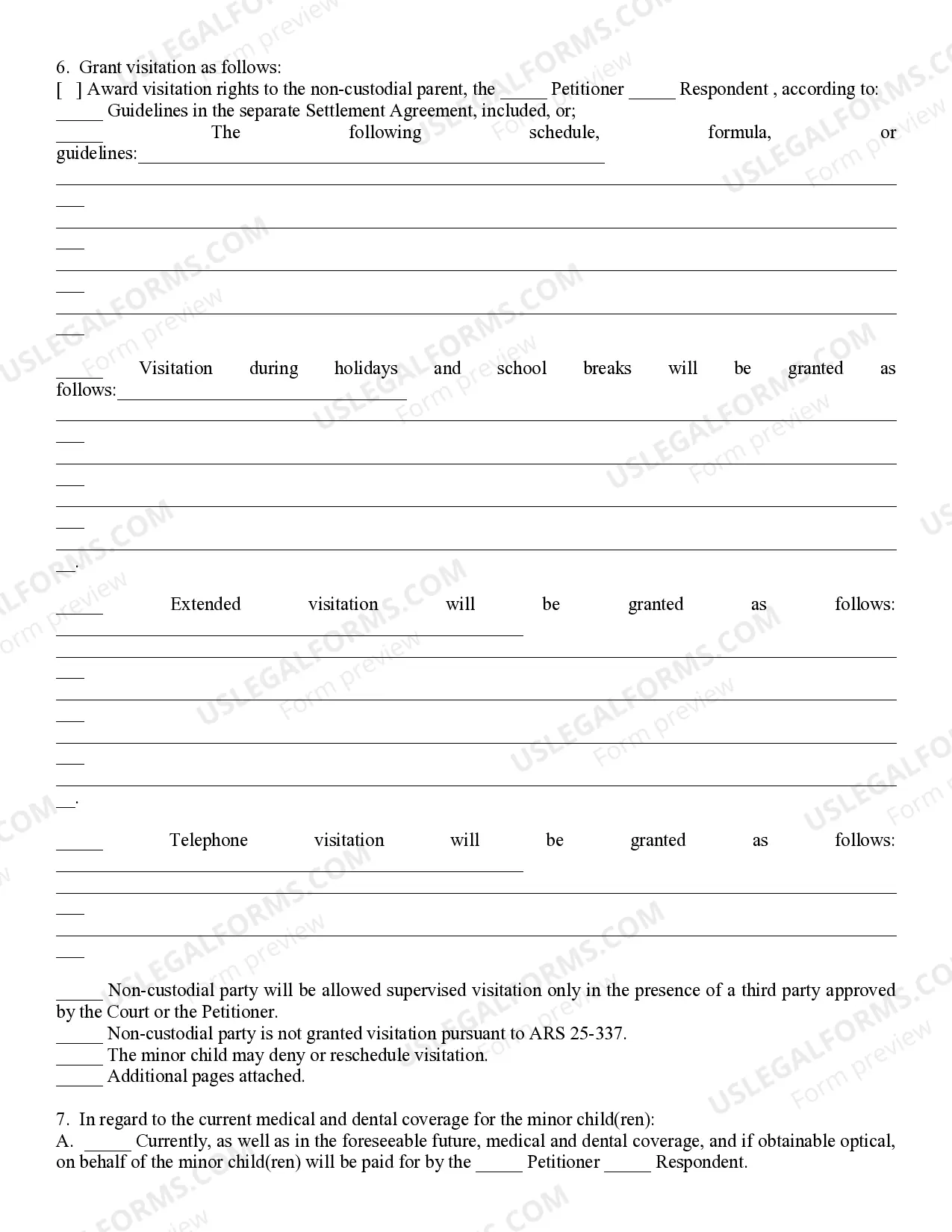
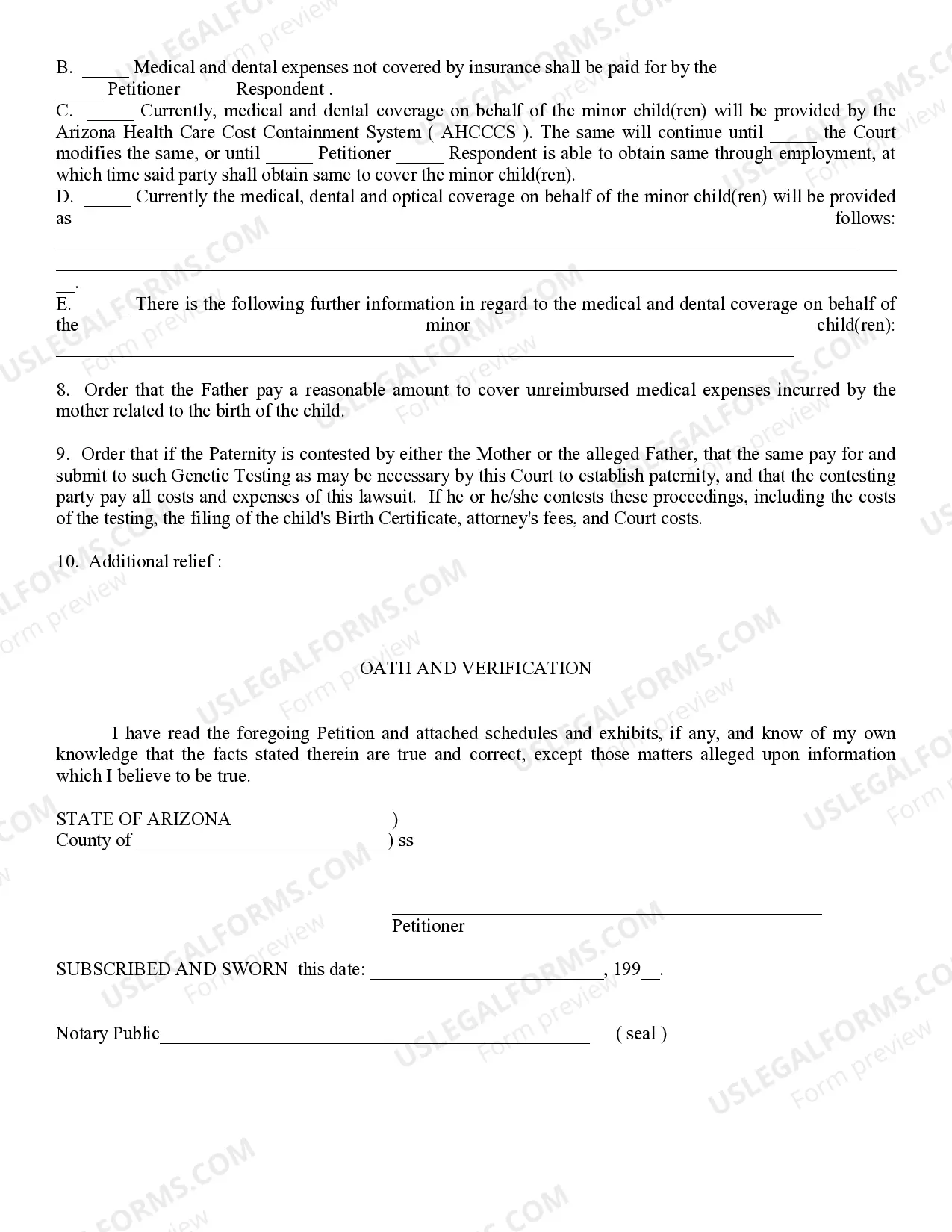
The Complaint in Paternity Establishing Child Custody, Visitation and Support is a legal document used to initiate a lawsuit in paternity cases. Its primary purpose is to establish paternity, determine child custody arrangements, set up visitation rights, and outline child support obligations. This form is particularly tailored for individuals seeking legal recognition of their parental rights and responsibilities regarding a child.
Form components explained
- Petitioner's and Respondent's identification details
- Jurisdictional statements to establish the court's authority
- Child's information, including name, date of birth, and residency
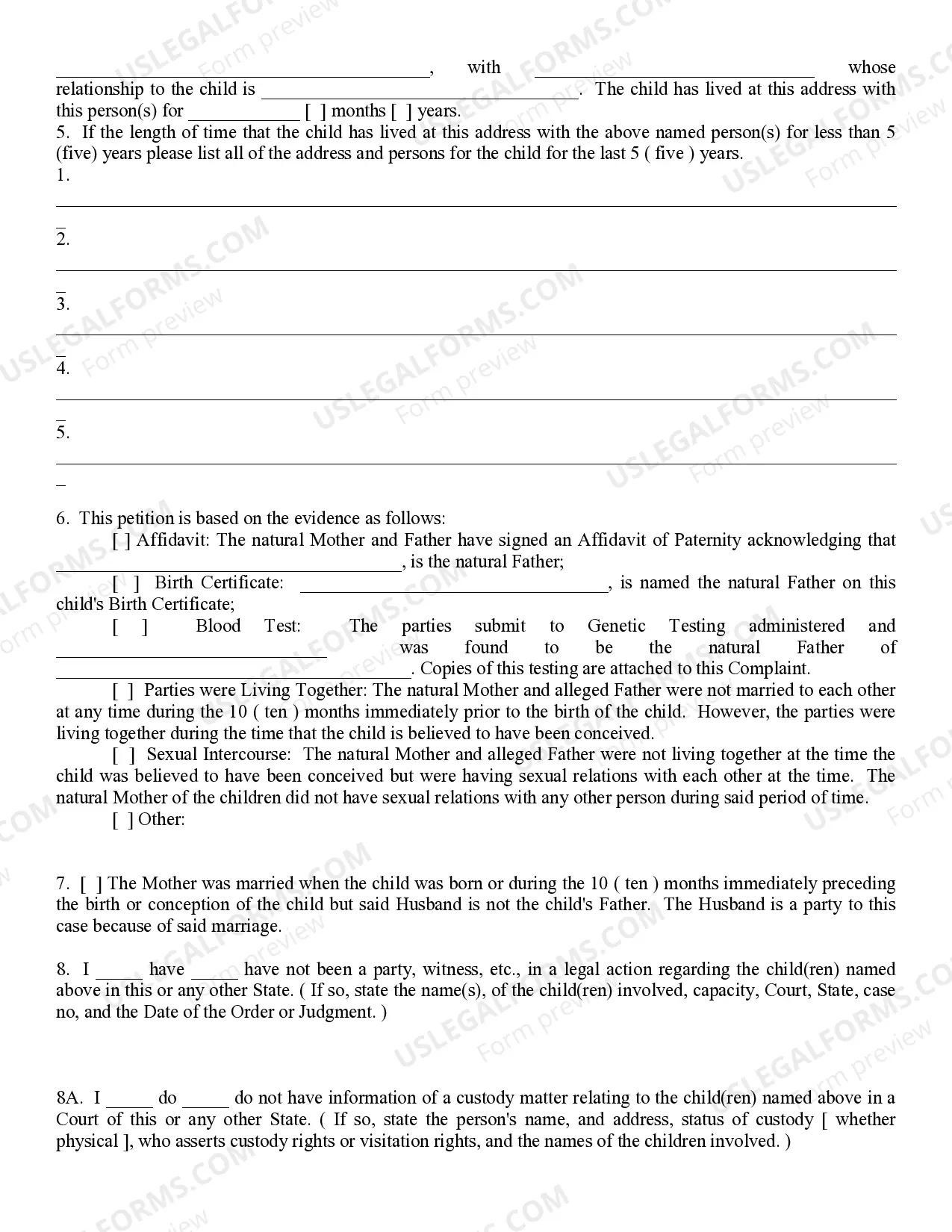
- Evidence supporting the claim of paternity
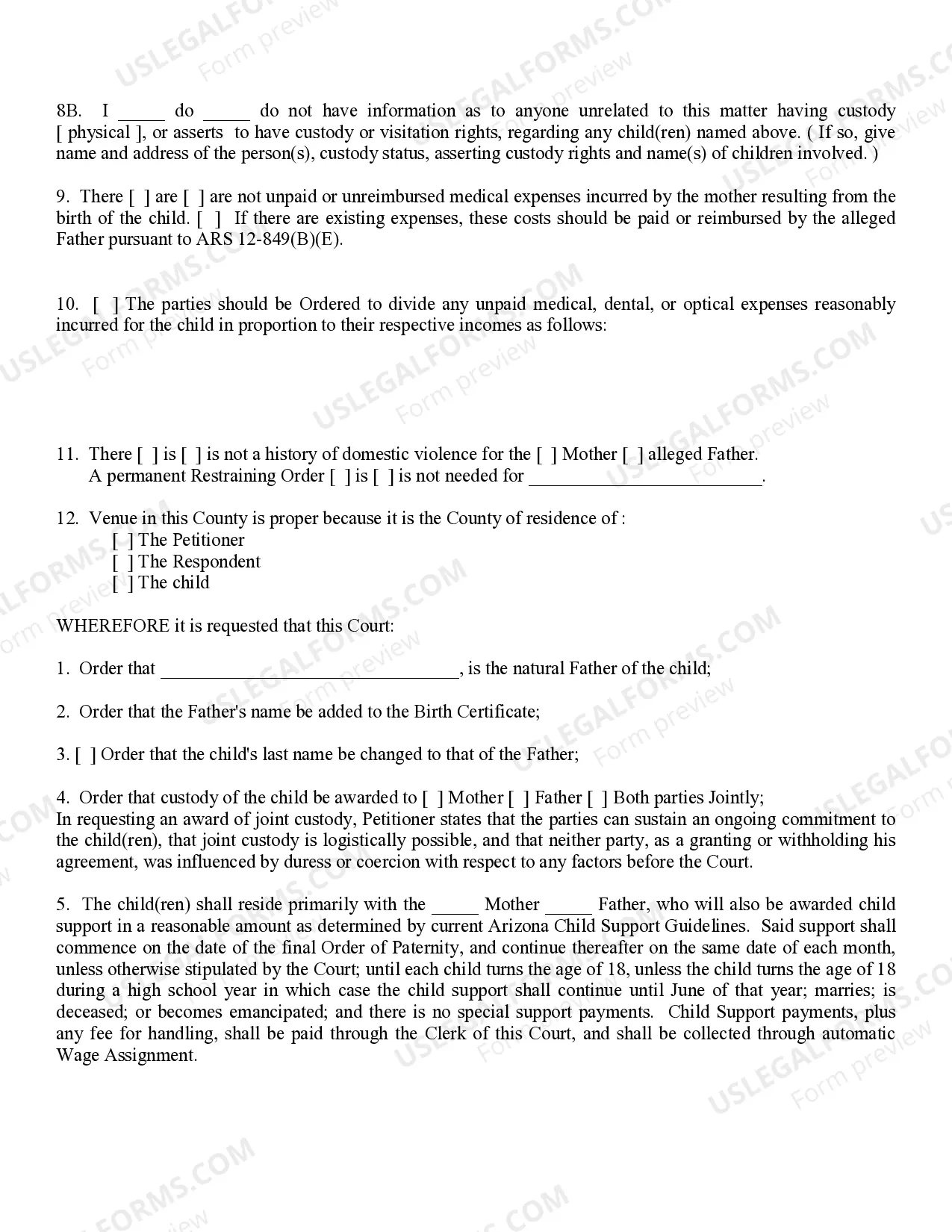
- Requests regarding child custody, visitation rights, and child support amounts
- Details about medical and dental insurance coverage for the child
Common use cases
This form should be used when an individual needs to establish paternity for a child born outside of marriage. It is appropriate in situations where legal recognition of the father is required for determining custody and visitation arrangements, as well as for establishing financial support obligations. Additionally, this form is necessary if there are disputes regarding the father's rights or responsibilities toward the child.
Who should use this form
- Parents seeking to establish paternity for a child born out of wedlock
- Individuals wanting to secure legal custody and visitation rights
- Fathers who wish to formalize child support obligations
- Guardians or relatives of a child needing to assert paternity or support claims
Instructions for completing this form
- Identify and enter the names and addresses of all parties involved: the petitioner and the respondent.
- Provide information about the child, including their name, date of birth, and current residence.
- List any evidence of paternity, such as affidavits or genetic test results, in the specified sections.
- Clearly outline your requests regarding custody, visitation rights, and child support within the form.
- Sign the form in the presence of a notary if required, or follow the local laws regarding notarization.
Notarization guidance
This form does not typically require notarization unless specified by local law. However, it is recommended to check with your local court for any specific requirements regarding notarization.
Get your form ready online
Our built-in tools help you complete, sign, share, and store your documents in one place.
Make edits, fill in missing information, and update formatting in US Legal Forms—just like you would in MS Word.
Download a copy, print it, send it by email, or mail it via USPS—whatever works best for your next step.
Sign and collect signatures with our SignNow integration. Send to multiple recipients, set reminders, and more. Go Premium to unlock E-Sign.
If this form requires notarization, complete it online through a secure video call—no need to meet a notary in person or wait for an appointment.
We protect your documents and personal data by following strict security and privacy standards.

Make edits, fill in missing information, and update formatting in US Legal Forms—just like you would in MS Word.

Download a copy, print it, send it by email, or mail it via USPS—whatever works best for your next step.

Sign and collect signatures with our SignNow integration. Send to multiple recipients, set reminders, and more. Go Premium to unlock E-Sign.

If this form requires notarization, complete it online through a secure video call—no need to meet a notary in person or wait for an appointment.

We protect your documents and personal data by following strict security and privacy standards.
Common mistakes to avoid
- Failing to provide complete and accurate information about the parties and the child
- Not including all necessary evidence of paternity
- Overlooking local requirements for filing and service of the complaint
- Neglecting to sign and date the form appropriately
Benefits of using this form online
- Convenience of downloading and printing the form at your convenience
- Editability to customize the form according to your specific needs
- Access to templates drafted by licensed attorneys, ensuring legal compliance
- Immediate availability for urgent legal matters without the need for scheduling appointments
Looking for another form?

Form popularity
FAQ
In a 50/50 custody arrangement in Arizona, the parent who earns more income usually pays child support. The court considers both parents' income and expenses as outlined in the Arizona Complaint in Paternity Establishing Child Custody, Visitation and Support to determine the support amount. Although both parents share custody, financial contributions are essential for the child's welfare. Understanding your rights and obligations through uslegalforms can provide valuable assistance in navigating these situations.
In Arizona, parents can agree not to pursue child support, but this agreement must still align with state guidelines. The court typically reviews any agreements made in the Arizona Complaint in Paternity Establishing Child Custody, Visitation and Support to ensure they are in the child's best interest. While parents can express their wishes, the court has the final say to protect children's welfare. Consulting with legal resources, such as uslegalforms, can clarify these agreements.
Yes, child support is mandatory in Arizona when parents separate. The court requires parents to provide financial support for their children, which is usually determined by the Arizona Complaint in Paternity Establishing Child Custody, Visitation and Support. This ensures that children's needs are met, providing for essential expenses like food, housing, and education. You can find detailed guidelines and calculations through platforms like uslegalforms.
To obtain full custody as a father in Arizona, you must demonstrate to the court that such an arrangement is in the best interest of the child. Factors considered include the child's relationship with both parents and the parents' ability to provide a stable environment. Presenting a well-structured case that incorporates the rules around the Arizona Complaint in Paternity Establishing Child Custody, Visitation and Support will bolster your position. Seeking legal assistance can also enhance your chances.
If you need to report someone for not paying child support in Arizona, you should contact the Arizona Department of Economic Security, Division of Child Support Services. They can assist you in filing the necessary complaints and may initiate enforcement actions. It's advisable to keep thorough records of missed payments to support your case. Utilizing the Arizona Complaint in Paternity Establishing Child Custody, Visitation and Support can help streamline this reporting process.
To enforce child support in Arizona, you can file a petition with the court if payments are not made. The court has various tools, such as wage garnishment and contempt of court orders, to ensure compliance. It is beneficial to understand the Arizona Complaint in Paternity Establishing Child Custody, Visitation and Support, as following the proper legal steps can lead to successful enforcement outcomes. Engaging with uslegalforms can simplify this process.
Establishing paternity in Arizona requires a few steps, often beginning with signing a Voluntary Acknowledgment of Paternity form. If there's any doubt, genetic testing can provide clarity. This legal identification is crucial for any Arizona Complaint in Paternity Establishing Child Custody, Visitation and Support since it impacts custody and support decisions. Consulting with legal professionals can guide you through this process efficiently.
In Arizona, a warrant for non-payment of child support can be issued when an individual is behind on payments. Typically, if you fall two months behind, the court may take action. This non-compliance can lead to serious consequences, making it essential to address child support issues promptly. Understanding the Arizona Complaint in Paternity Establishing Child Custody, Visitation and Support can help you navigate these situations effectively.
While Arizona law does not automatically mandate a 50/50 split for child custody, joint custody arrangements are common and favored in many cases. The court strives to ensure children maintain strong relationships with both parents, often leading to equitable time-sharing. Filing an Arizona Complaint in Paternity Establishing Child Custody, Visitation and Support is instrumental in achieving a balanced custody agreement. Legal assistance can further clarify what arrangements best fit your family’s needs.
Arizona is a community property state, meaning both spouses share the marital property equally after a divorce. However, this principle does not automatically apply to child custody arrangements. For those involved in an Arizona Complaint in Paternity Establishing Child Custody, Visitation and Support, a fair custody agreement considers various factors beyond just splitting time. It's crucial to advocate for your rights and understand how assets and responsibilities are divided.