Arizona Quitclaim Deed from Corporation to Individual
What is this form?
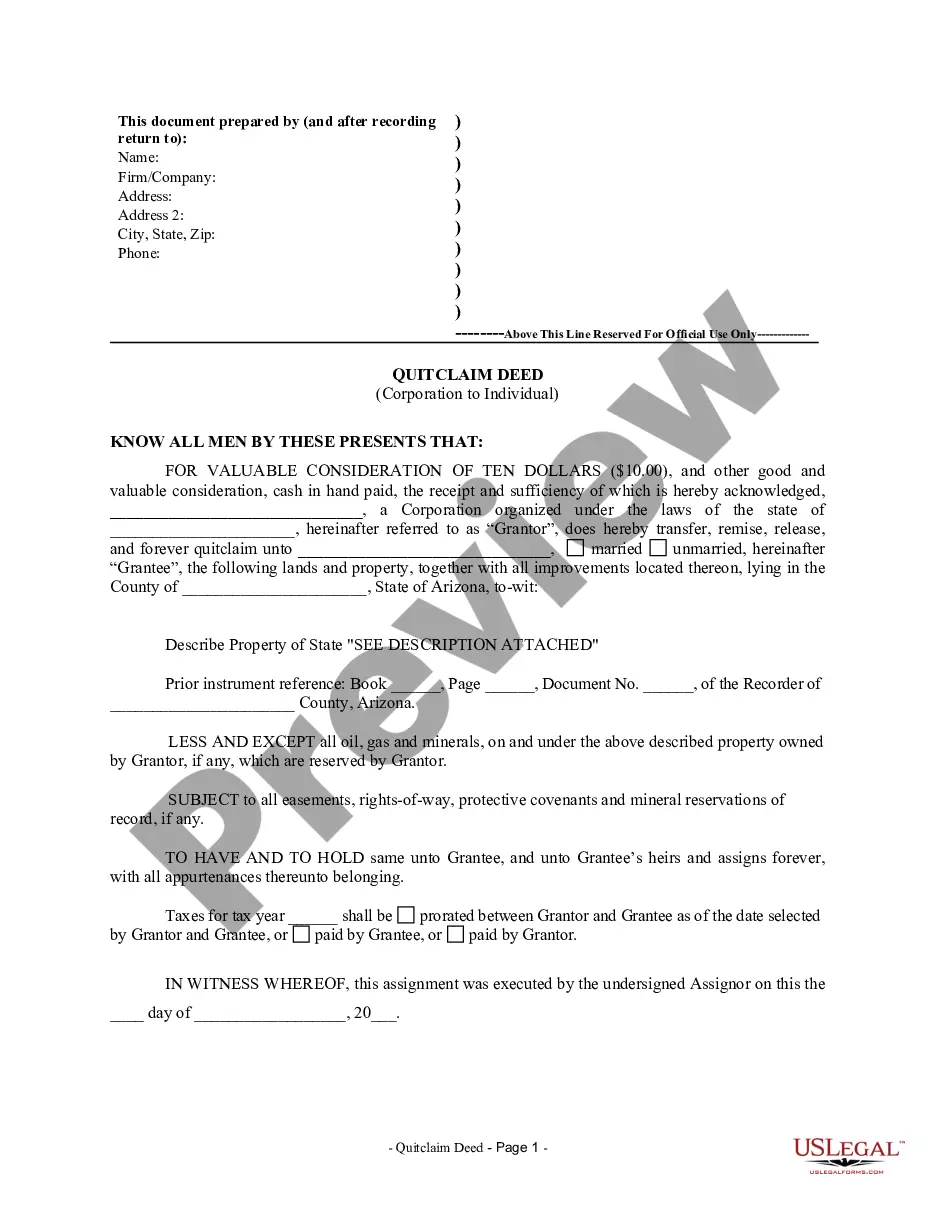
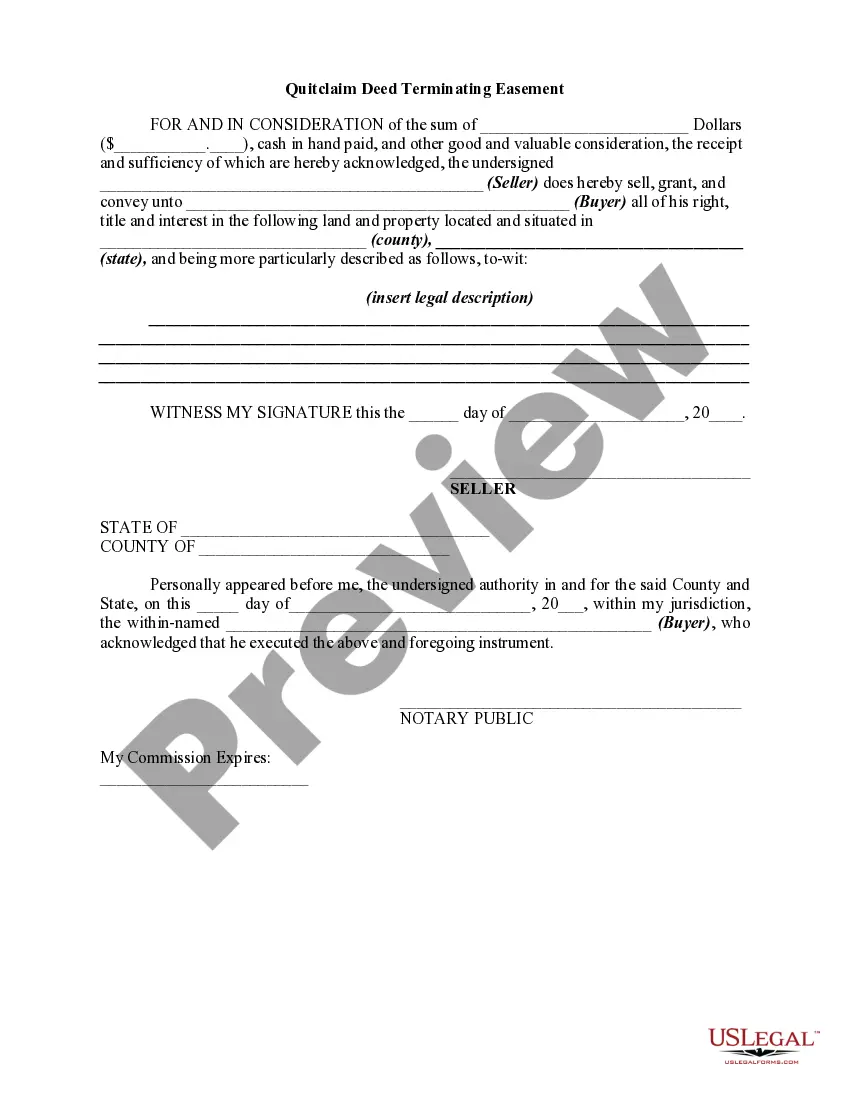
The Quitclaim Deed from Corporation to Individual is a legal document used to transfer property ownership from a corporation (the Grantor) to an individual (the Grantee). Unlike warranty deeds, a quitclaim deed does not guarantee that the Grantor holds clear title to the property, making it essential to understand the limitations it presents. This form is particularly useful in situations where the parties know each other well and trust the validity of the title being transferred.
Main sections of this form
- Identification of the parties: Clearly lists the corporation as the Grantor and the individual as the Grantee.
- Description of the property: Includes a detailed legal description of the property being transferred.
- Reservation clause: States that all oil, gas, and minerals, if any, are reserved by the Grantor.
- Easements and covenants: Mentions any applicable easements or protective covenants that may affect the property.
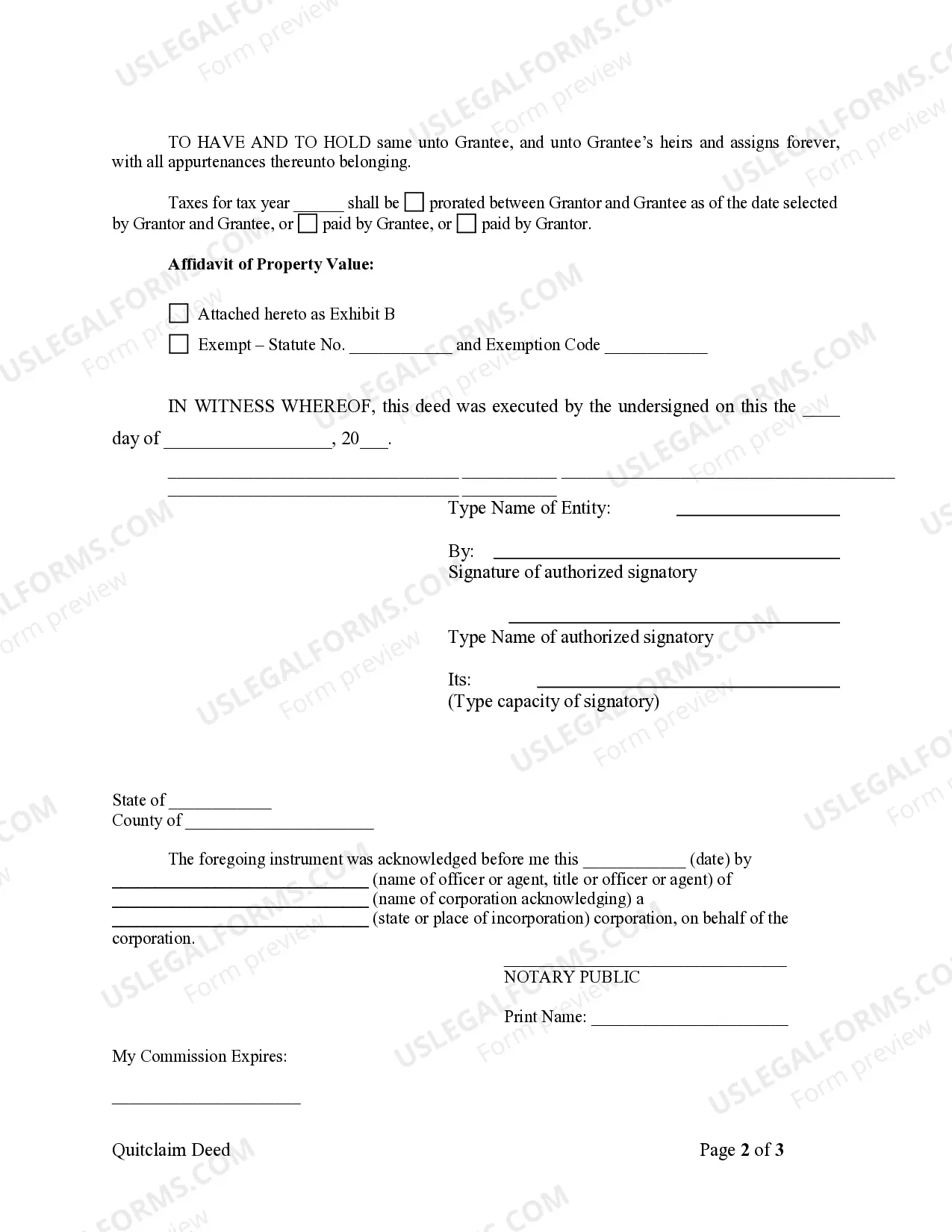
- Signature section: Requires the signatures of authorized representatives from the corporation and the Grantee.


Situations where this form applies
This form is needed when a corporation wants to transfer ownership of real estate to an individual. Common scenarios include family transfers, dissolution of business partnerships, or when a corporation wants to grant property to a significant stakeholder or employee. It is advisable to use this form when both parties have a mutual understanding regarding the property, and the potential limitations on the title are acceptable.
Who should use this form
This form is appropriate for:
- Corporation representatives authorized to convey property.
- Individuals receiving property from a corporation.
- Legal professionals managing property transfers on behalf of corporations.
Steps to complete this form
- Identify the Grantor and Grantee by entering the corporationâs name and the individualâs name.
- Include the complete legal description of the property, which should be attached as Exhibit A.
- Specify any reserved interests, such as oil, gas, and mineral rights, in the appropriate section.
- Ensure all signatures are obtained from the corporationâs authorized representatives and the Grantee.
- Review the document for any easements or covenants that may affect the property.
Does this document require notarization?
This form does not typically require notarization unless specified by local law. However, verifying local requirements is essential to ensure compliance and avoid legal issues.
Get your form ready online
Our built-in tools help you complete, sign, share, and store your documents in one place.
Make edits, fill in missing information, and update formatting in US Legal Forms—just like you would in MS Word.
Download a copy, print it, send it by email, or mail it via USPS—whatever works best for your next step.
Sign and collect signatures with our SignNow integration. Send to multiple recipients, set reminders, and more. Go Premium to unlock E-Sign.
If this form requires notarization, complete it online through a secure video call—no need to meet a notary in person or wait for an appointment.
We protect your documents and personal data by following strict security and privacy standards.

Make edits, fill in missing information, and update formatting in US Legal Forms—just like you would in MS Word.

Download a copy, print it, send it by email, or mail it via USPS—whatever works best for your next step.

Sign and collect signatures with our SignNow integration. Send to multiple recipients, set reminders, and more. Go Premium to unlock E-Sign.

If this form requires notarization, complete it online through a secure video call—no need to meet a notary in person or wait for an appointment.

We protect your documents and personal data by following strict security and privacy standards.
Typical mistakes to avoid
- Failing to include a complete legal description of the property.
- Not obtaining the necessary signatures from all required parties.
- Overlooking the reservation of mineral rights, which can lead to future disputes.
Benefits of using this form online
- Convenience: Easily fill out and download the form from anywhere.
- Editability: Modify the document as needed before finalizing the transaction.
- Reliability: Ensure your form complies with legal standards as drafted by licensed attorneys.
Looking for another form?

Form popularity
FAQ
Adding a spouse to a deed can be accomplished using an Arizona Quitclaim Deed from Corporation to Individual. Start by completing the deed to indicate the transfer of interest to your spouse. Ensure both spouses sign the document, which may require notarization for legality. Using USLegalForms can guide you through this process seamlessly, ensuring all necessary protocols are followed.
Yes, in Arizona, it is essential to record a quitclaim deed after it is signed to provide public notice of the ownership change. Recording the Arizona Quitclaim Deed from Corporation to Individual ensures that the transaction is recognized legally. This step protects both parties’ interests and helps avoid disputes regarding property ownership. Always check with local authorities for any specific recording requirements.
Filling out a Quit Claim Deed to add someone to a home title involves a few clear steps. First, you need to identify the parties involved along with the property details. Next, include a statement indicating you are transferring part or all of the property interest to the new party. Using the Arizona Quitclaim Deed from Corporation to Individual simplifies this process by providing a structured format to follow.
To effectively add someone to a deed, you should consider using an Arizona Quitclaim Deed from Corporation to Individual. This deed allows a corporation to transfer interest in a property easily. Both parties should be present during the signing to ensure that all legal requirements are met. It is a straightforward process that clearly documents the addition.
Individuals seeking to transfer property ownership quickly and without complications benefit most from a quitclaim deed. This method serves well for family transfers, divorce settlements, or when transferring property from a corporation to an individual. Unlike warranty deeds, quitclaim deeds do not guarantee a clear title, making them less burdensome but still effective for specific situations. Explore USLegalForms for resources related to an Arizona Quitclaim Deed from Corporation to Individual to make informed decisions.
In Arizona, a quitclaim deed must include the legal description of the property, the names of both the grantor and grantee, and their signatures. Additionally, the deed must be notarized to ensure its validity. It's also helpful to include the tax parcel number for clarity. Using USLegalForms can simplify the process, providing you with the necessary templates for an Arizona Quitclaim Deed from Corporation to Individual.
To file a quitclaim deed in Arizona, you must submit the document to the County Recorder’s Office in the county where the property is located. It's essential to check local regulations, as each county may have specific procedures and requirements. Once filed, the quitclaim deed becomes a public record, providing legal acknowledgment of the transfer. Consider using USLegalForms to access templates and guidance for an Arizona Quitclaim Deed from Corporation to Individual.
An Arizona Quitclaim Deed from Corporation to Individual must contain specific elements to be valid. It should include the names of the parties involved, the legal description of the property, and the signature of the grantor. Additionally, a notary public must witness the signature to make the deed legally binding. Utilizing uslegalforms can help you create a compliant quitclaim deed that meets all state requirements.
To transfer property title to a family member in Arizona, you can use an Arizona Quitclaim Deed from Corporation to Individual. This legal document allows you to transfer ownership without the need for a formal sale. Ensure that the deed includes the names of both the granter and the grantee, the property description, and the signature of the grantor. You may want to consult uslegalforms to simplify this process and ensure all requirements are met.