Arkansas Last Will and Testament for Divorced person not Remarried with Minor Children
About this form
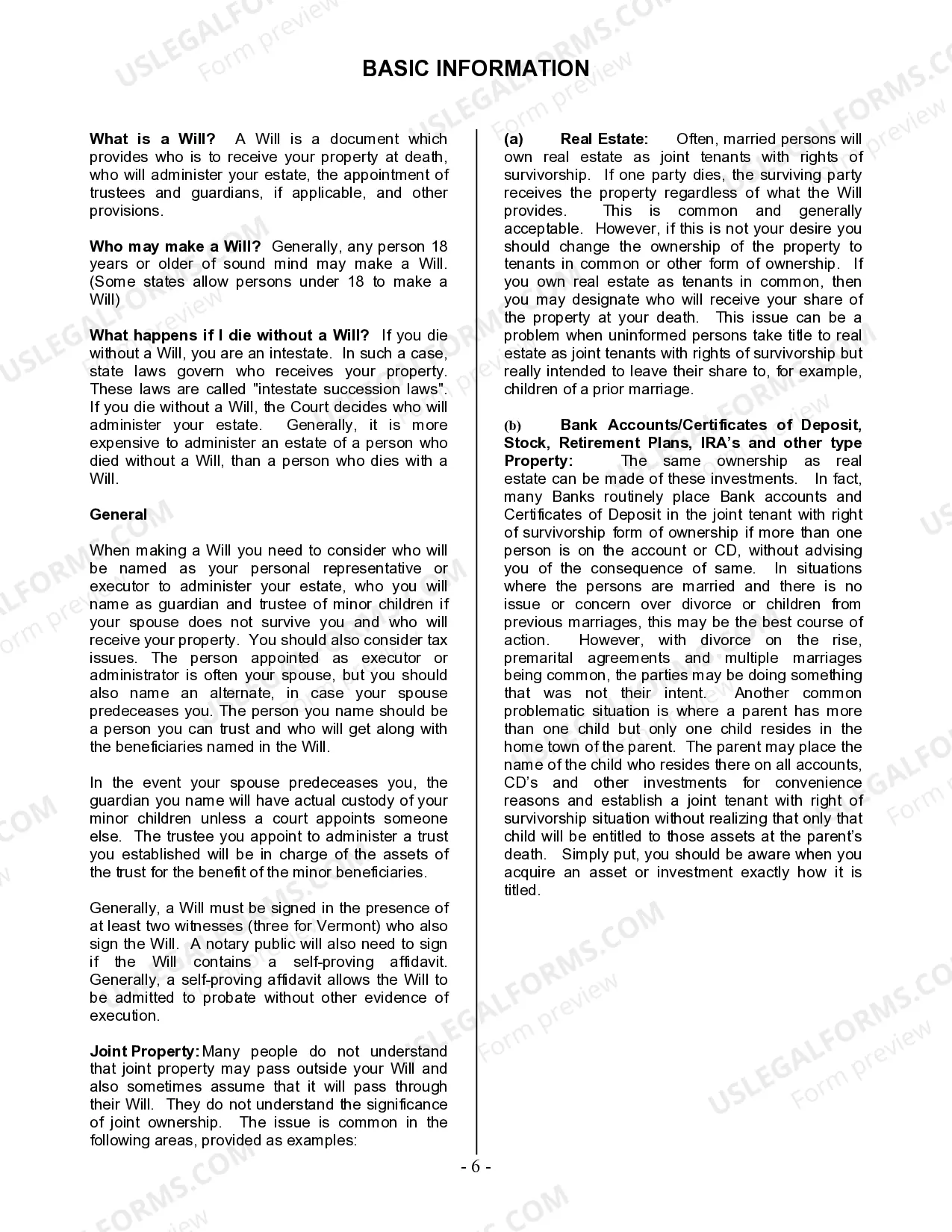
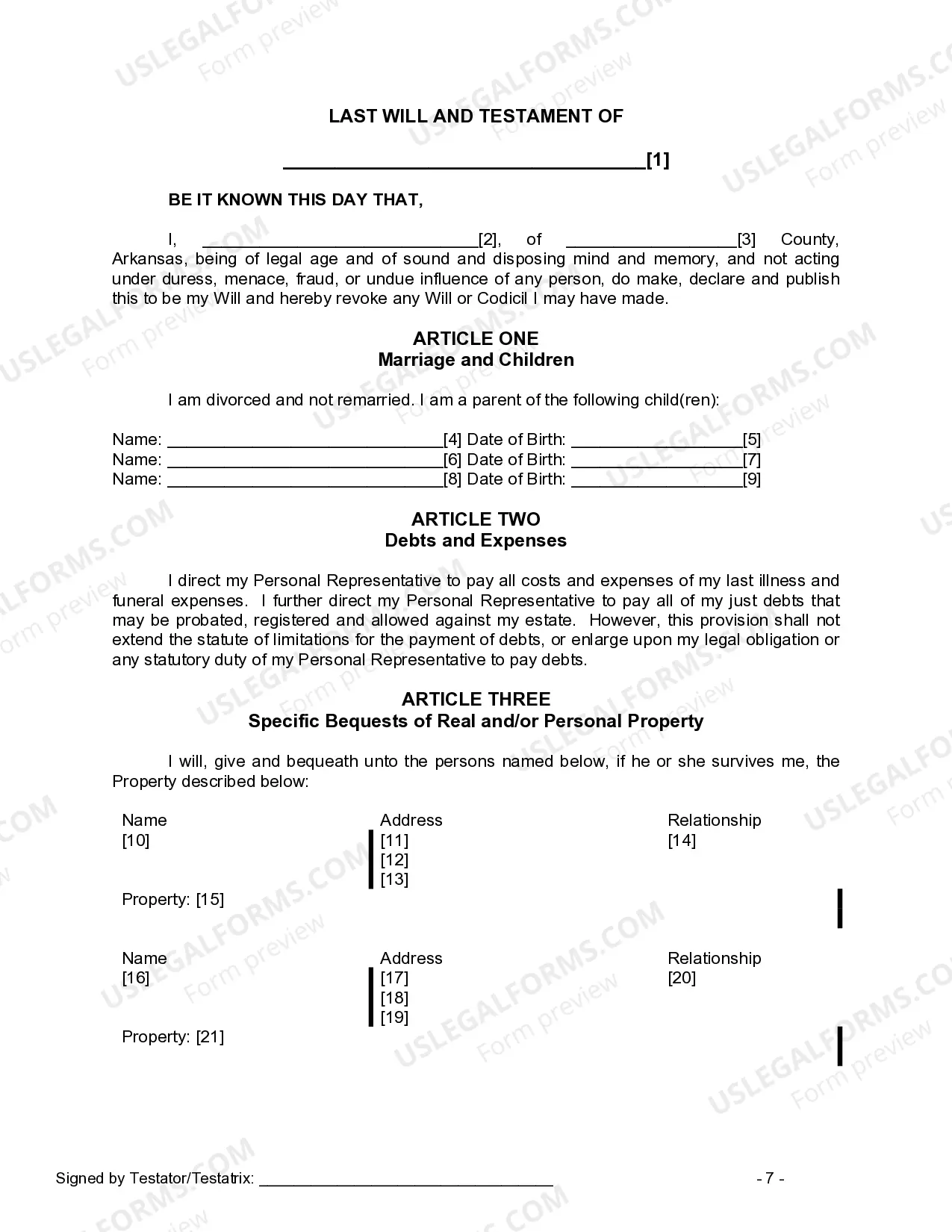
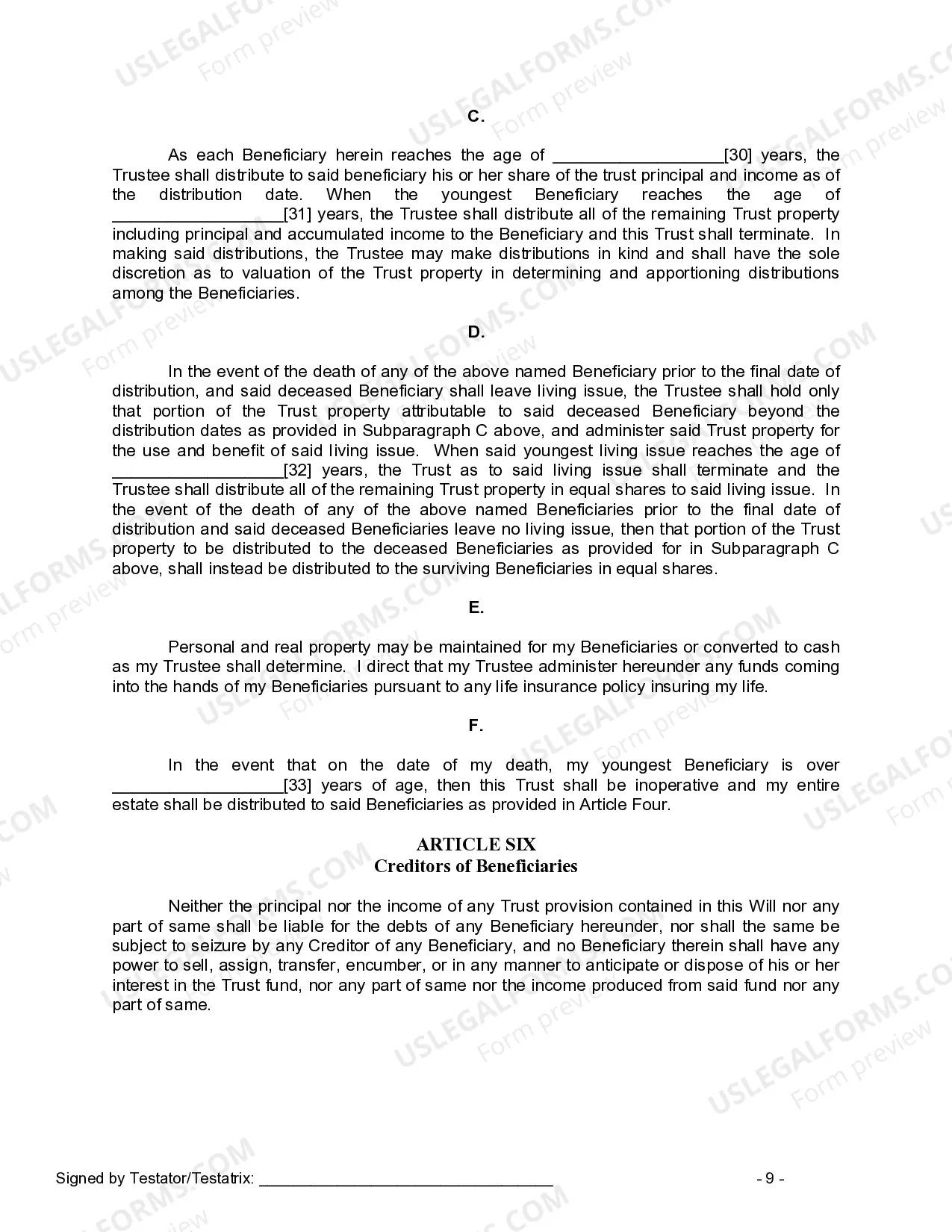
This Last Will and Testament is specifically designed for individuals who are divorced, not remarried, and have minor children. This legal document outlines how your assets will be distributed upon your death, appoints a personal representative to manage your estate, and addresses guardianship for your minor children. It is tailored to accommodate the unique circumstances of divorced parents, ensuring that your wishes are clearly articulated and legally protected.
Key parts of this document
- Appointment of personal representative to handle your estate.
- Designation of beneficiaries, ensuring your minor children are prioritized.
- Specific bequests for special property to certain individuals.
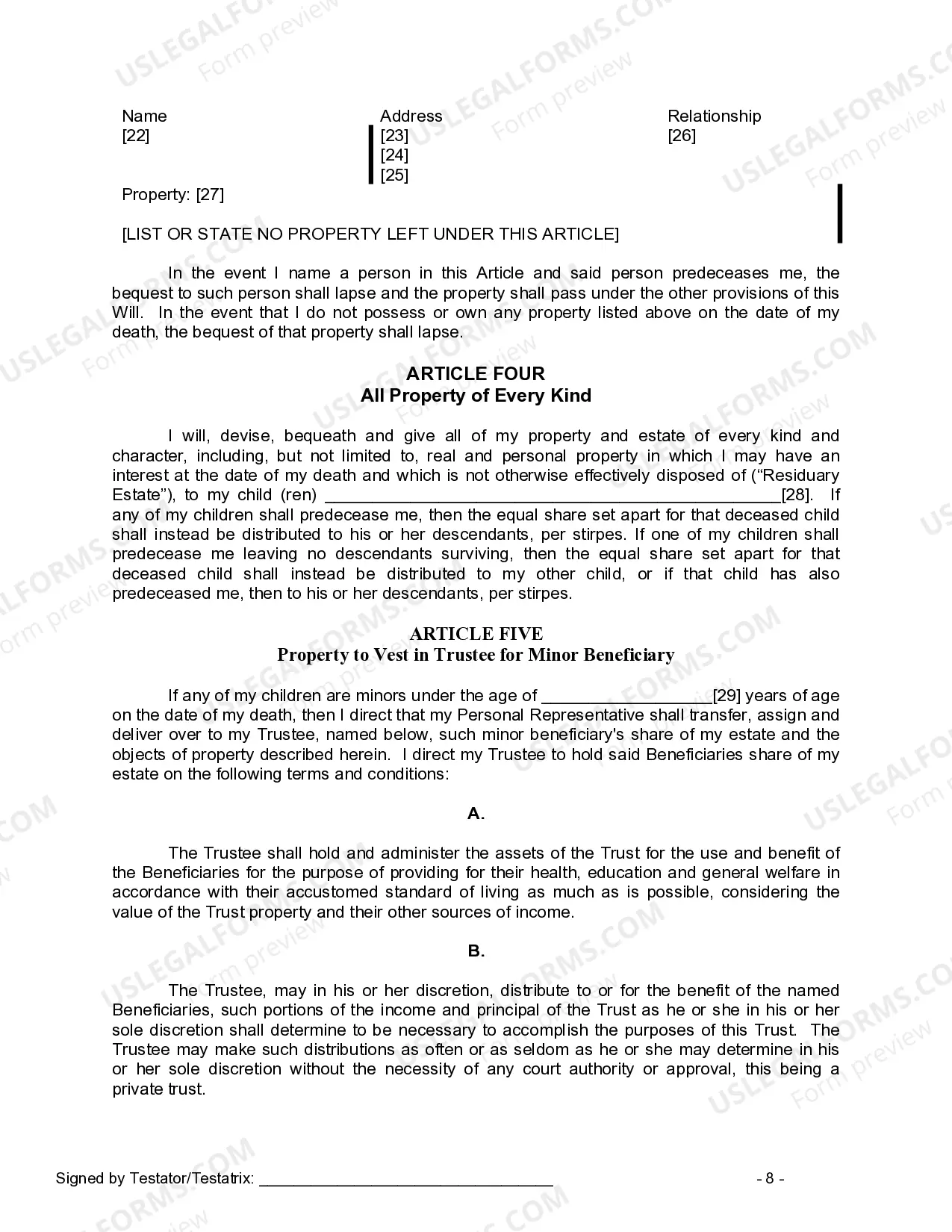
- Establishment of a trust for minor beneficiaries until they reach a specified age.
- Appointment of a guardian for any minor children.
- Clauses for waiving bond requirements for your personal representative.




When to use this form
This form should be used when a divorced person with minor children wants to create a legally binding last will and testament. It is essential in situations where you need to designate guardianship for your children and specify how your assets should be distributed after your death. This form is also useful if you wish to establish trusts for minors or ensure that your personal representative can manage your estate without unnecessary legal complications.
Who should use this form
- Individuals who are divorced and have minor children.
- Parents who want to ensure there is a clear plan for guardianship of their children.
- Anyone seeking to manage the distribution of their assets in a manner consistent with their wishes.
- Individuals looking to establish trusts for minor beneficiaries to receive assets at a future date.
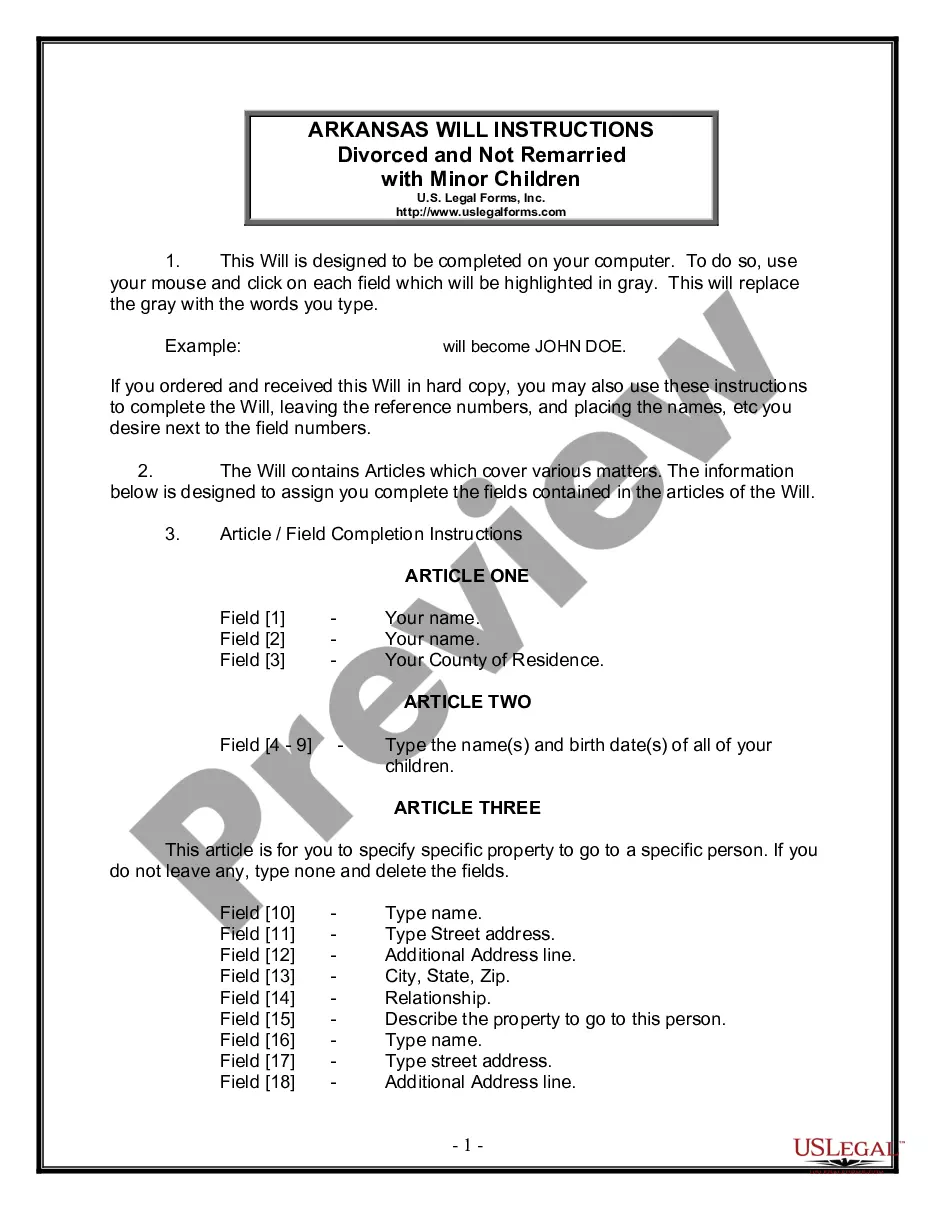
Instructions for completing this form
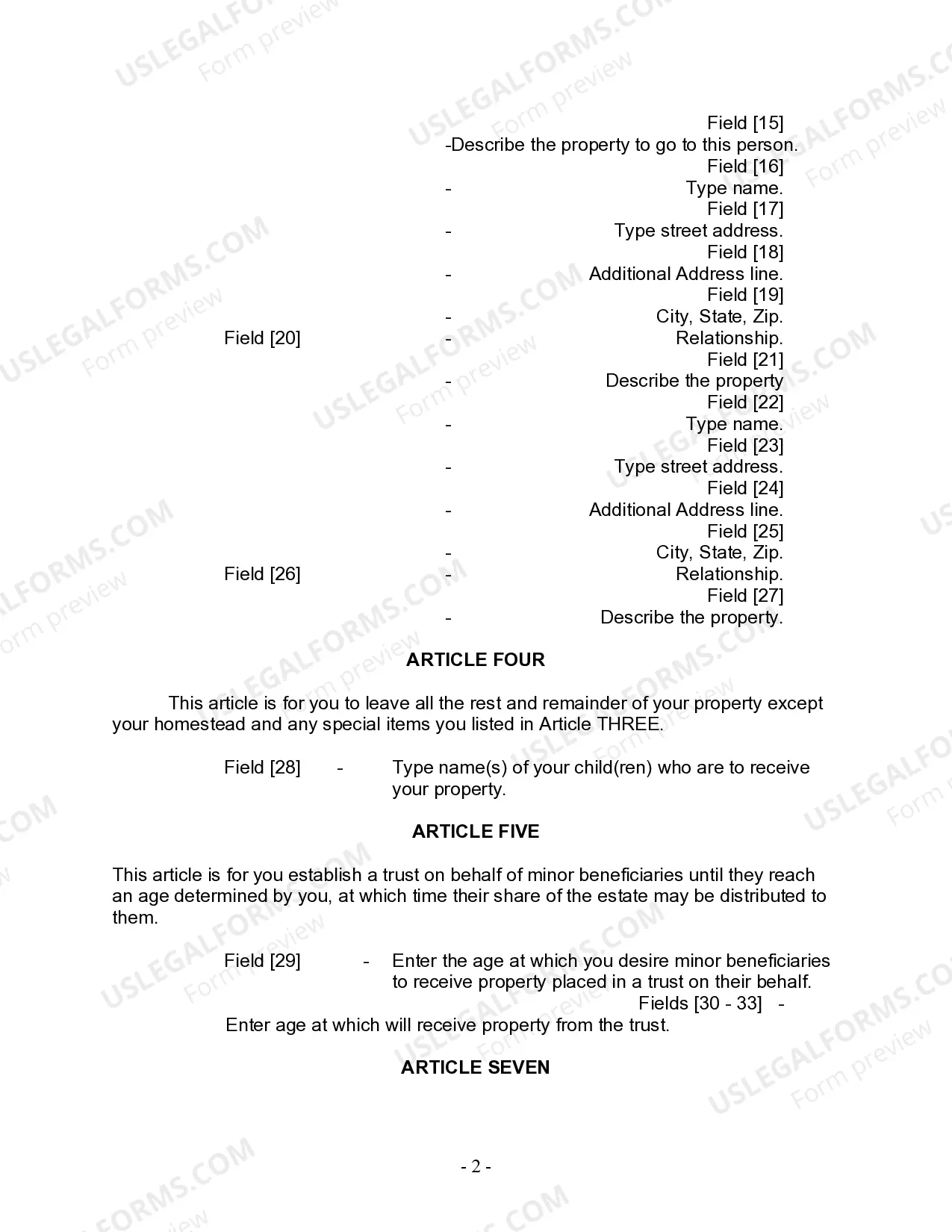
- Enter your name and county of residence at the beginning of the document.
- Specify the names and birthdates of all your minor children.
- Detail specific bequests for property you wish to assign to certain individuals.
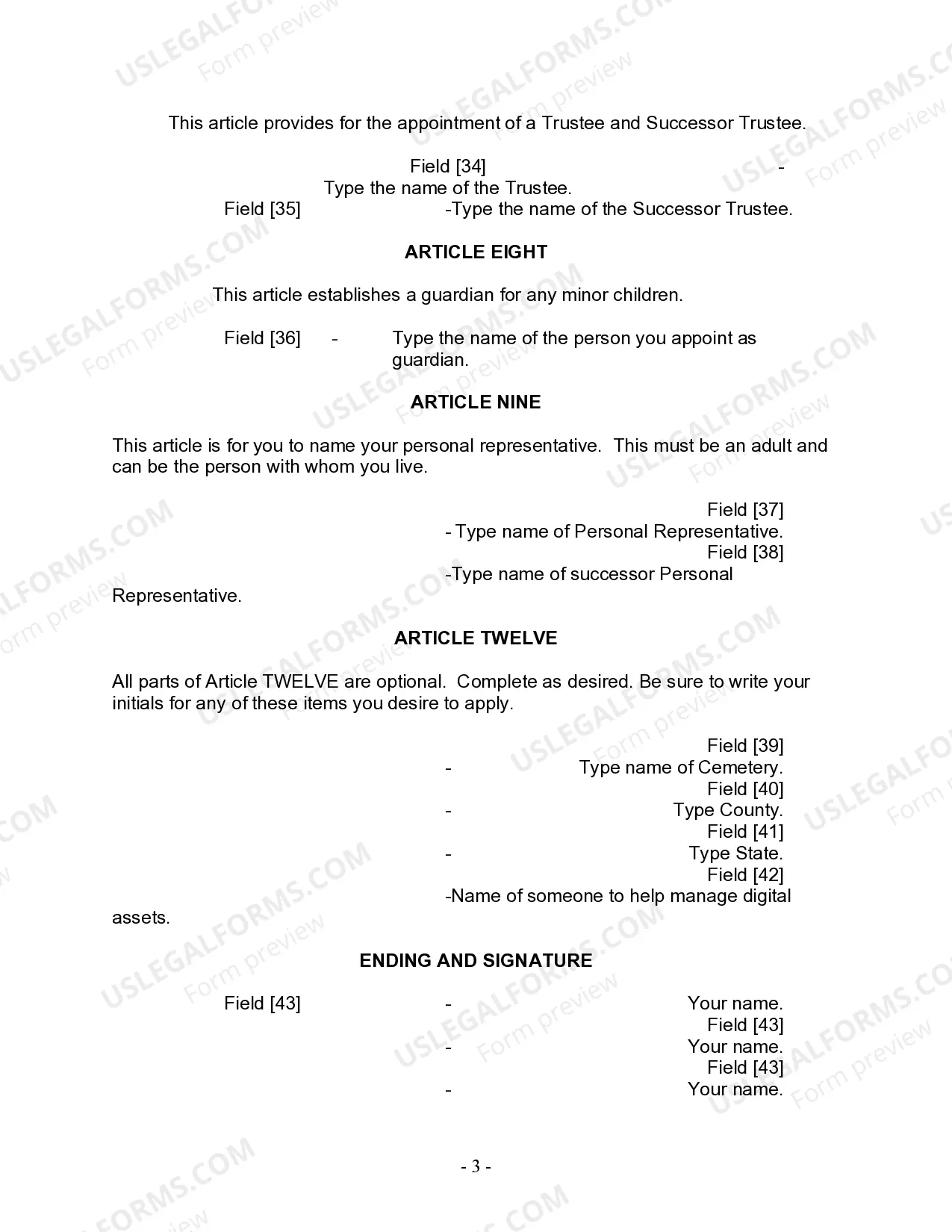
- Designate a trustee to manage assets held in trust for your minor beneficiaries.
- Appoint a guardian for your minor children and a personal representative for your estate.
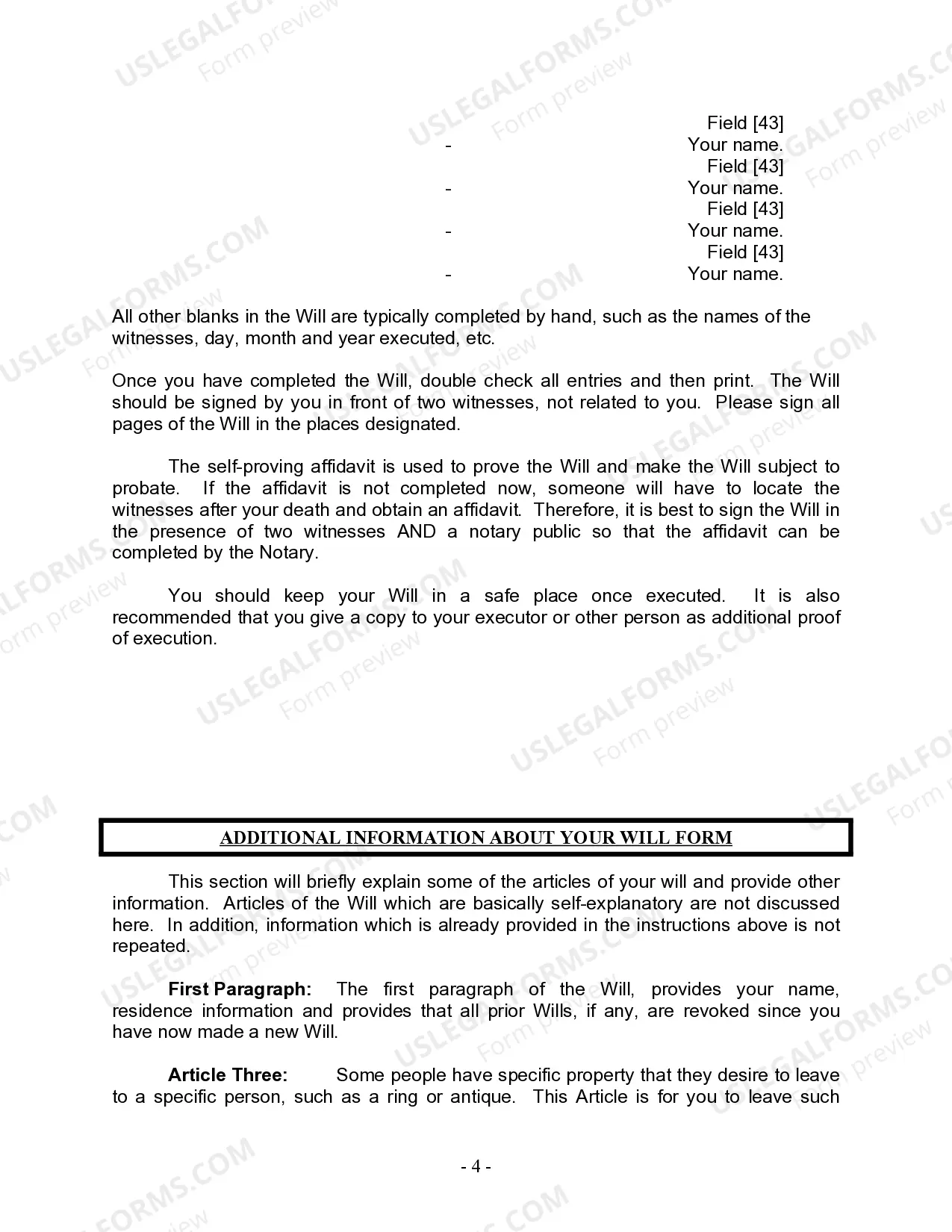
- Sign the completed will in the presence of at least two witnesses and a notary public if required.
Is notarization required?
Yes, this form must be notarized to be legally valid, especially if it includes a self-proving affidavit. It is advisable to have it notarized during the signing process, ensuring all witnesses are present, which simplifies future probate proceedings.
Get your form ready online
Our built-in tools help you complete, sign, share, and store your documents in one place.
Make edits, fill in missing information, and update formatting in US Legal Forms—just like you would in MS Word.
Download a copy, print it, send it by email, or mail it via USPS—whatever works best for your next step.
Sign and collect signatures with our SignNow integration. Send to multiple recipients, set reminders, and more. Go Premium to unlock E-Sign.
If this form requires notarization, complete it online through a secure video call—no need to meet a notary in person or wait for an appointment.
We protect your documents and personal data by following strict security and privacy standards.

Make edits, fill in missing information, and update formatting in US Legal Forms—just like you would in MS Word.

Download a copy, print it, send it by email, or mail it via USPS—whatever works best for your next step.

Sign and collect signatures with our SignNow integration. Send to multiple recipients, set reminders, and more. Go Premium to unlock E-Sign.

If this form requires notarization, complete it online through a secure video call—no need to meet a notary in person or wait for an appointment.

We protect your documents and personal data by following strict security and privacy standards.
Common mistakes
- Neglecting to have the will signed by the required number of witnesses.
- Failing to specify guardianship arrangements for minor children.
- Not properly designating a personal representative, which can lead to delays in estate administration.
- Overlooking the need for a self-proving affidavit if required by state law.
Advantages of online completion
- Convenient digital access allows you to complete the document from home.
- Editable fields make it easy to customize the will to fit your specific needs.
- Reliable templates are drafted by licensed attorneys to meet legal standards.
- Efficient process reduces time spent on paperwork and ensures accuracy.
Legal use & context
- This Last Will and Testament ensures your final wishes are respected.
- It provides a clear plan for guardianship and asset distribution for your children.
- The document is legally enforceable when properly executed according to state laws.
What to keep in mind
- This form is tailored for divorced individuals with minor children.
- It includes important sections for guardianship, property distribution, and personal representatives.
- Proper witnessing and notarization are critical to ensure validity.
Looking for another form?
Form popularity
FAQ
Yes, a living will in Arkansas must be notarized or witnessed by two individuals who are not related to you and who do not stand to gain from your estate. Ensuring proper notarization aligns your wishes for medical decisions with the law and provides clear guidance to your loved ones. This step complements your Arkansas Last Will and Testament for Divorced person not Remarried with Minor Children, creating a comprehensive plan for your family's future.
One effective way to avoid probate in Arkansas is to create a living trust, which allows assets to be transferred directly to beneficiaries upon your passing. Additionally, naming beneficiaries on accounts and using joint ownership can also help. This can be particularly beneficial when crafting your Arkansas Last Will and Testament for Divorced person not Remarried with Minor Children, as it simplifies the process for your heirs.
In Arkansas, a handwritten will, also known as a holographic will, does not require notarization if it is signed and dated by the testator. However, it's wise to consider that having witnesses can strengthen the validity of your Arkansas Last Will and Testament for Divorced person not Remarried with Minor Children. Notarization can also provide added assurance that your wishes are honored without dispute.
Probate is generally mandatory in Arkansas for estates exceeding the statutory threshold, typically $100,000. However, with proper planning, such as implementing living trusts or naming beneficiaries, you can avoid probate. Utilizing an Arkansas Last Will and Testament for Divorced person not Remarried with Minor Children is an essential step for your family's estate planning. This approach helps you address your unique circumstances proactively.
Yes, a hand-written will, known as a holographic will, is legal in Arkansas as long as it meets specific criteria. The will must be entirely in the handwriting of the testator and signed by them. To prevent potential disputes regarding your Arkansas Last Will and Testament for Divorced person not Remarried with Minor Children, having it formally drafted is often advisable. This ensures clarity and conformity with state laws.
Certain assets are exempt from probate in Arkansas, including life insurance policies with named beneficiaries, retirement accounts, and assets held in joint tenancy. Real estate held in such arrangements also avoids probate. By crafting an Arkansas Last Will and Testament for Divorced person not Remarried with Minor Children, you can specify how exempt assets should be handled, ensuring your children’s interests are prioritized without unnecessary delays.
Stepchildren do not automatically inherit from a stepparent unless specifically mentioned in a will. To ensure that stepchildren receive their intended share, include them in an Arkansas Last Will and Testament for Divorced person not Remarried with Minor Children. This clarity provides peace of mind regarding their inheritance rights, particularly when navigating complex family dynamics. Consulting legal resources can further guide you in this area.
Yes, there are several ways to bypass probate in Arkansas. Utilizing a living trust or naming beneficiaries on your accounts prevents your assets from going through probate. By preparing an Arkansas Last Will and Testament for Divorced person not Remarried with Minor Children, you can designate how your assets should be handled. It is wise to explore these alternatives, especially for securing your minor children's future.
To avoid probate in Arkansas, consider establishing a living trust, which allows assets to pass directly to beneficiaries without court involvement. Additionally, you can use beneficiary designations on accounts and properties. Creating an Arkansas Last Will and Testament for Divorced person not Remarried with Minor Children can influence how your assets are distributed, ensuring your children are protected. Seeking assistance from professionals can help you navigate these options effectively.
For a will to be valid in Arkansas, it must be in writing, signed by the testator, and witnessed by at least two individuals. These witnesses must see the testator sign the will or acknowledge their signature. Having a well-drafted Arkansas Last Will and Testament for Divorced person not Remarried with Minor Children enhances your estate planning. This ensures that your wishes regarding your minor children are legally recognized.