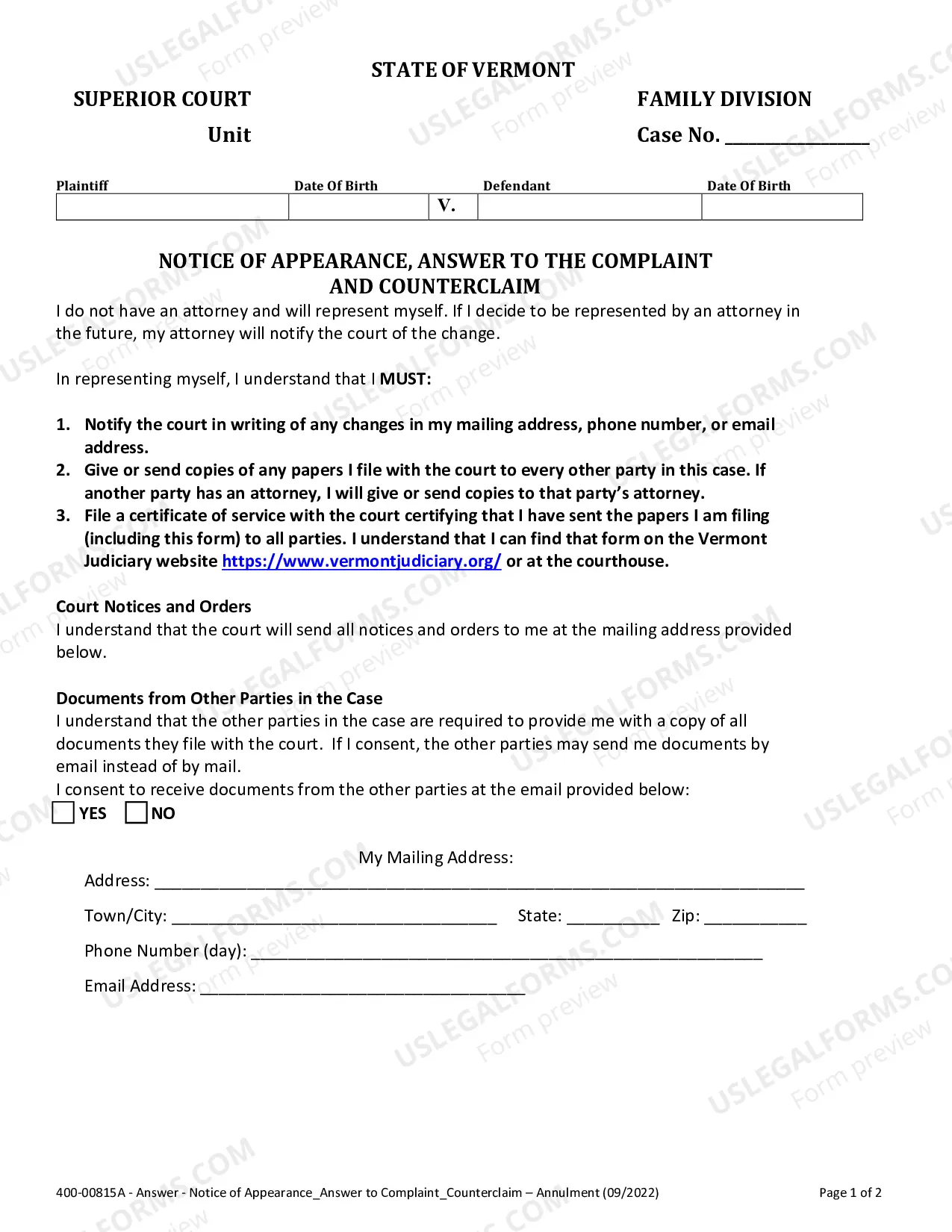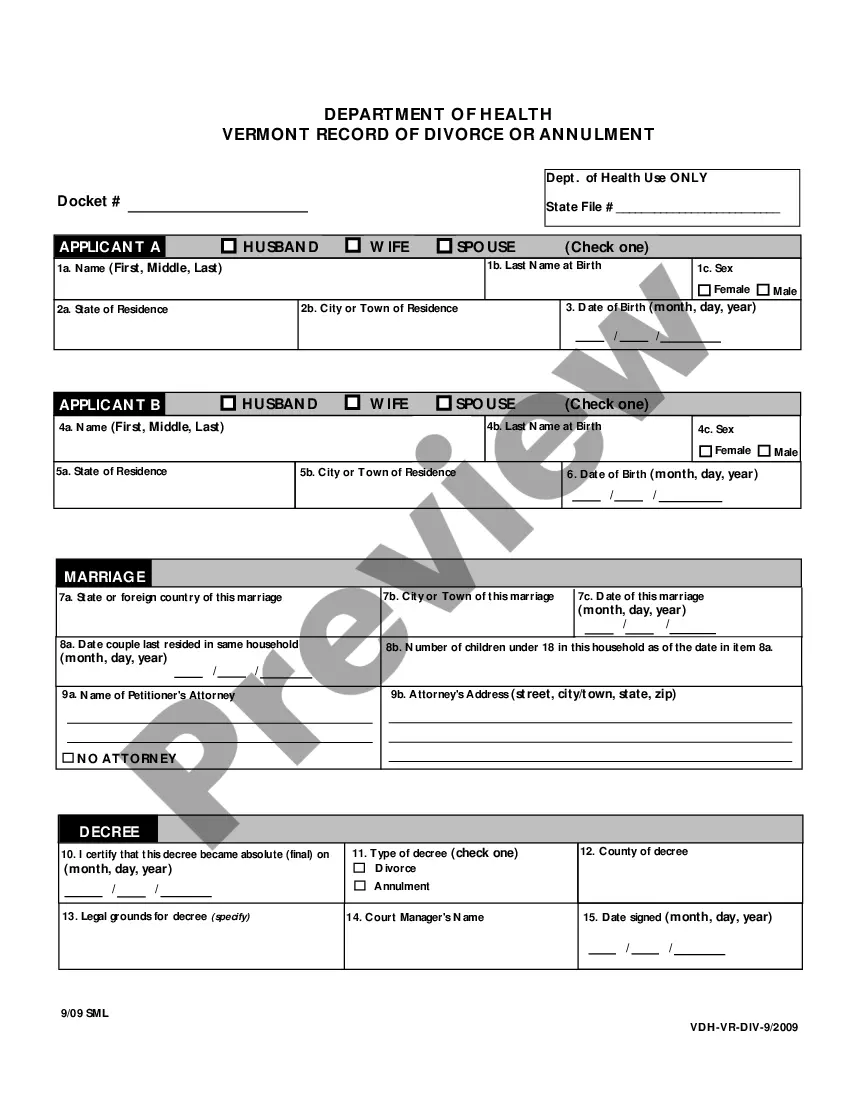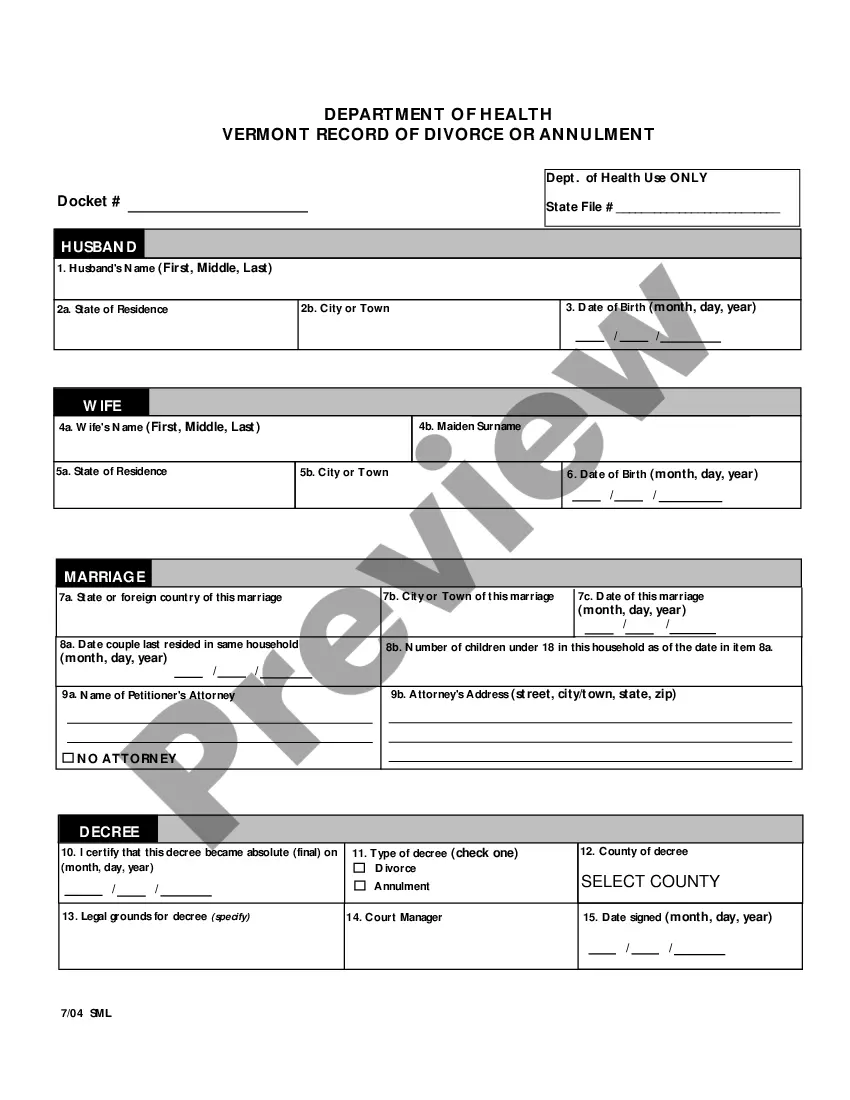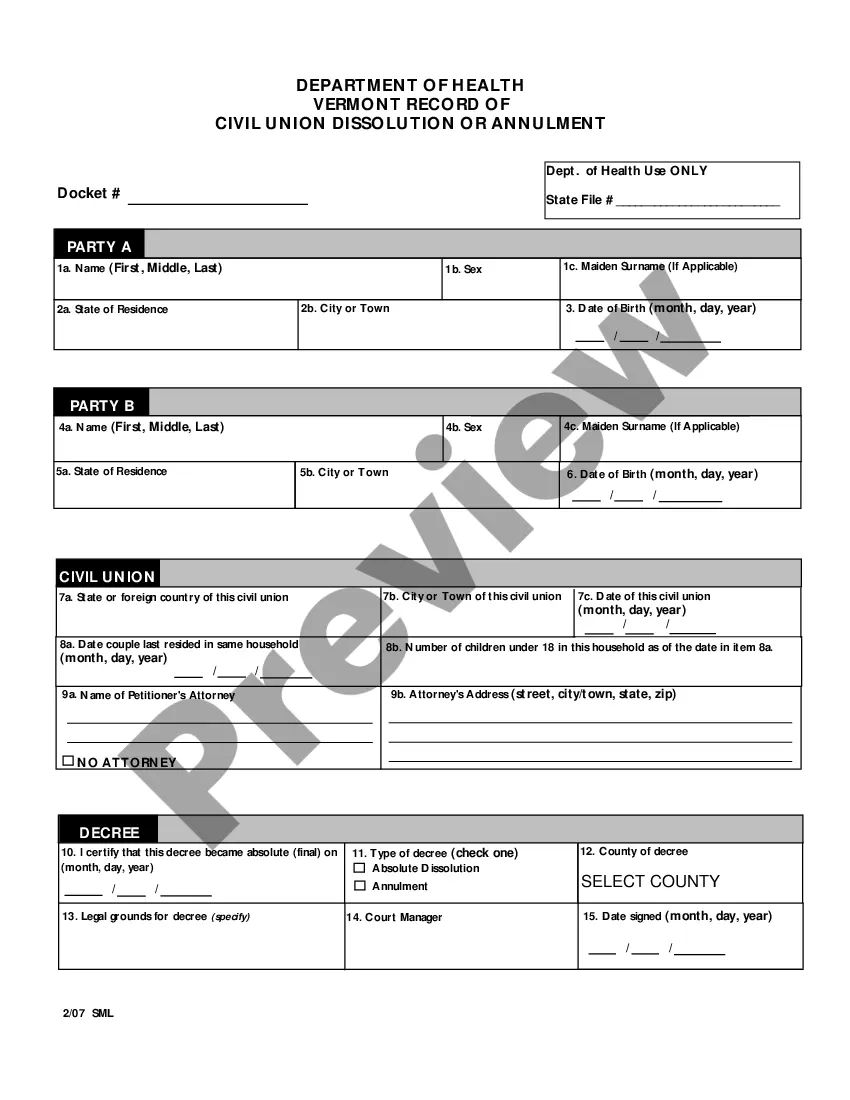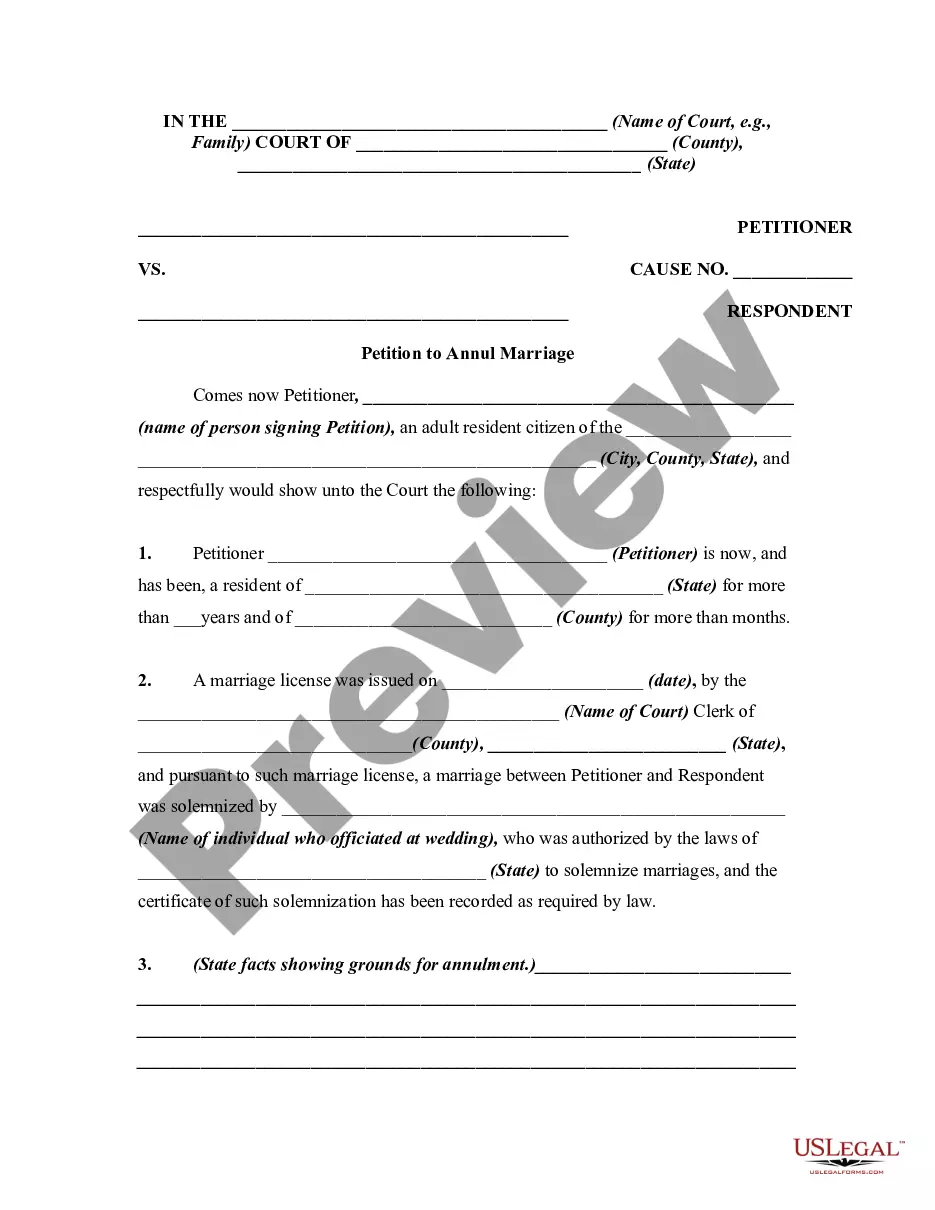
Vermont Annulment Forms

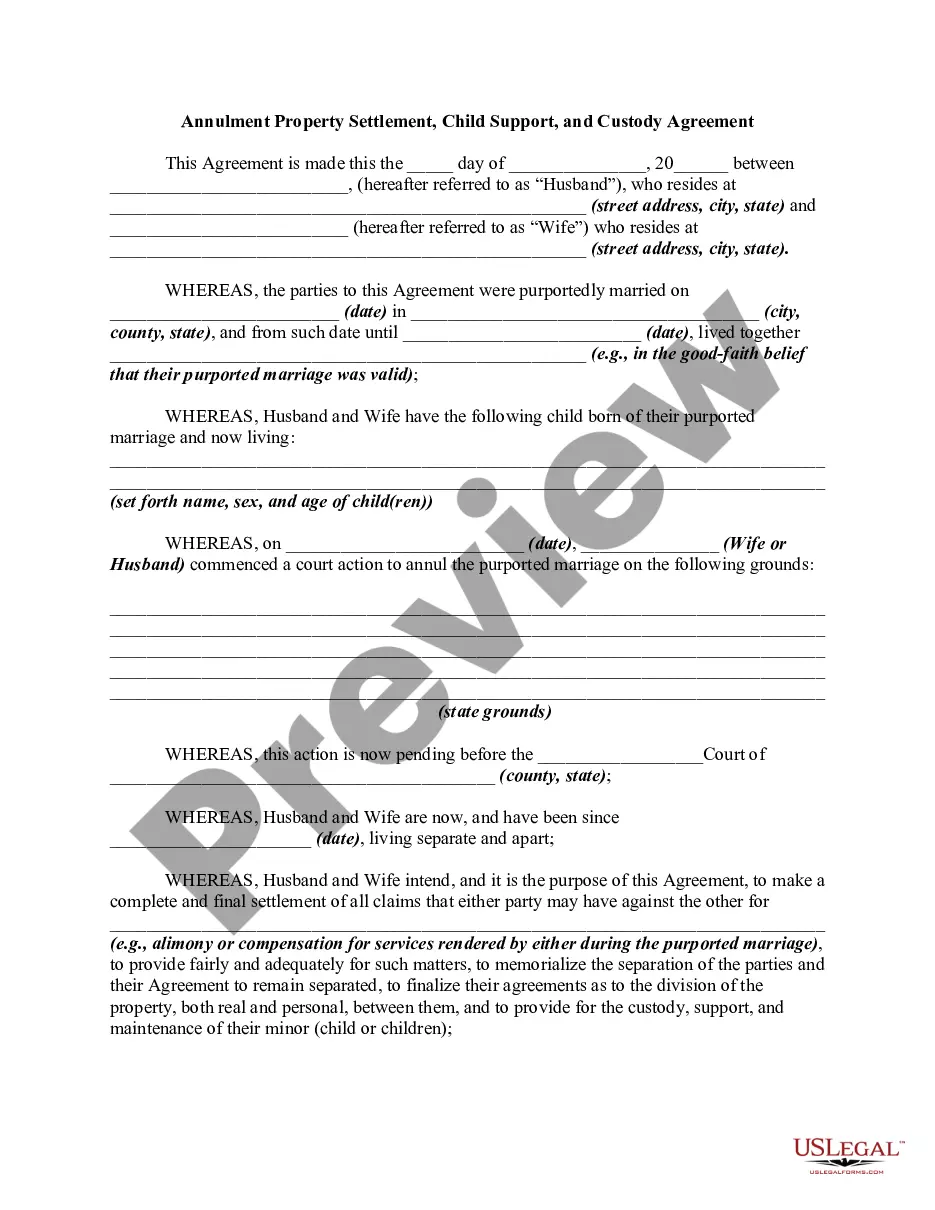
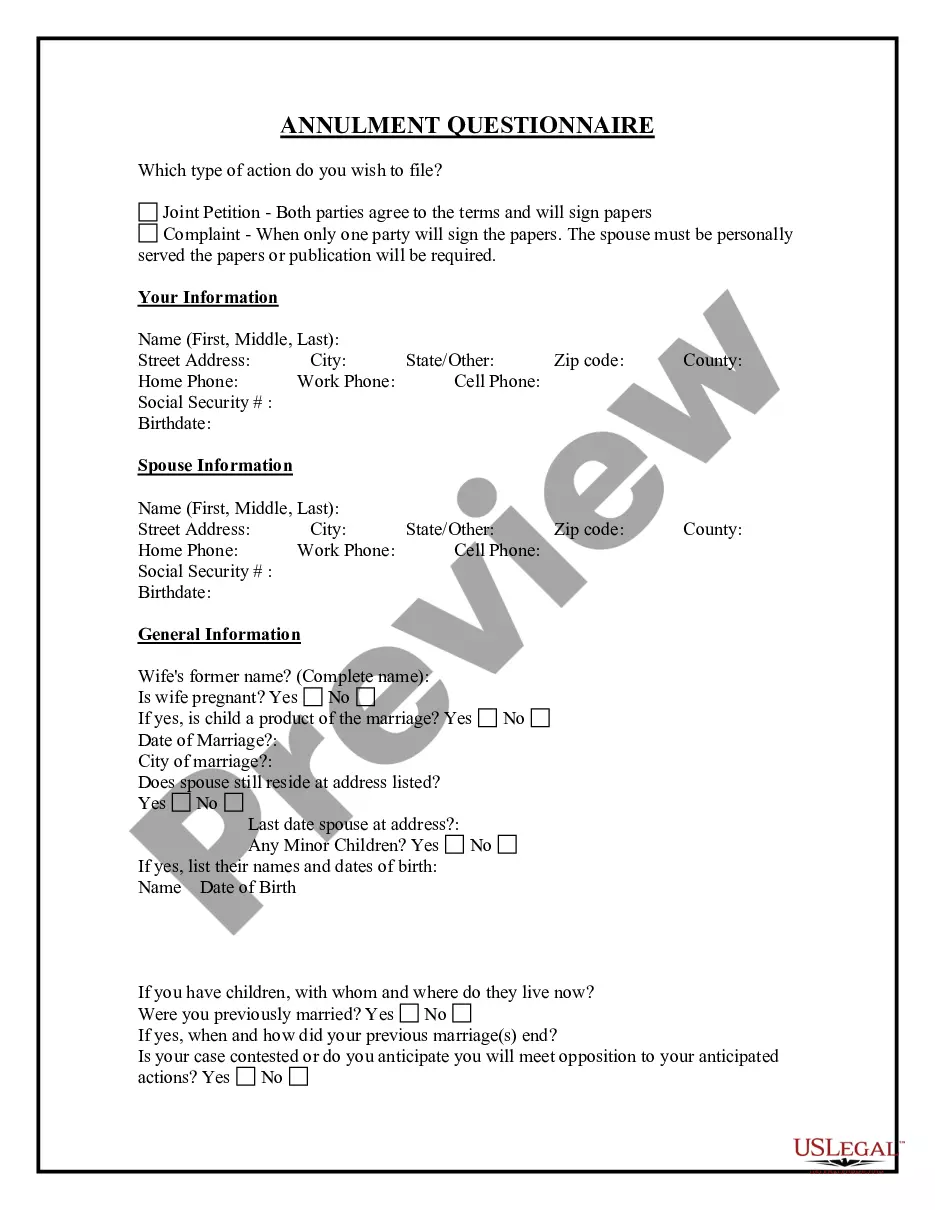
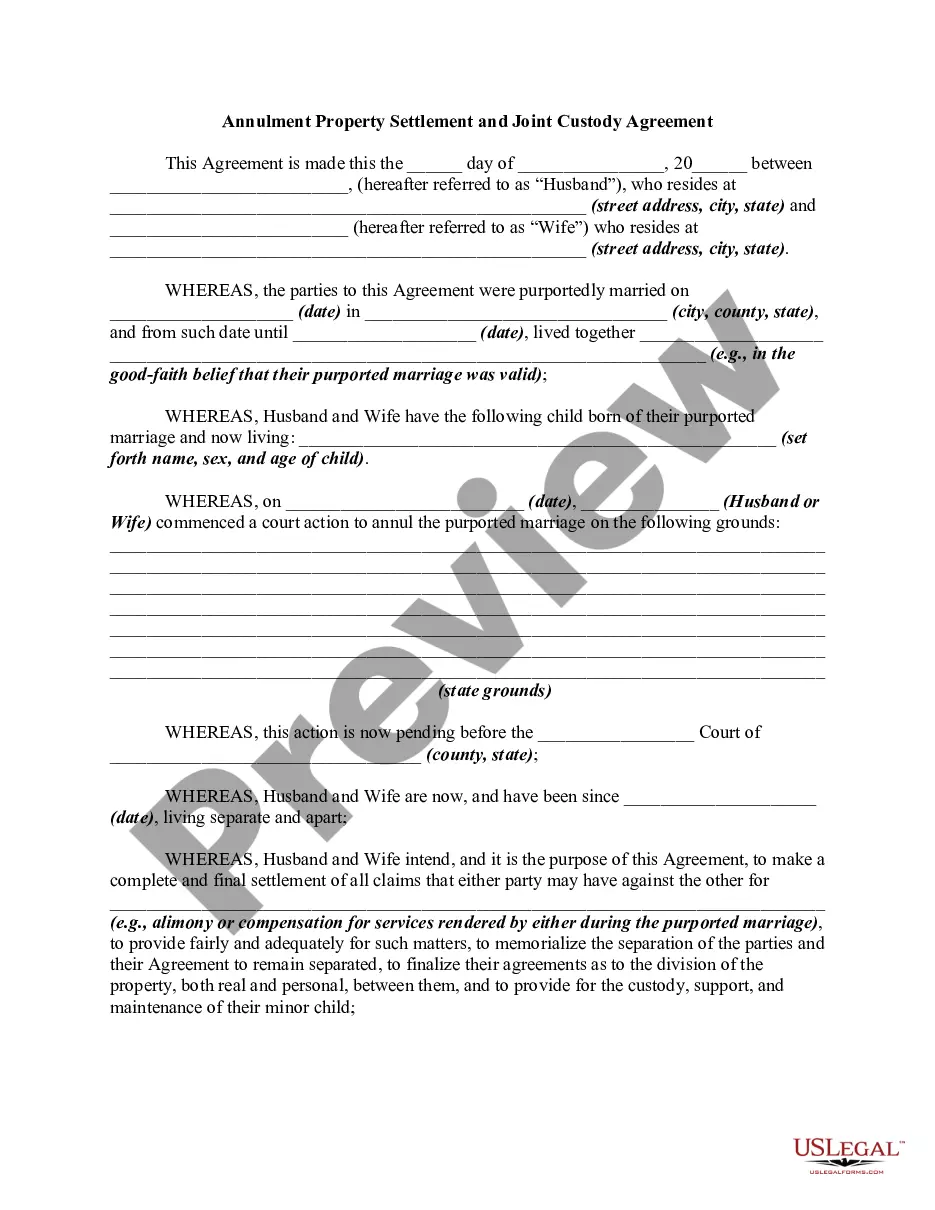
We offer thousands of annulment forms. Some of the forms offered are listed by area below. For others, please use our search engine.

Vermont Annulment Forms FAQ

What is an annulment?  An annulment is legal decree that states that a marriage was never valid. The legal effect of an annulment is to void the marriage as though it never existed. Generally, the length of time married is not a determining factor to request an annulment. Mere regret alone is generally insufficient grounds for an annulment. Laws vary by jurisdiction, so local laws should be consulted for requirements in your area.

What is the difference between annulment and divorce?  Annulment differs from divorce in that it addresses defects in a marital relationship occurring at the time of the formation of that relationship. Thus, if a marriage is illegally formed, when it is annulled the parties regain their legal rights and responsibilities as they existed before the marriage occurred. By contrast, a divorce deals with problems in a marital relationship arising after the marriage is formed. Traditionally, after a divorce the parties have continuing legal status as ex-spouses involving division of property, custody of children, and alimony.
Annulments are becoming similar to divorces in that with annulments courts may now divide marital property, order the payment of spousal support or alimony, or decree nearly anything that would be common upon a decree of divorce. Unlike with divorce, however, certain rights or entitlements such as worker's compensation benefits or alimony from a previous marriage that may have ended upon marriage will be restarted upon annulment, because the decree legally makes the marriage nonexistent

What are the grounds for an annulment?  Grounds for annulments and prohibited marriages are varied. Insanity, fraud, force, duress, impotency, being underage, and polygamy are all leading grounds for annulment. There are also a few more creative grounds. Colorado, for instance, has an annulment provision considering if the act were done as "Jest or Dare." A couple of states will also make a marriage void or voidable if a party is found to have AIDS or venereal disease.

Top Questions about Vermont Annulment Forms

  • Can you get divorced without being separated first?

    Yes, you can get divorced without a prior separation in Vermont. The law allows couples to file for divorce without an extended period of separation. It’s important to follow the correct procedures and complete the required documents like Vermont Annulment Forms to facilitate a smooth divorce process.

  • Can I divorce without going to court?

    Yes, you can often divorce without going to court by using alternative methods such as mediation or uncontested divorce procedures. You may still need to file specific documents, including Vermont Annulment Forms, but the court appearance can be avoided if all parties agree. This option can save time and reduce stress during your divorce process.

  • What states require separation before divorce?

    Some states do require a period of separation before a divorce can be finalized. These requirements can differ, so it’s crucial to research individual state laws. Understanding these regulations will help clarify the process, especially when preparing Vermont Annulment Forms.

  • How long does it take for an annulment to be approved?

    The time it takes for an annulment to be approved in Vermont varies by case, but generally, it can be resolved within a few months. Factors such as court schedules and specific circumstances surrounding your marriage play a role. To ensure a streamlined process, utilizing Vermont Annulment Forms correctly is essential.

  • Do you have to be separated before divorce in Vermont?

    In Vermont, you do not need to be separated before filing for divorce. You can directly initiate the divorce process without any mandatory separation period. However, understanding the implications of filing and the use of Vermont Annulment Forms can help you navigate the case more smoothly.

  • What are the different types of annulment?

    Annulments can vary significantly based on the reasons for seeking one. Common types include those based on fraud, lack of capacity, or failure to consummate the marriage. By using Vermont annulment forms, you can select the appropriate type that matches your situation, helping to streamline the process.

  • How do I get annulment papers?

    To obtain Vermont annulment forms, start by visiting the official website or a reputable legal document service like US Legal Forms. These platforms provide up-to-date forms tailored for Vermont annulment procedures. Once you access these forms, ensure you follow the instructions carefully to complete your annulment application successfully.

  • What is the most acceptable ground for annulment?

    The most acceptable ground for annulment often relates to lack of capacity, such as being underage or mentally incompetent at the time of marriage. This ground is widely recognized in legal proceedings and is generally easier to prove. It is essential to document your claims effectively on Vermont Annulment Forms. Our platform provides the necessary tools to accurately outline your case.

  • How do you write an annulment?

    Writing an annulment requires a clear understanding of your situation and the applicable laws. Start by gathering your information and using the appropriate Vermont Annulment Forms, which guide you through the necessary details. Accurately completing these forms increases your chances of a smooth process. Our platform also offers templates that simplify this task.

  • What percentage of annulments are denied?

    Annulments can be complex, and often, a notable percentage is denied. In Vermont, factors like insufficient evidence or failure to meet legal criteria commonly influence these outcomes. It is important to have the correct Vermont Annulment Forms to ensure you present your case effectively. Utilizing our resources can help clarify your situation and improve your chances of success.