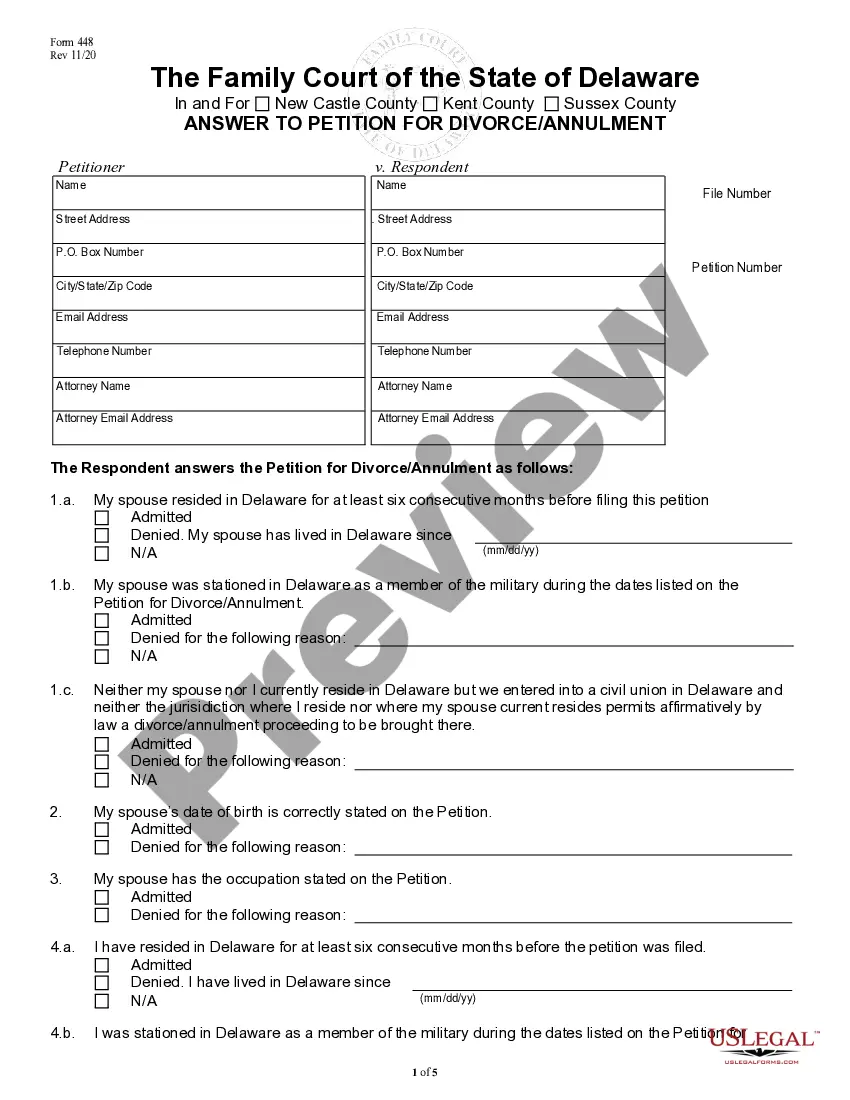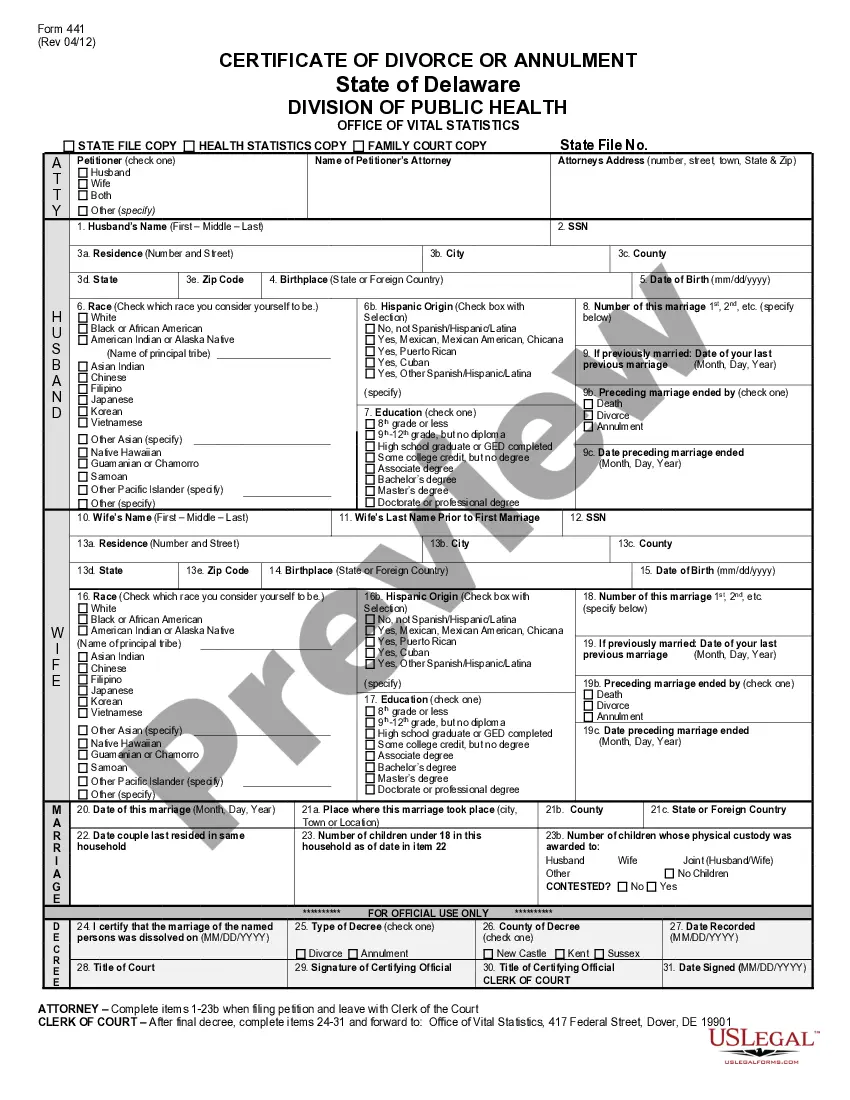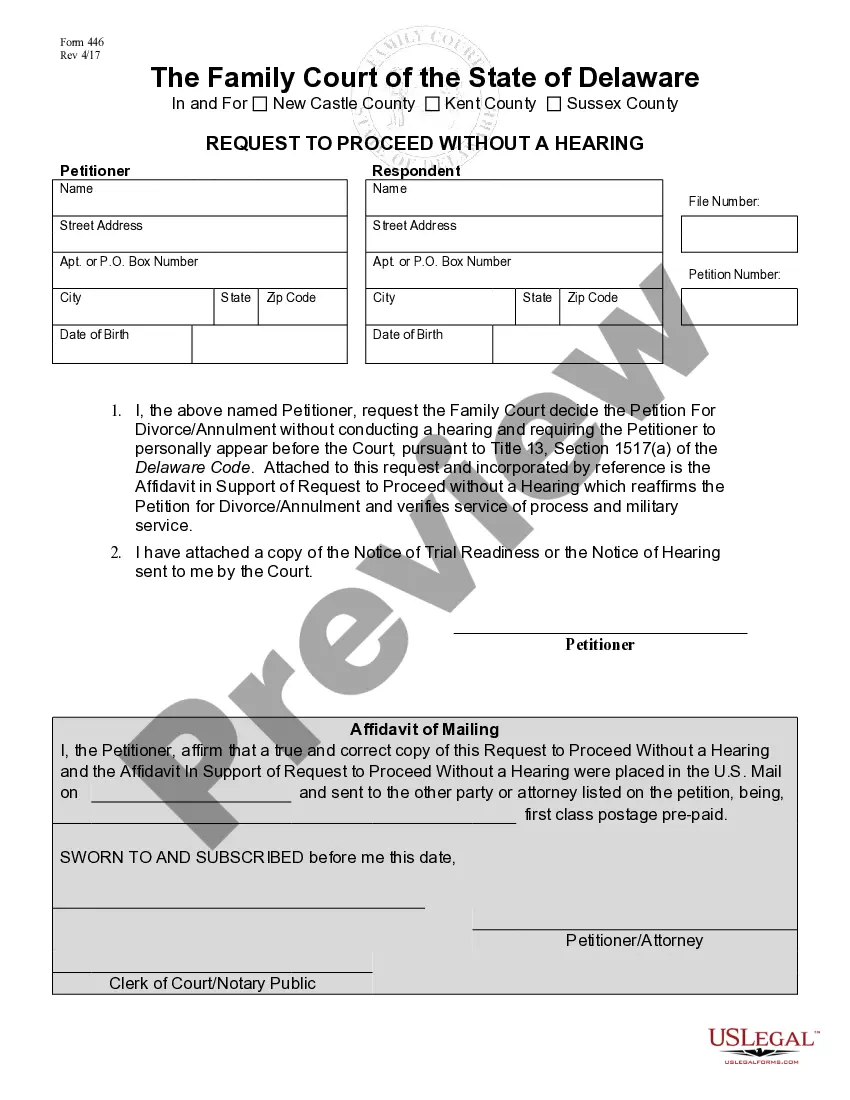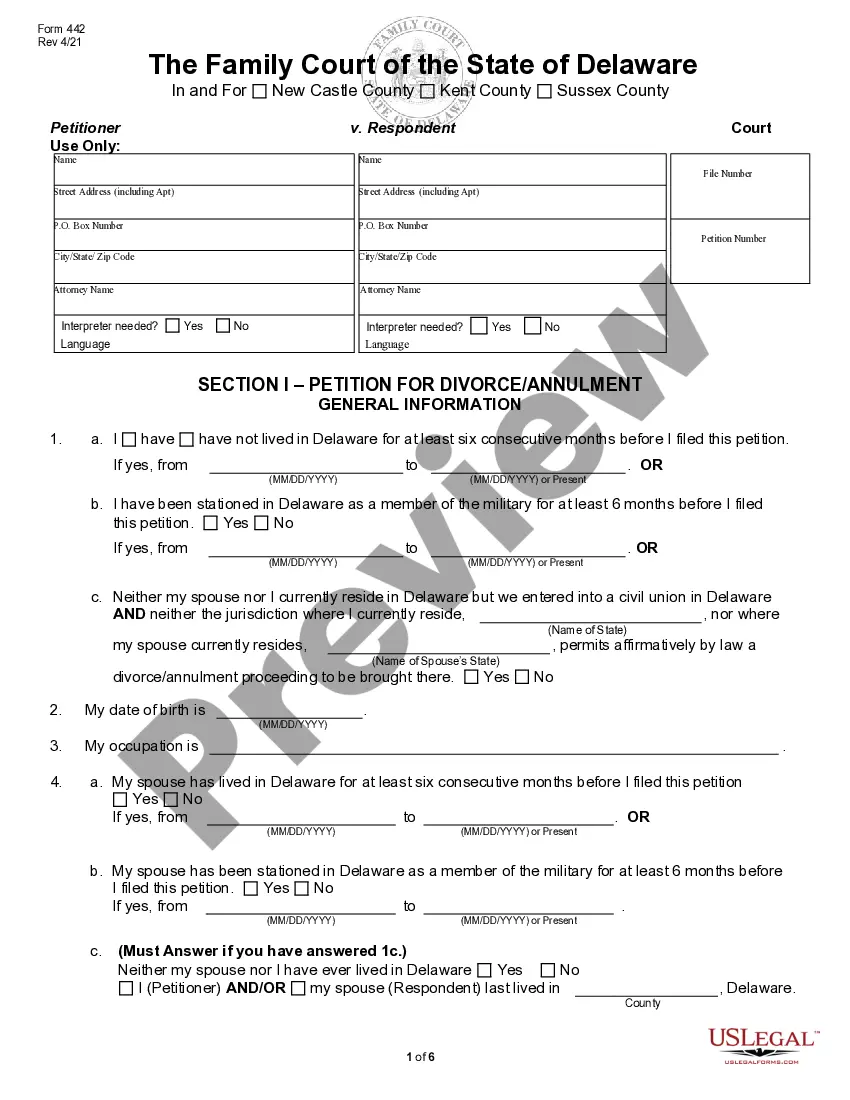
Delaware Annulment Forms
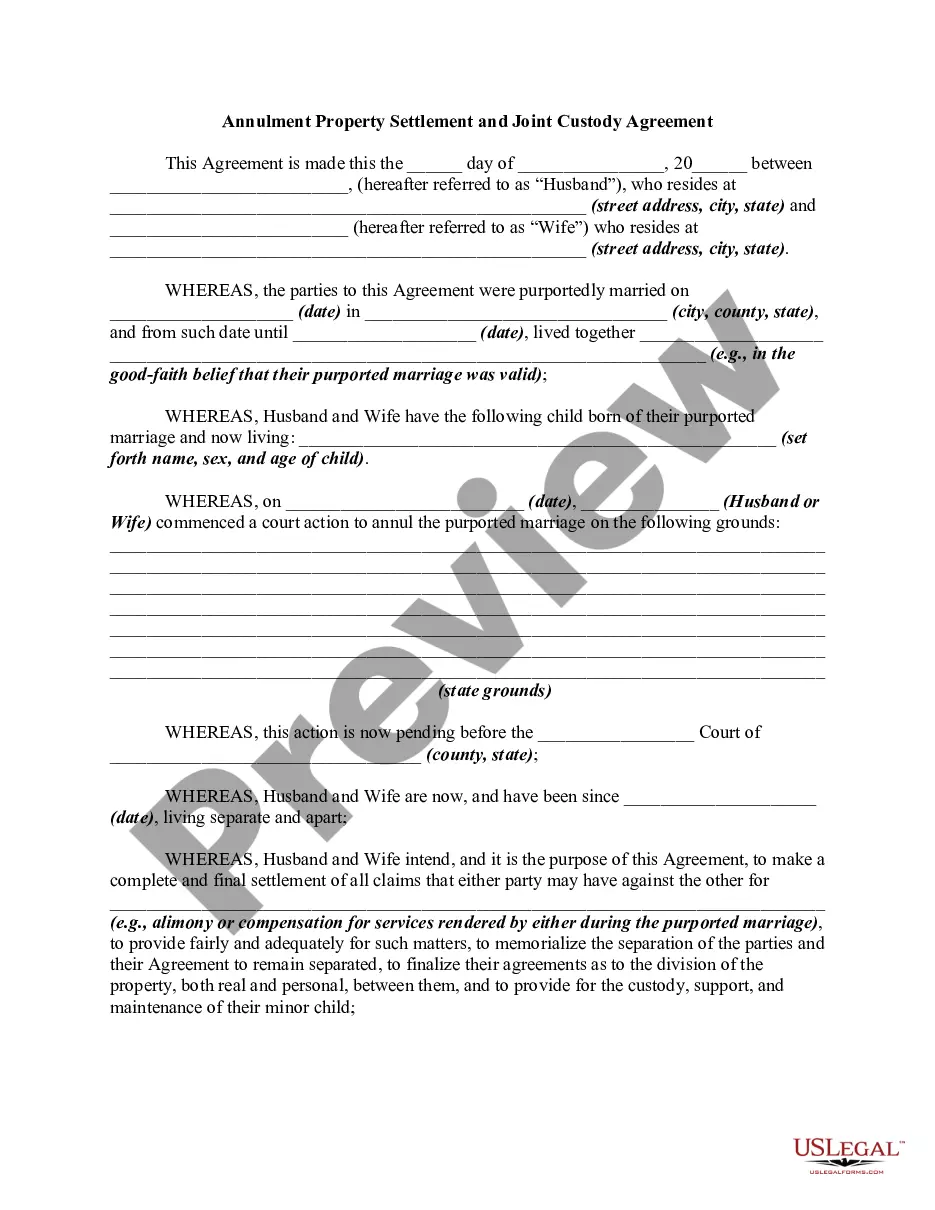
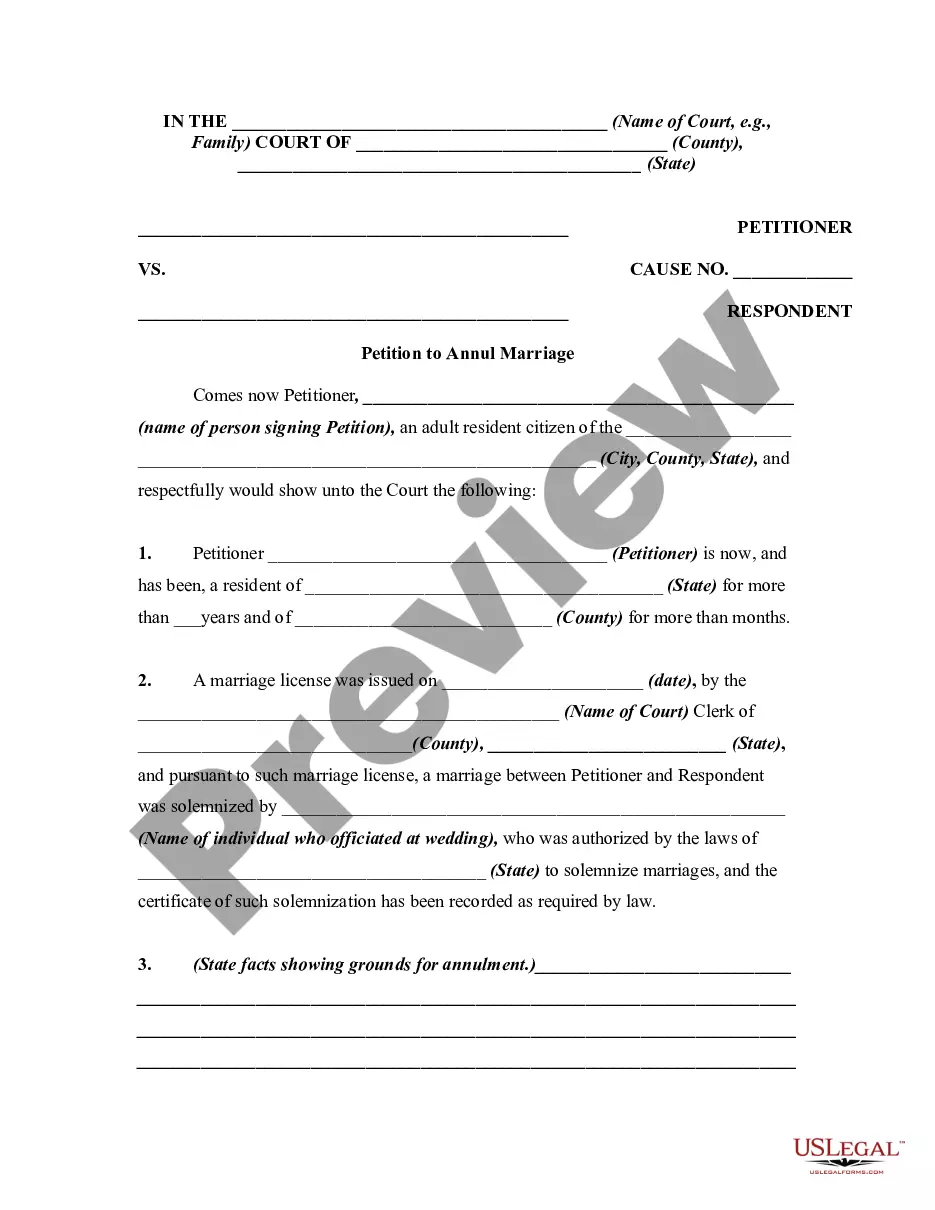
We offer thousands of annulment forms. Some of the forms offered are listed by area below. For others, please use our search engine.
Delaware Annulment Forms FAQ
What is an annulment? An annulment is legal decree that states that a marriage was never valid. The legal effect of an annulment is to void the marriage as though it never existed. Generally, the length of time married is not a determining factor to request an annulment. Mere regret alone is generally insufficient grounds for an annulment. Laws vary by jurisdiction, so local laws should be consulted for requirements in your area.
What is the difference between annulment and divorce?Â
Annulment differs from divorce in that it addresses defects in a marital relationship occurring at the time of the formation of that
relationship. Thus, if a marriage is illegally formed, when it is annulled the parties regain their legal rights and responsibilities
as they existed before the marriage occurred. By contrast, a divorce deals with problems in a marital relationship arising after the
marriage is formed. Traditionally, after a divorce the parties have continuing legal
status as ex-spouses involving division of property, custody of children, and alimony.
Annulments are becoming similar to divorces in that with annulments courts may now divide marital property, order the payment of spousal support or alimony, or decree nearly anything that would be common upon a decree of divorce. Unlike with divorce, however, certain rights or entitlements such as worker's compensation benefits or alimony from a previous marriage that may have ended upon marriage will be restarted upon annulment, because the decree legally makes the marriage nonexistent
What are the grounds for an annulment? Grounds for annulments and prohibited marriages are varied. Insanity, fraud, force, duress, impotency, being underage, and polygamy are all leading grounds for annulment. There are also a few more creative grounds. Colorado, for instance, has an annulment provision considering if the act were done as "Jest or Dare." A couple of states will also make a marriage void or voidable if a party is found to have AIDS or venereal disease.
Top Questions about Delaware Annulment Forms
-
Who gets the house in a Delaware divorce?
In Delaware, the ownership of the house is decided based on equitable distribution principles. Factors such as marital contributions and the welfare of any children involved will be considered. Ultimately, the court will aim for a fair resolution rather than equal division. If you are exploring this aspect of divorce, understanding how Delaware Annulment Forms factor into your case can provide additional clarity.
-
How do you get an annulment in Delaware?
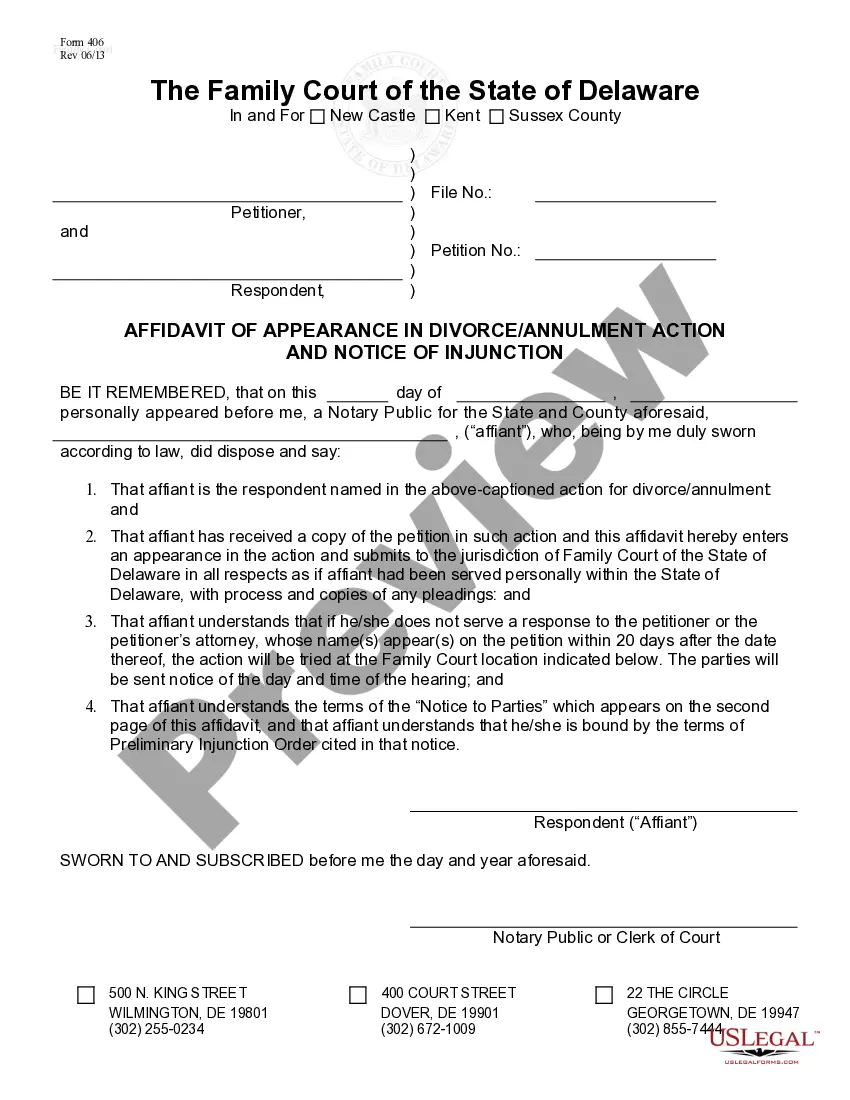
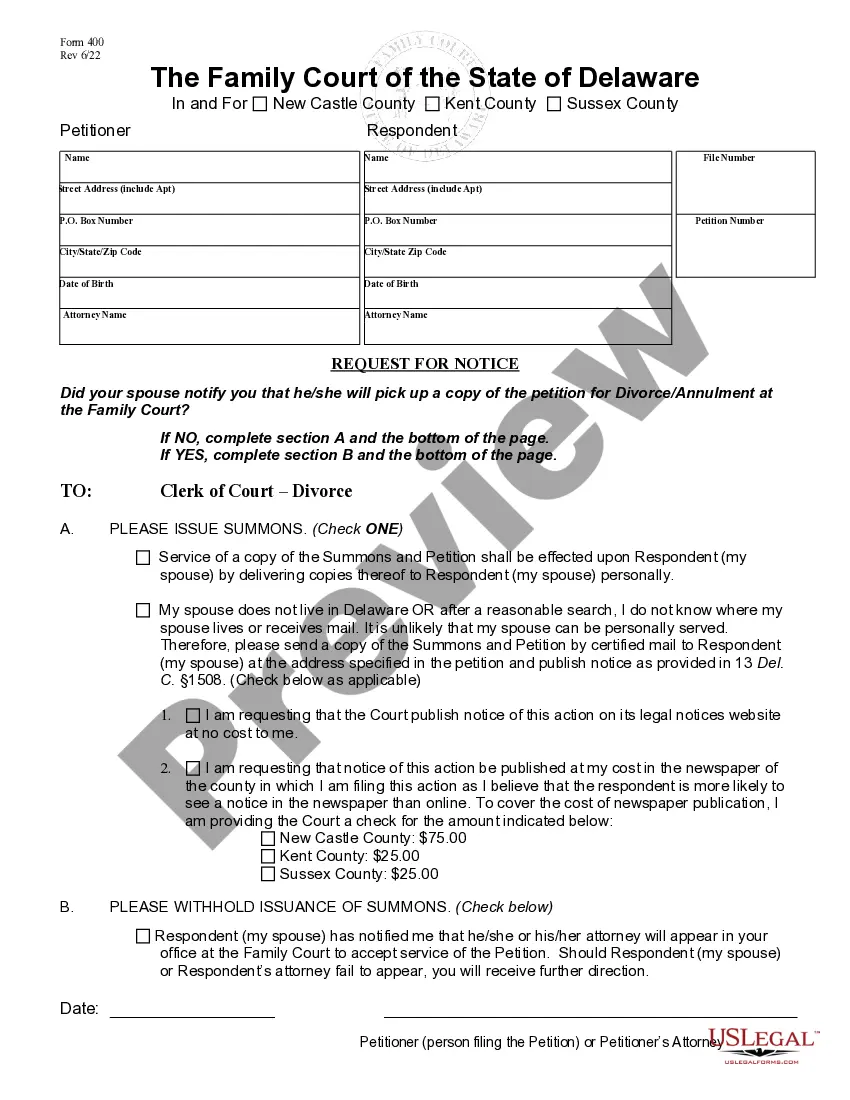
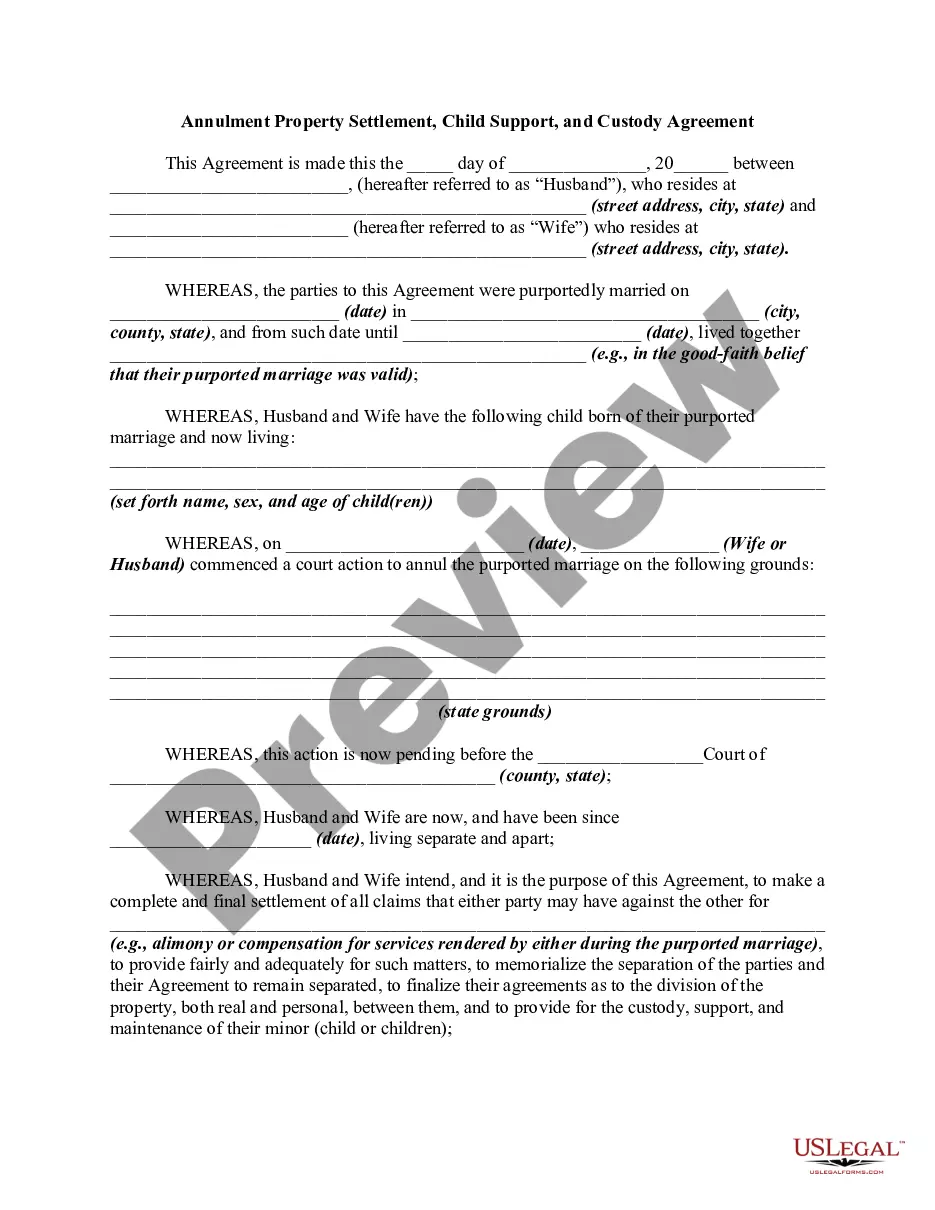
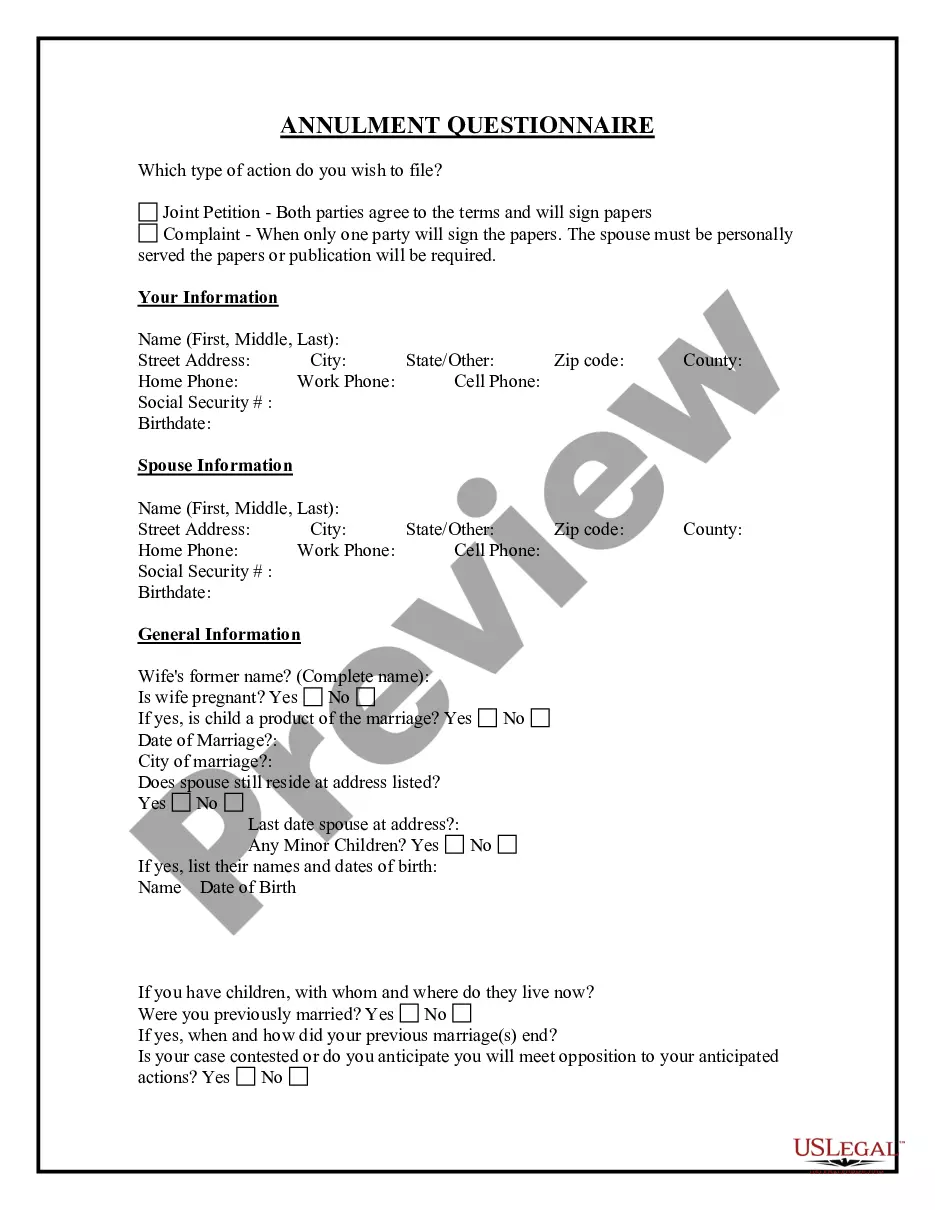
To get an annulment in Delaware, you must file the appropriate Delaware Annulment Forms in court. This process requires you to demonstrate specific grounds for annulment, such as fraud or lack of consent. After submitting your forms, a court hearing may be necessary to finalize the annulment. Utilizing a reliable platform like US Legal Forms can streamline this process and ensure you complete the paperwork correctly.
-
How are assets divided in a Delaware divorce?
In Delaware, assets are divided equitably, meaning fairly, but not necessarily equally. The court will assess various factors, including the length of the marriage and contributions made by each spouse. Understanding how assets are classified can significantly affect the outcome. Furthermore, using Delaware Annulment Forms can help you navigate these complex issues more effectively.
-
Does adultery affect divorce in Delaware?
In Delaware, adultery can influence divorce proceedings, particularly regarding the division of assets and alimony. While it is a ground for divorce, it does not automatically determine the outcome. Courts may consider the impact of adultery on the marriage, but several factors come into play. Therefore, getting a comprehensive understanding of Delaware Annulment Forms can help clarify your options.
-
Why would someone want an annulment instead of a divorce?
Someone might prefer an annulment over a divorce when they believe the marriage was never valid. An annulment provides a clean slate, allowing individuals to legally declare that the marriage never existed. This can simplify matters related to property division and future relationships. Utilizing the correct Delaware Annulment Forms ensures that the annulment process is handled correctly and efficiently.
-
What qualifies for annulment in Delaware?
In Delaware, certain conditions qualify for annulment, which declaration makes a marriage void. Grounds for annulment may include fraud, coercion, or if one party was underage at the time of marriage. Additionally, if couples have not cohabited after marriage or have a marriage that is inherently invalid, annulment may be an option. It's advisable to utilize Delaware Annulment Forms to navigate this complex process effectively.
-
How many years do you have to be married to get alimony in Delaware?
In Delaware, there is no set number of years you must be married to qualify for alimony, but longer marriages generally carry more weight in alimony considerations. Courts evaluate factors like the length of the marriage, financial needs, and the standard of living during the marriage when deciding alimony awards. If you believe your marriage should be annulled instead of divorced, Delaware annulment forms could help clarify your financial position moving forward.
-
Can you get divorced without being separated first?
Yes, you can get divorced in Delaware without first separating from your spouse. If both parties agree to the terms of the divorce, you can process the divorce without any required separation period. This can often expedite the process, especially for couples who have amicably resolved their issues. However, if you believe your marriage is invalid, consider investigating Delaware annulment forms to determine if that route is more appropriate.
-
What is the difference between divorce and annulment in Delaware?
In Delaware, the main difference between divorce and annulment lies in the legal acknowledgment of the marriage. Divorce means the marriage is legally dissolved, while annulment declares that the marriage was never valid from the start. If you are considering Delaware annulment forms, it’s essential to understand that annulment can nullify certain rights associated with marriage, such as property division. This distinction can greatly impact your future, so examining your specific circumstances is crucial.
-
What is marital misconduct in Delaware?
Marital misconduct in Delaware may refer to behaviors such as infidelity, abuse, or addiction that negatively affect the marriage. This kind of misconduct can influence divorce proceedings, particularly in determining alimony and property distribution. If you find yourself dealing with these challenging issues, consider using Delaware Annulment Forms as part of your strategy in addressing misconduct implications.