Alabama Revocation of Advance Health Care Directive
About this form
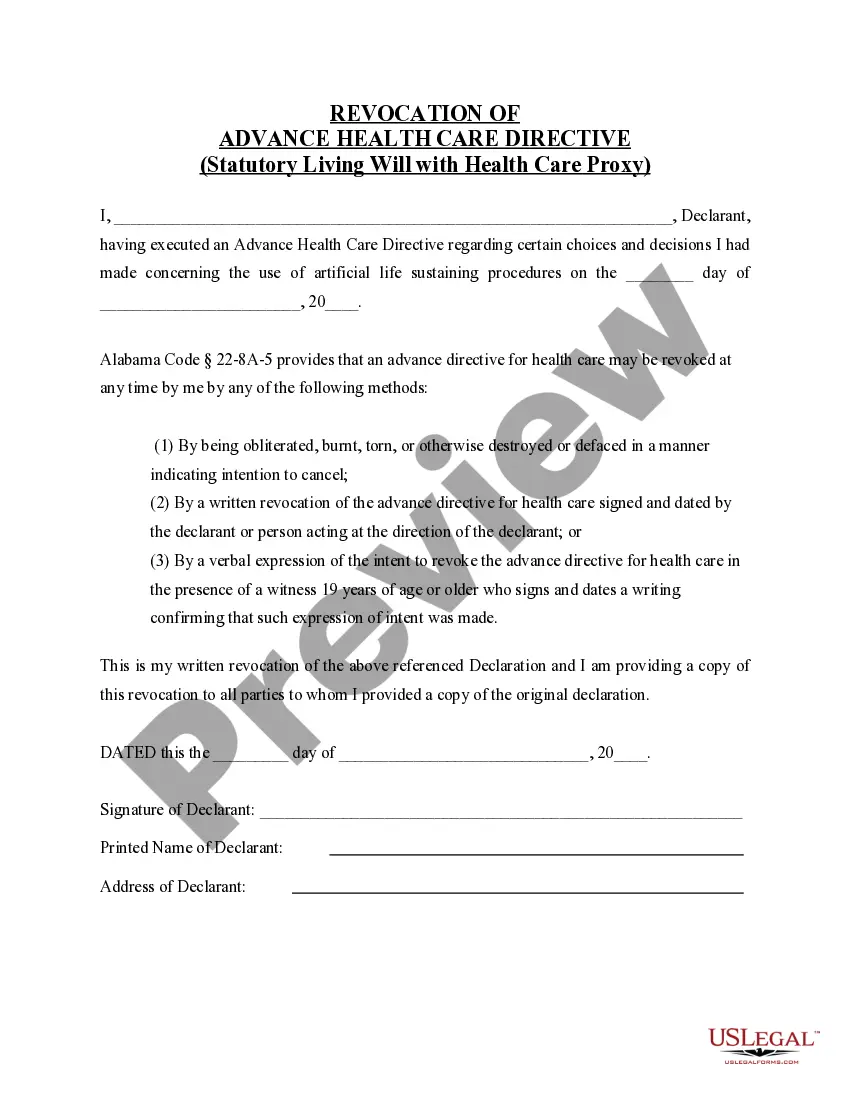
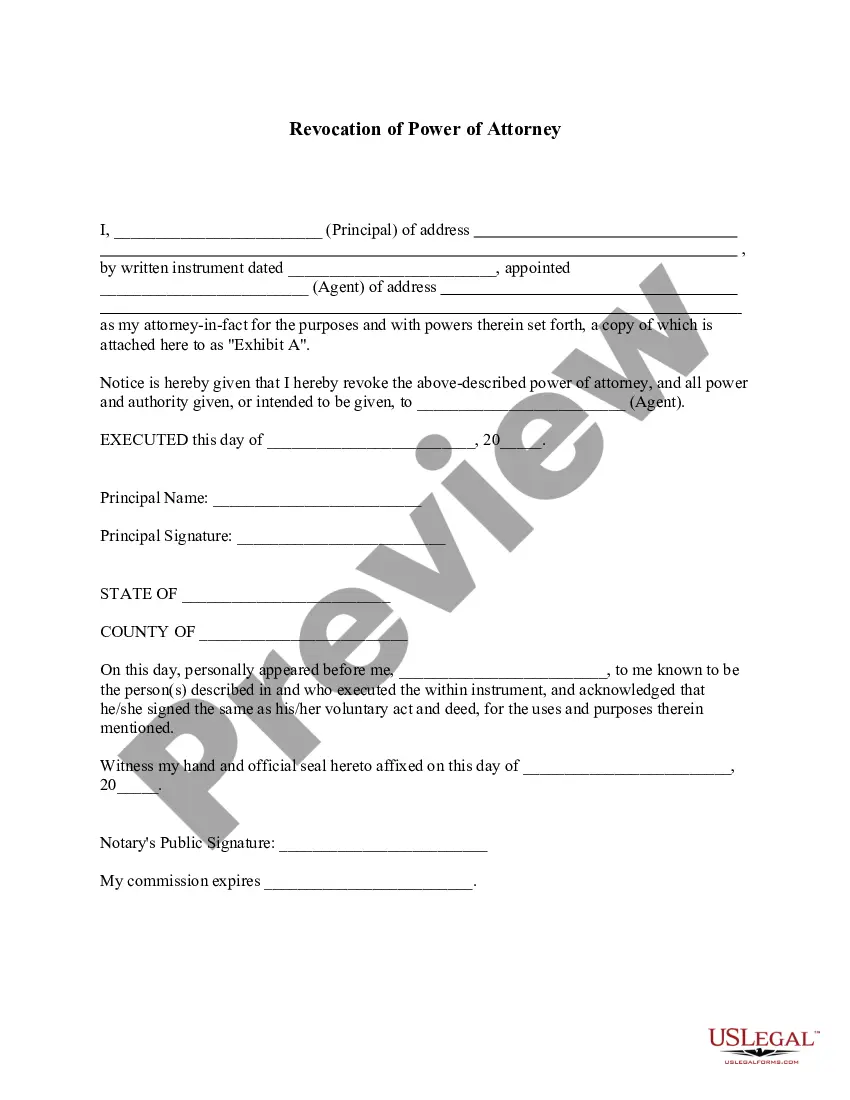
The Revocation of Advance Health Care Directive is a legal document that allows you to cancel a previously executed living will. This form clarifies your healthcare preferences and revokes the prior instructions regarding artificial life-sustaining procedures. It is crucial for ensuring that your updated wishes are clearly communicated, especially in situations where your medical condition may prevent you from expressing them verbally.
Key components of this form
- Declarant's personal information, including name and date of birth.
- Specific date when the Advance Health Care Directive was originally executed.
- Methods of revoking the directive, including destruction or written revocation.
- Statement of intent to revoke the previously established living will.
- Signature of the declarant to confirm the revocation.
- Date of signature to validate the revocation notice.
When to use this document
You should use the Revocation of Advance Health Care Directive if you have previously created a living will and wish to change your end-of-life care preferences. This might occur if your health situation changes, if you change your mind about the care you want, or if you want to ensure your current wishes are clearly documented and known by healthcare providers.
Who can use this document
- Individuals who have an existing Advance Health Care Directive and want to revoke it.
- Patients who are receiving medical care and want to update their treatment preferences.
- Those who wish to ensure their healthcare decisions align with their current values and beliefs.
How to complete this form
- Fill in your full name as the declarant at the top of the form.
- Enter the date you originally executed your Advance Health Care Directive.
- Review the methods of revocation and indicate the option you choose (e.g., written revocation).
- Sign and date the form to validate the revocation.
- Keep a copy of this form and provide copies to any parties who received the original directive.
Does this document require notarization?
Notarization is not commonly needed for this form. However, certain documents or local rules may make it necessary. Our notarization service, powered by Notarize, allows you to finalize it securely online anytime, day or night.
Get your form ready online
Our built-in tools help you complete, sign, share, and store your documents in one place.
Make edits, fill in missing information, and update formatting in US Legal Forms—just like you would in MS Word.
Download a copy, print it, send it by email, or mail it via USPS—whatever works best for your next step.
Sign and collect signatures with our SignNow integration. Send to multiple recipients, set reminders, and more. Go Premium to unlock E-Sign.
If this form requires notarization, complete it online through a secure video call—no need to meet a notary in person or wait for an appointment.
We protect your documents and personal data by following strict security and privacy standards.

Make edits, fill in missing information, and update formatting in US Legal Forms—just like you would in MS Word.

Download a copy, print it, send it by email, or mail it via USPS—whatever works best for your next step.

Sign and collect signatures with our SignNow integration. Send to multiple recipients, set reminders, and more. Go Premium to unlock E-Sign.

If this form requires notarization, complete it online through a secure video call—no need to meet a notary in person or wait for an appointment.

We protect your documents and personal data by following strict security and privacy standards.
Typical mistakes to avoid
- Not providing the date on which the original directive was executed.
- Failing to sign and date the revocation form.
- Not notifying relevant parties about the revocation.
Why use this form online
- Immediate access to a legally compliant document.
- Easy personalization and editing to fit your specific needs.
- Secure storage of your healthcare preferences for easy reference.
Looking for another form?






Form popularity
FAQ
Alabama Code 22 encompasses a range of laws, including those related to health, welfare, and public health. It provides the statutory framework for various health-related directives, including advance health care directives. Having a thorough understanding of Alabama Code 22 is important for anyone interested in the Alabama Revocation of Advance Health Care Directive.
The Natural Death Act in Alabama allows individuals to make decisions regarding their end-of-life care. It supports the rights of patients to refuse extraordinary medical treatment under certain circumstances. Understanding this act is vital when considering the implications of the Alabama Revocation of Advance Health Care Directive.
Alabama Code 22 8A 11 relates to the revocation of an advance health care directive. This section outlines how individuals can legally revoke their directives when their circumstances change or if they wish to alter their health care decisions. Familiarizing yourself with this code is essential for effectively managing the Alabama Revocation of Advance Health Care Directive.
Code 13A 8 11 in Alabama refers to the laws regarding the unlawful termination of a pregnancy, which is separate from health care directives. However, knowing the legal landscape around health-related codes can complement your understanding of the Alabama Revocation of Advance Health Care Directive.
Any adult over 19 years old in Alabama has the right to create an advance directive. This directive allows you to specify your healthcare preferences in advance. By knowing your eligibility, you can take proactive steps to implement your wishes concerning the Alabama Revocation of Advance Health Care Directive.
In Alabama, if there is no power of attorney, medical decisions may fall to a spouse, adult children, or parents in that order. If family members are unavailable, the healthcare provider may make determinations on behalf of the patient. Understanding who has authority in such situations is crucial, especially when considering the implications of the Alabama Revocation of Advance Health Care Directive.
Alabama Code 22 8 pertains to the laws governing advance health care directives in Alabama. It establishes the framework for how individuals can prepare and revoke these directives. Understanding this code is essential for everyone looking to ensure their medical wishes are respected, especially in relation to the Alabama Revocation of Advance Health Care Directive.
An advance directive can be deemed invalid in Alabama for several reasons, including lack of proper signatures, failure to meet state requirements, or if it was created under duress or without adequate understanding. Additionally, if you create a more recent directive, it can automatically revoke any previous documents. To ensure your advance directive remains valid, always double-check that it follows legal guidelines. Being aware of these factors can help maintain your Alabama advance health care directive's effectiveness.
A physician in Alabama may not go against a patient’s advance directives unless they feel that the directives do not align with accepted medical standards or if they are deemed invalid. However, it is essential that you discuss your directives with your healthcare providers to avoid any conflict and misunderstanding. Ensuring clarity about your wishes enhances compliance and respects your autonomy as a patient. This understanding reinforces the significance of having a valid Alabama advance health care directive.
Generally, family members cannot override a living will in Alabama unless you have granted them that authority within your advance directive. A living will specifies your healthcare preferences, which must be honored by healthcare providers. However, if a dispute arises and your wishes are unclear, family members may challenge the directives in court. Therefore, it is crucial to clearly express your preferences to prevent misunderstandings regarding your Alabama advance health care directive.