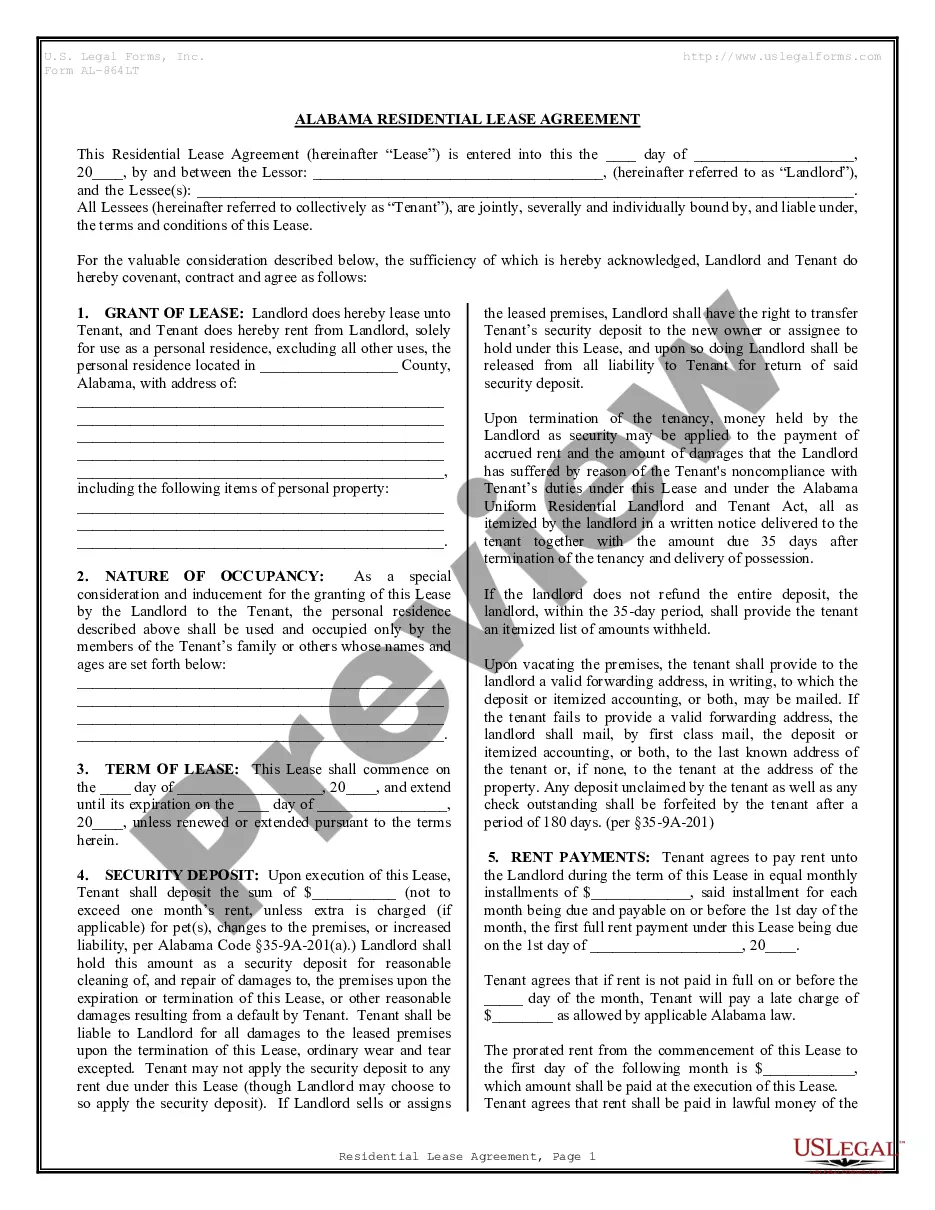
Alabama Residential Rental Lease Agreement
Understanding this form
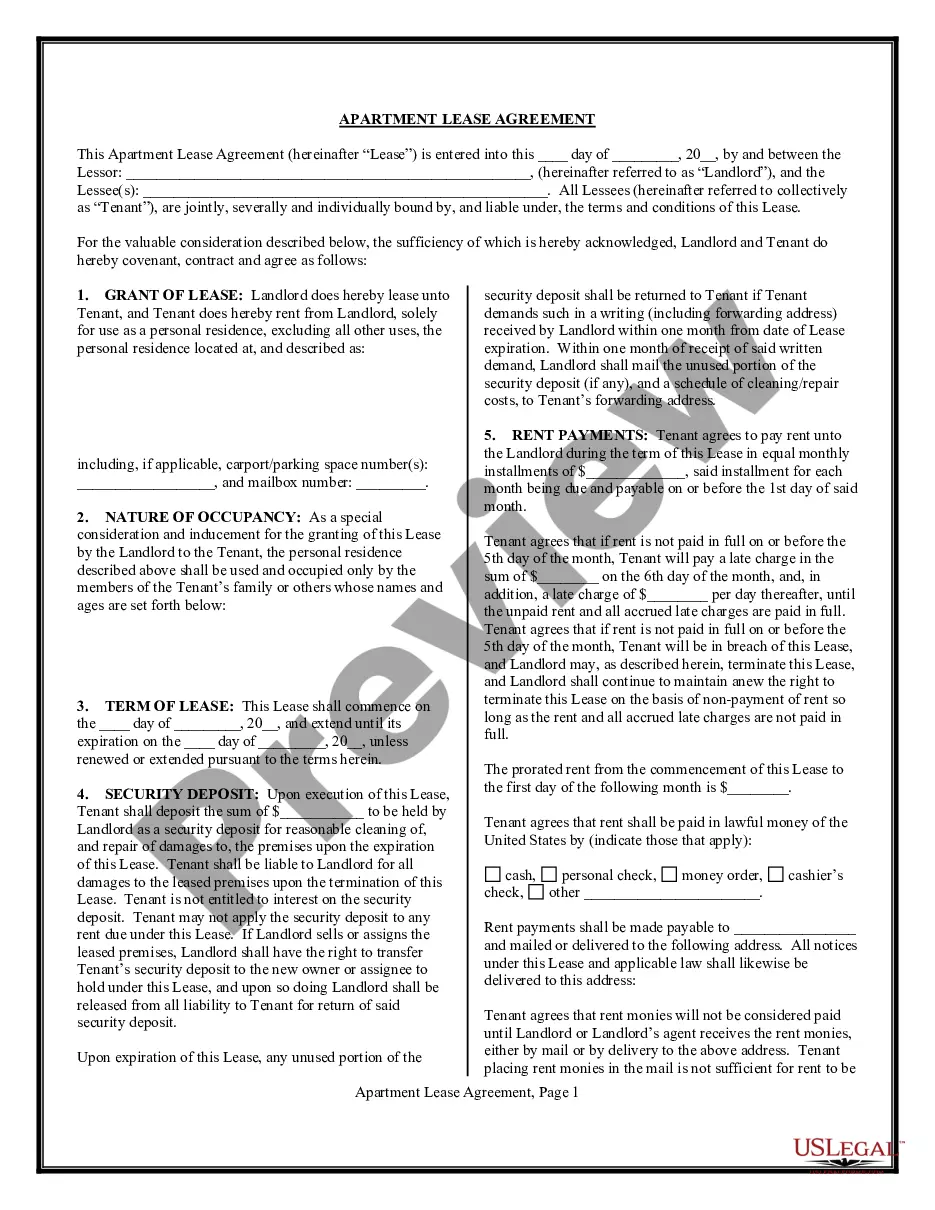
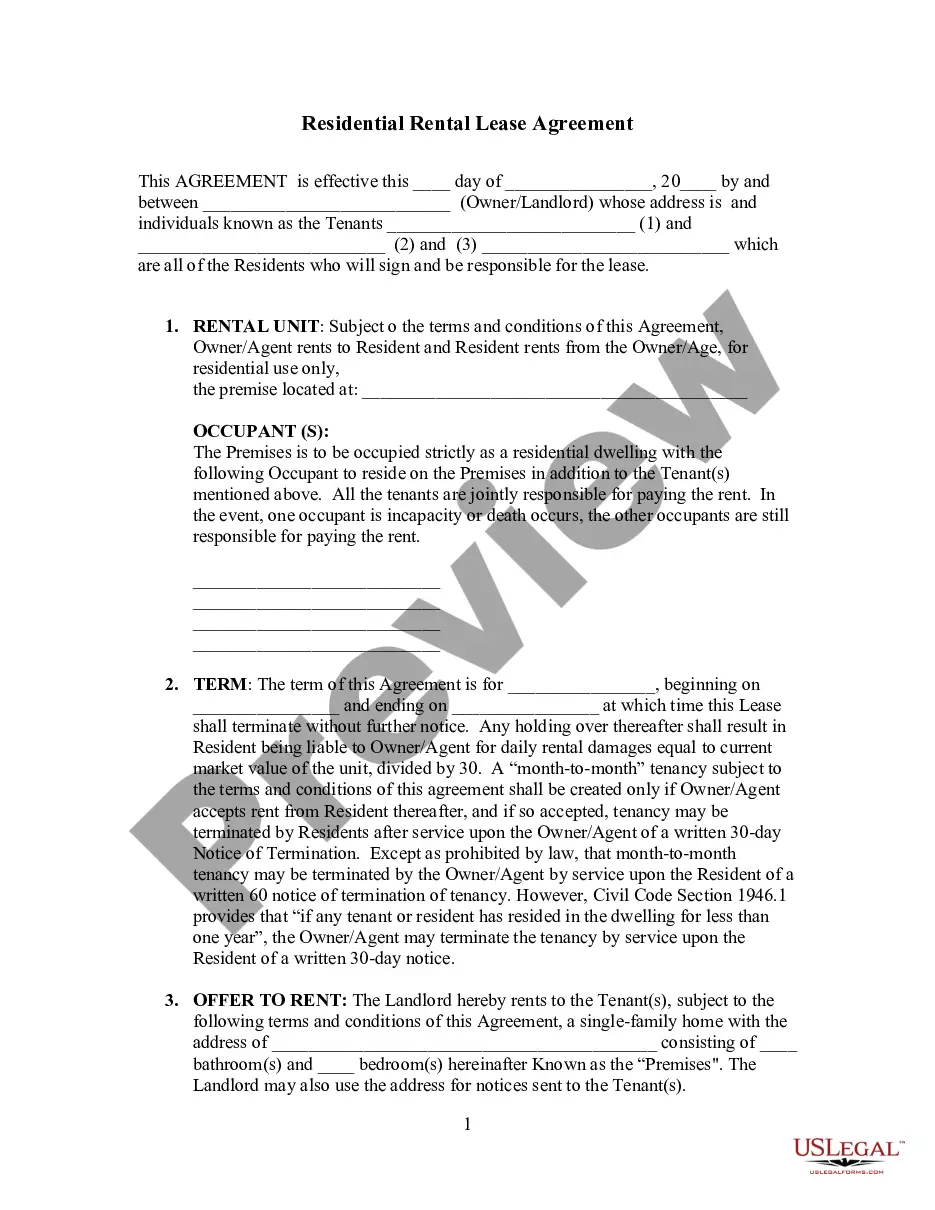
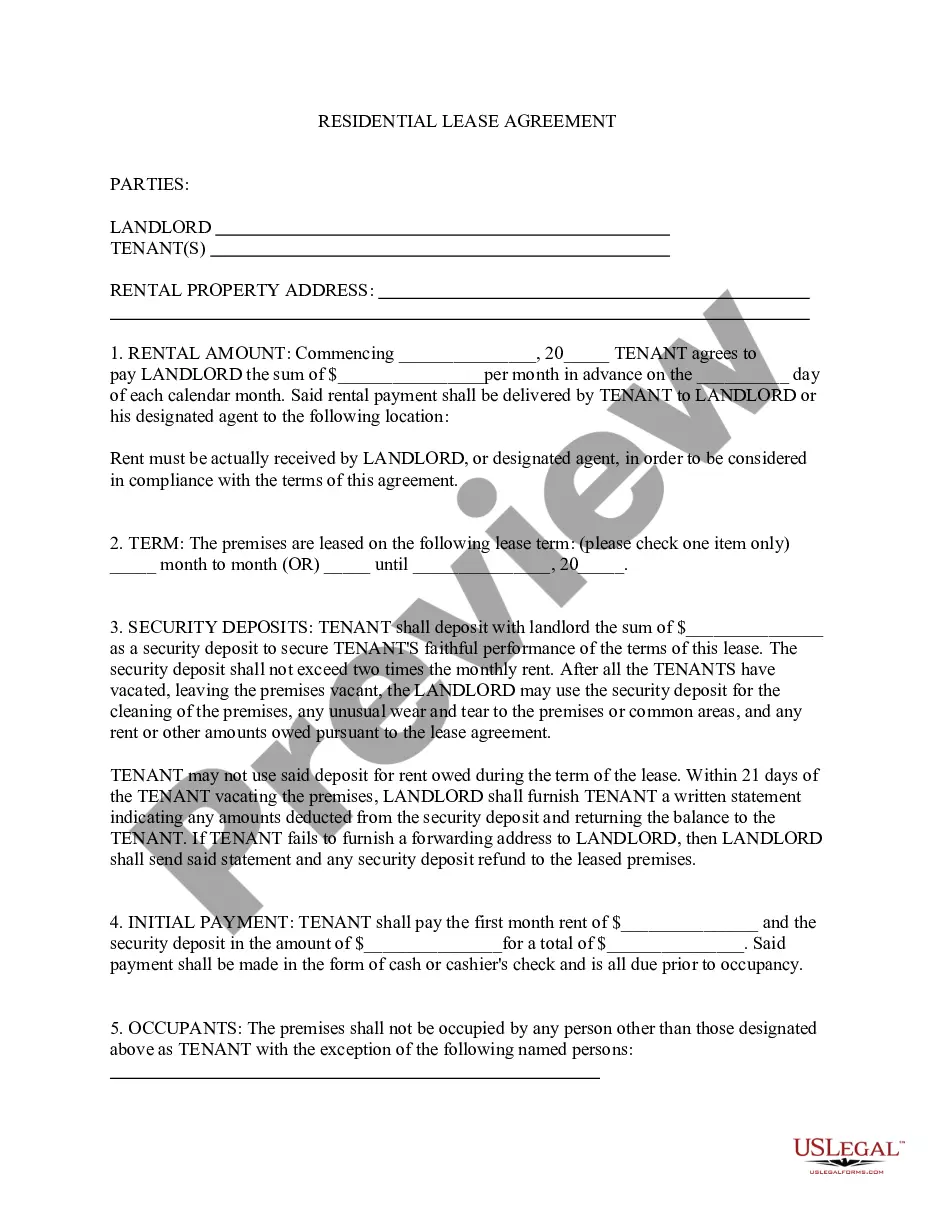
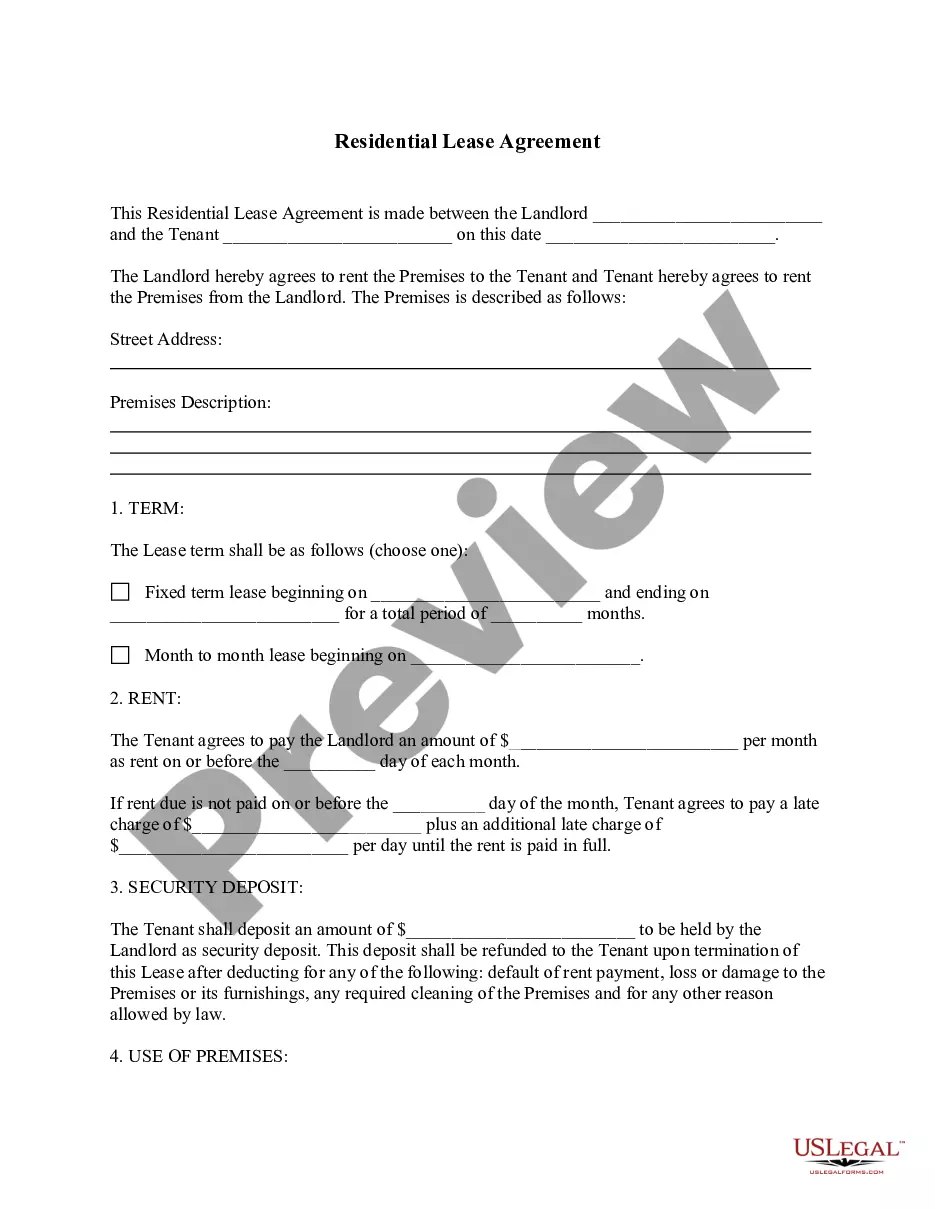
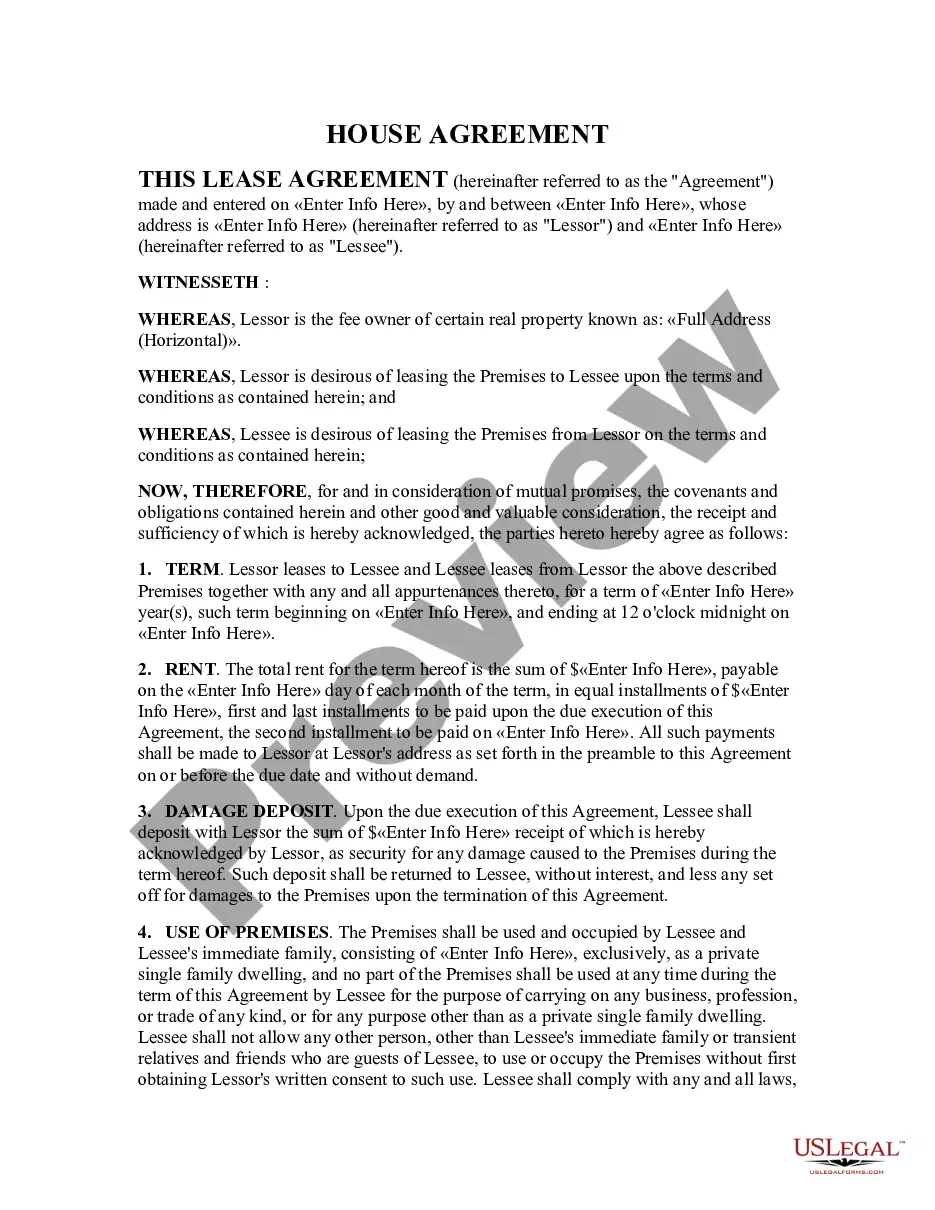
The Residential Rental Lease Agreement is a legal document used by landlords and tenants to outline the terms and conditions of renting residential property. This lease is specifically designed for fixed-term rental agreements, typically lasting from six months to several years. It provides clear guidelines that help protect both parties' rights and responsibilities during the tenancy, ensuring a mutual understanding of occupancy, payment, and maintenance expectations.
Form components explained
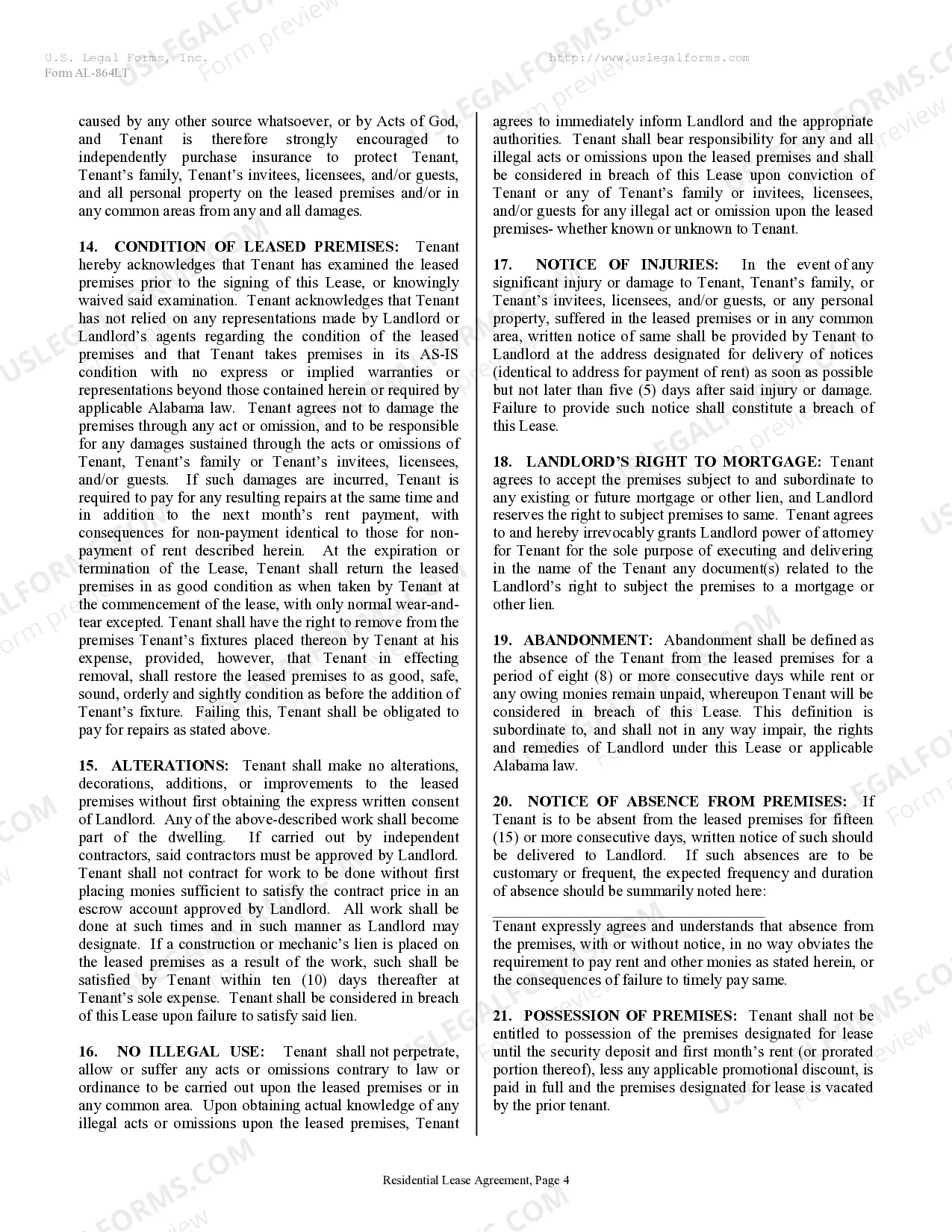
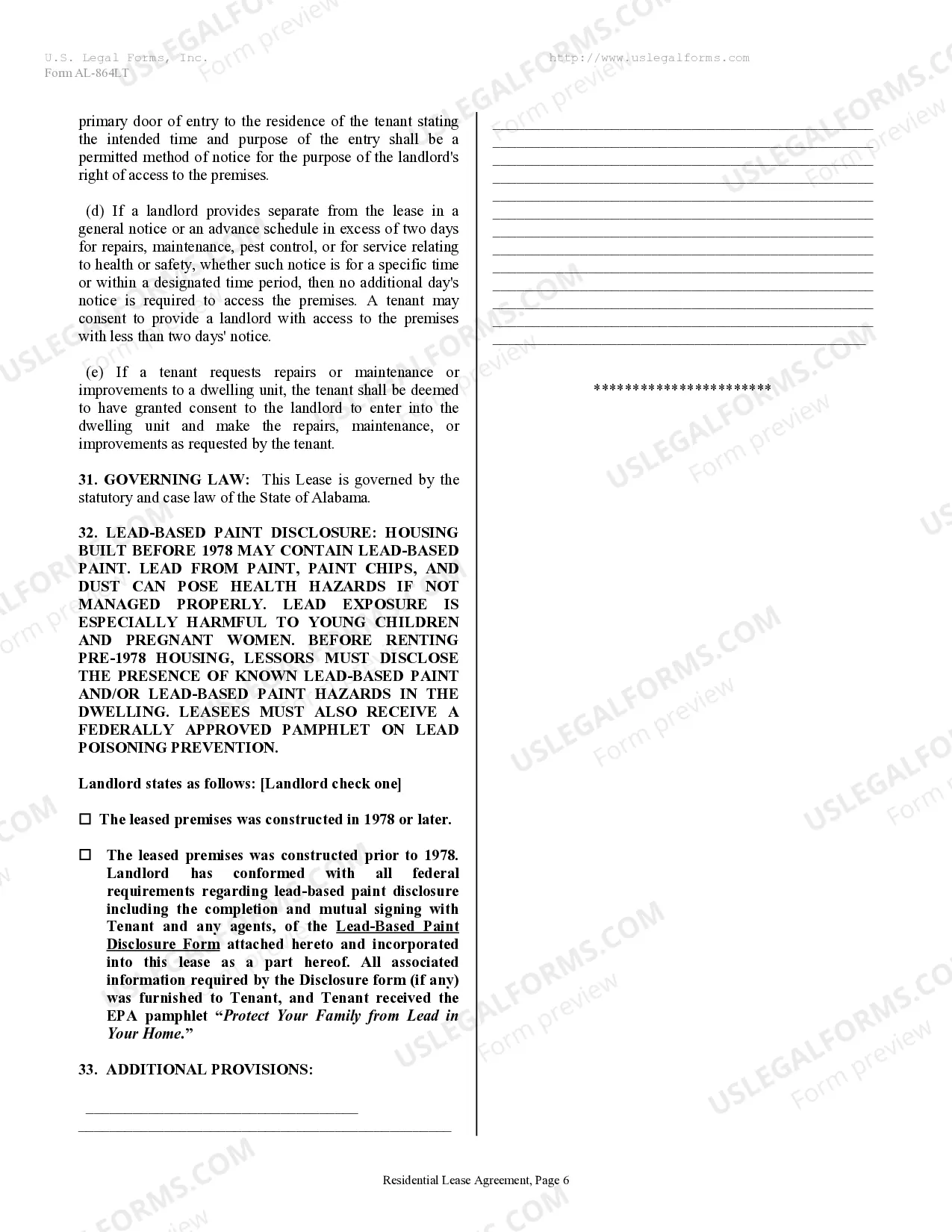
- Grant of Lease - Specifies the property being rented and its intended use.
- Rent Payments - Details the rental amount, due dates, and payment methods.
- Security Deposit - Outlines the conditions under which the deposit is held and refunded.
- Term of Lease - States the duration of the lease agreement.
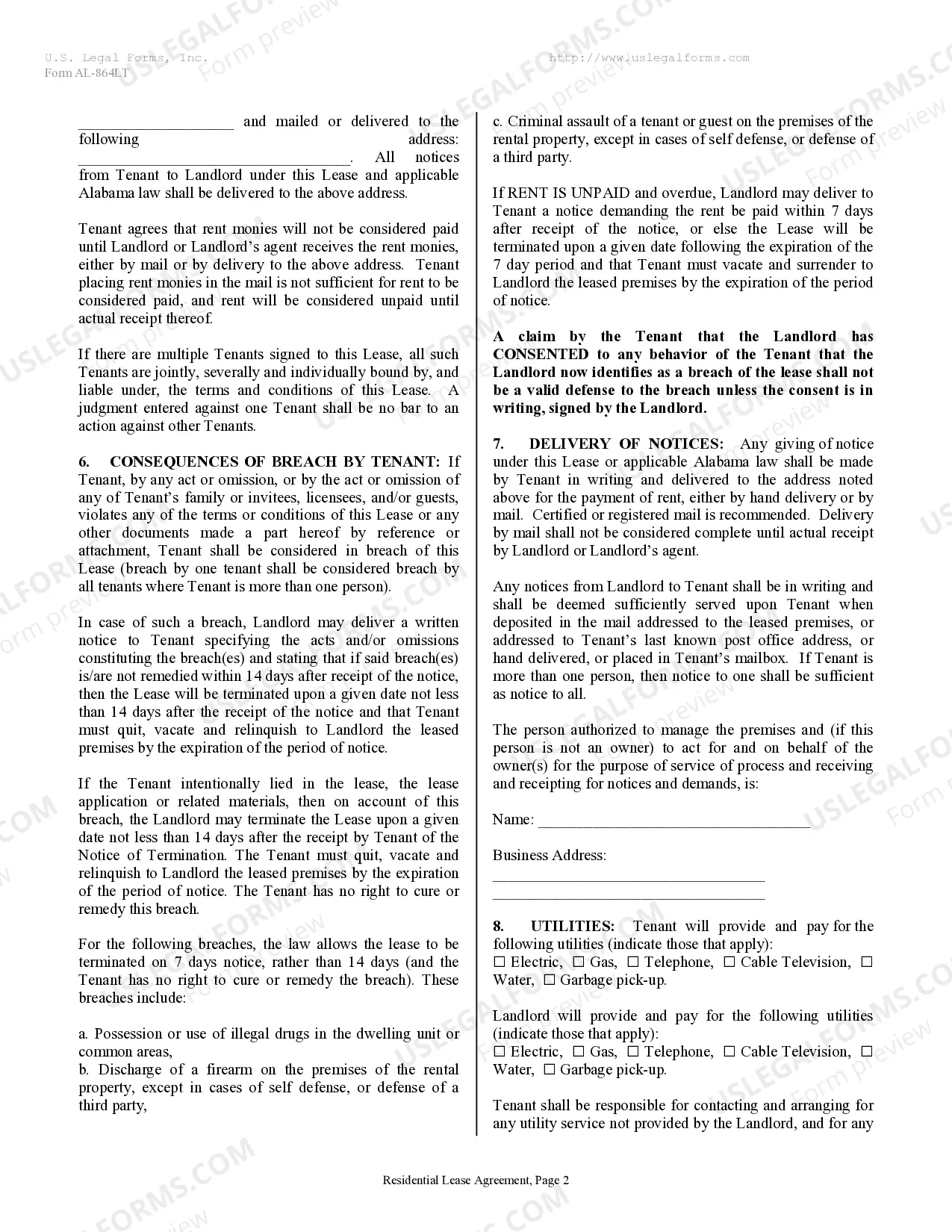
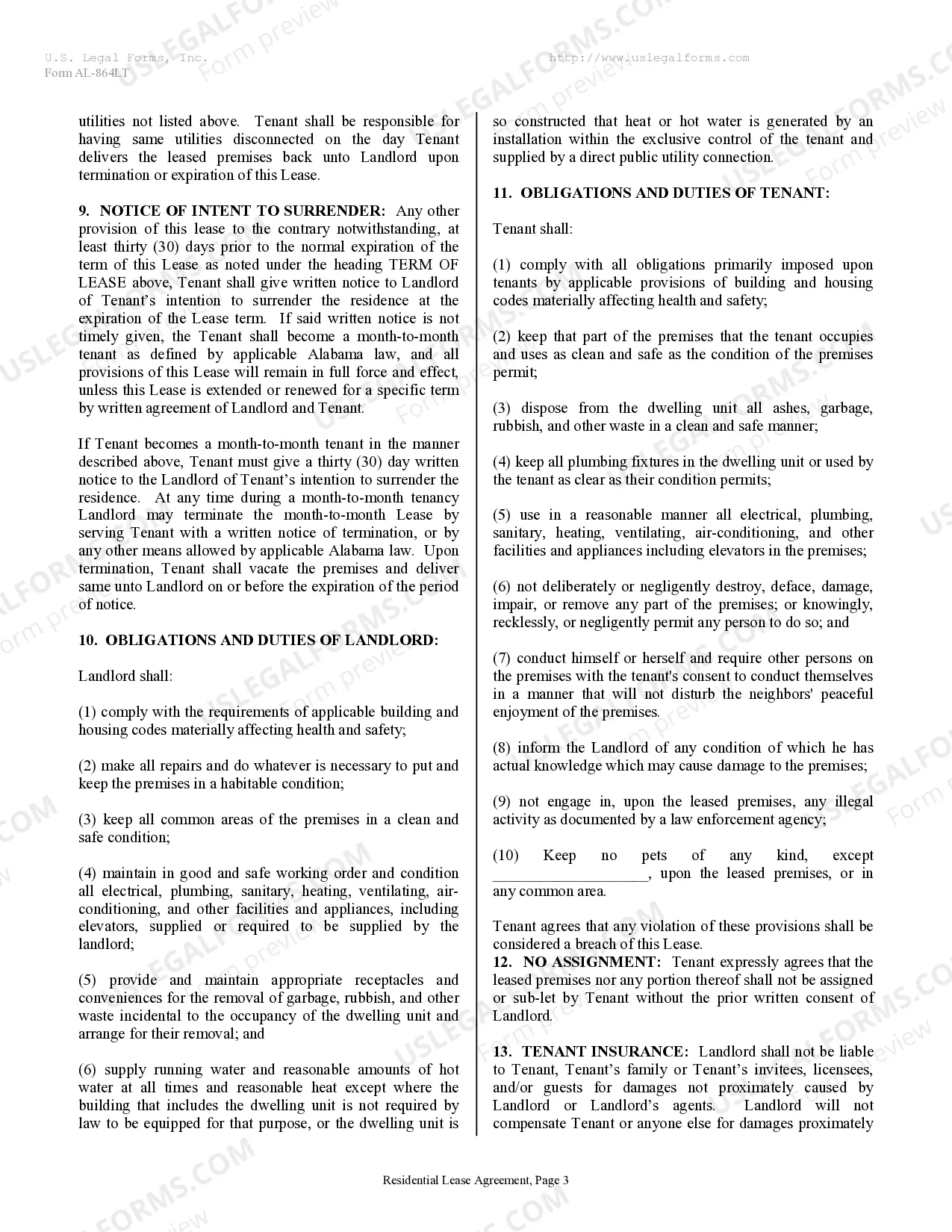
- Obligations and Duties - Clarifies responsibilities of both landlord and tenant regarding property maintenance and use.
- Consequences of Breach - Describes the actions that can be taken if either party violates the terms of the lease.


When this form is needed
This form is essential when entering into a rental agreement for residential properties such as apartments, houses, or condos. Whether you are a landlord seeking to outline terms for potential tenants or a tenant aiming to secure a place to live, this lease agreement ensures that both parties have a clear understanding of their obligations. Use this form when you want to formalize a rental agreement that lasts for a specific period, protecting your rights and interests.
Who can use this document
- Landlords renting out residential properties.
- Tenants looking for a legally binding agreement to secure rental housing.
- Real estate professionals facilitating rental agreements.
- Individuals transitioning from renting to property management.
Steps to complete this form
- Identify the parties involved: Fill in the names of the landlord and tenants.
- Specify the property: Provide the address and description of the rental property.
- Set the lease term: Enter the start and end dates of the lease agreement.
- Detail rent payment terms: State the monthly rent, security deposit amount, and payment methods.
- Review obligations: Ensure both parties understand and agree to their respective responsibilities.
Is notarization required?
In most cases, this form does not require notarization. However, some jurisdictions or signing circumstances might. US Legal Forms offers online notarization powered by Notarize, accessible 24/7 for a quick, remote process.
Get your form ready online
Our built-in tools help you complete, sign, share, and store your documents in one place.
Make edits, fill in missing information, and update formatting in US Legal Forms—just like you would in MS Word.
Download a copy, print it, send it by email, or mail it via USPS—whatever works best for your next step.
Sign and collect signatures with our SignNow integration. Send to multiple recipients, set reminders, and more. Go Premium to unlock E-Sign.
If this form requires notarization, complete it online through a secure video call—no need to meet a notary in person or wait for an appointment.
We protect your documents and personal data by following strict security and privacy standards.

Make edits, fill in missing information, and update formatting in US Legal Forms—just like you would in MS Word.

Download a copy, print it, send it by email, or mail it via USPS—whatever works best for your next step.

Sign and collect signatures with our SignNow integration. Send to multiple recipients, set reminders, and more. Go Premium to unlock E-Sign.

If this form requires notarization, complete it online through a secure video call—no need to meet a notary in person or wait for an appointment.

We protect your documents and personal data by following strict security and privacy standards.
Common mistakes
- Not filling in the security deposit terms correctly.
- Failing to list all occupants or specifying their ages.
- Overlooking the lease termination notice period.
- Neglecting to provide a valid forwarding address for the return of the security deposit.
Advantages of online completion
- Immediate access to a professionally drafted lease agreement.
- Easy customization to fit specific needs and preferences.
- Reduced paperwork and time spent on legal document preparation.
- Secure storage and download options for personal records.
Legal use & context
- This lease agreement is legally enforceable under Alabama law when properly executed by both parties.
- Understanding the rights and responsibilities outlined in the lease can prevent future disputes.
- Both parties should retain copies for their records after signing.
Summary of main points
- The Residential Rental Lease Agreement provides a clear framework for renting residential properties.
- Complete and accurate information is crucial for the enforceability of the lease.
- Understanding the terms outlined in the lease helps protect both landlord and tenant rights.
- Landlord: The person or entity that owns the rental property.
- Tenant: The individual or individuals renting the property.
- Security Deposit: A sum of money held to cover any damages or unpaid rent.
- Lease Term: The duration for which the rental agreement is valid.
Looking for another form?





Form popularity
FAQ
Yes, a lease can be valid in Alabama even if it is not notarized. The essential requirement is that both parties must sign the agreement to establish their consent. However, for an Alabama Residential Rental Lease Agreement, notarization can provide additional credibility and help avoid future disputes. You can find reliable lease agreement templates on US Legal Forms that guide you through the process.
The most common residential lease in Alabama is a year-to-year lease, which often provides stability for both landlords and tenants. This type of lease typically includes essential terms like rent payment, property maintenance, and renewal options. For a comprehensive Alabama Residential Rental Lease Agreement, look into the resources on US Legal Forms. They offer customizable templates to suit your needs.
Yes, a handwritten lease agreement can be legally binding in Alabama as long as it includes all essential terms. It is crucial that both parties sign the agreement to ensure its enforceability. For your peace of mind, using a professionally drafted Alabama Residential Rental Lease Agreement is advisable. Check US Legal Forms for templates that meet legal standards.
An assignment of lease does not require notarization to be valid under Alabama law. However, it is often recommended to have it notarized for added security and clarity among parties involved. Using an Alabama Residential Rental Lease Agreement minimizes potential misunderstandings. For the best practices in lease agreements, consider exploring the resources available on the US Legal Forms platform.
For a lease to be classified as a finance lease in Alabama, it must meet specific criteria such as transferring ownership to the lessee at the end of the lease term, requiring the lessee to make fixed payments for the lease term, and stipulating that the lease cannot be canceled easily. Moreover, a significant portion of the asset's value should be tied up in the lease payments over its life. Knowing these criteria can help when structuring an Alabama Residential Rental Lease Agreement that serves your financial goals.
No, a lease does not need to be notarized in Alabama. While notarization can provide extra legal security, it is not a requirement for an Alabama Residential Rental Lease Agreement. However, both parties should sign the lease to make it enforceable, and keeping a copy for your records is advisable.
When signing an Alabama Residential Rental Lease Agreement, you typically need to provide personal identification, proof of income, and a security deposit. The landlord may also require references or a credit check to assess your suitability as a tenant. Ensuring all parts of the agreement are clear before signing protects both parties involved.
To qualify for a lease in Alabama, both the landlord and tenant must have the legal capacity to enter into a contract. Generally, this means they should be at least 18 years old and of sound mind. Additionally, the Alabama Residential Rental Lease Agreement should clearly outline the rights and responsibilities of each party to ensure compliance with state laws.
Yes, you can create your own rental agreement. However, it is important to ensure that your document complies with Alabama state laws to avoid legal issues. Using a template for an Alabama Residential Rental Lease Agreement from US Legal Forms can simplify this process, guaranteeing you include all necessary details and terms.
In most cases, an Alabama Residential Rental Lease Agreement does not require notarization for legality. However, notarizing your agreement can enhance its enforceability in court and offers an extra layer of protection. It's wise to evaluate your specific situation or consult a legal professional if you're unsure.