Alabama Quitclaim Deed from Individual to Individual

Understanding this form
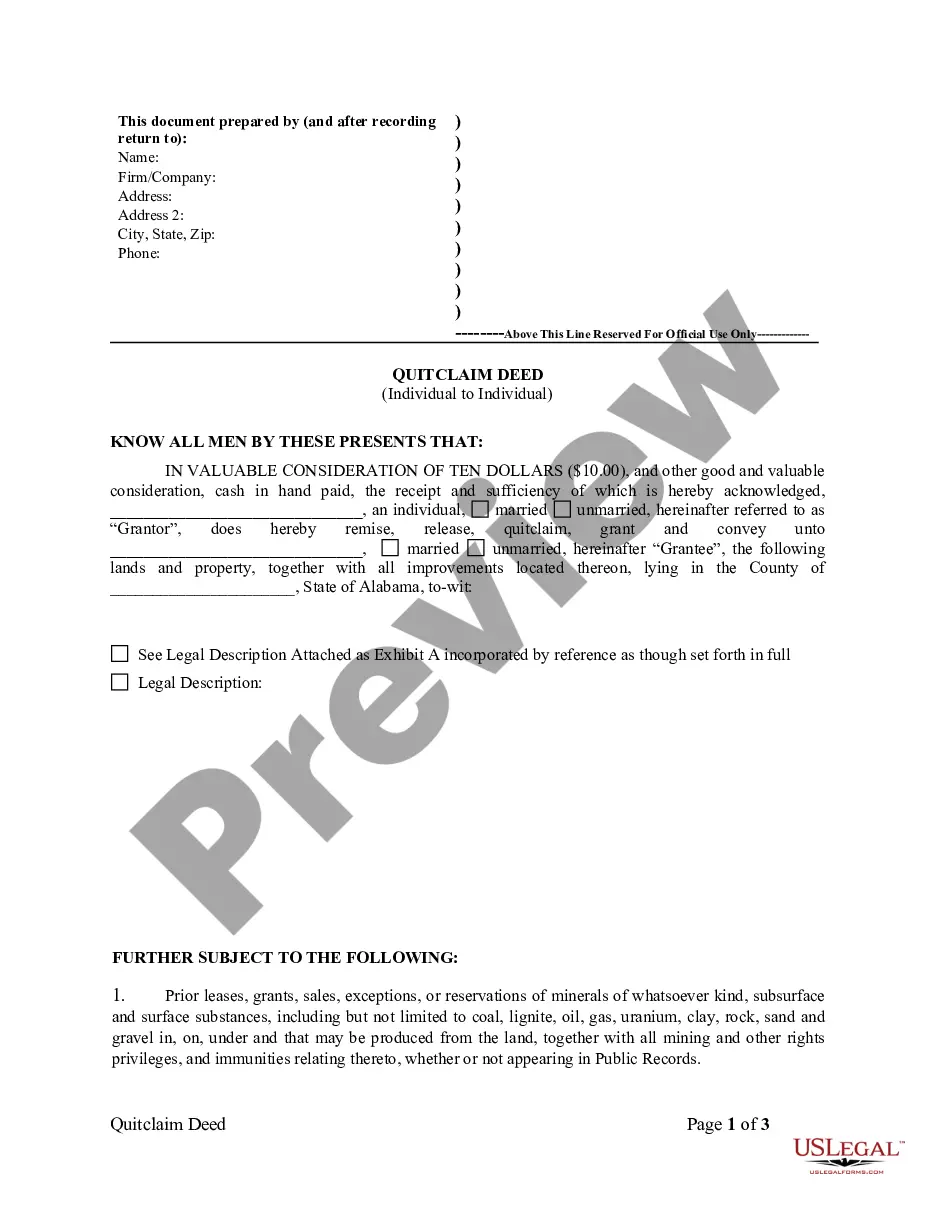
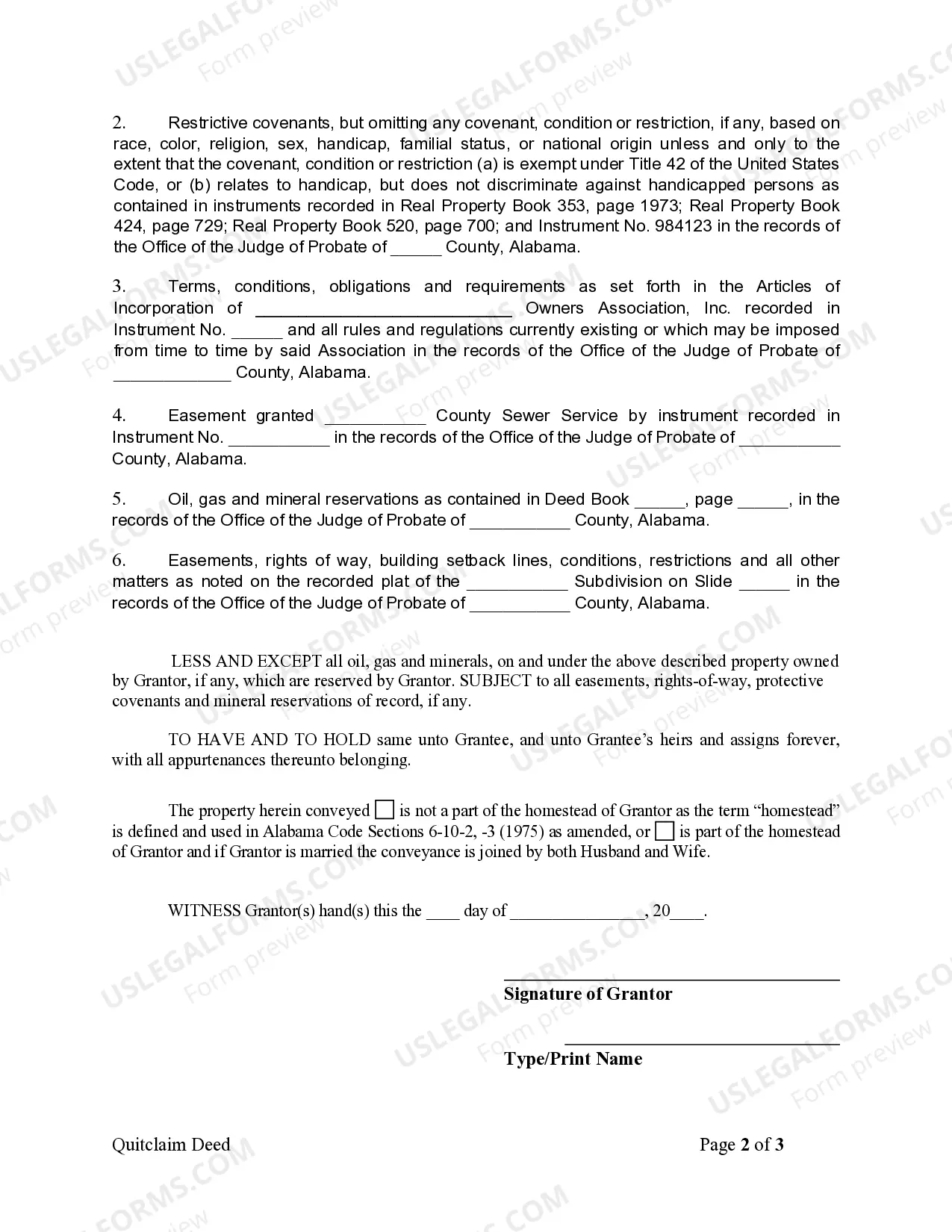
This Quitclaim Deed from Individual to Individual is a legal document that allows one individual (the Grantor) to transfer their interest in a specific property to another individual (the Grantee). Unlike a warranty deed, it does not guarantee that the Grantor holds a valid title or that the property is free from claims. This form is essential for transferring real estate between individuals quickly and efficiently, ensuring the legal formalities are met.
What’s included in this form
- Identification of the Grantor and Grantee.
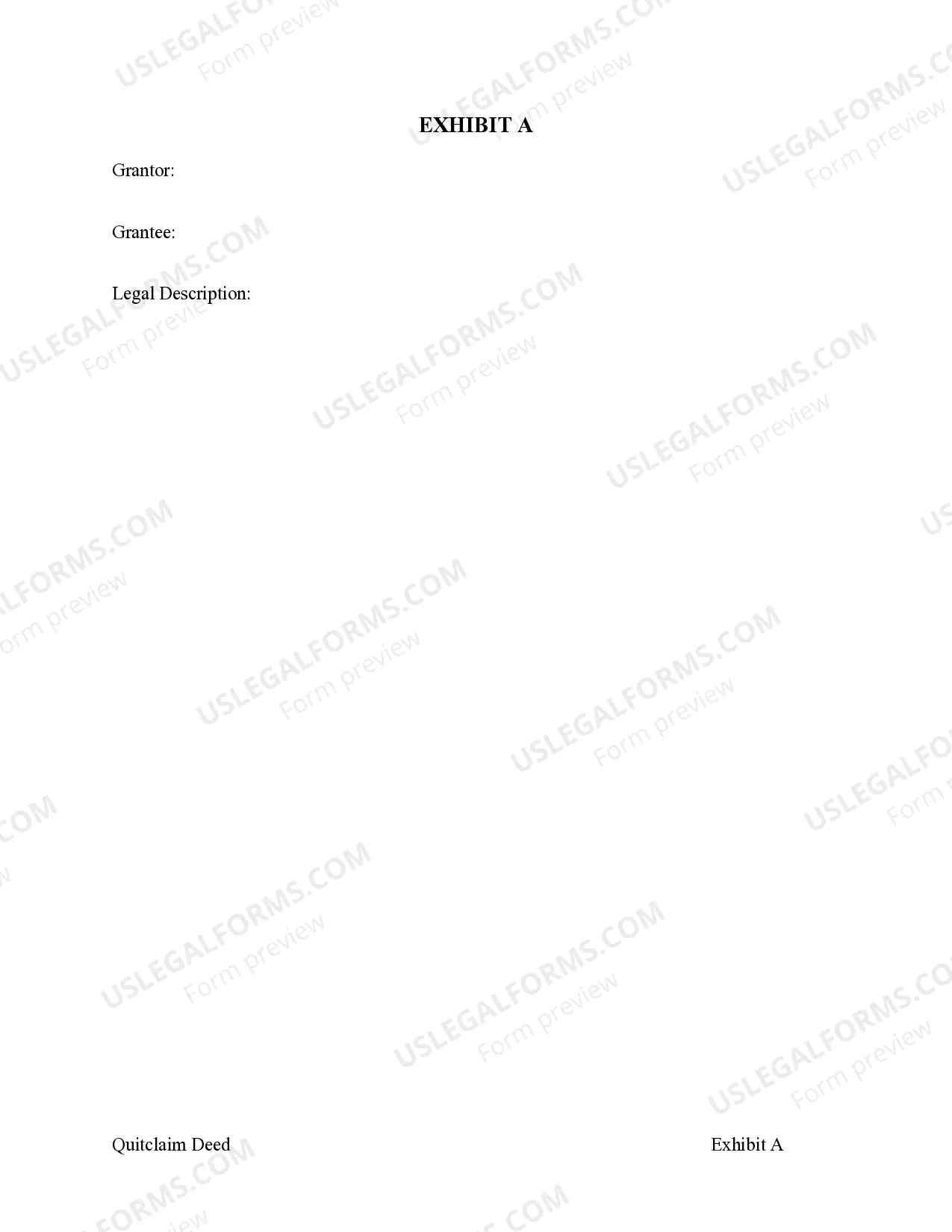
- Legal description of the property being transferred.
- Statement of the Grantor's intent to convey their interest in the property.
- Reservation of any rights, such as oil, gas, and mineral interests, by the Grantor.
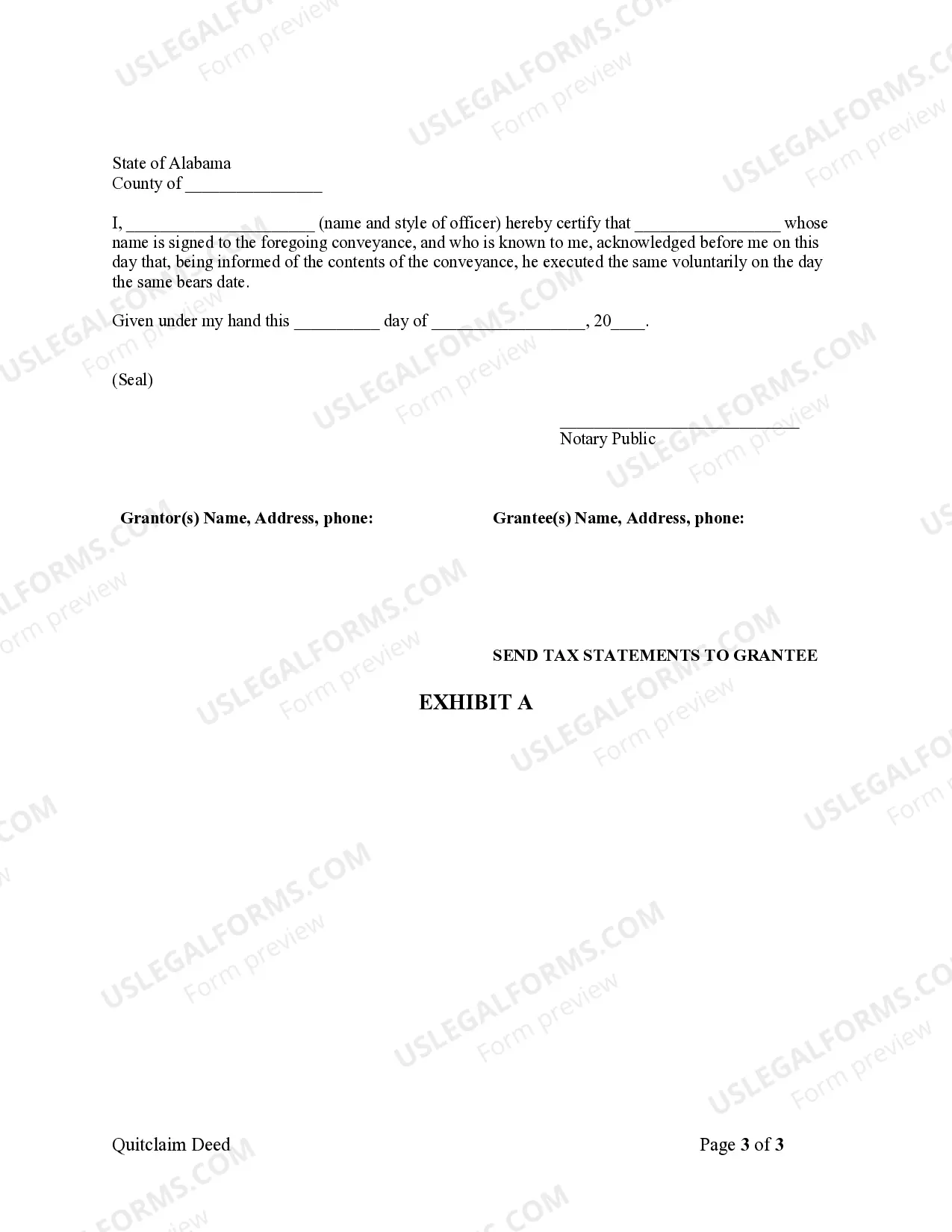
- Signatures of both parties and potential witnesses, if required by state law.





When this form is needed
Use this Quitclaim Deed when you need to transfer ownership of a property between individuals. This is commonly needed in situations such as family transfers, amicable property settlements, or when a property is being conveyed as a gift. It is particularly useful in scenarios where the Grantor may not have the ability to provide a warranty of title.
Intended users of this form
- Individuals looking to transfer property ownership without warranties.
- Family members handling property transfers between each other.
- Individuals settling disputes or dividing property assets.
- Anyone who needs to grant property rights to another individual.
Instructions for completing this form
- Identify the parties: Clearly state the names and addresses of the Grantor and Grantee.
- Specify the property: Provide a detailed legal description of the property being transferred.
- State the Grantor's intent: Include a statement that indicates the Grantor is conveying their interest in the property.
- Reserve rights, if applicable: Clearly outline any reserved rights, such as oil, gas, and mineral interests.
- Sign and date: Ensure both the Grantor and Grantee sign and date the document appropriately.
Notarization requirements for this form
To make this form legally binding, it must be notarized. Our online notarization service, powered by Notarize, lets you verify and sign documents remotely through an encrypted video session.
Get your form ready online
Our built-in tools help you complete, sign, share, and store your documents in one place.
Make edits, fill in missing information, and update formatting in US Legal Forms—just like you would in MS Word.
Download a copy, print it, send it by email, or mail it via USPS—whatever works best for your next step.
Sign and collect signatures with our SignNow integration. Send to multiple recipients, set reminders, and more. Go Premium to unlock E-Sign.
If this form requires notarization, complete it online through a secure video call—no need to meet a notary in person or wait for an appointment.
We protect your documents and personal data by following strict security and privacy standards.

Make edits, fill in missing information, and update formatting in US Legal Forms—just like you would in MS Word.

Download a copy, print it, send it by email, or mail it via USPS—whatever works best for your next step.

Sign and collect signatures with our SignNow integration. Send to multiple recipients, set reminders, and more. Go Premium to unlock E-Sign.

If this form requires notarization, complete it online through a secure video call—no need to meet a notary in person or wait for an appointment.

We protect your documents and personal data by following strict security and privacy standards.
Common mistakes
- Failing to include a complete legal description of the property.
- Not signing or dating the deed by both parties.
- Ignoring state-specific requirements for notarization or witnesses.
- Not reserving any necessary rights that the Grantor wishes to retain.
Why complete this form online
- Convenience: Download and complete the form at your own pace.
- Editability: Easily modify the document to suit your specific transaction.
- Reliability: Receive professionally drafted legal forms that comply with state laws.
Looking for another form?

Form popularity
FAQ
This form transfers a grantor’s interest in real estate to a grantee between individuals without warranties about title. It’s used for quick transfers such as family transfers, amicable settlements, or gifts. It requires identifying the grantor and grantee, a legal property description, a statement of conveyance, possible rights reservations, and signatures (with witnesses if required by law).
A quitclaim deed can be void if it isn’t properly executed or delivered. Missing required signatures, lack of witnesses when state law requires them, or failure to include a clear legal description can render it invalid for recording. For this Alabama form, ensure both parties sign and any state‑required witnesses are present.
Common mistakes include misidentifying the grantor or grantee, omitting the property’s legal description, failing to state the grantor’s intent to convey, forgetting to reserve rights when needed, and not providing the required signatures or witnesses. This form emphasizes proper identification, description, and execution to avoid those issues.
Yes. This standard form is designed for individuals to complete without an attorney for straightforward transfers. However, if title issues, liens, or disputes exist, or the transfer is complex, consulting a licensed attorney is advisable.
The form requires signatures from both parties and may call for witnesses if required by state law, but it does not explicitly state a notary requirement. In Alabama, deeds often must be acknowledged or notarized to be recorded, so check with the local county recorder to confirm whether notarization is needed for your recording.
It differs because a quitclaim deed provides no warranties about title and only conveys the grantor’s interest, possibly with reserved rights, while a warranty deed guarantees title and defends against title defects. This form includes signatures and may include witnesses, but it does not guarantee title.