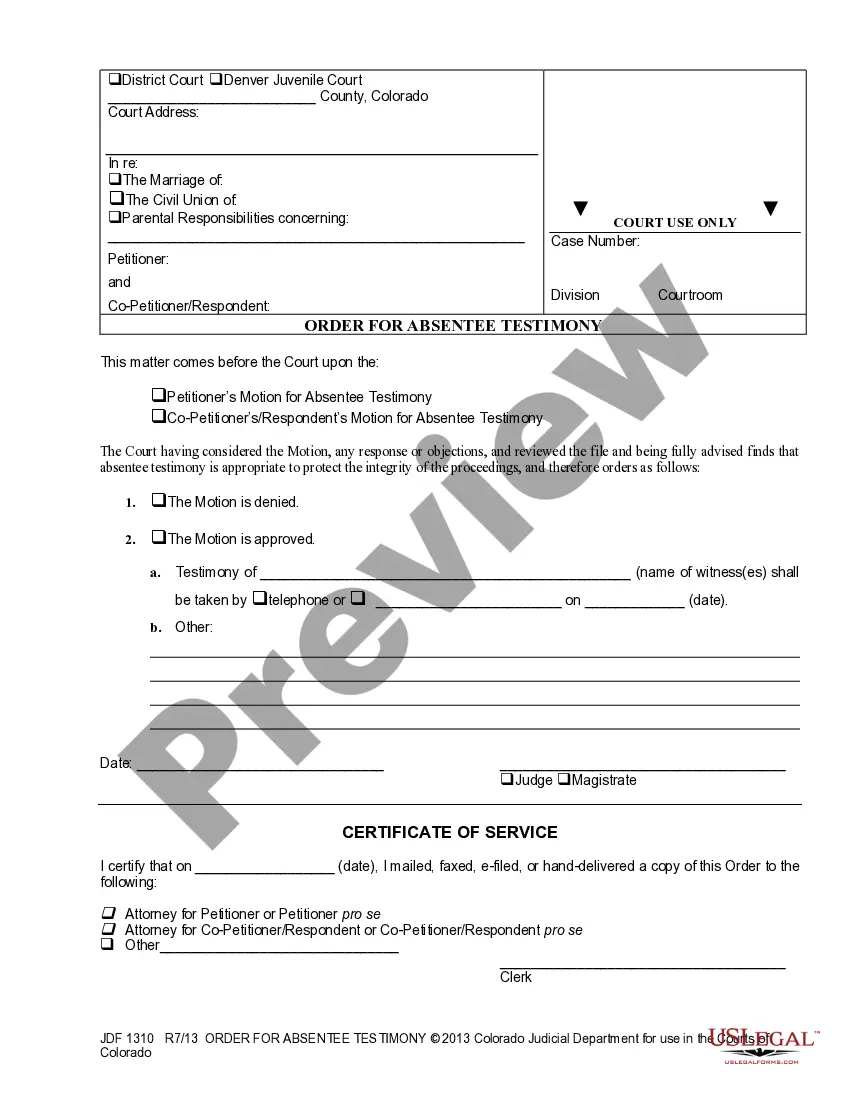
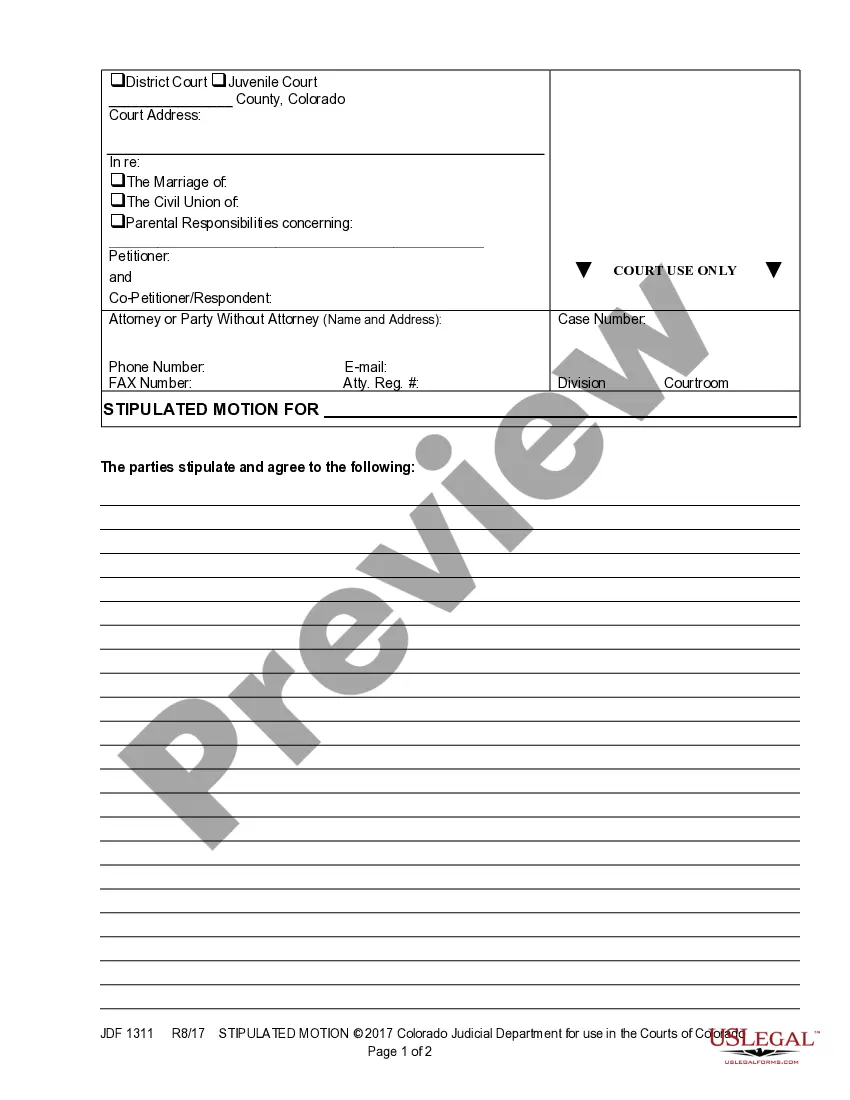
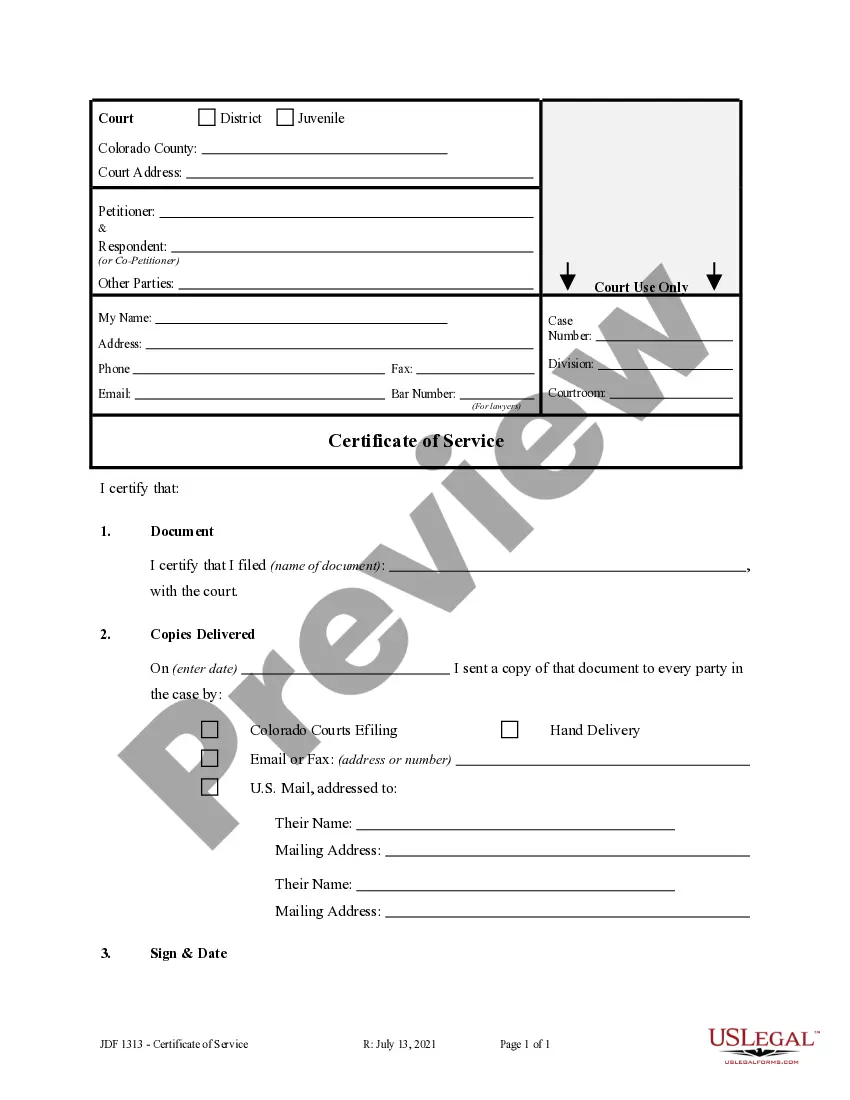
Alabama Business Incorporation Package to Incorporate Corporation
What this form package covers
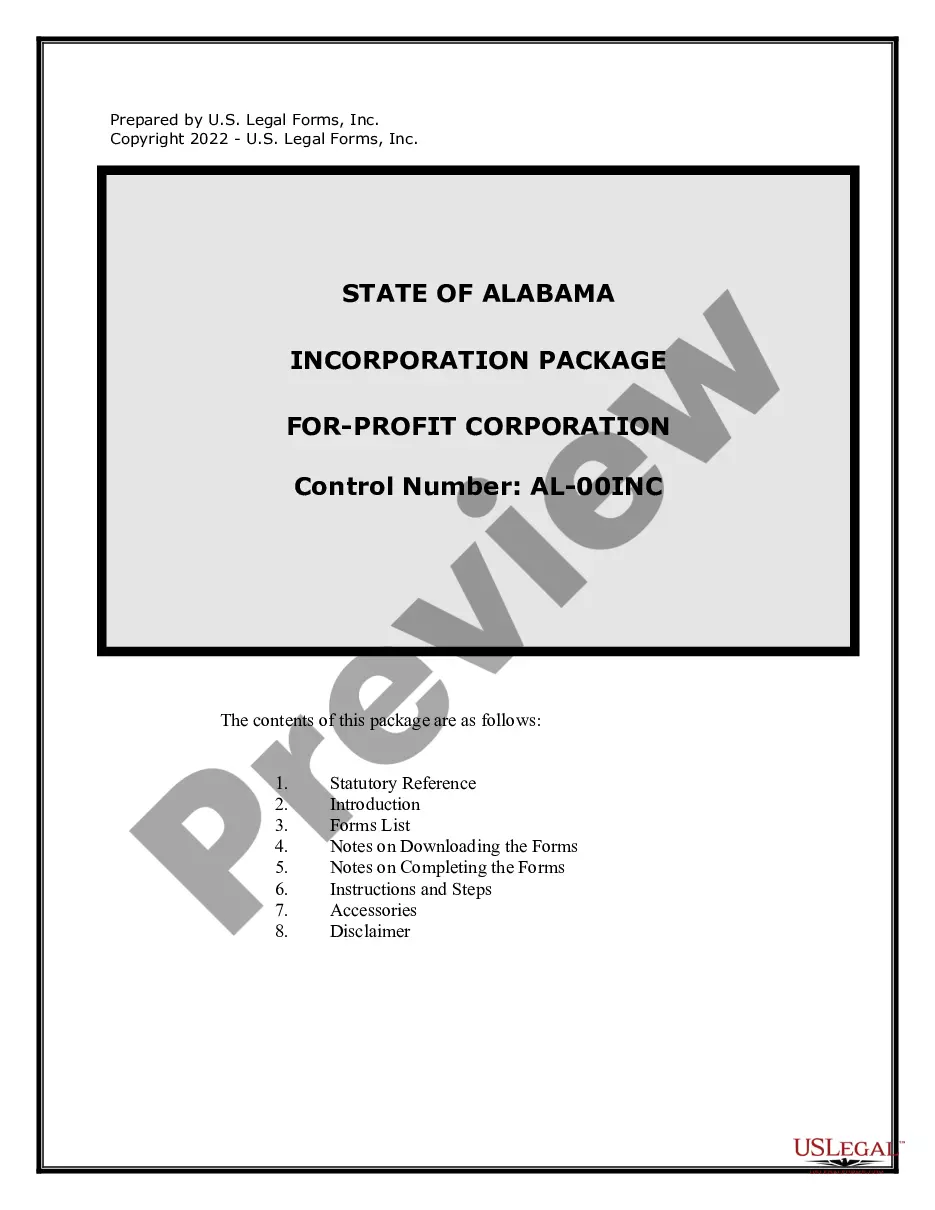
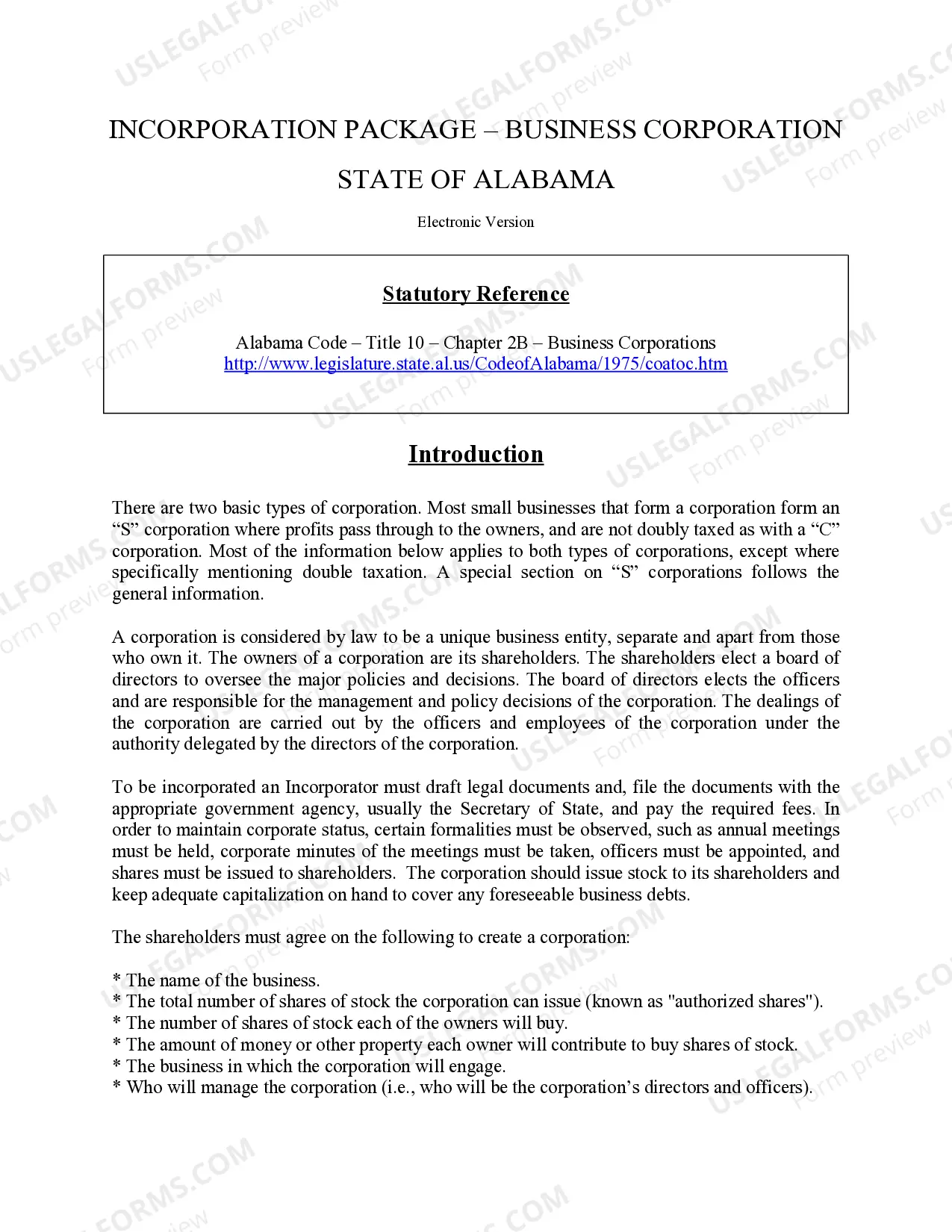
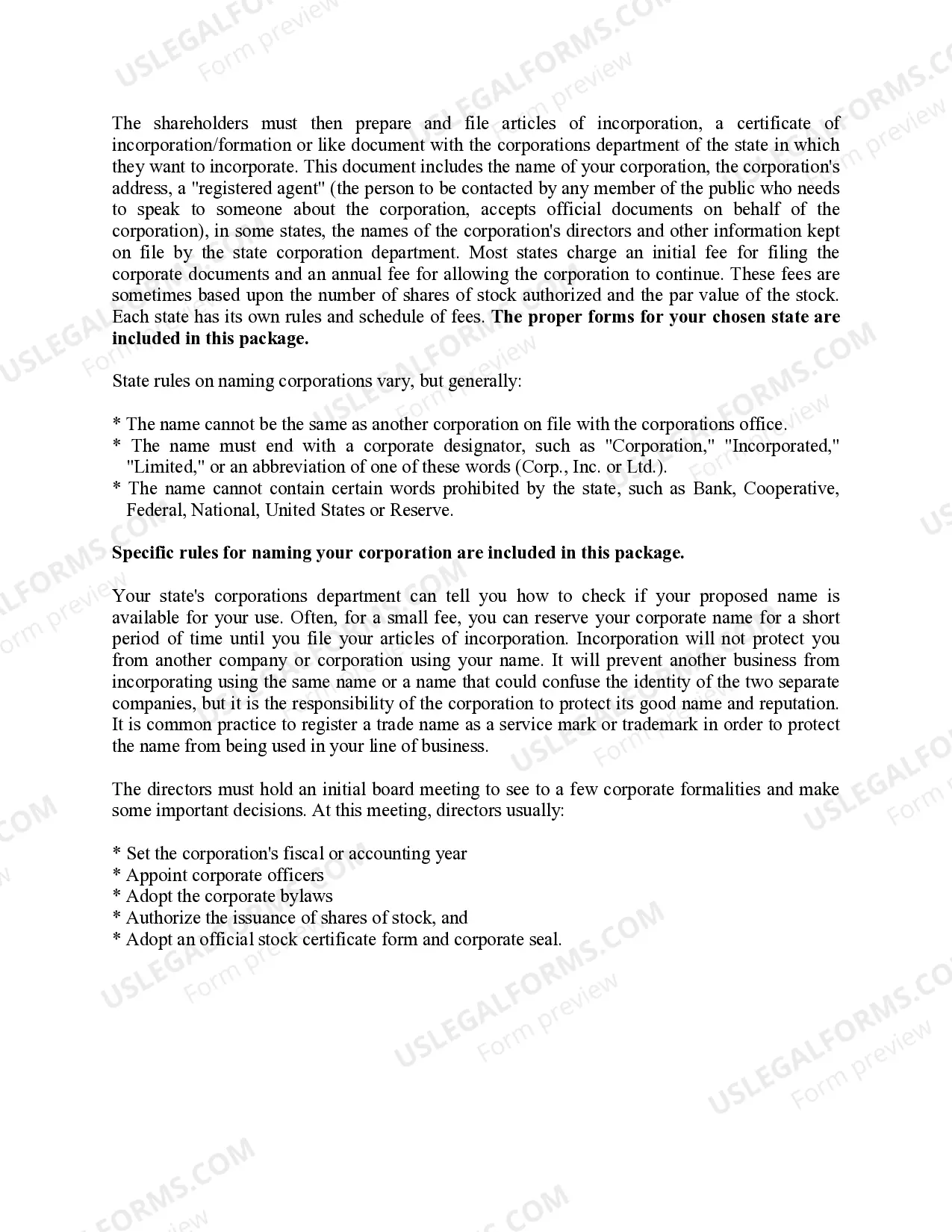
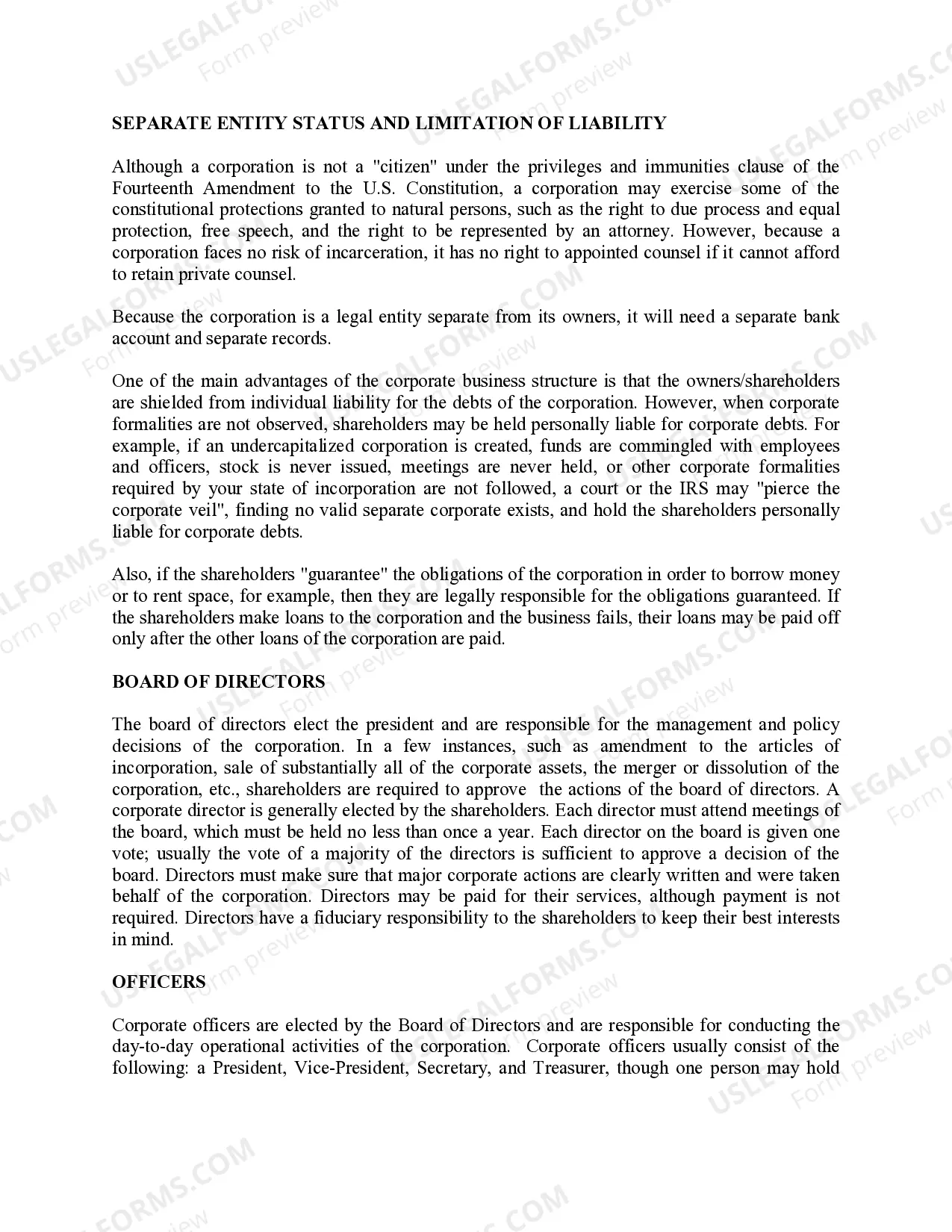
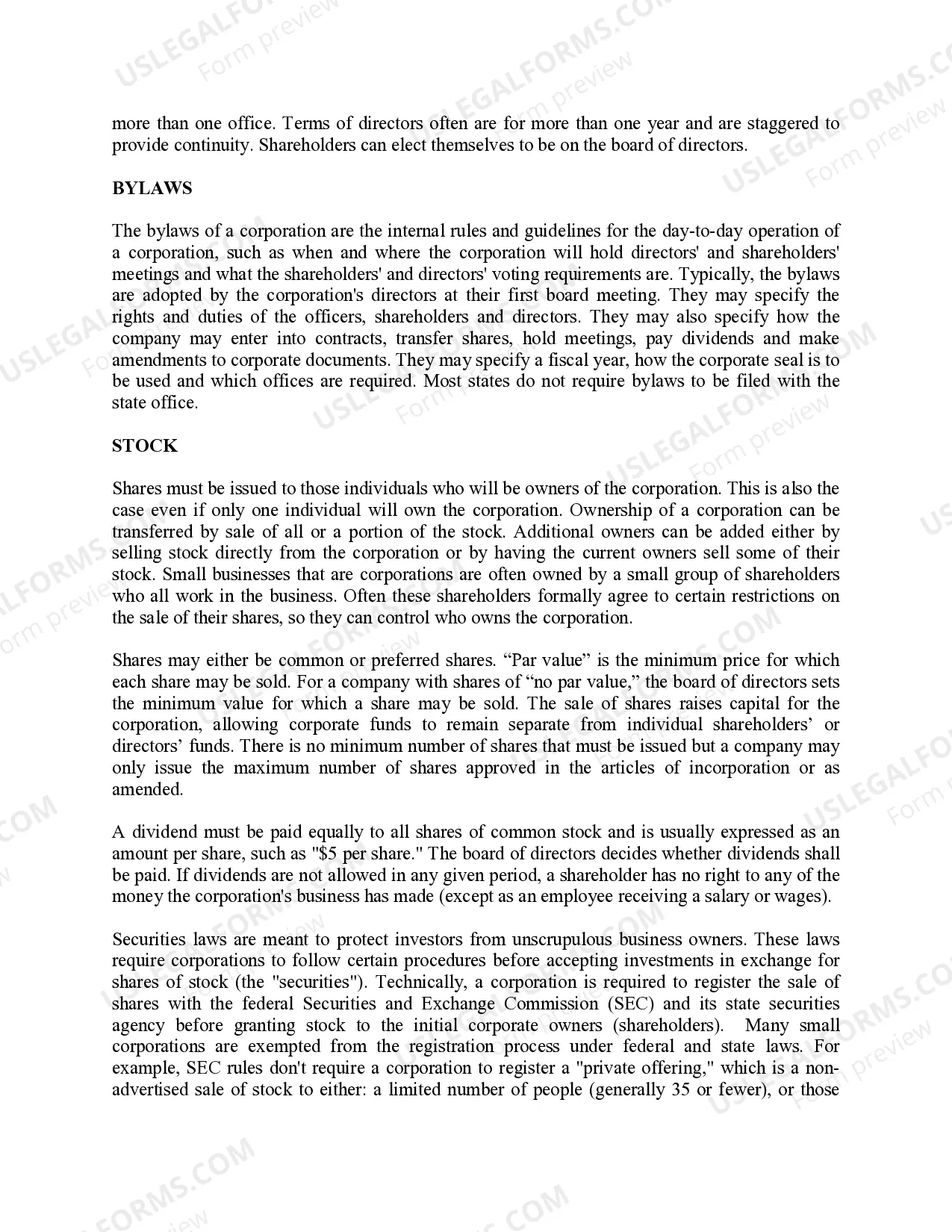
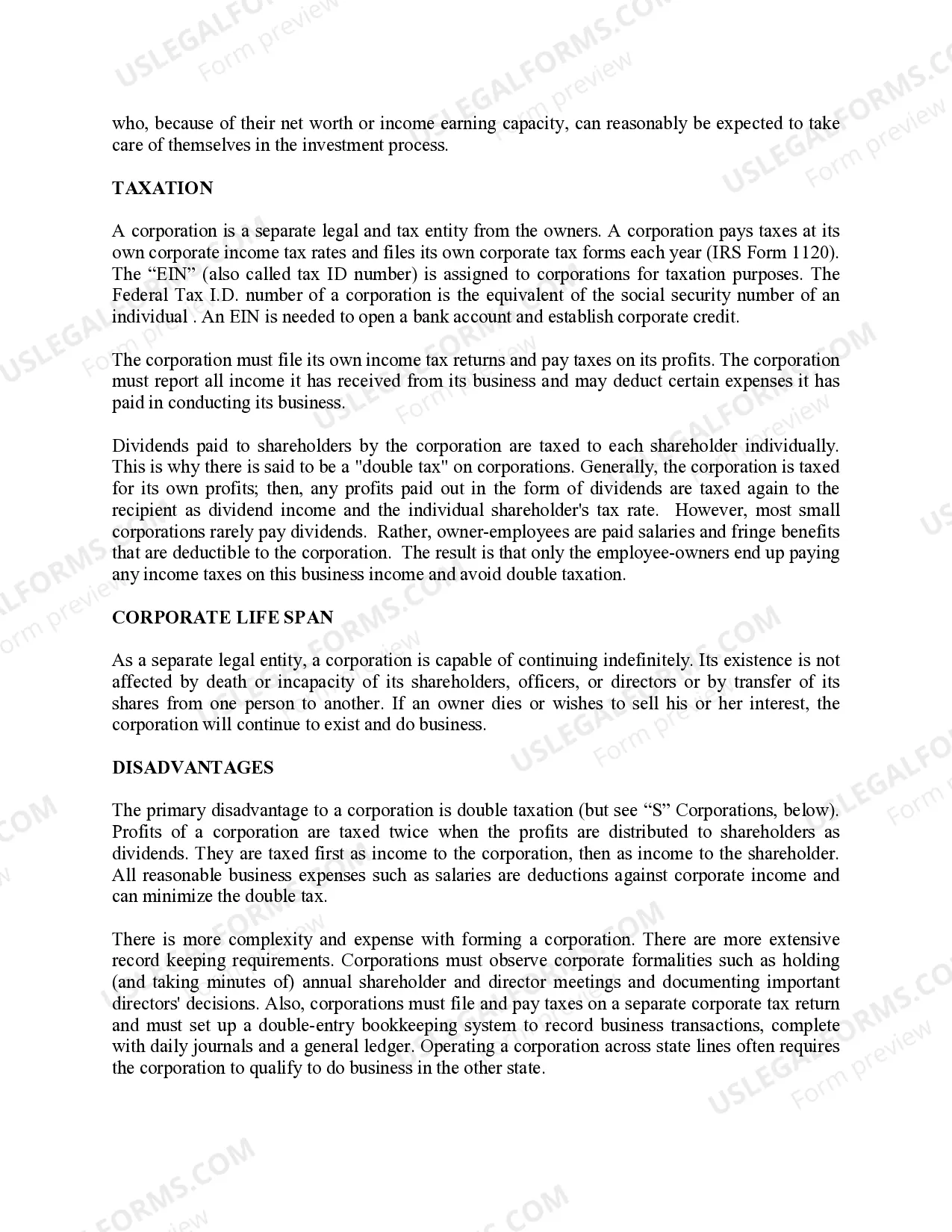
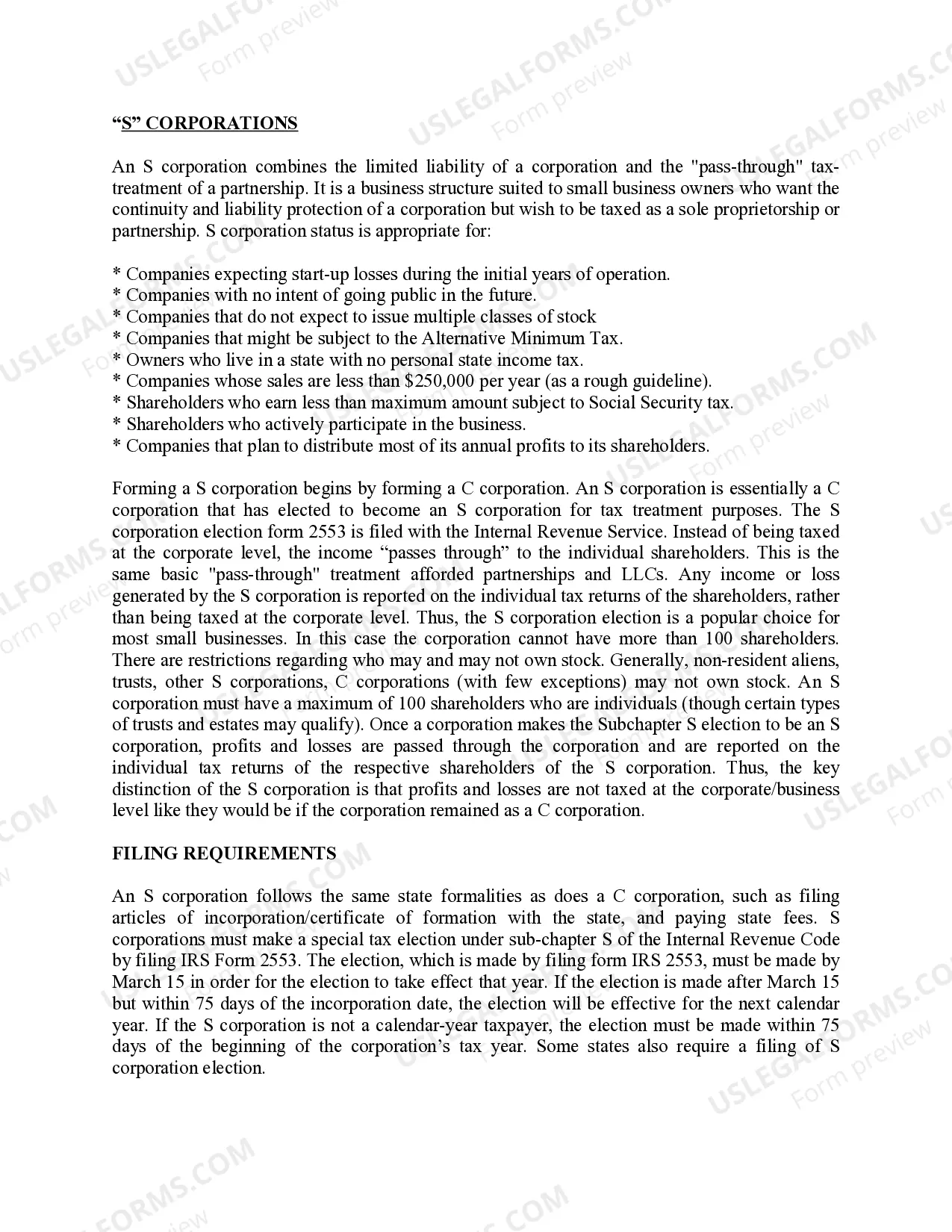
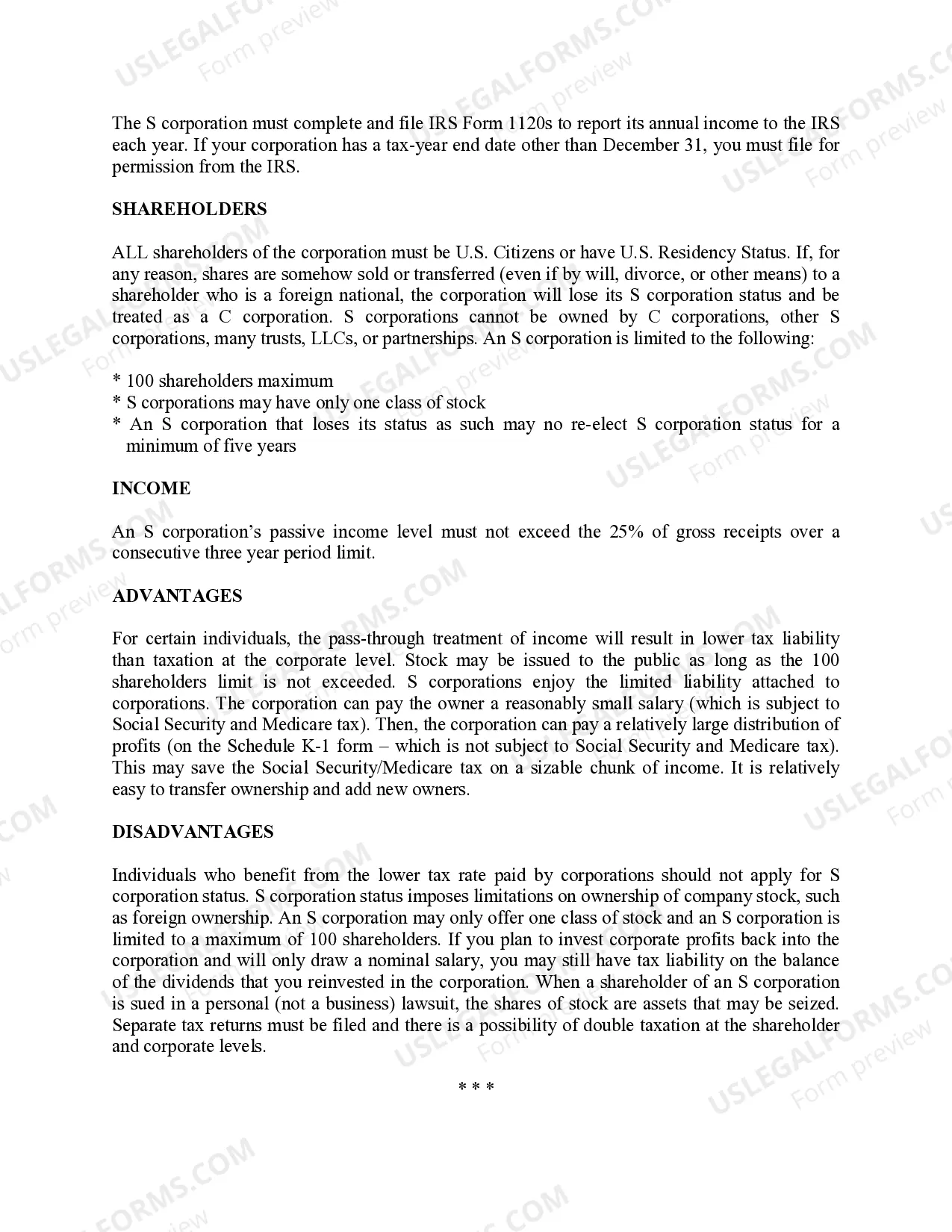
The Alabama Business Incorporation Package is a comprehensive set of forms designed to help individuals incorporate a corporation in Alabama. This package includes all necessary documents, such as Articles of Incorporation and By-Laws, along with step-by-step guidance through the incorporation process. Unlike other packages, it also provides essential forms for ongoing corporate governance, making it a complete resource for new business owners.
Forms you’ll find in this package
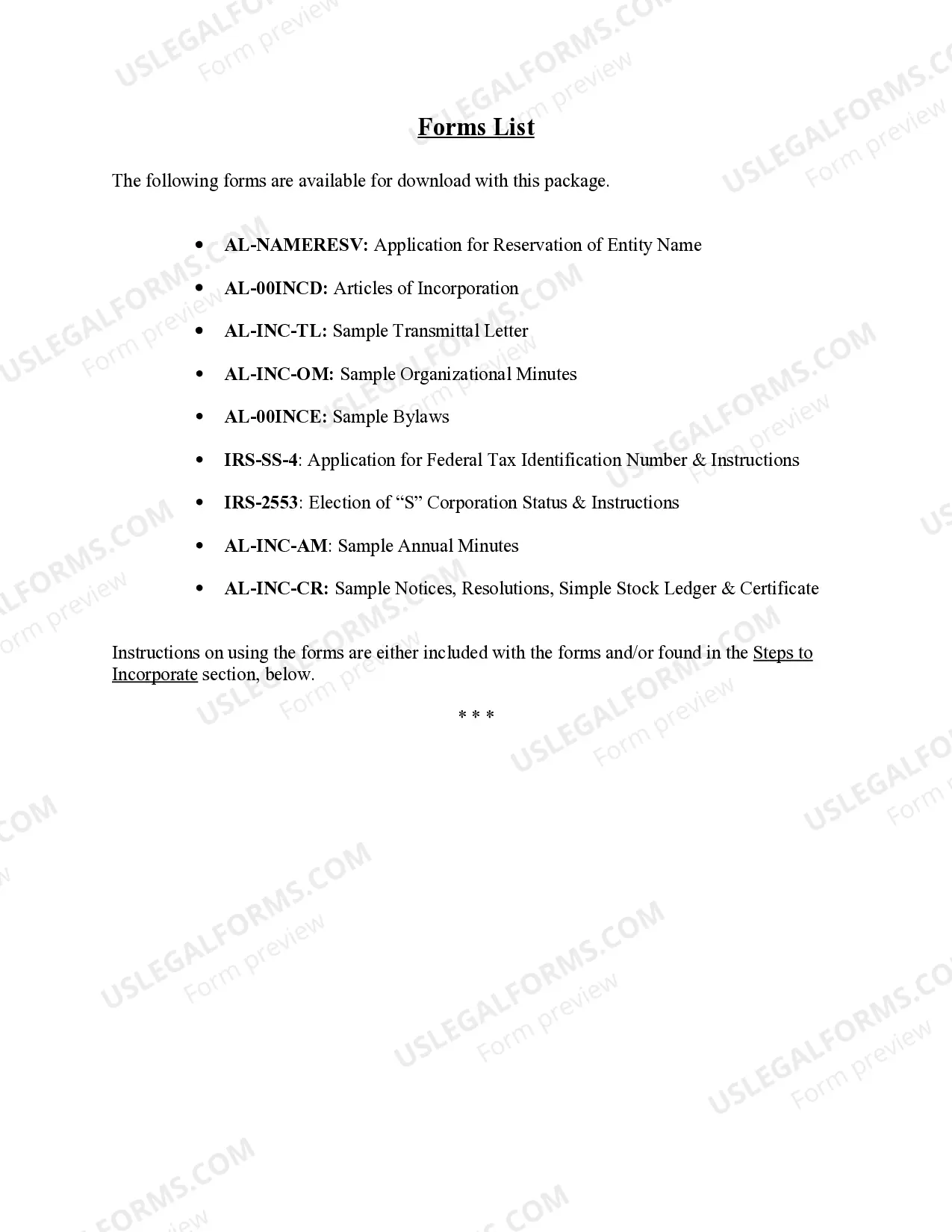
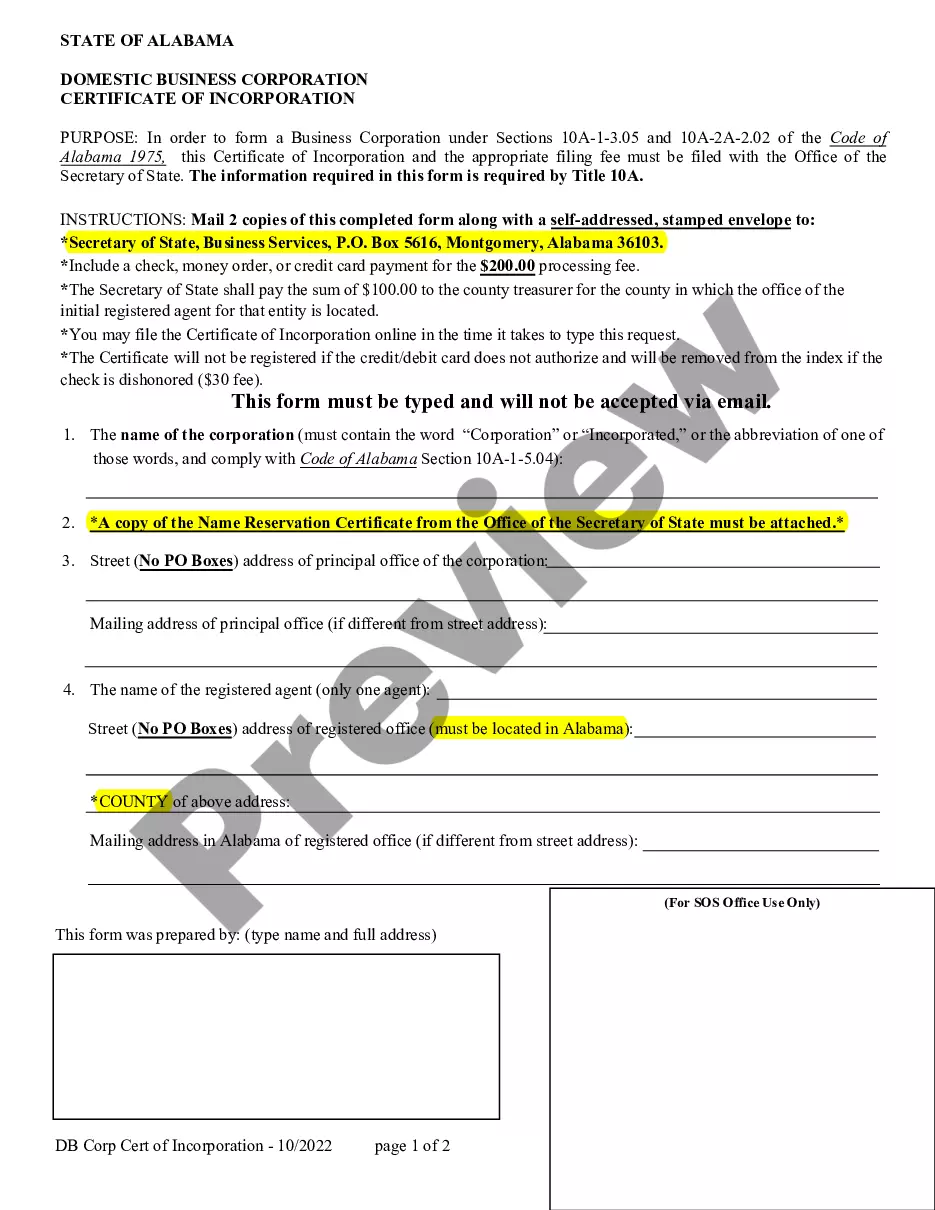
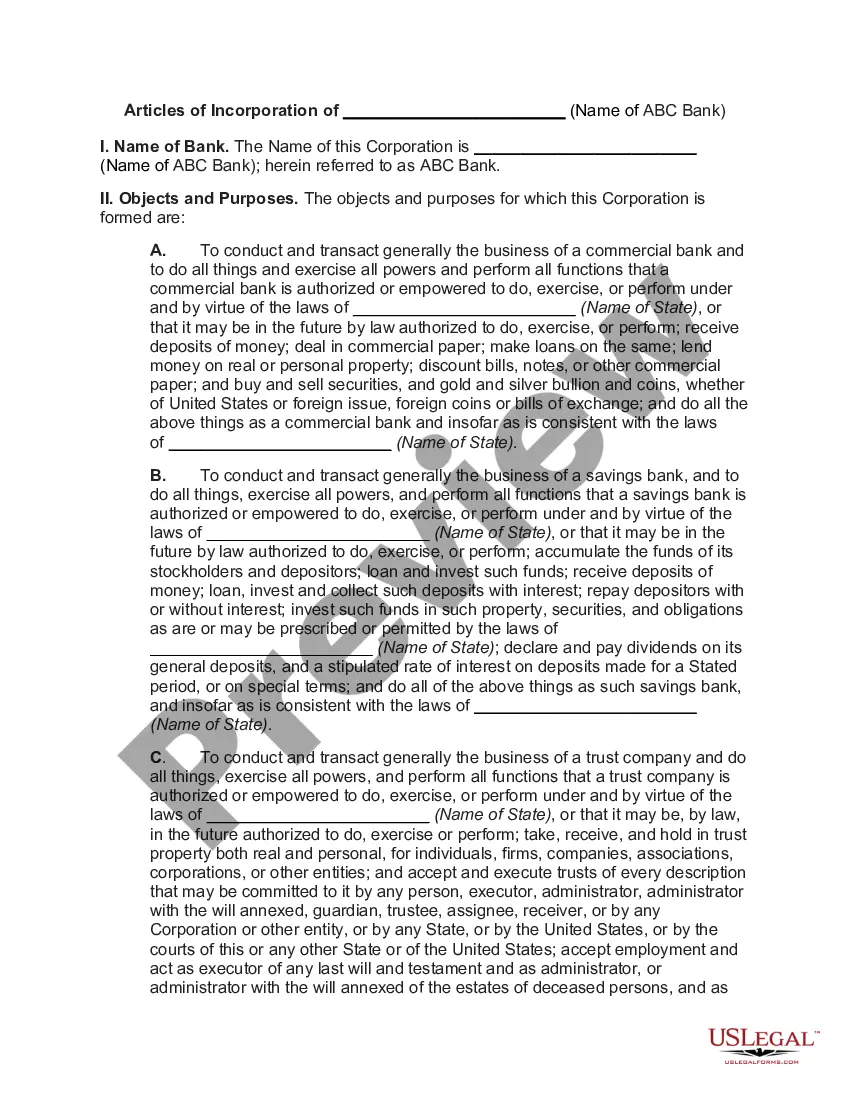
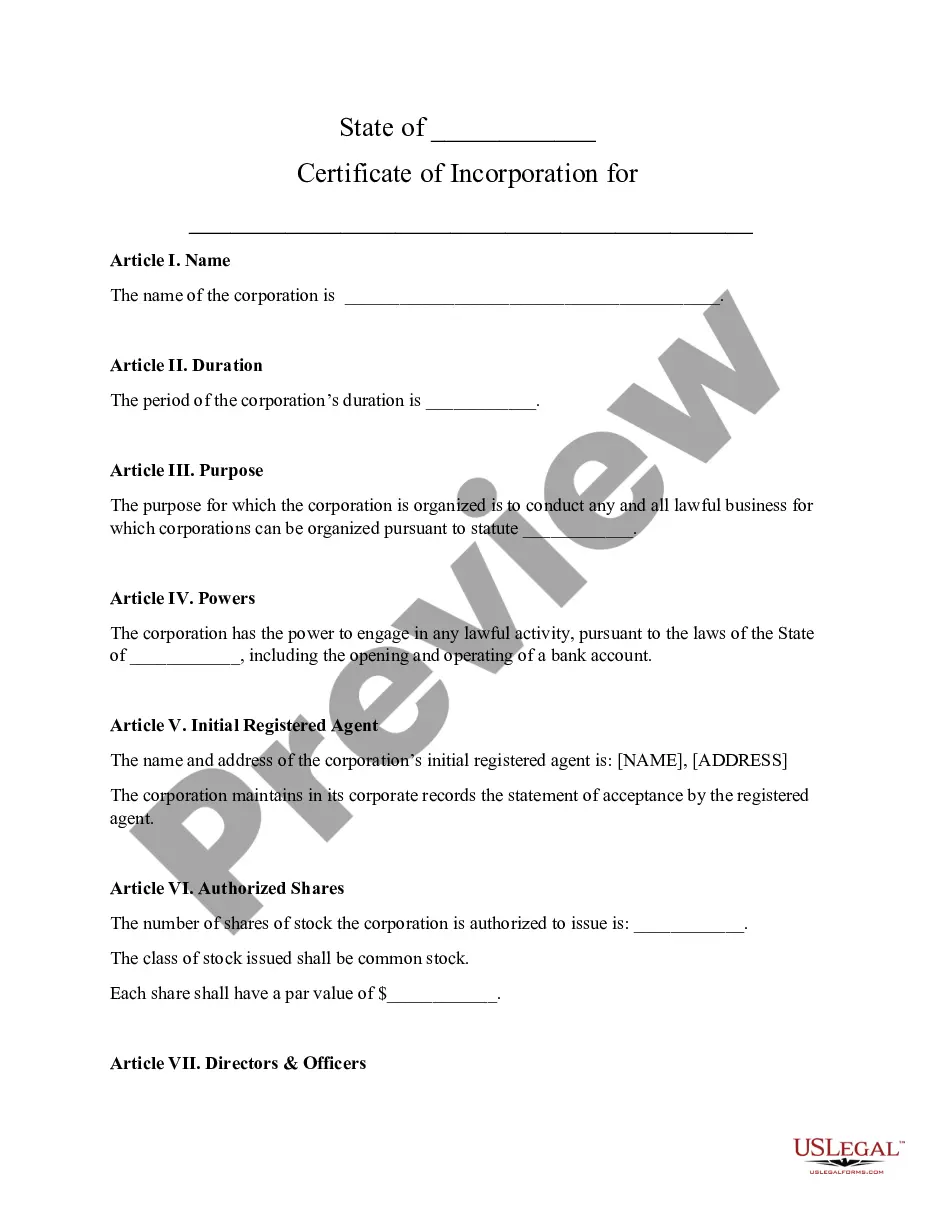
- Alabama Articles of Incorporation for Domestic For-Profit Corporation
- Alabama Bylaws for Corporation
- Annual Minutes
- Notices, Resolutions, Simple Stock Ledger and Certificate
- Minutes for Organizational Meeting
- Sample Transmittal Letter to Secretary of State's Office to File Articles of Incorporation
- Name Reservation Request Form for Domestic Entities
- Election of 'S' Corporation Status and Instructions - IRS 2553
- I.R.S. Form SS-4 (to obtain your federal identification number)


When to use this form package
This form package is essential when you want to legally establish a corporation in Alabama. Use it when you intend to:
- Start a new business as a corporation.
- Change your business structure from a sole proprietorship or partnership to a corporation.
- File for tax identification numbers and S corporation status.
- Ensure compliance with state laws regarding business formation.
Who this form package is for
- Entrepreneurs planning to incorporate a business in Alabama.
- Business owners looking to transition from another business structure to a corporation.
- Individuals seeking to protect personal assets by forming a corporation.
- Those needing comprehensive guidance on ongoing corporate compliance.
Completing these forms step by step
To complete this form package, follow these steps:
- Review the included forms and instructions provided in the package.
- Reserve your corporate name using the Application for Reservation of Entity Name.
- Fill out the Articles of Incorporation with the necessary details about your business.
- Prepare By-Laws and other corporate governance documents.
- File the Articles of Incorporation and pay any required fees to the appropriate state office.
- Apply for a Federal Tax Identification Number (EIN) through IRS Form SS-4.
- If applicable, elect S corporation status by filing IRS Form 2553.
Notarization details for included forms
Forms in this package typically do not require notarization unless required by local law. However, it is always advisable to check specific legal requirements based on your circumstances.
Get your form ready online
Our built-in tools help you complete, sign, share, and store your documents in one place.
Make edits, fill in missing information, and update formatting in US Legal Forms—just like you would in MS Word.
Download a copy, print it, send it by email, or mail it via USPS—whatever works best for your next step.
Sign and collect signatures with our SignNow integration. Send to multiple recipients, set reminders, and more. Go Premium to unlock E-Sign.
If this form requires notarization, complete it online through a secure video call—no need to meet a notary in person or wait for an appointment.
We protect your documents and personal data by following strict security and privacy standards.

Make edits, fill in missing information, and update formatting in US Legal Forms—just like you would in MS Word.

Download a copy, print it, send it by email, or mail it via USPS—whatever works best for your next step.

Sign and collect signatures with our SignNow integration. Send to multiple recipients, set reminders, and more. Go Premium to unlock E-Sign.

If this form requires notarization, complete it online through a secure video call—no need to meet a notary in person or wait for an appointment.

We protect your documents and personal data by following strict security and privacy standards.
Avoid these common issues
- Failing to reserve the corporate name before filing Articles of Incorporation.
- Not completing the Articles of Incorporation accurately, leading to rejection.
- Ignoring the steps for maintaining corporate compliance, like annual minutes and meetings.
- Forgetting to file for an EIN, which is necessary for tax purposes.
Benefits of using this package online
- Convenience of having all necessary forms in one package.
- Editability of forms to customize them for your corporation's needs.
- Reliability of documents drafted by licensed attorneys ensuring legal compliance.
- Access to guidance that simplifies complex legal jargon into understandable steps.
- This package provides legally valid documents for establishing a corporation according to Alabama law.
- Documentation and compliance with corporate formalities are crucial to avoid personal liability.
- Proper filing ensures that the corporation is recognized as a separate legal entity, offering protections for personal assets.
Main things to remember
- The Alabama Business Incorporation Package is vital for anyone looking to establish a corporation in Alabama.
- It includes essential forms and ongoing corporate governance documents.
- Compliance with state laws is crucial to maintain corporation status and protect personal liability.
Looking for another form?








Form popularity
FAQ
The Alabama Business Incorporation Package to Incorporate Corporation is a bundled set of forms and guidance to help you legally form an Alabama corporation. It includes core documents such as Articles of Incorporation and By-Laws, plus essential forms for ongoing governance and step-by-step guidance through the Alabama incorporation process.
This package provides the essential documents needed to form a corporation in Alabama, including the core incorporation forms and governing documents, plus forms to support ongoing governance and compliance. It also offers step-by-step guidance from start to initial governance setup.
Incorporating generally creates a separate legal entity with limited personal liability and added credibility, but it also imposes ongoing obligations such as maintaining governance records and formalities. This package helps you begin with proper Articles of Incorporation, By-Laws, and governance forms to support compliant operation.
A pro is limited personal liability for shareholders, meaning personal assets are typically protected from corporate debts. A con is the increased compliance and ongoing administrative burden, including maintaining formal governance records. This package addresses formation needs and governance requirements to help manage those aspects.
A common mistake is failing to establish and follow proper governance documents, such as bylaws, or neglecting to set up clear corporate structure and records from the start. The Alabama package provides essential incorporation forms and governance templates to help prevent that starting out.
This package bundles Articles of Incorporation with By-Laws, ongoing governance forms, and step-by-step guidance, delivering a complete formation and governance solution. Buying only Articles of Incorporation covers filing alone, while the package supports formation and ongoing compliance as a whole.