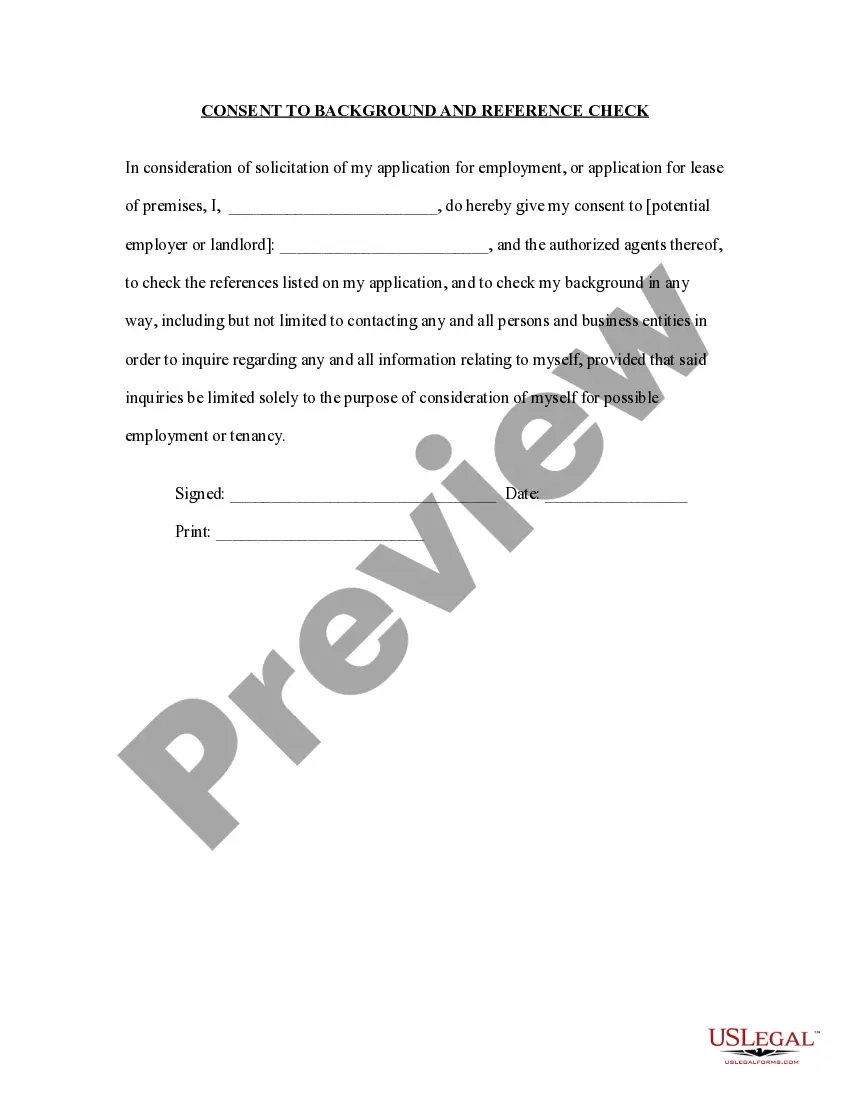
Alaska Tenant Consent to Background and Reference Check
Understanding this form
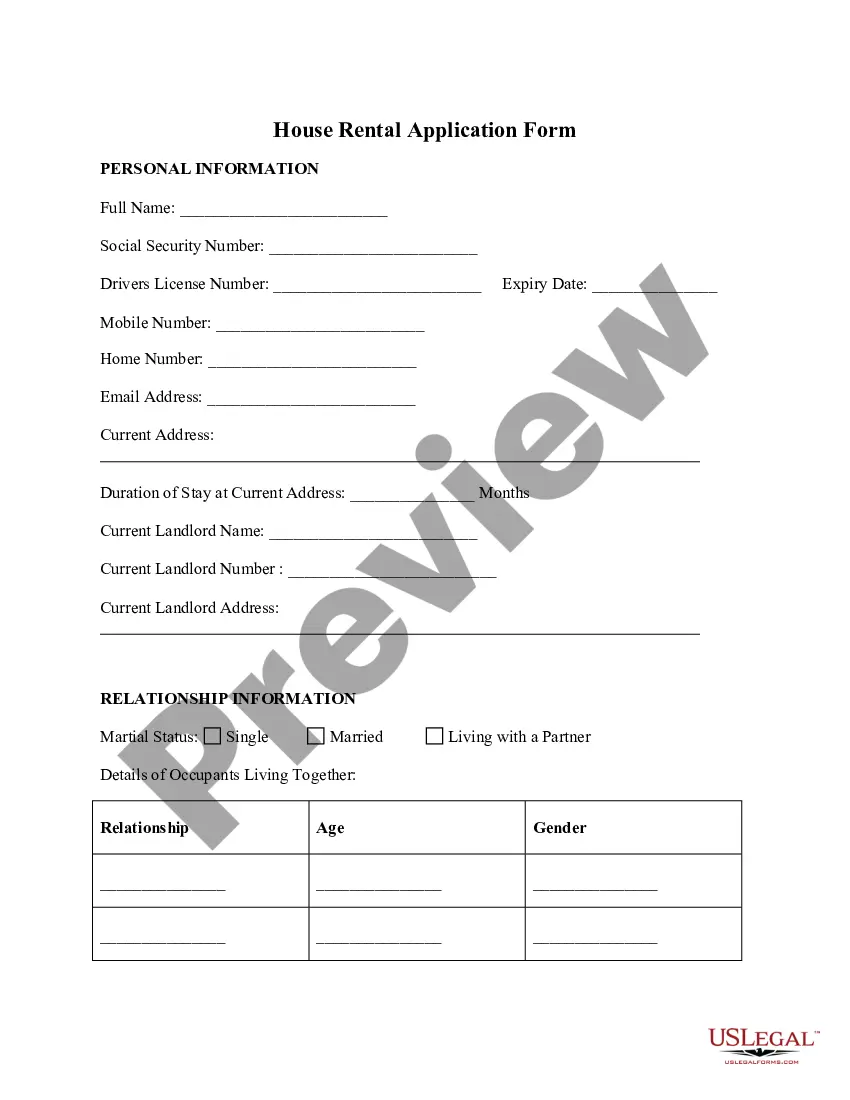
The Tenant Consent to Background and Reference Check is a legal document allowing landlords to conduct a thorough background and reference check on potential tenants. This form is crucial in the tenant screening process, differentiating itself from generic consent forms by specifically addressing the need for background checks, which include criminal history and references. It ensures that the landlord can verify the character and history of individuals applying for rental properties, fostering a safer living environment for everyone involved.
Key components of this form
- Tenant's printed name and signature: To authenticate the consent.
- Landlord's name: Identifies the party conducting the background check.
- Scope of consent: Specifies the extent of inquiries permitted regarding references and background.
- Date of consent: Records when the tenant granted permission.
When this form is needed
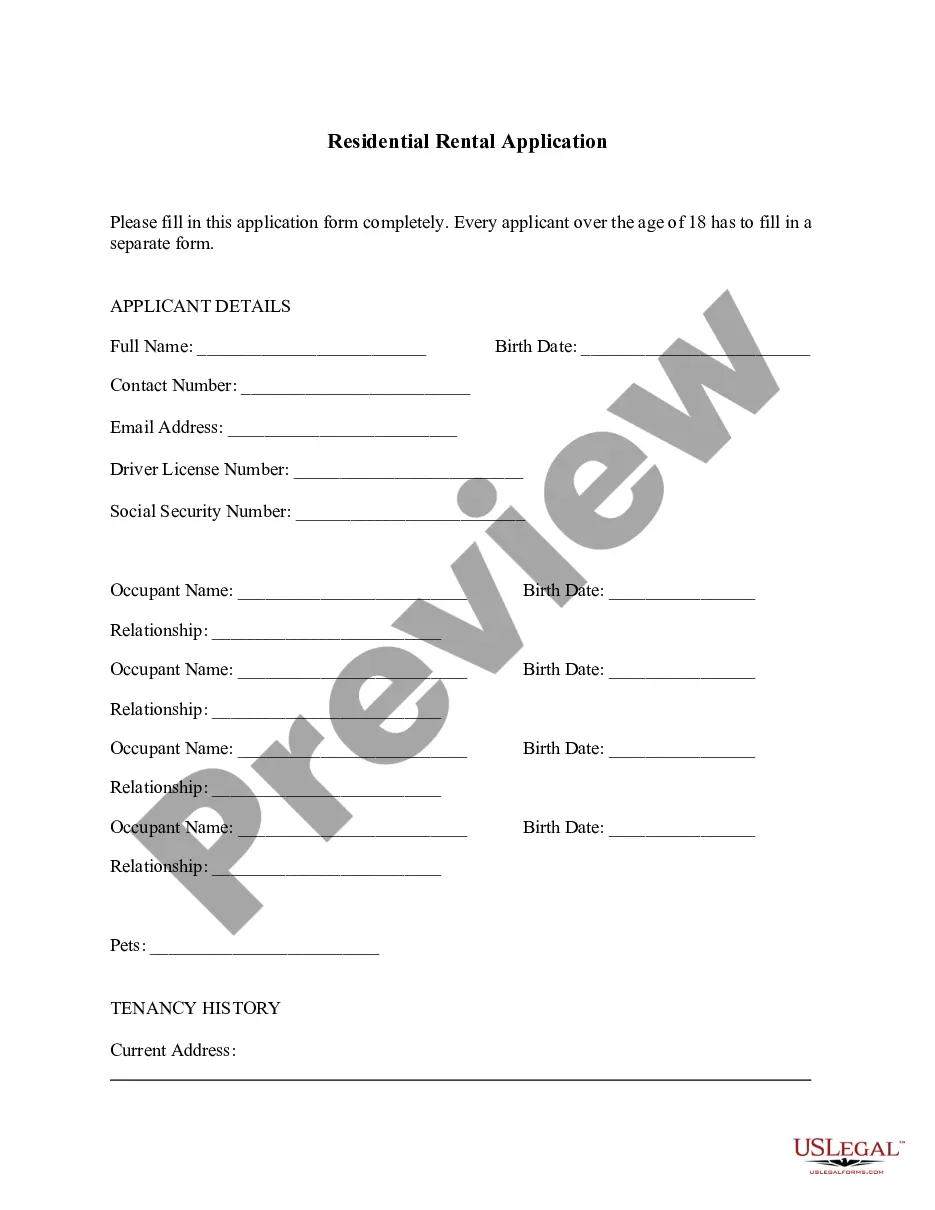
This form should be used when a landlord needs to verify a tenant's suitability for a rental property. It is particularly important when the landlord wishes to conduct a criminal and reference check before entering into a lease agreement, helping to mitigate risks associated with tenant placement.
Who this form is for
This form is designed for:
- Landlords or property managers seeking to screen potential tenants.
- Tenants applying for rental housing who need to provide consent for background checks.
How to complete this form
- Print the form and fill in the tenant's name at the designated space.
- Provide the name of the landlord or property management company.
- Sign and date the form to indicate consent.
- Make sure to keep a copy for your records.
Does this document require notarization?
This form does not typically require notarization unless specified by local law. However, consulting legal counsel can provide clarity based on your location.
Get your form ready online
Our built-in tools help you complete, sign, share, and store your documents in one place.
Make edits, fill in missing information, and update formatting in US Legal Forms—just like you would in MS Word.
Download a copy, print it, send it by email, or mail it via USPS—whatever works best for your next step.
Sign and collect signatures with our SignNow integration. Send to multiple recipients, set reminders, and more. Go Premium to unlock E-Sign.
If this form requires notarization, complete it online through a secure video call—no need to meet a notary in person or wait for an appointment.
We protect your documents and personal data by following strict security and privacy standards.

Make edits, fill in missing information, and update formatting in US Legal Forms—just like you would in MS Word.

Download a copy, print it, send it by email, or mail it via USPS—whatever works best for your next step.

Sign and collect signatures with our SignNow integration. Send to multiple recipients, set reminders, and more. Go Premium to unlock E-Sign.

If this form requires notarization, complete it online through a secure video call—no need to meet a notary in person or wait for an appointment.

We protect your documents and personal data by following strict security and privacy standards.
Common mistakes
- Failing to sign or date the form, rendering it invalid.
- Not providing complete information about the landlord.
- Overlooking to keep a copy of the completed form for personal records.
Why use this form online
- Easy access to a professionally drafted legal document.
- Immediate download allows for quick completion and submission.
- Editable templates enable users to input specific information as needed.
Legal use & context
- This form serves as a record of the tenant's consent for background checks, protecting both parties.
- It can help landlords defend against disputes regarding the screening process.
- In some states, failing to obtain consent may lead to legal repercussions for landlords.
Key takeaways
- The Tenant Consent to Background and Reference Check is crucial for tenant screening.
- Completing this form ensures compliance with tenant privacy laws.
- Both landlords and tenants benefit by clarifying the consent process in tenant applications.
Looking for another form?






Form popularity
FAQ
Be upfront. Get your paperwork together. Inform referees. Answer all correspondence as soon as you can. Work out who will pay what. Secure a guarantor before starting the tenant referencing process. Lastly, have your finances in order.
A. A courteous introduction (e.g. Dear ______ or To whom it may concern) b. A statement of intent (e.g. I am writing this letter to recommend _____ as a tenant) c. A closing sentiment (e.g. Kind Regards or Sincerely)
To deny a tenant application, you need to let the prospective tenant know that you will not be selecting their application by sending them an adverse action letter. This letter informs the tenant why they are being denied, and if there is any way that their application can be reconsidered.
Screening questions for a tenant's personal reference How long have you known them? How do they spend their spare time? Have you been to the renter's home before? How would you describe it?
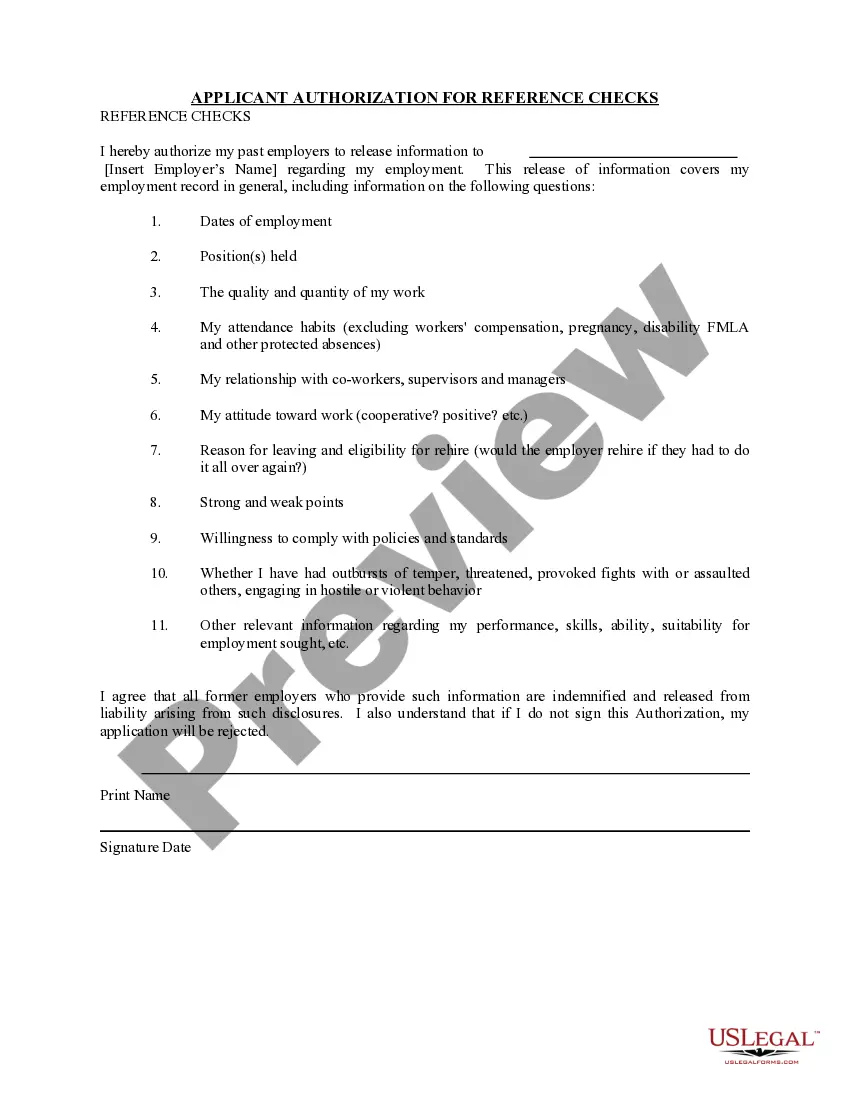
Yep! When you get your instant tenant background check free, you'll see a button at the bottom of the free screening report to request a rental application and/or other tenant screening reports. All you need to do is enter their email address and we'll send them a request to complete the rental application.
Describe your relationship Include any relevant information such as how long your tenants have rented from you and any personal connection you may have to them. Other landlords want to be assured that you've known your tenants for a sufficiently long period of time.
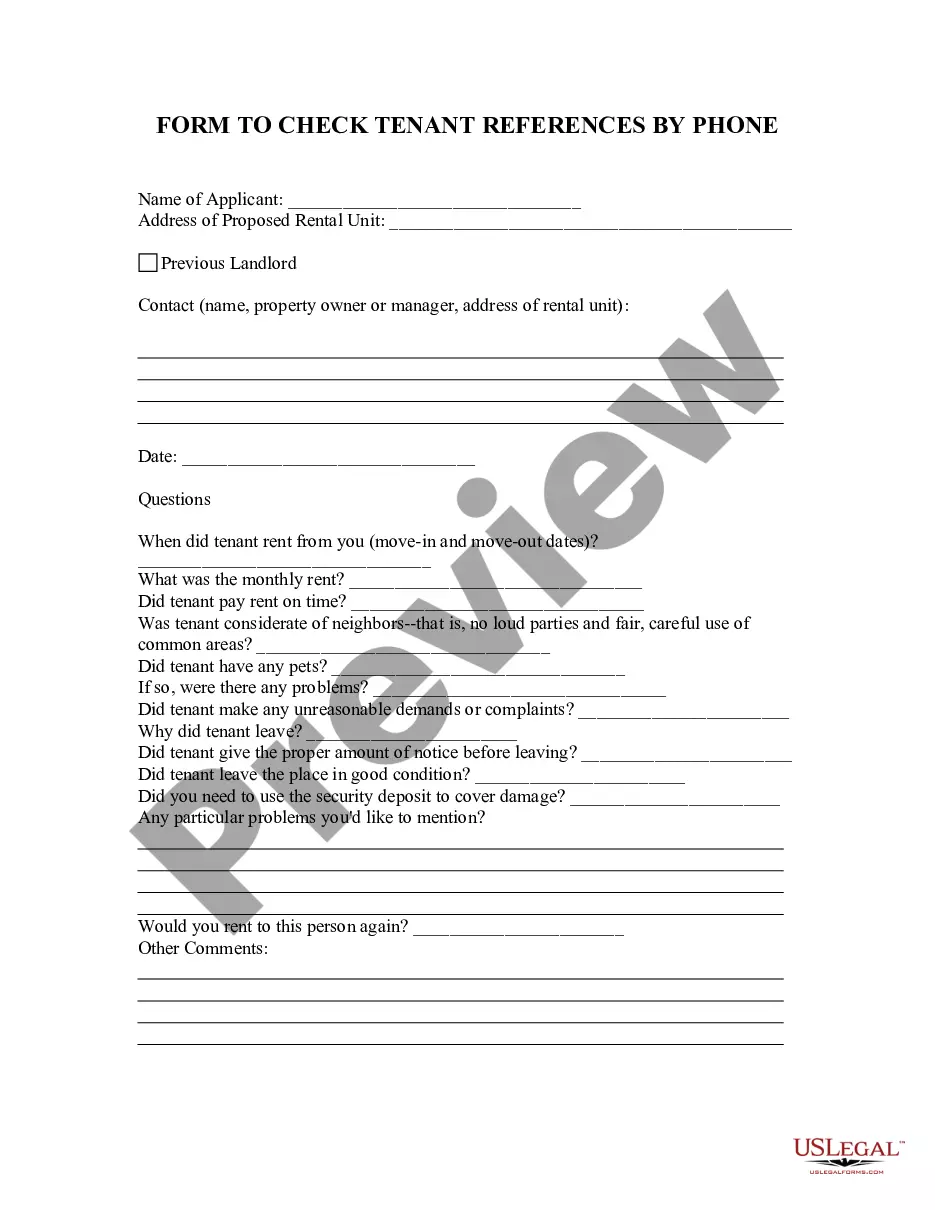
What is the address of their property? Who were the occupants listed on the lease? How long was the tenancy? What was the tenant's monthly rental amount? Did the tenant consistently pay rent on time? Did the tenant maintain the rental property well?
References from past landlords may indicate how an applicant would occupy your property, and this information could help you avoid a bad outcome such as late rent payments, property damage, complaints from neighbors, or an eviction. The eviction process is time-consuming and costly.
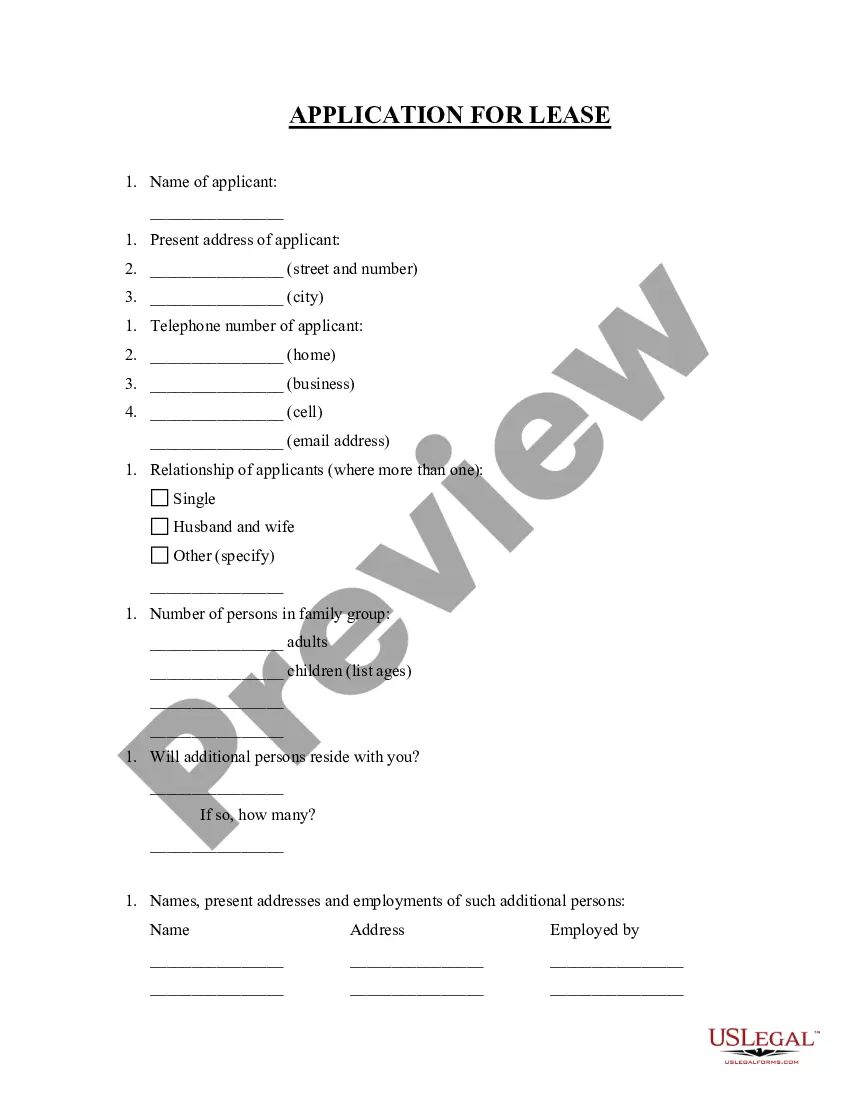
Request an Application. Start by having every prospective tenant complete an application. Run a Credit Check. Run a Background Check. Contact the Previous Landlords. Contact the Tenant's Employer. Interview the Tenant.