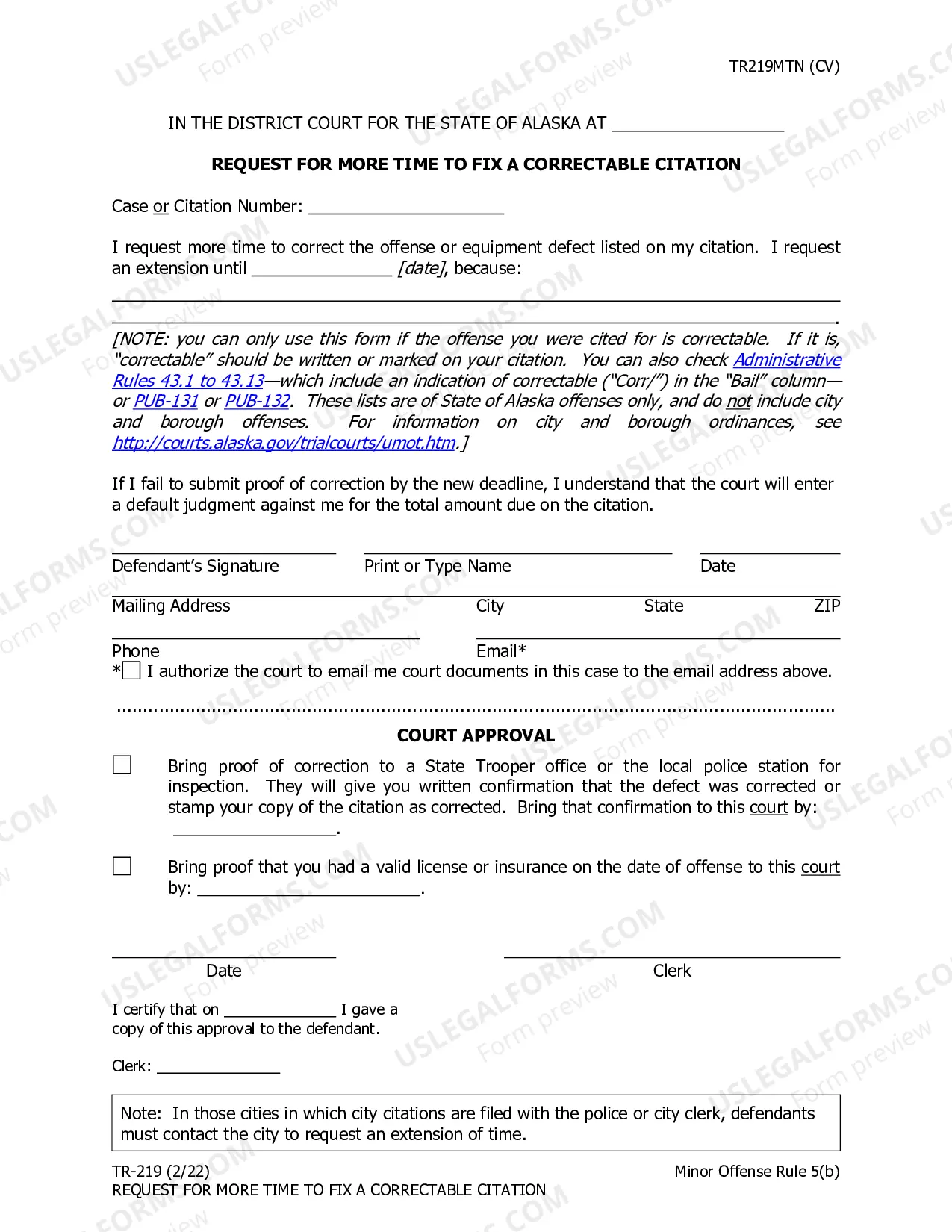
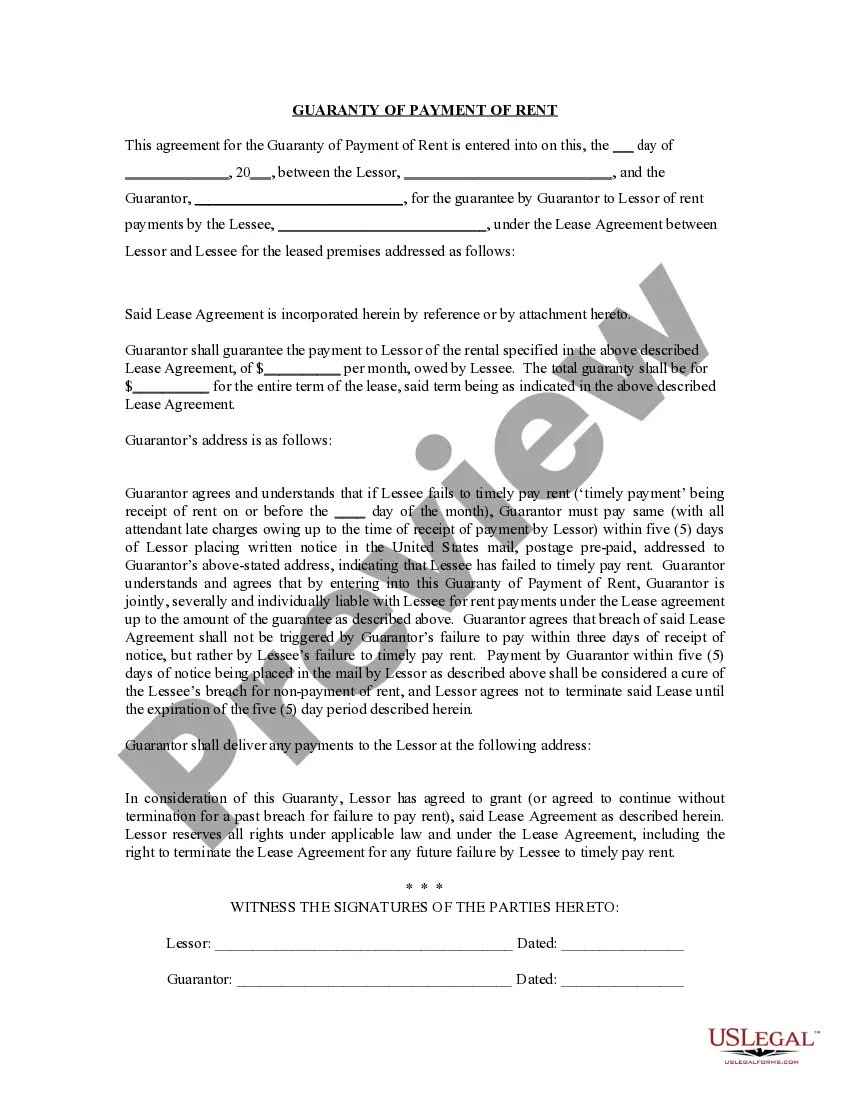
Alaska Guaranty or Guarantee of Payment of Rent
What is this form?
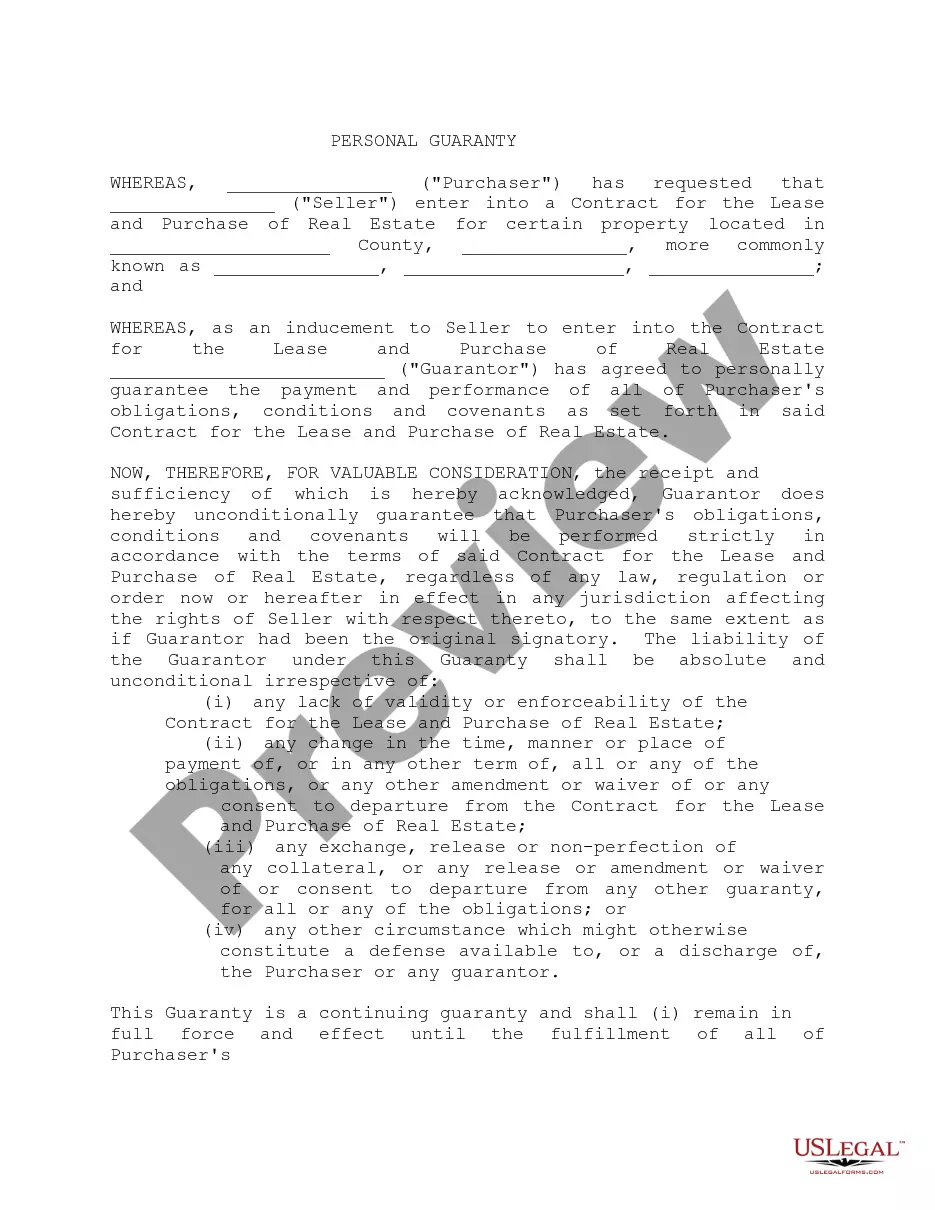
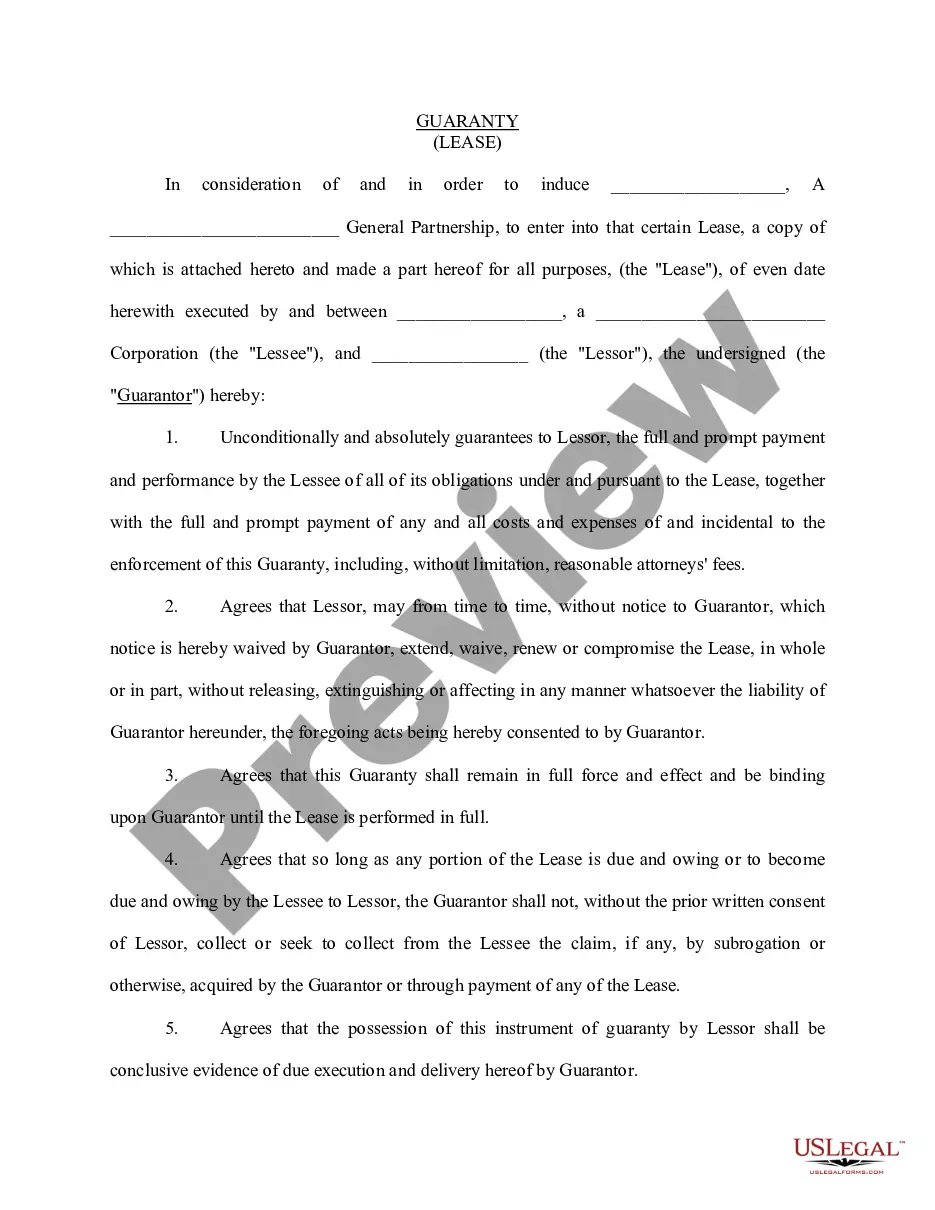
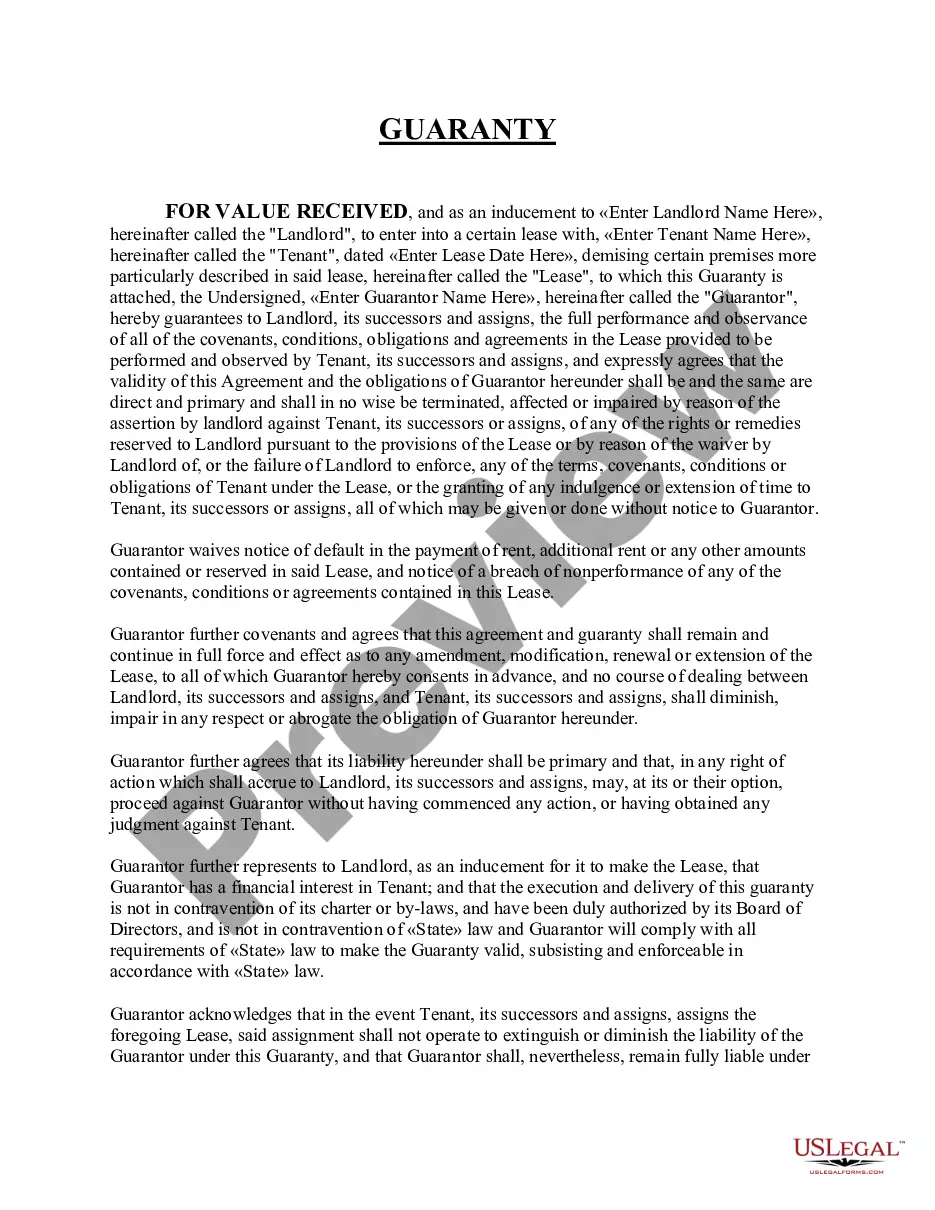
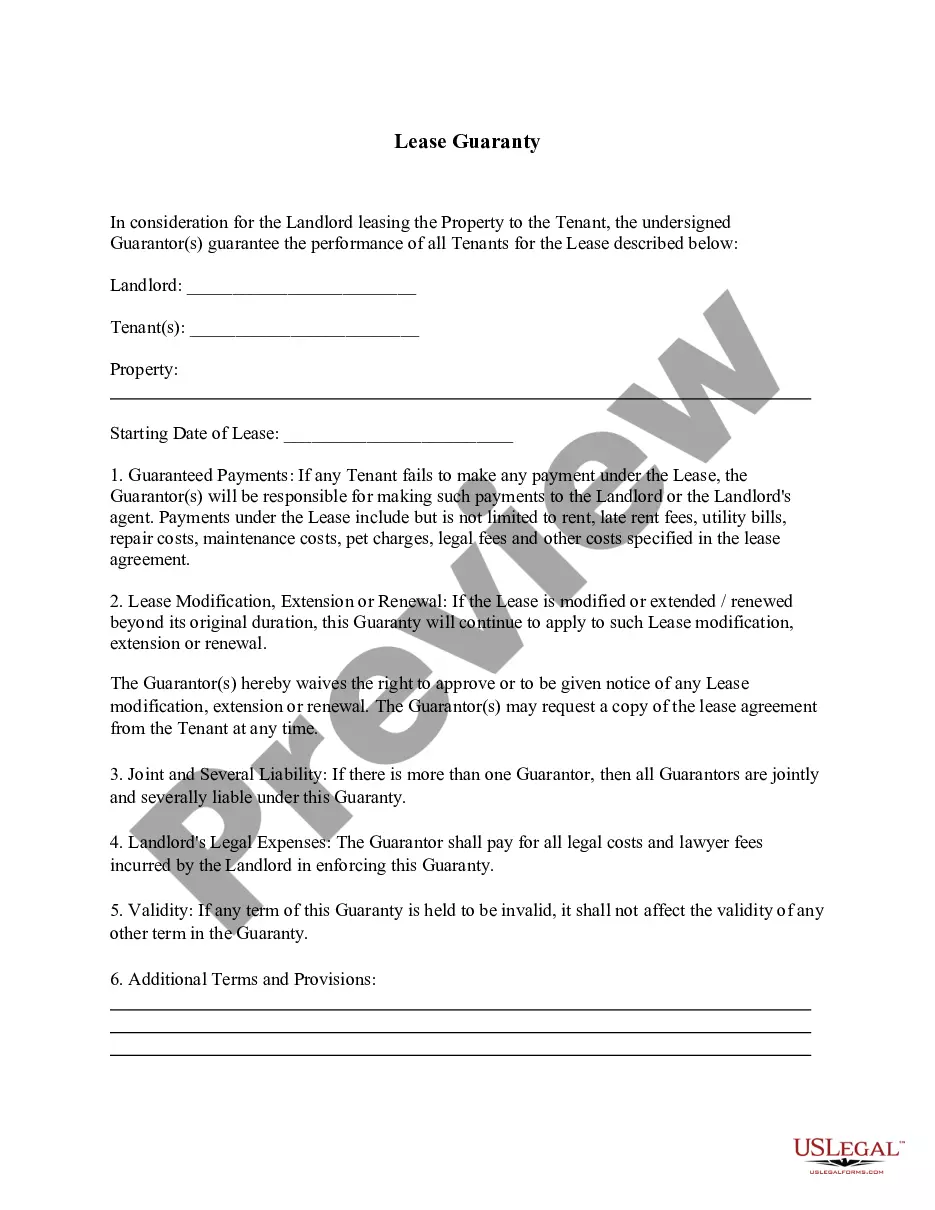
The Guaranty or Guarantee of Payment of Rent is a legal agreement between a tenant's guarantor and their landlord. This form ensures that if the tenant fails to pay their rent, the guarantor will step in to cover these payments. Unlike a rental lease, which directly relates to the tenant's obligations, this guaranty functions as an additional layer of security for landlords, making it a crucial document in rental transactions.
Main sections of this form
- Guarantor's address: Details the location of the guarantor.
- Lessor information: Identifies the landlord or property owner.
- Signatures: Requires signatures from both the lessor and the guarantor, along with dates for legal validation.
When to use this document
This form is essential in situations where a tenant may struggle to pay rent. It is often required by landlords when the tenant has insufficient credit history or income to qualify on their own. Using this form provides reassurance to landlords while giving tenants the ability to secure a lease with the backing of a financially reliable guarantor.
Who this form is for
- Tenants who may have low credit scores or inadequate income.
- Guarantors who are willing to assume financial responsibility for the tenant.
- Landlords looking for financial security when leasing their properties.
Instructions for completing this form
- Identify the parties: Include the names and addresses of the tenant, landlord, and guarantor.
- Specify the property: Clearly state the rental property address.
- Fill in applicable dates: Record the dates for signing the agreement.
- Obtain signatures: Ensure the guarantor and landlord sign the document to finalize it.
Does this document require notarization?
Notarization is generally not required for this form. However, certain states or situations might demand it. You can complete notarization online through US Legal Forms, powered by Notarize, using a verified video call available anytime.
Get your form ready online
Our built-in tools help you complete, sign, share, and store your documents in one place.
Make edits, fill in missing information, and update formatting in US Legal Forms—just like you would in MS Word.
Download a copy, print it, send it by email, or mail it via USPS—whatever works best for your next step.
Sign and collect signatures with our SignNow integration. Send to multiple recipients, set reminders, and more. Go Premium to unlock E-Sign.
If this form requires notarization, complete it online through a secure video call—no need to meet a notary in person or wait for an appointment.
We protect your documents and personal data by following strict security and privacy standards.

Make edits, fill in missing information, and update formatting in US Legal Forms—just like you would in MS Word.

Download a copy, print it, send it by email, or mail it via USPS—whatever works best for your next step.

Sign and collect signatures with our SignNow integration. Send to multiple recipients, set reminders, and more. Go Premium to unlock E-Sign.

If this form requires notarization, complete it online through a secure video call—no need to meet a notary in person or wait for an appointment.

We protect your documents and personal data by following strict security and privacy standards.
Avoid these common issues
- Failing to provide accurate addresses for all parties.
- Not including signature dates, which can invalidate the agreement.
- Poorly defining the scope of the guarantor's responsibilities.
Benefits of using this form online
- Convenience: Access and download the form anytime, from anywhere.
- Editability: Easily customize the document to suit your specific needs.
- Reliability: Forms are drafted by licensed attorneys ensuring legal compliance.
Summary of main points
- The Guaranty of Payment of Rent offers security for landlords and helps tenants who may not qualify alone.
- Accurate completion of the form is critical to ensure enforceability.
- Online access simplifies the process of obtaining and filling out this document.
Looking for another form?


Form popularity
FAQ
Grace periods are quite common, usually varying between three and five days. Grace periods provide tenants extra time to pay rent before the landlord can legally charge a late fee.
Grace periods are quite common, usually varying between three and five days. Grace periods provide tenants extra time to pay rent before the landlord can legally charge a late fee.
Your Landlord is legally obligated to return your deposit within 10 days of you both agreeing how much you'll get back (after the tenancy has ended, of course).
A five day grace period means that rent due on the 1st wouldn't get a late fee until the 6th. However, this does not mean that rent is actually due on the 5th but that's the message that is inadvertently conveyed. Rent is due on the due date please don't make a habit out of paying within the grace period.
A guarantor acts as a guarantee that the rent gets paid during a situation when the tenant can't meet their financial commitment. The guarantor is as responsible for the lease as the tenant.
Alaska state law limits how much a landlord can charge for a security deposit (two months' rent, unless the monthly rent exceeds $2,000), when it must be returned (within 14 days after a tenant moves if the tenant has given proper notice to end the tenancy or 30 days if the tenant has not), and sets other restrictions
Late fees Most rental agreements include a late fee clause. You might have to pay a late fee if you're even a few minutes past the due date. Or, you might have a grace period of a day or two.If you pay on the second, you won't have to pay a late fee, but your payment may still be flagged as a late payment.
If your deposit didn't need to be protected and your landlord refuses to give it back, you might have to take them to court.You'll need to take your landlord to the small claims court to get your money back.
Although landlords won't fine tenants during 'grace periods', the payment of the rent is still considered legally delinquent. Normally, rent should be paid on or before the established due date. This is a clause that is included in all lease agreements.