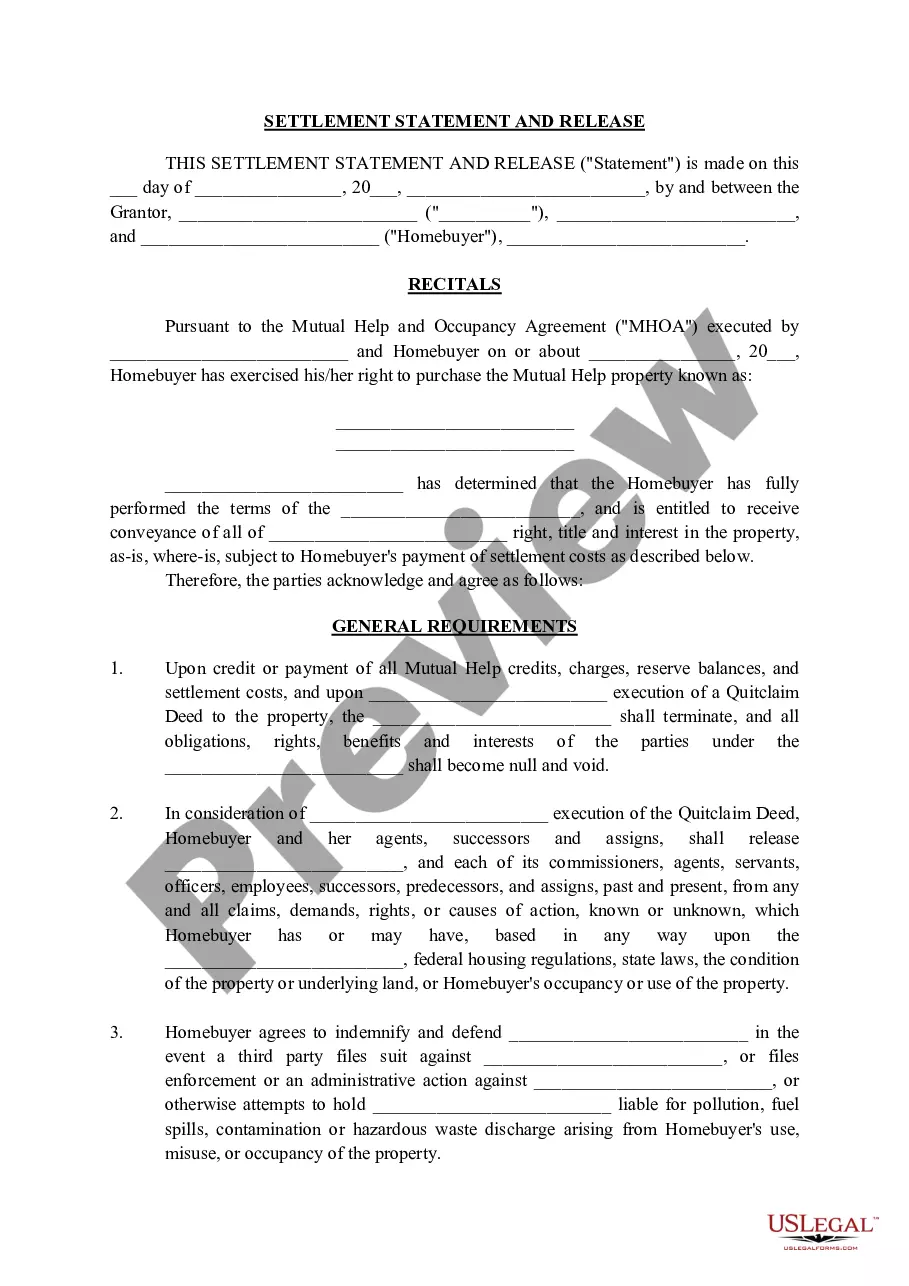
Alaska Letter from Landlord to Tenant as Notice to remove unauthorized inhabitants
What this document covers
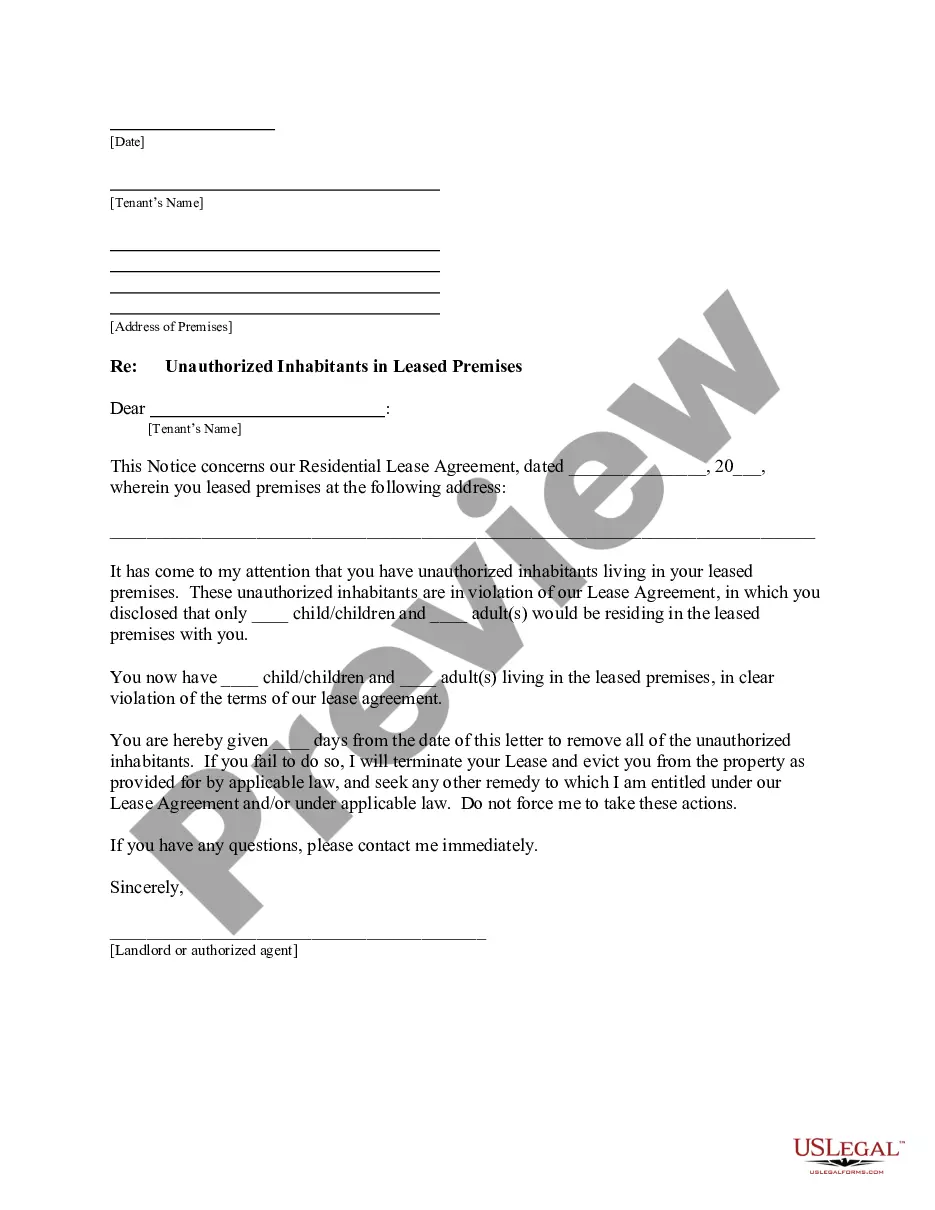
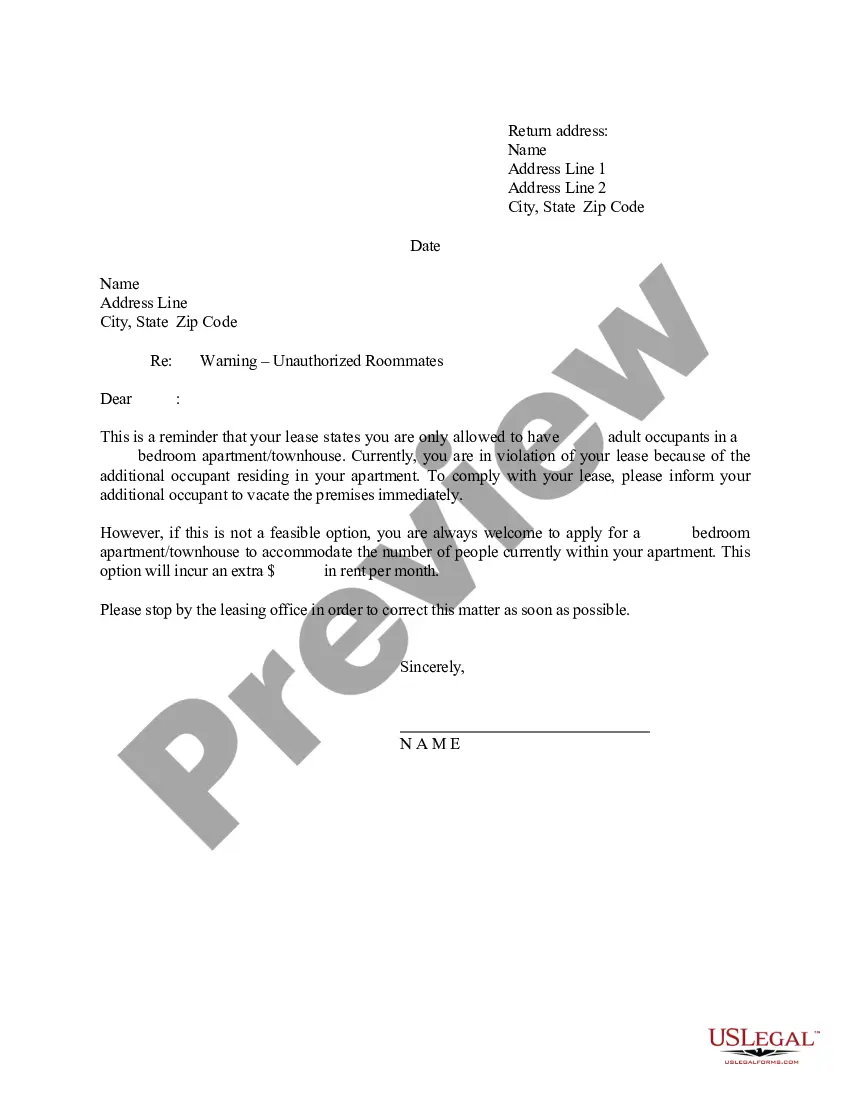
This form is a letter from a landlord to a tenant, used to demand the removal of unauthorized inhabitants from a rental property. It serves as a formal notice outlining the violation of the Lease Agreement and the potential consequences, which may include lease termination and eviction. This document is essential for landlords wishing to enforce the terms of their lease while complying with applicable laws, distinguishing it from other forms of eviction notices by its specific focus on unauthorized inhabitants.
Key components of this form
- Identification of the Residential Lease Agreement with date and property address
- Statement regarding unauthorized inhabitants living in the premises
- Reference to the original disclosures made by the tenant regarding residents
- Deadline for the removal of unauthorized inhabitants
- Consequences of failure to comply, including lease termination and eviction
- Landlordâs contact information for any questions

When to use this form
This form should be used when a landlord discovers unauthorized individuals living in a rental property. It is necessary when the lease clearly states the number of approved residents, and the tenant has violated that agreement by allowing additional people to reside in the property without consent. Using this notice helps the landlord to formally communicate the issue and to lay out potential legal actions should the tenant fail to rectify the situation.
Who can use this document
- Landlords managing residential rental properties
- Property managers acting on behalf of landlords
- Anyone needing to address unauthorized inhabitants in their rental property
How to complete this form
- Identify the parties involved by entering the landlord's and tenant's names.
- Specify the rental property's address and the date of the original lease agreement.
- Detail the unauthorized inhabitants residing in the property, including discrepancies from the disclosure.
- Set a clear deadline for the tenant to remove unauthorized residents.
- Sign the document to validate it as the landlord or authorized agent.
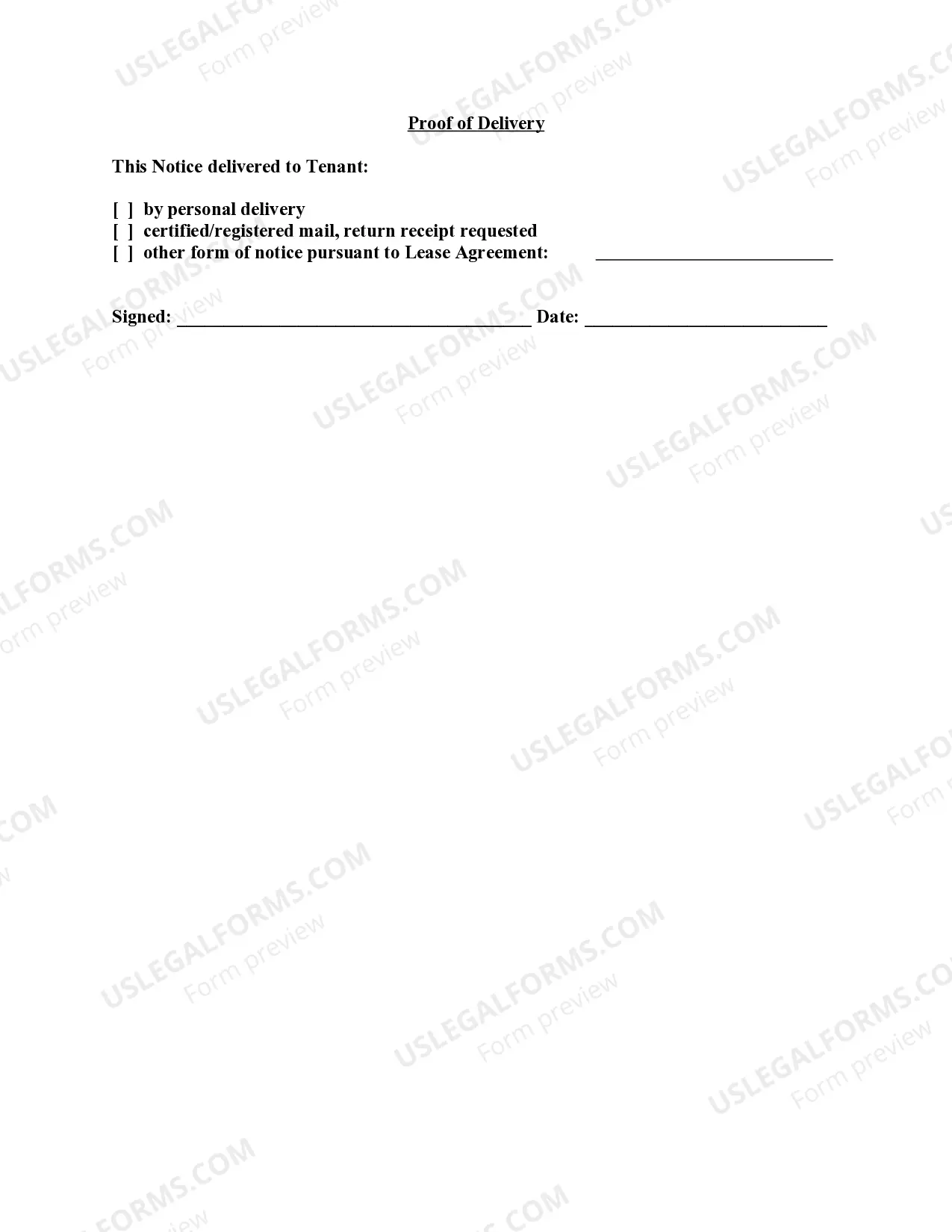
- Deliver the notice to the tenant via the specified method (e.g., personal delivery, certified mail).
Is notarization required?
This form does not typically require notarization unless specified by local law.
Get your form ready online
Our built-in tools help you complete, sign, share, and store your documents in one place.
Make edits, fill in missing information, and update formatting in US Legal Forms—just like you would in MS Word.
Download a copy, print it, send it by email, or mail it via USPS—whatever works best for your next step.
Sign and collect signatures with our SignNow integration. Send to multiple recipients, set reminders, and more. Go Premium to unlock E-Sign.
If this form requires notarization, complete it online through a secure video call—no need to meet a notary in person or wait for an appointment.
We protect your documents and personal data by following strict security and privacy standards.

Make edits, fill in missing information, and update formatting in US Legal Forms—just like you would in MS Word.

Download a copy, print it, send it by email, or mail it via USPS—whatever works best for your next step.

Sign and collect signatures with our SignNow integration. Send to multiple recipients, set reminders, and more. Go Premium to unlock E-Sign.

If this form requires notarization, complete it online through a secure video call—no need to meet a notary in person or wait for an appointment.

We protect your documents and personal data by following strict security and privacy standards.
Mistakes to watch out for
- Failing to specify the exact date of the lease agreement.
- Not clearly identifying all unauthorized inhabitants.
- Setting an inappropriate timeframe for compliance.
- Neglecting to include appropriate contact information for follow-up questions.
Why complete this form online
- Convenience of immediate access and download from any location.
- Editability allows landlords to tailor the letter to fit specific situations.
- Reliability of forms drafted by licensed attorneys enhances legal compliance.
Legal use & context
- This notice is a formal method of addressing lease violations regarding unauthorized inhabitants.
- It is essential for landlords to document their requests and communications to uphold their rights in court if necessary.
- Failure to utilize such notices properly may weaken a landlord's position in eviction proceedings.
Main things to remember
- This notice is crucial for landlords to address unauthorized occupants legally.
- Clearly outline the lease violations in the notice to avoid misunderstandings.
- Provide tenants with an opportunity to correct the situation before eviction.
Looking for another form?


Form popularity
FAQ
Keep in mind thatregardless of the roommate's status on the lease or rental agreementit is never legal to physically remove or lock out a tenant (or a roommate who might have legal rights similar to a tenant's) from a rental.
It's best if your roommate leaves quietly during the 30-day notice period after you give him the eviction paperwork. If he doesn't, however, you must take him to court so a judge can demand he vacate the apartment. Even if his name isn't on the lease, you must follow formal eviction procedure to force him to leave.
You cannot evict a co-tenant. Only a landlord can evict someone who is named on a lease, and can only do so with just cause. In this situation, your best option is to let the landlord know what the problem is.
If you've had a friend stay over for a few nights, there's no need to evict the person -- he's not legally a tenant. In California and most other states, however, if someone has lived in your apartment for 30 days or more, he's considered a tenant even if he never signed a lease.
You can only evict your roommate if they aren't on the lease or are your subtenant. Most of the laws relevant to leased apartments in Texas can be found in Title 8, Chapter 92 of the Texas Property Code. This law says that a lease can be oral or written, and can be made between a tenant and a subtenant.
To evict your roommate in California, you need to start by giving them a three-day notice to cure or quit. If they ignore you, then you'll have to begin an unlawful detainer action.
If a lodger in California refuses to leave after 30 days, they can be kicked out without going through a court-ordered eviction process, because after the 30-day mark, they are officially trespassing. At this point, you could call the police.