Alaska Letter from Tenant to Landlord with Demand that landlord repair floors, stairs or railings
Overview of this form
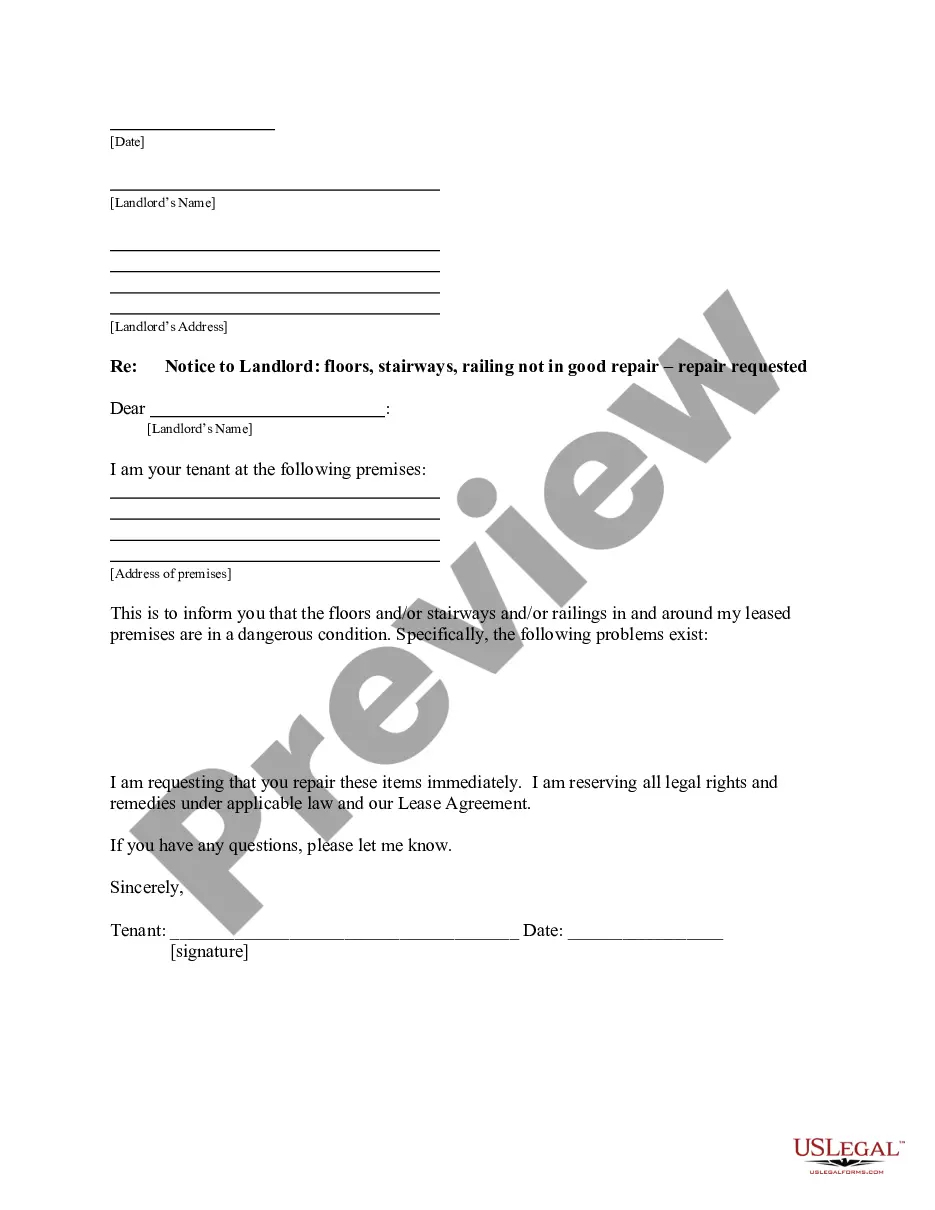
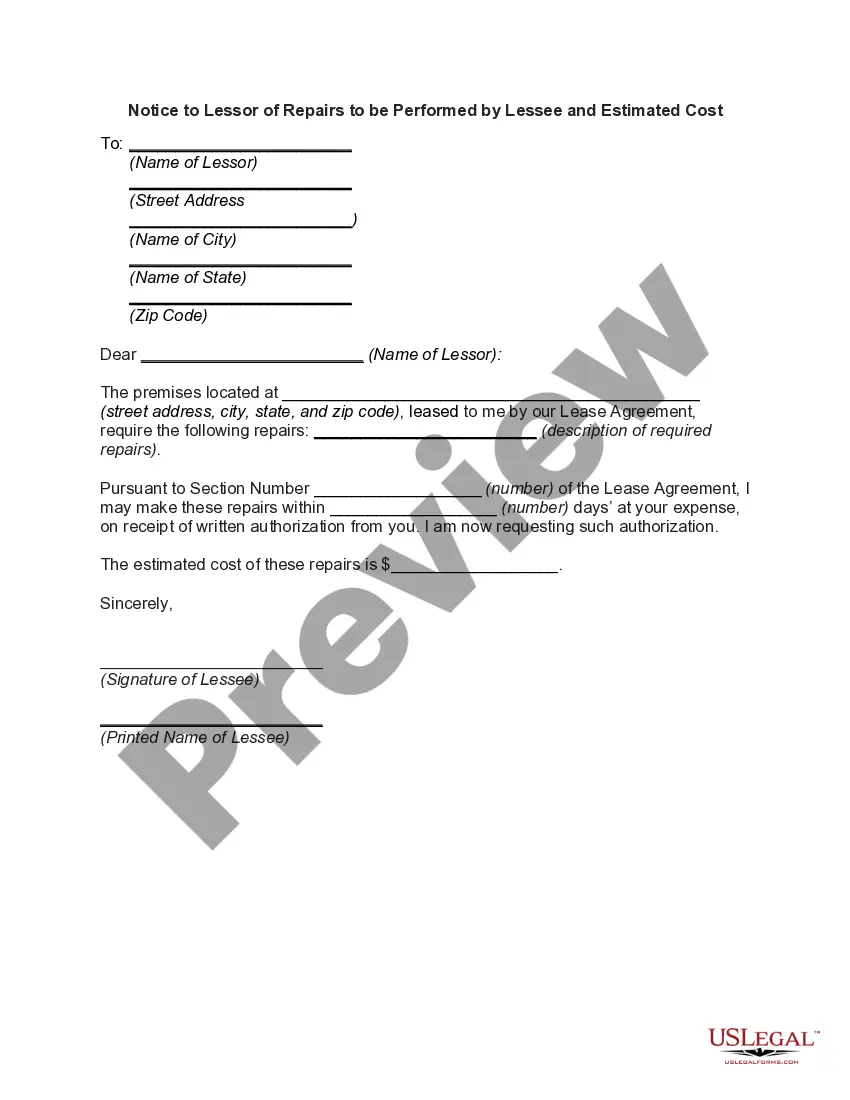
This Letter from Tenant to Landlord with Demand that landlord repair floors, stairs, or railings is a crucial document for tenants facing issues related to safety and maintenance within their rental properties. It serves as an official notification to the landlord about the defects in floors, stairs, or railings that require immediate repair. This form is essential to ensure that the landlord is aware of these issues, which may pose safety risks and is necessary for maintaining the property in tenantable condition.
Key parts of this document
- Tenant's contact information: The form requires the tenant to provide their name and address.
- Landlord's contact information: Includes fields for the name and address of the landlord or their authorized agent.
- Description of issues: The tenant must describe the specific repairs needed for floors, stairs, or railings.
- Demand for action: The tenant formally requests the landlord to make the necessary repairs.
- Date and signature: The tenant signs and dates the notice to confirm the request.
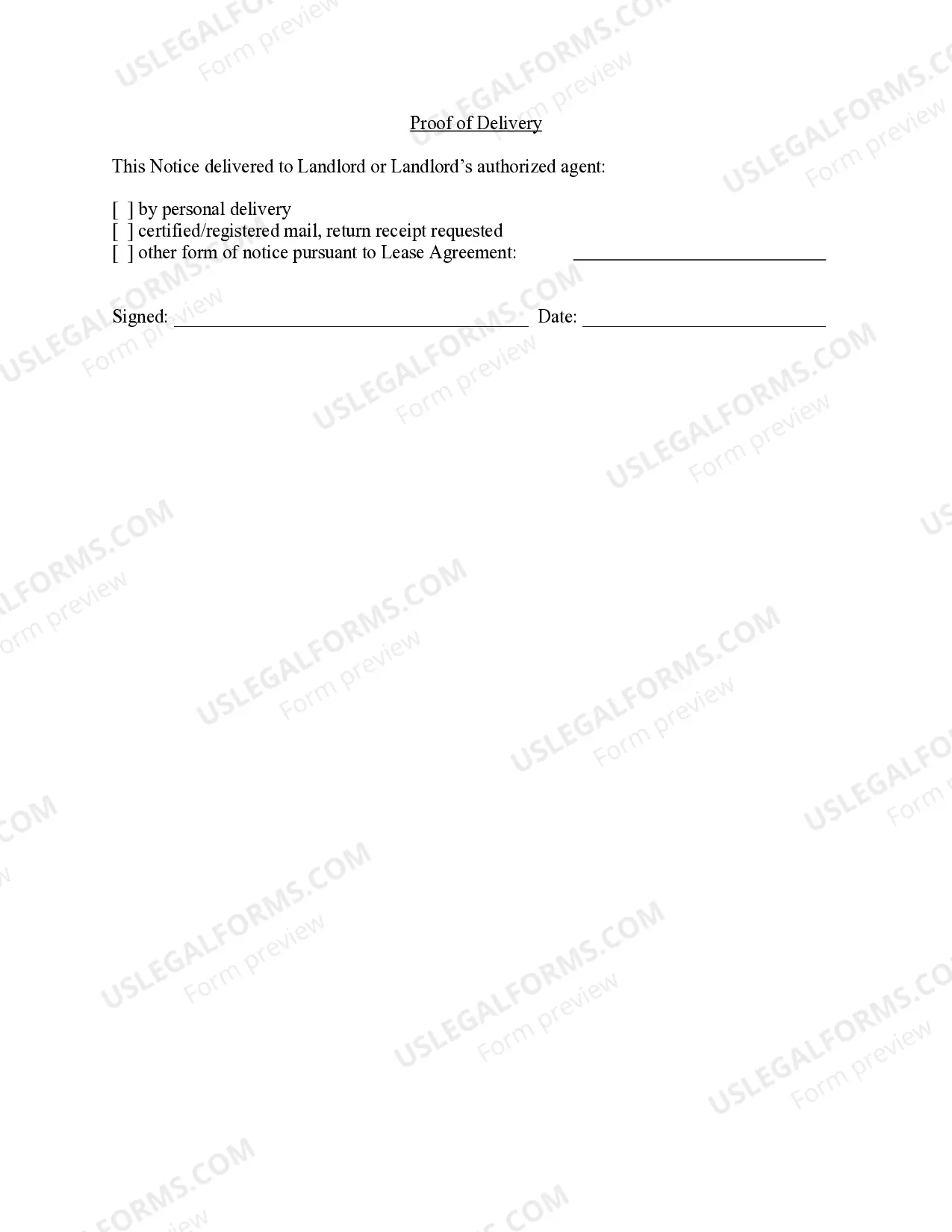
- Proof of delivery: Indicates how the notice was delivered to the landlord.



Situations where this form applies
This form should be used when a tenant discovers that the floors, stairs, or railings within the rental property are in disrepair. It is important to use this form if these issues could pose safety hazards, such as falls or accidents, or if they violate the implied warranty of habitability. Sending this letter initiates a dialogue for necessary repairs and helps protect the tenant's rights.
Who should use this form
- Tenants who have identified repair issues with their rental property.
- Individuals seeking to formally notify their landlord of safety hazards.
- Tenants looking to document their communication regarding property maintenance.
Steps to complete this form
- Identify the parties: Enter your name and address as the tenant, followed by the landlord's name and address.
- Specify the property: Include details about the rental property in question.
- Describe the issues: Clearly explain the condition of the floors, stairs, or railings that need repair.
- Make your demand: Formally state your request for the landlord to address the repairs.
- Sign and date the form: Ensure it is signed by you and include the date of completion.
- Deliver the notice: Send the letter via personal delivery or certified mail, keeping a record of the delivery method.
Does this form need to be notarized?
Notarization is generally not required for this form. However, certain states or situations might demand it. You can complete notarization online through US Legal Forms, powered by Notarize, using a verified video call available anytime.
Get your form ready online
Our built-in tools help you complete, sign, share, and store your documents in one place.
Make edits, fill in missing information, and update formatting in US Legal Forms—just like you would in MS Word.
Download a copy, print it, send it by email, or mail it via USPS—whatever works best for your next step.
Sign and collect signatures with our SignNow integration. Send to multiple recipients, set reminders, and more. Go Premium to unlock E-Sign.
If this form requires notarization, complete it online through a secure video call—no need to meet a notary in person or wait for an appointment.
We protect your documents and personal data by following strict security and privacy standards.

Make edits, fill in missing information, and update formatting in US Legal Forms—just like you would in MS Word.

Download a copy, print it, send it by email, or mail it via USPS—whatever works best for your next step.

Sign and collect signatures with our SignNow integration. Send to multiple recipients, set reminders, and more. Go Premium to unlock E-Sign.

If this form requires notarization, complete it online through a secure video call—no need to meet a notary in person or wait for an appointment.

We protect your documents and personal data by following strict security and privacy standards.
Avoid these common issues
- Failing to provide accurate contact information for both the tenant and landlord.
- Not clearly stating the specific repairs needed.
- Forgetting to sign and date the letter.
- Neglecting to keep a copy of the sent notice for personal records.
- Using vague language that does not effectively communicate the urgency of the repairs needed.
Why complete this form online
- Convenience: Easily fill out and download the form from anywhere.
- Editability: Make necessary changes to the document to fit your specific situation.
- Reliability: Ensure that the form complies with legal standards set by licensed attorneys.
Looking for another form?
Form popularity
FAQ
When a home is condemned, the owner (and tenants, if any) are notified in writing that the building must be vacated. A sign is attached to the building stating that the dwelling is not fit for human habitation, and that it cannot be occupied.The owner of the building may be ordered to repair or demolish the building.
If you think your landlord is violating the Fair Housing Act, you can get that landlord in trouble by filing a complaint at HUD.gov. Your remedy for breach of quiet enjoyment is to terminate the lease and move or sue in small claims court.
If your landlord breaches the warranty of habitability or the warranty of quiet enjoyment, you may be able to sue her to recover monetary damages.In some states, such as California and Arizona, you may be able to seek emotional distress damages if the landlord's actions were particularly egregious.
If you're seeking damages for emotional distress caused by a landlord's discrimination, or punitive damages for especially blatant and intentional discrimination, a lawsuit may well be your best bet. Understand what's involved in suing your landlord. You may file a lawsuit in either federal or state court.
In California, habitability includes the following specific warranties: A dwelling also may be considered uninhabitable (unlivable) if it substantially lacks any of the following: Effective waterproofing and weather protection of roof and exterior walls, including unbroken windows and doors.
Health Issues When the environment in a unit becomes hazardous to one's health, the rental is considered to be uninhabitable.Other health risks such as mold and asbestos can make a unit uninhabitable, by causing respiratory problems and serious illnesses.
Contact us at (888) 700-9995.
Uninhabitable conditions can include dangerous ones, such as holes in the floor, unsafe or exposed wiring, or non-working air conditioning in dangerously hot summer months. Gross infestations of roaches, fleas or other pests are also uninhabitable conditions.
Tenants can potentially claim against their landlord for injuries suffered in a rental premises. Injured tenants need to establish that their injury was caused because part of the premises was unsafe and the landlord knew, or ought to have known, yet did nothing to repair it.A claim can also be made against a tenant.