West Virginia Assignment of Deed of Trust by Corporate Mortgage Holder
What is this form?
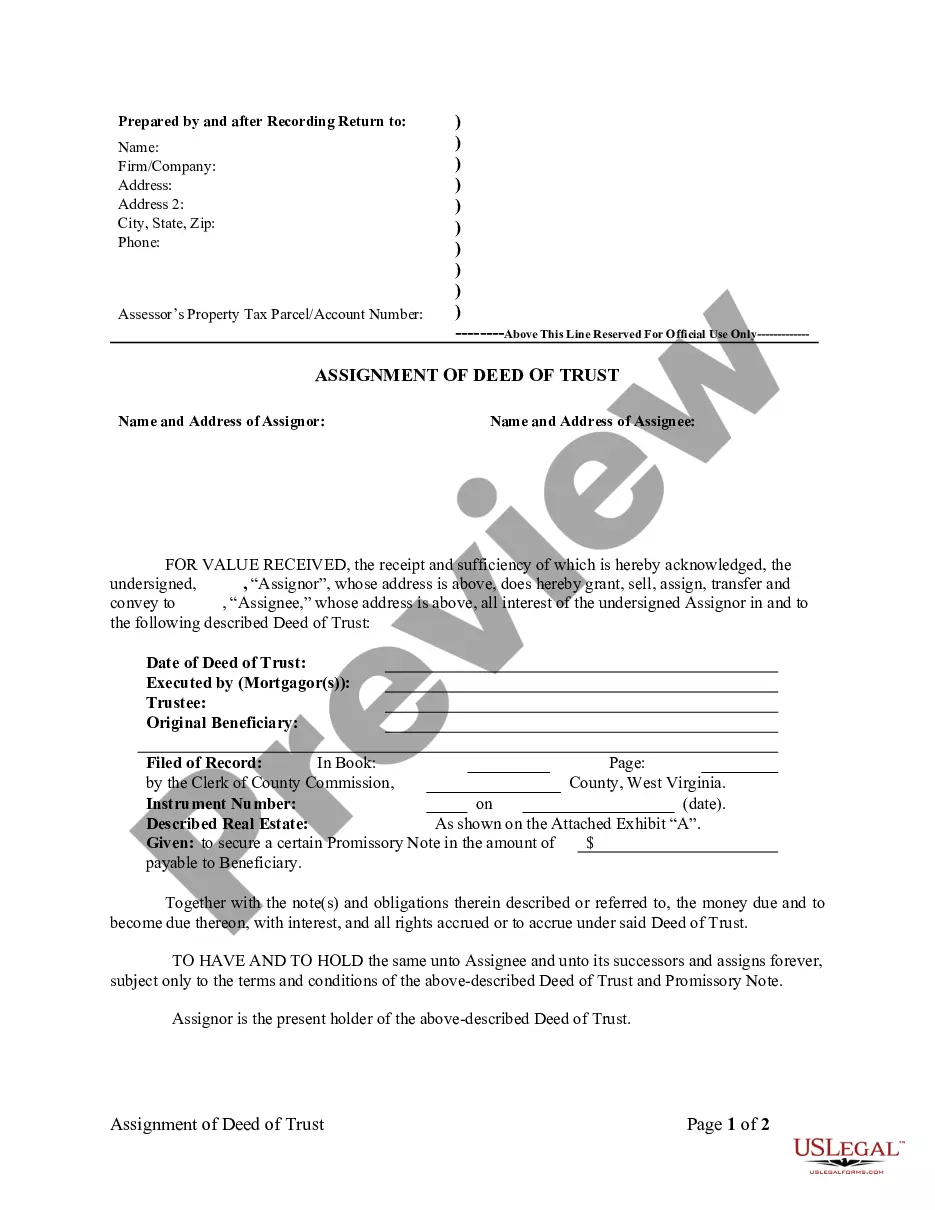
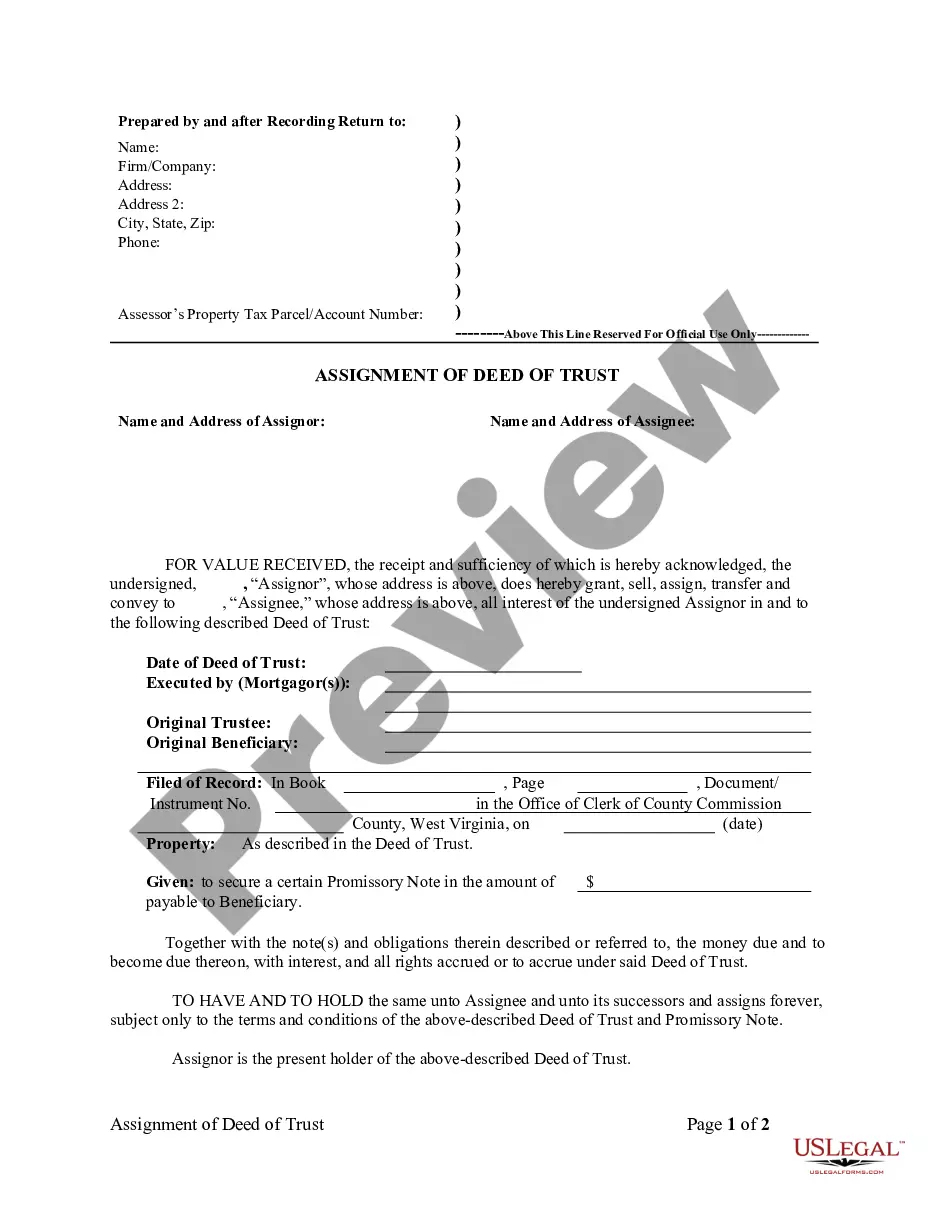
The Assignment of Deed of Trust by Corporate Mortgage Holder is a legal document through which a corporation transfers its interest in a mortgage or deed of trust to a third party. This form distinguishes itself from other mortgage-related forms by focusing specifically on the assignment by corporate holders, ensuring that the responsibilities and rights associated with the deed of trust are clearly conveyed to the assignee.
Main sections of this form
- Date of the deed of trust
- Names of the mortgagor(s) and trustee
- Details of the original beneficiary
- Description of the real estate involved
- Promissory note amount and terms
- Rights and obligations under the deed of trust
When to use this form
This form is used when a corporate mortgage holder wishes to transfer their ownership interest in a deed of trust to another entity. It is particularly useful in financial transactions where the original lender is divesting their interest and needs to formalize the transfer and notify relevant parties.
Who this form is for
- Corporate mortgage holders looking to assign their interest
- Financial institutions involved in mortgage lending
- Real estate professionals managing corporate properties
- Attorneys or legal representatives facilitating such transactions
How to complete this form
- Identify the parties involved: mortgagor(s), trustee, and assignee.
- Provide the date of the deed of trust and relevant identifiers, such as the instrument number.
- Specify the property description, often found in an attached exhibit.
- Enter the amount of the promissory note and clarify payment obligations.
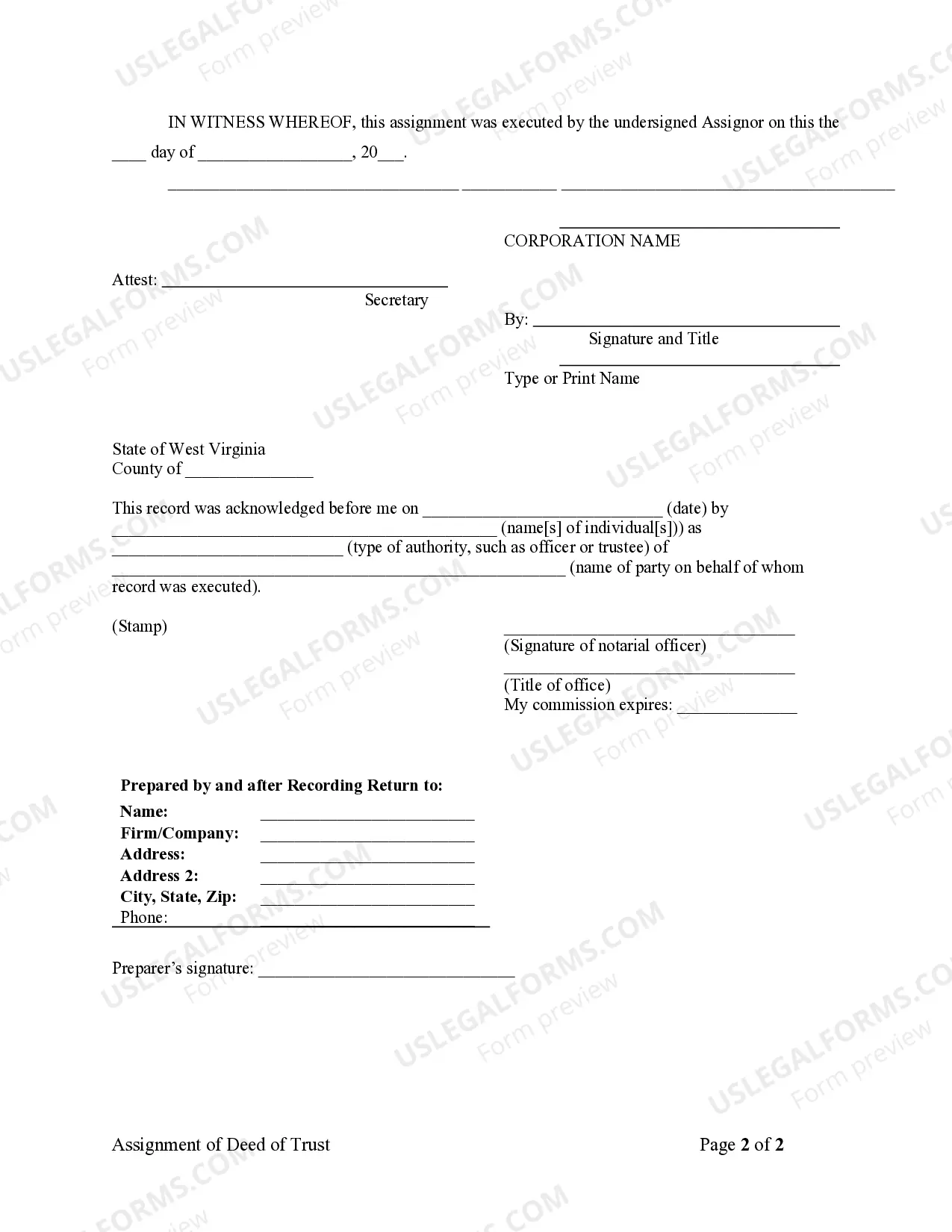
- Ensure all parties sign and date the document to validate the assignment.
Does this document require notarization?
This document requires notarization to meet legal standards. US Legal Forms provides secure online notarization powered by Notarize, allowing you to complete the process through a verified video call, available 24/7.
Get your form ready online
Our built-in tools help you complete, sign, share, and store your documents in one place.
Make edits, fill in missing information, and update formatting in US Legal Forms—just like you would in MS Word.
Download a copy, print it, send it by email, or mail it via USPS—whatever works best for your next step.
Sign and collect signatures with our SignNow integration. Send to multiple recipients, set reminders, and more. Go Premium to unlock E-Sign.
If this form requires notarization, complete it online through a secure video call—no need to meet a notary in person or wait for an appointment.
We protect your documents and personal data by following strict security and privacy standards.

Make edits, fill in missing information, and update formatting in US Legal Forms—just like you would in MS Word.

Download a copy, print it, send it by email, or mail it via USPS—whatever works best for your next step.

Sign and collect signatures with our SignNow integration. Send to multiple recipients, set reminders, and more. Go Premium to unlock E-Sign.

If this form requires notarization, complete it online through a secure video call—no need to meet a notary in person or wait for an appointment.

We protect your documents and personal data by following strict security and privacy standards.
Mistakes to watch out for
- Failing to include the complete property description.
- Omitting signatures or dates from any involved party.
- Not referencing the associated promissory note accurately.
- Using outdated legal terminology that may not be recognized.
Benefits of completing this form online
- Convenience of immediate access and download.
- Editability to tailor the form to specific needs and jurisdictions.
- Reliability of forms drafted by licensed attorneys.
Main things to remember
- The Assignment of Deed of Trust by Corporate Mortgage Holder formalizes the transfer of mortgage interests by corporations.
- Correctly completing this form is essential to avoid legal complications in property transactions.
- Always check for state-specific requirements when using this form.
Looking for another form?
Form popularity
FAQ
Corporate mortgage assignment defined. An assignment of a mortgage occurs when a loan for a piece of property (home or otherwise) is assigned to another party.A corporate assignment of a mortgage occurs when the third party that assumes the obligation for the loan is a corporation.
Essentially, the Deed of Assignment (DOA) is a legal document that transfers the ownership of a property from one party to another.
The basic difference between the mortgage as a security instrument and a Deed of Trust is that in a Deed of Trust there are three parties involved, the borrower, the lender, and a trustee, whereas in a mortgage document there are only two parties involved, the borrower and the lender.
An assignment of a deed of trust is simply the movement of the deed of trust from one party to another, a party that was not originally involved in the deed creation when the property was bought. A corporate assignment is simply an assignment of the deed of trust between different businesses.
As you stated in your question, it is recorded among the land records, and your lender keeps the original. When you pay off the loan, the lender will return the deed of trust with the promissory note. This document is rather lengthy and quite legalistic.
When your mortgage lender decides he wants to sell your mortgage loan to another lender, your mortgage lender will sign an assignment of deed of trust in favor of the new lender. This assignment gives the new lender the same lien on your property that your original lender had under the mortgage loan.
If there's a deed of trust on a property, the lender can sell the property and pay off the loan. Whether your loan falls under the mortgage or deed of trust definition, you'll need to get approval from the lender before you sell your home for less than you owe.
When your mortgage lender decides he wants to sell your mortgage loan to another lender, your mortgage lender will sign an assignment of deed of trust in favor of the new lender. This assignment gives the new lender the same lien on your property that your original lender had under the mortgage loan.
Once the note is assigned, the person to whom it is assigned, the assignee, can collect payment under the note. Assignment of the mortgage agreement occurs when the mortgagee (the bank or lender) transfers its rights under the agreement to another party.